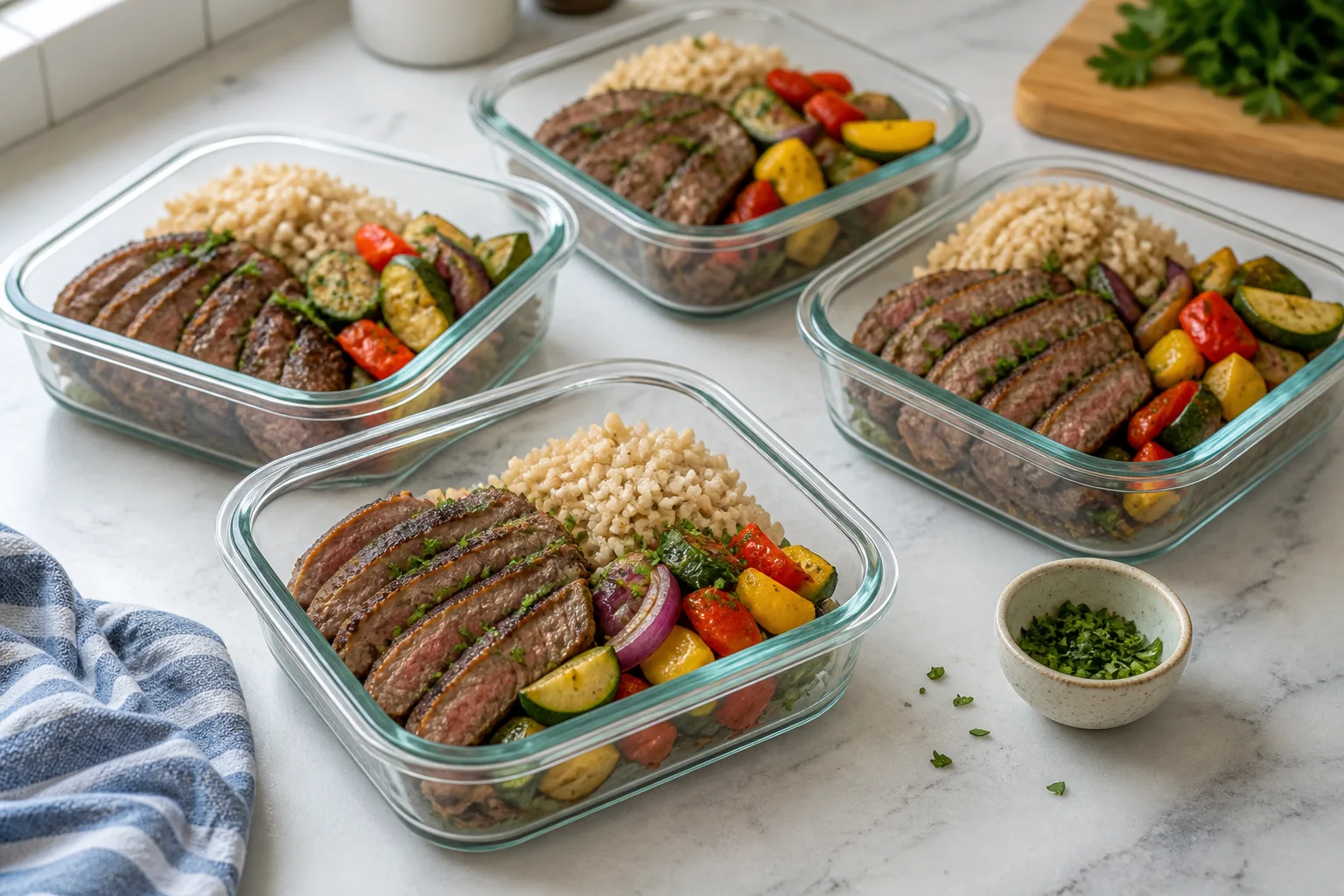
What Best Steak for Meal Prep Really Means
The best steak for meal prep is a cut that portions evenly, tastes good warm or cool and does not depend on a just-rendered fat seam. Top sirloin is the dependable default, but flank, flat iron and trimmed strip can be better for specific bowls, salads and budgets.
A useful answer begins by naming the exact cut and the state in which it is measured. Raw and cooked weights are not interchangeable because cooking usually removes water and some rendered fat. A cooked 100-gram sample therefore represents a different starting amount of beef than 100 grams raw. Bone, separable exterior fat, marinades and sauce create additional differences that a single restaurant estimate cannot resolve.
This guide uses practical kitchen measurements and identifies where a number is sourced rather than presenting one universal value. Plan roughly 4 to 6 ounces of cooked steak per main meal according to appetite and the rest of the plate, then buy extra raw weight to allow for moisture loss and trim. Treat the figures as comparison tools for planning; use the package label or a verified database entry for the exact product you actually eat.
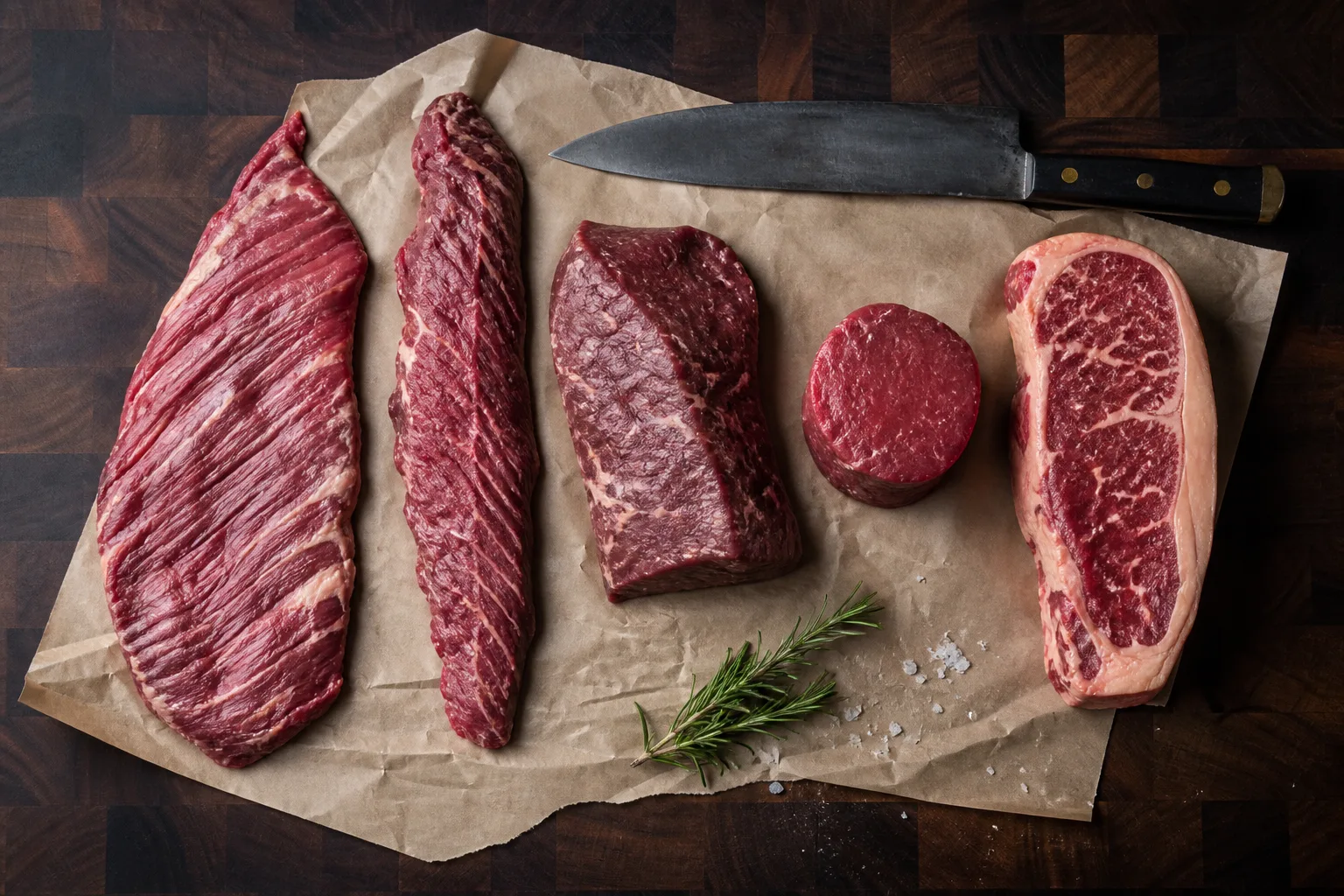
The Useful Comparison
| Cut | Why it works | Best format | Main caution |
|---|---|---|---|
| Top sirloin | Lean, beefy, affordable and even | Bowls, potatoes, vegetables | Do not overcook |
| Flank | Large piece portions efficiently | Thin slices for bowls and salads | Slice firmly across grain |
| Flat iron | Tender and quick-cooking | Rice bowls and wraps | Verify central seam is removed |
| New York strip | Rich flavor and uniform shape | Premium boxes | Trim hard cooled fat |
| Ribeye | Rich and satisfying | Eat soon after cooking | Rendered fat firms when chilled |
Choose top sirloin for an all-purpose box, flank for thin bowl slices, flat iron for tenderness and trimmed strip when a richer premium meal is the goal. The table is a starting point, not permission to ignore the steak in front of you. Fine marbling, the amount of separable fat eaten, final doneness and any oil or butter retained on the surface can move a real serving away from a reference entry.
When comparing cuts, hold the serving weight constant. When comparing meals, include the complete plate. Rice, potatoes, dressing, sugary glaze, butter and restaurant portions may contribute more variation than the difference between two lean steak cuts. For anatomy and buying terminology, begin with the steak-cuts directory before choosing a cooking method.
A Repeatable Planning Method
Cook vegetables and grains first, portion sauces, label containers and leave enough empty space for rapid cooling before the steak reaches the pan. Build the plan before the pan gets hot. Portion the raw steak, prepare the sides, decide which ingredients will be stored separately and label containers if more than one meal is being assembled.
- Select even geometry: Buy steaks of similar thickness so the batch reaches its endpoint together.
- Stage the boxes: Cook grains and vegetables and portion sauces before high-heat steak cooking.
- Cook whole: Brown the outside, measure the center and avoid cutting the raw steak into moisture-losing strips.
- Rest and slice: Identify the grain and carve only after carryover heat settles.
- Cool and pack: Divide by cooked weight, leave lids ajar only during safe rapid cooling, then cover and refrigerate.
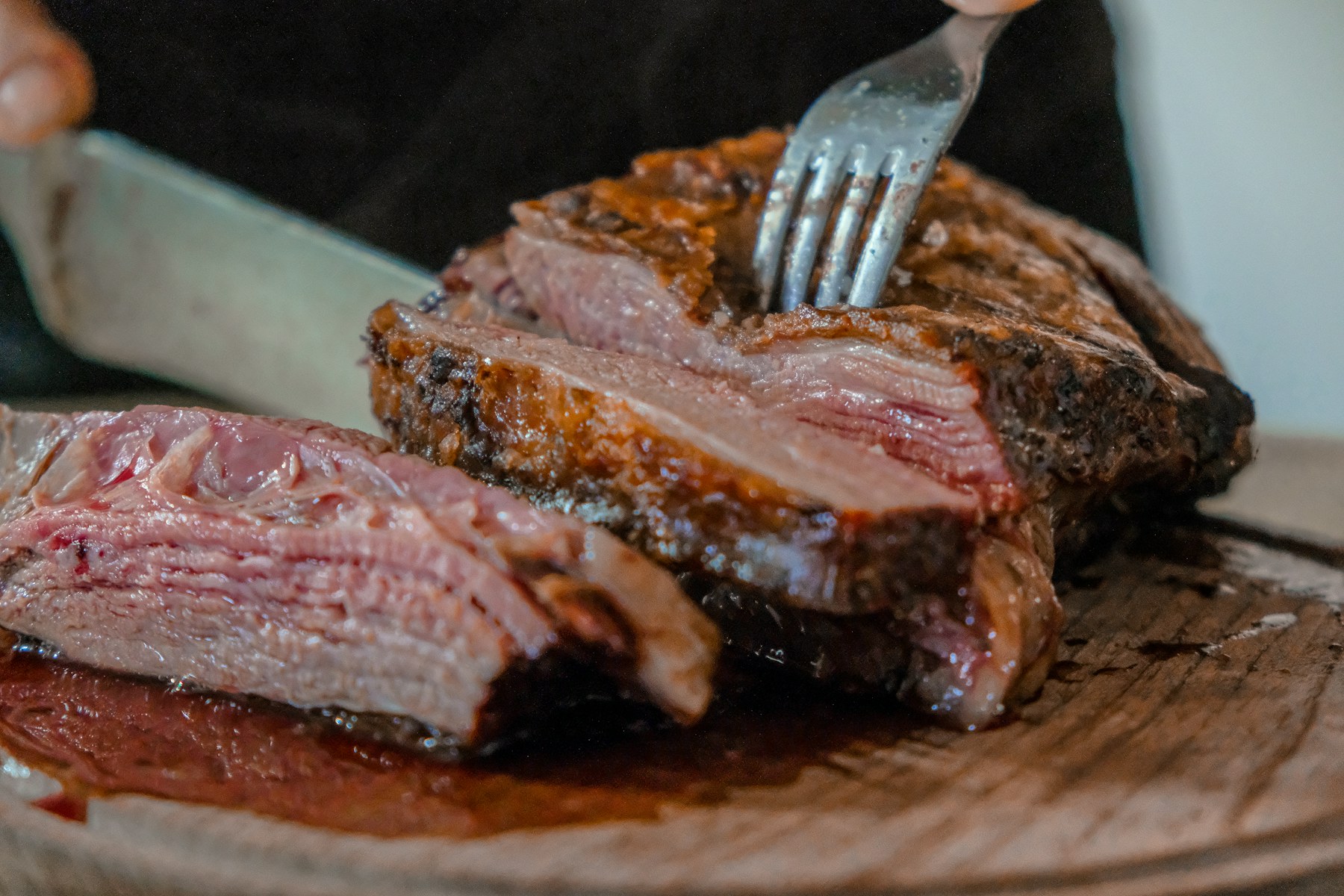
Use an evenly thick steak, cook it whole, measure the center and rest before carving. Thin pre-cut strips lose moisture faster and are harder to keep pink during reheating. Time-per-side charts cannot account for thickness, starting temperature, cookware or burner output. For whole steaks, insert an instant-read thermometer from the side toward the coolest lean center, avoiding bone, large fat pockets and the cooking surface.
Serving, Storage and Reheating
Slice across the grain, distribute by cooked weight and pair with components that reheat on the same schedule; keep fresh herbs, greens and crunchy toppings separate. Slice only what will be eaten immediately when possible. A larger intact piece loses less moisture in storage than a pile of thin slices, while a strongly grained cut still needs to be carved across its fibers before serving.
Cool promptly, refrigerate in shallow containers and follow official leftover guidance. Reheat grains and vegetables first, then add steak near the end or serve it cool in a salad. Cool cooked food promptly in shallow containers and keep wet sauce away from crisp greens, toasted toppings and roasted potatoes. Reheat only the portion needed. Gentle covered heat, a brief warm sauce bath or adding thin steak slices to an already-hot bowl usually protects the center better than repeating the original hard sear.

For a complete cooking workflow, continue with the how-to-cook-steak guide. If the plan is built around composed dinners, the steak dinner ideas hub connects bowls, salads, skillet meals and make-ahead options without turning closely related searches into competing pages.
Common Mistakes and Better Decisions
| Mistake | Why it fails | Better decision |
|---|---|---|
| Choosing only by price | Uneven or seam-heavy cuts portion poorly | Compare edible yield |
| Cooking pre-cut strips too long | Small pieces overshoot quickly | Cook larger steaks first |
| Packing hot wet food tightly | Steam softens every component | Cool promptly in shallow portions |
| Microwaving the full box on high | Steak overcooks before dense sides heat | Reheat in stages |
Most disappointing results come from an undefined measurement or a sequencing problem. Decide whether the goal is a nutrition comparison, a dry rub, a pan sauce or a stored meal; then measure the variables that actually control that result. Adding more seasoning cannot correct an overcooked center, and a precise database number cannot repair an unweighed restaurant portion.
Keep a short cooking note with cut, raw and cooked weight, thickness, cooking surface, pull temperature and final yield. On the next attempt, change one variable rather than all of them. This is faster than chasing a new minute-per-side rule and produces information that belongs to your own equipment and preferred portion size.
The Bottom Line
Top sirloin is the most flexible meal-prep steak; flank and flat iron excel when sliced correctly, while heavily marbled steaks can feel waxy when cold. Choose top sirloin for an all-purpose box, flank for thin bowl slices, flat iron for tenderness and trimmed strip when a richer premium meal is the goal.
Use exact labels, measured edible portions and controlled cooking as the foundation. Keep claims narrow enough to support with visible evidence, and treat sauce, sides and storage as part of the result rather than afterthoughts. That framework remains useful even when a product, cut or serving size differs from the examples on this page.
Where This Guide Fits
This page supports the broader Steak Dinner Ideas guide. Use that pillar page for the complete cut family, buying framework and links to every closely related article.
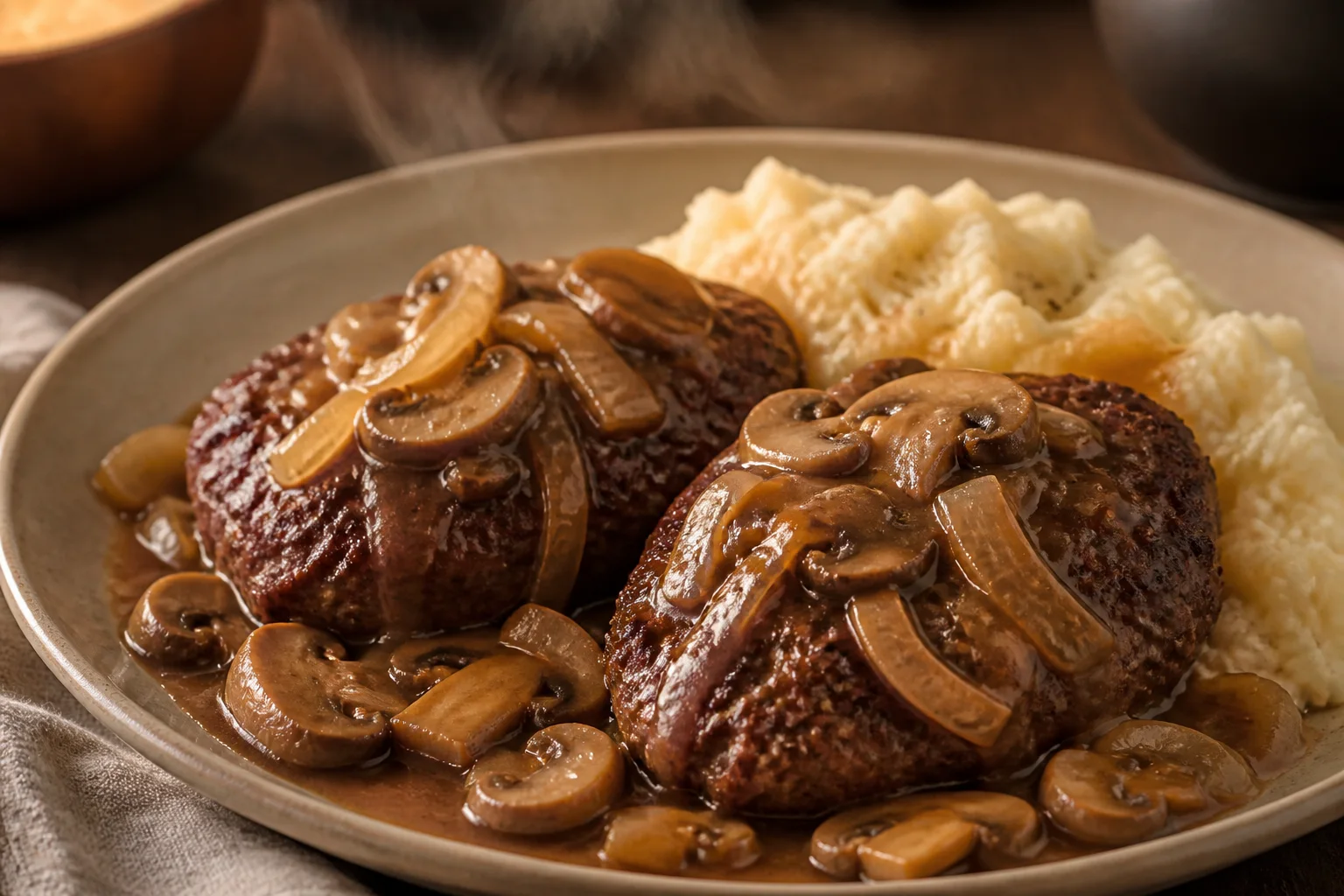
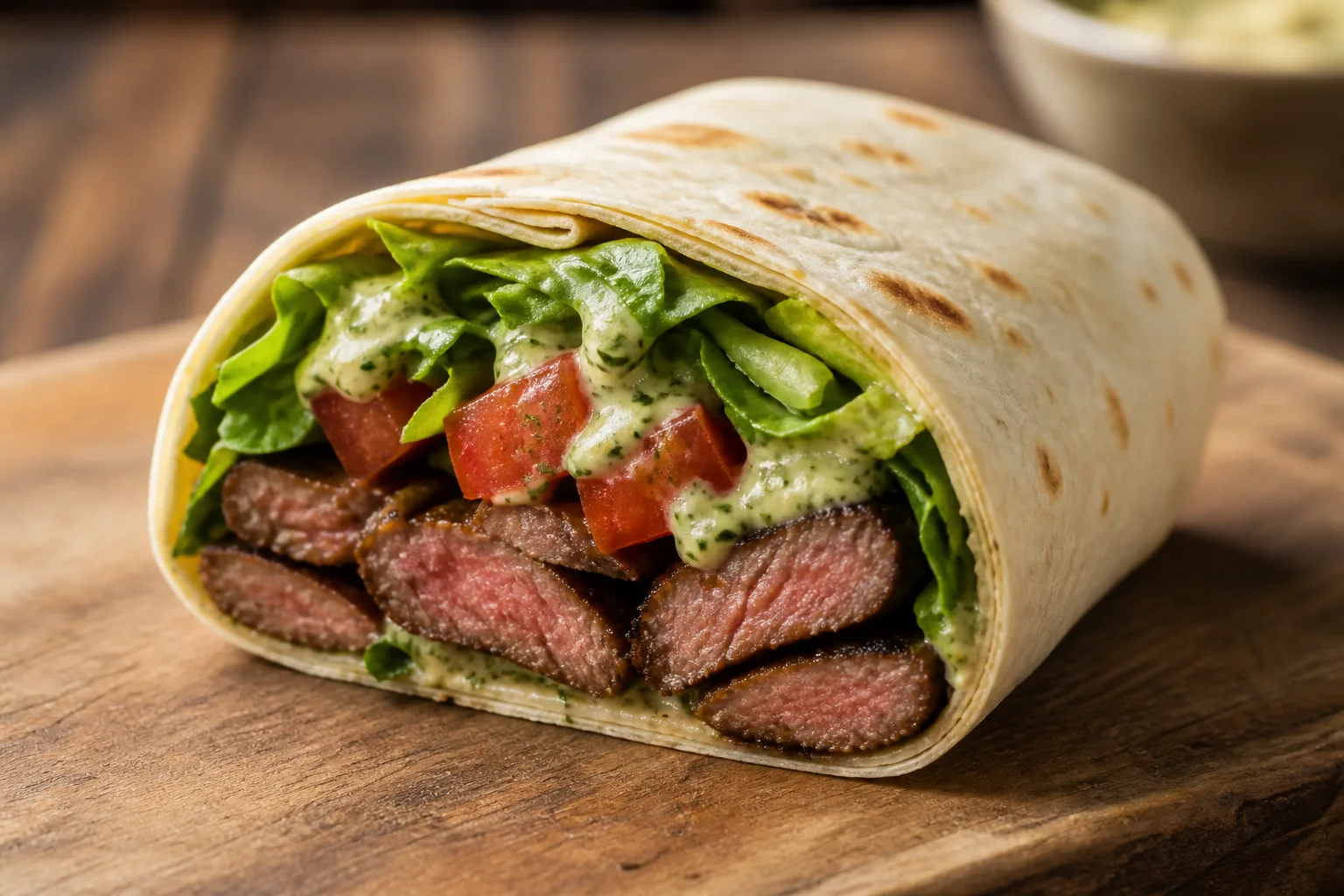
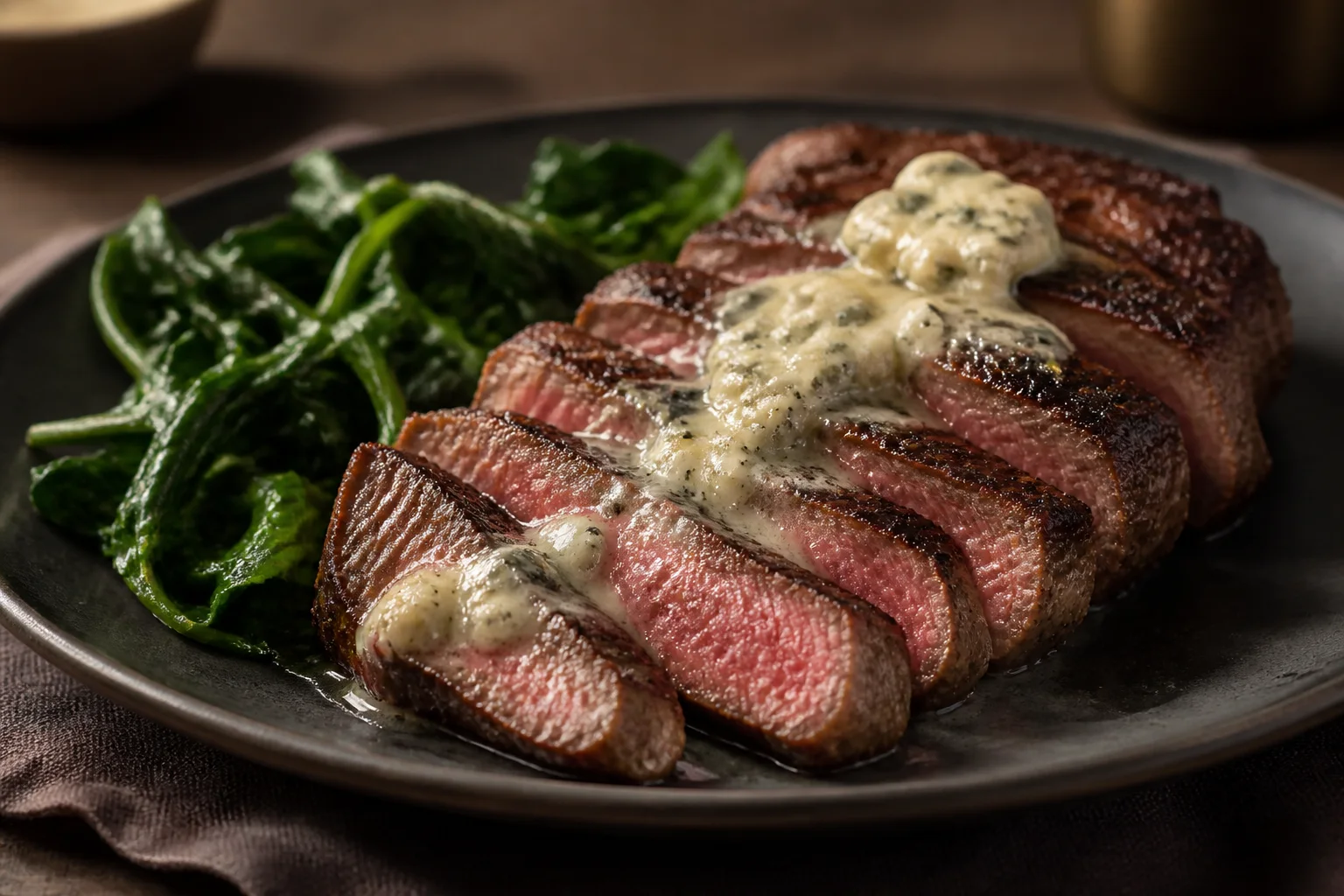
Useful next reads include Salisbury Steak Recipe, Steak Wrap Recipe, Steak with Blue Cheese, recipes, and steak temperature for nearby cuts, methods and decisions.
Frequently Asked Questions
What is the best steak for meal prep?
Top sirloin is the best general-purpose choice because it balances cost, beef flavor, portioning and reheating.
Can meal-prep steak stay medium-rare?
Follow official food-safety guidance and your own risk needs. Reheating will continue cooking, so use gentle staged heat rather than a full second sear.
Should I slice steak before storing it?
Large pieces retain moisture better, but portioned cross-grain slices are convenient. A good compromise is to store each meal as one thick sliced section with sauce separate.
Sources & further reading
- USDA FSIS — Safe Minimum Internal Temperature Chart — Official guidance for whole beef steaks: 145°F followed by at least a three-minute rest.
- USDA FSIS — Leftovers and Food Safety — Official cooling, refrigeration and reheating guidance for leftovers.