What Is a Tomahawk Steak?
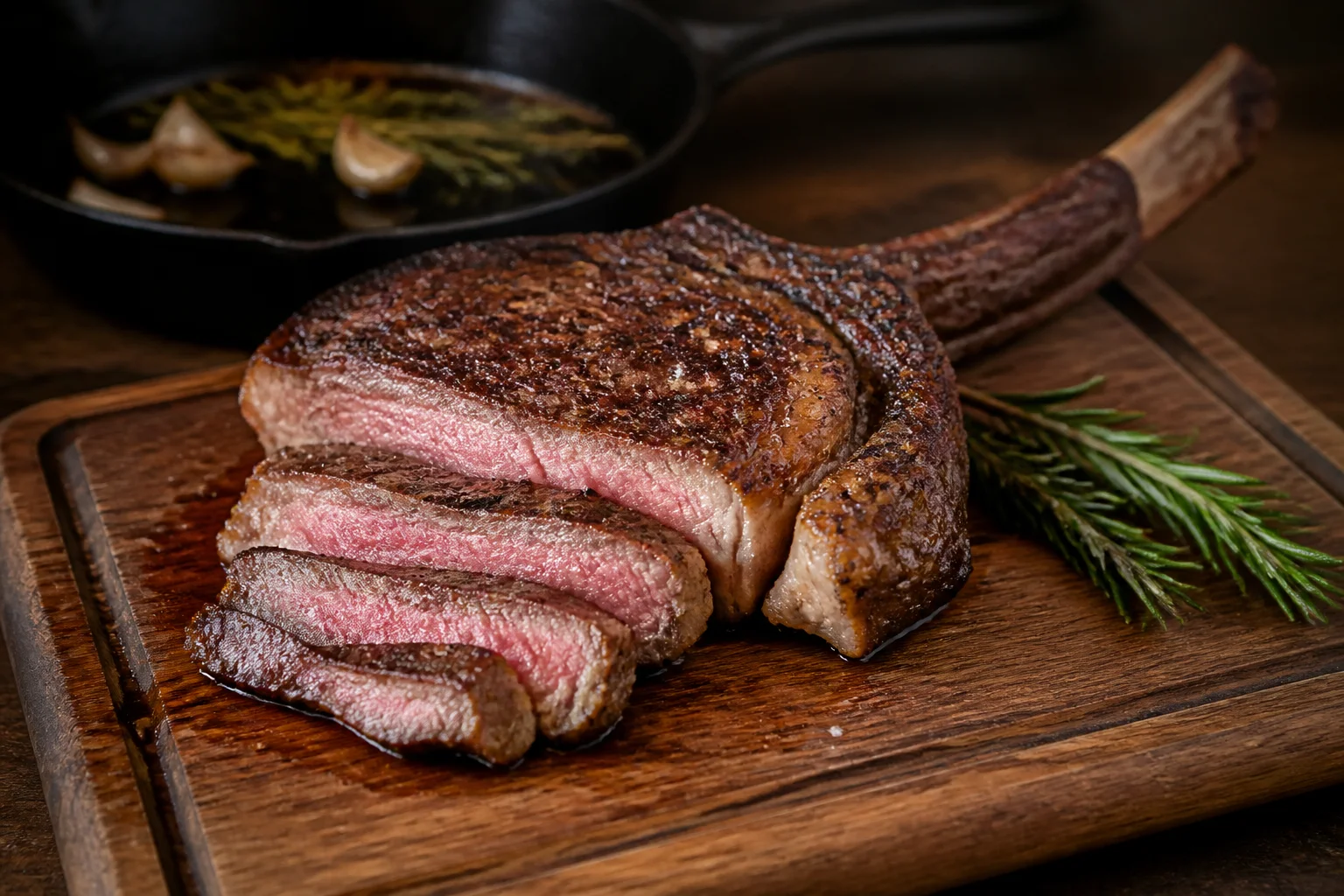
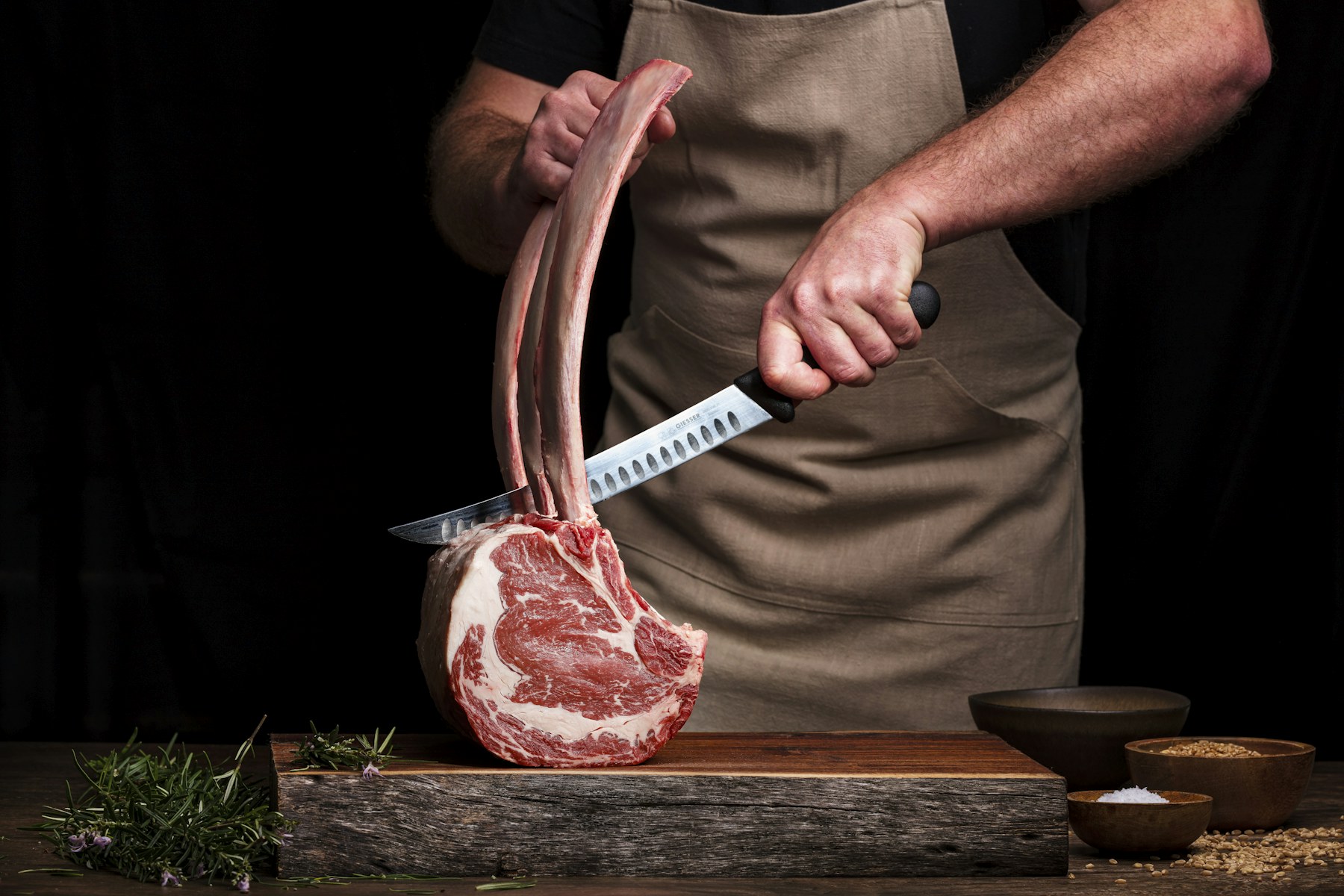
A tomahawk steak is a bone-in ribeye cut extra thick and left attached to a long section of rib bone. The butcher removes meat and connective tissue from the exposed bone—a presentation technique called frenching—so the steak resembles a small axe. Underneath the dramatic handle, it is still the same richly marbled rib section explained in our complete ribeye guide.
The name describes presentation rather than a separate muscle. Most examples include the longissimus dorsi, the central eye, and some spinalis dorsi, the prized outer cap. The exact cap size, tail fat and bone length vary with fabrication. That variation is why inspecting the meat matters more than buying the longest bone in the case.
Is a Tomahawk Steak a Ribeye?
Yes. A tomahawk is a particular presentation of a bone-in ribeye. A cowboy steak is closely related but normally has a shorter frenched bone; a standard bone-in ribeye may have little or no exposed handle. These labels are not always used consistently, so ask the butcher about cut thickness and which rib muscles are present.
| Cut | Bone presentation | Typical thickness | What you are buying |
|---|---|---|---|
| Tomahawk | Long frenched rib | Usually about 2–3 in | A thick bone-in ribeye plus presentation |
| Cowboy steak | Short frenched rib | Often 1.5–2.5 in | A thick bone-in ribeye with a compact handle |
| Bone-in ribeye | Bone trimmed close | Varies widely | Ribeye flavor without the long exposed bone |
| Boneless ribeye | None | Usually 1–2 in | Maximum edible yield and easier pan handling |
Is a Tomahawk Steak a Ribeye?
Yes. A tomahawk steak is a long-bone ribeye. The butcher leaves a substantial section of rib attached and cleans the exposed bone to create the handle. The steak still contains the ribeye eye, cap and seams associated with its position in the rib primal.
| Ribeye format | Bone treatment | Best reason to choose it |
|---|---|---|
| Boneless ribeye | Bone removed | Maximum pan contact and edible-beef efficiency |
| Standard bone-in ribeye | Short rib section retained | Bone-in format without an oversized footprint |
| Cowboy steak | Longer frenched bone, usually shorter than tomahawk | A thick individual or shared ribeye with manageable equipment fit |
| Tomahawk ribeye | Extra-long frenched rib handle | A dramatic, thick shared centerpiece |
Cut, Bone and Ribeye Anatomy
Tomahawks come from the rib primal, between the chuck and short loin. The center eye provides tenderness and a fine grain; the cap wraps around the outside with looser texture and concentrated beefiness. Between them are seams of fat that soften during cooking. The long bone contributes visual impact and changes the geometry of cooking, but it does not perfume every bite with flavor.
What Does “Frenched Bone” Mean?
Frenching means scraping the exposed rib clean. It is a butchery finish, not an aging or grading process. A perfectly clean, very long bone can increase labor and packaging costs without improving the meat. For an easier-to-handle version with the same core character, compare a traditional bone-in ribeye.
Flavor, Texture, Thickness and Portions
Ribeye is prized because abundant intramuscular fat carries aroma and helps the steak feel succulent. The center is tender but substantial; the cap is softer, more open-grained and exceptionally rich. A tomahawk does not automatically taste better than another ribeye of equal grade, aging and thickness. Its main practical advantage is that it is commonly sold thick, which makes edge-to-edge doneness easier to control.
Many tomahawks are two to three inches thick and weigh roughly 30 to 45 ounces, although neither range defines the cut. Bone and exterior fat are part of that scale weight. One large steak can serve two people generously or three as part of a meal with several sides. Our serving-planning guidance treats weight as only one input because bone-in yield varies.
How to Choose a Good Tomahawk
Begin with the ribeye, not the handle. The eye should be broad and evenly thick; the cap should be visible around at least part of the edge; marbling should be distributed rather than confined to one hard seam. Ask whether the quoted weight includes the bone, whether the steak was cut from the chuck or loin end of the rib, and whether it is fresh, previously frozen, wet-aged or dry-aged.
- Thickness: choose an even cut around two inches or more if you want a two-stage cook.
- Marbling: fine white flecks across the eye matter more than a single thick exterior fat band.
- Cap: a substantial spinalis is a strong sign of a satisfying ribeye experience.
- Surface: avoid torn edges, excessive purge or dry, darkened patches unrelated to controlled aging.
- Packaging: frozen is not inherently inferior if it was frozen and thawed carefully.
Prime, Choice, Wagyu and Dry Aging
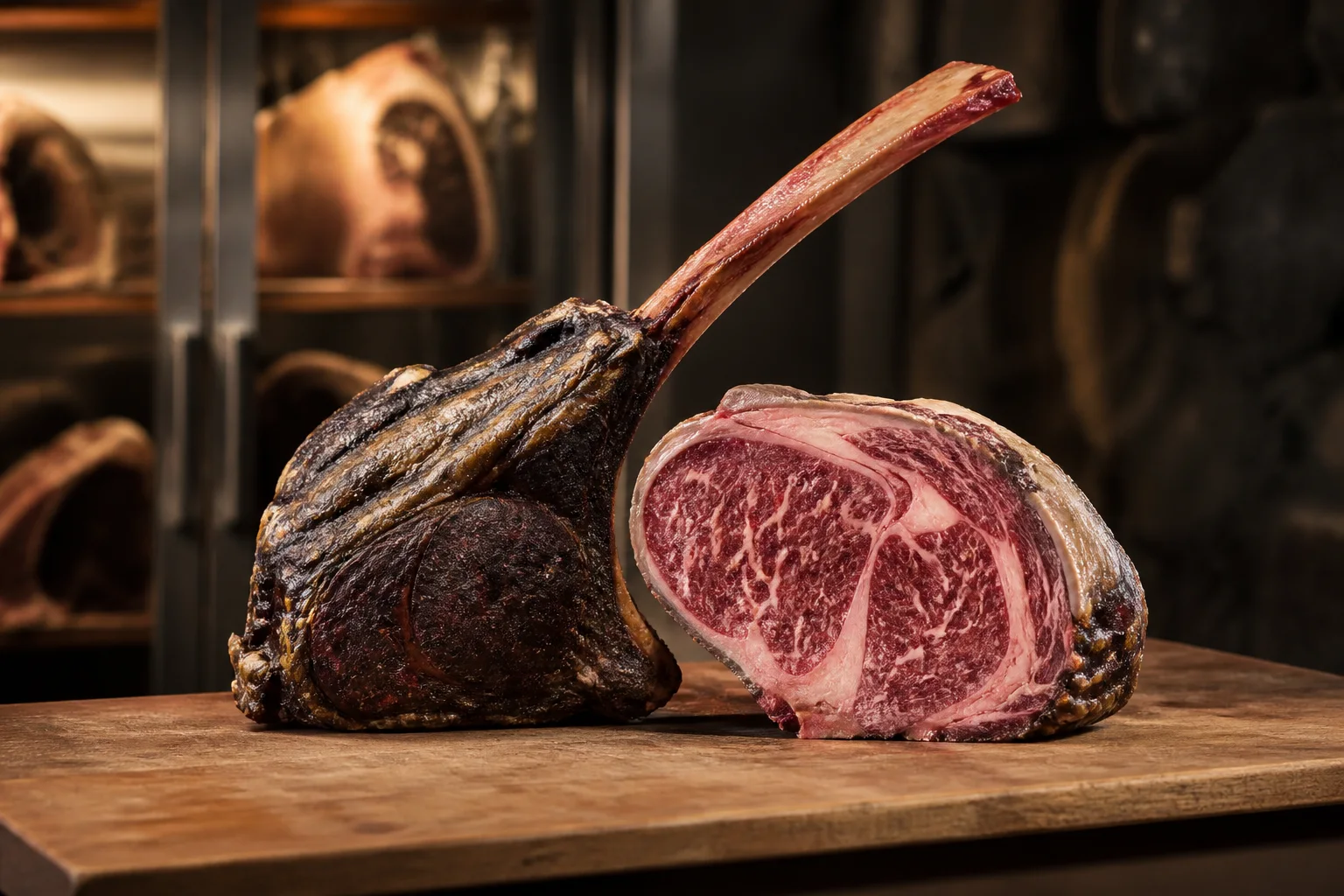
USDA quality grades describe carcass characteristics including maturity and marbling; they do not guarantee flawless cutting or cooking. Prime usually offers more marbling than Choice, but a well-selected Choice steak can be excellent. A Wagyu tomahawk may be richer still, while dry aging changes aroma and concentrates the surface at the cost of trim and yield. Buy the experience you want rather than treating every premium label as cumulative proof of quality.
Because availability changes by region and season, our tomahawk buying guide focuses on evaluating butchers, shipping and specifications instead of claiming live stock. The separate price guide explains which costs are attached to meat quality and which are attached to presentation.
Preparation: Salt, Surface Dryness and Shape
Salt either shortly before cooking or far enough ahead for a dry brine. For a thick steak, seasoning uncovered on a rack in the refrigerator for 12 to 24 hours gives salt time to move inward and leaves a drier surface. If that window is unavailable, salt immediately before the steak hits the heat rather than letting drawn-out moisture sit on the surface for an awkward half hour.
Pat the surface dry, lightly oil the meat rather than the grill if needed, and keep pepper or sugary rubs away from temperatures that will scorch them. A tomahawk does not need to sit on the counter until the center reaches room temperature—an especially unrealistic goal for a steak this thick. Instead, remove the chill briefly while the cooker preheats and use a probe to follow the actual center.
For a step-by-step workflow with equipment choices and probe placement, use our how to cook a tomahawk steak guide. If you want a measured ingredient list and serving sequence, go straight to the tomahawk steak recipe.
Best Cooking Methods
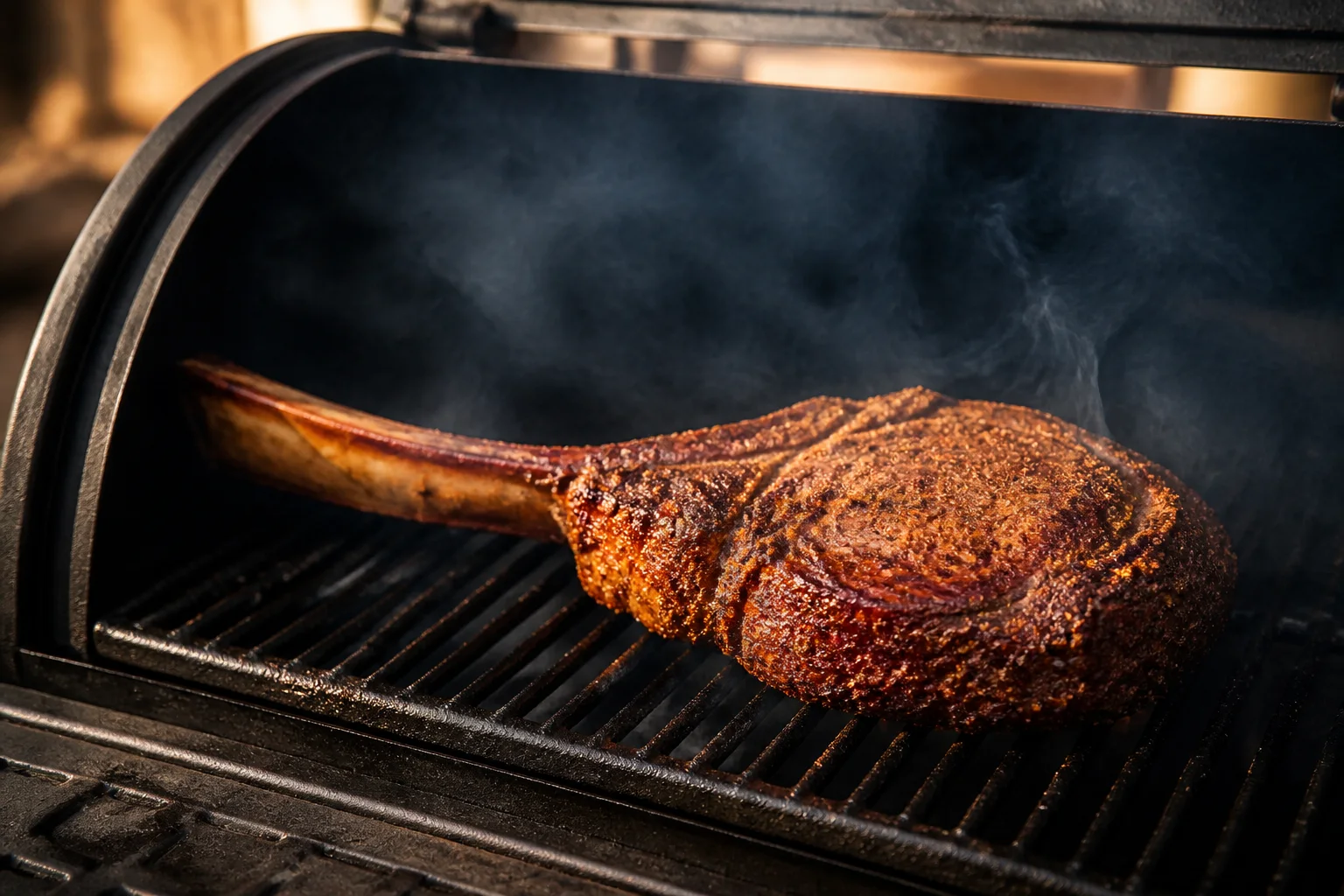
A very thick ribeye benefits from separating interior cooking from crust development. Reverse searing—warming the steak gently in an oven, grill or smoker and searing at the end—reduces the overcooked band beneath the surface. A two-zone grill uses the same principle outdoors. Smoking adds a distinct aromatic layer; our smoked tomahawk method explains how to keep smoke clean and the final crust dry.
| Method | Best for | Heat strategy | Main watch-out |
|---|---|---|---|
| Reverse sear | Even interior and controlled timing | Low heat, then very high heat | Sear before carryover passes the target |
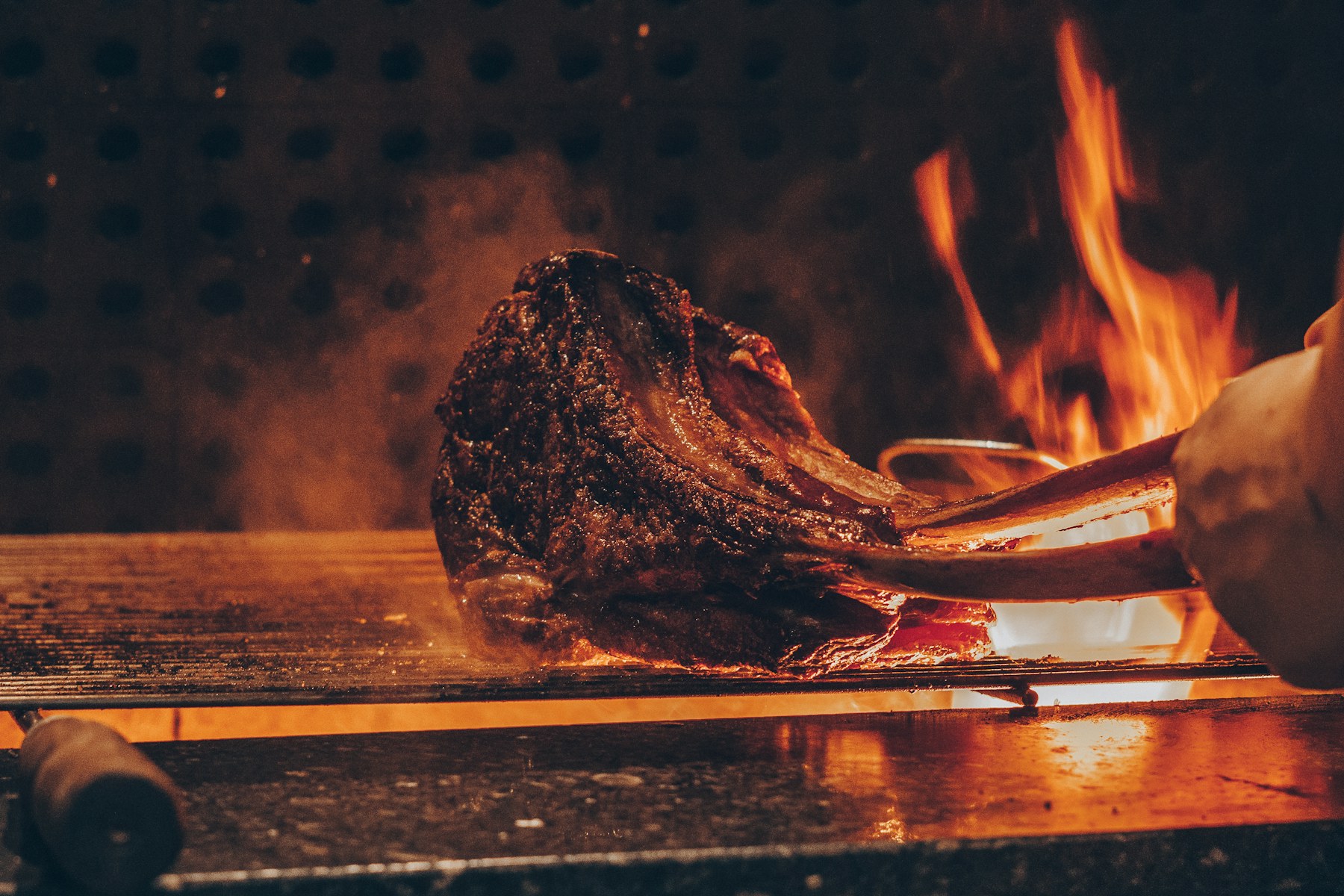
| Two-zone grill | Live-fire flavor | Indirect side, then direct coals | Flare-ups from ribeye fat |
| Smoker + sear | Wood-smoke character | Clean low smoke, then hot finish | A damp surface or heavy smoke |
| Oven + skillet | Reliable indoor cooking | Low oven, preheated iron finish | Pan and bone may not fit |

Temperature, Carryover and Resting
Insert a leave-in probe from the side into the thickest central part of the eye, clear of the bone and large fat seams. Confirm with an instant-read thermometer in more than one spot. The temperature can climb during the sear and rest, so start checking early rather than relying on one rigid pull number.
Our steak temperature guide separates common culinary doneness ranges from official food-safety advice. USDA FSIS advises cooking whole beef steaks to 145°F/62.8°C followed by at least a three-minute rest. People who choose a lower culinary doneness should understand that it differs from that official recommendation.
Rest the steak on a warm rack or board until temperature rise slows and the surface is no longer aggressively steaming—often 10 to 15 minutes for a thick cut, but conditions matter. Do not wrap tightly in foil; trapped steam softens the crust.
How to Slice and Serve It
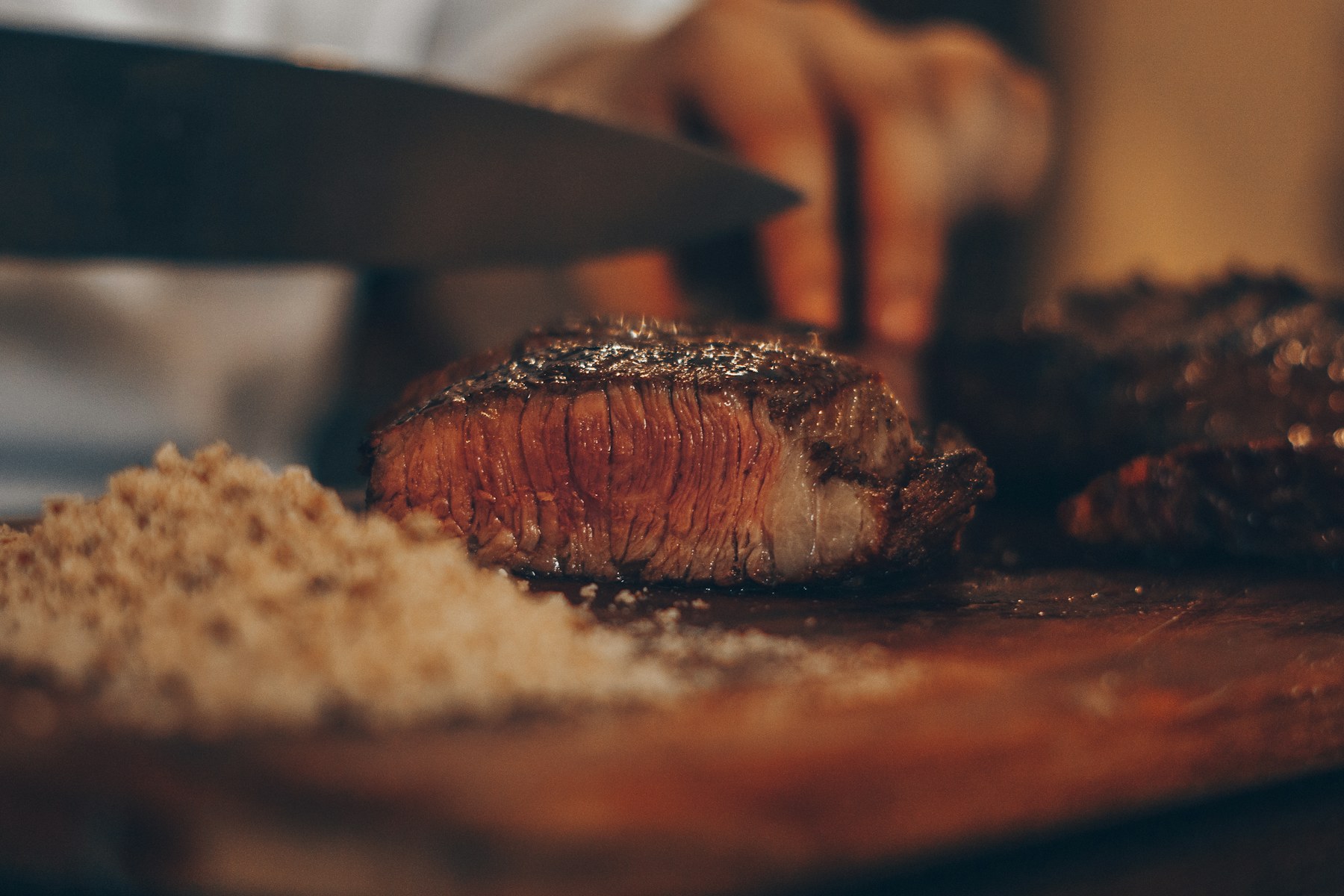
Run a knife along the curve of the bone to release the meat. Separate any large cap section if its grain changes direction, then slice the eye across the grain into half-inch pieces. Return the slices to a warm platter and spoon over any board juices. Finishing salt should sharpen the crust, not turn the surface gritty.
Rich ribeye likes contrast: bitter greens, charred brassicas, a sharp shallot vinaigrette, horseradish, chimichurri or restrained garlic butter. Potatoes are classic, but one bright or acidic side keeps a large shared steak from feeling heavy.
Storage and Reheating
Refrigerate leftovers promptly in a shallow airtight container. For the best texture, keep the steak in larger pieces and slice only what you need. Reheat gently in a covered low oven with a spoonful of stock or butter, then refresh the surface in a hot pan. Thin leftover slices are often better served cool or warmed briefly in a sandwich than cooked a second time to gray.
Common Tomahawk Mistakes
- Choosing bone length over marbling, cap size and even thickness.
- Trying to cook a three-inch steak entirely over direct, violent heat.
- Putting the probe against bone or inside a large fat seam.
- Using wet, acrid smoke or scorching a sugary rub during the sear.
- Waiting too long to begin temperature checks, then chasing a target after carryover has started.
- Carving immediately or tenting so tightly that the crust steams.
Rib Position Changes the Steak Inside the Handle
Tomahawks cut closer to the chuck end tend to show a larger, more irregular spinalis cap and extra seams around the eye. Cuts nearer the loin end often have a broad, tidy eye and a smaller cap. Neither end is universally better: cap-focused diners may prefer the chuck end, while a cleaner eye can be easier to portion and cook evenly.
Ask the butcher to show the cut face rather than judging only the length of the rib. Fine marbling should continue through the eye, the cap should be securely attached, and the steak should not taper abruptly toward one edge. A dramatic bone can distract from a narrow or uneven piece of meat.
The bone is usually frenched—meat and tissue are scraped from the exposed section for presentation. That cleanup does not improve tenderness. It does add labor, packaging length and weight, which explains part of the premium detailed in our tomahawk price guide.
Plan the Equipment Before Buying the Steak
Measure the oven rack, grill lid and largest pan with the door or lid closed. A 20-inch overall steak may have only a few inches of edible eye beyond what a shorter cowboy cut provides, yet the handle can prevent the lid from closing or force the meat into a cold corner. Foil around the bone protects appearance; it does not make an undersized pan work.
| Constraint | Better choice | Why |
|---|---|---|
| Small skillet | Low oven plus rotating skillet finish | The center warms evenly before each surface gets brief pan contact |
| Compact grill | Shorter-bone cowboy steak | Same ribeye family with fewer fit problems |
| One-zone charcoal grill | Rebuild as a two-zone fire | Rendered ribeye fat needs an escape area |
| Serving four or more | Two medium steaks | More crust and easier doneness control than one enormous steak |
A leave-in probe should enter from the side into the eye without touching rib or a wide fat seam. Confirm with an instant-read thermometer before the final sear. The tomahawk cooking guide explains the full sequence for oven, grill and smoker.
Is a Tomahawk Ribeye the Same as a Tomahawk Steak?
Yes. A tomahawk ribeye is a bone-in ribeye with an unusually long, frenched rib bone. The meat that matters is still the ribeye eye, cap and associated rib muscles; the long handle changes presentation, package size and searing logistics rather than creating a different primal cut.
When a seller uses tomahawk ribeye, compare the edible eye thickness, rib position, cap development, marbling and grade. Bone length can make two steaks look dramatically different even when their useful meat portions are close. The bone-in ribeye guide and cowboy steak comparison explain the shorter-bone alternatives.
Continue Through This Steak Topic
Build the full picture: How to Cook Tomahawk Steak, Tomahawk Steak Recipe, Smoked Tomahawk Steak, Dry-Aged Tomahawk Steak, Traeger Tomahawk Steak, Tomahawk Steak Price, Where to Buy Tomahawk Steak, Wagyu Tomahawk Steak, and Cowboy Steak vs Tomahawk cover the closely related cuts, methods, buying decisions and recipes that support this guide.
When you need to compare across families or techniques, continue with Ribeye Steak, Cowboy Steak, and steak temperature. These pages answer adjacent questions without forcing every detail into one overgrown article.
Frequently Asked Questions
Is a tomahawk steak just a ribeye?
It is a bone-in ribeye cut thick with a long, cleaned rib bone. The muscles and marbling are ribeye; the long bone is the presentation.
Does the long bone add flavor?
The bone changes presentation and can influence heat flow at the edge, but bone length by itself does not make the center taste more beefy. Grade, marbling, aging, seasoning and browning matter more.
How many people does one tomahawk serve?
A typical large tomahawk often feeds two generously or three alongside substantial sides. Check the actual meat area and bone-to-meat ratio rather than dividing scale weight alone.
What is the best way to cook a thick tomahawk?
Use a two-stage method: warm the interior with controlled indirect heat, then build the crust over very high heat. Track the center with a thermometer.
Should a tomahawk reach room temperature before cooking?
No. A very thick steak will not quickly become room temperature throughout. A short counter rest while equipment preheats is fine, but measured internal temperature is more useful than a ritualized wait.
Sources & further reading
- USDA FSIS — Doneness Versus Safety — Safe minimum temperature and rest guidance
- USDA AMS — Beef Grading Shields and Marbling — Official grade terminology and marbling descriptions
- USDA AMS — Carcass Beef Grades and Standards — Detailed quality-grade standards
- USDA AMS — Institutional Meat Purchase Specifications, Fresh Beef Series 100