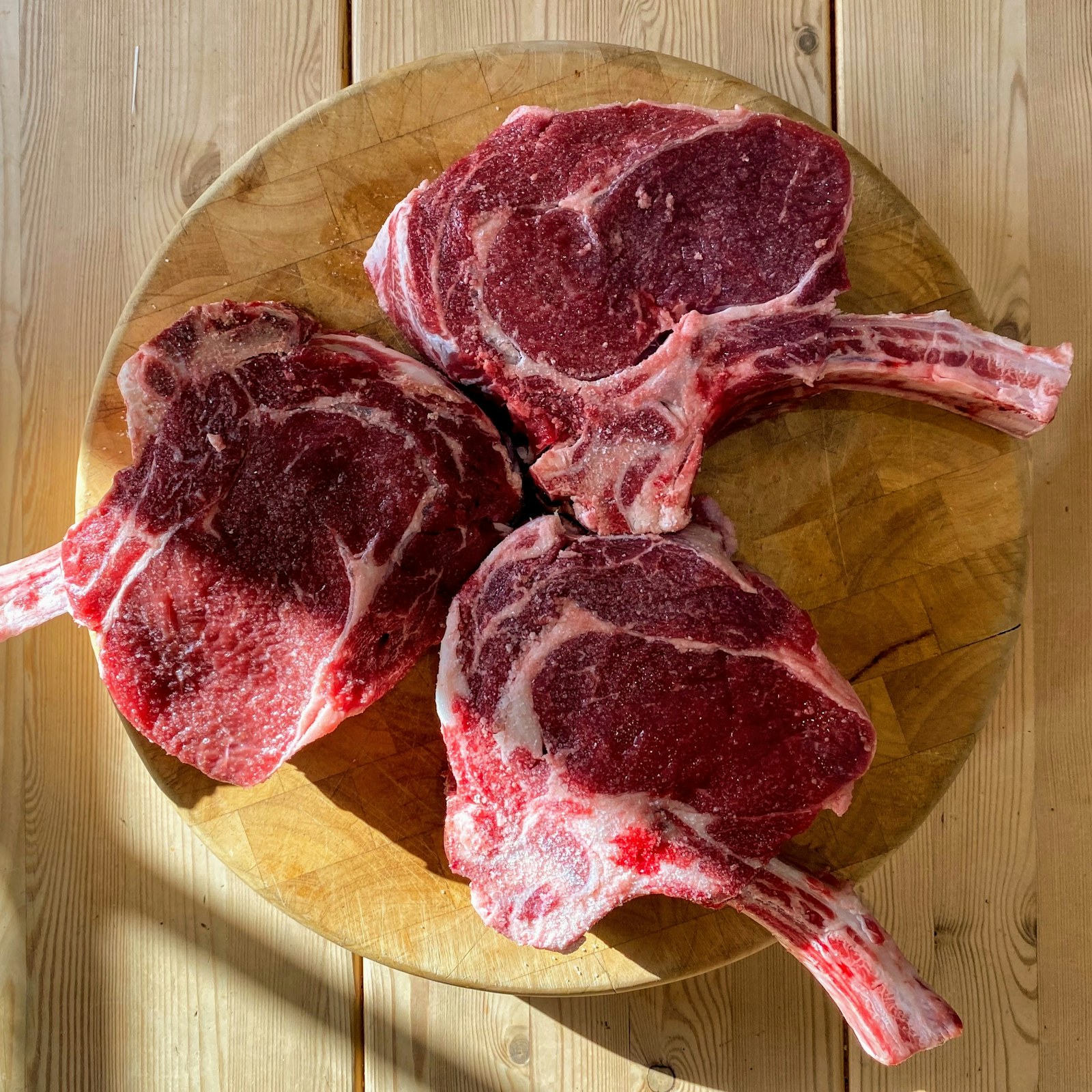
What Is a Bone-In Ribeye?
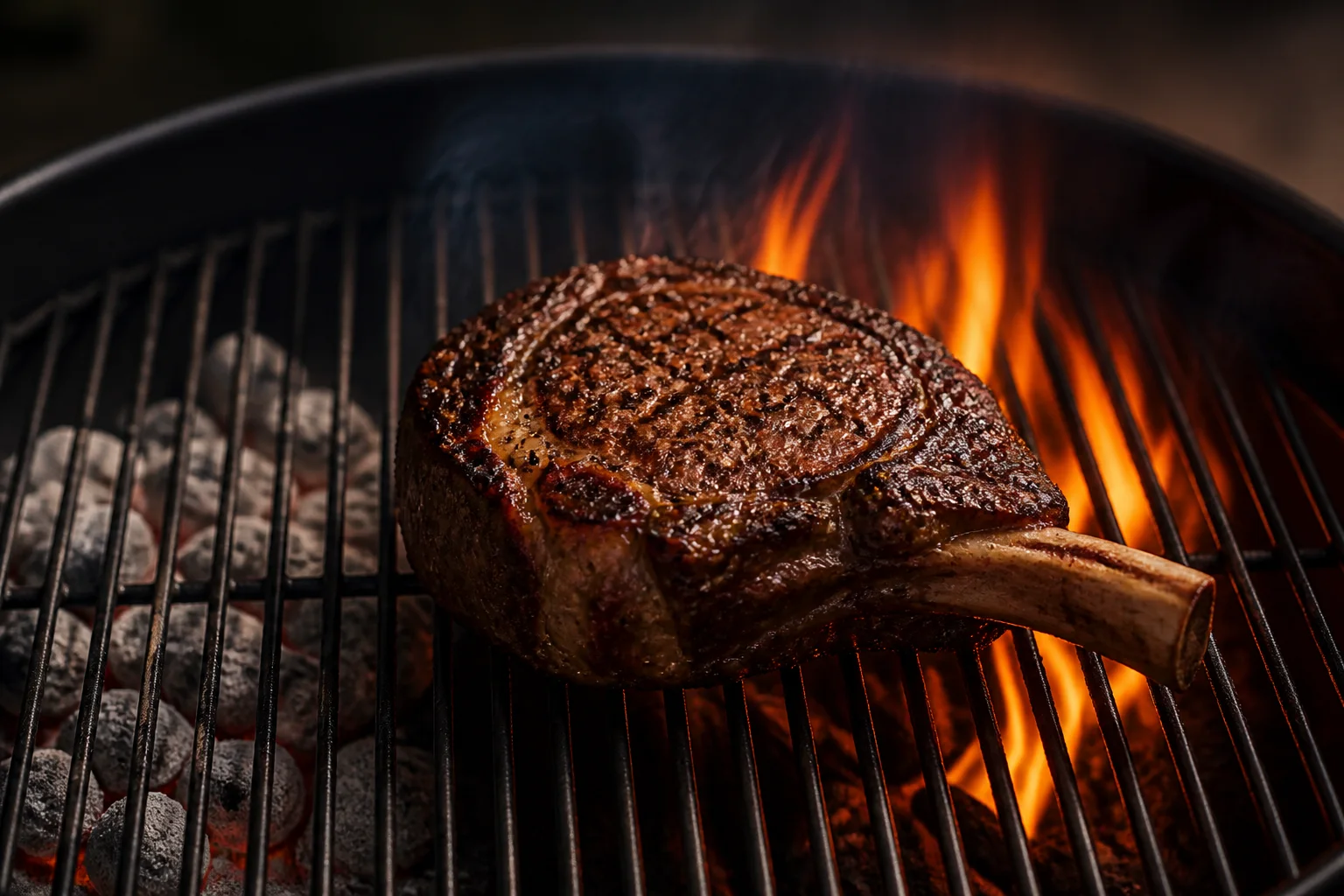
Bone-in ribeye is a ribeye steak cut with part of the rib attached. It contains the same eye and cap described in the ribeye guide. The butcher may trim the bone close or leave a short handle.
A cowboy steak is usually a thick bone-in ribeye with a short frenched bone. A tomahawk extends that bone dramatically. Retail names vary, so compare the steak rather than treating the labels as strict legal definitions.
What the Bone Actually Changes
The bone shields a narrow edge from direct heat, makes pan contact less uniform and lowers edible yield per pound. It also gives the steak a sturdy presentation. During the relatively short cook, it does not release enough material to flavor every bite in the way stock bones flavor a long simmer.
How to Cook Bone-In Ribeye
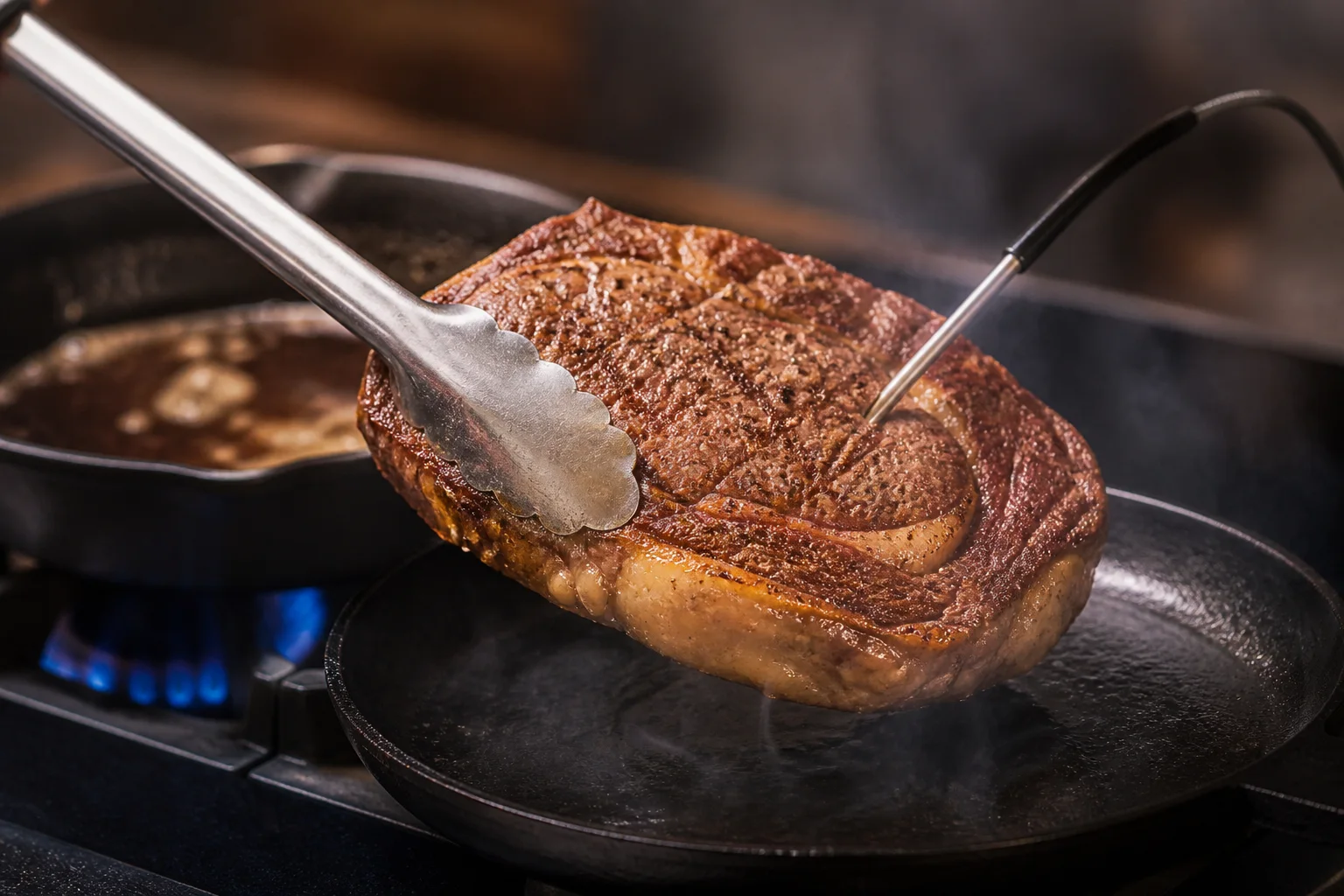
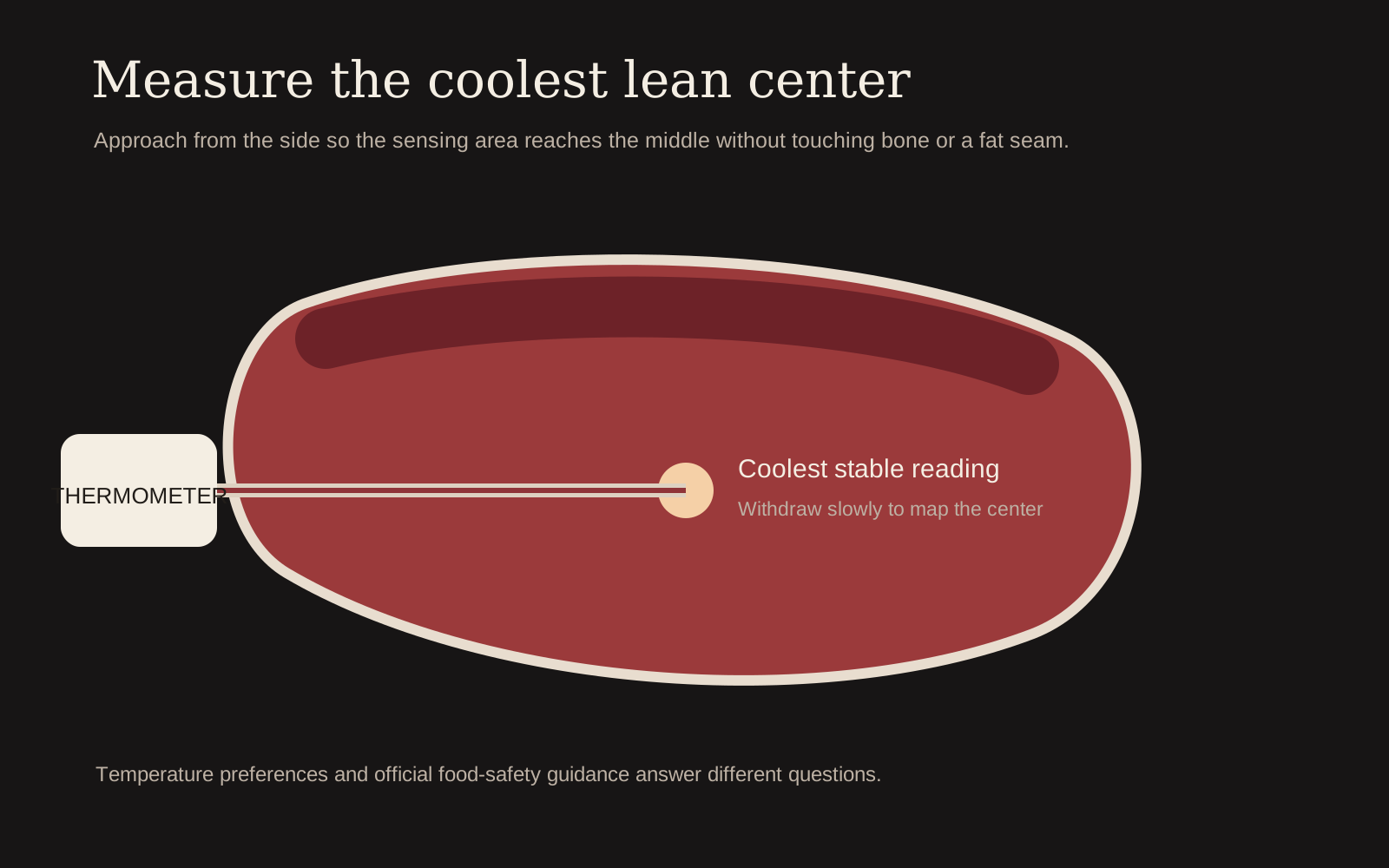
Use a two-zone grill or low oven for steaks thicker than about 1.5 inches, then sear. For a manageable indoor cut, follow the steps in how to cook ribeye. Measure the center from the side, keeping the probe away from the rib.
The steak temperature chart explains culinary doneness and the USDA safety recommendation. Rest before cutting along the bone, then slice across the grain.
Buying Checklist
- Even 1.5–2 inch thickness for flexible cooking.
- Fine marbling through the eye and cap.
- A bone length that fits your grill, pan and serving platter.
- Clear grade and aging information.
- No excessive hard exterior fat hidden under the label or tray edge.
Cook Around the Rib's Uneven Geometry
A curved rib lifts part of the meat away from a flat pan and leaves a pale strip if the steak never moves. Shift the steak through several positions, baste the lifted edge after lowering heat or use a grill grate that contacts the surface more flexibly. Pressing with force expels juices and still may not solve the curve.
On a two-zone grill, face the bone toward the cooler side during the indirect stage. The exposed eye should receive the more even airflow. During direct searing, turn often and watch the outer cap, which can overbrown while the insulated edge near the bone remains pale.
Carving along the rib reveals meat that may be less browned but still properly cooked. Slice that piece with the rest rather than returning it alone to fierce heat. A short flash on the cut surface is possible, but it changes doneness quickly. If maximum uniform crust is the priority, buy the same marbled ribeye boneless.
Choose the Meat, Then the Bone
Inspect the ribeye face before admiring the rib. Look for fine marbling across the eye, a cap that remains firmly attached and a thickness that suits the method. The meat should not taper dramatically away from the bone. A heavy bone can make a package feel substantial without adding edible servings.
A short, uncleaned or lightly cleaned rib is normal for bone-in ribeye. A longer cleaned rib moves the cut toward cowboy or tomahawk presentation. Those names describe fabrication, not a different primal muscle or guaranteed grade.
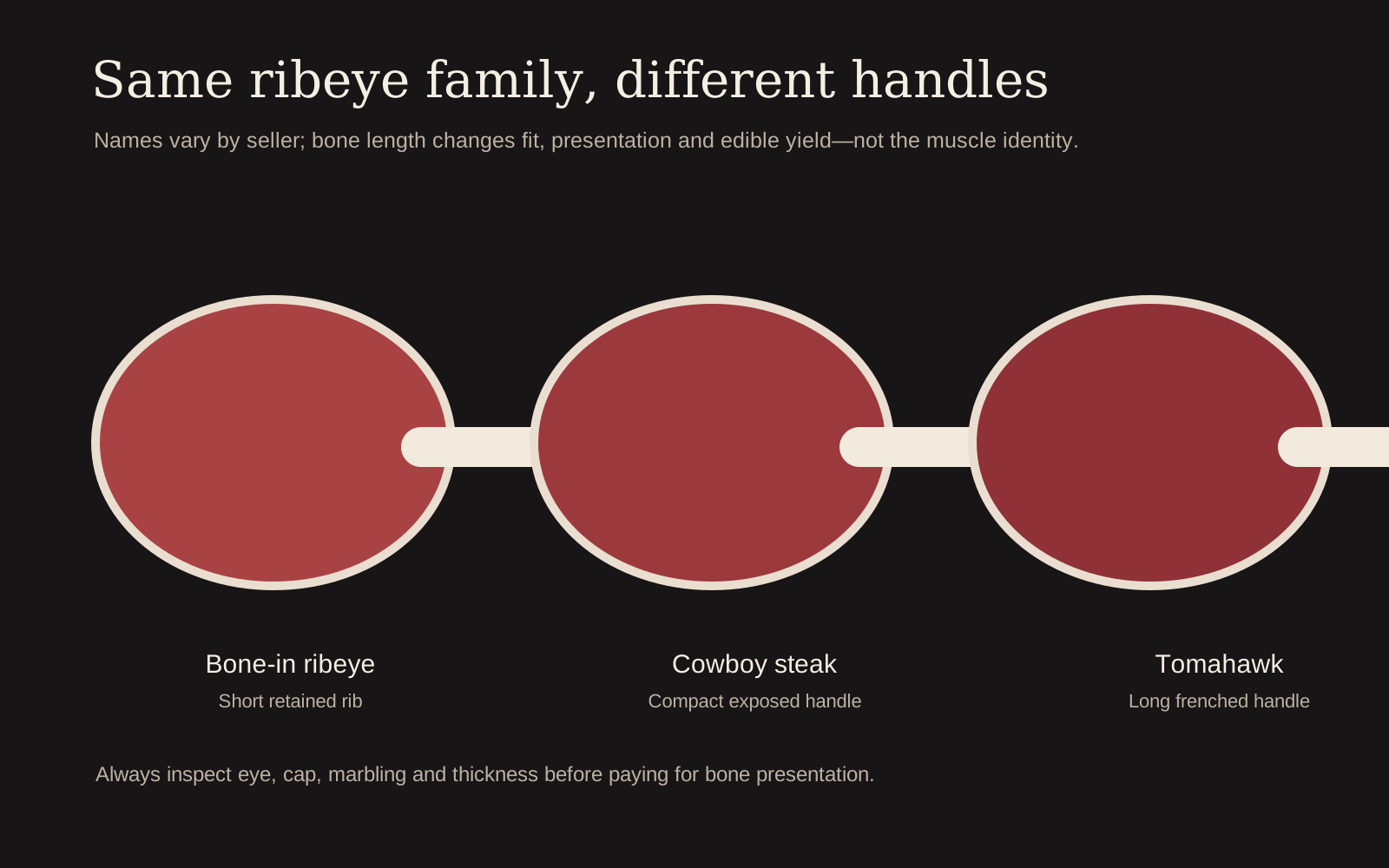
| Format | Bone treatment | Practical consequence |
|---|---|---|
| Bone-in ribeye | Short rib retained | Compact grill and oven fit |
| Cowboy steak | Short exposed or frenched handle | Stronger presentation with manageable length |
| Tomahawk | Long frenched rib | More packaging, handling and pan-fit constraints |
Use the Bone as a Geometry Problem
The rib can lift nearby meat away from a flat pan. Shift the steak through several positions instead of pressing it hard, and spoon hot fat over pale areas only after the aggressive sear. A grill conforms better to the curve, while a low oven can warm the center before a short pan finish.
Insert the thermometer from the side, parallel to the bone, and stop in the center of the eye. Bone contact can distort a reading. Check the cap separately when it is thin. The more detailed ribeye cooking guide matches pan, grill and reverse-sear methods to thickness.
Carve and Portion the Bone-In Steak
Run a sharp knife along the rib after resting, then set the bone aside. Separate the cap where its seam naturally releases and slice both cap and eye across the grain. Meat close to the rib can be trimmed into small pieces for the platter rather than left as a single cook's reward.
For leftovers, refrigerate a larger unsliced piece promptly. Gentle reheating protects the center better than returning thin slices to high heat. Cold slices with mustard and dressed greens are often a better second meal.
When Bone-In Is the Right Ribeye Format
Choose bone-in for the visual presentation, the carving ritual and access to the meat around the rib. Choose boneless for maximum pan contact, easier portioning and more edible beef per listed pound. Blind-tasting claims about the bone “sending flavor into the steak” during a short cook should not drive the purchase.
A butcher-cut bone-in steak also exposes less surface than two smaller boneless steaks of equal total weight, so the crust-to-center ratio changes. For diners who prioritize crust, separate steaks may be more satisfying. For a shared table presentation, the bone has genuine experiential value even when it is not a flavor injector.
If the handle becomes longer, compare the cowboy steak and tomahawk formats before paying by total weight.
Where This Guide Fits
This page supports the broader Ribeye Steak guide. Use that pillar page for the complete cut family, buying framework and links to every closely related article.
Useful next reads include Cowboy Steak, Ribeye Steak Recipe, How to Cook Ribeye Steak, Tomahawk Steak, and steak temperature for nearby cuts, methods and decisions.
Frequently Asked Questions
Does bone-in ribeye taste better?
Not automatically. Bone format changes edge heating and presentation; marbling, aging, browning and seasoning drive the larger flavor differences.
Is a bone-in ribeye the same as a cowboy steak?
Cowboy steak generally means a thick bone-in ribeye with a short, cleaned handle. Naming is not perfectly consistent.
Where should a thermometer go?
Into the thickest center of the eye from the side, away from bone and large fat seams.