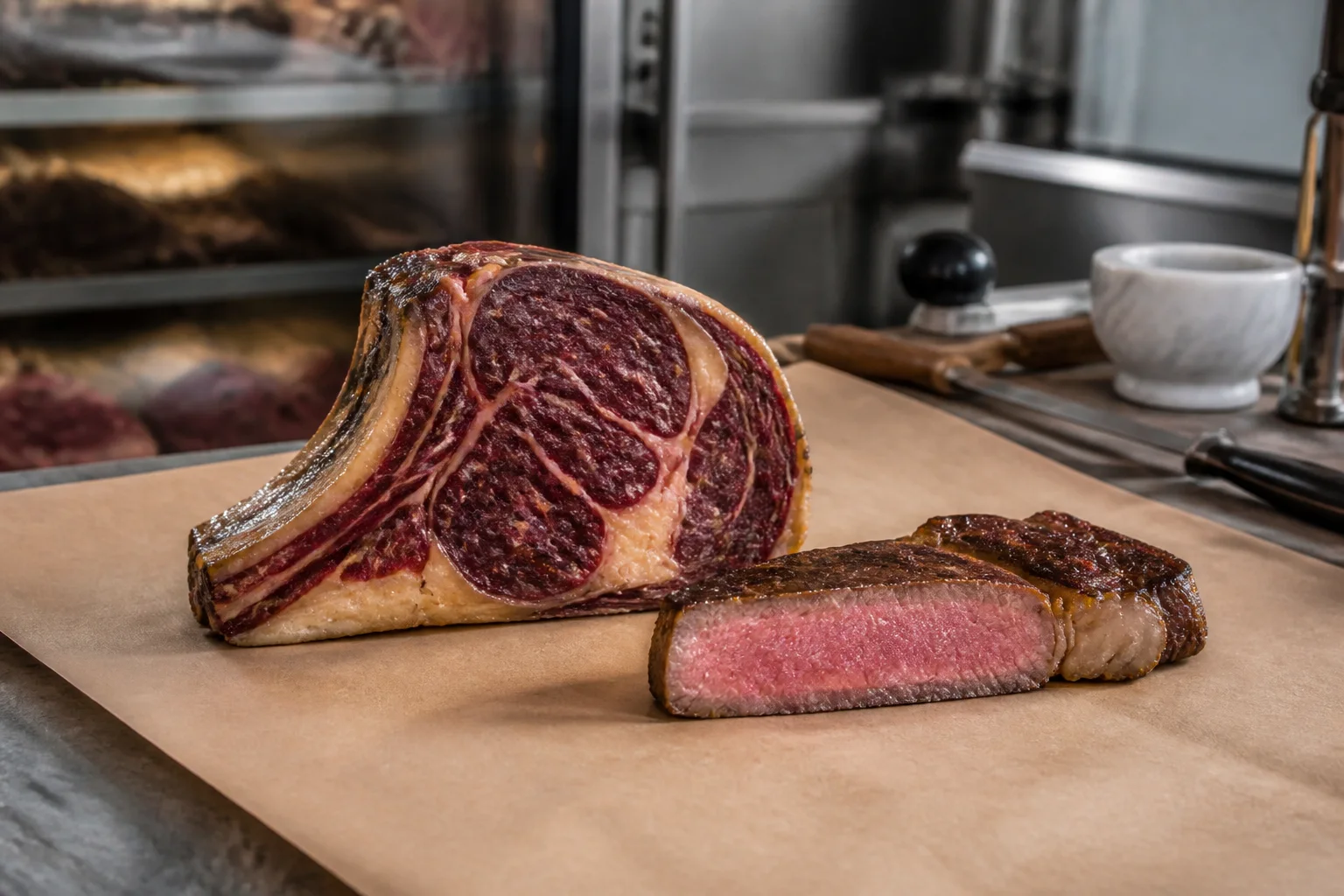
What Dry Aging Is
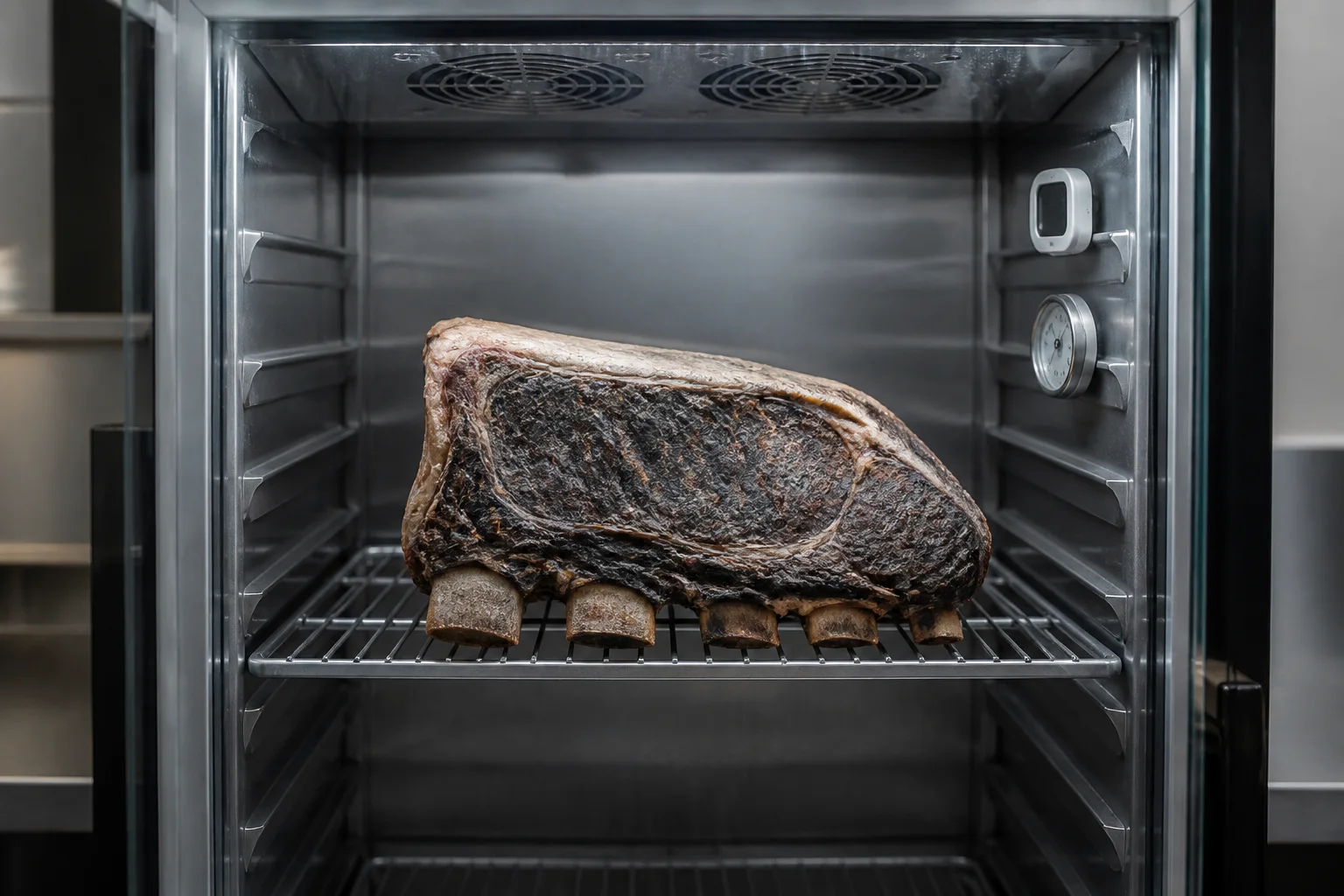
Large beef cuts are held in a controlled environment with managed temperature, humidity and airflow. Enzymes change texture, moisture evaporates and the dried exterior is trimmed. Aging an individual supermarket steak uncovered in a household refrigerator is not an equivalent process.
Visual Reference

How Flavor Changes
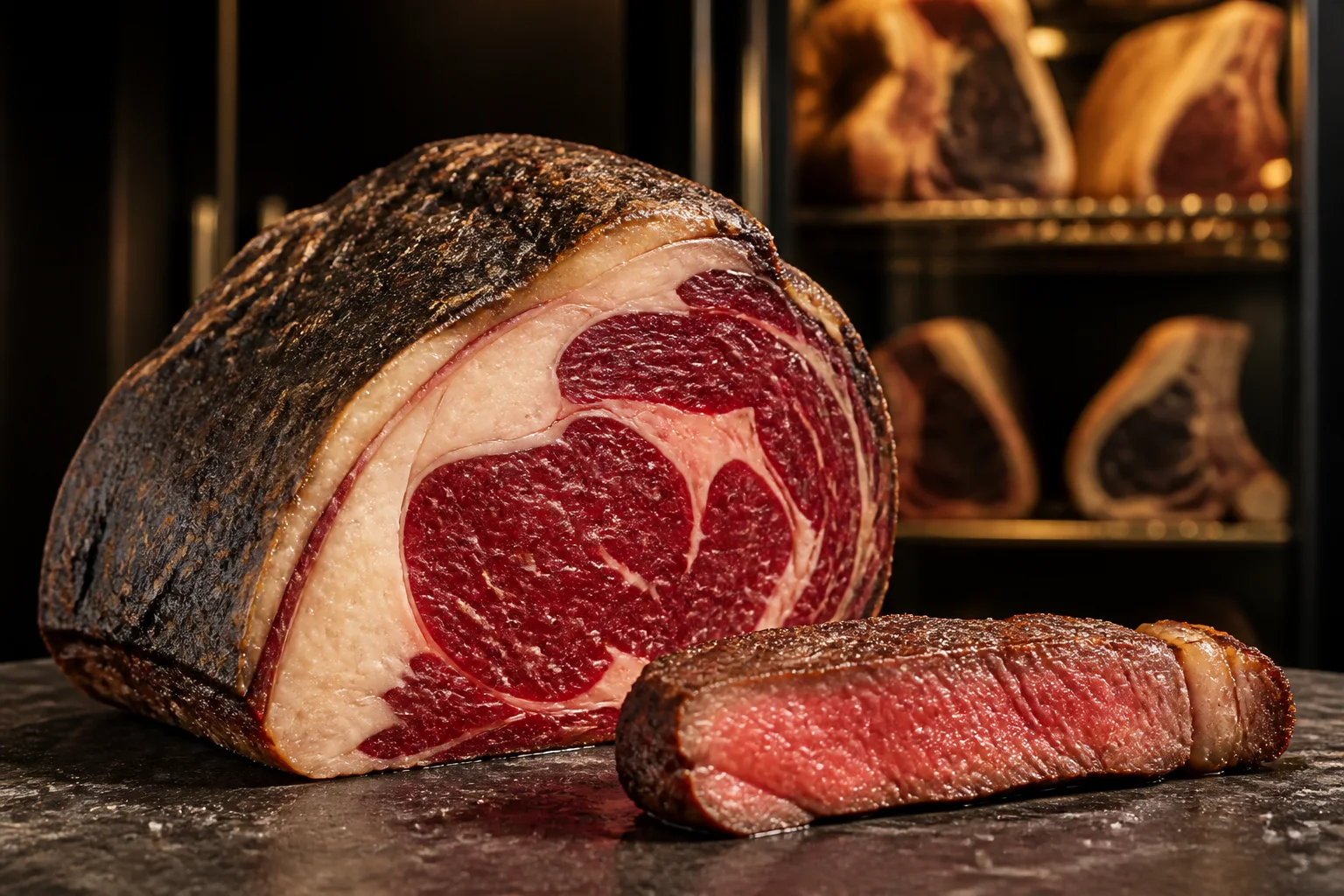
Aging can create concentrated roasted, nutty and buttery aromas; longer or more assertive programs may add earthy, cured or blue-cheese-like notes. Cut and starting beef still matter. Dry-aged ribeye carries these aromas through substantial fat, while leaner strip presents them more directly.
Why It Costs More
The aging room ties up inventory, evaporation reduces weight and trimming removes the dried exterior. Skilled control and reduced sellable yield explain the premium more credibly than days alone. Compare this with the cost factors in the tomahawk price guide.
Questions to Ask
- Was the primal dry-aged before individual steaks were cut?
- How long was it aged and what flavor profile is intended?
- What was the grade or program of the starting beef?
- Has the dried exterior been fully trimmed?
- Is the steak fresh, frozen or previously frozen after aging?
Cook Without Masking It
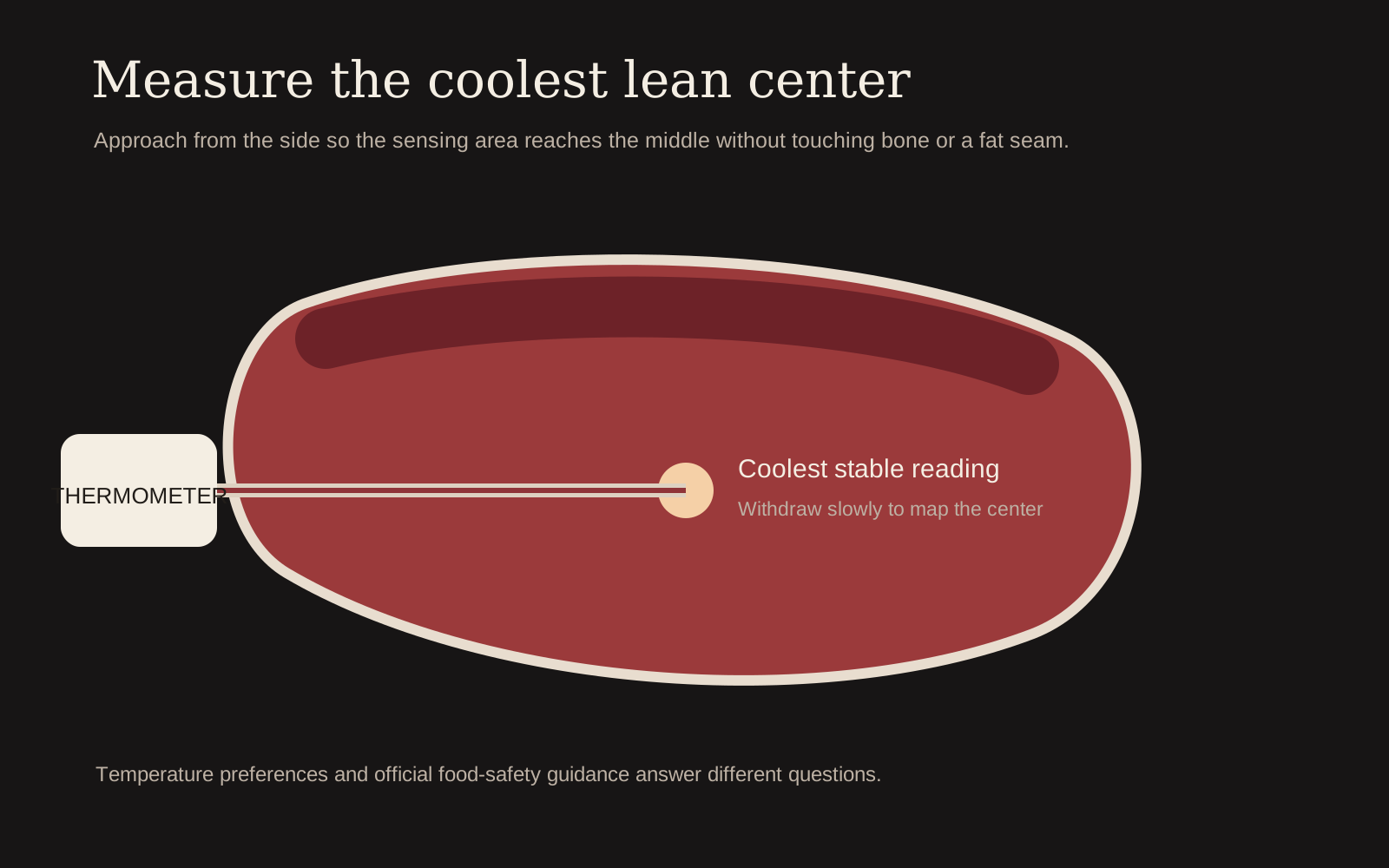
The dry surface browns fast. Salt modestly, sear for less time than a damp fresh steak and keep smoke, sugar and butter restrained. Use reverse searing for thickness and the temperature guide for the center.
Separate Real Aging Information From Atmosphere
A glass-fronted aging cabinet can demonstrate investment, but it does not by itself explain the steak on your plate. Ask whether the listed days apply to the intact primal, whether time includes transit or wet aging, and whether steaks are cut to order. A credible seller can describe trimming loss and flavor without relying on a cabinet as theater.
Aging bags and membrane systems are not identical to open-rack dry aging. They can reduce contamination exposure while allowing some moisture transfer, but a seller should name the process honestly. Similarly, a dark, dry retail edge may simply be oxidized individual steak rather than evidence of controlled aging.
For a first experience, choose a familiar cut and moderate aging profile so you can identify the change. A dry-aged ribeye emphasizes nutty aroma through fat; strip offers a firmer, leaner comparison. Share the steak and serve restrained sides before investing in a more assertive long-aged example.
What a Controlled Dry-Aging Program Manages
Professional dry aging holds large intact beef cuts under controlled refrigeration with managed temperature, airflow, humidity and sanitation. Moisture loss concentrates components while endogenous enzymes continue changing muscle proteins. The dark dried exterior is later trimmed away before steaks are portioned.
Time is only one variable. Cut size, fat cover, bone, chamber conditions and trimming affect yield and flavor. A day count does not make two programs equivalent, and a longer period does not guarantee that every diner will prefer the result.
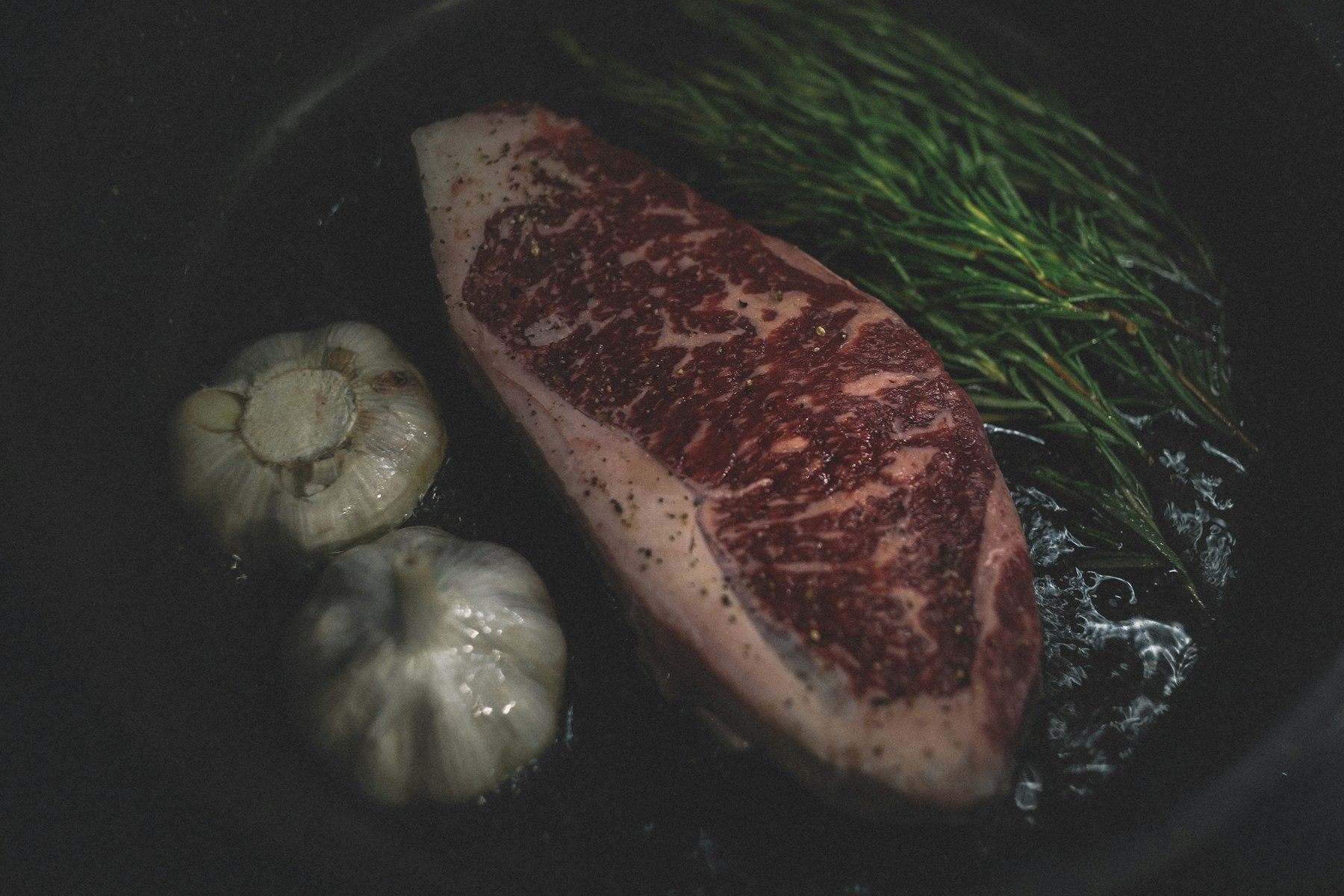
Flavor Changes by Cut and Aging Program
Moderate aging may emphasize concentrated beef and roasted, nutty aromas. More assertive programs can produce blue-cheese, cured or earthy notes. Descriptions are subjective, and the same program reads differently in fatty ribeye than in firmer strip.
Ribeye fat carries aroma and creates a particularly rich experience; our dry-aged ribeye guide covers that cut. Strip provides a leaner comparison. Tenderloin sacrifices more yield relative to its mild flavor, so not every muscle benefits equally in value terms.
| Cut | Why it is used | Service consideration |
|---|---|---|
| Ribeye | Fat and cap amplify aroma | Use small portions and bright sides |
| Strip | Firm beefy muscle shows concentration clearly | Slice across grain; avoid heavy sauce |
| Porterhouse | Two-muscle contrast | Tenderloin and strip still cook differently |
Buy With Specific Questions and Cook Simply
Ask what was aged, whether the stated days apply to the intact primal, how the exterior was trimmed and whether the steak was cut to order. A credible answer can be concise. “Aged flavor” on a menu or a cabinet in view does not prove the process for a particular steak.
At home, keep seasoning restrained and dry the surface. Dry-aged beef often browns quickly, so do not burn the exterior trying to copy a standard sear time. Use a thermometer for the center, rest on a warm board and taste before adding butter or sauce.
Understand the Yield Behind the Price
Dry aging raises cost through refrigerated time, space, moisture loss and exterior trimming. The seller begins with a larger primal and ends with fewer saleable pounds. Bone and fat coverage can protect the interior during aging but add to the material held and later trimmed.
That cost does not make every aged steak equally worthwhile. Flavor preference, cut and the transparency of the program matter. A moderate dry-aged strip from a careful butcher may provide a clearer first comparison than the longest-aged or most expensive ribeye on the page.
Compare wet-aged and dry-aged products only when cut, grade and thickness are similar. Wet aging in vacuum packaging can improve tenderness without the same moisture and trim loss, but it creates a different flavor profile. Neither term alone establishes careful handling.
At a restaurant, ask the cut, aging period and listed raw weight. At retail, ask whether the steak was cut after aging and how much exterior trim remains. Specific, calm answers are more useful than dramatic cabinet photography.
Dry-Aged Beef, Dry-Aged Steaks and Home Aging
Dry-aged beef describes the controlled aging process; dry-aged steaks are portions cut from the aged primal or subprimal after the dried exterior is trimmed. Those phrases share one commercial-aging guide. They should not become separate pages competing for the same definition and buying intent.
Commercial dry aging controls refrigeration, humidity, airflow, sanitation, time and trim yield together. It is not equivalent to leaving an individual steak uncovered beside household groceries. USDA states that it does not recommend aging beef in a home refrigerator because aging takes from about 10 days to six weeks.
Continue Through This Steak Topic
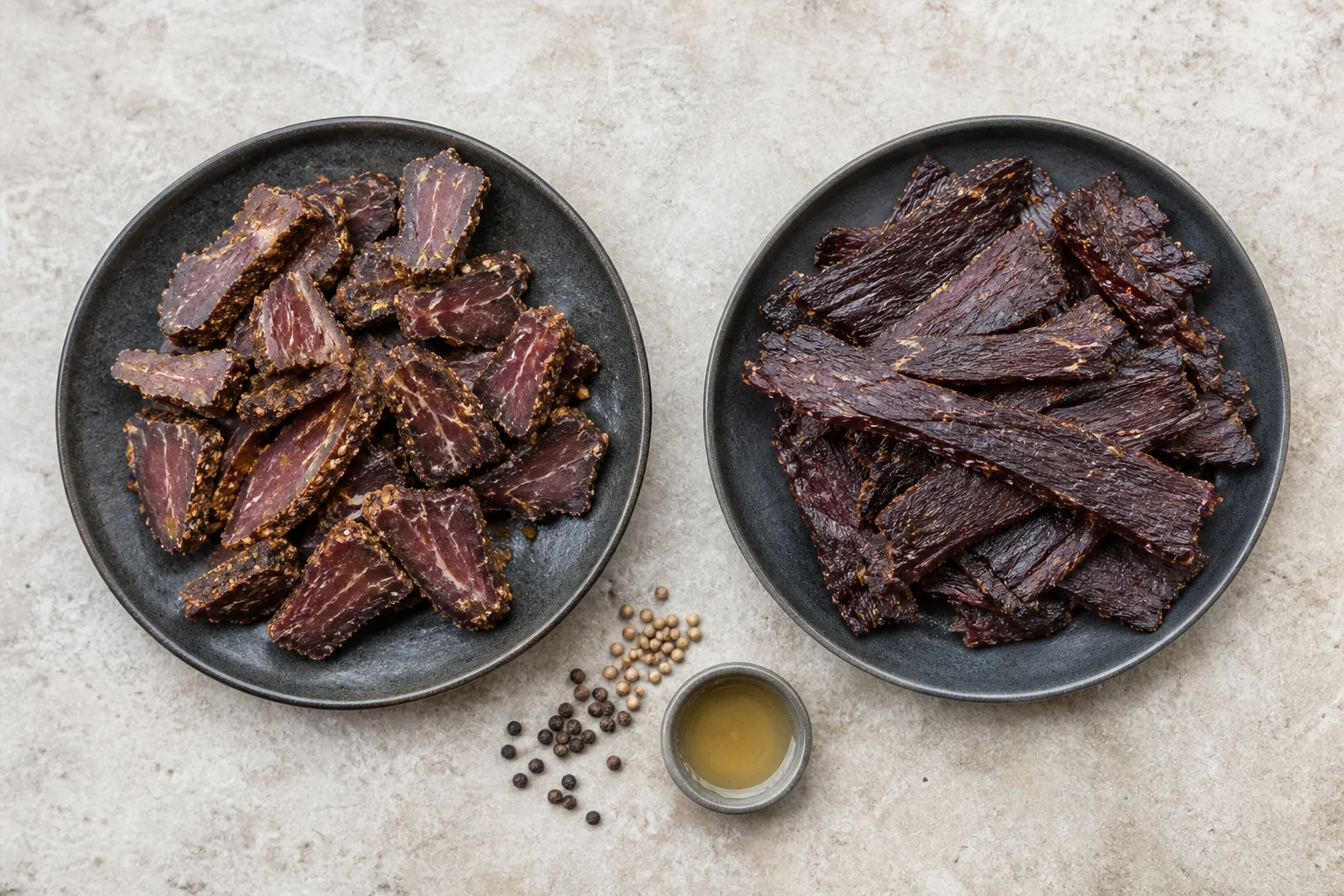
Build the full picture: Dry Aging Beef at Home, and Biltong vs Jerky cover the closely related cuts, methods, buying decisions and recipes that support this guide.
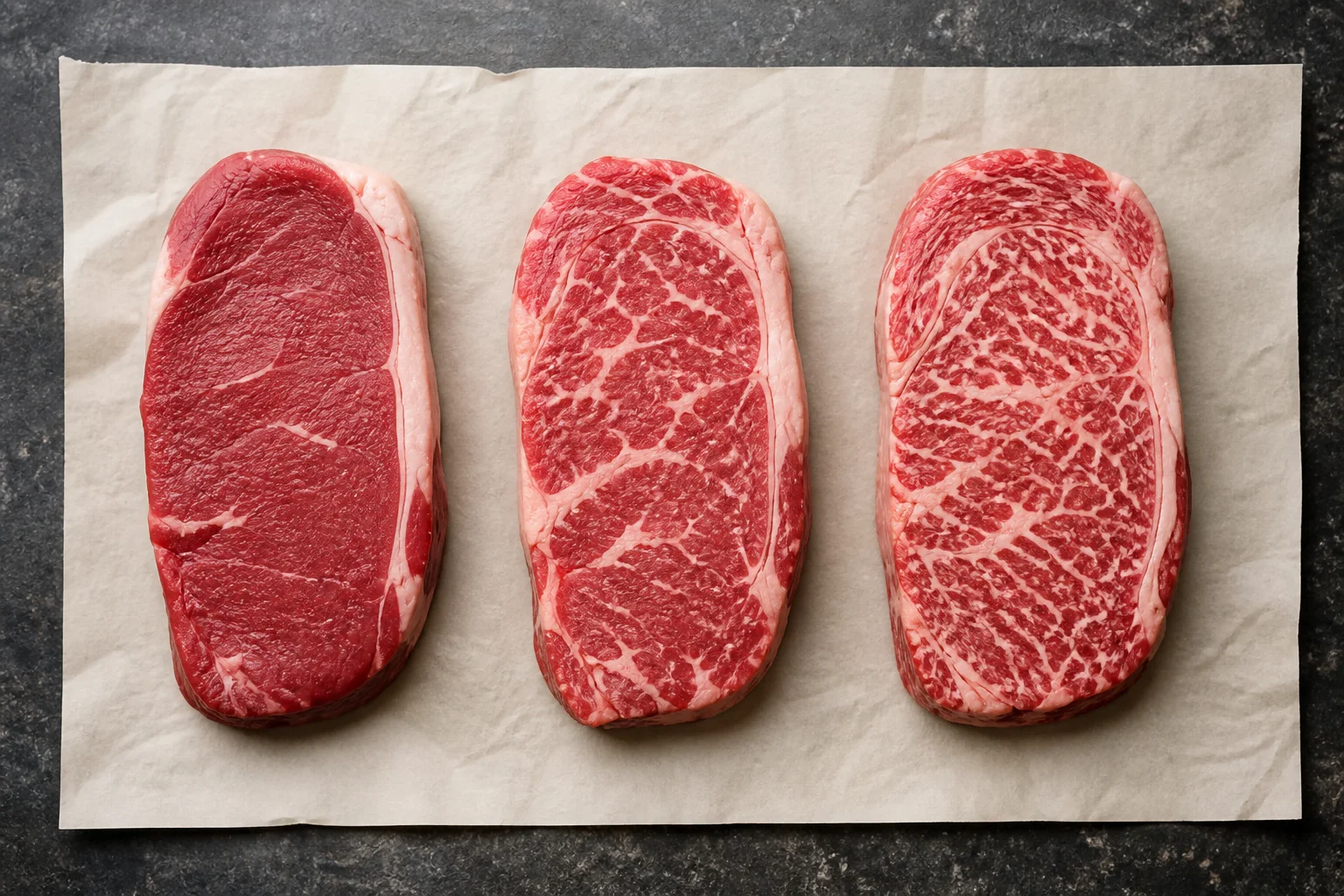
When you need to compare across families or techniques, continue with Dry-Aged Ribeye, Beef Marbling, and steak temperature. These pages answer adjacent questions without forcing every detail into one overgrown article.
Frequently Asked Questions
Can I dry-age a single steak in my refrigerator?
A household refrigerator and individual steak do not reproduce a professional aging room. Surface drying for crust is useful but is not the same process.
Does longer always mean better?
No. Flavor becomes stronger and preference varies; aging conditions and starting beef matter too.
Is dry-aged steak safe?
It depends on controlled professional handling and final cooking. Buy from a credible source and follow food-safety guidance.
Sources & further reading
- USDA FSIS — Safe Minimum Internal Temperature Chart
- USDA FSIS — Beef From Farm to Table — Official USDA statement on beef aging and home refrigerators.