Cuts and Thickness
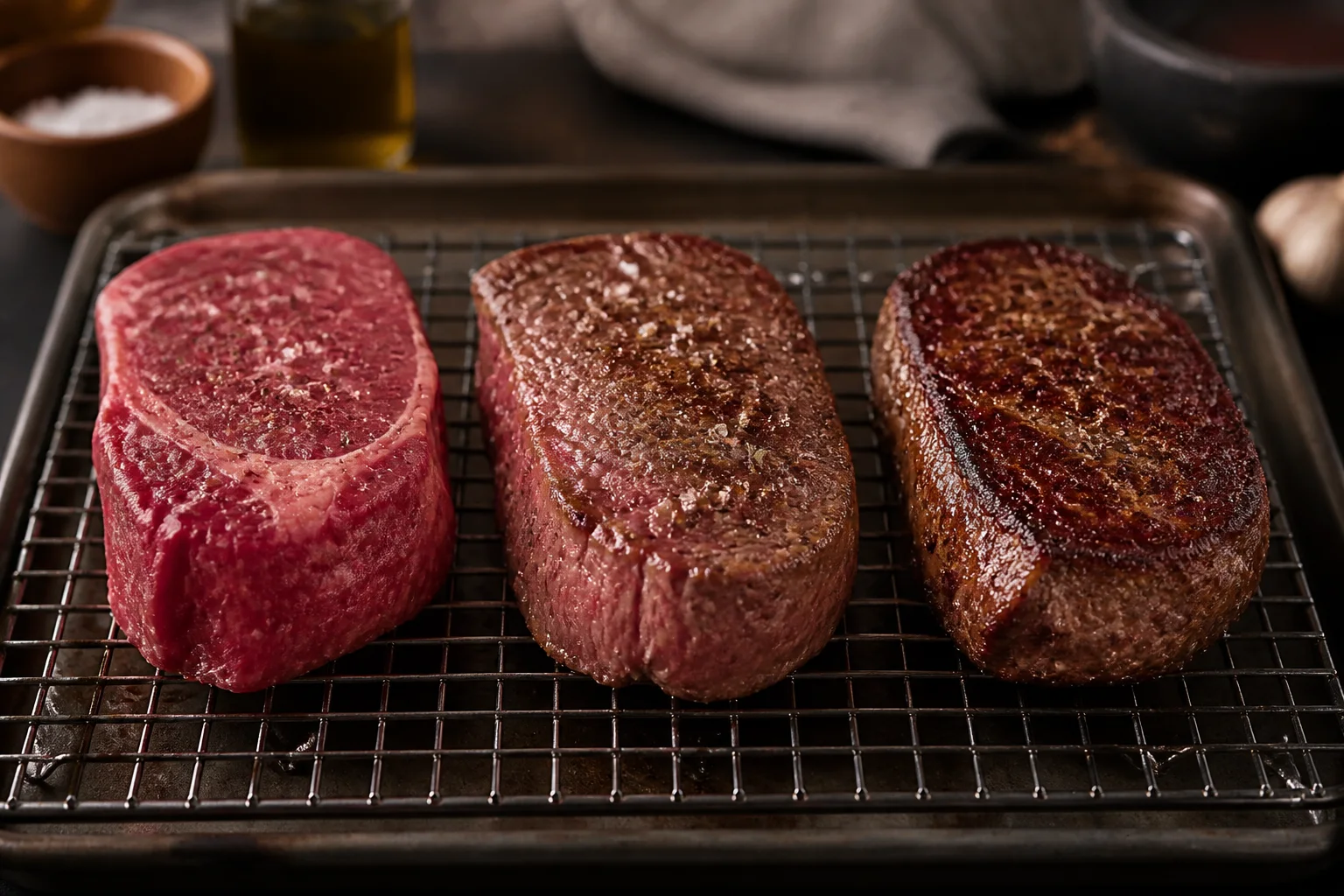
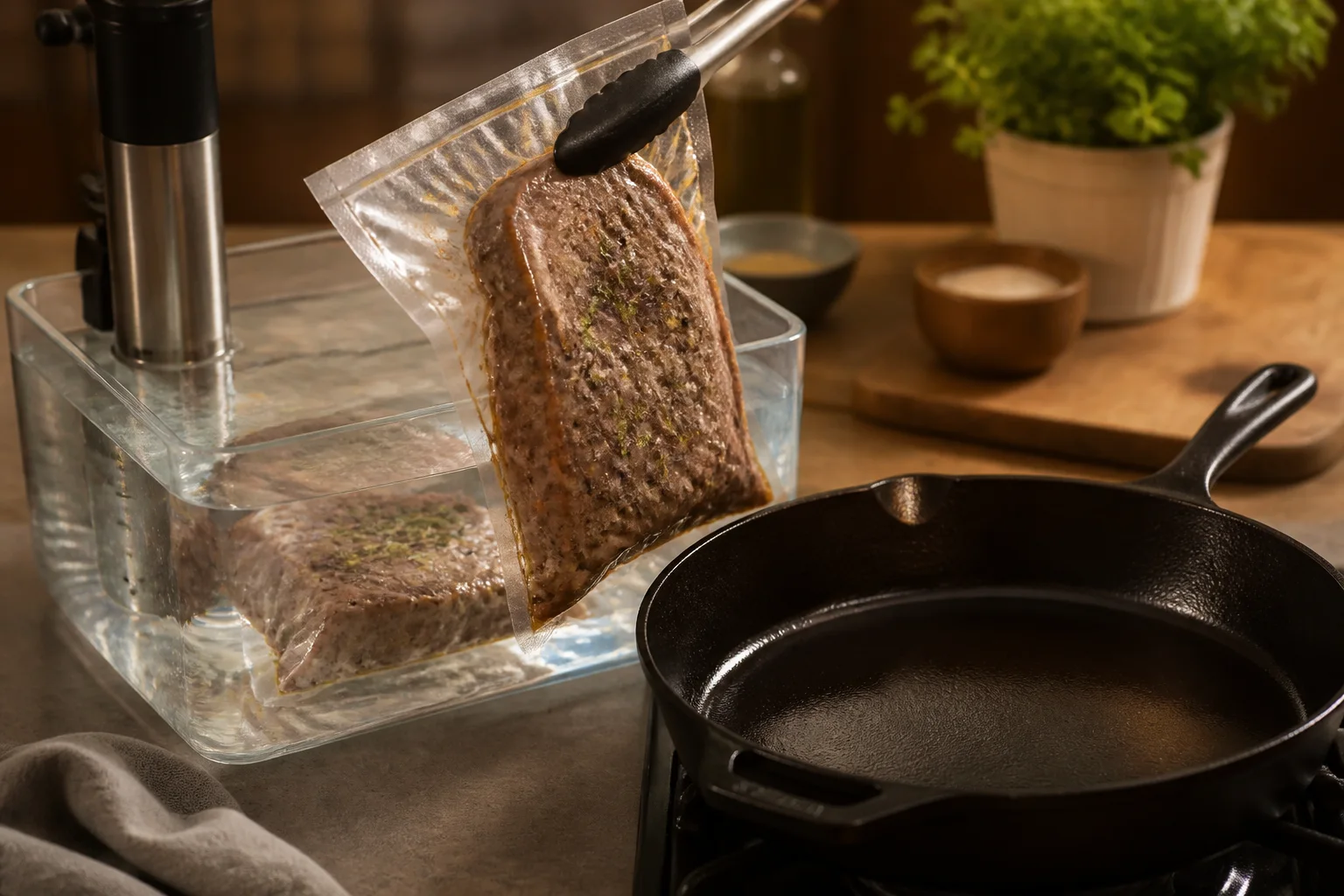
Thick steaks benefit most because a water bath can heat the center evenly without overshooting the bath. Ribeye needs enough temperature to soften fat; lean tender cuts can use a lower culinary range. For quick thin steaks, cast iron is simpler.
Time and Temperature Work Together
Sous vide safety cannot be reduced to a familiar steak pull temperature because holding time, thickness, initial temperature and bath accuracy affect pasteurization. Use a validated time-temperature table from an authoritative sous-vide source and do not improvise extended low-temperature holds.
Season and Bag
Salt with care because long bag contact can produce a cured texture. Use a food-safe heat-rated bag, keep the seal above water and prevent floating. Delicate herbs can become intense; add fresh aromatics during the sear instead.
Dry More Than You Think
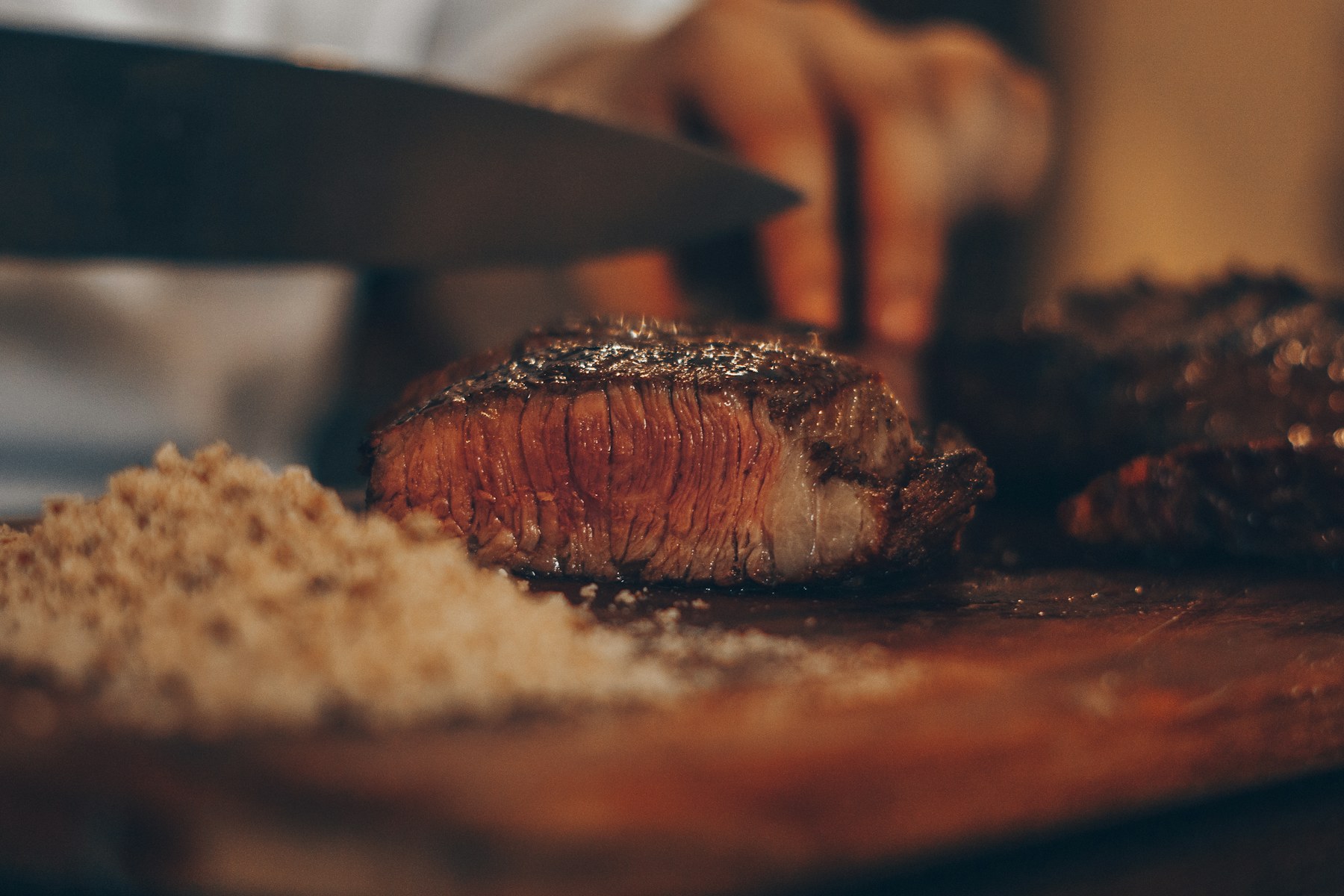
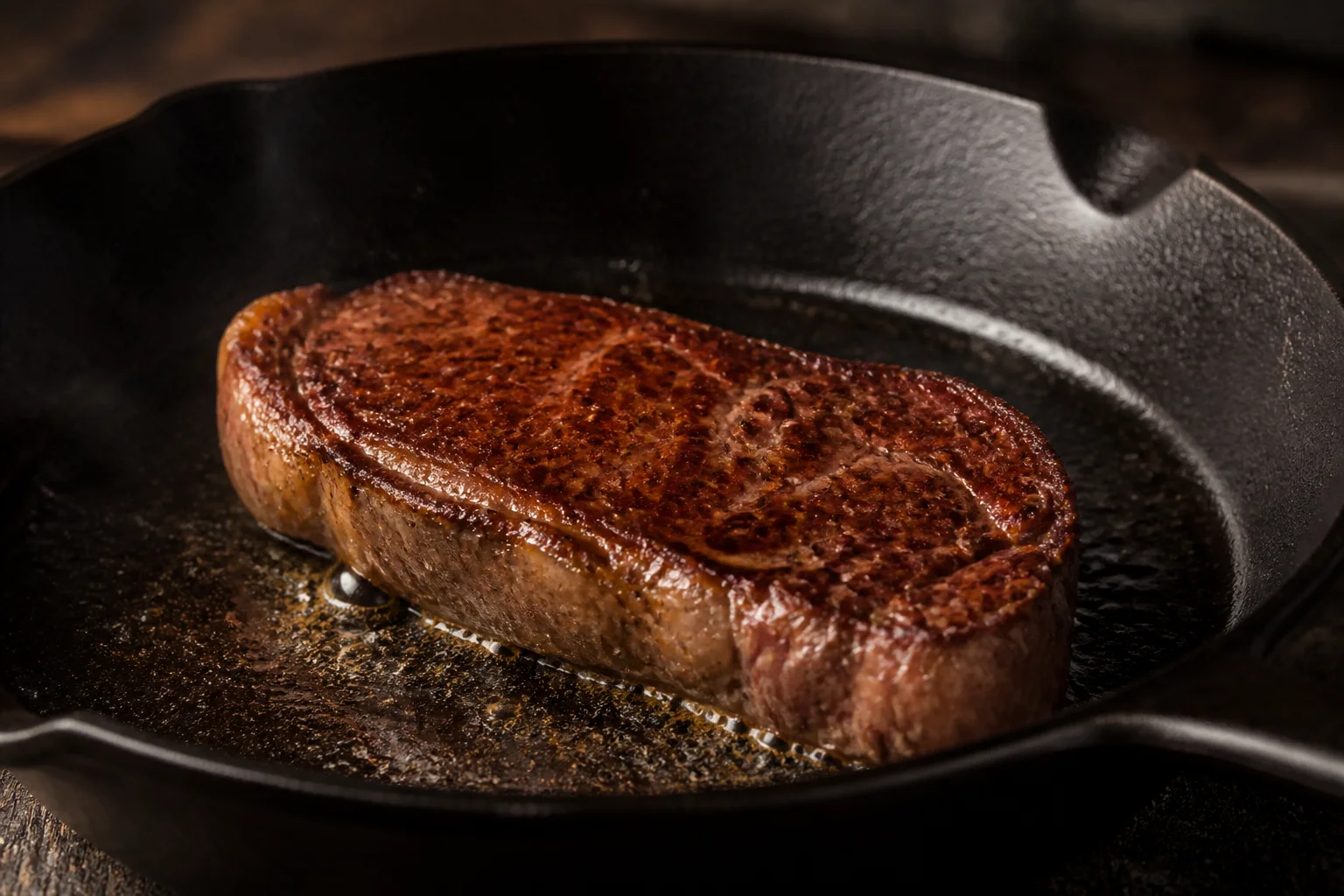
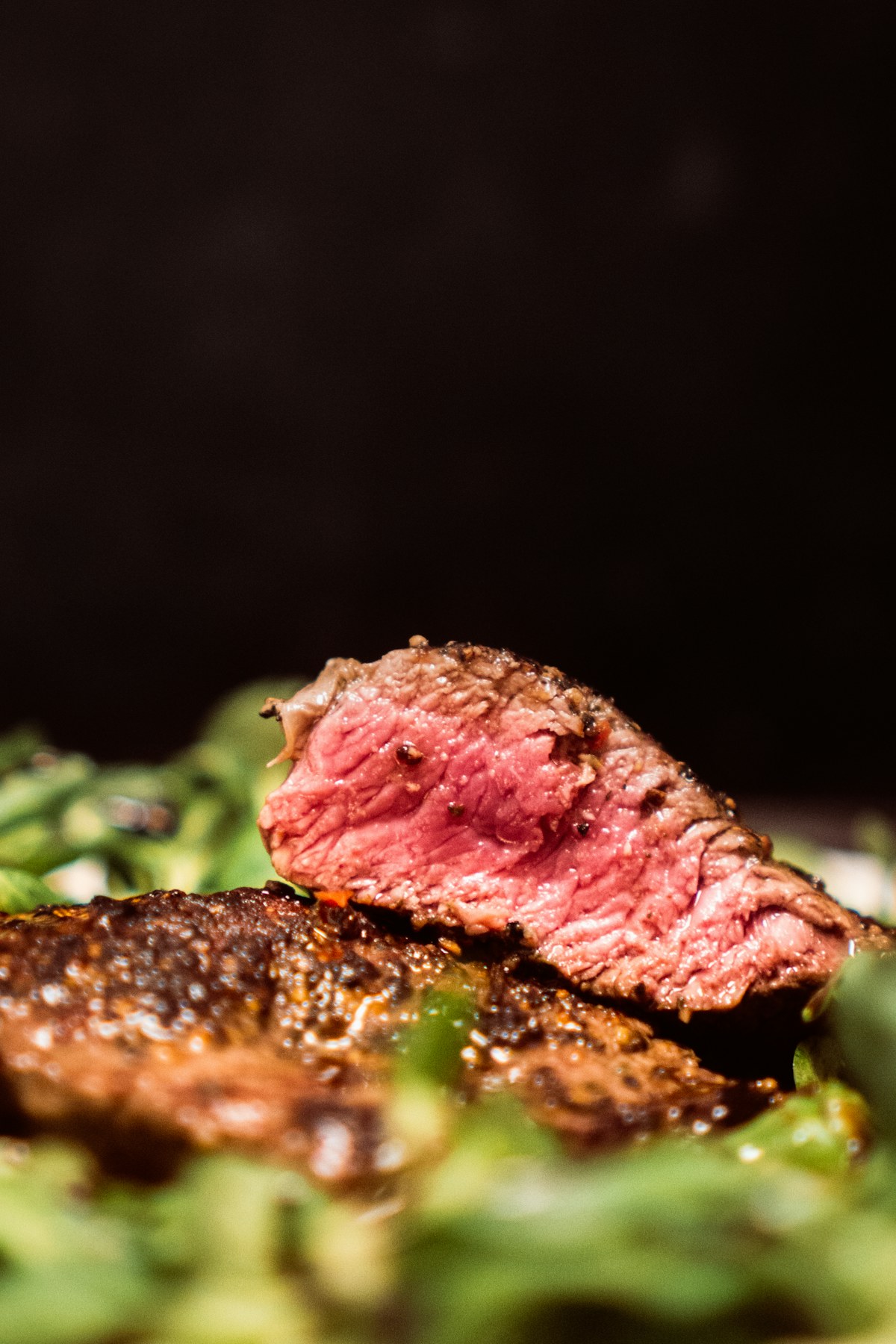
Remove the steak and dry every surface thoroughly. Chill briefly if your chosen method and safety plan allow, then sear over exceptionally hot iron or a grill in very short turns. The reverse-sear guide uses a different first stage but shares the same dry, fast finish principle.
What Sous Vide Does Not Solve
| Strength | Limitation |
|---|---|
| Even center | No crust in the bag |
| Flexible holding within a validated plan | Texture can soften during excessive holds |
| Repeatable bath temperature | Requires calibration and safe bagging |
| Works for thick cuts | Fat may not render pleasantly at very low baths |
Control Bag Quality and Post-Bath Timing
A strong vacuum can deform a very tender steak or pull liquid toward the seal. Arrange the bag flat, keep the seal area clean and use a double seal when the equipment manufacturer recommends it. Water must circulate around every bag; stacking steaks against each other creates an insulating layer.
Longer is not automatically more tender in a desirable way. Extended holds can soften the outer layers until the steak feels roast-like or mushy, particularly with already tender cuts. Follow a validated thickness and pasteurization schedule, then remove the steak when the quality window—not mere convenience—says it is ready.
After the bath, collect bag juices separately if making a sauce; they can contain proteins that coagulate unattractively unless strained and cooked. Dry the steak with several towels, including edges and creases. A cast-iron sear should be exceptionally brief because the center is already at its chosen bath temperature.
Frequently Asked Questions
Can steak be seared before sous vide?
A pre-sear can add flavor, but a final sear is still needed because bag moisture softens the surface.
Should butter go in the bag?
It is usually unnecessary and can dilute beef aroma into the bag liquid. Add butter during or after the final sear if desired.
Why is no universal sous vide time given?
Thickness, starting temperature, target bath and pasteurization goal change the safe schedule. Use validated tables for the exact situation.