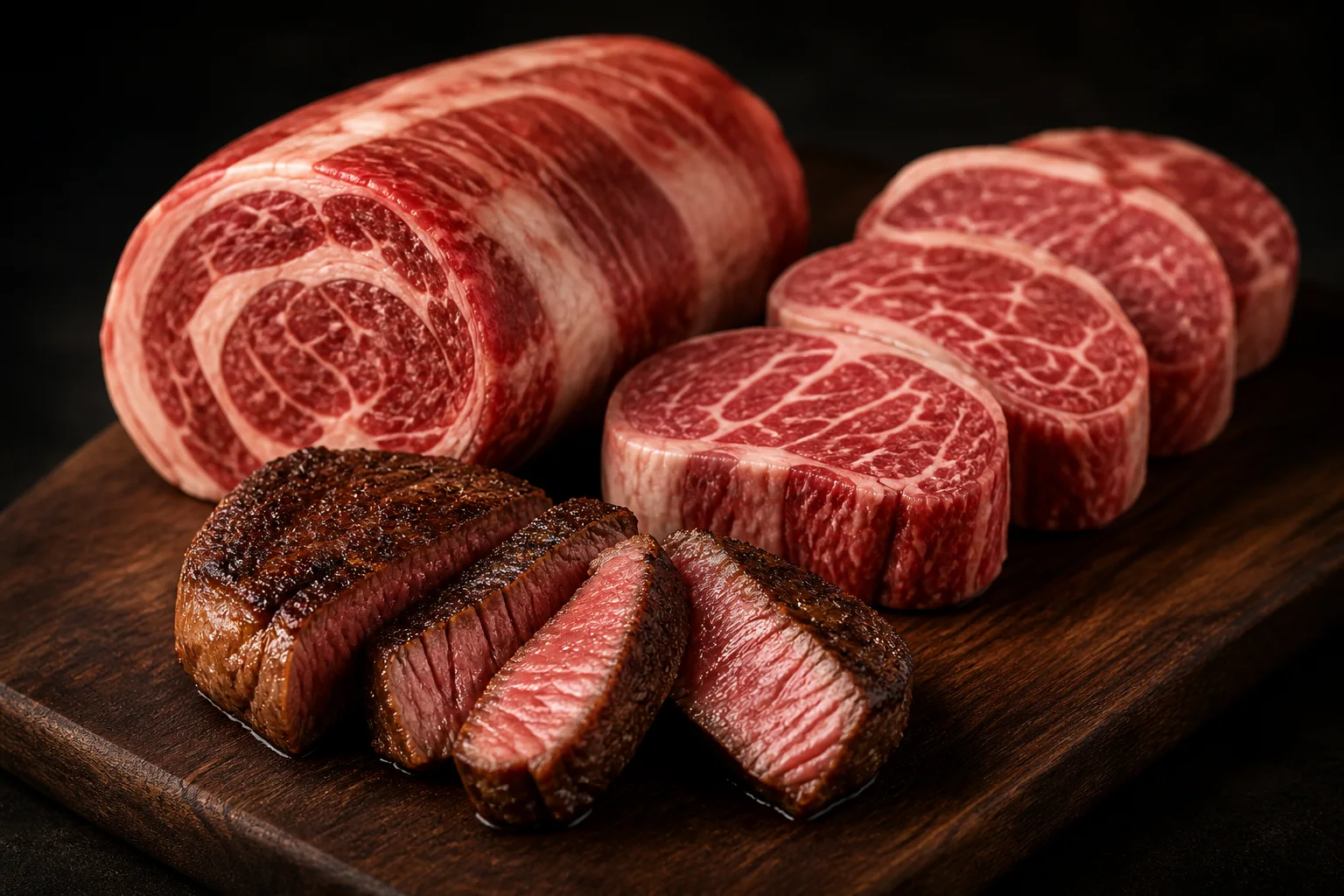
What Is the Ribeye Cap?
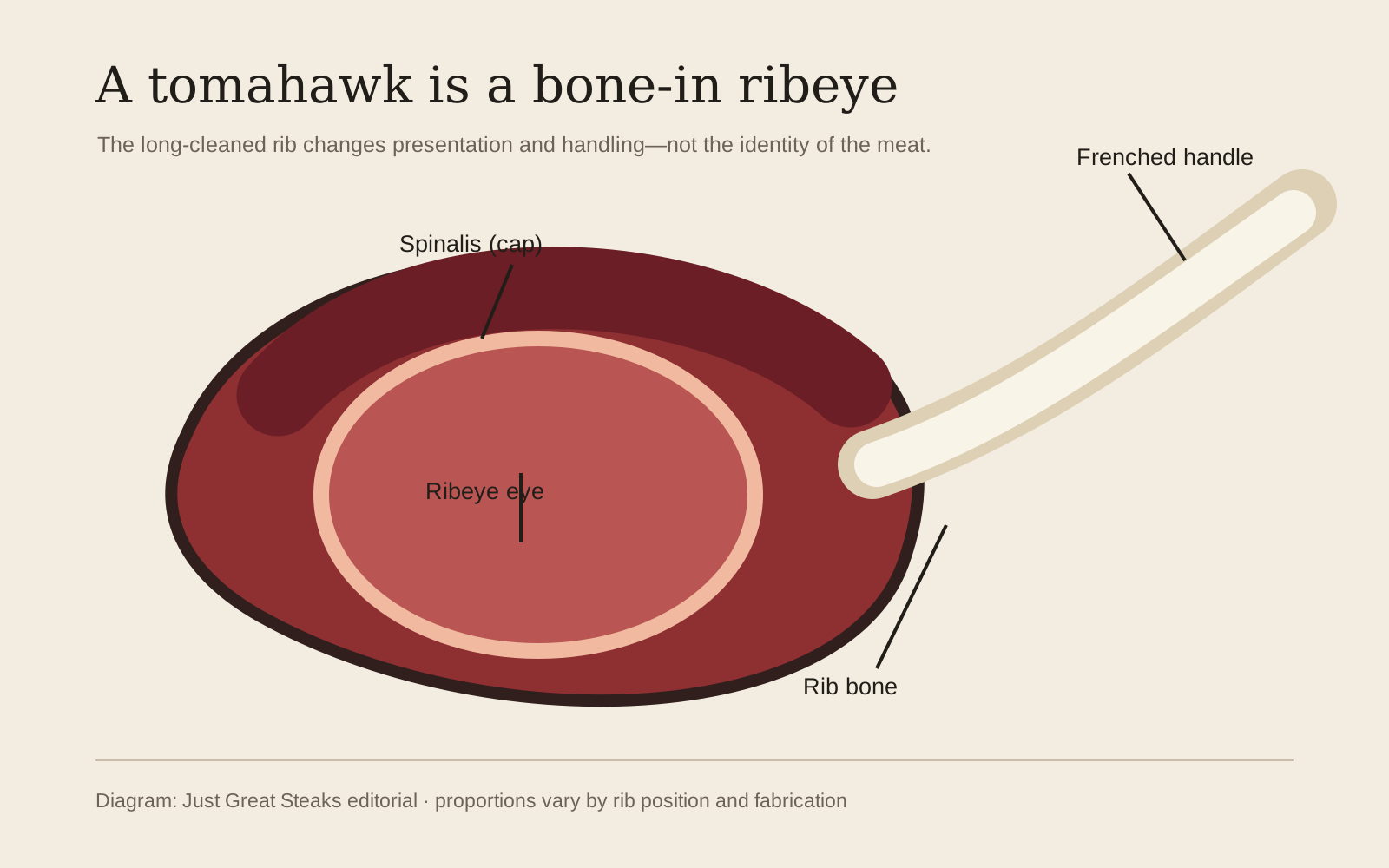
The spinalis dorsi forms the curved outer muscle around part of a ribeye. It is looser-grained and often more marbled than the eye. The ribeye anatomy guide shows how its size changes through the rib section.
Whole Cap, Rolled Cap and Cap-On Ribeye
A butcher can leave the cap attached, remove it as an irregular sheet, or roll and tie it into medallions. A rolled cap may be labeled rib cap or spinalis steak. Because removing it changes the value of the remaining ribeye, it is relatively uncommon.
How to Buy and Portion
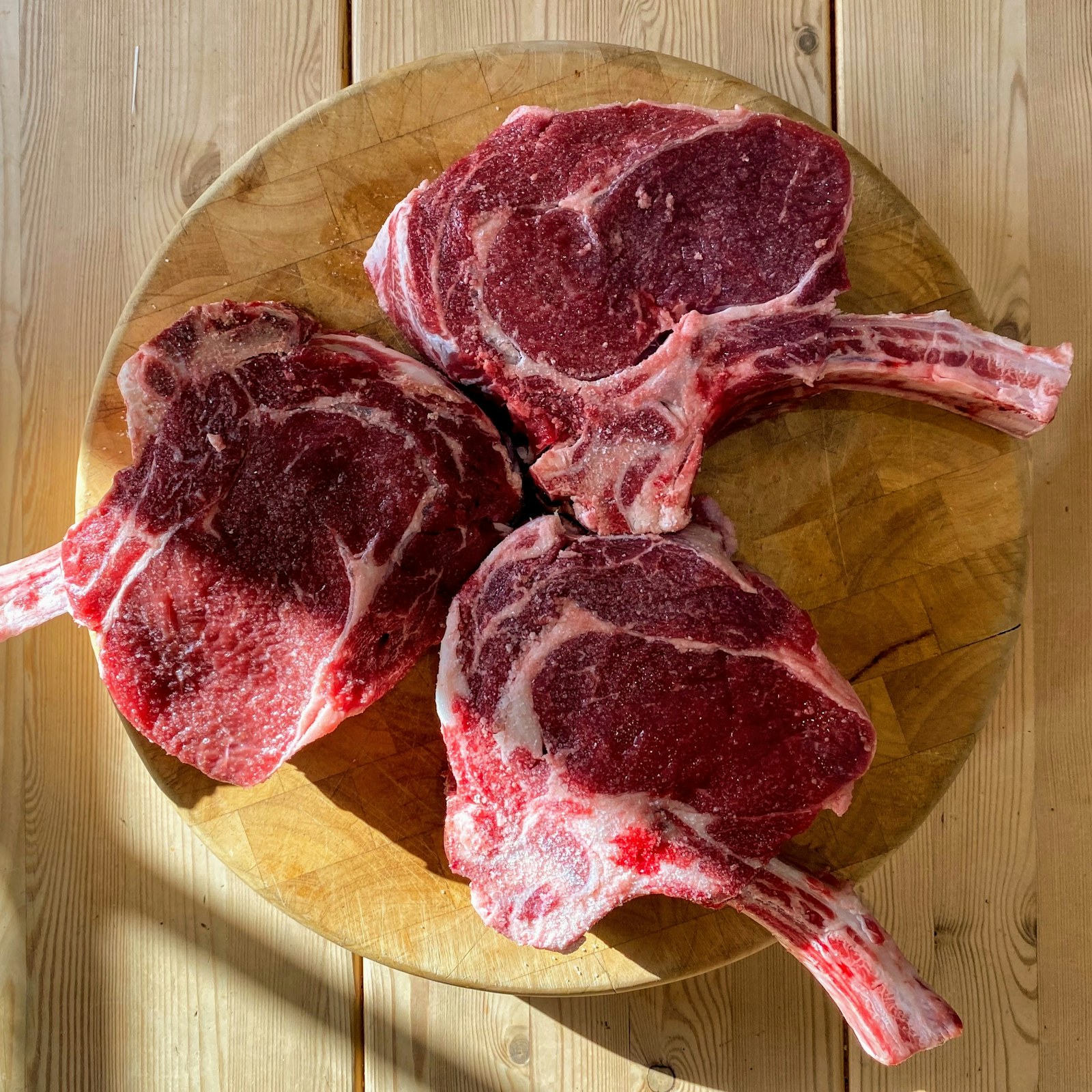
Look for tight rolling, even thickness and fine marbling. Portion modestly; cap is exceptionally rich. If a separate cap is unavailable, choose a chuck-end bone-in ribeye with a broad spinalis.
How to Cook Ribeye Cap
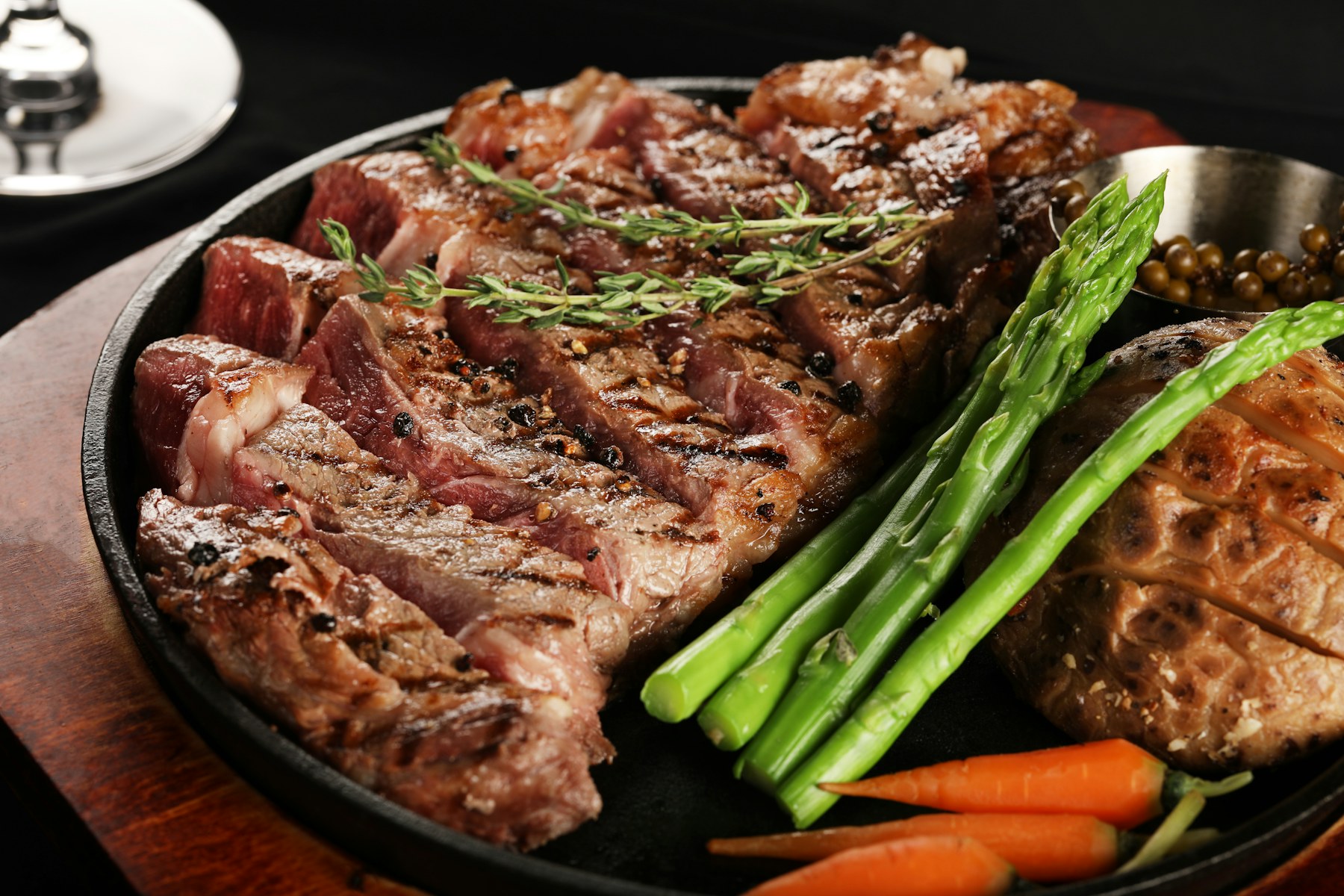
For rolled medallions, sear the broad faces and briefly brown the circumference. For a thicker roll, use the reverse-sear approach. Avoid very low doneness that leaves internal seams waxy, and confirm with the temperature guide.
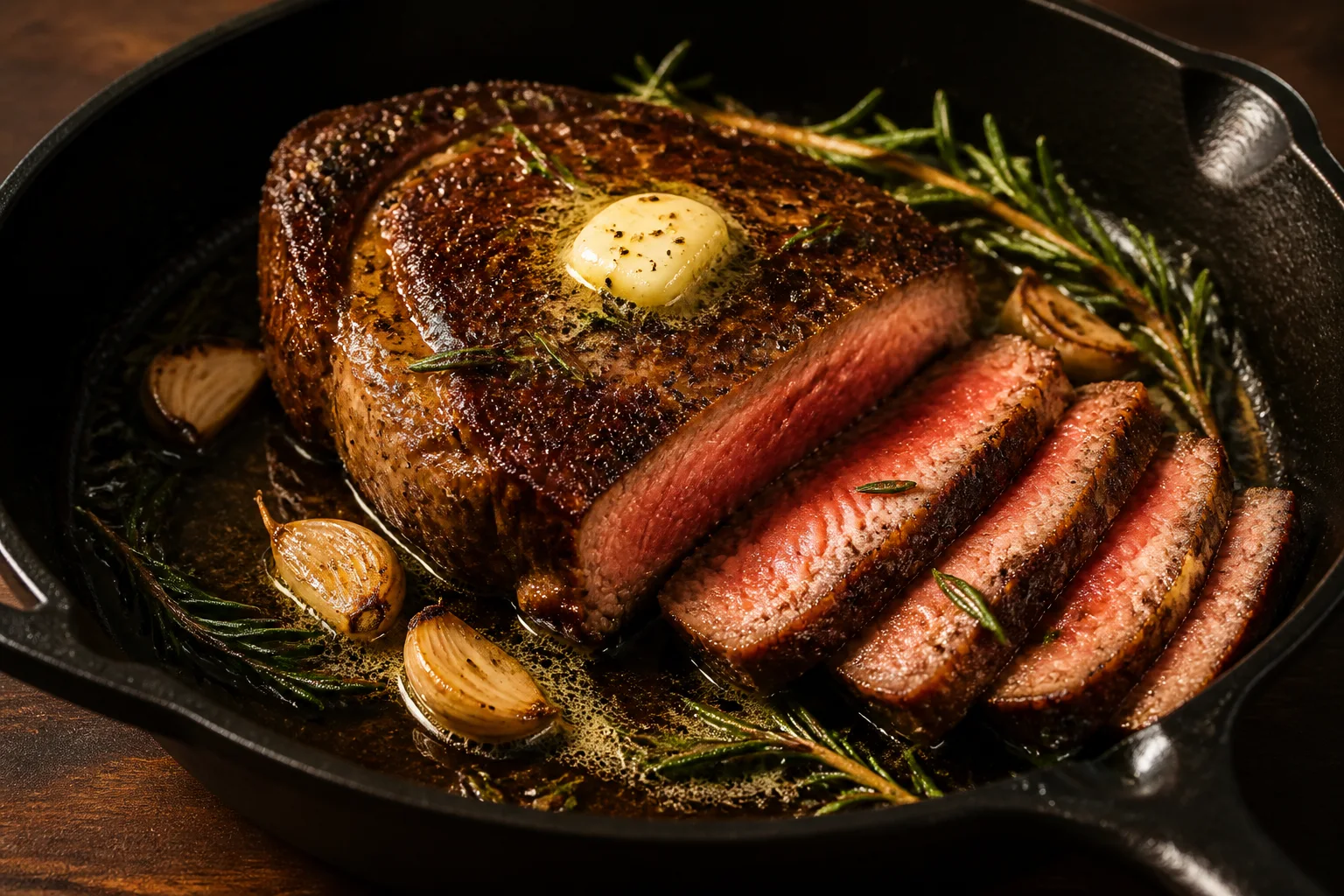
Serve with acid and bitter greens rather than a heavy cream sauce. If you want a full-pan method, adapt the heat control from cast-iron ribeye.
Handling a Rolled or Irregular Cap
A whole spinalis is not a tidy cylinder. When it is rolled, the butcher creates even portions by overlapping thin edges and tying the package. Inspect the roll before cooking: if one end is significantly smaller, cook it as a separate tasting piece or retie the steak. Leaving a loose flap exposed gives it far more heat than the protected center.
Salt a rolled cap far enough ahead that seasoning reaches the folds, but do not push coarse spices into the roll. Sear the two broad faces first, then turn the circumference in short intervals. Rendered fat will collect rapidly; spoon away excess if it begins frying herbs or filling the pan with smoke. The cap should feel rich and supple, not oily and soft.
For service, remove every piece of twine and cut the medallion so diners can see the spiral. A bitter salad, mustard vinaigrette or grilled radicchio is more useful than another layer of cream. If a full cap steak feels too rich, buy a chuck-end ribeye with the cap attached and share both muscles.
Why Spinalis Eats Differently From the Eye
The spinalis dorsi wraps around the outside of the ribeye eye. Its fibers, abundant marbling and loose texture create especially rich bites, while connective seams separate it from neighboring muscles. On a whole ribeye, cap size is generally greater toward the chuck end and narrows toward the loin.
A butcher may sell the cap as a long strip, roll and tie it into medallions, or leave it attached to the eye. Those formats are not thermally equivalent. A rolled cap has folds and protected interior surfaces; a cap-on ribeye has a thin outer arc that can overcook before the eye.
Buy the Fabrication, Not Just the Luxury Name
Ask whether the product is whole spinalis, rolled cap or a ribeye marketed for its large cap. Examine how securely a roll is tied and whether thick seam fat was trimmed without stripping the meat. A loose spiral cooks unevenly and may conceal large soft fat pockets.
- Whole cap strip: ideal for portioning yourself, but thickness may vary along its length.
- Rolled medallion: tidy presentation; requires even tying and attention to the folds.
- Cap-on ribeye: offers eye-and-cap contrast with less fabrication and usually better value.
If the cap is the only desired part, expect low availability because removing it changes the value of the remaining ribeye. A chuck-end Prime ribeye can be a more practical way to get a generous cap.
Cook Rich, Irregular Meat With Restraint
Dry-brine and blot the surface. Sear rolled medallions on both broad faces, then rotate around the circumference. Lower the heat as soon as fat accumulates and remove excess from the pan. Butter is usually unnecessary; herbs and acid are more useful.
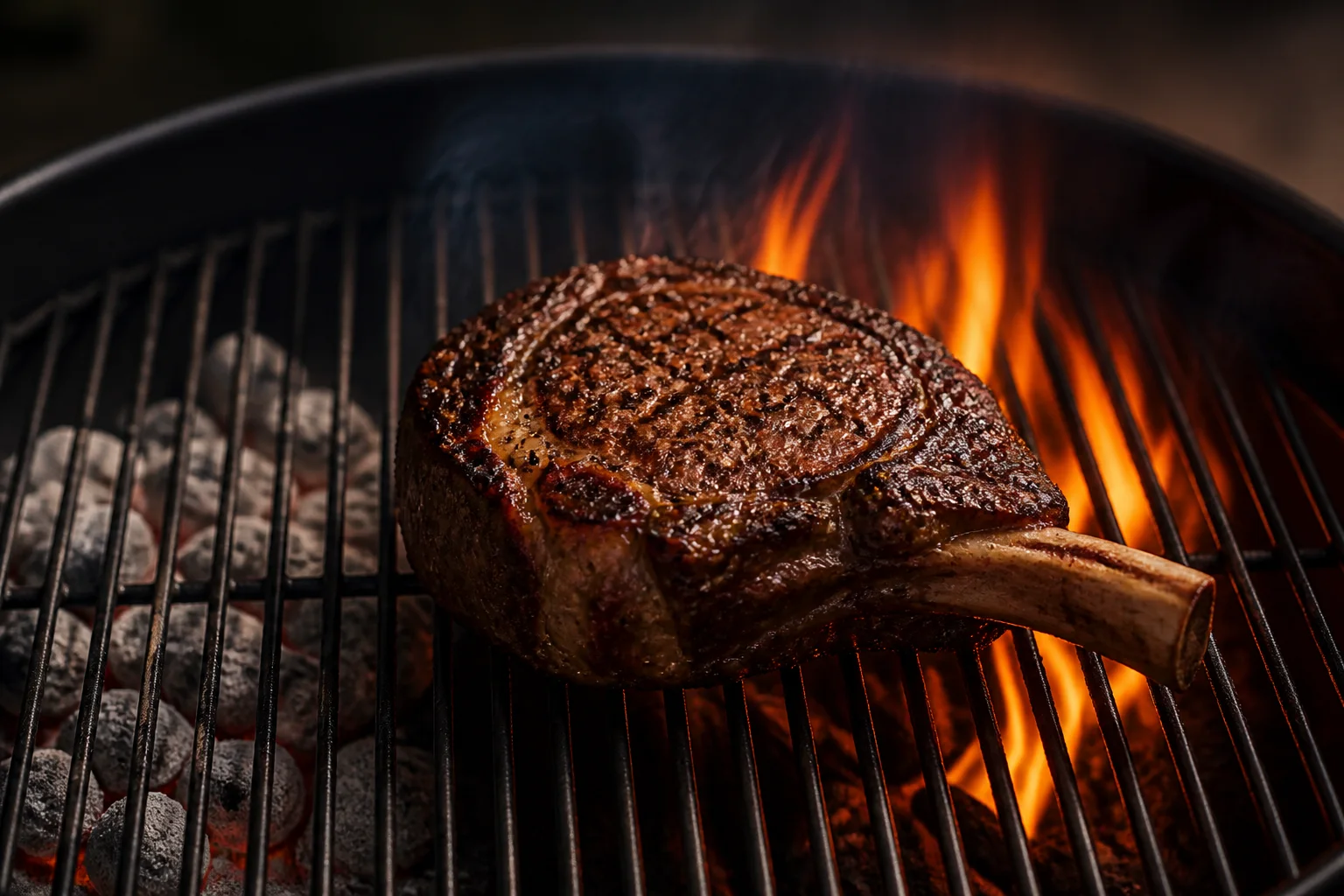
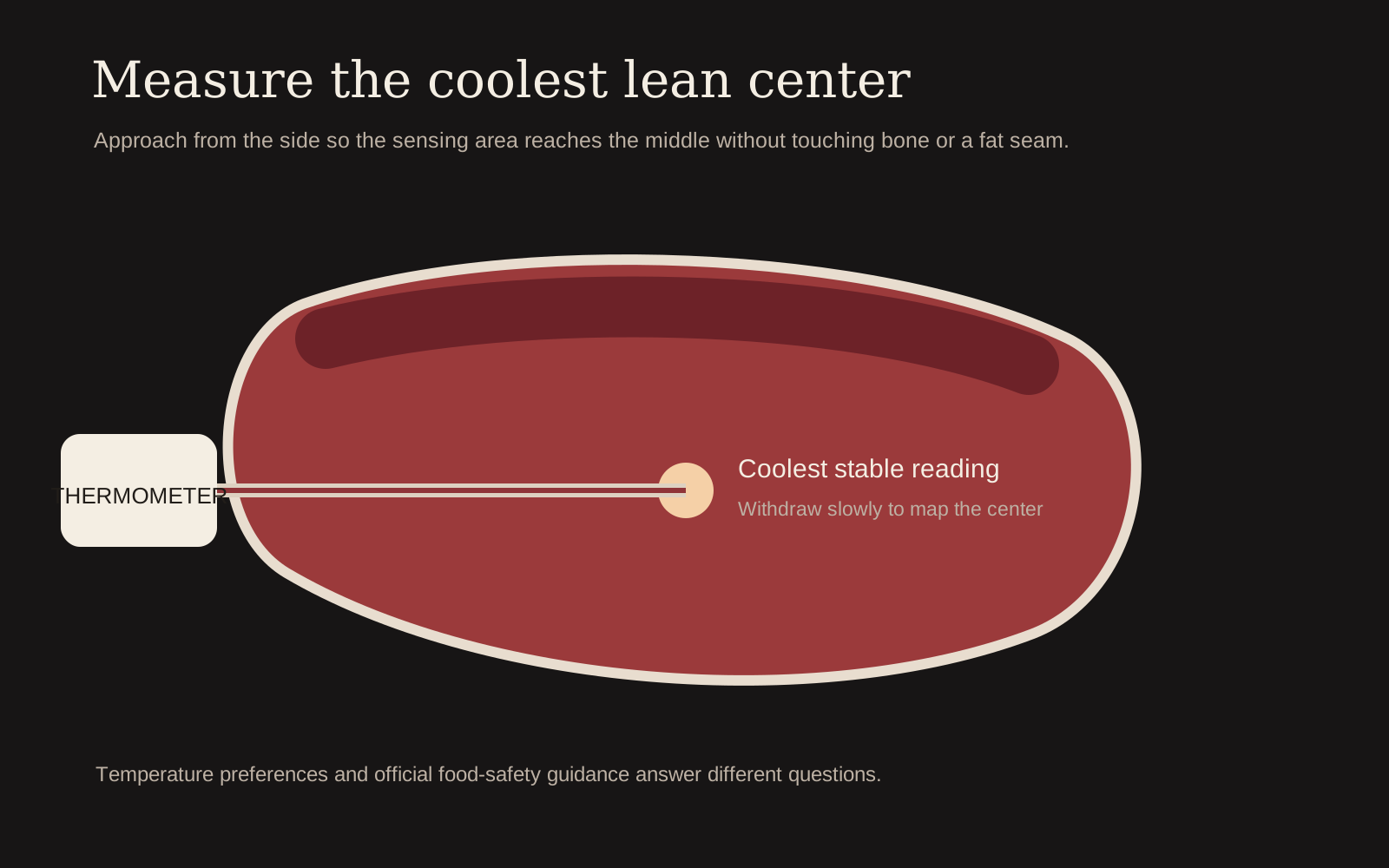
Probe the center of a roll without landing in a fold of fat. For a cap-on ribeye, monitor the eye as the primary center and protect the thin cap from the hottest zone. Rest, remove every piece of twine and slice so diners can see the spiral.
Serve small portions with bitter greens, mustard or citrus. The cap's richness makes a large steak serving less appealing than several deliberate slices.
Where This Guide Fits
This page supports the broader Ribeye Steak guide. Use that pillar page for the complete cut family, buying framework and links to every closely related article.
Useful next reads include Bone-In Ribeye Steak, Cowboy Steak, Ribeye Steak Recipe, Tomahawk Steak, and steak temperature for nearby cuts, methods and decisions.
Frequently Asked Questions
Is ribeye cap the same as spinalis?
Yes. Spinalis dorsi is the main anatomical name for the outer cap muscle.
Why is ribeye cap expensive?
There is limited cap on each rib section, it is highly desirable, and removing it reduces the value of the remaining ribeye.
Can I cut the cap off a ribeye before cooking?
You can, but leaving it attached is simpler. If separated, tie irregular portions to create even thickness.