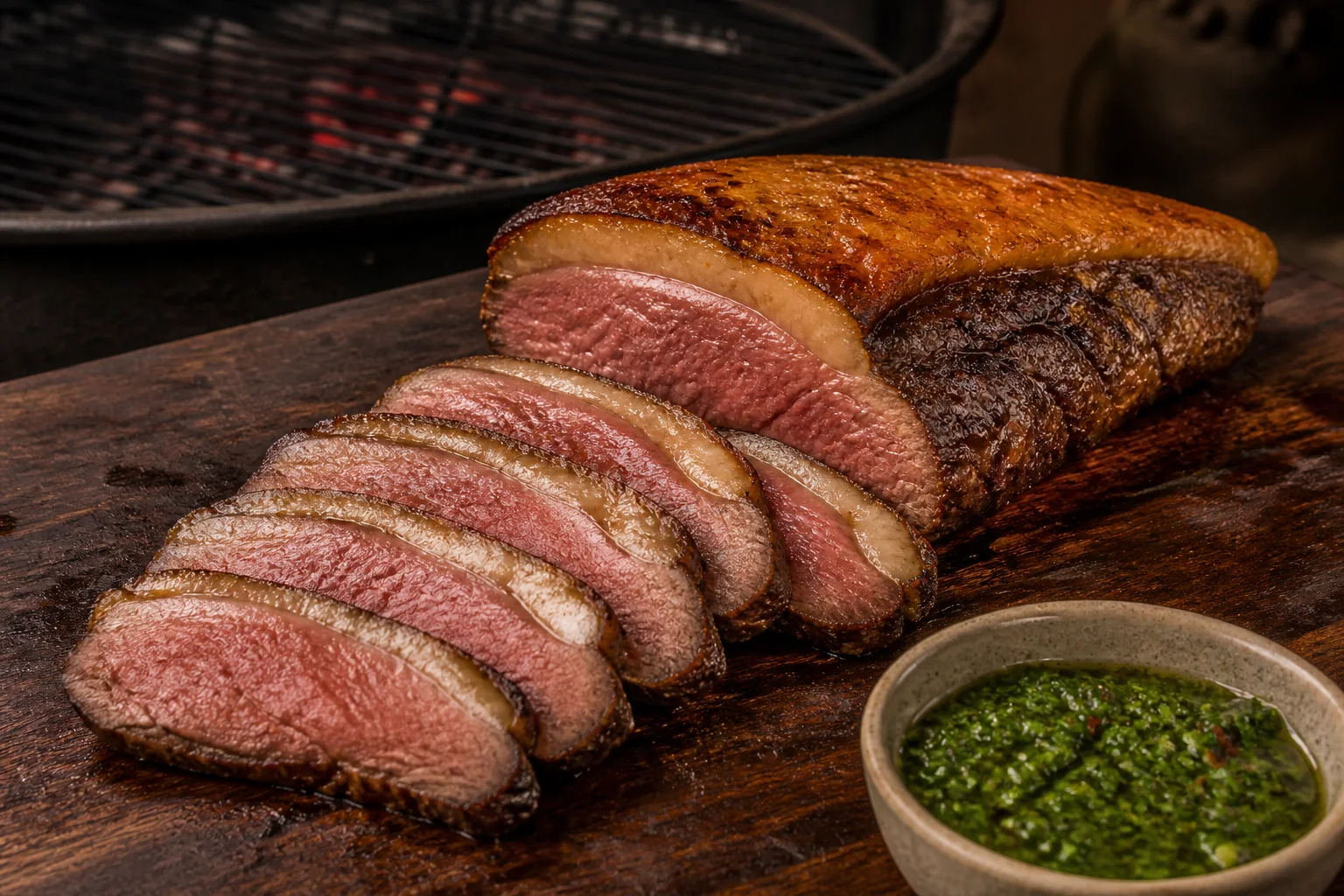
What Is Picanha?
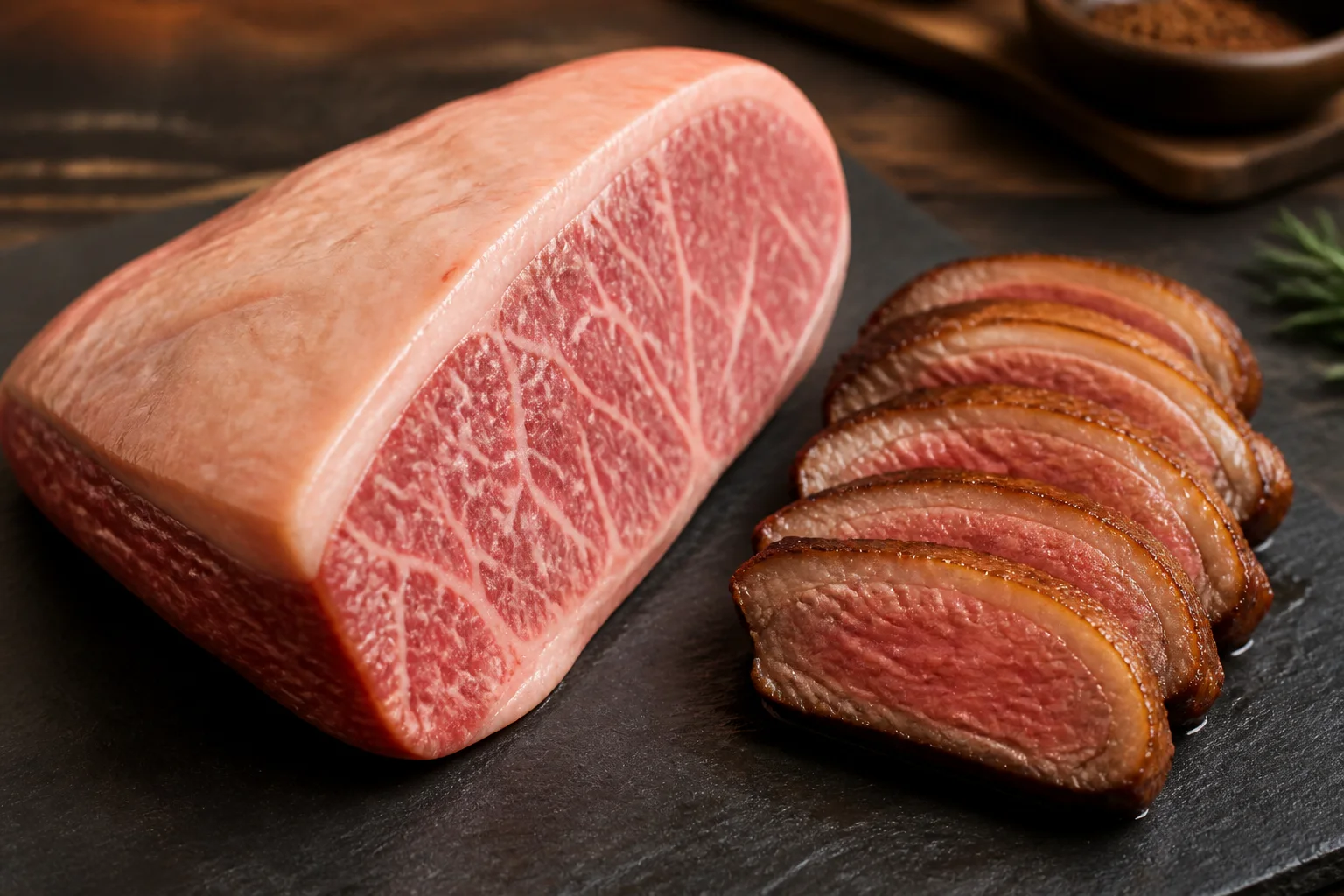
Picanha is the triangular top sirloin cap, especially associated with Brazilian churrasco. It sits over the sirloin and carries a broad external fat cap. In North American cases, related pieces may be labeled rump cap, sirloin cap or coulotte.
It is not tri-tip, which comes from the bottom sirloin, and not sirloin tip, which usually comes from the round. Naming is regional, so the triangular shape and continuous fat cap are useful confirmation.
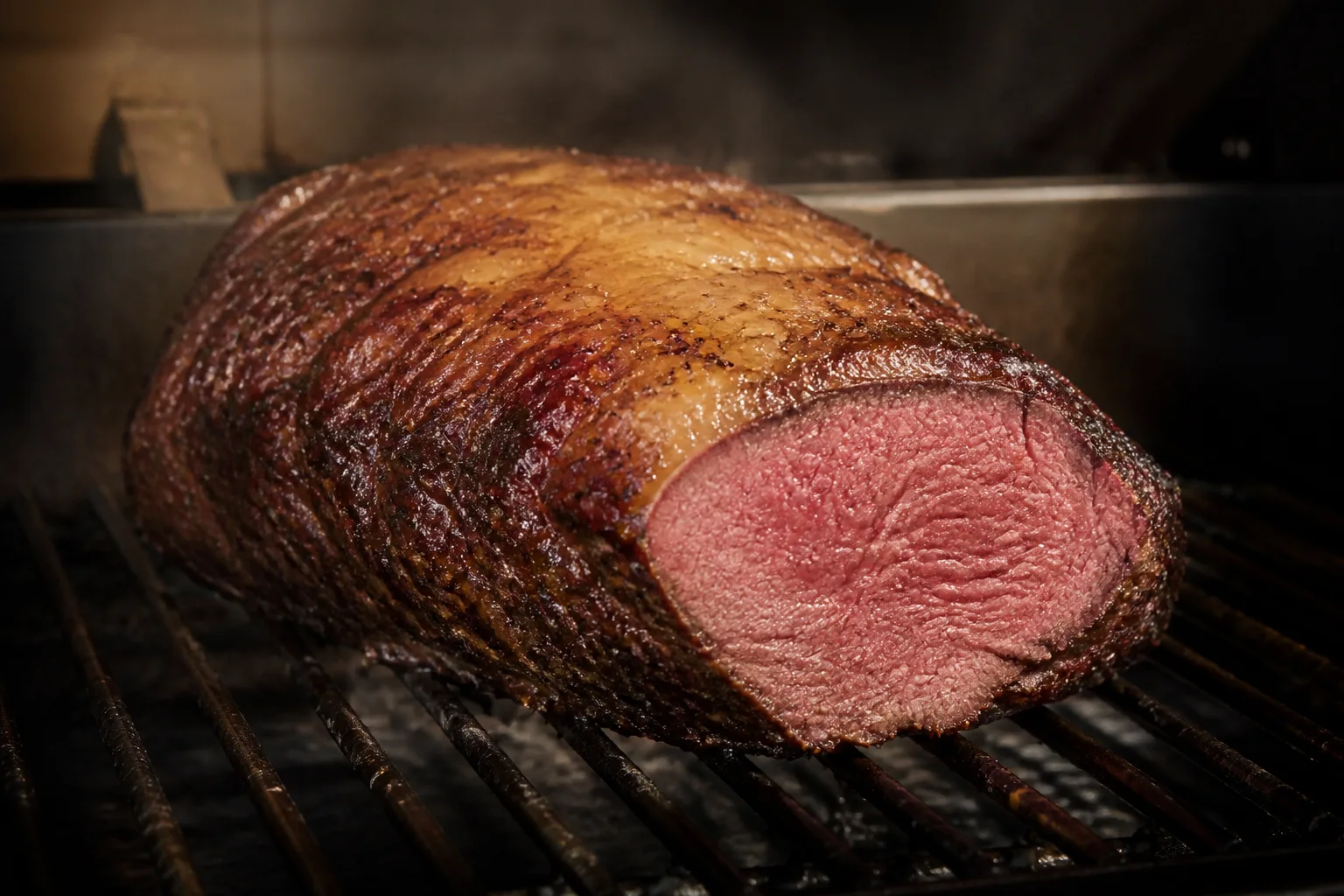
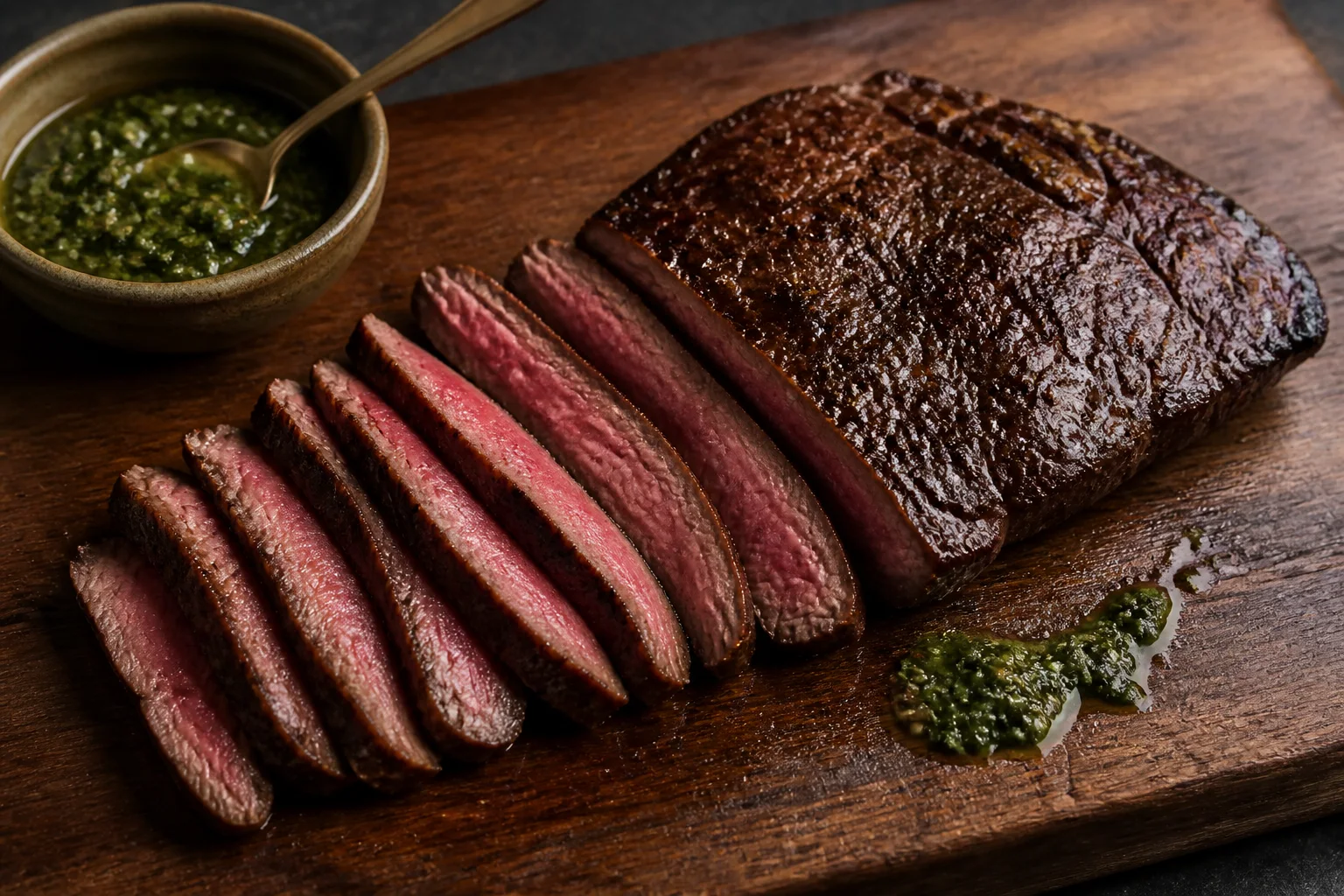
Visual Reference

Flavor, Texture and Fat Cap
The lean is firm, juicy and distinctly beefy, with less internal marbling than ribeye. The fat cap supplies richness at the edge. Properly rendered, it becomes browned and tender; under-rendered it is waxy, and burned it tastes sooty.
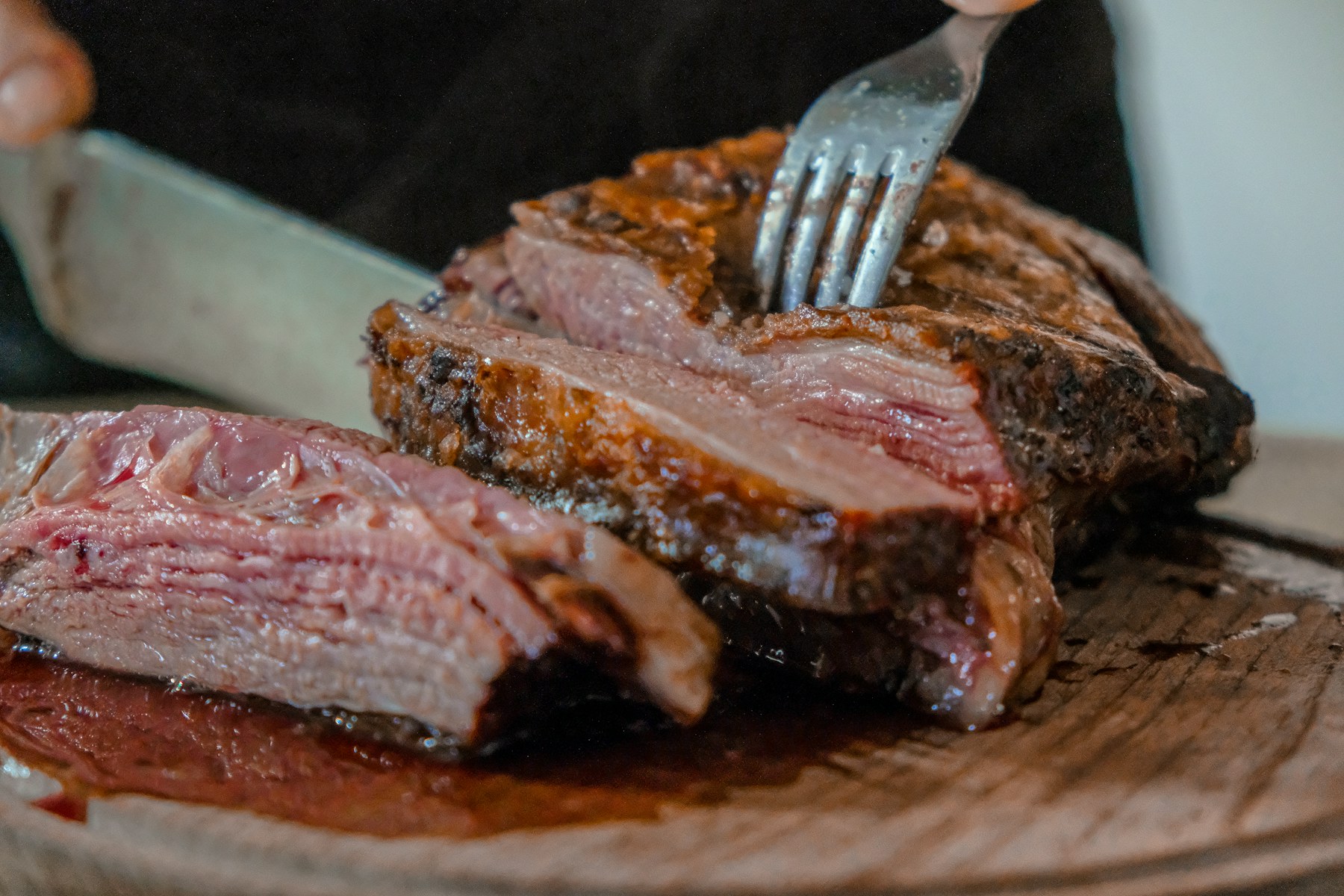
Buying Picanha
- Look for the triangular whole cap rather than a large piece extending deep into tougher rump muscles.
- Choose an even fat cap; trim it to a manageable layer rather than removing it.
- Check that steaks are cut with the grain before final cross-grain serving, depending on method.
- Avoid excessive surface gouging that will lose juices and render unevenly.
Brazilian Skewer and Steak Methods
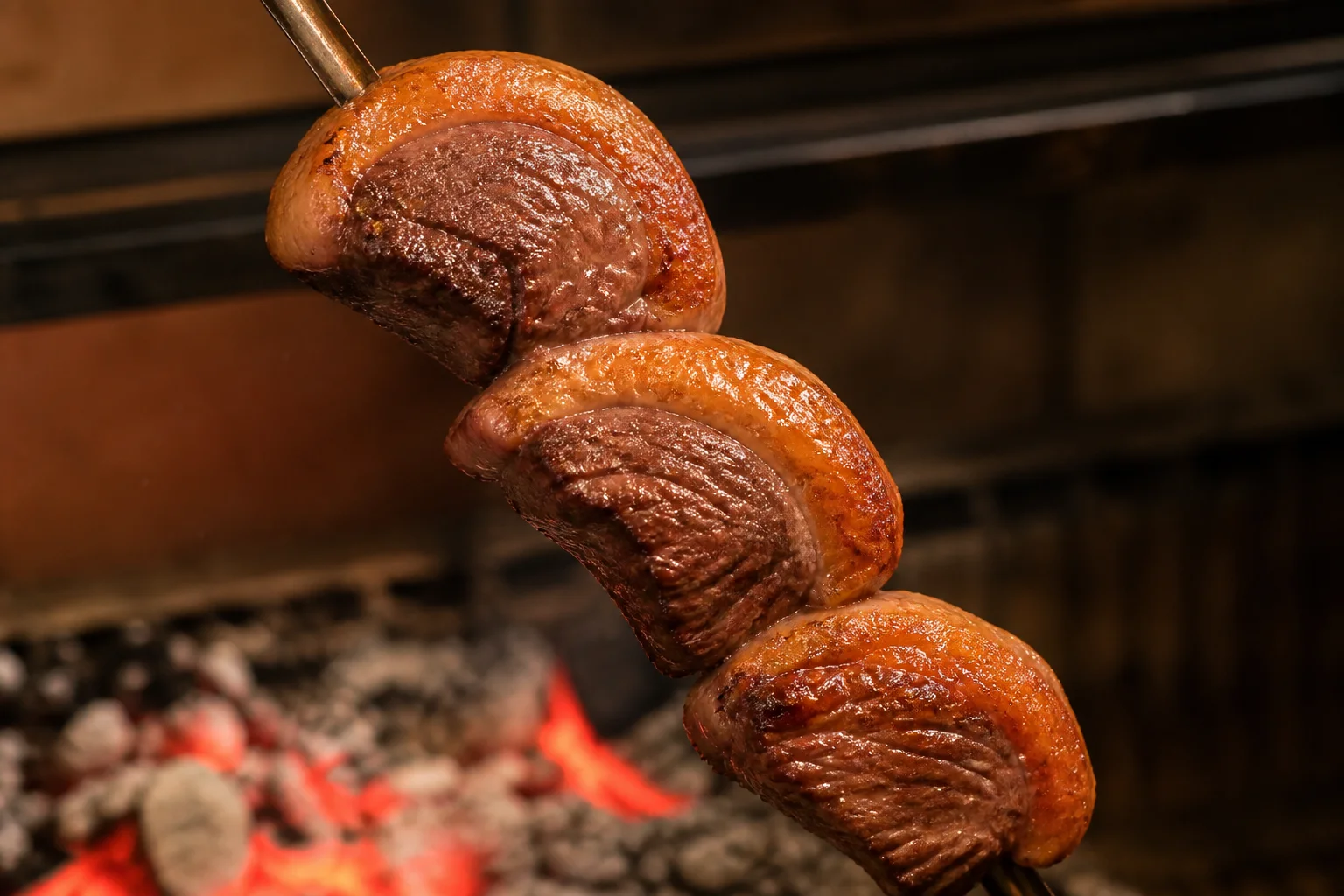
For churrasco-style portions, cut thick steaks with the grain, curve them into a C with the fat outside, skewer, and rotate over live heat. Shave thin slices across the grain at service. For flat steaks, render fat-side down, then sear both meat faces and finish indirectly.
Use a two-zone fire from the grilling guide and verify the thickest point with the steak temperature guide. Heavy sugar rubs burn on dripping fat; coarse salt is traditional and effective.
Slice and Serve
Rest, recheck the grain and cut thinly across it. Serve with farofa, vinaigrette, grilled vegetables, rice or chimichurri. For a richer premium version, see Wagyu picanha.
Render the Cap Without Starting a Grease Fire
Begin fat-side down over moderate rather than maximum heat. The cap should hiss and slowly turn golden; black patches and tall flames mean the heat is too concentrated. Move to indirect heat, let the fire settle and return. Scoring helps prevent curling but should stop before the knife reaches lean meat.
On skewers, the curved fat edge faces outward and passes near the fire during rotation. Keep spacing between pieces so rendered fat can drain rather than pooling between folds. Shave only the browned outer layer at service, then return the skewer to the fire for the next surface.
For flat steaks, rest before slicing and preserve a narrow fat edge on each piece. Diners who do not want all of it can leave it; removing the cap before cooking sacrifices both rendering and the cut's identity. If the cap has already been trimmed away, treat the piece more like coulotte steak and shorten the high-heat exposure.
Picanha Is Defined by Muscle and Fat-Cap Tradition
Picanha is the top sirloin cap, commonly retained with a substantial exterior fat layer in Brazilian-style fabrication. In US retail it may appear as top sirloin cap, rump cap or coulotte, but those packages can differ in fat trimming and portioning. Confirm that the triangular cap muscle—not a generic piece of rump or sirloin—is being sold.
A whole cap has a thick end, tapered end and grain that curves. Very large pieces may include neighboring muscle beyond the cap. Size is not a guarantee of authenticity, so use shape, fat layer and seller knowledge together.
Decide the Final Slice Before the First Cut
For thick horseshoe pieces on a skewer, portion the raw cap with the grain so the final shavings come off across it. For flat steaks, map the grain and ensure the serving knife crosses the fibers. A phone photograph of the raw surface is a useful reference after the crust forms.
Keep the fat cap attached and trim only extreme or ragged thickness. Score shallowly if needed to limit curling, stopping before the blade reaches lean. Salt the fat as well as the broad meat surfaces, but do not pack scoring cuts with rub.
| Format | Initial cut | Final service |
|---|---|---|
| Brazilian skewer | Thick pieces generally portioned with grain | Shave browned exterior across grain |
| Flat steaks | Even steaks planned around changing grain | Rest and slice across fibers |
| Whole cap roast | Leave intact, tie tapered end if needed | Map grain and adjust carving angle |
Render the Cap With a Real Escape Zone
Begin the fat over moderate heat and let it turn golden gradually. Maximum direct heat produces flames before the thick fat can soften. On charcoal or gas, reserve a cooler zone and move the meat whenever flames make sustained contact. In a skillet, pour off excess rendered fat so the lean browns rather than fries.
Check the thickest lean section with a thermometer. The fat cap and tapered end will report different temperatures. Rest before slicing and leave a narrow browned fat edge on each piece for diners to choose. The richer Wagyu picanha guide explains how internal marbling changes portion size and fire risk.
Common Picanha Problems and Corrections
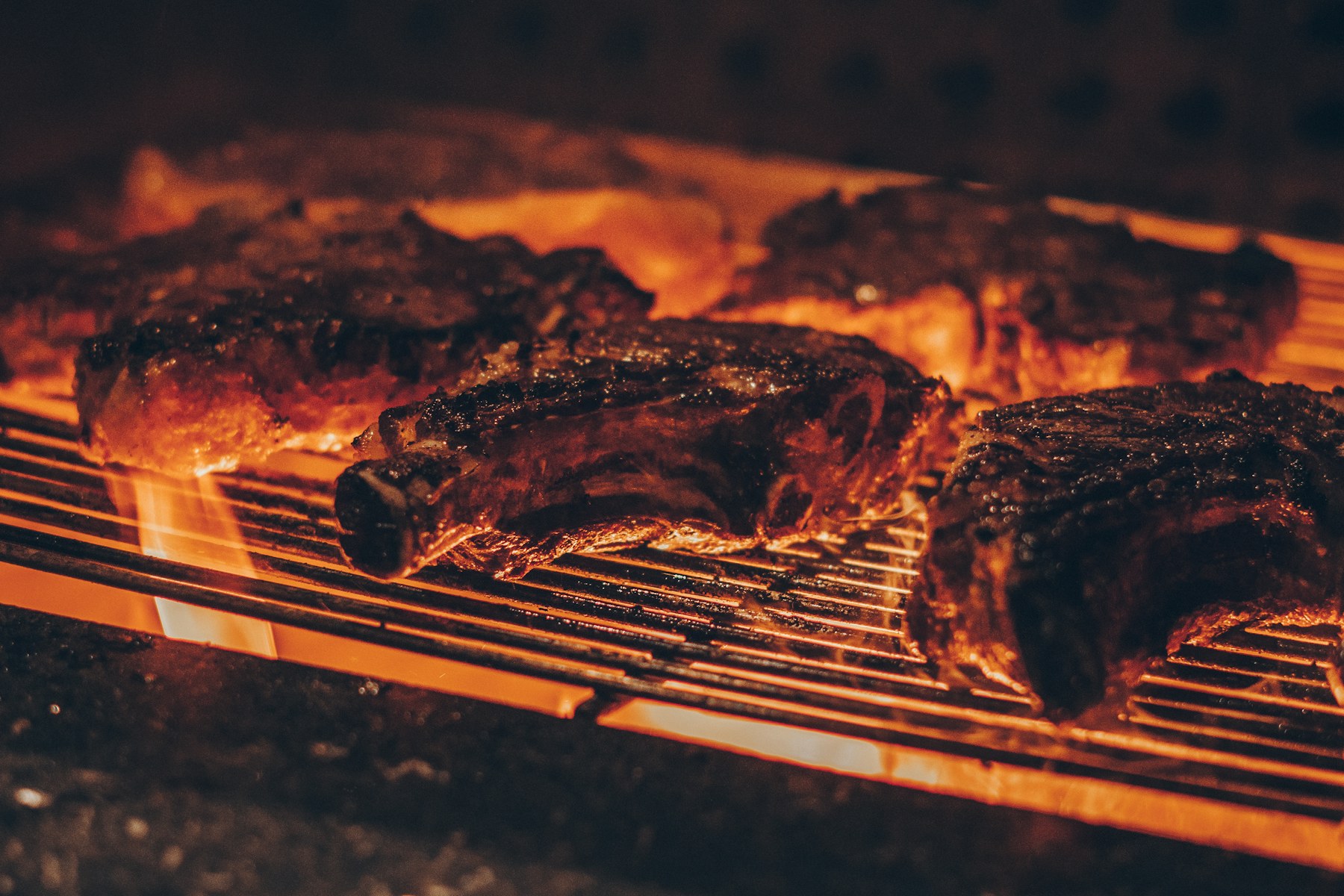
A black, hard fat cap indicates heat that was too intense before rendering. Use moderate heat and a cooler zone. A curled steak was often cut or scored unevenly; shallow scoring and frequent repositioning help. A tender center with chewy bites usually points to carving along the curved grain.
If the package lacks a substantial cap, cook it as a trimmed sirloin-cap steak and shorten direct heat rather than adding oil to imitate missing fat. If the piece includes several obvious muscles or is unusually large, ask whether it is a broader rump-cap portion rather than clean picanha.
Picanha, Pichana, Picahna and Rump Cap
Picanha is the established spelling for the triangular fat-capped sirloin cut. Pichana and picahna are frequent misspellings, while rump cap, sirloin cap and coulotte are related market terms. These searches belong on one anatomy page because the useful question is whether the package contains the correct capped muscle—not how the customer typed it.
| Term | What it signals | What to verify |
|---|---|---|
| Picanha | Brazilian/Portuguese market name | Triangular sirloin-cap muscle with an even fat cap |
| Pichana / picahna | Common search misspellings | Do not expect a distinct cut |
| Rump cap / sirloin cap | Anatomical or regional retail wording | Fabrication, cap thickness and grain |
| Coulotte | Closely overlapping North American/French-derived market term | Whether sold whole or portioned into steaks |
Rump Cap Steak, Picanha and Coulotte
Rump cap steak commonly points to the same top-sirloin-cap muscle discussed here, but retail fabrication can differ. Picanha often emphasizes an intact exterior fat cap and Brazilian service, while coulotte may be trimmed or portioned differently. The useful check is the triangular cap muscle, grain map and continuous fat cover—not the regional word alone.
| Label | What to verify | Best next guide |
|---|---|---|
| Rump cap steak | Top-sirloin-cap muscle and attached adjacent tissue | This picanha guide |
| Coulotte steak | Whether the cap is trimmed, portioned or sold whole | Coulotte steak |
| Brazilian picanha | Fat cover and skewer or whole-roast service | Brazilian picanha |
If the package uses coulotte, see the coulotte steak guide. For traditional fat-cap and skewer context, use the Brazilian picanha guide. These routes answer distinct intent without creating a fourth page for rump cap.
Continue Through This Steak Topic
Build the full picture: Brazilian Picanha, Smoked Picanha, Wagyu Picanha, and Coulotte Steak cover the closely related cuts, methods, buying decisions and recipes that support this guide.
When you need to compare across families or techniques, continue with Sirloin Steak, Grilled Steak, and steak temperature. These pages answer adjacent questions without forcing every detail into one overgrown article.
Frequently Asked Questions
What cut is picanha?
It is the top sirloin cap, a triangular muscle with a characteristic fat layer.
Is picanha the same as coulotte?
They refer to the same muscle region, but coulotte is often trimmed or portioned differently in North American retail.
Do you eat the picanha fat cap?
Yes, when it is trimmed to a sensible thickness and rendered until browned and tender. Diners can still choose how much edge fat to eat.