Cooking
How to Cook Steak
Learn how steak thickness, cut, surface moisture, heat strategy, temperature and resting determine the best cooking method.
Read guideChoose a cooking method by cut and thickness, then control surface moisture, heat, temperature, resting and slicing.
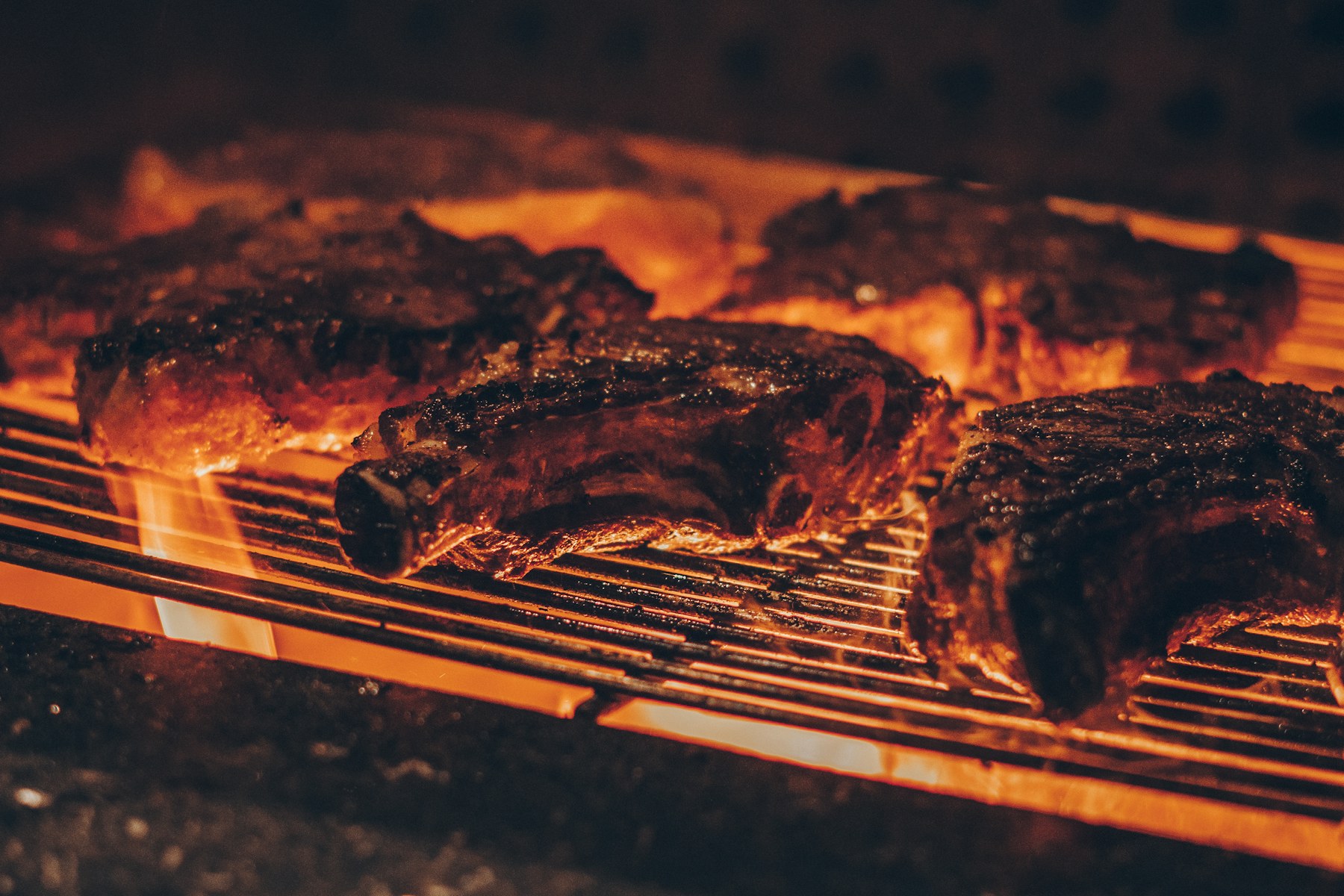
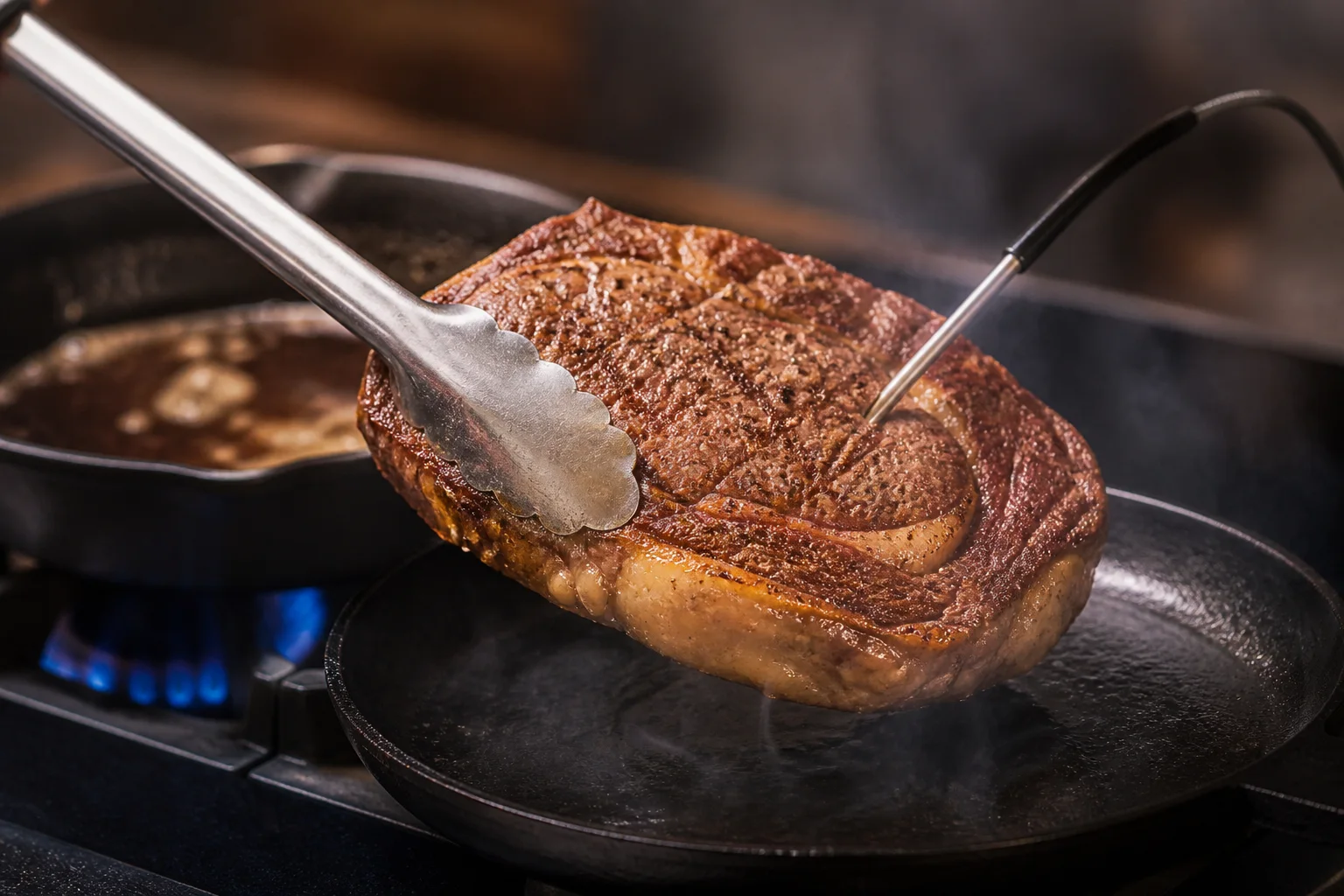
The core how to cook steak guide explains the decisions. For a thick steak, begin with reverse searing; for a medium boneless cut, learn cast-iron heat control.
Learn how steak thickness, cut, surface moisture, heat strategy, temperature and resting determine the best cooking method.
Read guideDirect heat, indirect zones and clean wood flavor.
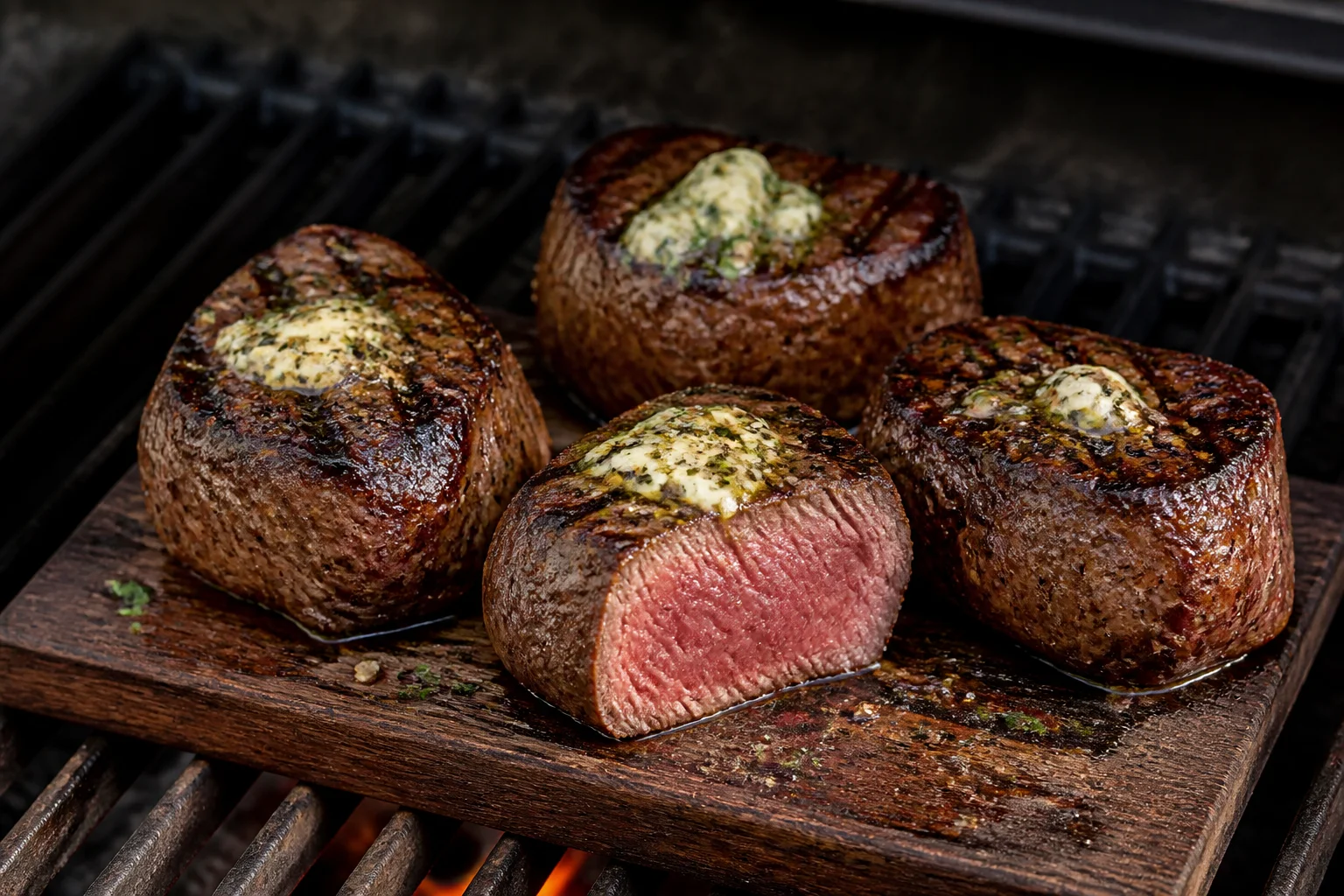
Grill steak with direct and indirect zones, manage fat flare-ups, use accurate temperature checks and rest and slice correctly.
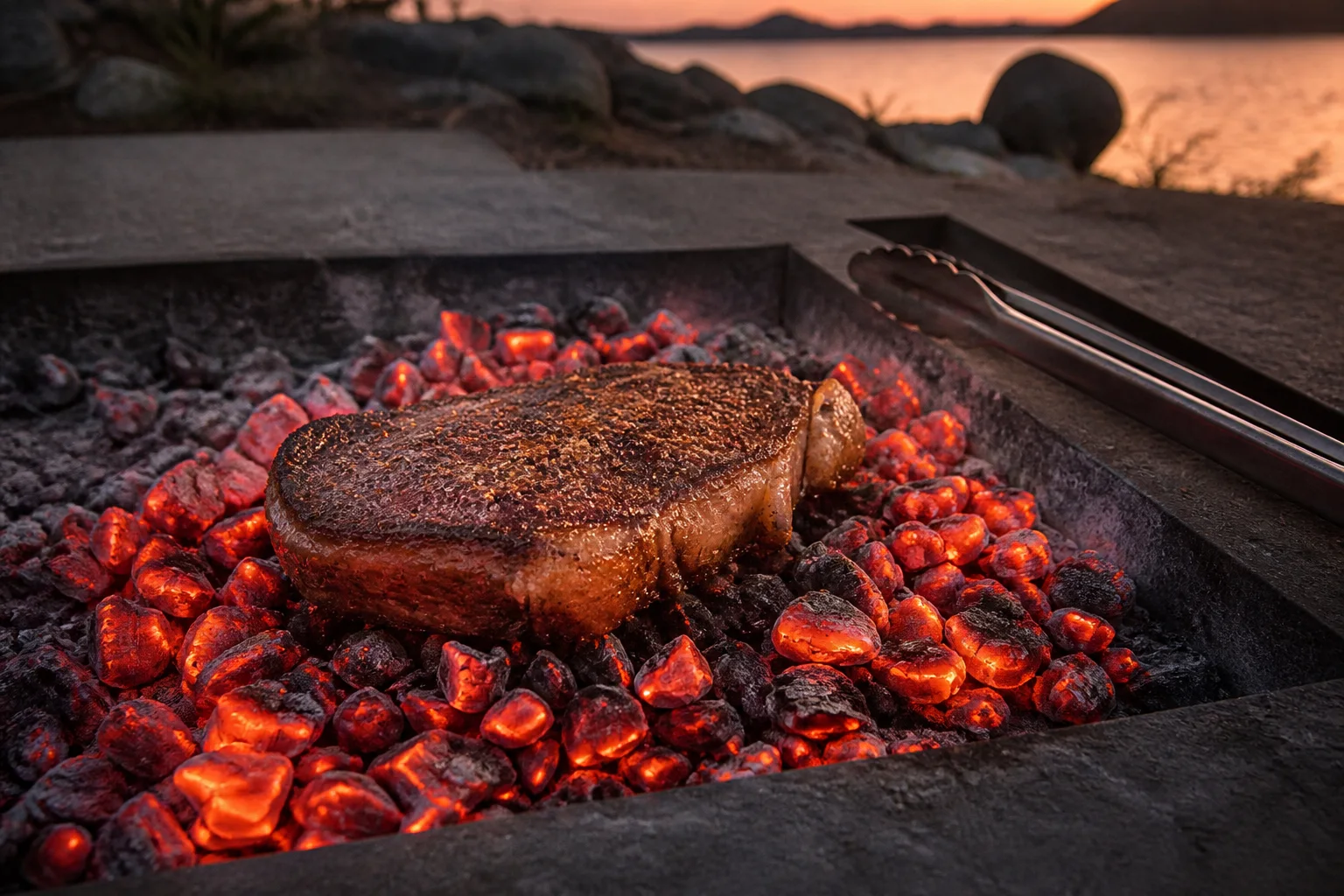
Read guideCook caveman steak directly on a clean hardwood ember bed with the right fuel, coal preparation, ash control, two-zone finishing and thermometer checks.
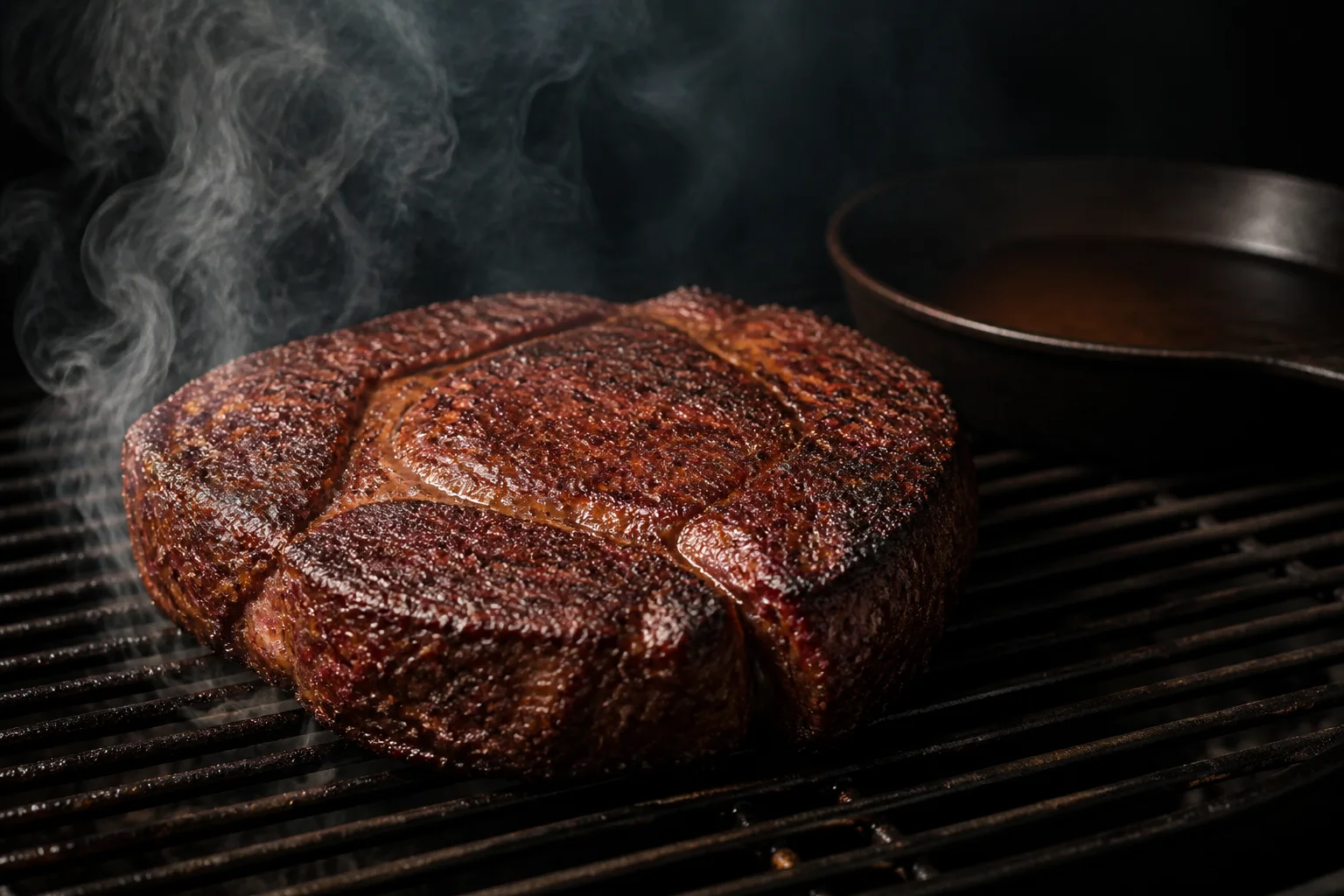
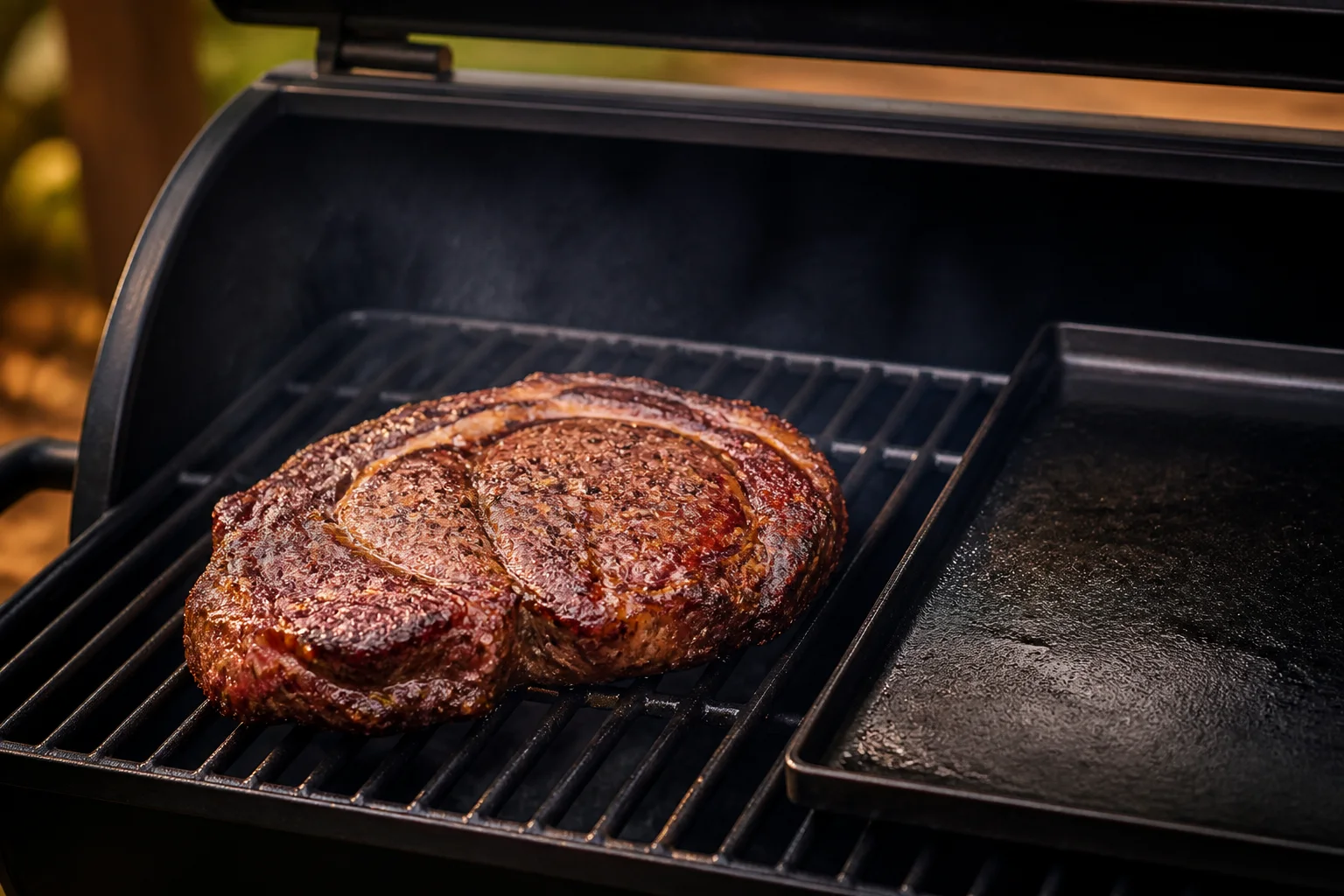
Read guideSmoke thick steaks over a clean fire, position the probe correctly and finish with a high-heat reverse sear for crust.
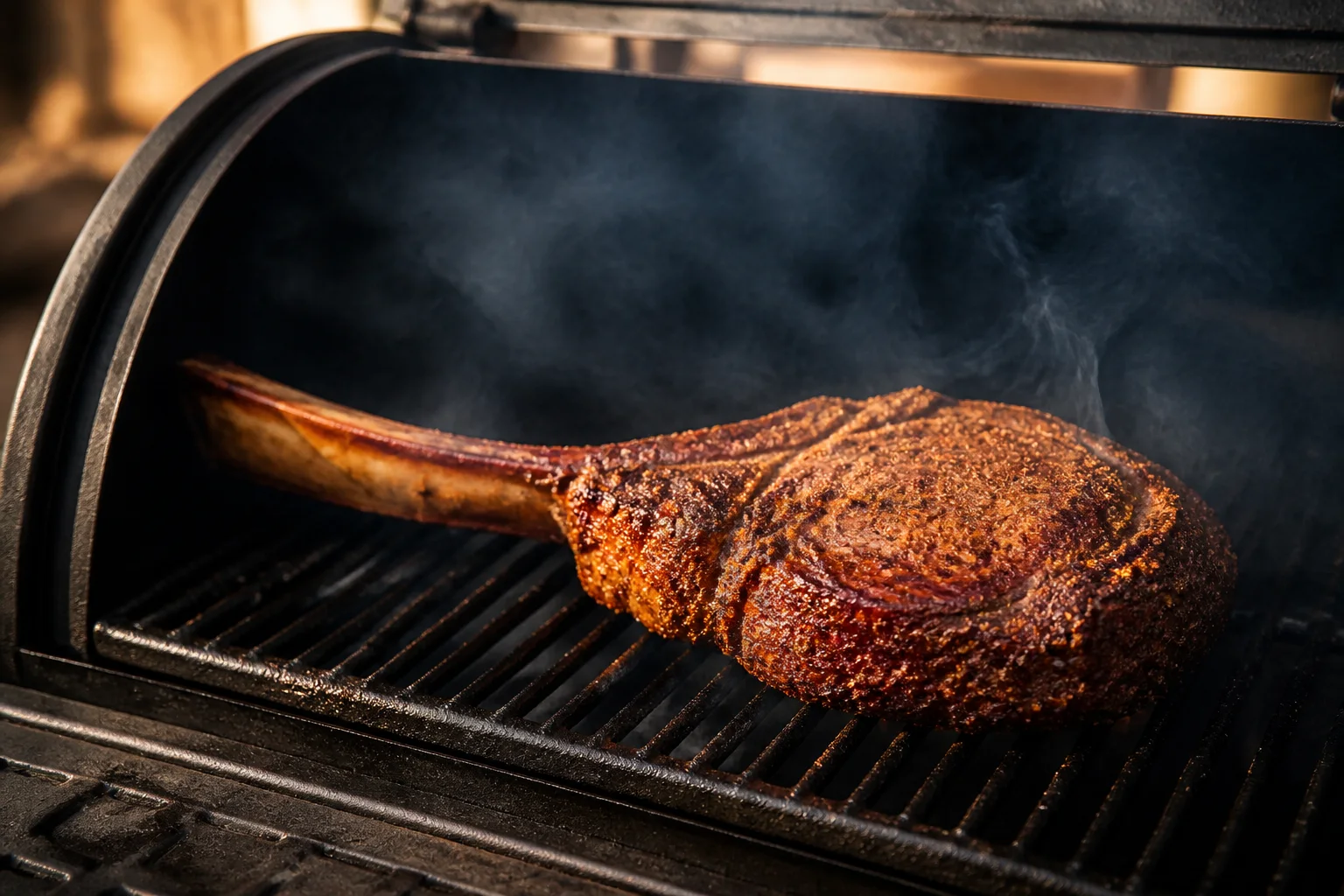
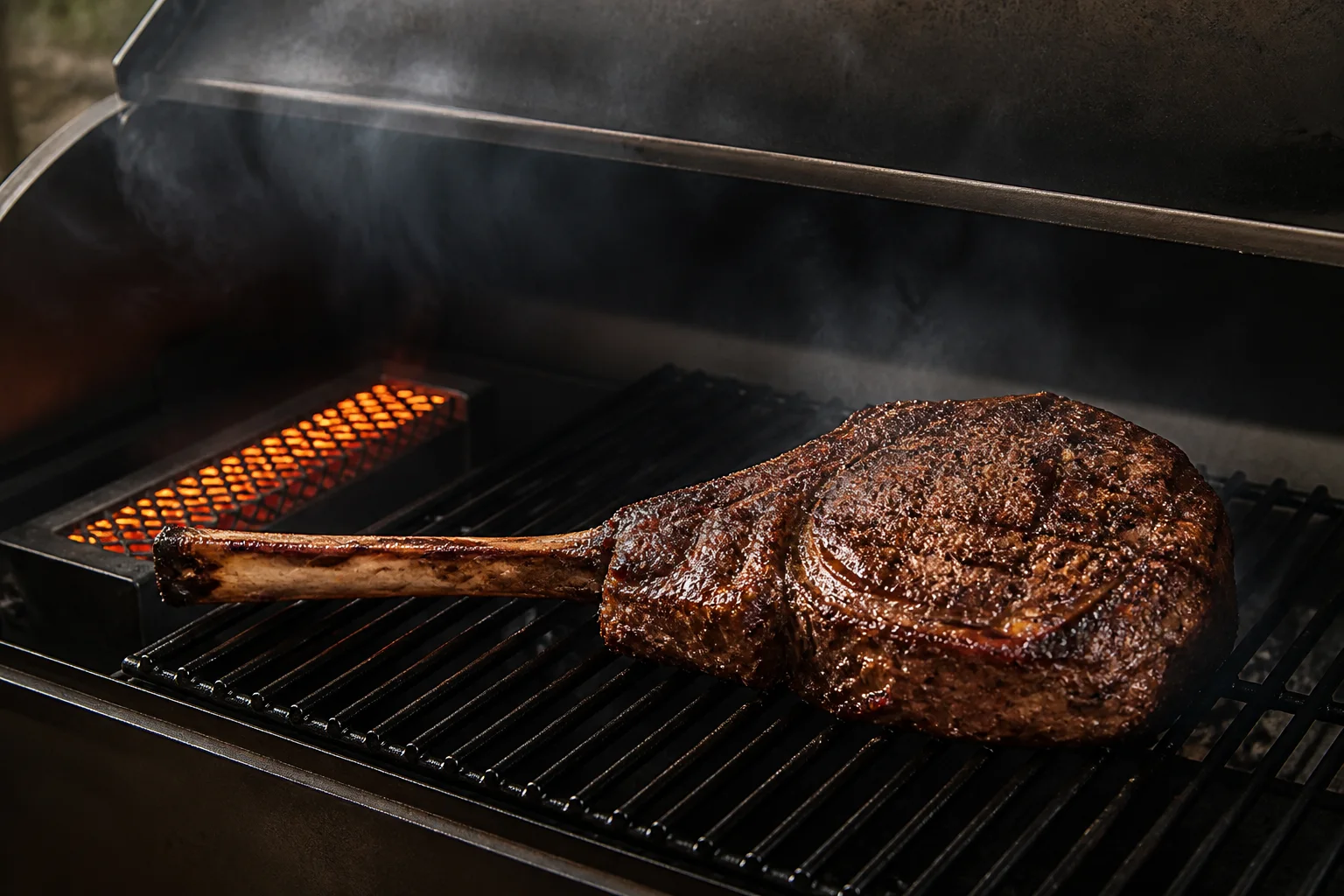
Read guideSmoke a tomahawk steak with clean wood flavor, accurate probe placement and a high-heat reverse sear for a dry, browned crust.
Read guideSmoke a thick ribeye over clean wood, track the center accurately and reverse-sear for a crisp crust without bitter smoke.
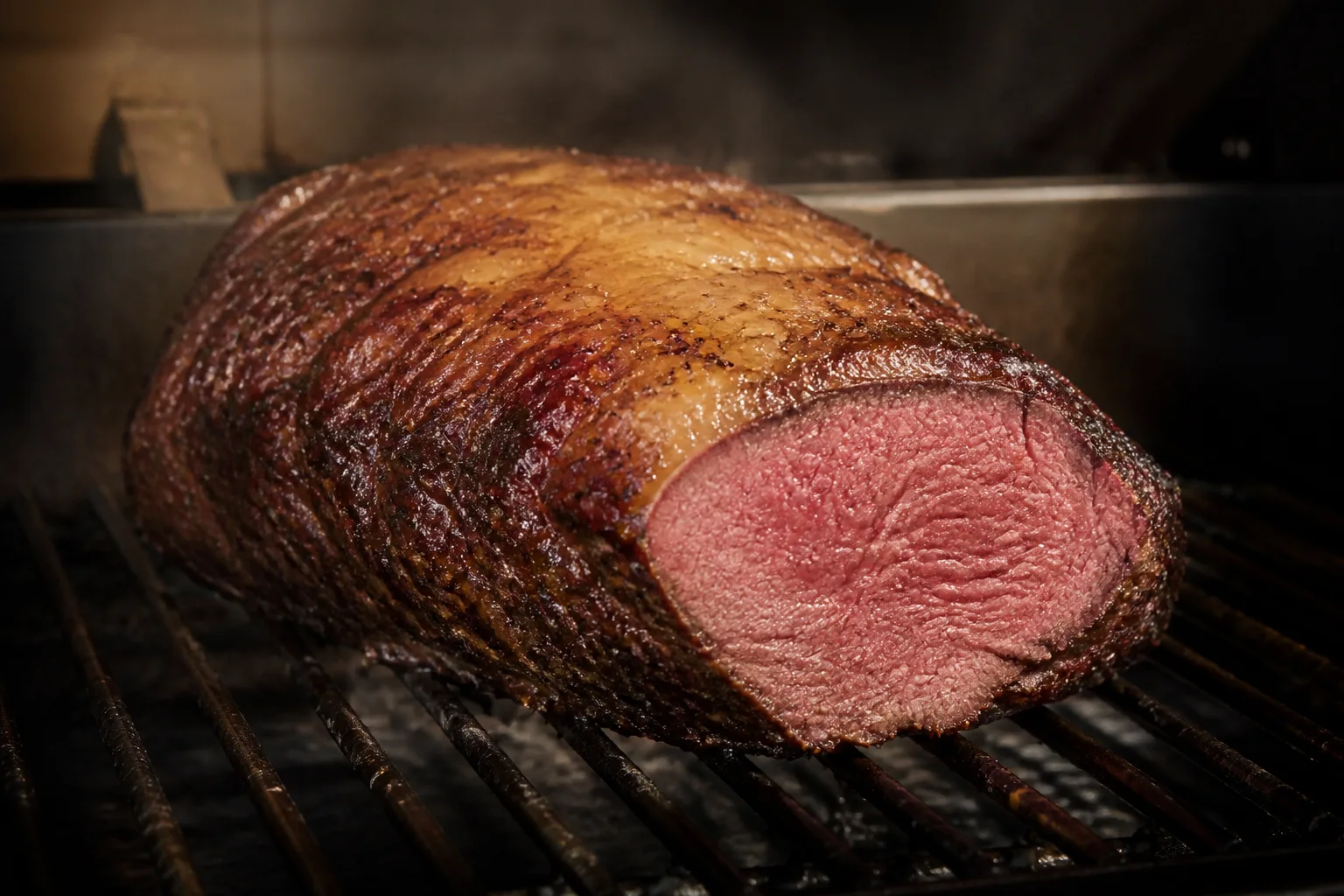
Read guideSmoke a whole picanha with its fat cap intact, then finish over high heat for a crisp exterior using grain mapping and measured temperature.
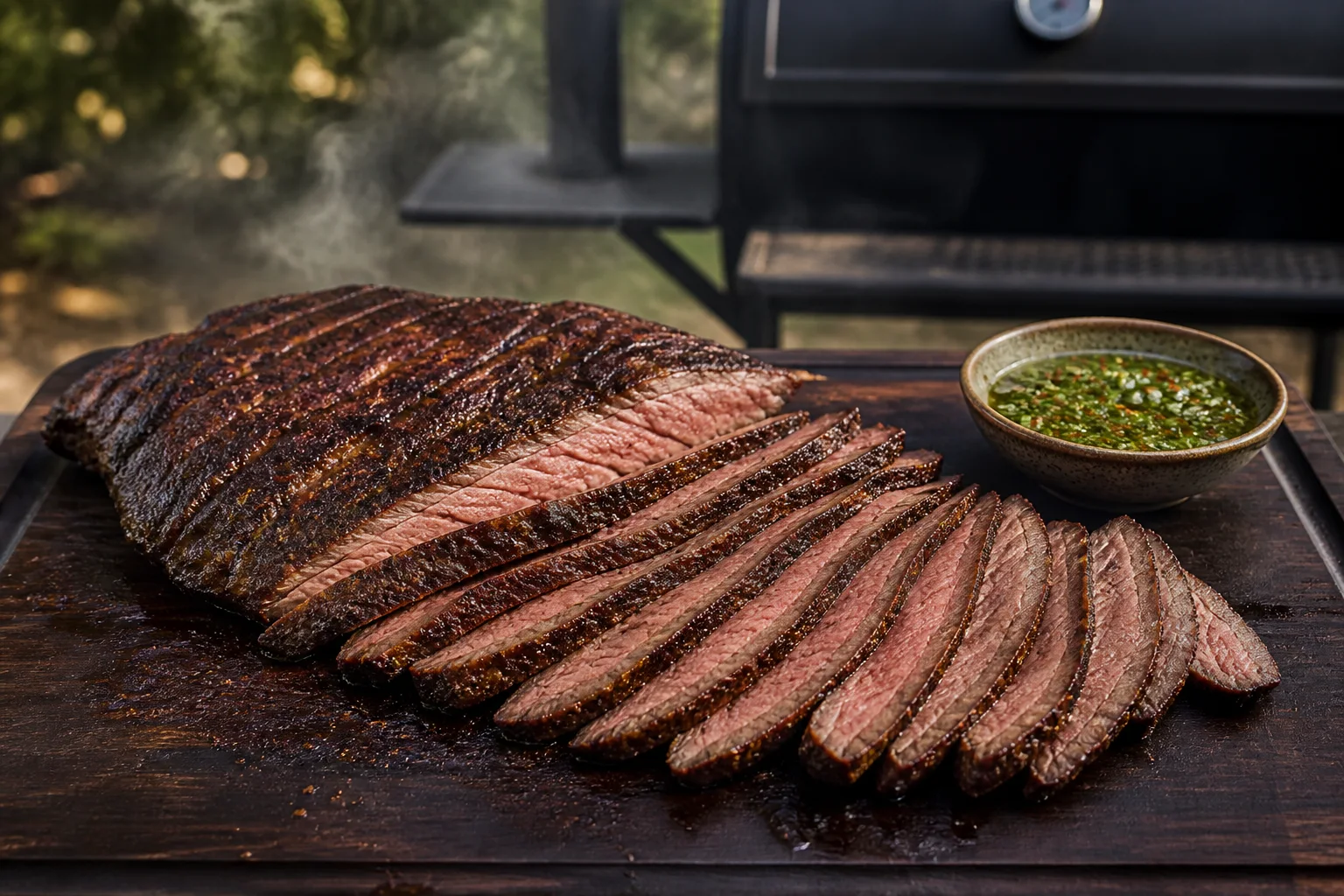
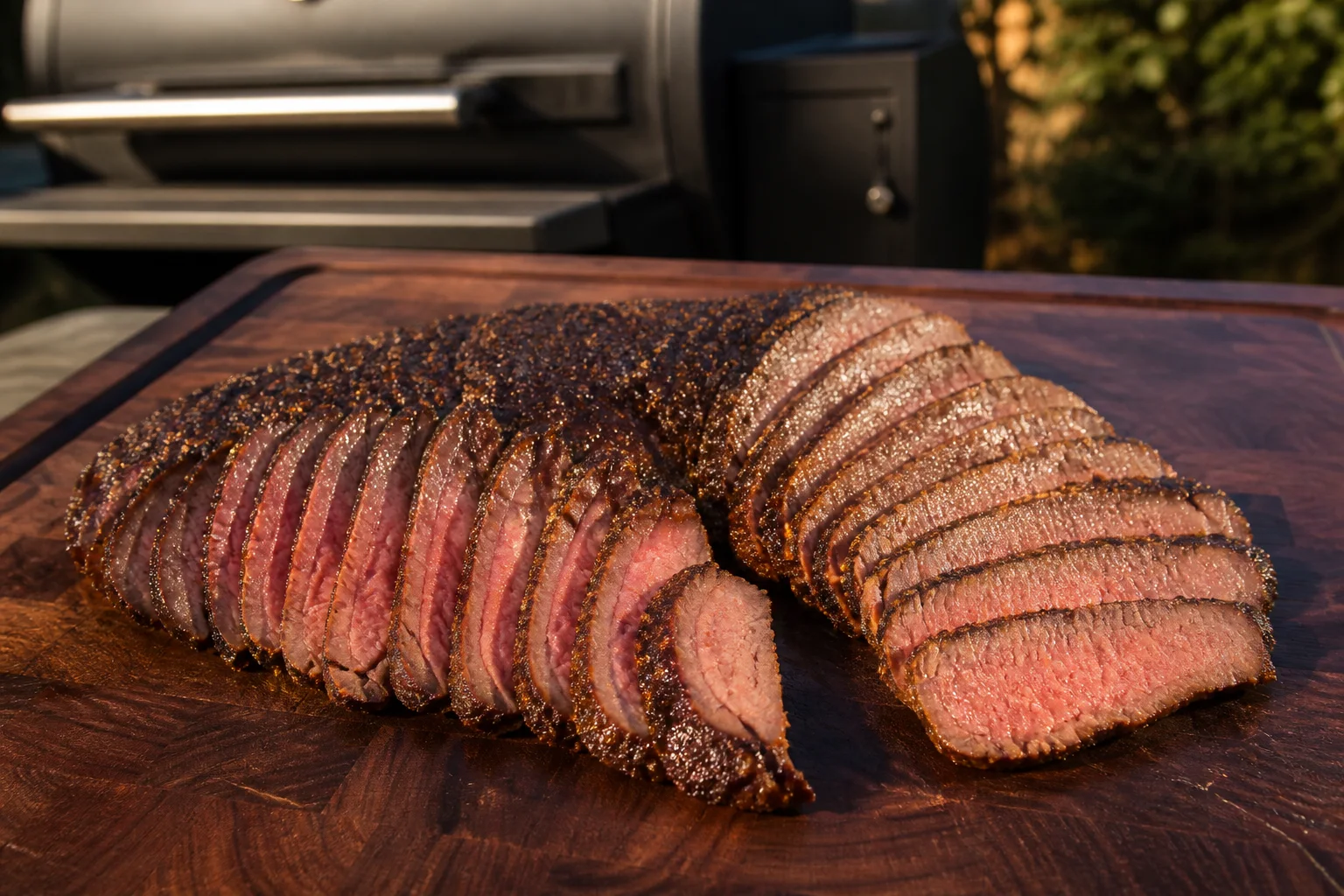
Read guideSmoke flank steak briefly over clean wood, finish it with intense dry heat and carve very thinly across the grain for tender slices.
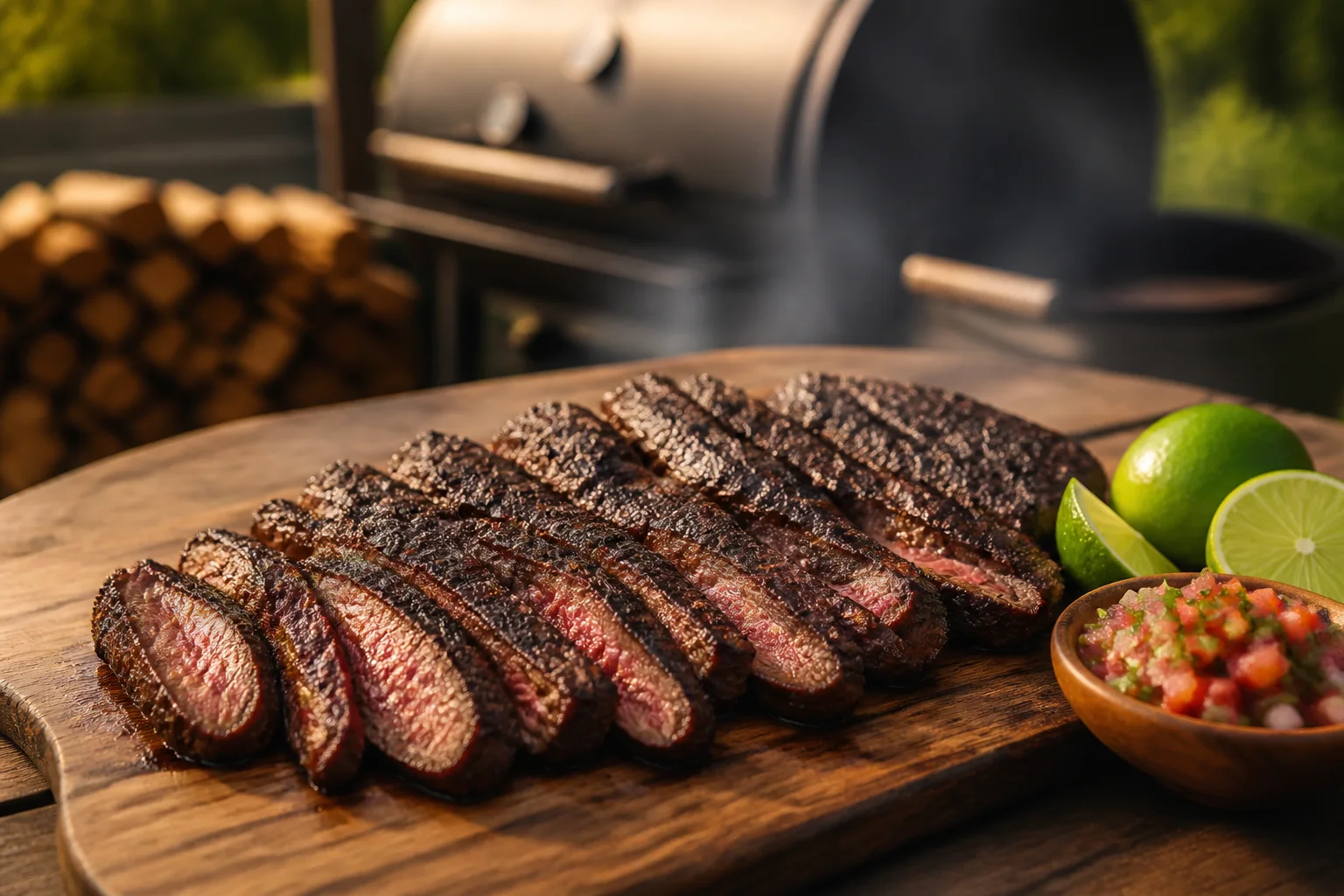
Read guideSmoke skirt steak without drying its thin loose grain, then sear quickly and carve into short cross-grain slices for tacos, bowls or plates.
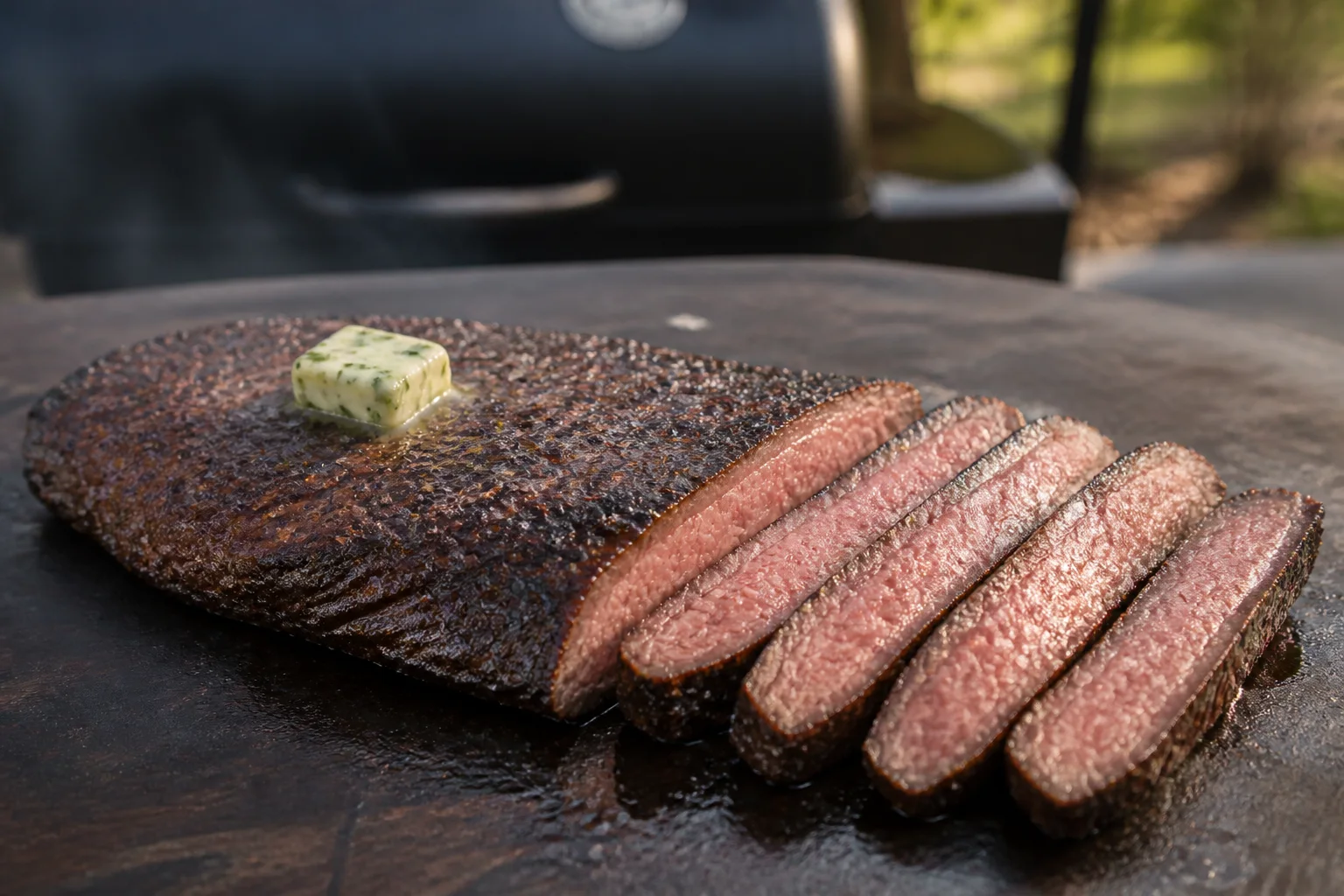
Read guideSmoke flat iron steak over clean wood, finish it in a hot skillet and slice across the fine grain while preserving this tender shoulder cut.
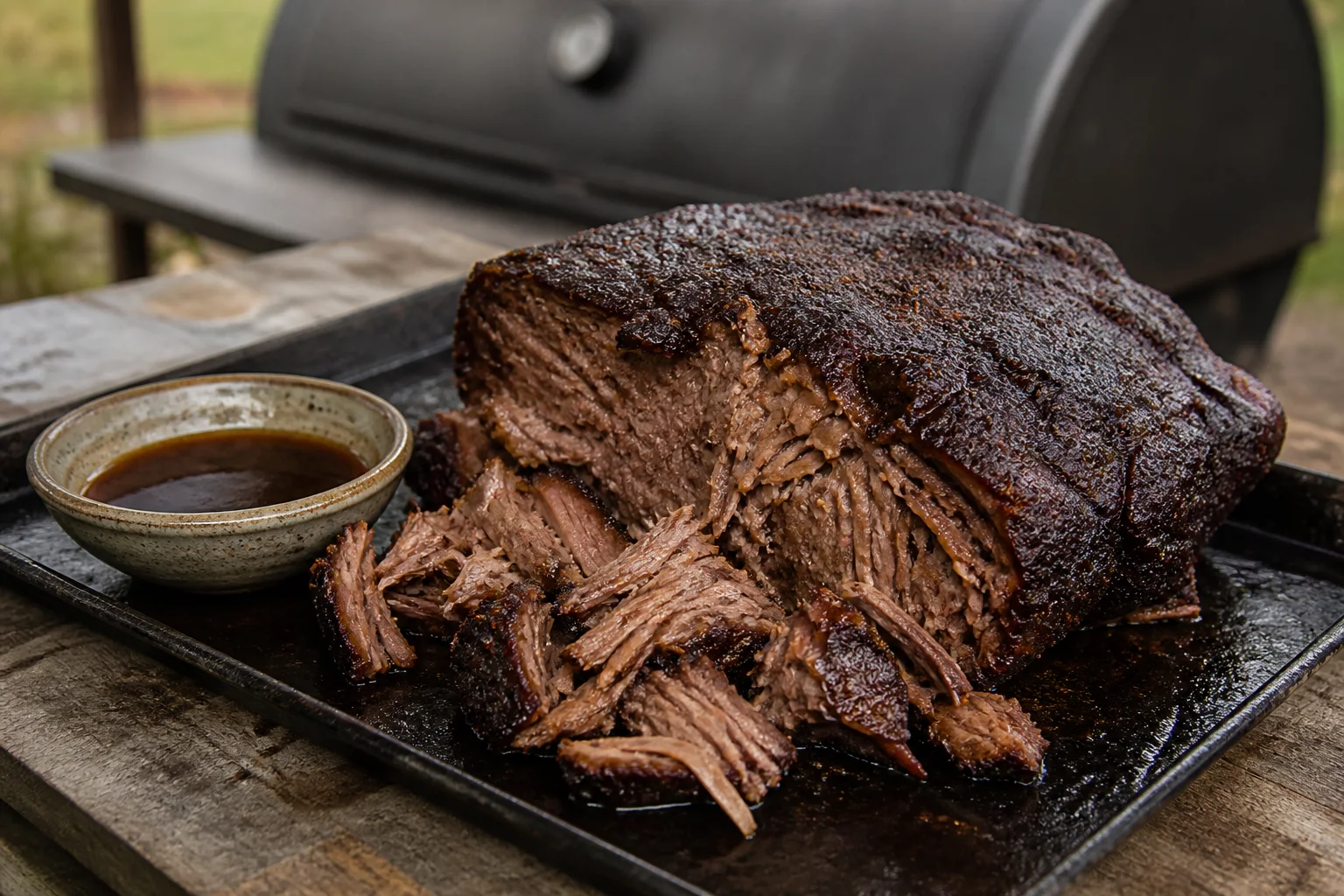
Read guideSmoke chuck roast with a dry bark, controlled 250°F pit, covered tenderizing stage and probe-led finish for sliceable or pullable beef.
Read guideSmoke tri-tip over controlled indirect heat, finish with a fast sear and divide the roast at its grain turn before thin cross-grain slicing.
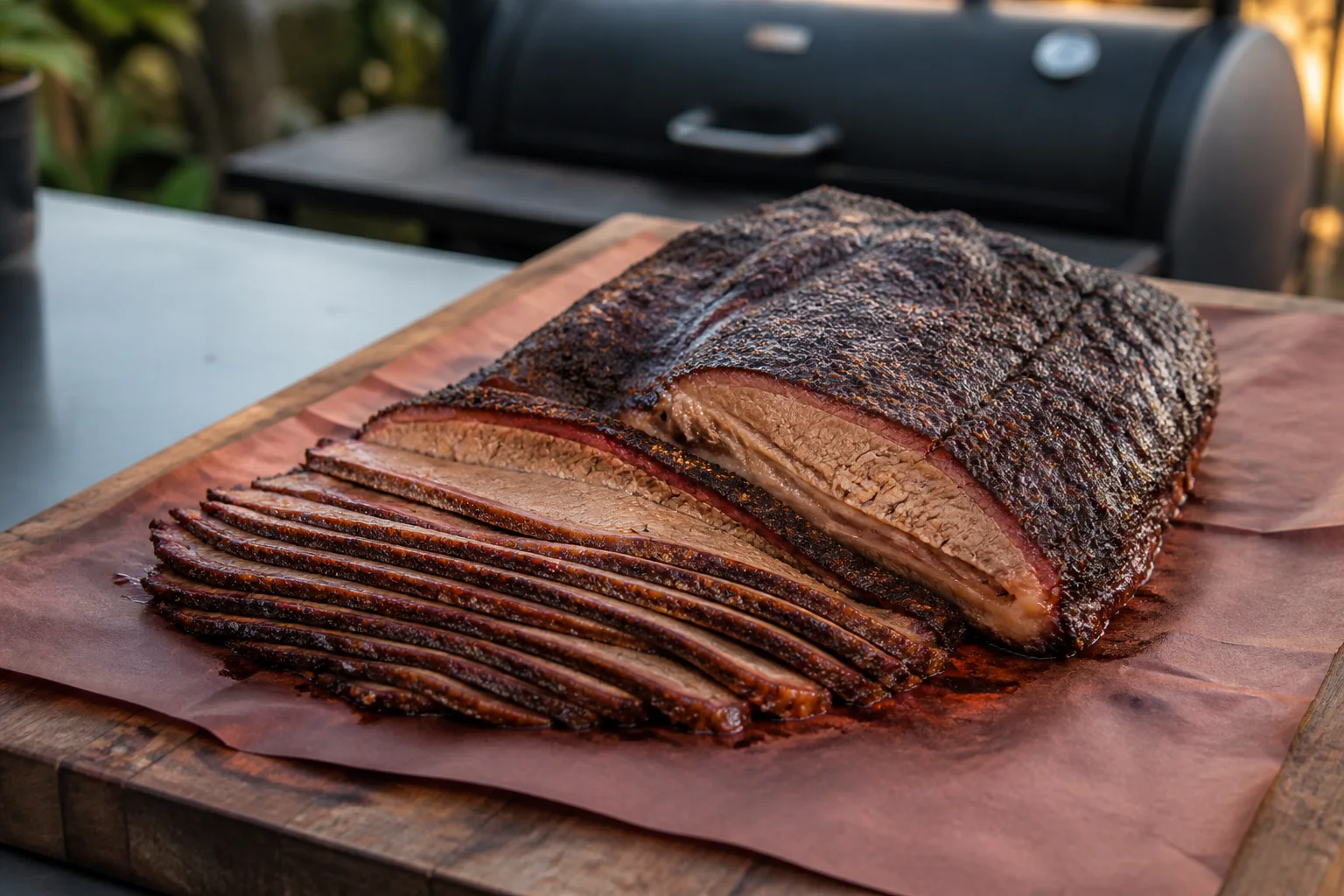
Read guideSmoke a whole beef brisket with clean bark, monitored pit temperature, an optional wrap, probe-led tenderness and separate flat and point slicing.
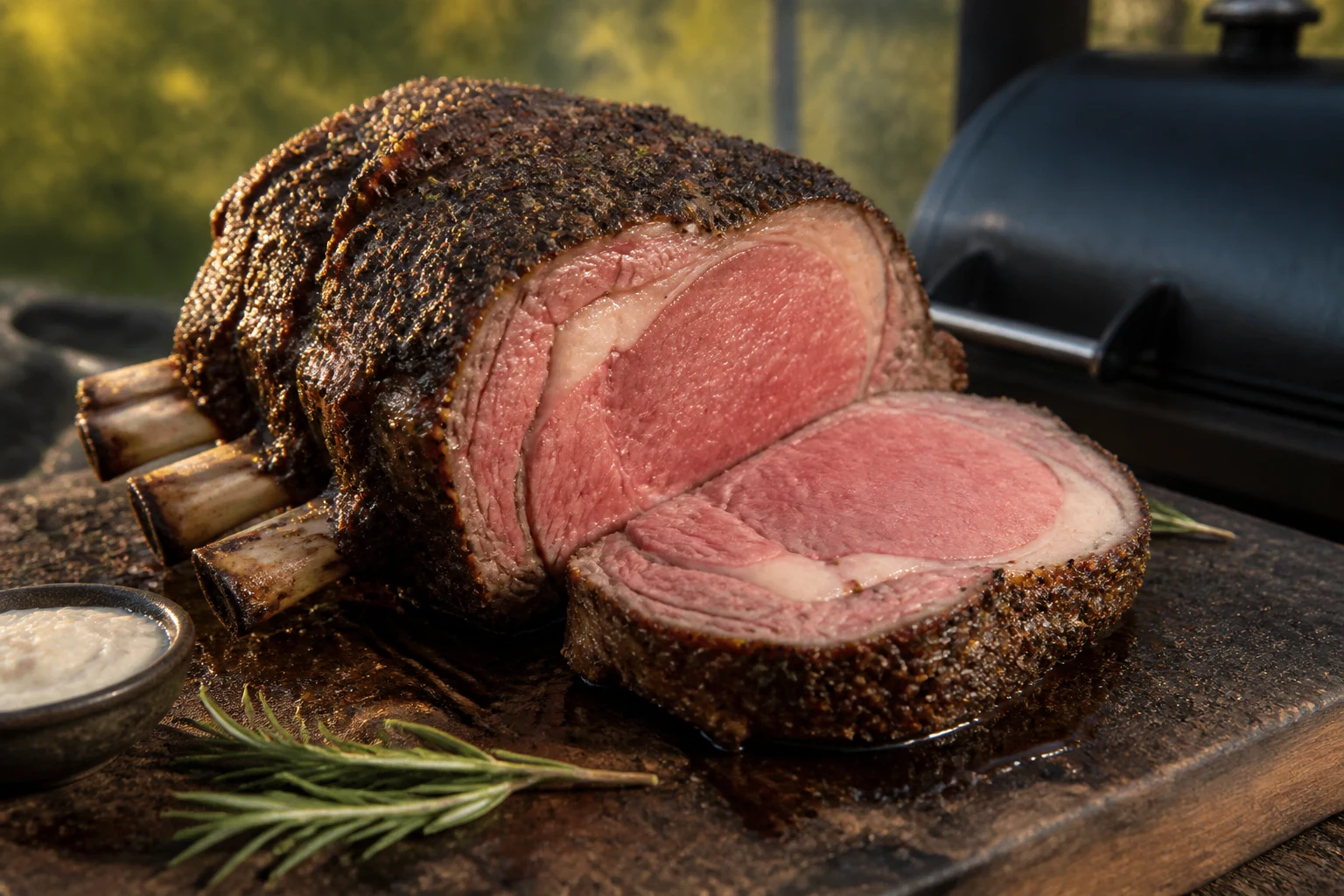
Read guideSmoke bone-in or boneless prime rib with a dry-brined surface, verified 225°F to 300°F chamber, measured 145°F center, rest and optional hot finish.
Read guideCook ribeye on a Traeger or other pellet grill with a low smoke stage, accurate grate temperature and a properly hot finishing sear.
Read guideCook a tomahawk on a pellet grill with clean smoke, correct probe placement, a separate searing plan and safe control of rendered-fat flare-ups.
Read guideControl heat indoors with iron, ovens, moving air or a water bath.
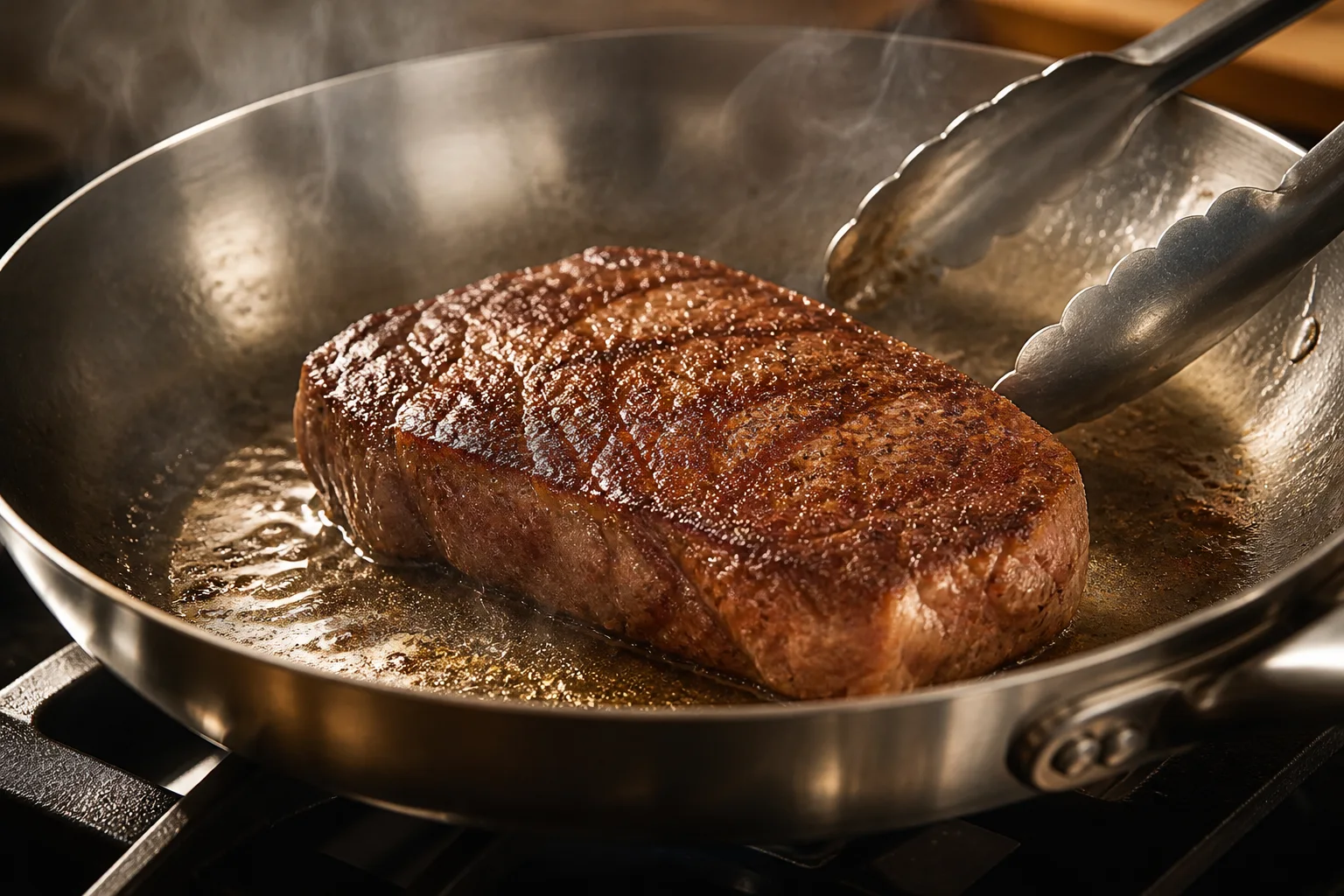
Pan-sear steak with a dry surface, controlled skillet heat, accurate center measurement, late butter basting and a crust-preserving rest.
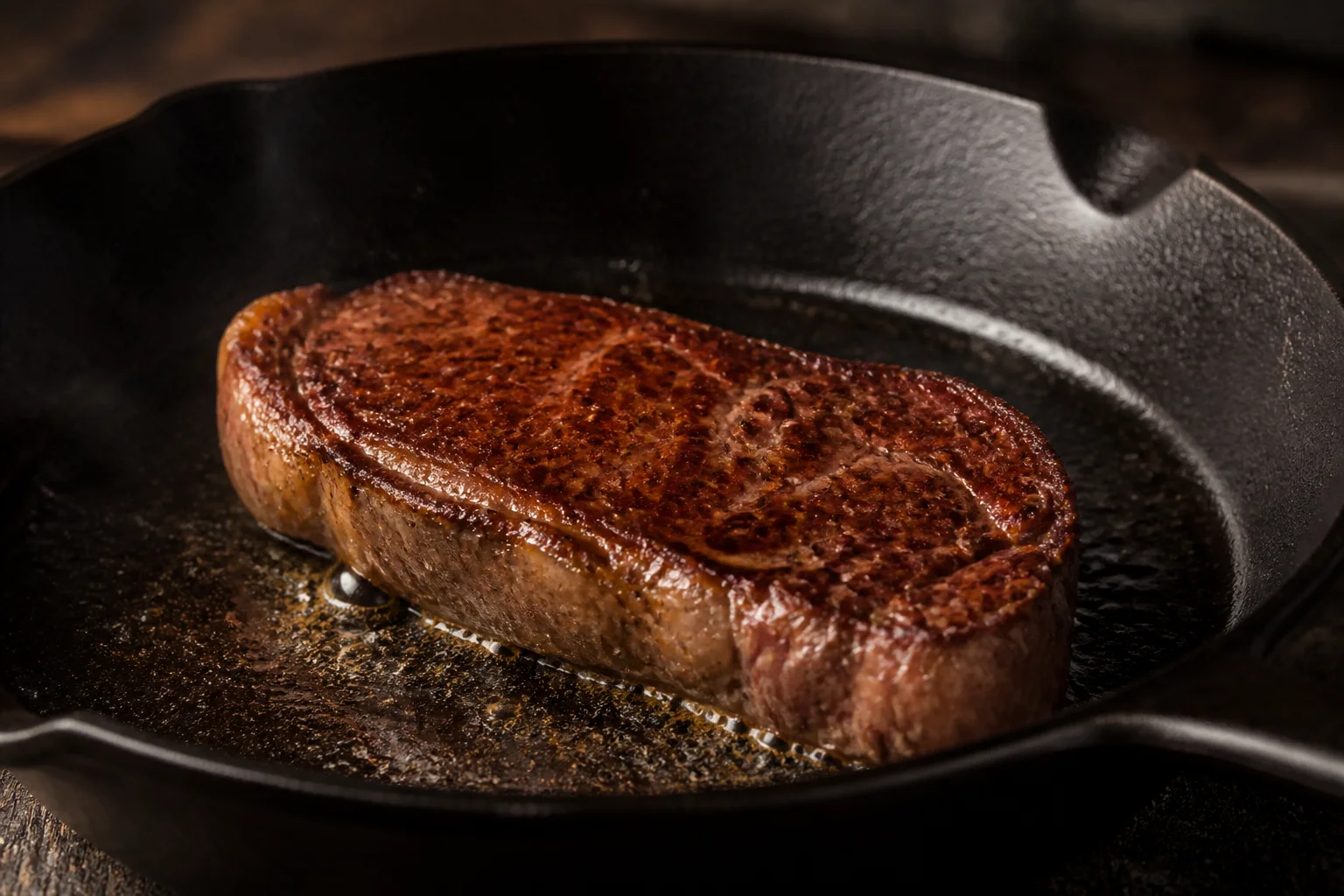
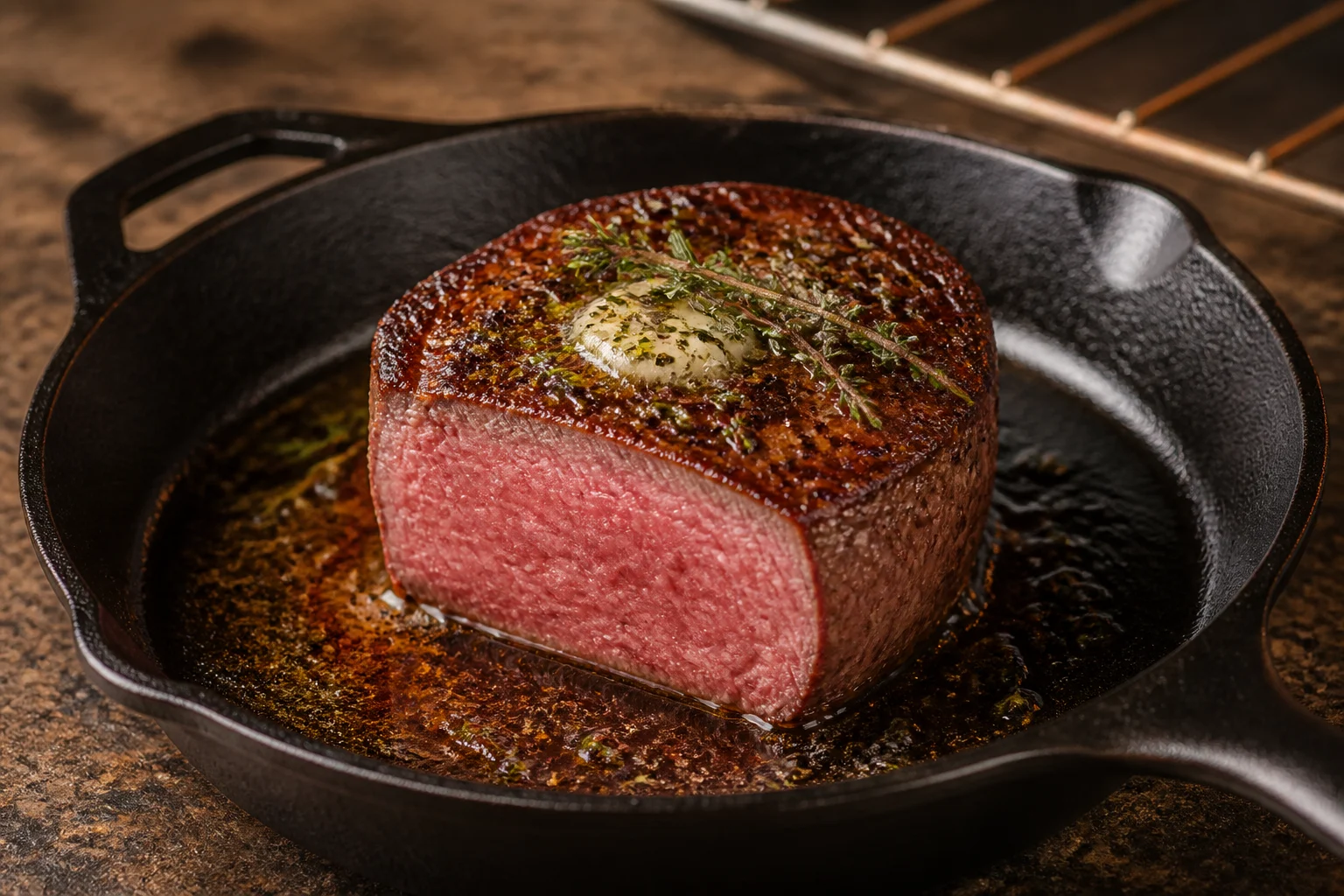
Read guideCook steak in cast iron with proper pan sizing, a dry surface, frequent turns, a late butter baste and temperature-led resting.
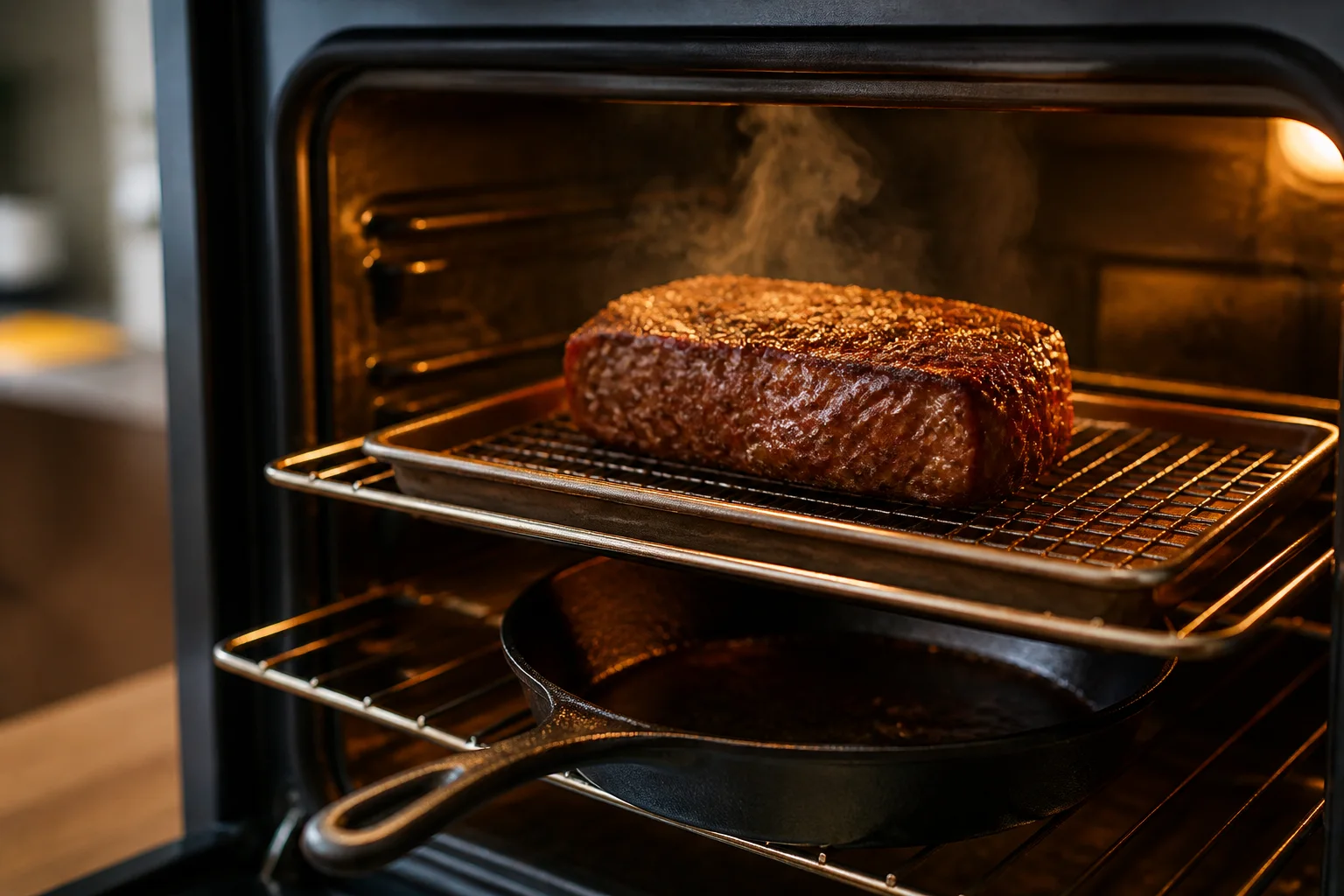
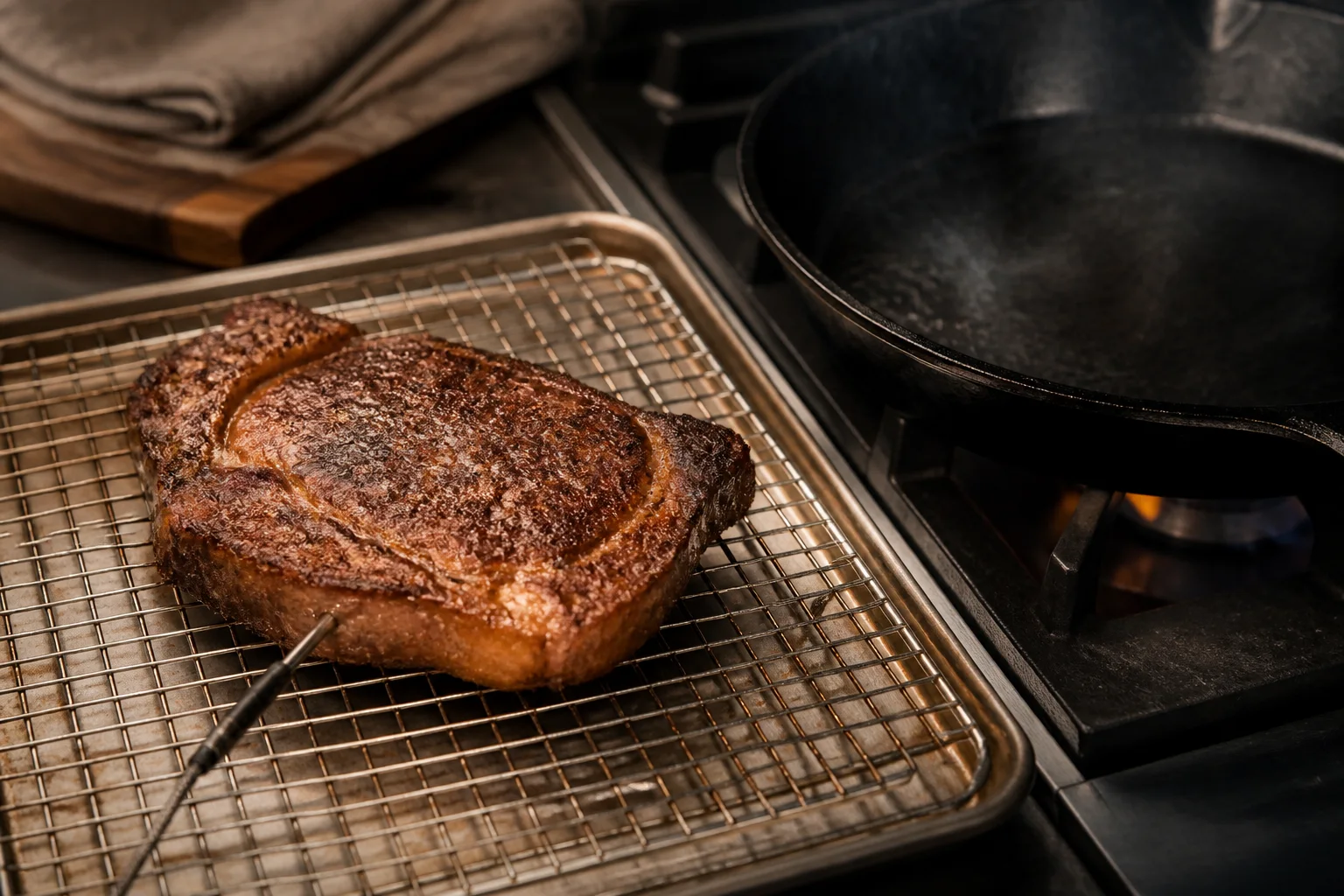
Read guideCook steak in the oven on a rack, then finish with cast iron or a broiler for crust, using temperature rather than fixed baking time.
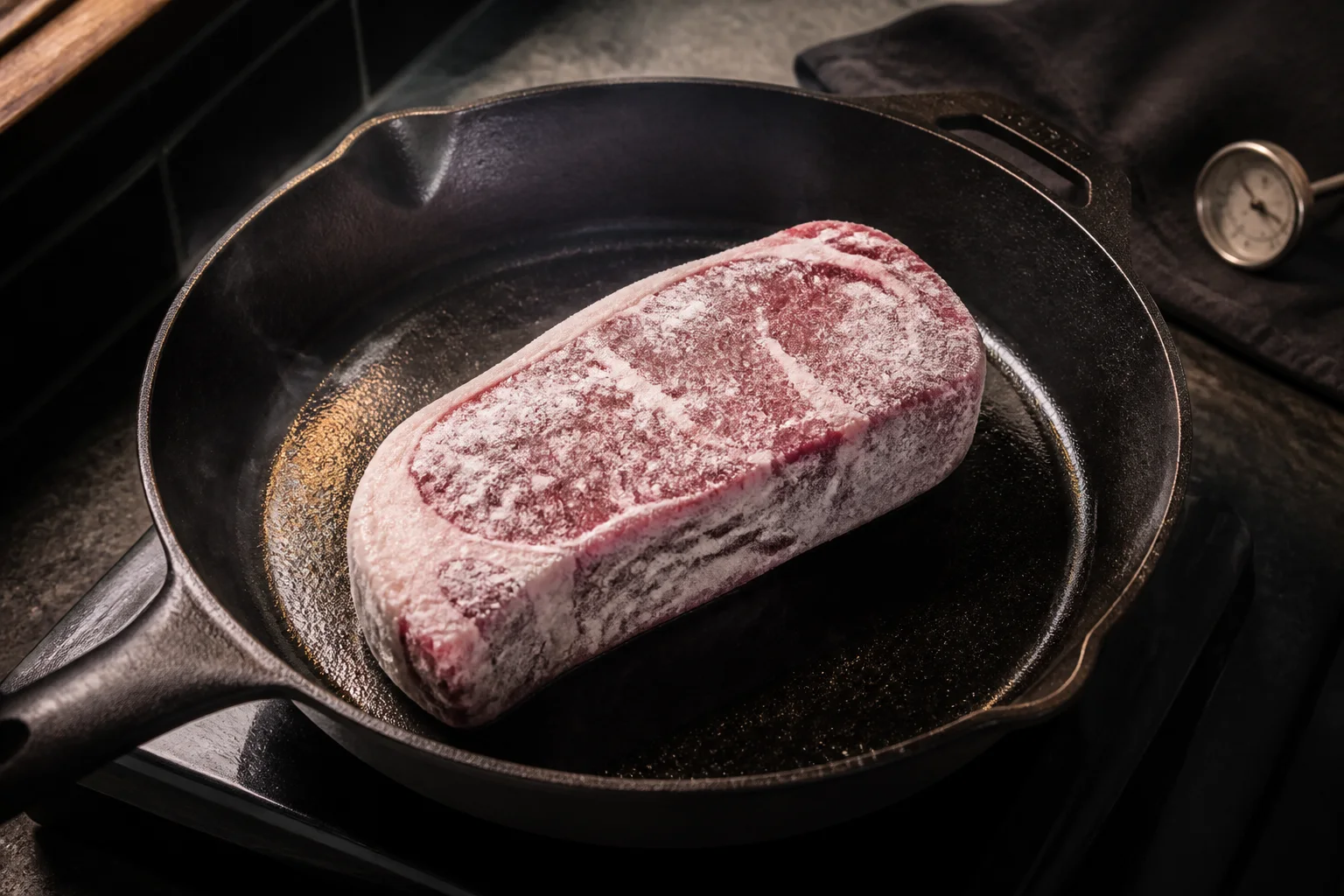
Read guideCook frozen steak safely or thaw it correctly with USDA-backed refrigerator, cold-water and microwave options plus pan, oven and temperature guidance.
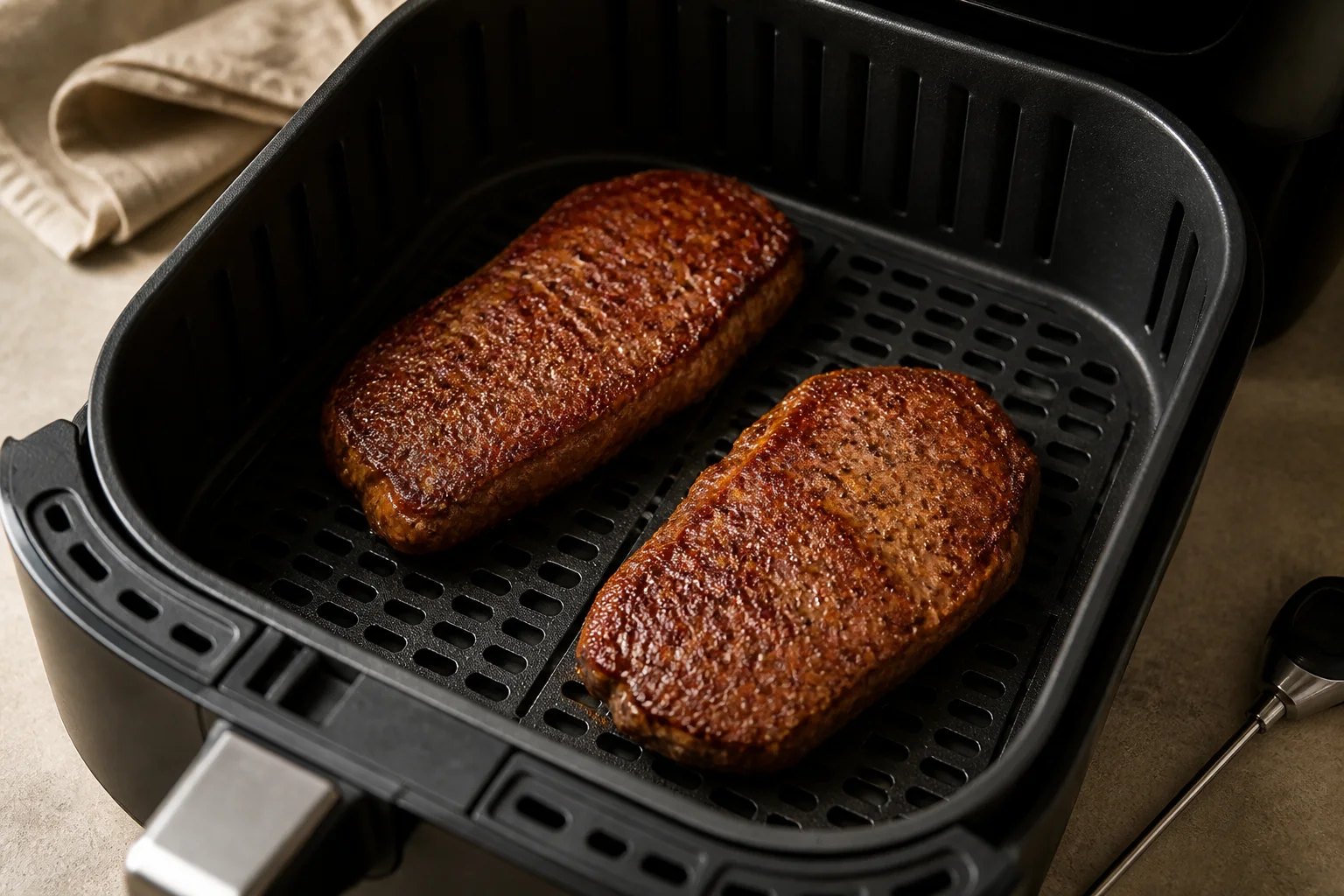
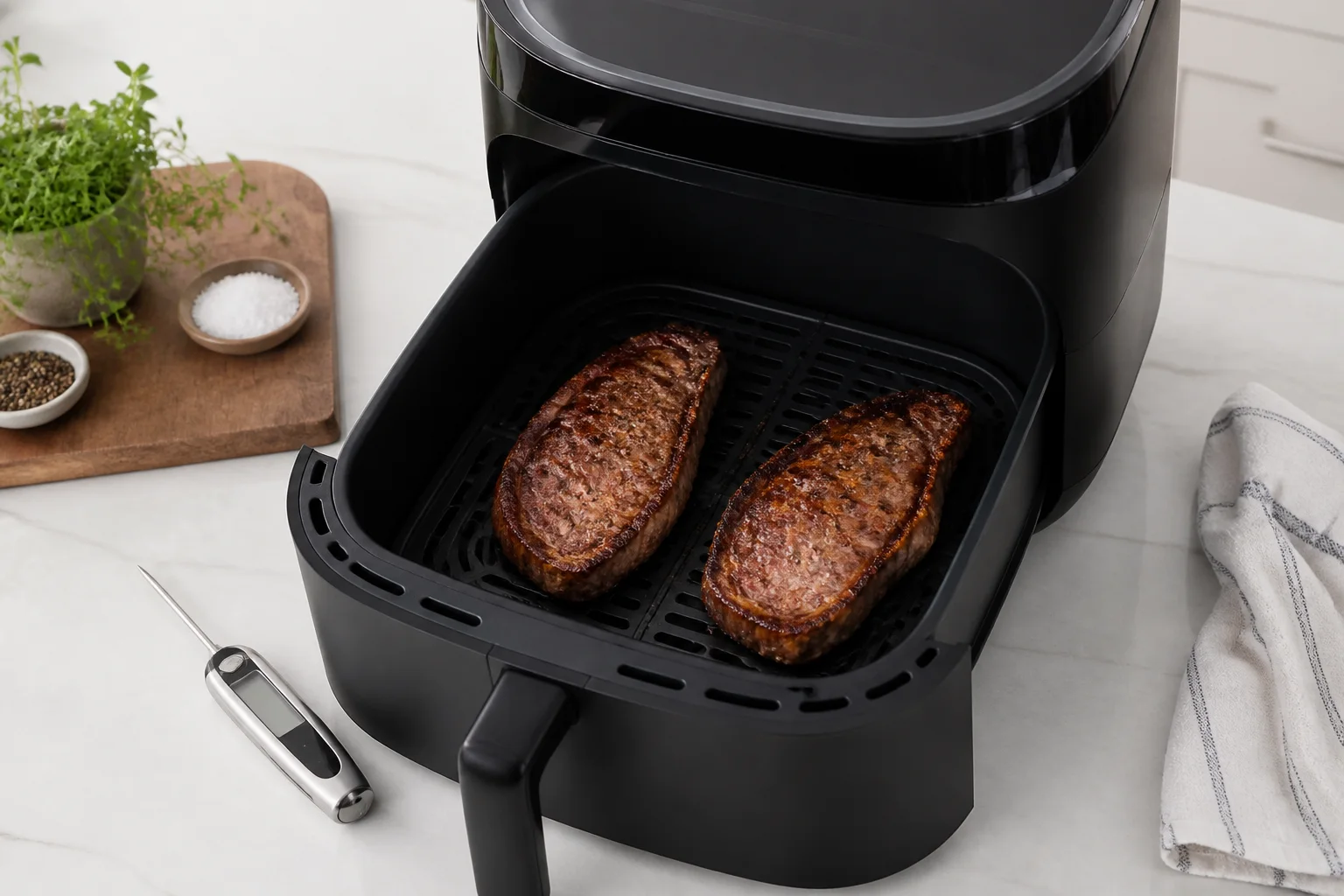
Read guideCook a small steak in an air fryer with preheating, airflow, accurate temperature checks and an optional fast pan finish.
Read guideCook steak in a Ninja Foodi using the correct model manual, open airflow and early temperature checks instead of one setting for every appliance.
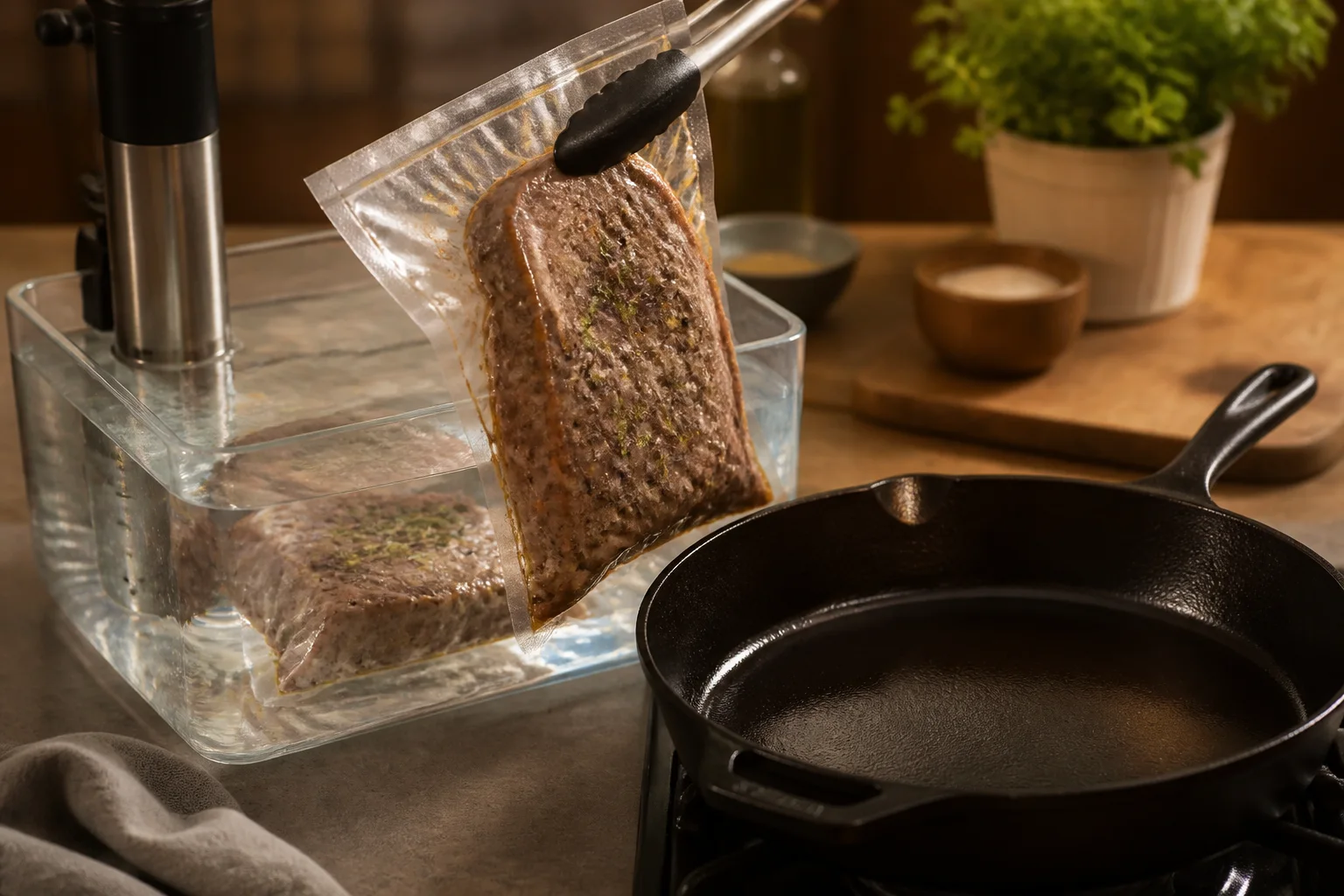
Read guideCook steak sous vide with safe time-temperature planning, careful bagging, thorough drying and a fast final sear.
Read guideMethod choices tuned to filet, ribeye, porterhouse and tomahawk geometry.
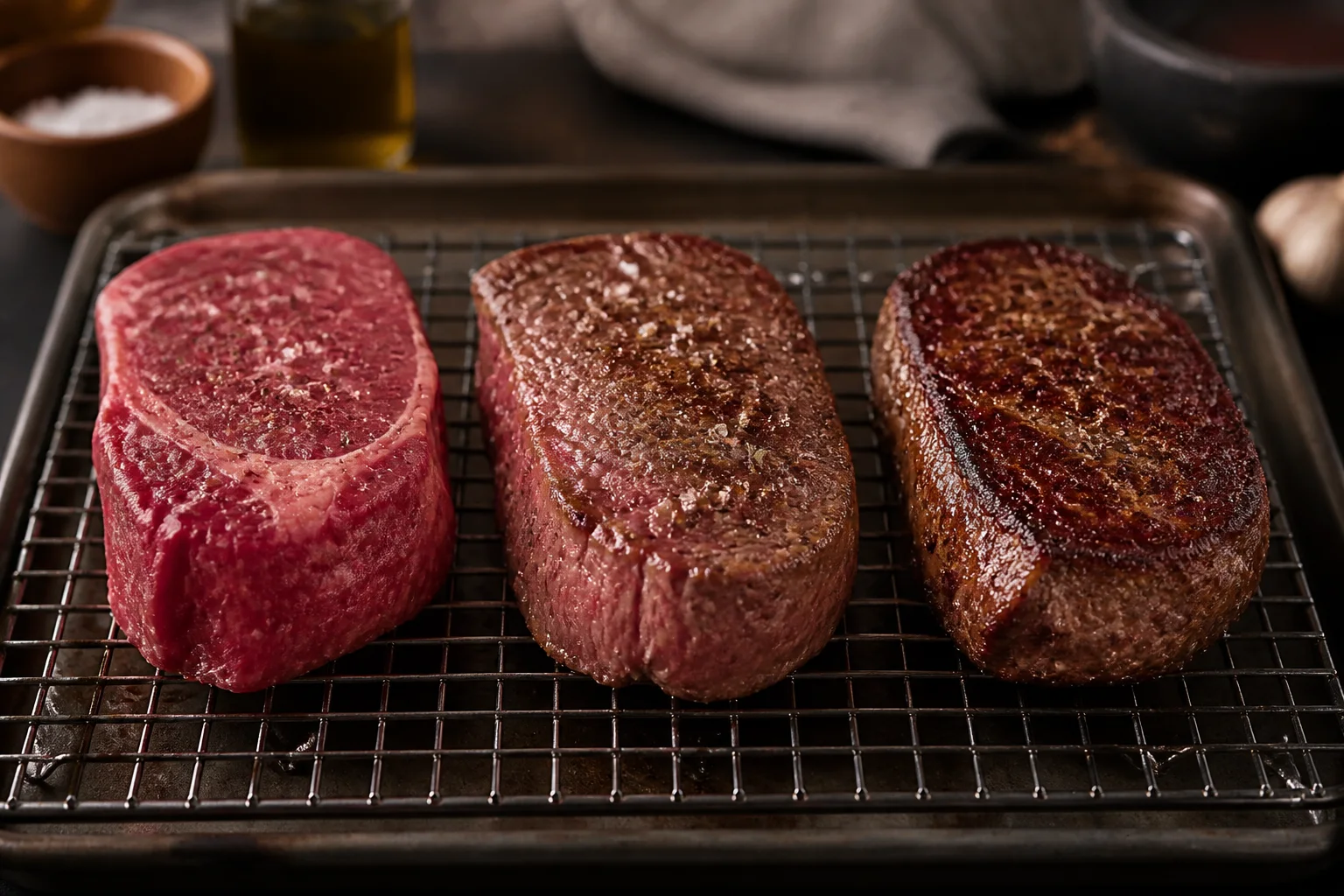
Reverse-sear thick steak using a low oven, grill or smoker followed by a fast high-heat finish, with temperature and carryover control.
Read guideGrill filet mignon with a two-zone fire, complete edge browning and accurate center checks while protecting the lean tenderloin from overcooking.
Read guideReverse sear filet mignon with a low oven, measured pull window and fast skillet finish for an even center and deeply browned exterior.
Read guideChoose the right ribeye cooking method for thickness, then dry-brine, sear, monitor temperature, rest and carve it correctly.
Read guideReverse-sear thick ribeye in a low oven or indirect grill, then finish over high heat for an even center and deep crust.
Read guideReverse-sear porterhouse while measuring strip and tenderloin separately, protecting the smaller filet and finishing both sides with a fast crust.
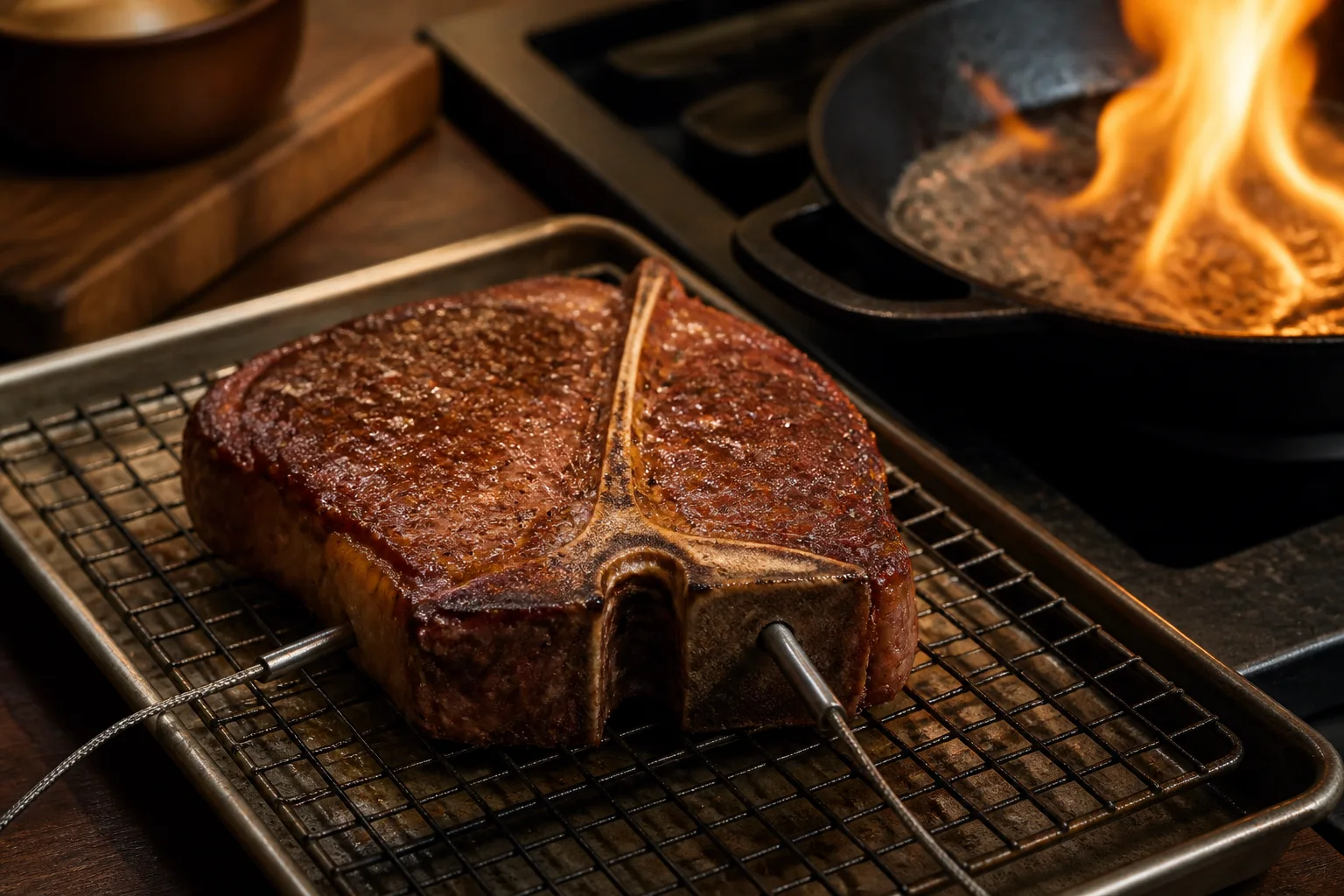
Read guideCook a thick tomahawk evenly with reverse-sear, grill, smoker and oven methods, including dry brining, probe placement, searing and resting.
Read guide