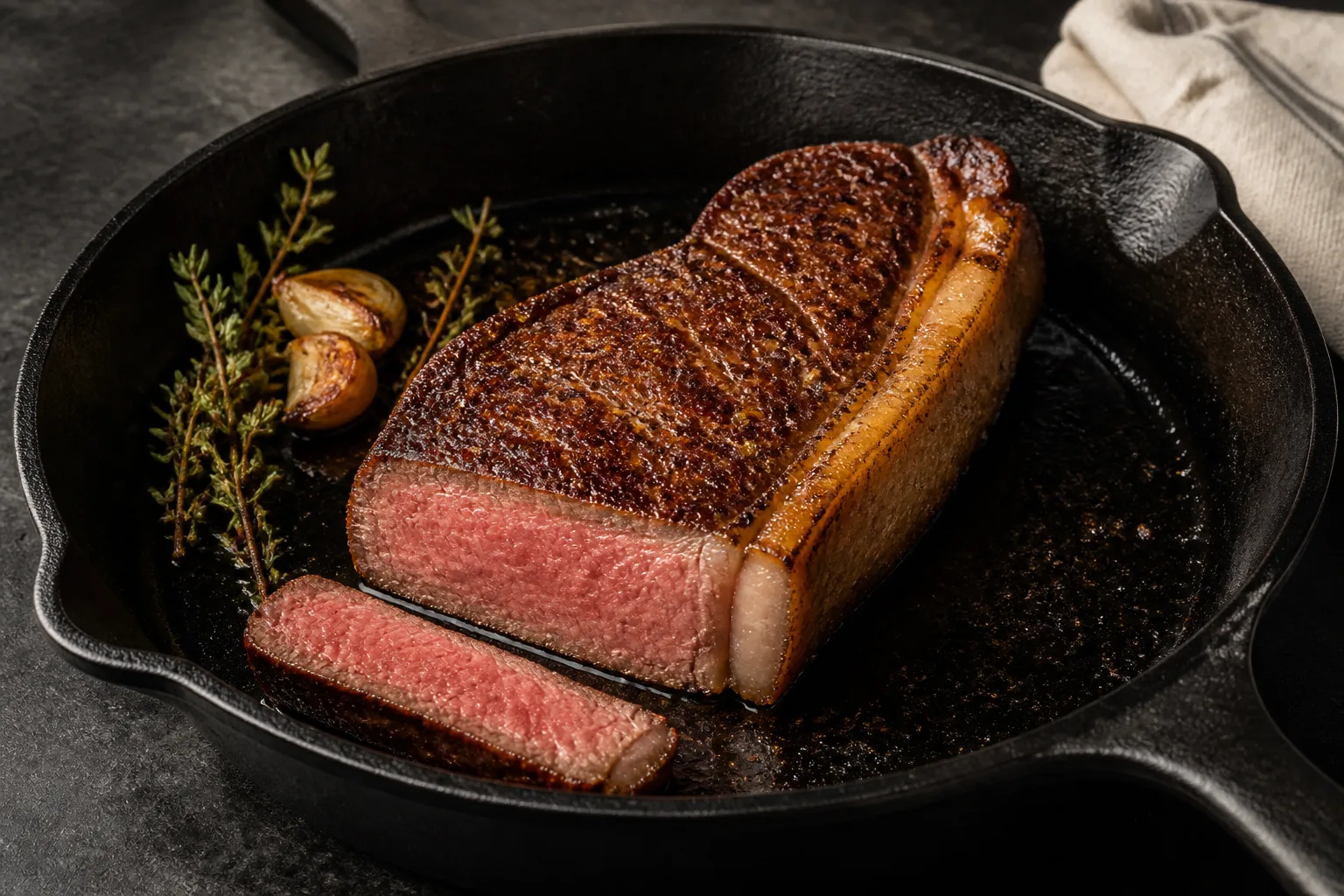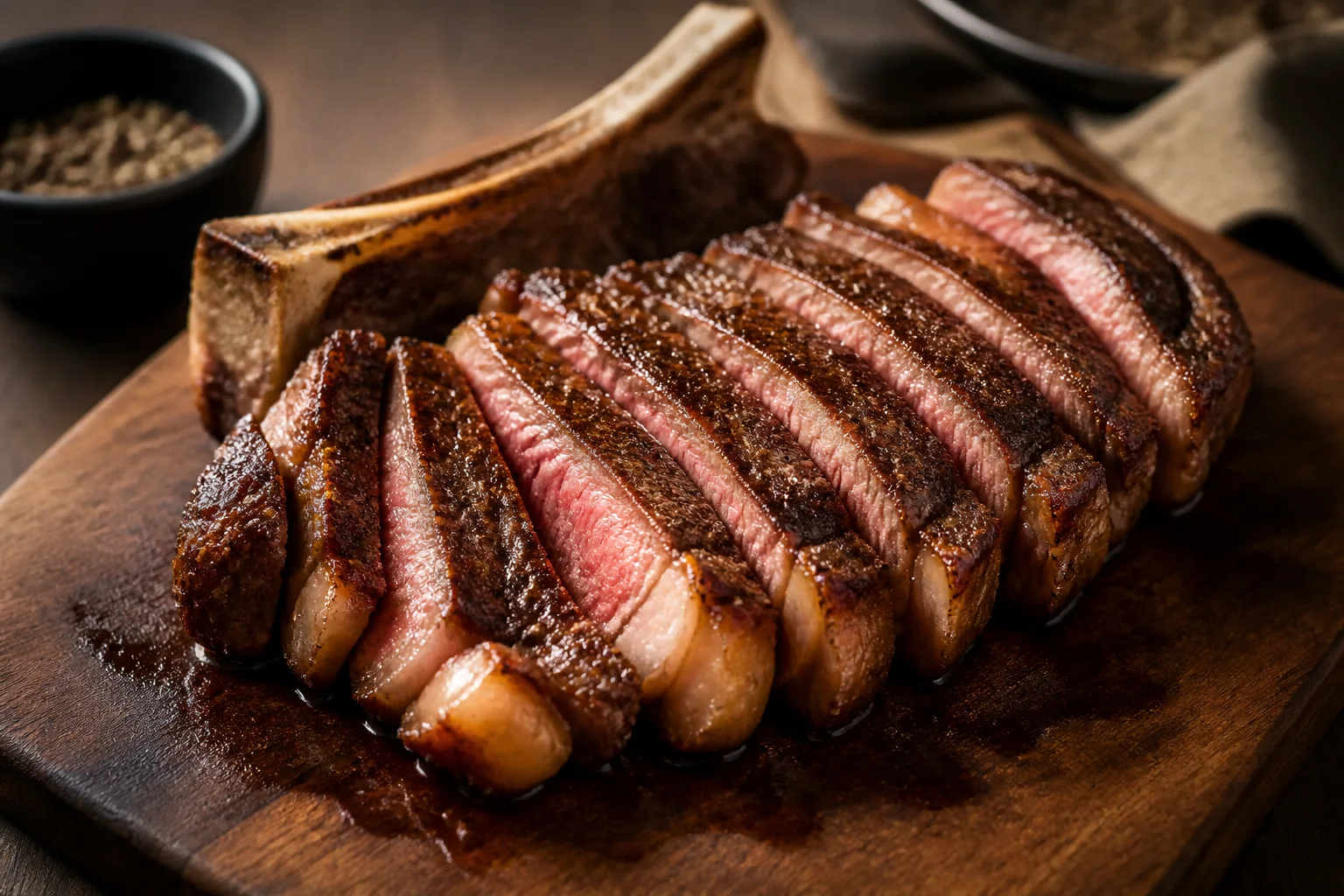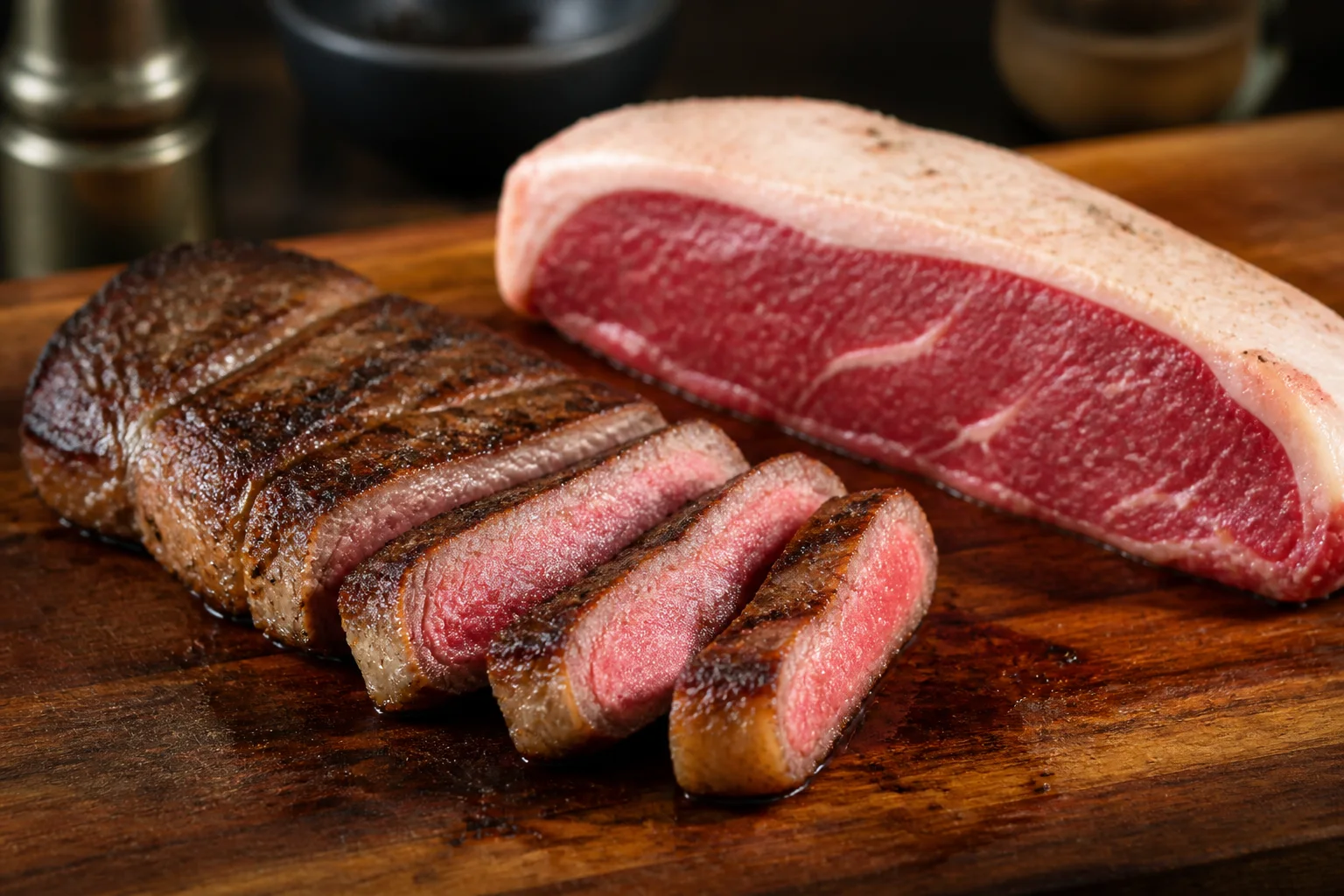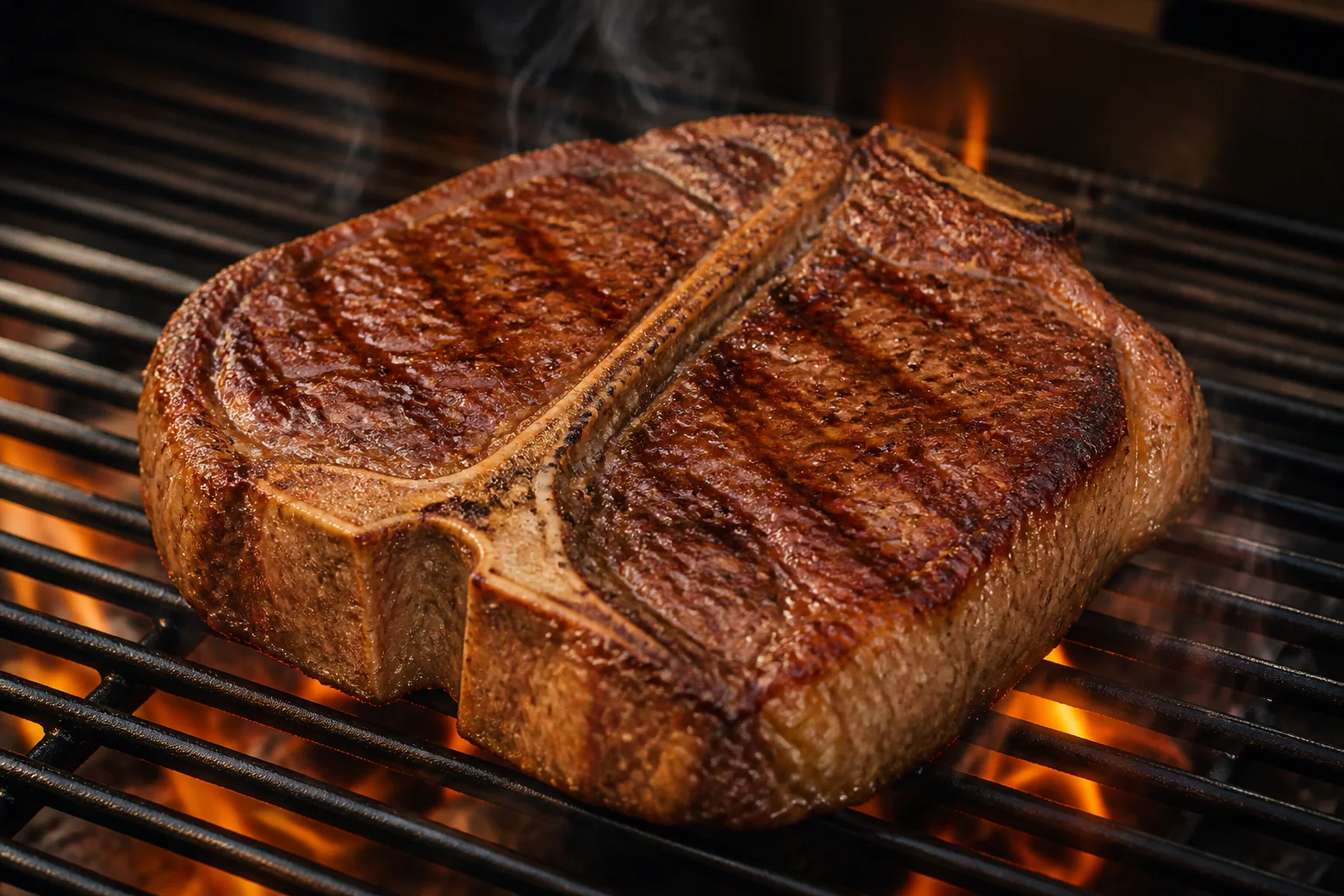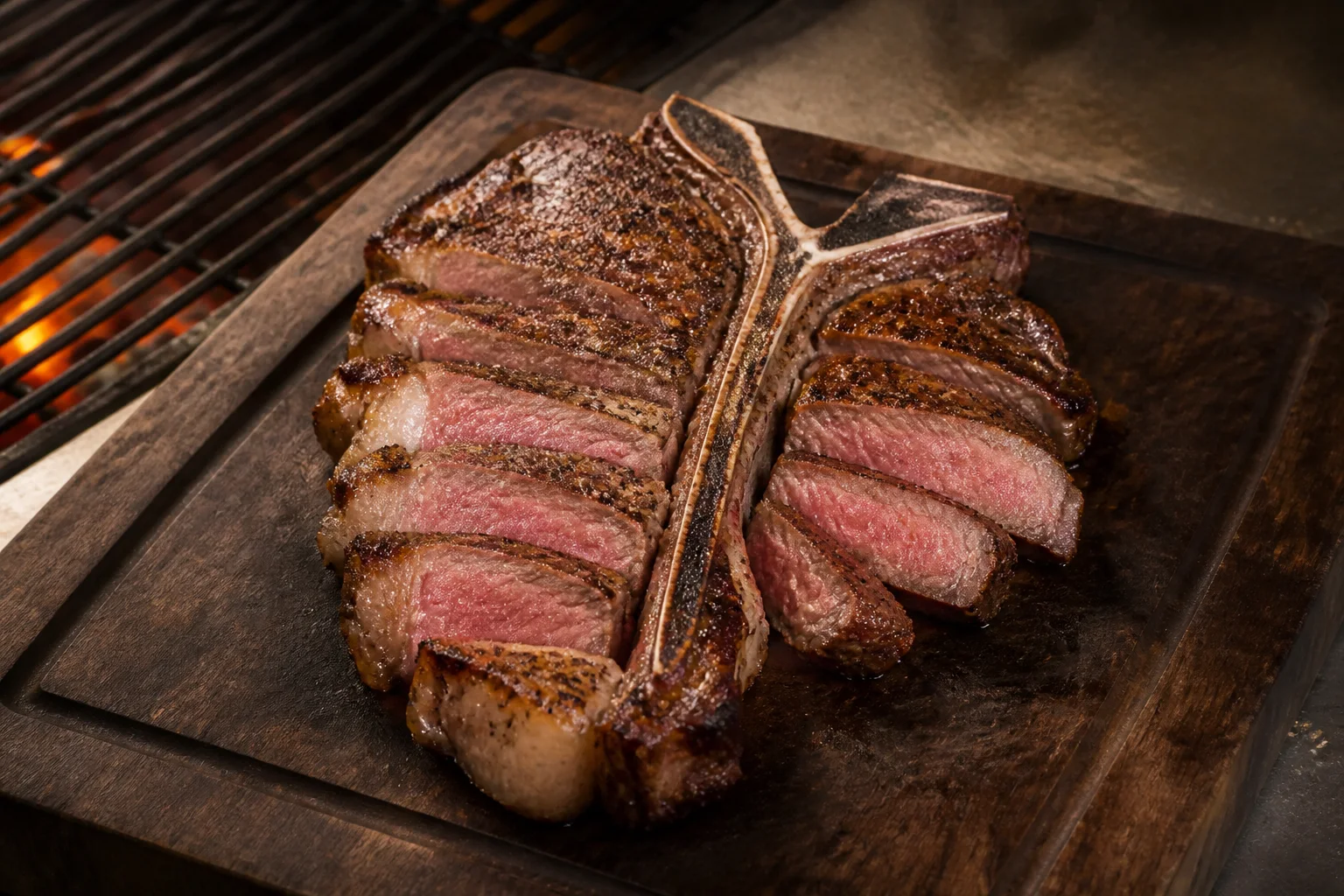
What Is a Porterhouse?
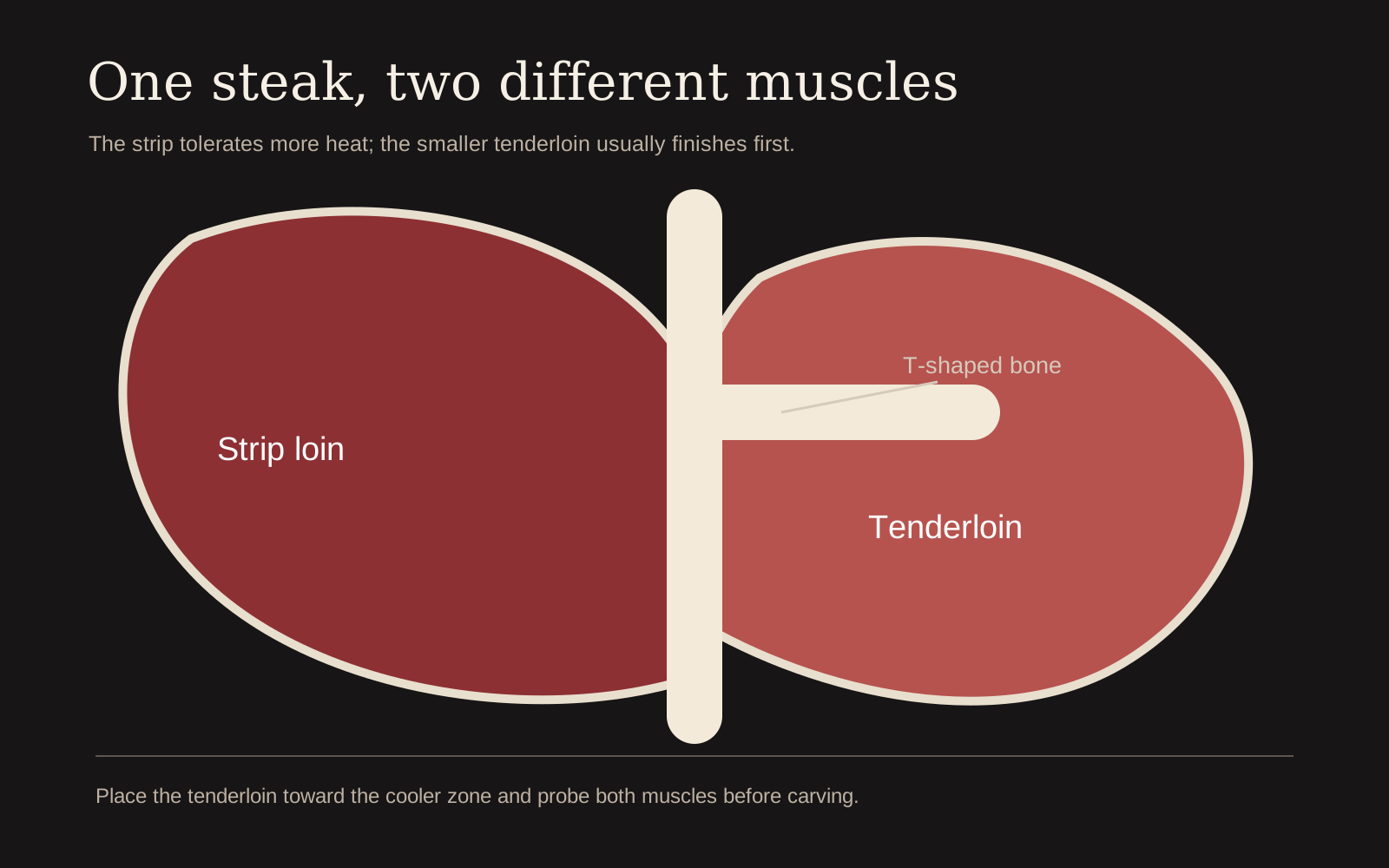
Porterhouse is cut from the rear portion of the short loin. A T-shaped lumbar bone separates a large tenderloin section from the strip loin. A T-bone comes from farther forward and has a smaller tenderloin. In U.S. institutional meat-purchase specifications, the tenderloin width is part of the formal distinction, although retail cutting can still vary.
The strip side shares character with a Kansas City strip; the tenderloin side is milder and leaner. Unlike ribeye, porterhouse has two major lean muscles rather than a heavily marbled eye-and-cap structure.
Visual Reference
How to Buy a Balanced Porterhouse
- Choose a generous, evenly thick tenderloin side; avoid one that tapers to almost nothing.
- Look for marbling through the strip side.
- Prefer a clean saw cut without bone dust or gouged meat.
- Select at least 1.5 inches thickness for two-zone or reverse-sear control.
- Check that the steak fits the grill and resting board.
The Two-Muscle Cooking Problem
Tenderloin is smaller, leaner and quick to heat; strip is broader and benefits from more browning. Position the tenderloin away from the fiercest direct heat. On a grill, point it toward the indirect zone; in a pan, let the strip side take the hotter contact.
Best Cooking Method
Use a two-zone grill or a low oven followed by a high-heat finish. Frequent turns help even the surface. Verify both sides with the steak temperature guide. If one muscle reaches its target first, shield it with a cooler zone rather than waiting passively.
Rest, Carve and Serve
Rest the whole steak, then run the knife down each side of the T-bone. Slice strip and tenderloin separately across their grains and return both to a platter. This makes the difference between the cuts visible and gives everyone a balanced portion.
Give Strip and Tenderloin Different Heat
On a charcoal grill, place the tenderloin toward the cooler edge and the strip toward the coal bed during both indirect warming and searing. Rotate the entire steak without swapping those relationships. On gas, use a lower burner beneath the tenderloin side if the grill layout permits.
In a pan, the T-shaped bone limits full contact. Start with the strip side over the hotter center of the skillet and spoon hot fat over the tenderloin only after lowering heat. A low oven first reduces the time the steak must fight the pan's geometry. Check both muscles from the side with a narrow thermometer probe.
At carving, label the two piles if serving people unfamiliar with the cut. Tenderloin slices are fine-grained and mild; strip slices are firmer and beefier. Give each diner both before offering seconds. That contrast is the reason to buy porterhouse instead of a large Kansas City strip with bone.
What Makes a Porterhouse Different From a T-Bone
Both steaks come from the short loin and contain strip loin and tenderloin divided by a T-shaped vertebral bone. Porterhouse is cut from the rear end, where the tenderloin section is larger. In US institutional purchasing specifications, the tenderloin width is part of the distinction, but retail naming outside those systems can be inconsistent.
Inspect the actual tenderloin lobe instead of trusting scale or price. It should be substantial enough to justify buying two muscles. The strip side should also be evenly thick and free of an excessive vein-end connective crescent.
| Feature | Porterhouse | T-bone |
|---|---|---|
| Short-loin position | Rear, toward sirloin | Farther forward |
| Tenderloin lobe | Larger | Smaller |
| Cooking issue | Pronounced strip/tenderloin mismatch | Same issue, usually with less filet |
Buy a Balanced Steak, Not the Biggest Bone
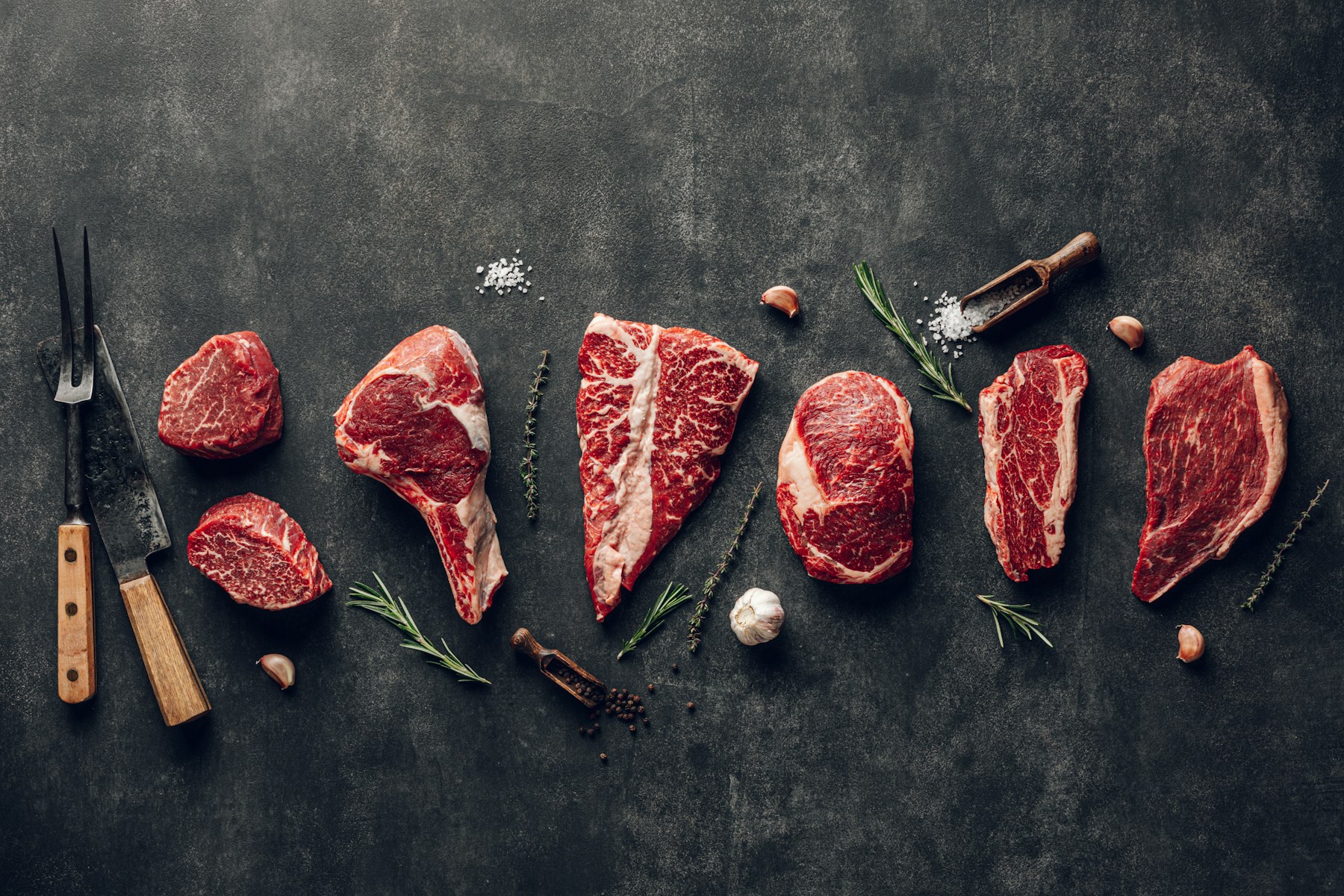
Look for similar thickness on both sides of the bone, a generous intact tenderloin, fine marbling through the strip and clean bone cuts. A thin tenderloin tail can overcook almost immediately. Thickness around 1½ inches or more gives the cook more room to manage the two muscles.
Grade applies to the carcass, while the cut face still deserves inspection. A Prime porterhouse with a damaged or tiny tenderloin may be a poorer purchase than a well-cut Choice example. Clarify dry-aging claims and whether the listed weight includes a particularly heavy bone.
Give the Strip and Tenderloin Different Heat
Warm a thick porterhouse gently, with the tenderloin toward the cooler zone. During searing, keep the strip closer to the strongest heat and rotate without swapping that relationship. In a pan, the bone limits contact; shifting positions and spooning hot fat after lowering heat works better than pressing.
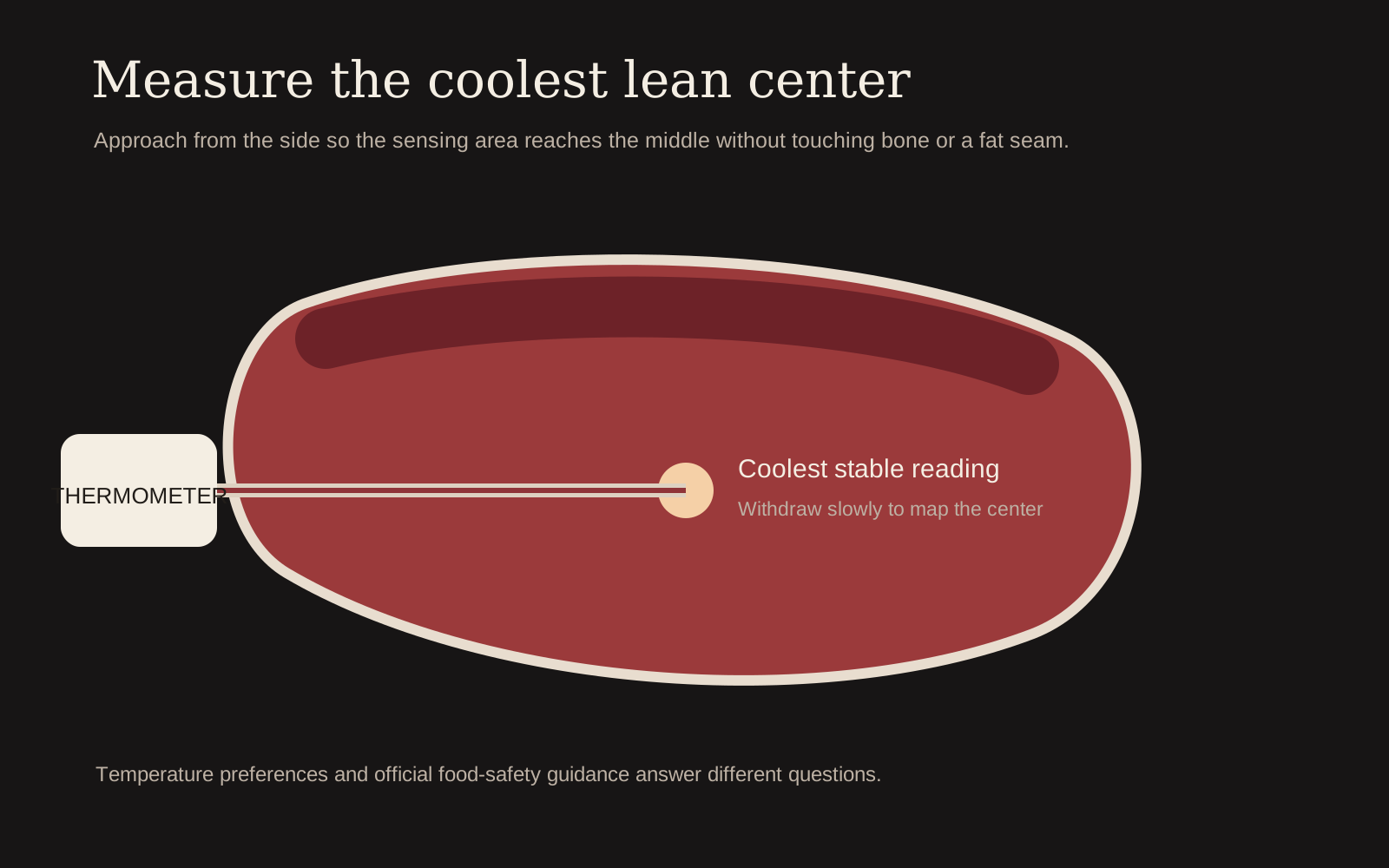
Probe both muscles from the side. The smaller tenderloin usually reaches its target first. If the difference becomes large, shield the tenderloin with a small foil barrier during indirect cooking or lift its side away from direct heat. Rest, carve both lobes from the bone and slice them separately.
If diners mainly want the firmer beefy side, a Kansas City strip avoids paying for a second muscle. If they want ribeye fat and cap, choose a different primal altogether.
Rest, Carve and Divide Two Muscles Fairly
Rest the porterhouse on a warm board with the tenderloin side away from residual heat. Run the knife along both sides of the T-shaped bone, lift off the strip and filet, then slice each across its grain. Return the slices to their original positions only for presentation; keeping the piles distinct helps diners understand the contrast.
Give each diner some strip and tenderloin before offering seconds. The strip supplies firm beef flavor and the tenderloin supplies fine tenderness. Pour board juices around the slices and serve sauce on the side so neither muscle loses its crust.
Leftovers are easier to protect when the muscles stay in larger pieces. Refrigerate promptly, then warm gently or use cold slices. Avoid microwaving a fully arranged bone-and-slice platter, which heats the thin tenderloin fastest.
Porterhouse vs Ribeye Is an Anatomy Decision
Porterhouse supplies strip and tenderloin across a T-shaped bone; ribeye supplies the ribeye eye, cap and associated rib muscles. The porterhouse vs ribeye comparison maps texture, edible yield and heat control without repeating this porterhouse guide.
A key correction matters when shopping: USDA IMPS 1173 specifies at least 1.25 inches at the tenderloin's maximum width for porterhouse—not the frequently repeated 1.5-inch claim. Measure the actual steak and inspect both muscles.
Where This Guide Fits
This page supports the broader New York Strip Steak guide. Use that pillar page for the complete cut family, buying framework and links to every closely related article.
Useful next reads include Kansas City Strip Steak, Shell Steak, T-Bone Steak, Ribeye Steak, and Filet Mignon for nearby cuts, methods and decisions.
Frequently Asked Questions
Porterhouse vs T-bone: what is the difference?
Both combine strip and tenderloin around a T-shaped bone. Porterhouse is cut farther back and has a larger tenderloin section.
How many people does porterhouse serve?
A thick large porterhouse often serves two, depending on actual weight, bone and side dishes.
Which side cooks faster?
The smaller, leaner tenderloin side generally heats faster and should be kept away from the fiercest zone.