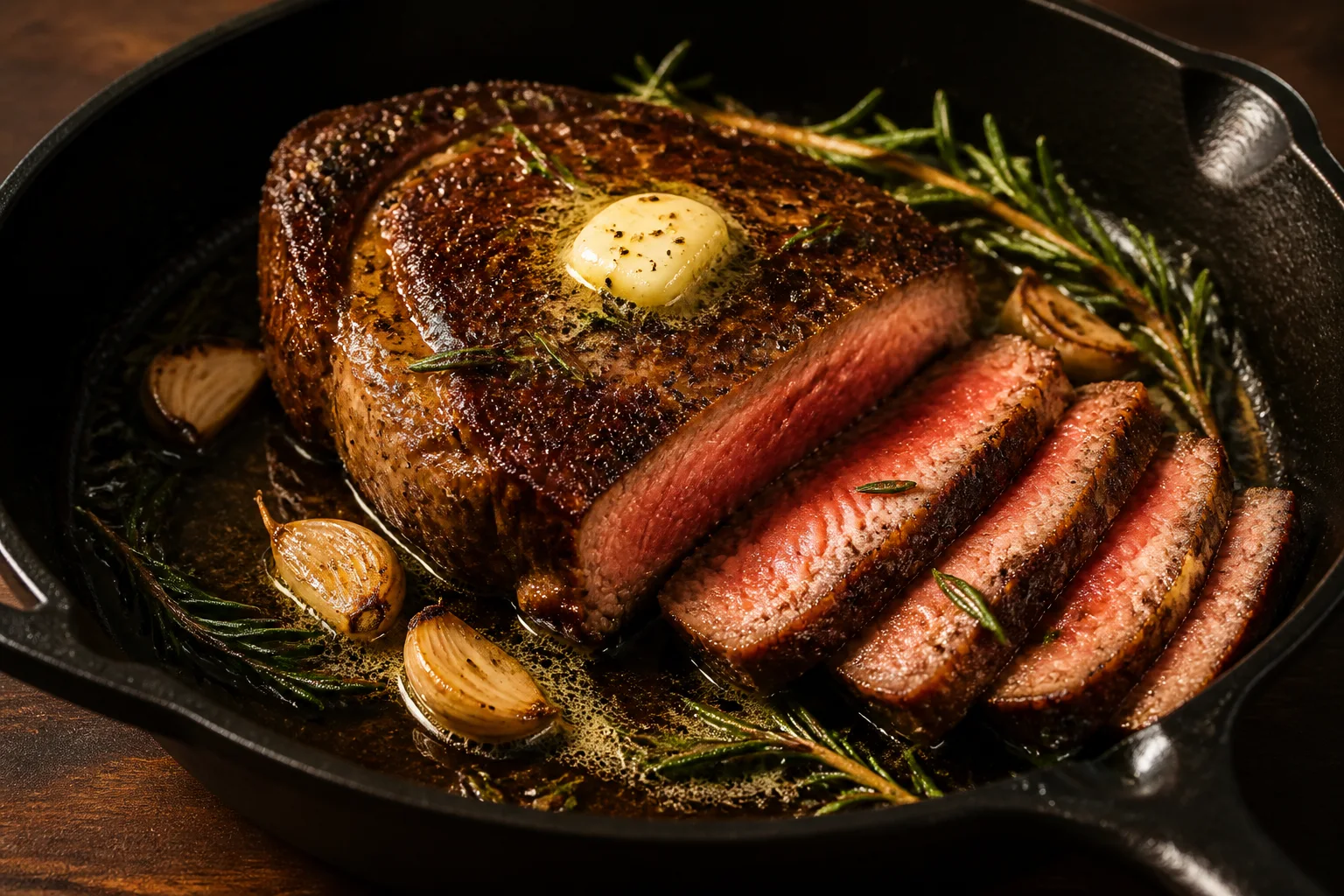
Ribeye Steak Recipe
A temperature-led cast-iron ribeye recipe with dry brining, frequent turning, rosemary-garlic pan butter and serving notes.
- Prep
- 10 min
- Cook
- 12 min
- Rest
- 8 min
- Total
- 30 min
- Serves
- 2
- Yield
- 1 large ribeye
Equipment
- 12-inch cast-iron skillet
- Tongs
- Instant-read thermometer
- Wire rack or carving board
Ingredients
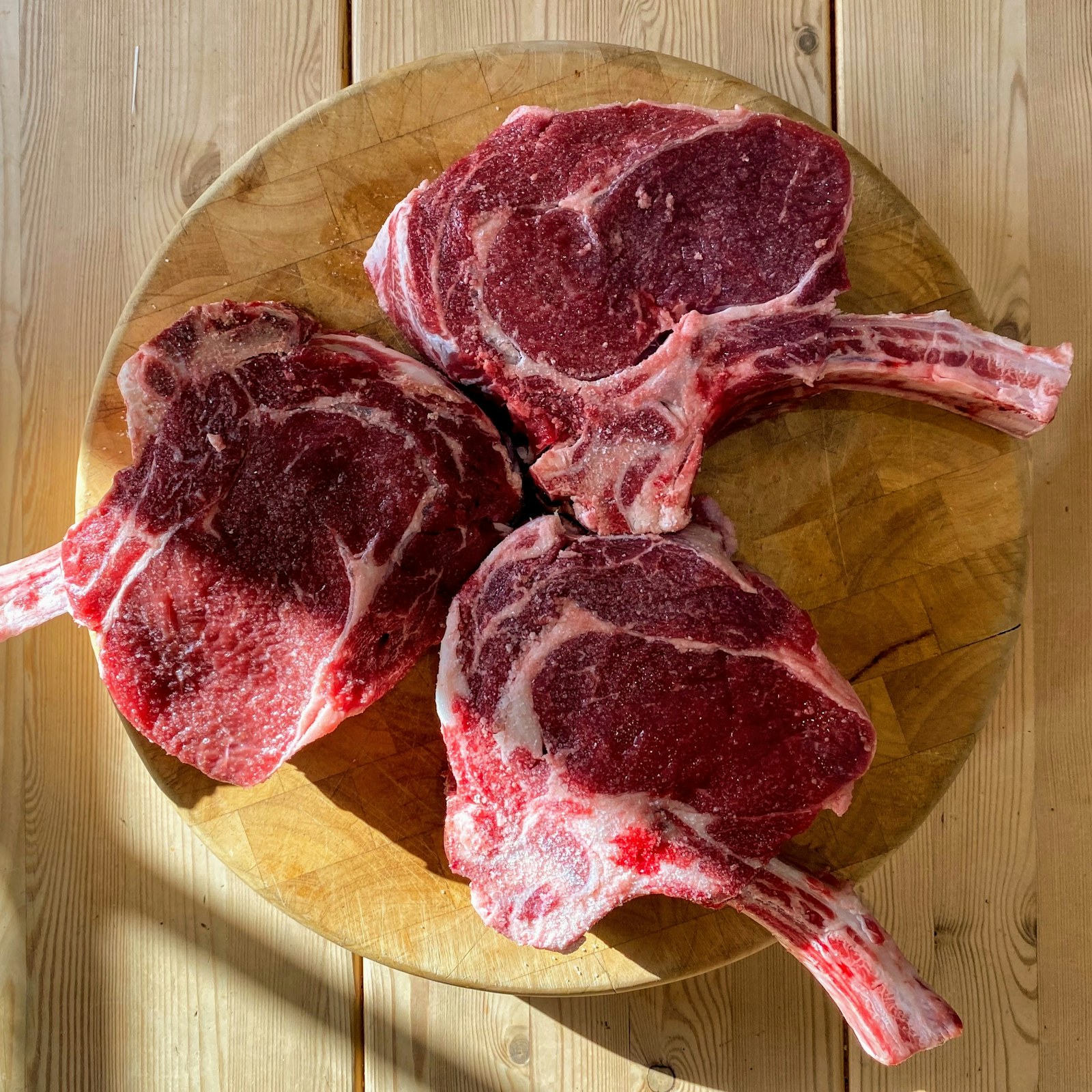
- 1 boneless ribeye steak, about 1.5 inches thick
- Kosher salt
- 2 teaspoons neutral high-heat oil
- 2 tablespoons unsalted butter
- 2 garlic cloves, lightly crushed
- 2 rosemary sprigs
- Black pepper, to taste
Instructions
- Season
Salt the steak 8 to 24 hours ahead and refrigerate uncovered, or salt immediately before cooking. Pat dry.
- Sear
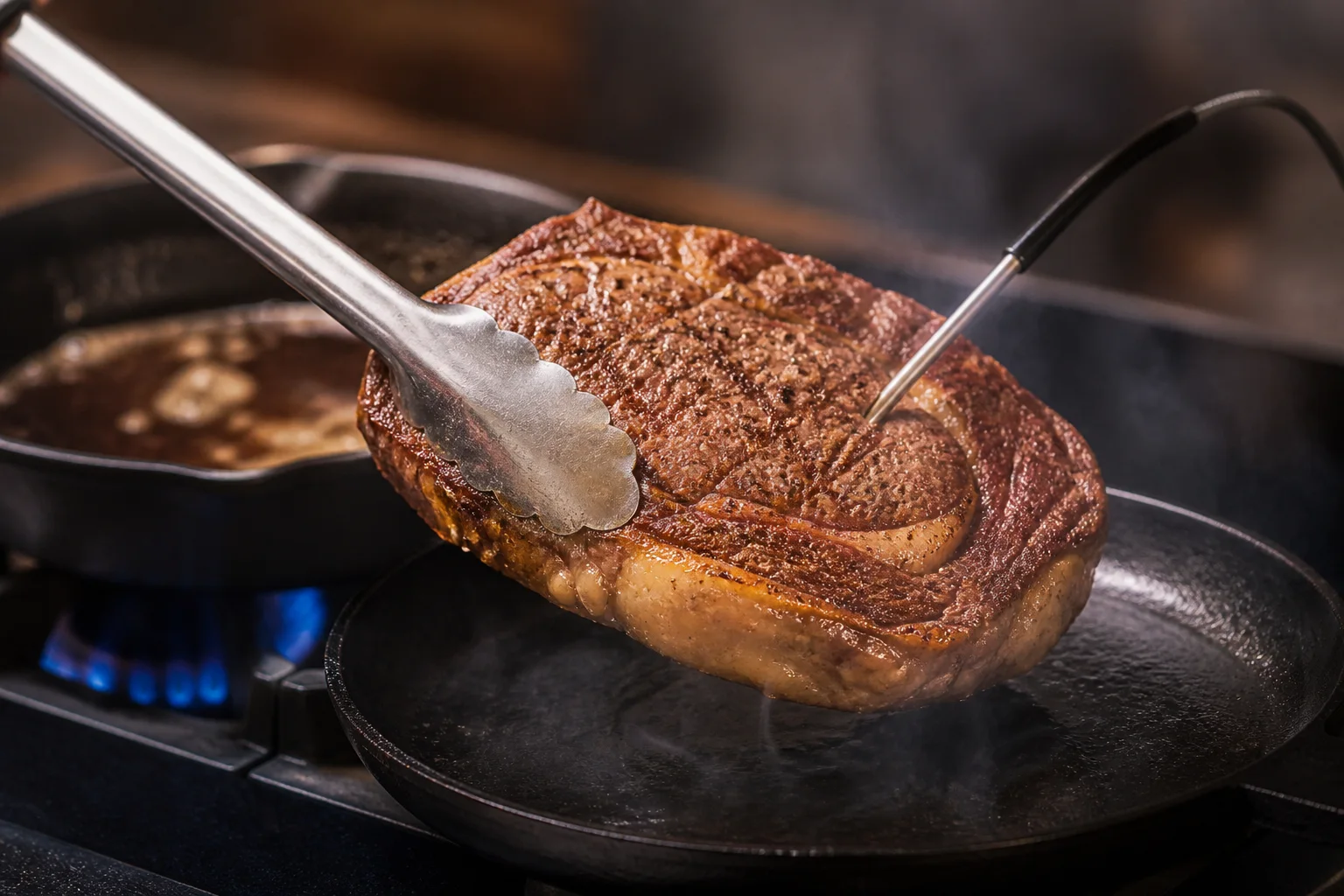
Heat oil in cast iron. Sear the steak, turning every 30 to 45 seconds, until an even brown crust develops.
- Render the edge
Hold the fat edge against the pan briefly with tongs.
- Baste
Reduce the heat, add butter, garlic and rosemary, and baste briefly without burning the milk solids.
- Check and rest
Measure the center from the side, remove with carryover in mind, and rest about 8 minutes before slicing.
Before You Start
Choose a boneless ribeye around 1.5 inches thick. For cut selection and anatomy, read the ribeye guide. For a steak over two inches, switch to the gentler first stage in the reverse-sear ribeye method.
Salt 8 to 24 hours ahead and refrigerate uncovered if possible. Otherwise, salt immediately before searing. Pat the steak completely dry.
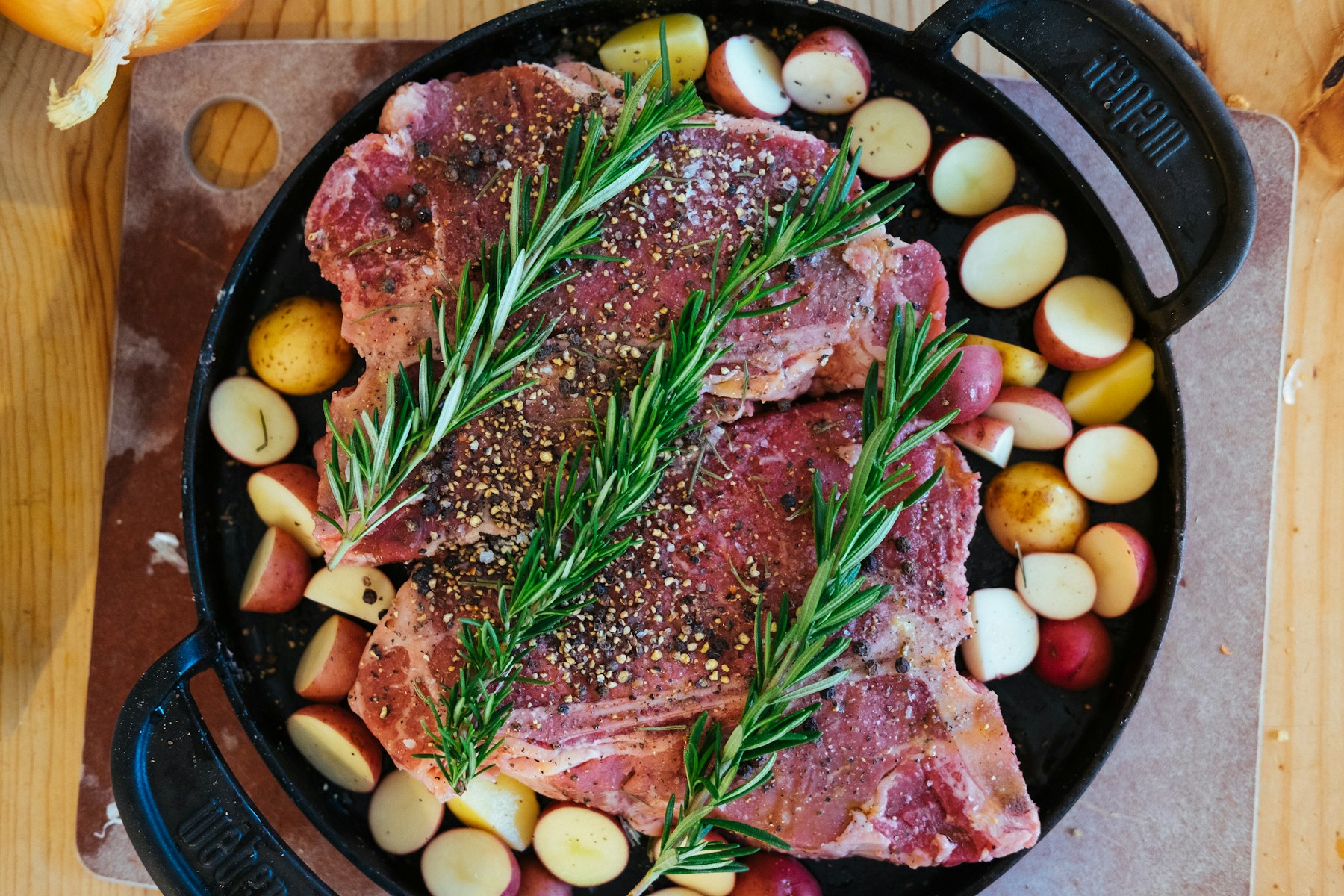
Pan-Sear the Ribeye
- Heat a heavy skillet over medium-high until a film of high-heat oil shimmers.
- Lay the dry steak away from you. Turn every 30–45 seconds to build an even crust without a thick gray band.
- Hold the fat edge against the pan briefly with tongs, then lower the heat.
- Add butter, crushed garlic and rosemary. Baste briefly; move the pan off heat if the milk solids darken too quickly.
- Check the center from the side with an instant-read thermometer and account for carryover.
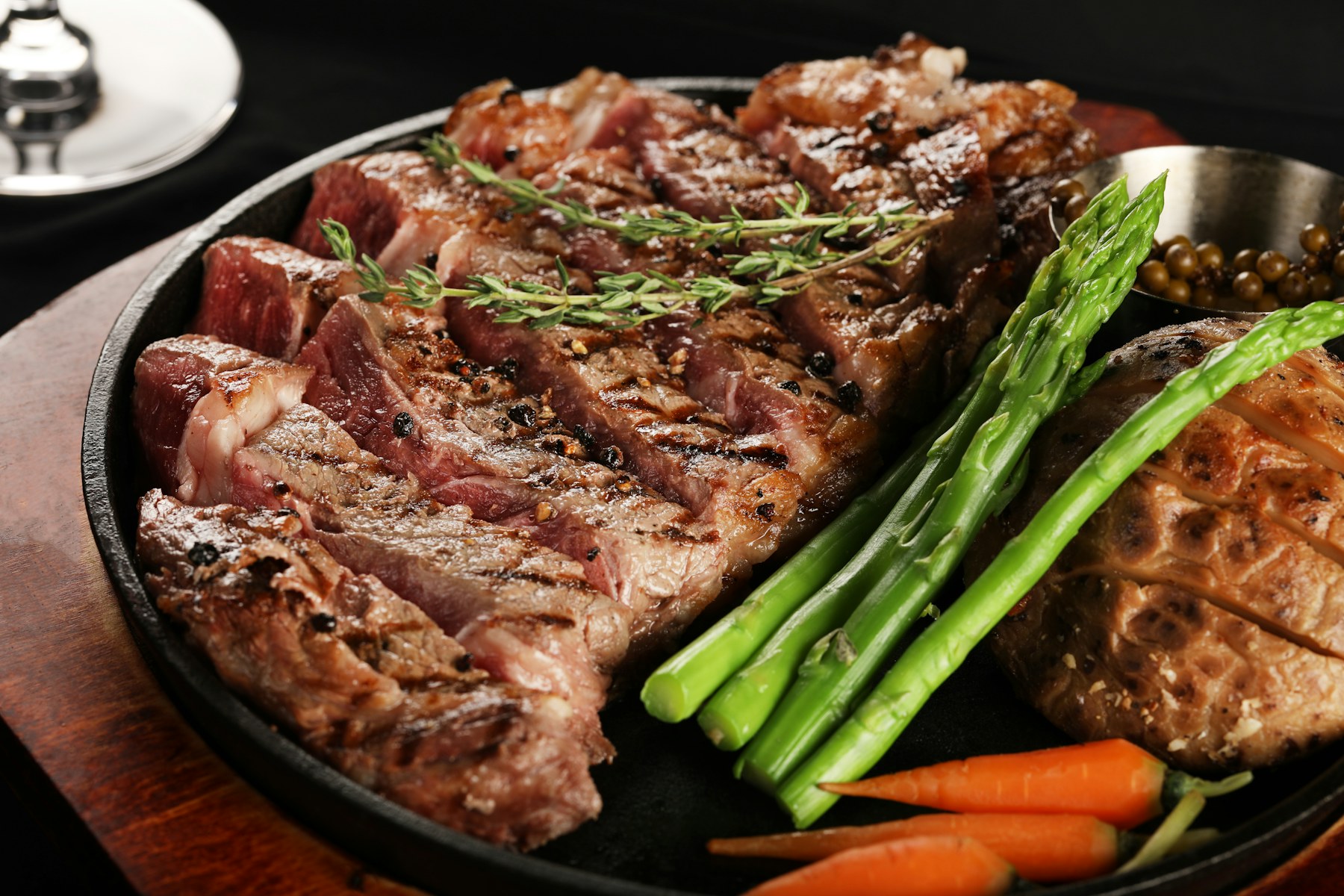
- Rest on a board, then slice across the grain and spoon over the browned butter.
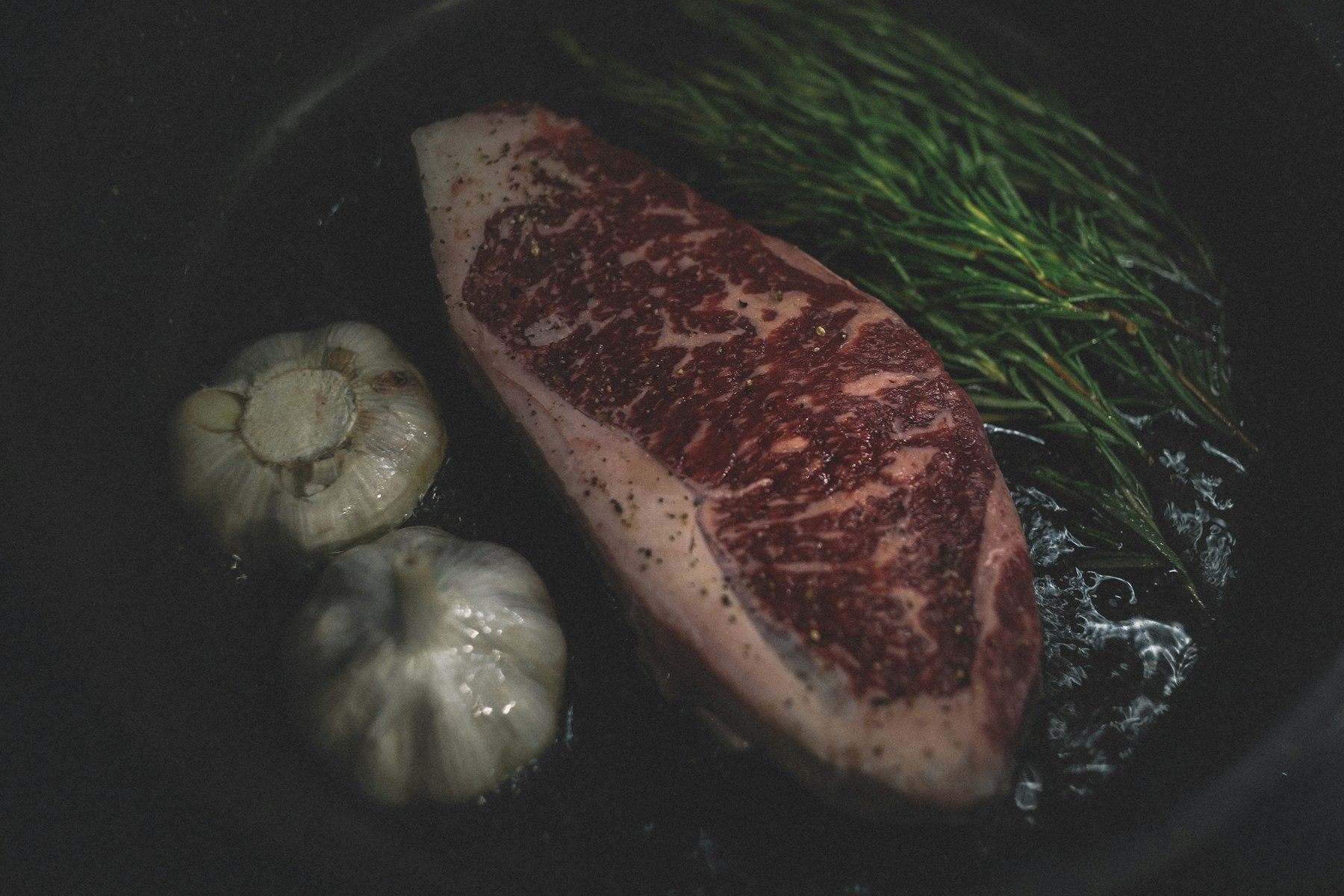
Notes, Substitutions and Sides
Thyme can replace rosemary. Use olive oil and lemon zest for a dairy-free finish. Pepper can go on before cooking if you enjoy its toasted edge, or after the sear to avoid bitterness. For more pan control detail, see cast-iron ribeye.
Balance the rich steak with wilted greens, roasted mushrooms, watercress salad or potatoes sharpened with vinegar. Keep sauce portions modest.
Storage and Reheating
Refrigerate promptly in an airtight container. Reheat the steak as a thick piece in a low oven, then refresh the exterior in a hot pan. Or slice cold and serve over dressed greens.
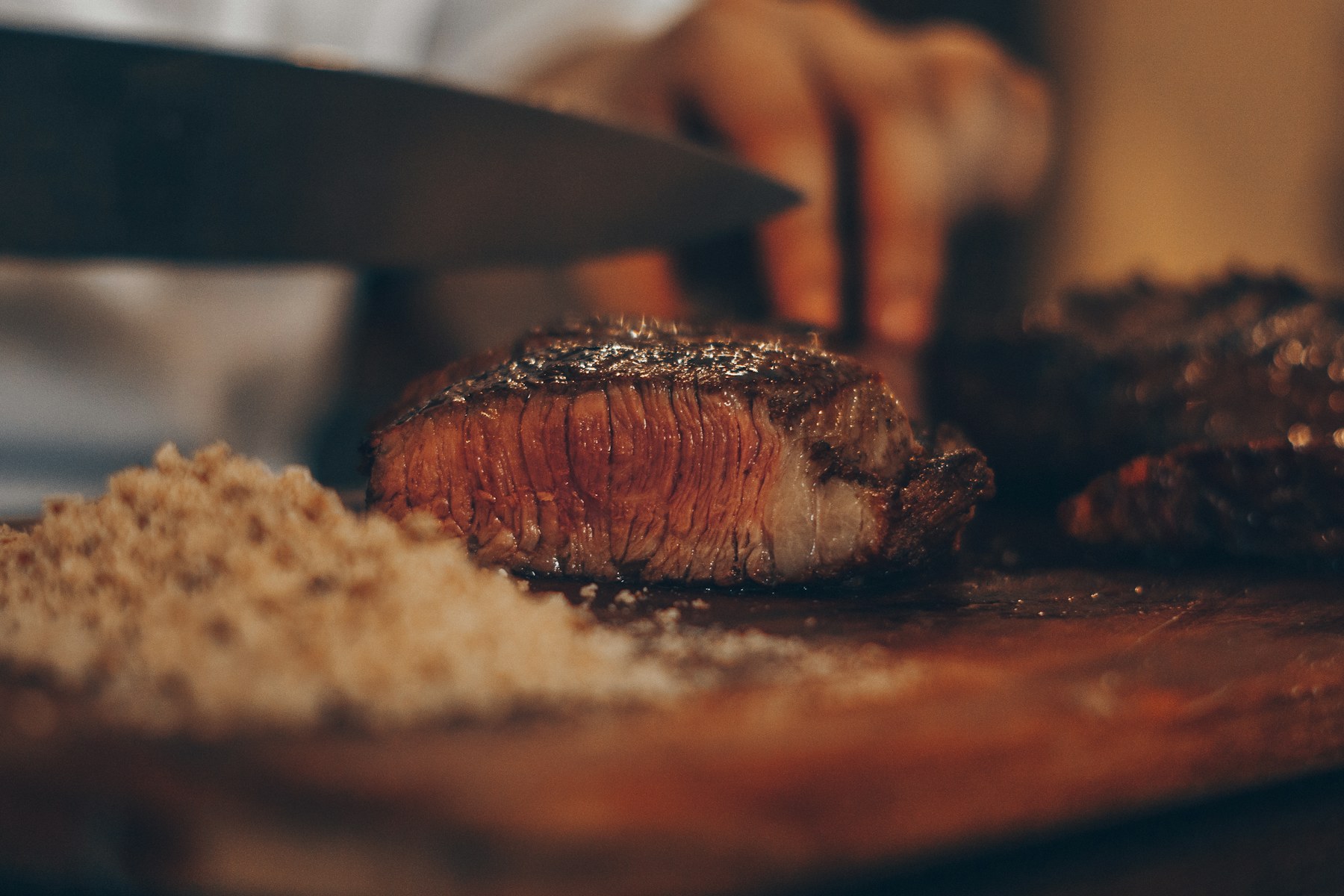
Ingredient Notes That Protect the Crust
Choose a ribeye of even thickness with a dry, freshly exposed surface. Kosher salt is easiest to distribute, but crystal size varies by brand, so volume measures are not interchangeable. A thin film of neutral oil supports the initial sear; abundant ribeye fat will soon render into the pan.
Butter, crushed garlic and rosemary form the finishing baste. Add them only after the browned surface is established and the burner is reduced. Whole crushed garlic can be moved away from a hot spot; minced garlic cannot. Thyme is a quieter substitute, while lemon zest added off heat supplies brightness without pan bitterness.
| Ingredient | Purpose | Substitution |
|---|---|---|
| Ribeye, about 1½ inches | Rich steak with enough thickness for crust and center | Strip steak, with less fat and a shorter baste |
| Neutral high-heat oil | Initial pan contact | Refined avocado, grapeseed or another suitable oil |
| Unsalted butter | Late basting and aroma | Olive oil plus herbs for dairy-free service |
| Rosemary and garlic | Savory finishing fragrance | Thyme and shallot, monitored closely |
Control the Pan Through Each Stage
Preheat cast iron gradually so its center and edge are both useful. The oil should shimmer without filling the kitchen with smoke. Lay the dry steak away from you and turn every 30 to 45 seconds, moving it through the hotter and cooler pan zones. Frequent turns build even color and limit a thick gray band.
As fat renders, tilt the pan and remove excess if the steak begins to fry. Once the crust is deep brown, lower or briefly remove the pan from heat before adding butter and aromatics. Baste in short passes. If butter turns black or garlic hardens, the pan is too hot.
Insert the thermometer horizontally into the center of the eye. Withdraw slowly to find the coolest stable reading, then account for carryover during the rest. The cast-iron ribeye guide goes deeper on pan recovery and cooking more than one steak.
Recipe Troubleshooting
If the crust is pale, the surface was wet, the skillet cooled or the steak was moved through a pool of liquid. Remove moisture before cooking and give one steak enough pan area. If the crust is black while the center is cool, lower the initial heat or use a gentler first stage for a thicker steak.
If the butter and garlic taste bitter, the pan was still above a useful basting temperature. Move it off heat, wipe burned solids and finish with fresh butter only if needed. If the steak is cooked correctly but feels chewy, inspect grain direction and whether a large seam was included in the slice.
For two steaks, use two pans or cook sequentially. Hold the first on a rack and keep the final refresh extremely short. Doubling ingredients does not double pan capacity.
The recipe is deliberately temperature-led. A cooking-time estimate can help schedule the meal, but the side-entry reading and surface color make the decisions.
Where This Guide Fits
This page supports the broader Ribeye Steak guide. Use that pillar page for the complete cut family, buying framework and links to every closely related article.
Useful next reads include Bone-In Ribeye Steak, Cowboy Steak, How to Cook Ribeye Steak, Tomahawk Steak, and steak temperature for nearby cuts, methods and decisions.
Frequently Asked Questions
How long should ribeye cook in cast iron?
Use time only as an early planning estimate. Thickness, burner, pan mass and starting temperature vary; check the center with a thermometer.
When should butter go in?
After the high-heat crust is established and the pan heat has been reduced. This keeps butter and garlic from burning.
Should I marinate ribeye?
It is unnecessary for tenderness. A dry brine seasons while preserving a dry surface for browning.