What Is Ribeye Steak?
Ribeye is cut from the rib primal, where muscles do relatively little locomotion work and remain tender. The central longissimus dorsi forms the eye; the spinalis dorsi wraps around the outside as the cap; smaller muscles and fat seams complete the cut. That mixed anatomy gives ribeye its combination of tenderness, juicy fat and pronounced beef flavor.
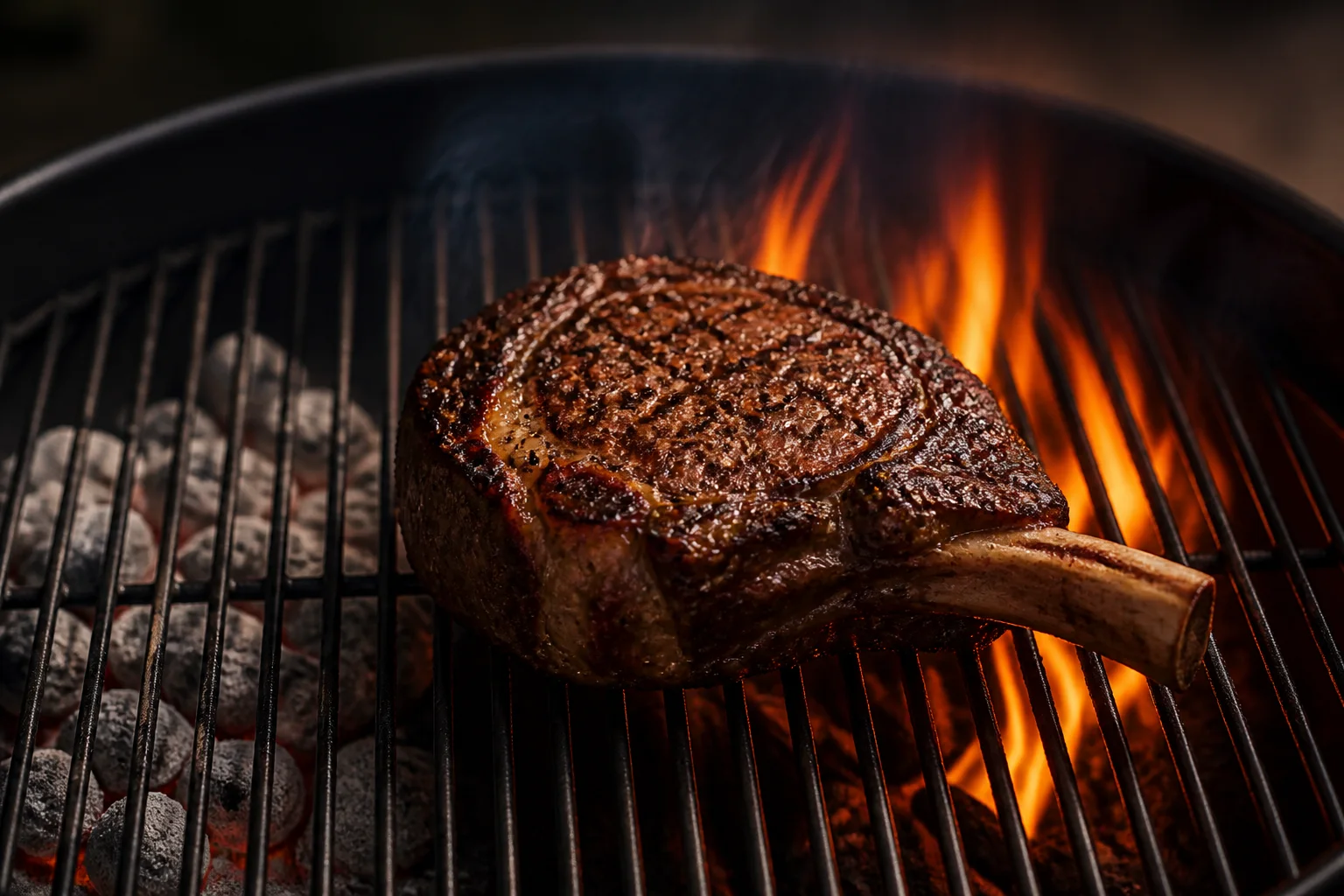
A bone-in ribeye retains the rib. A boneless steak removes it. Leave the bone long and clean and the same family becomes a tomahawk steak; shorten and french it and many butchers call it a cowboy steak. Those presentations matter for handling and yield, but the underlying muscles are ribeye.
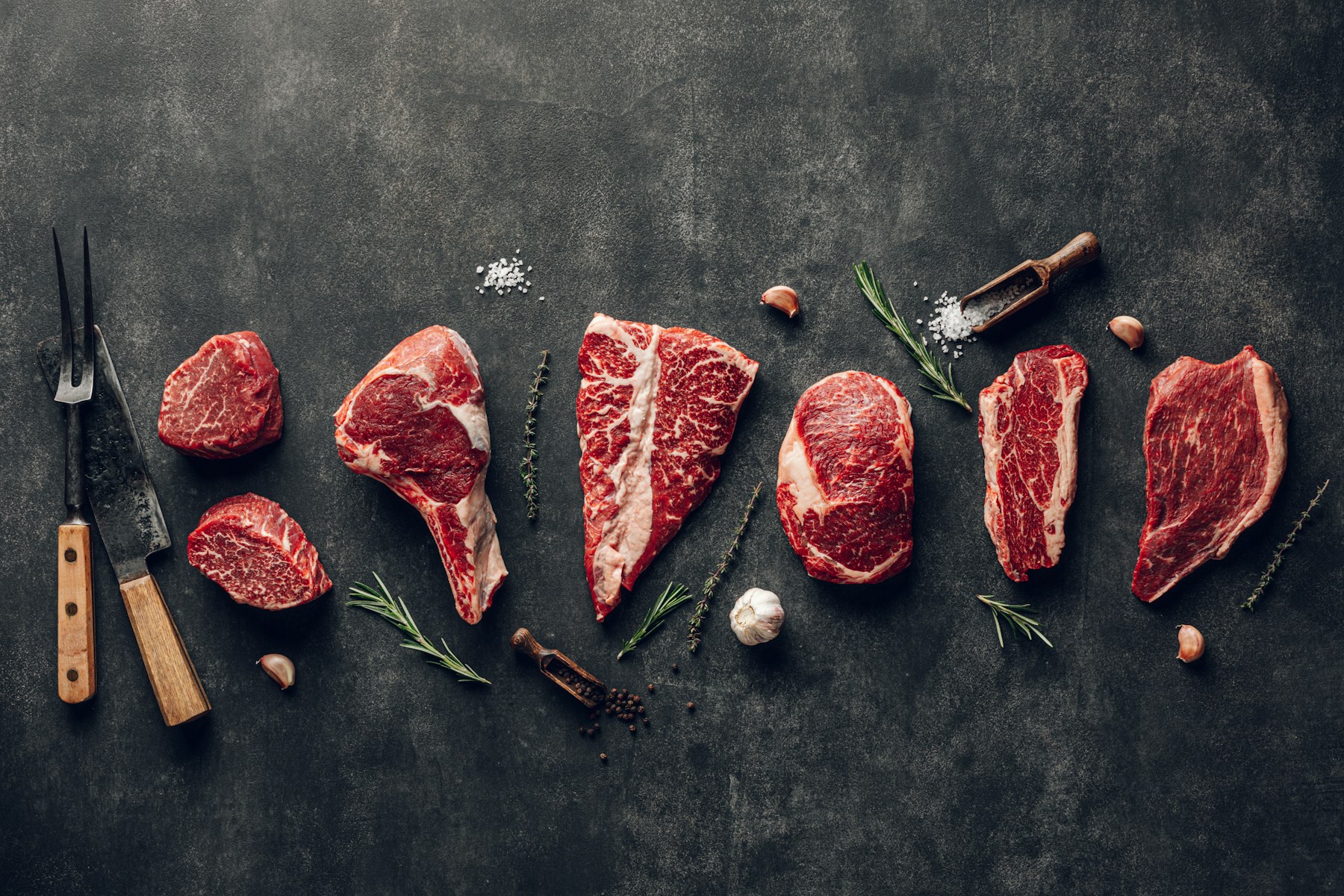
Eye, Cap and Rib Position
The eye is fine-grained and tender with an assertive but balanced beef flavor. The cap is looser-grained, richly marbled and often the most coveted bite. Between them, a seam of fat can soften during cooking but may remain waxy if the steak is served very cool.
Ribeyes from nearer the chuck generally show a larger, more obvious cap and more complex muscle arrangement. Toward the loin, the eye becomes more uniform and the cap tends to narrow. Neither end is objectively best: cap lovers often favor the chuck end, while diners who want a broad central eye may prefer the loin end. The dedicated ribeye cap guide explains why isolated cap steaks are uncommon and expensive.
Marbling, Flavor and Texture
Marbling is the fine intramuscular fat within lean, not merely the thick rim around a steak. During cooking it contributes aroma, lubrication and richness. Distribution matters: fine flecks across the eye generally serve more bites than one heavy seam. Exterior fat can be delicious when browned and softened, but it is not a substitute for internal marbling.
Ribeye tastes fuller and fattier than tenderloin and typically feels softer than strip. If that richness sounds excessive, a leaner cut such as bavette offers strong beef flavor with a different chew, while Denver steak balances marbling and a smaller format.
Bone-In vs Boneless Ribeye
| Format | Advantages | Trade-offs | Good fit |
|---|---|---|---|
| Boneless | Easy pan contact, carving and portioning | Less dramatic presentation | Cast iron and weeknight cooking |
| Bone-in | Classic presentation; slightly shields one edge | Uneven geometry and lower edible yield | Grill or oven finish |
| Cowboy | Thick with manageable short handle | Needs indirect-first cooking | Two-zone grill |
| Tomahawk | Centerpiece and usually extra thick | Long bone costs and complicates cookware | Shared occasion steak |
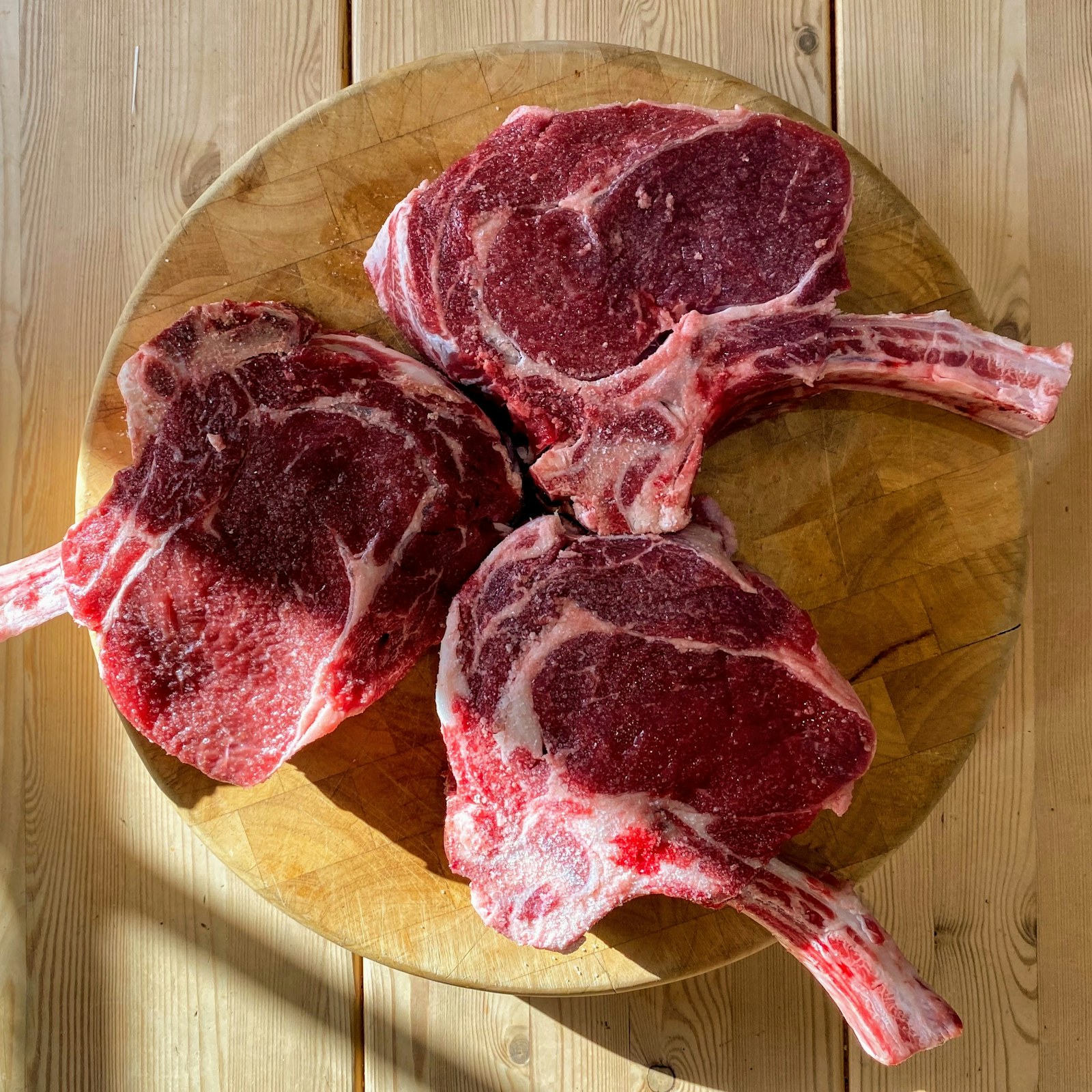
Claims that the bone deeply flavors every bite during a short steak cook are overstated. The meaningful differences are thickness, surface exposure, edge insulation, handling and the way the steak is portioned.
Prime, Choice, Wagyu and Dry Aging
USDA Prime generally has more marbling than Choice, but the grade applies to a carcass evaluation and does not erase variation between individual steaks. Inspect the actual cut. A Wagyu ribeye can carry far more intramuscular fat, yet 'Wagyu' needs country and program context.
Wet aging keeps beef in vacuum packaging and mainly develops tenderness. Dry-aged ribeye loses moisture and trimmed exterior while developing nutty, roasted or blue-cheese-like aromas. It is a different flavor, not a guarantee that every diner will prefer it.
How to Buy Ribeye
- Choose thickness first: around 1.5–2 inches gives enough room to develop crust before overcooking the center.
- Look for fine marbling through the eye and cap, not only a thick exterior fat edge.
- Decide whether you prefer a large cap or a broad, uniform eye.
- Check grade, pack date, aging claim and fresh/frozen status rather than trusting vague premium language.
- Make sure the steak fits the pan or cooking zone you plan to use.
How to Cook Ribeye
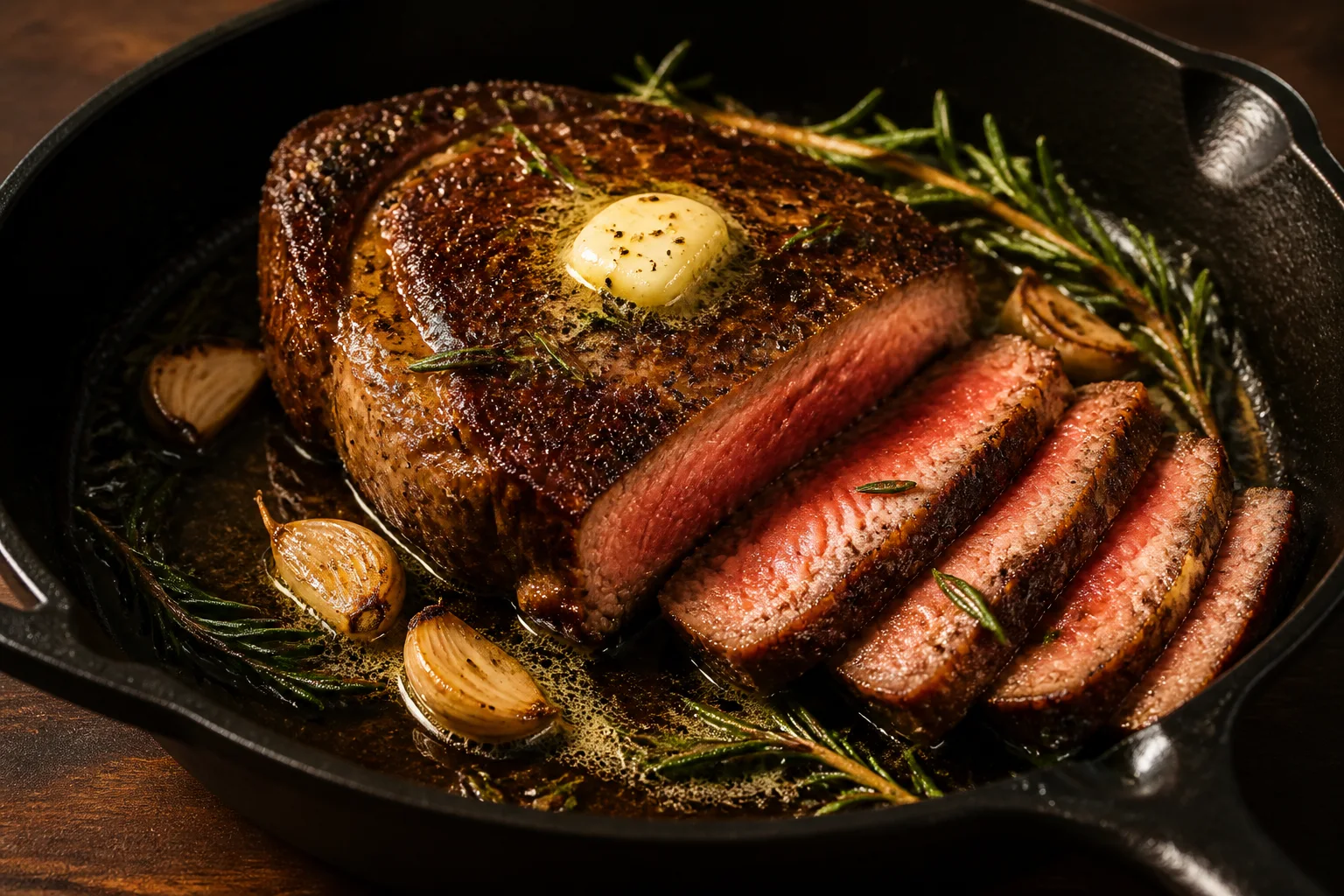
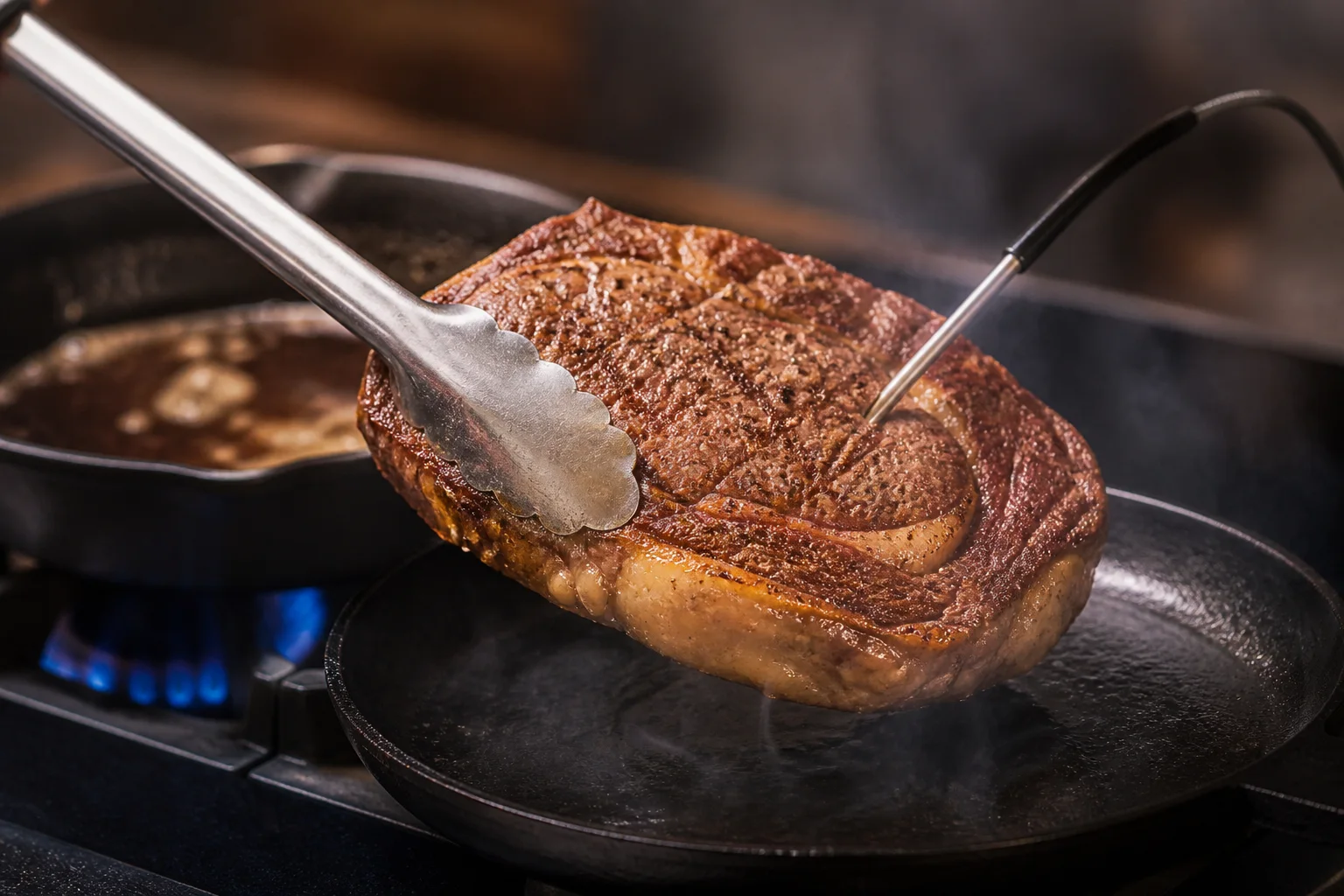
For a 1–1.5 inch boneless steak, a direct cast-iron ribeye method can build a strong crust before the interior runs away. For a thicker cut, reverse-sear ribeye separates the gentle interior stage from the final browning. A grill works well if it has direct and indirect zones.
Smoke suits thick steaks, but it should be clean and restrained. Choose the dedicated smoked ribeye guide for a charcoal or offset setup, or the pellet-grill ribeye guide for pellet-cooker behavior. The broader how to cook ribeye guide helps select among all methods.
| Thickness | Strong method | Why |
|---|---|---|
| Under 1 in | Fast direct sear | A gentle first stage may overcook the thin center |
| 1–1.5 in | Cast iron or two-zone grill | Enough room for crust with careful turning |
| 1.5–2.5 in | Reverse sear | Better center-to-edge control |
| Very thick bone-in | Indirect grill, oven or smoker + sear | The center needs time before crust development |
Seasoning and Dry Brining
Salt is the foundation. Dry-brine thicker steaks uncovered in the refrigerator for 8 to 24 hours when possible. This seasons more evenly and dries the surface. Pepper, garlic and herbs can complement ribeye, but add delicate aromatics late enough to avoid scorching. Our steak seasoning guide explains timing and salt selection.
Doneness, Temperature and Resting
Ribeye often benefits from enough heat to soften its internal fat, which is one reason many diners prefer it around medium-rare to medium rather than very rare. Preference is separate from safety: our steak temperature guide shows common culinary ranges and clearly identifies USDA FSIS guidance of 145°F with at least a three-minute rest for whole beef steaks.
Insert the thermometer into the thickest part of the eye, away from the cap seam and bone. Rest until the temperature rise slows. Do not drown the crust under a tight foil tent.
A Reliable Ribeye Dinner
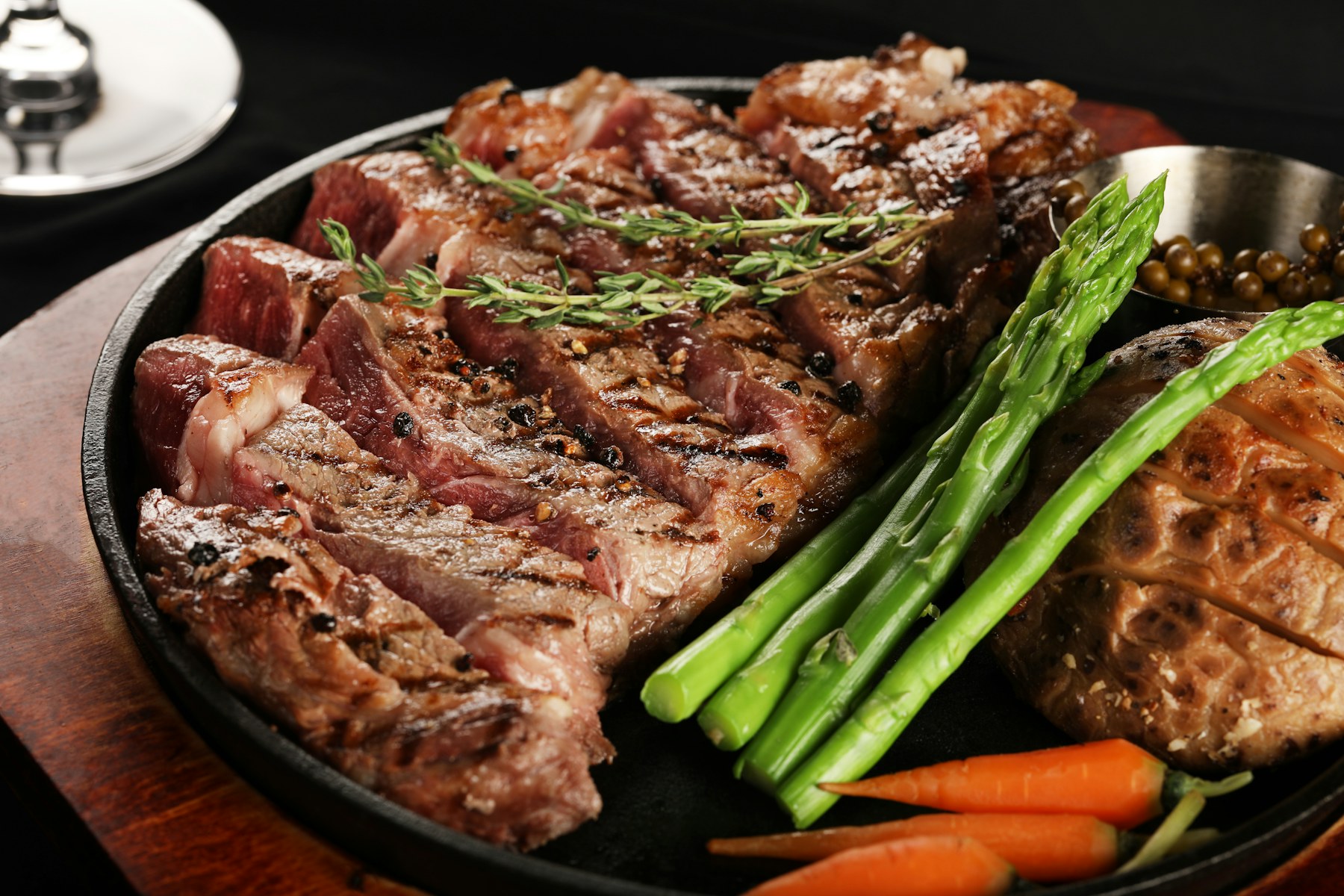
For measured quantities, equipment and a complete plate, follow the ribeye steak recipe. Serve with an acidic counterpoint—mustard vinaigrette, chimichurri, pickled shallots—or a modest spoonful of herb butter. Slice across the eye and, if useful, turn the cap separately because its grain can run differently.
Common Ribeye Mistakes
- Buying a thin steak and expecting both a dark crust and a cool center.
- Confusing exterior fat with well-distributed marbling.
- Using only direct high heat for a very thick bone-in steak.
- Placing the thermometer in a fat seam and trusting the misleading reading.
- Leaving a butter baste over fierce heat until the milk solids turn bitter.
- Slicing the entire steak before it has rested.
Chuck End, Center and Loin End
Ribeye changes as the rib section approaches the chuck or loin. Chuck-end steaks usually carry a larger spinalis cap, more internal seams and a less symmetrical eye. Toward the loin, the eye becomes broad and tidy while the cap generally narrows. Center cuts balance those traits.
Choose by preference rather than a simplistic ranking. A large cap provides especially rich, loose-textured bites but can cook faster than the eye. A clean loin-end steak makes even pan contact and creates consistent slices. Ask to see the actual cut face; two packages with the same weight and grade can be very different meals.
| Ribeye position | Typical appearance | Cooking implication |
|---|---|---|
| Chuck end | Larger cap, complex seams, irregular eye | Protect thinner cap from prolonged direct heat |
| Center | Balanced eye and cap | Versatile for pan, grill or reverse sear |
| Loin end | Large uniform eye, smaller cap | Even pan contact and straightforward portioning |
Manage Fat for Flavor Rather Than Smoke
Ribeye needs enough heat to brown and soften its fat, but a pan full of rendered fat can shallow-fry the surface while a grill flare coats it in soot. Begin with only a film of oil, render the exterior edge deliberately and spoon away excess pan fat before adding butter. On a grill, keep a clear indirect zone.
Large seam fat does not render completely during a short steak cook, nor should the center be overcooked trying to melt every white pocket. Cut around any unappealing seam at the table. Fine marbling within the lean is the fat that most directly changes juiciness and texture.
A leaner ribeye may need less fire management but a narrower doneness window. A heavily marbled Prime ribeye or Wagyu ribeye benefits from smaller portions and restrained added fat.
Carve the Eye and Cap With Intention
Rest the steak on a warm board, then identify the seam between eye and cap. For a shared steak, separate the muscles and slice each across its own grain. This prevents long cap fibers and lets every diner taste both textures. Keep slices thick enough that the center stays warm.
Serve sauce beside the steak or under part of the sliced meat so the crust remains crisp. Bitter greens, mushrooms, potatoes with vinegar and charred onions balance richness better than piling cream, cheese and butter onto every component.
Boneless Ribeye and Choice Ribeye: Read Both Parts of the Label
Boneless ribeye identifies the cut and bone format. Choice ribeye steak adds a USDA quality grade. These phrases answer different questions: removing the rib bone changes yield and contact with the pan, while the Choice grade describes qualifying carcass maturity and marbling within a broad official range.
A boneless ribeye can be Prime, Choice, Select or ungraded; a Choice ribeye can be bone-in or boneless. Compare like with like by rib position, cap size, fine marbling, thickness, aging and trimmed weight. The absence of bone usually makes edge-to-edge pan contact easier, but it does not automatically make the steak more tender or less flavorful.
| Claim | It establishes | It does not establish |
|---|---|---|
| Boneless ribeye | Ribeye cut without rib bone | USDA grade or marbling level |
| Choice ribeye | Official USDA Choice quality grade when properly labeled | Bone format or exact cap size |
| Prime ribeye | Official USDA Prime grade when properly labeled | Aging method or perfect fabrication |
For cooking, measure thickness and inspect fat distribution first. Continue with the bone-in ribeye guide or Prime ribeye guide when those attributes—not the general ribeye anatomy—are the main decision.
Choose the Right Ribeye Comparison
Ribeye comparison searches divide into two different questions. Cowboy versus tomahawk compares two bone presentations around the same ribeye family. Porterhouse versus ribeye compares different primals, muscle layouts, textures and cooking challenges.
Keeping those decisions on separate URLs protects this page as the canonical ribeye definition. It also prevents a shopper from mistaking long bone, T-shaped bone, grade and marbling for interchangeable signals.
Continue Through This Steak Topic
Build the full picture: Bone-In Ribeye Steak, Cowboy Steak, Ribeye Steak Recipe, How to Cook Ribeye Steak, Dry-Aged Ribeye, Ribeye Cap Steak, Reverse Sear Ribeye, Smoked Ribeye Steak, Cast Iron Ribeye Steak, Traeger Ribeye, Wagyu Ribeye, Prime Ribeye Steak, Cap Steak, Scotch Fillet Steak, and Bife Ancho cover the closely related cuts, methods, buying decisions and recipes that support this guide.
When you need to compare across families or techniques, continue with Tomahawk Steak, steak temperature, and Reverse Sear Steak. These pages answer adjacent questions without forcing every detail into one overgrown article.
Frequently Asked Questions
What part of the cow is ribeye?
Ribeye comes from the rib primal between the chuck and short loin. It contains the central eye, outer cap and smaller surrounding muscles.
Is ribeye better bone-in or boneless?
Neither is universally better. Boneless is easier to cook and portion; bone-in offers presentation and slightly different edge geometry.
What is the ribeye cap?
The spinalis dorsi is the outer crescent of ribeye, valued for rich marbling, a loose grain and tenderness.
Should ribeye be marinated?
A high-quality ribeye usually needs only salt and careful cooking. Marinades add surface flavor but do not penetrate deeply or make an already tender ribeye meaningfully more tender.
How thick should ribeye be?
Around 1.5–2 inches is a useful all-purpose thickness because it leaves time to brown the exterior before the center overcooks.
Sources & further reading
- USDA FSIS — Doneness Versus Safety
- USDA AMS — Beef Grading Shields
- USDA AMS — Beef Carcass Grades and Standards — Official USDA beef quality-grade definitions.
- USDA AMS — Institutional Meat Purchase Specifications, Fresh Beef Series 100