Why There Is No Honest Universal Price
Tomahawk prices change with country, grade, season, currency, aging, retailer and whether the number comes from a butcher case, online shipment or restaurant menu. Without live regional data, a current-looking price range quickly becomes misleading. This guide explains how to compare offers rather than pretending one number applies everywhere.
Start by understanding the actual tomahawk cut, then use our where-to-buy guide to evaluate sellers and shipping terms.
The Main Cost Drivers
| Factor | Why it changes the price | What to ask |
|---|---|---|
| Grade and marbling | Higher graded or program beef may be scarcer | Is the grade official and shown on the label? |
| Bone and trim | The long rib adds sale weight and fabrication labor | What is the total weight and edible eye size? |
| Thickness | A thick steak occupies more of a valuable rib section | Is thickness even edge to edge? |
| Dry aging | Moisture loss and trimming reduce sellable yield | How long, on what primal, and under whose process? |
| Shipping | Insulated packaging and fast delivery are expensive | Is shipping included and is the steak frozen? |
| Restaurant service | Cooking, labor, rent, sides and hospitality are bundled | Is the listed weight raw or cooked, and are sides included? |
Bone Weight and Edible Value
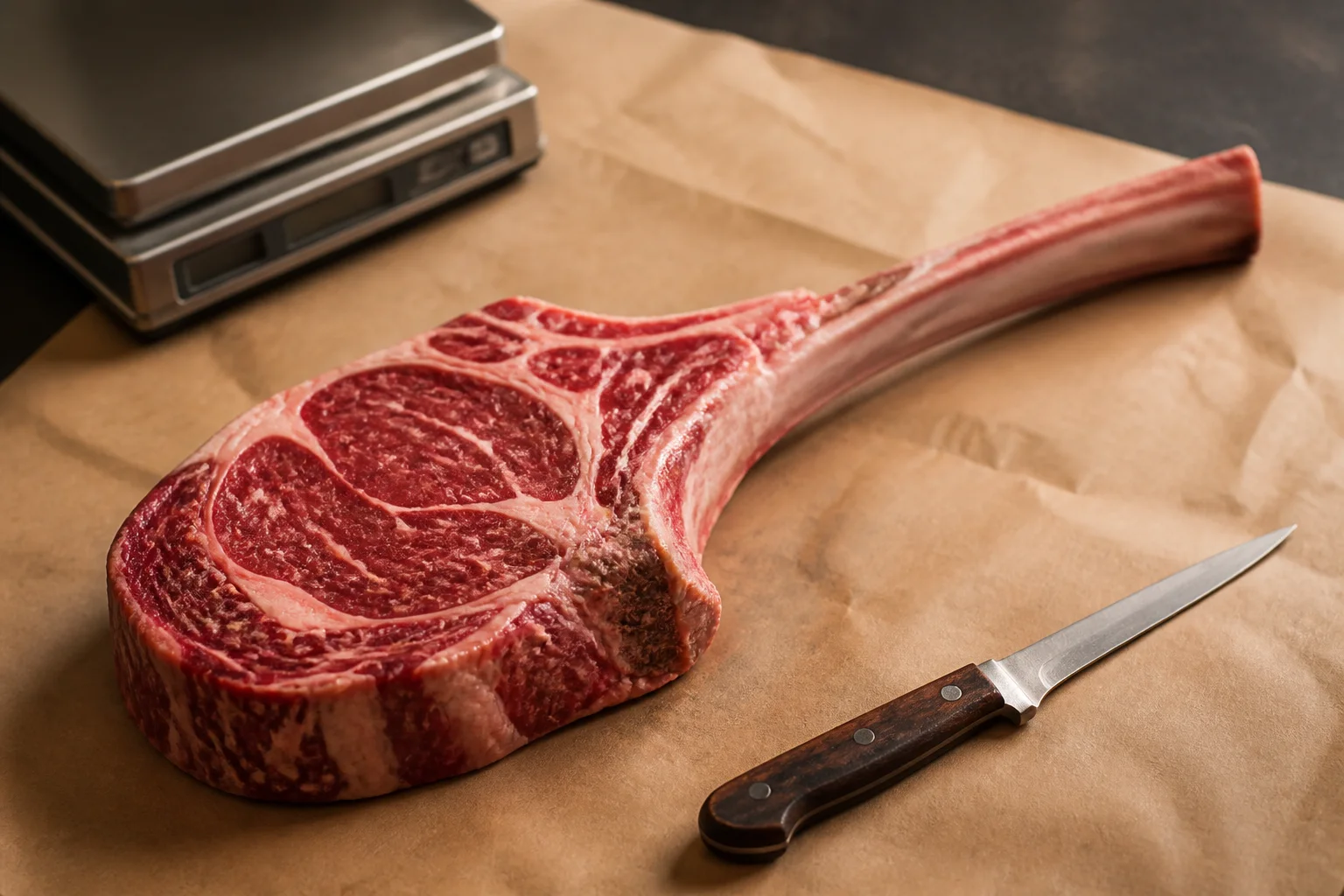
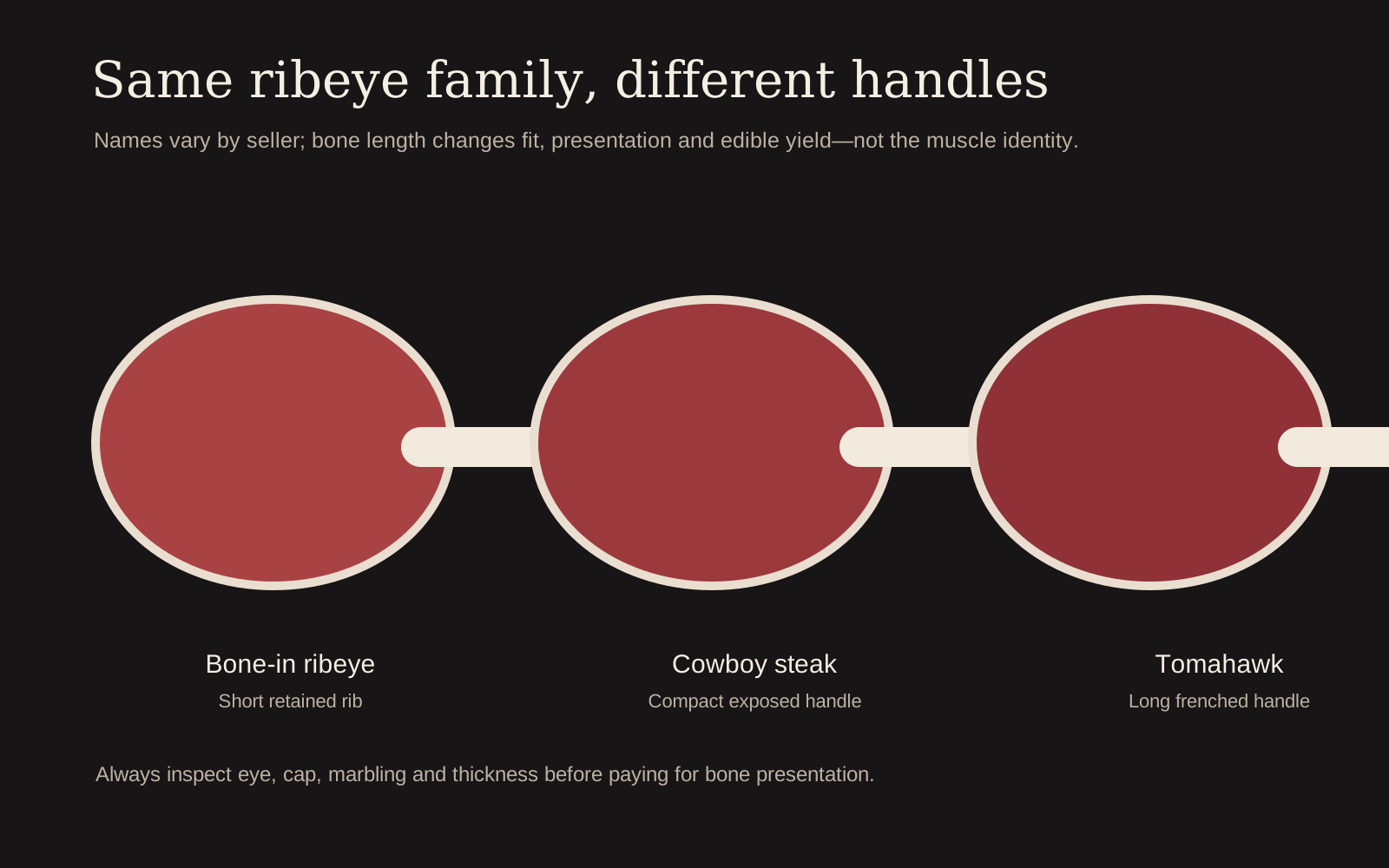
A price-per-pound comparison can flatter a steak with a smaller eye and longer bone. Compare the whole package: meat area, cap, marbling, thickness and final delivered cost. If value matters more than table theater, a bone-in ribeye or shorter cowboy steak may direct more of the purchase toward edible beef.
How to Compare Two Offers
- Normalize the final delivered cost, including mandatory shipping or service charges.
- Compare grade, origin, fresh/frozen status, aging claim and thickness.
- Look at the eye and cap rather than bone length.
- Check whether a restaurant's listed weight is a raw pre-cook figure.
- Choose the steak that fits your cooking setup; wasted quality is not value.
Once purchased, protect the investment with the temperature-led steps in how to cook tomahawk steak.
Calculate Cost Per Edible Experience
Price per pound is useful only after the products are normalized. Add mandatory shipping, subtract promotional bundles you did not want and note the stated weight range. Then compare the eye size, cap, bone length and exterior trim. A lighter steak with a short bone may provide more edible beef than a heavier showpiece.
Restaurant comparisons require another frame. The menu price pays for skilled cooking, labor, rent, service, sides and the risk of holding premium inventory. It should not be compared directly with raw retail price. Instead, ask whether the restaurant can identify grade, aging and listed raw weight, and whether the steak is meant for sharing.
Set a budget before reading luxury labels. If the priority is crust and ribeye richness, a thick cowboy steak can deliver the same muscles with less bone. If the priority is ceremony, the long handle has real experience value even though it is not edible. Calling that choice presentation—not hidden flavor science—makes the purchase honest.
Read the Product Listing Like a Butcher
The useful numbers are total weight range, approximate thickness and bone length. A listing that gives only weight may conceal a very long rib or an unusually thick exterior fat layer. Ask for a side view or a representative cross-section so eye size and taper can be judged.
Grade, aging and branded programs should be named precisely. “Premium,” “steakhouse” and “reserve” are marketing language unless the seller defines them. USDA Prime, a documented dry-aging period and an identified Wagyu program are different claims with different evidence.
- Normalize shipping. Add required cold-chain delivery before comparing an online price with a local counter.
- Use the low end of a weight range. Make sure the smallest promised steak still serves the planned meal.
- Ask whether weight includes packaging. Product net weight should describe the steak, but ambiguous listings deserve clarification.
- Compare usable meat. Long bone and thick trim may make a higher package weight a worse edible value.
Why Restaurant and Retail Prices Are Not Direct Comparisons
A restaurant price includes sourcing, trimming, skilled cooking, labor, rent, service, breakage and the risk of holding a perishable premium item. A raw retail price includes none of the hospitality around it. Compare restaurants by clarity of grade, aging, listed raw weight, cooking skill and the complete experience—not by subtracting supermarket cost.
Ask whether the listed weight is pre-cook, which is the normal meaningful basis for steak menus, and whether sides are included. A shared tomahawk may be a sensible celebration purchase even when it is not the cheapest route to ribeye. The distinction is value by purpose, not a claim that the handle improves flavor.
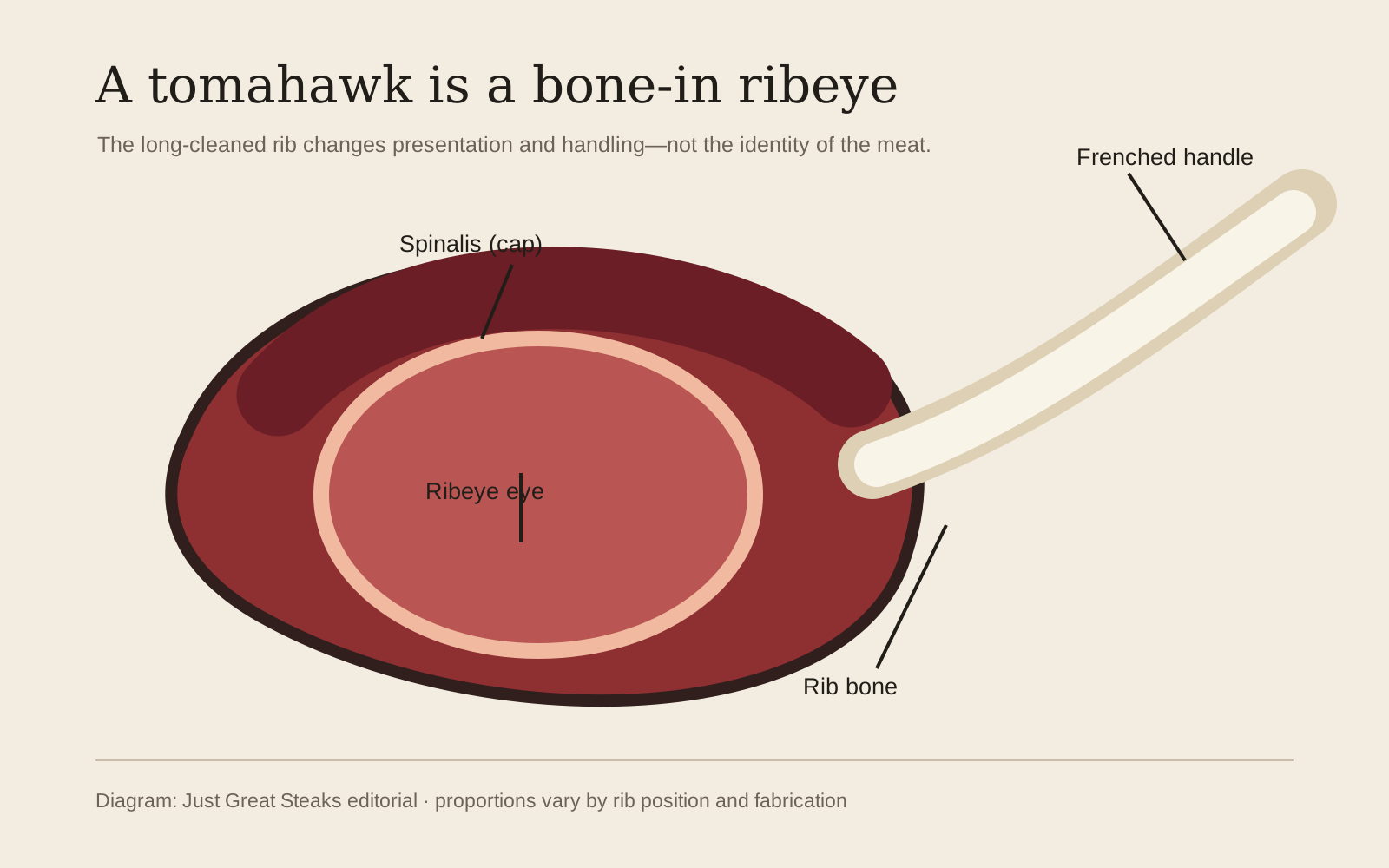
If the goal is maximum edible ribeye per dollar, compare a thick bone-in ribeye or cowboy cut. If the goal is documented premium beef, compare the Wagyu tomahawk buying questions before assuming a higher price means Japanese A5.
Where This Guide Fits
This page supports the broader Tomahawk Steak guide. Use that pillar page for the complete cut family, buying framework and links to every closely related article.
Useful next reads include How to Cook Tomahawk Steak, Tomahawk Steak Recipe, Smoked Tomahawk Steak, Ribeye Steak, and Cowboy Steak for nearby cuts, methods and decisions.
Frequently Asked Questions
Why is tomahawk steak more expensive than ribeye?
It often adds bone weight, trimming labor, thick-cut merchandising and presentation demand to the underlying ribeye price. Grade, aging and seller matter too.
Is tomahawk worth the price?
It can be for a shared centerpiece. If edible yield is the priority, a comparably marbled bone-in or boneless ribeye is often more efficient.
Does a higher price guarantee better steak?
No. Verify grade, marbling, cap size, aging, origin and condition. A long bone and luxury packaging do not guarantee better beef.