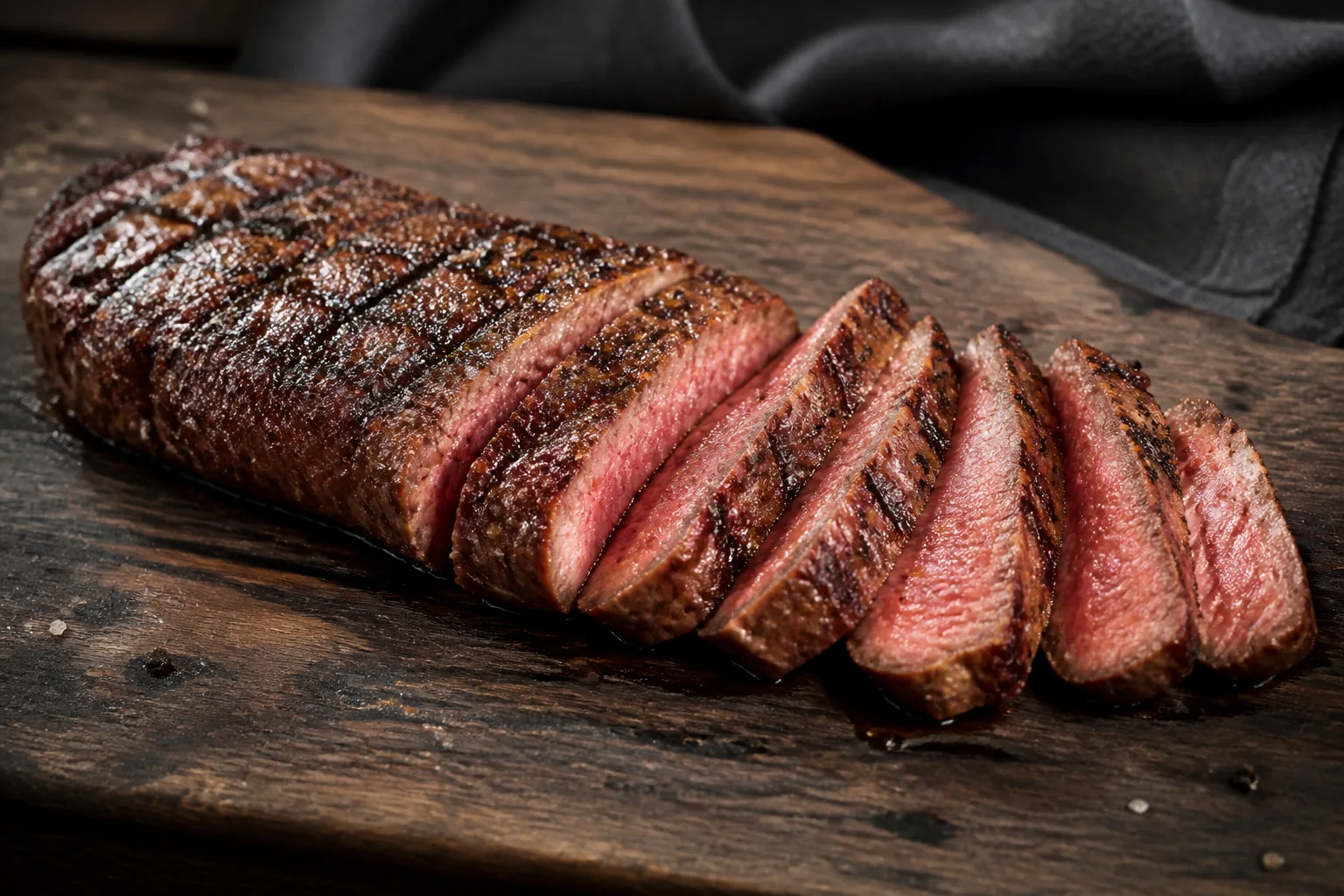
What Is Denver Steak?
Denver steak is fabricated from the serratus ventralis in the chuck, underneath the shoulder blade area. When separated along natural seams and cut across the grain, it produces rectangular, well-marbled steaks. It is not simply any small chuck steak.
Compared with the fine-grained teres major, Denver has more visible marbling and a firmer, beefier chew. Compared with ribeye, it is smaller and often less expensive but requires more attention to grain.
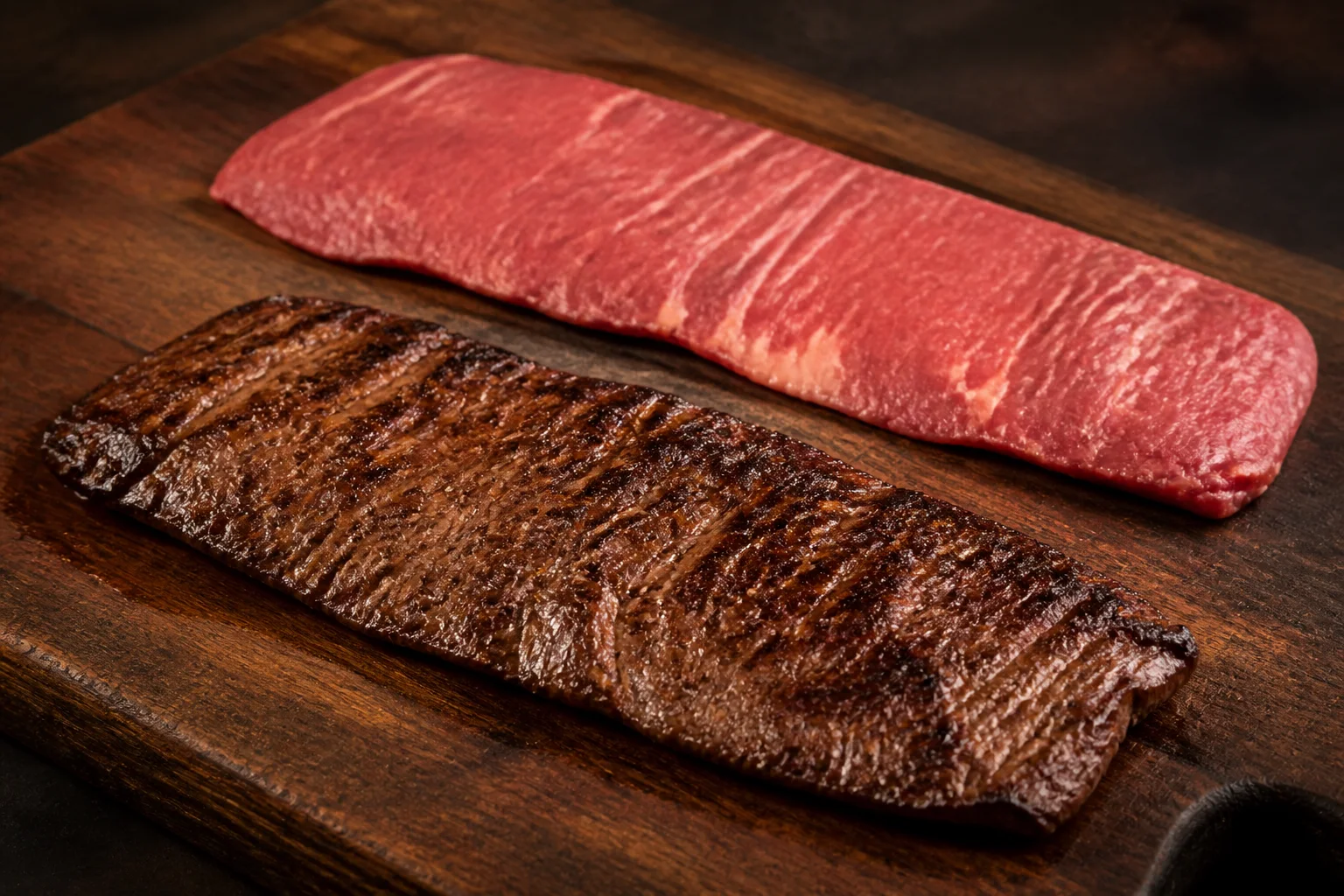
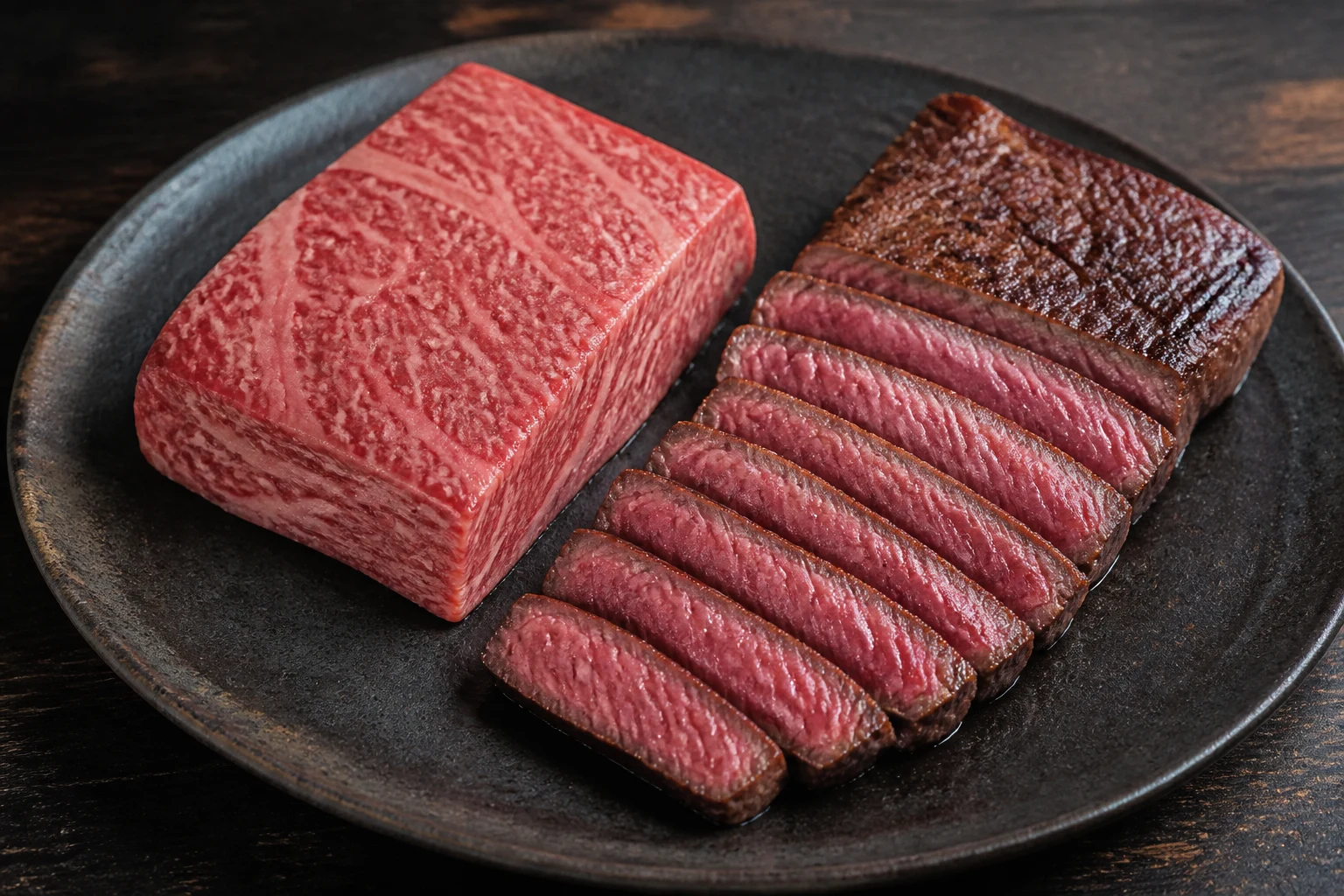
Visual Reference

How to Recognize a Good Denver
Look for a rectangular steak, fine marbling and fibers running along its length. Avoid pieces crossed by thick connective seams; careful fabrication is the point of the cut. Thickness around an inch or more gives useful searing control.
Best Cooking Methods
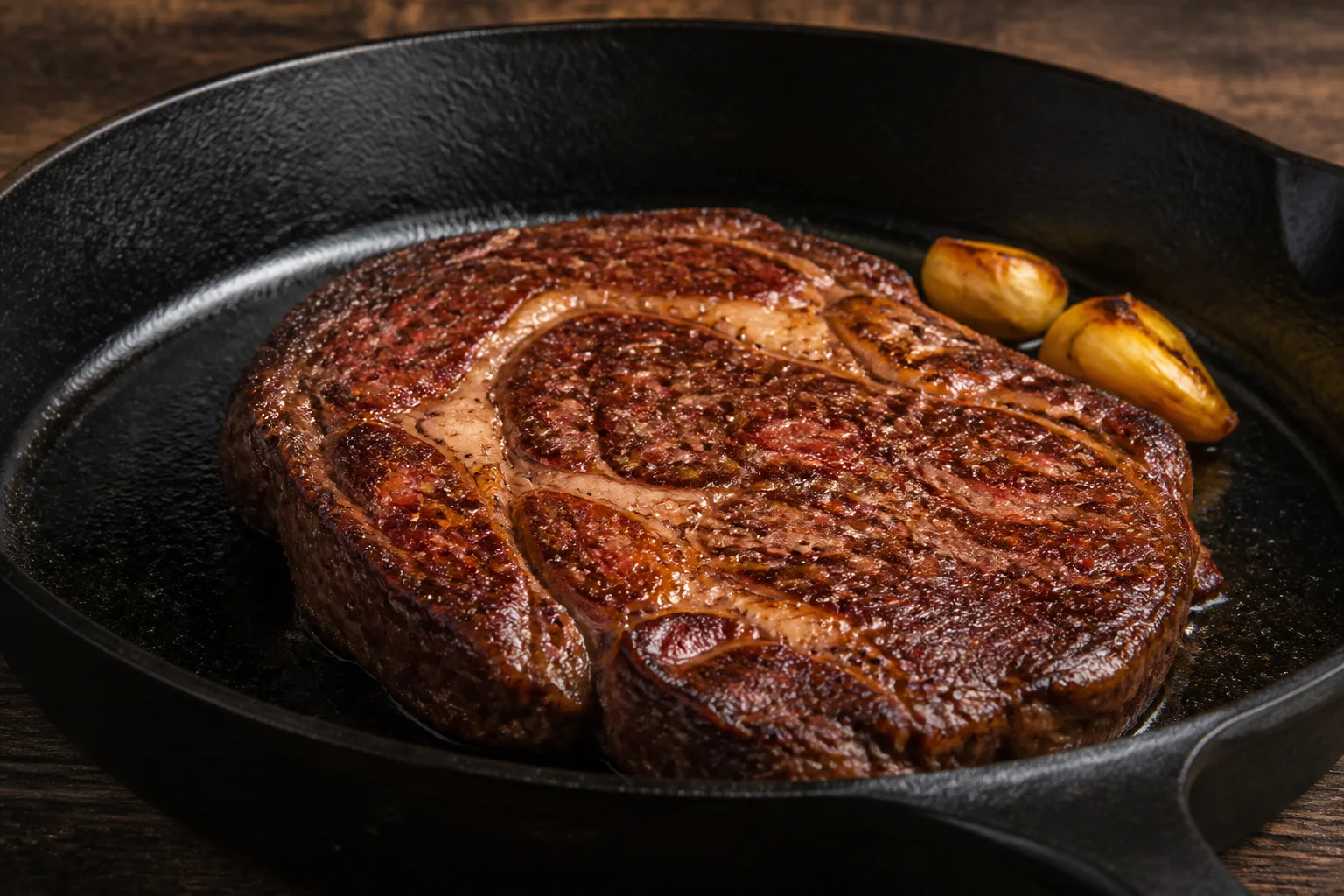
Salt ahead, pat dry and sear over a hot grill or cast iron. A medium-thick Denver works especially well with the cast-iron steak method. Very thick versions can be reverse-seared.
Check the center early using the temperature guide. Denver's marbling protects it better than sirloin tip, but its smaller format still cooks quickly.
Slice Across the Long Grain
The butcher should cut steaks across the primary muscle grain, but inspect each piece. After resting, make serving slices across any visible fibers. Denver suits tacos, rice bowls and steak salads as well as a conventional plate.
Seasoning and Pairings
Its beef-forward profile handles pepper, cumin, coffee-chile rubs or chimichurri. Keep sugar away from a very hot sear. For a simple baseline, use the steak seasoning guide.
Why Butcher Skill Matters to Denver Steak
The serratus ventralis sits among chuck muscles and connective seams. A properly fabricated Denver is separated along those seams and then portioned across its long fibers. If a package contains a thick white band running through the center, it may be an under-trimmed chuck portion using the fashionable name rather than the clean steak readers expect.
Denver steaks are often rectangular but can taper. Match pieces of similar thickness when cooking several, and mark the grain before seasoning. A short marinade adds flavor but cannot correct a steak cut parallel to the grain. If the raw fibers run from one short edge to the other, plan the final slices accordingly.
Marbling makes Denver forgiving, but the chuck flavor welcomes bolder accompaniments than filet. Toasted cumin, black pepper, grilled onions and chile-lime sauce work well. For a shoulder cut with a finer grain and less marbling, compare teres major; the contrast makes the effect of seam butchery easy to taste.
Denver Steak Exists Because of Seam Butchery
Denver steak comes from the serratus ventralis in the chuck underblade. The muscle can be tender and well marbled, but it sits among connective seams that must be removed. It should not be confused with a generic chuck steak cut straight across several muscles.
Fabrication often leaves a rectangular steak with long visible grain. Some pieces carry a thin internal seam; others are very clean. A skilled butcher increases value by following natural seams rather than leaving thick connective bands for the diner.
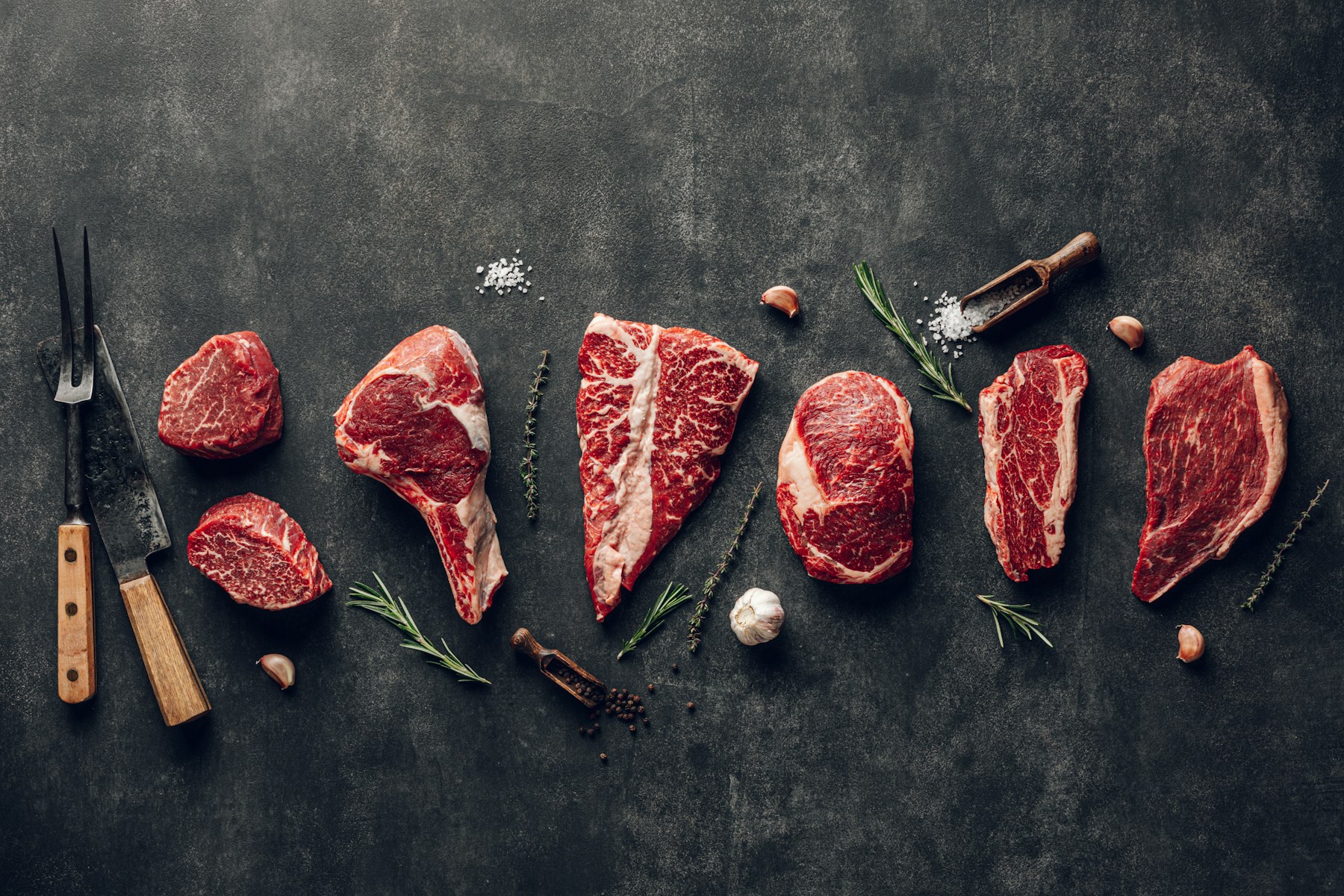
Buy for Grain, Marbling and Even Thickness
Choose a piece with fine marbling distributed across the broad face and no heavy silver membrane. Thickness near an inch or more gives the surface time to brown before the center overshoots; very thin Denver is better for fast strips than a steakhouse presentation.
Salt ahead, blot dry and sear in cast iron or over a two-zone grill. Turn frequently and hold narrow edges against the heat. Denver can have abundant fat but a pronounced grain, so correct temperature alone does not replace proper slicing.
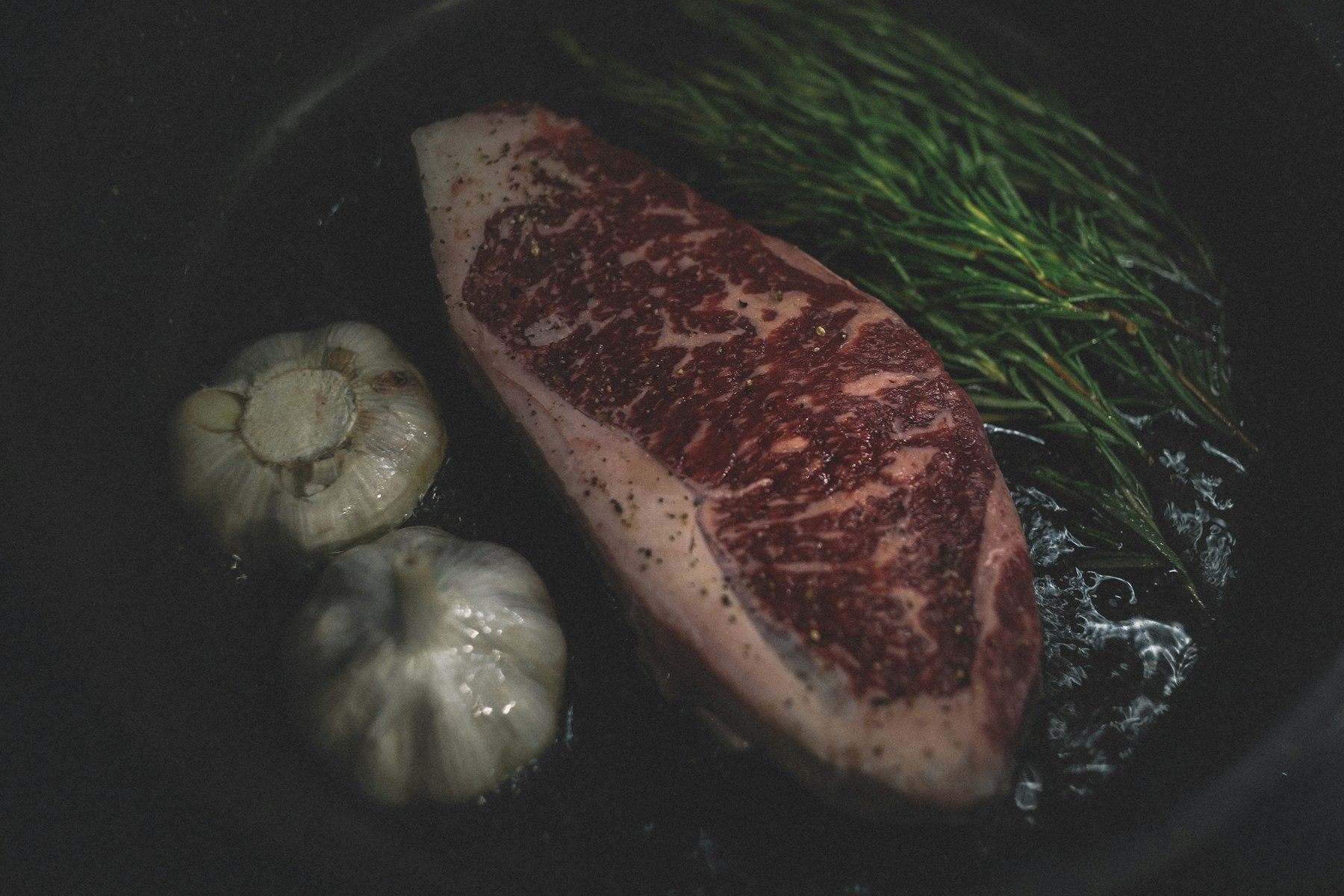
Slice Denver Across Its Long Fibers
Rest briefly, divide an awkward piece into manageable sections if needed, then cut across the grain. Serve as a plated steak, over rice or beside grilled vegetables. Strong beef flavor handles pepper, chile and fermented sauces, but keep surface liquids controlled before the sear.
For another small shoulder steak with a finer, leaner texture, compare teres major. For ribeye-like richness with a larger format, Denver is not a direct substitute; it has its own grain and seam structure.
Why Denver Can Be Excellent Value
Denver steak can offer fine marbling and a tender bite at a lower price than ribeye because it is smaller, less familiar and requires skilled fabrication. Value disappears when the butcher leaves heavy connective seams or cuts it so thin that it cannot develop crust before overcooking.
Ask whether the steak is cut with or across the muscle and inspect grain direction yourself. Some Denver portions are sold as long rectangular steaks; others are smaller blocks. Thickness and clean seams matter more than a standardized silhouette.
Marinade is optional. A dry brine highlights beef and protects browning. For Korean-style or soy-garlic preparations, use a shorter marinade and wipe solids before heat. Slice across the grain after resting, then add sauce rather than boiling the cooked steak in it.
Refrigerate leftovers as a thick piece. Cold Denver slices cleanly for sandwiches, while reheated thin slices should enter a hot dish at the very end. Repeated cooking makes the long fibers more apparent.
Is Zabuton Steak the Same as Denver Steak?
Zabuton is a Japanese name associated with the chuck flap or chuck-flat area inside the chuck roll. Denver steak is the American steak portion most often cut from that well-marbled shoulder area. Retail usage is not perfectly uniform, so treat the names as overlapping market language rather than proof that two packages were fabricated identically.
The useful buying question is not merely “is this zabuton steak?” Ask whether the piece is the chuck flap/under-blade muscle, whether exterior seams were removed, how thick it was portioned and whether it is intended for a whole-steak sear or thin yakiniku slices. Japanese-cut charts may show a thin presentation while an American Denver is often a compact thick steak.
| Label | What it usually describes | What to verify |
|---|---|---|
| Zabuton | Highly marbled chuck-flat/chuck-flap area | Origin, muscle and portion thickness |
| Denver steak | Seam-cut shoulder steak from the under-blade area | Fabrication and hard connective seams |
| Chuck flap | Muscle/cut-family language rather than one serving format | Whether sold whole, thin-sliced or steak-cut |
Where This Guide Fits
This page supports the broader Chuck Eye Steak guide. Use that pillar page for the complete cut family, buying framework and links to every closely related article.
Useful next reads include Cube Steak, Flat Iron Steak, Zabuton Steak, Sirloin Steak, and steak cuts for nearby cuts, methods and decisions.
Frequently Asked Questions
Is Denver steak tender?
Yes, especially for a chuck cut. Correct seam butchery and cross-grain slicing are important.
Is Denver steak the same as flat iron?
No. Both come from the chuck, but they are different muscles and are fabricated differently.
Should Denver steak be marinated?
It does not need tenderizing. A marinade can add surface flavor, but a dry brine preserves browning.
Sources & further reading
- USDA FSIS — Safe Minimum Internal Temperature Chart
- JETRO — Japanese Wagyu Beef Cut Guide — Official Japanese trade reference locating zabuton/chuck flat within the chuck roll.