What Grass-Fed Means—and What It Does Not
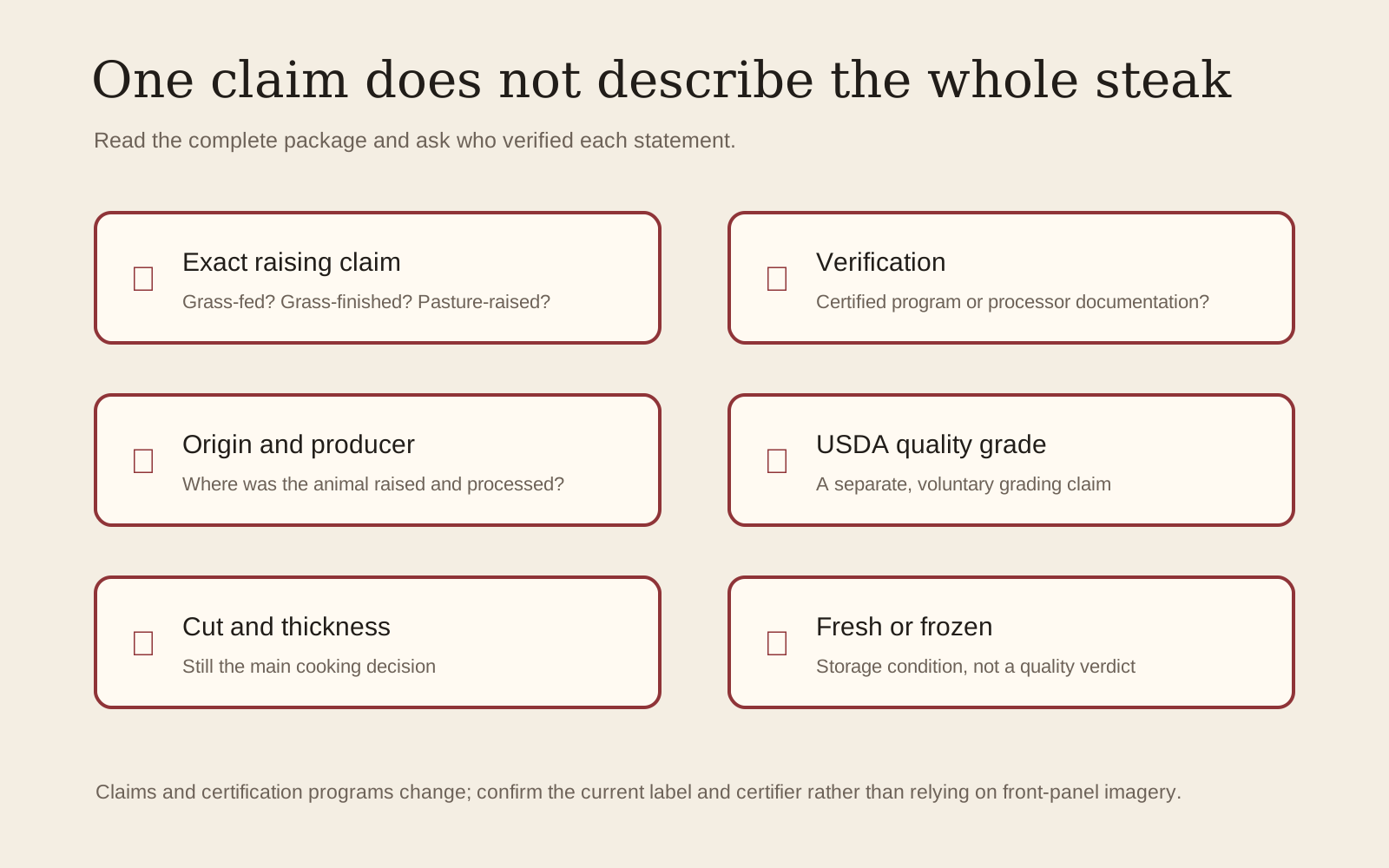
Grass-fed is an animal-raising claim. It does not name a muscle, set a tenderness level or tell you how much intramuscular fat a particular steak contains. A grass-fed ribeye is still ribeye; a grass-fed sirloin tip is still a lean, strongly grained sirloin-tip cut. The anatomy remains the first cooking fact.
The precise wording matters. Packages may say grass-fed, grass-finished, pasture-raised or carry a private certification. Those phrases should not be treated as interchangeable. In the United States, animal-raising claims submitted for federal label approval need supporting documentation, and the label or certifier should explain the production standard behind the words.
The claim also does not automatically mean organic, local, a particular breed or USDA Prime. USDA quality grading is a separate voluntary system that evaluates carcass characteristics including maturity and marbling. A producer may sell verified grass-fed beef with or without a quality grade.
Flavor, Fat and Texture Vary More Than the Label Suggests
Diet can influence fat composition and flavor, but the eating result also reflects breed, genetics, age, pasture quality, season, growth rate, carcass handling, aging and the cut itself. Some grass-fed beef is distinctly lean with mineral or herbal notes. Other programs produce well-marbled beef with a flavor closer to familiar grain-finished steak. A single adjective cannot predict all of that variation.
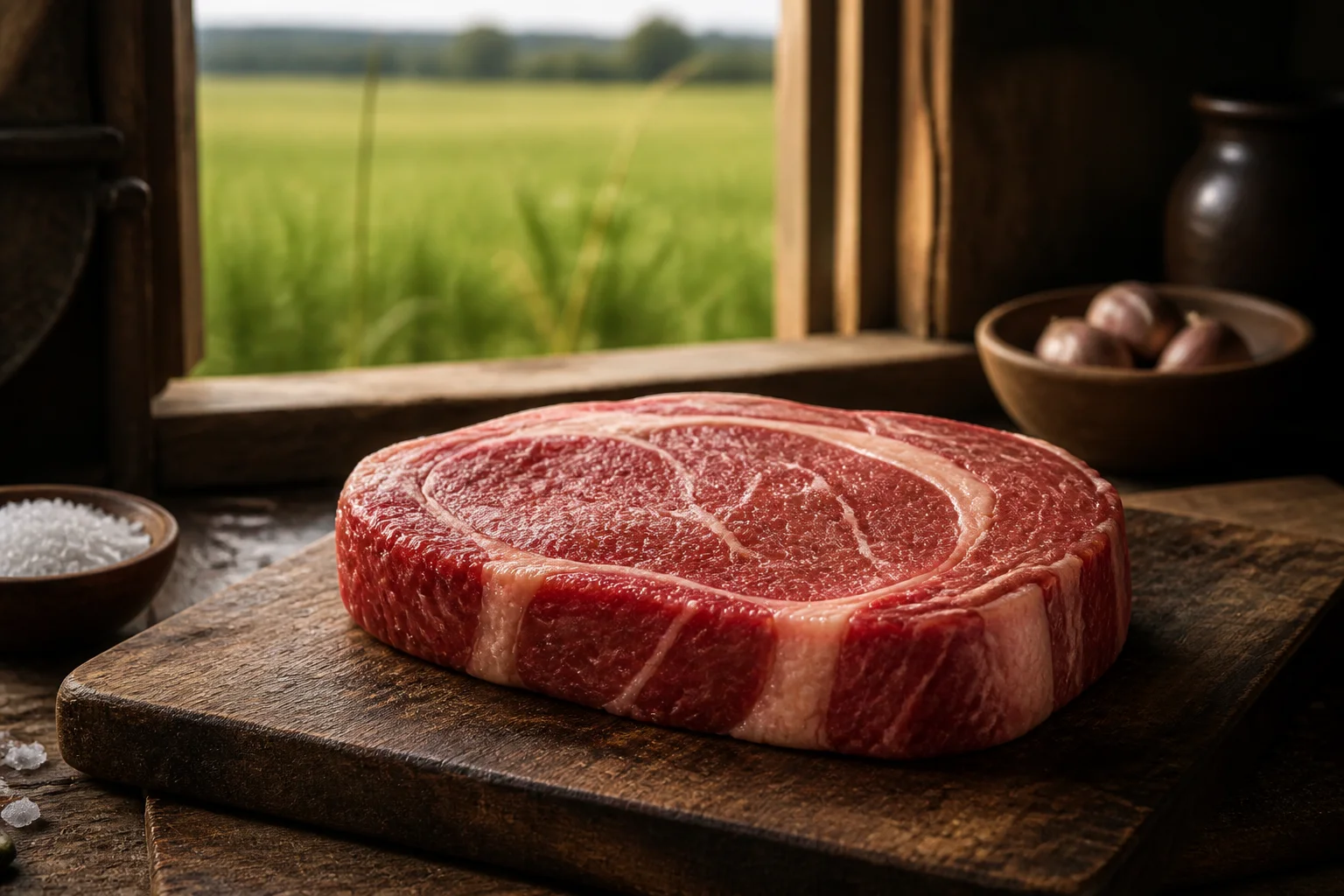
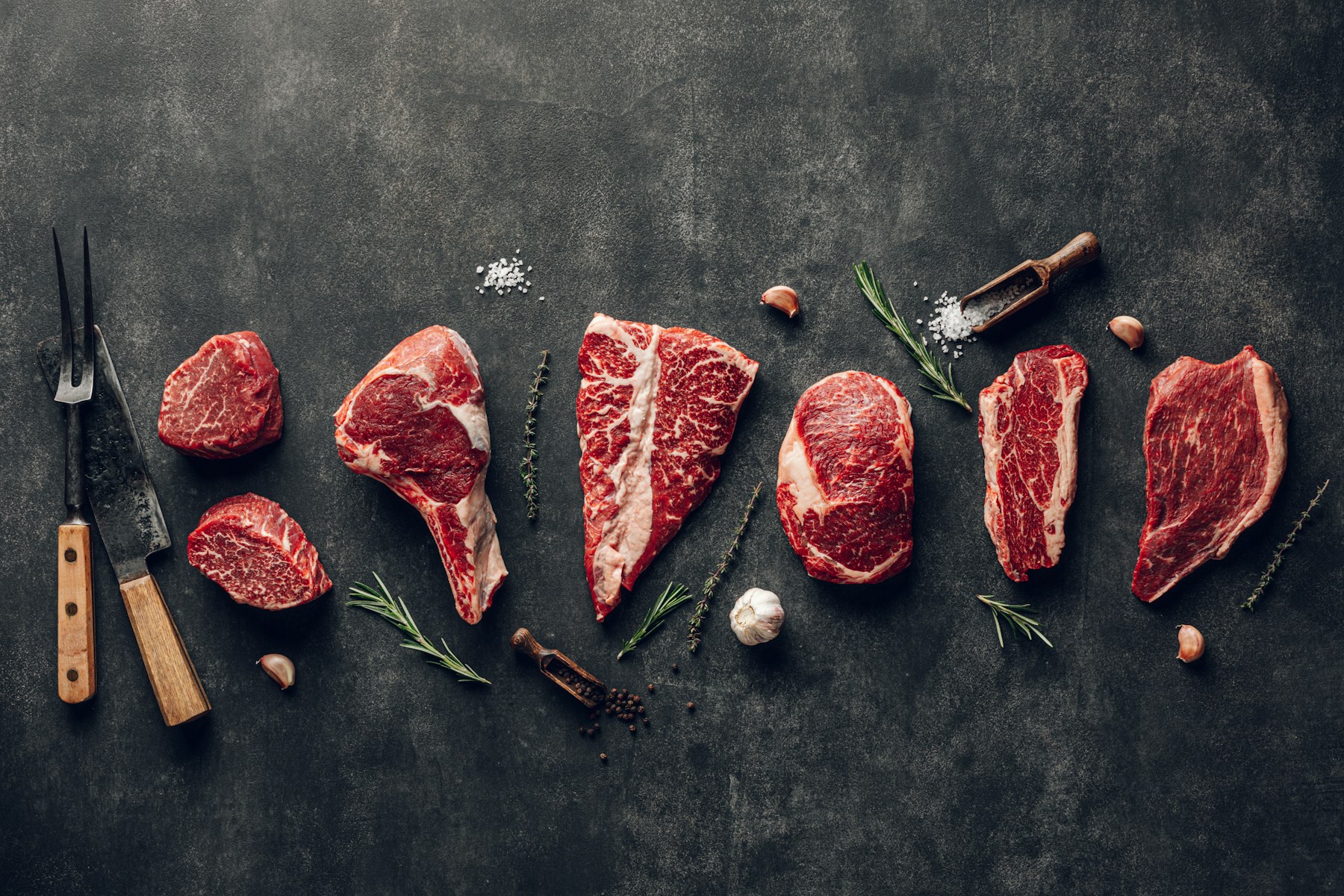
Look at the steak. Fine white flecks within the lean are more useful to cooking decisions than a green pasture graphic. Exterior fat does not substitute for intramuscular marbling: it can baste an edge and contribute flavor, but it will not protect the center in the same way as distributed fat. Color varies with oxygen exposure, packaging and animal factors, so bright cherry-red is not a complete quality test either.
| What you see | What it may suggest | What to do |
|---|---|---|
| Lean, fine-grained steak | Less thermal buffer and a quicker finish | Use a thermometer and stop the hard sear promptly |
| Visible fine marbling | More richness and tolerance of high heat | Choose the method mainly by cut and thickness |
| Thick exterior fat | Potential for a rendered edge, not guaranteed interior juiciness | Render gradually and control flare-ups |
| Uneven thickness | Different zones will finish at different times | Divide the cut or position the thin end over lower heat |
How to Buy Grass-Fed Steak
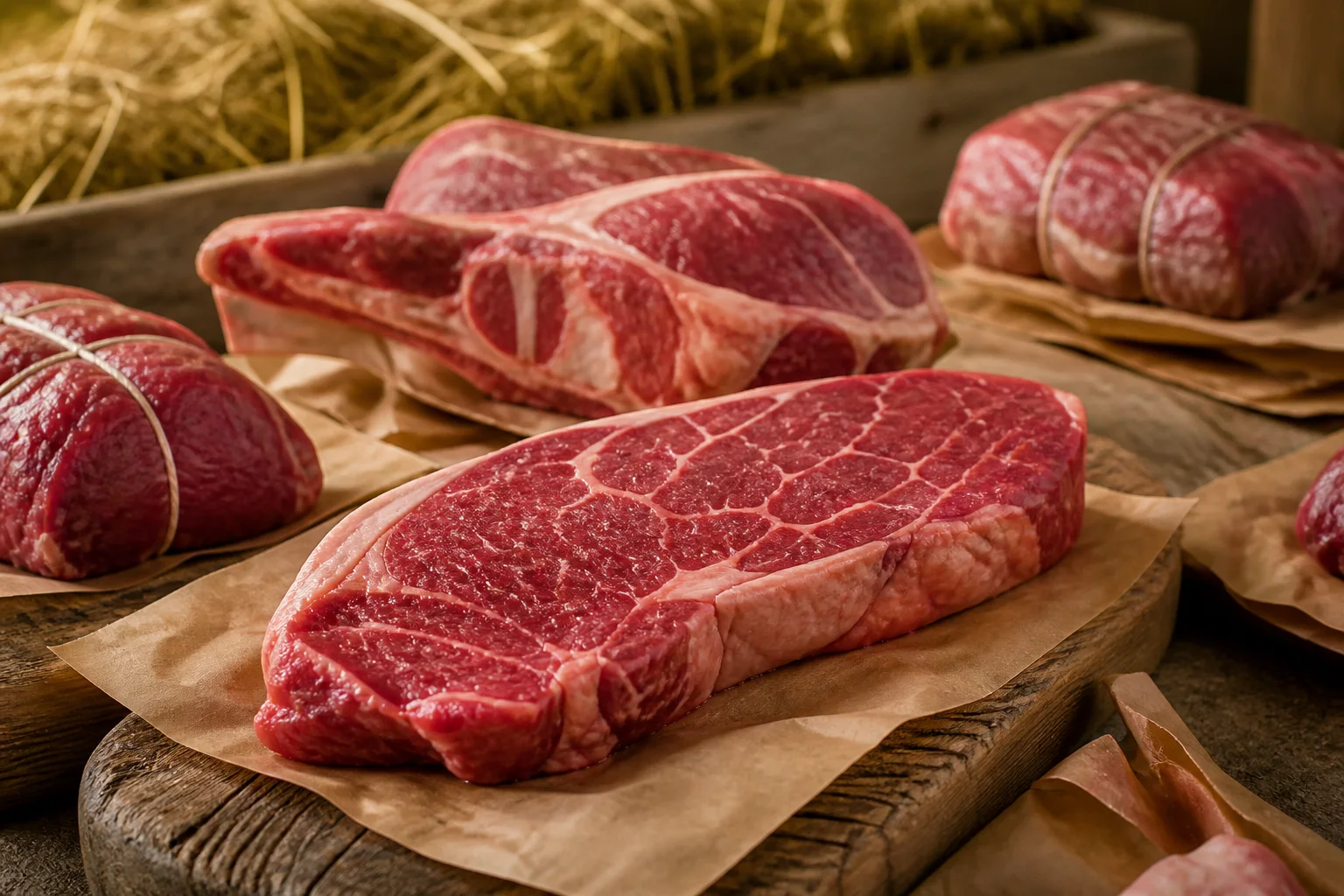
Start with search intent at the meat case: dinner format, number of diners, cooking equipment and budget. Then choose the cut. For a high-heat individual steak, ribeye, strip, Denver or teres major can work. For a sliced meal, bavette or sirloin tip can deliver beef flavor without pretending to be tenderloin.
- Read the full claim. Look for the exact raising statement and the name of any certifier or verified program.
- Ask about finishing. If the distinction matters to you, ask what the cattle consumed during the finishing period rather than inferring from pastoral imagery.
- Check origin and processor details. Country, producer and establishment information answer different questions from feeding claims.
- Inspect cut, thickness and marbling. Those factors determine the useful cooking method and value on the plate.
- Treat fresh and frozen honestly. Properly frozen beef can be excellent. Packaging integrity and cold-chain handling matter more than a simplistic fresh-is-always-better rule.
How to Cook Grass-Fed Steak
There is no separate appliance setting for grass-fed beef. Match the method to geometry. A thin bavette needs brief, intense heat and careful slicing. A thick ribeye benefits from a two-stage method. A lean sirloin tip should be cooked only as long as necessary, rested and sliced thinly. The general framework in our steak cooking guide remains valid.
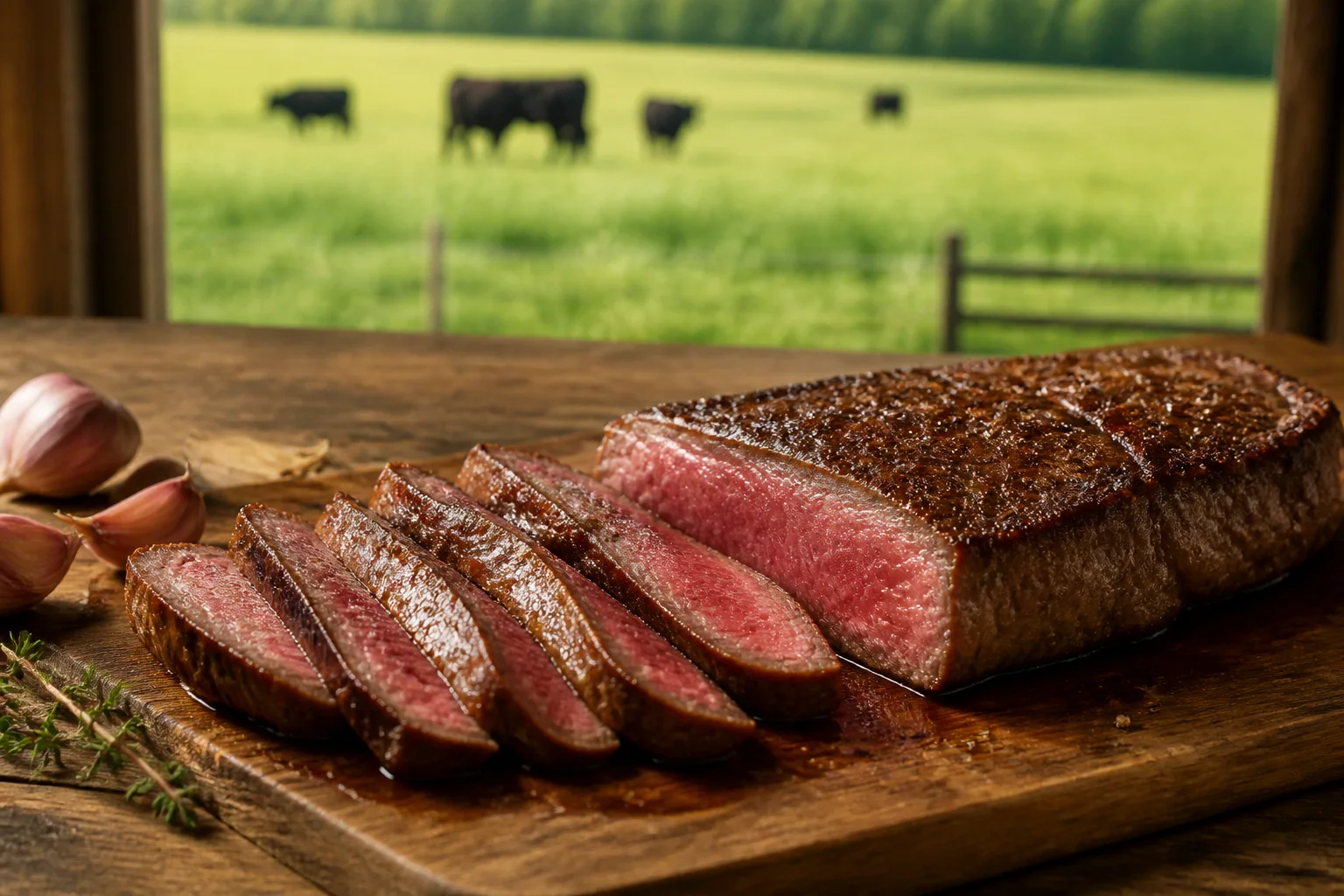
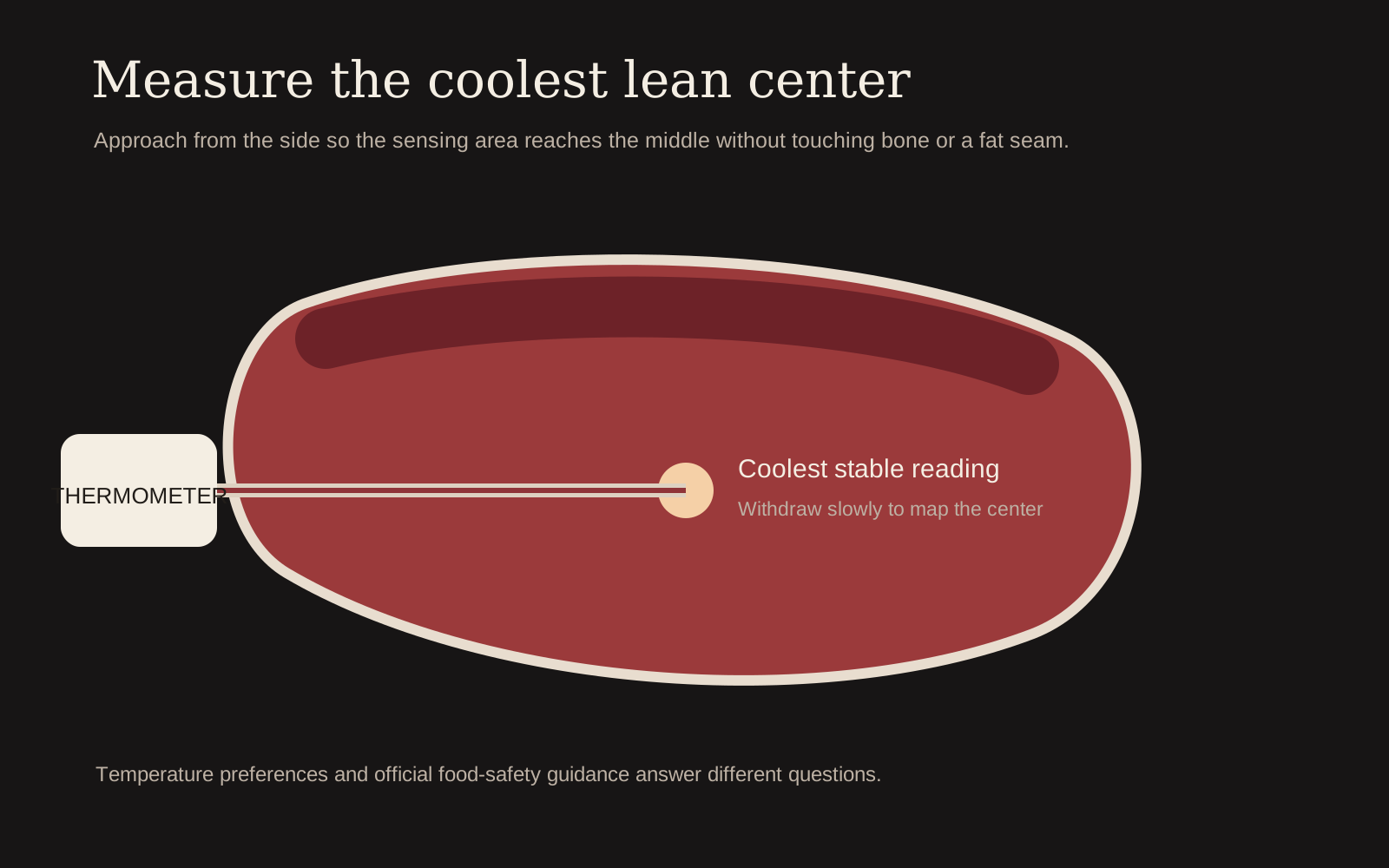
Dry the surface thoroughly. Salt in advance when the schedule permits, then cook in a pan or over a two-zone grill with a reliable instant-read thermometer. Turn frequently during direct searing for even browning. If the steak is thick, use gentler heat first and reserve fierce heat for the crust. Lean meat can move from the preferred center to dry more quickly, so begin checking earlier than a clock-based recipe suggests.
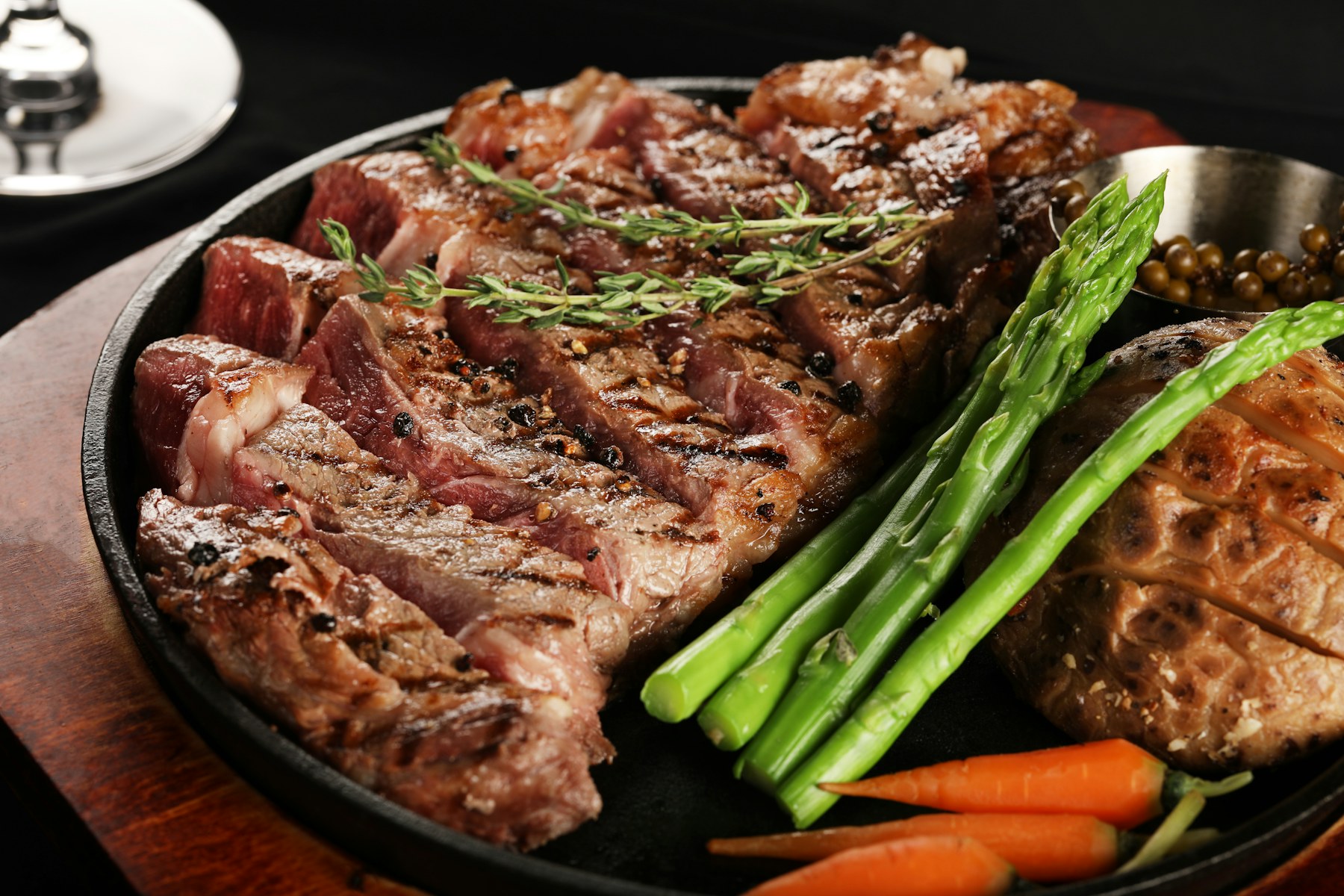
Butter, oil or sauce can add richness, but none repairs badly overcooked muscle. Add butter only after the fiercest heat to avoid burned milk solids. For leaner cuts, slice across the grain and use a bright pan sauce, chimichurri or mustard vinaigrette. Rich, well-marbled grass-fed ribeye needs less added fat.
Is Grass-Fed Steak Worth Buying?
It can be, when the production claim matches your priorities and the steak itself is well cut. Some diners prefer the flavor; others value a documented farming system. Those are legitimate preferences. They do not eliminate the need to compare edible yield, marbling, thickness, aging and seller handling.
Do not pay a premium for ambiguity. A transparent producer can describe its feeding standard, verification and origin. A butcher can show the actual steak and identify the muscle. If the label is clear but the cut is tapered, poorly trimmed or too thin for your planned method, choose a better-fabricated steak.
For a useful comparison, cook two steaks of the same cut and similar thickness with the same salt, heat and target temperature. Taste them without a heavy sauce. That isolates the beef more effectively than comparing a lean grass-fed sirloin with a heavily marbled conventional ribeye.
Run a Useful Side-by-Side Tasting
Buy the same cut at similar grade or visible marbling, thickness and aging. Cook both with the same salt and equipment, then pull at the same measured temperature. Comparing unrelated cuts mainly teaches the difference between muscles.
Taste without sauce first and note aroma, fat texture, juiciness and finish. Then add the same acidic condiment to both. A preference is more useful than a claim that one production system creates a universally superior steak.
Save the labels. If the grass-fed claim is verified by a particular program, your conclusion belongs to that producer and steak—not every animal raised under a broad marketing term.
Continue Through This Steak Topic
Build the full picture: Grass-Fed Ribeye, and Grass-Fed Sirloin Steak cover the closely related cuts, methods, buying decisions and recipes that support this guide.
When you need to compare across families or techniques, continue with Organic Steak, Ribeye Steak, and Sirloin Steak. These pages answer adjacent questions without forcing every detail into one overgrown article.
Frequently Asked Questions
Is grass-fed beef always leaner?
No. Many grass-fed programs produce relatively lean beef, but breed, genetics, age, pasture and finishing practices create substantial variation. Inspect the actual cut and marbling.
Are grass-fed and grass-finished the same claim?
Do not assume they are. Read the exact package language and the standard or certification behind it, especially if the finishing diet matters to your purchase.
Does grass-fed mean USDA Prime?
No. A raising claim and a USDA quality grade describe different things. Beef can carry one, both or neither claim.