What Is a Kansas City Strip?
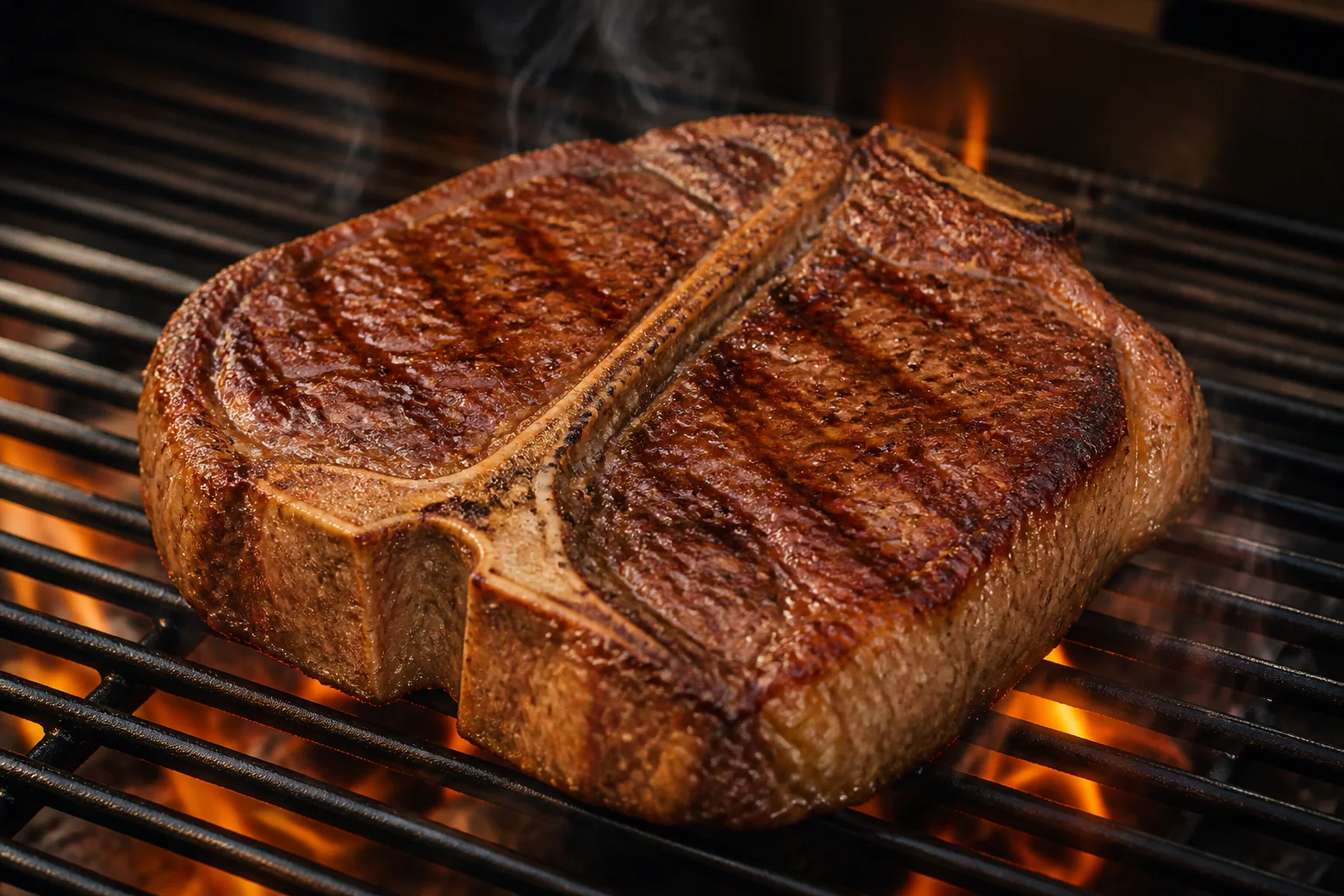
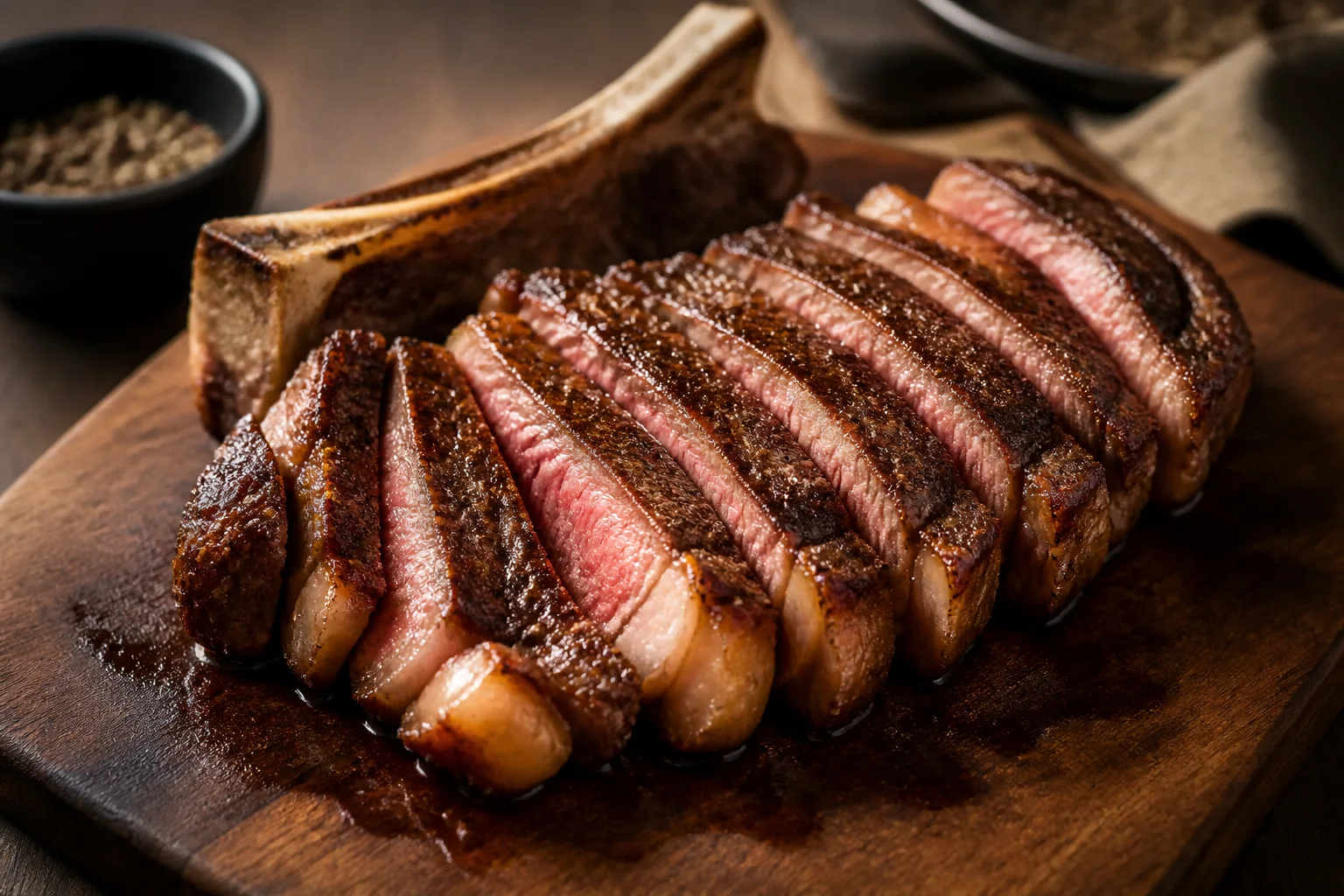
Kansas City strip commonly means a bone-in strip steak cut from the short loin. New York strip usually means the boneless version, although restaurant usage varies. The same strip muscle appears on one side of a porterhouse.
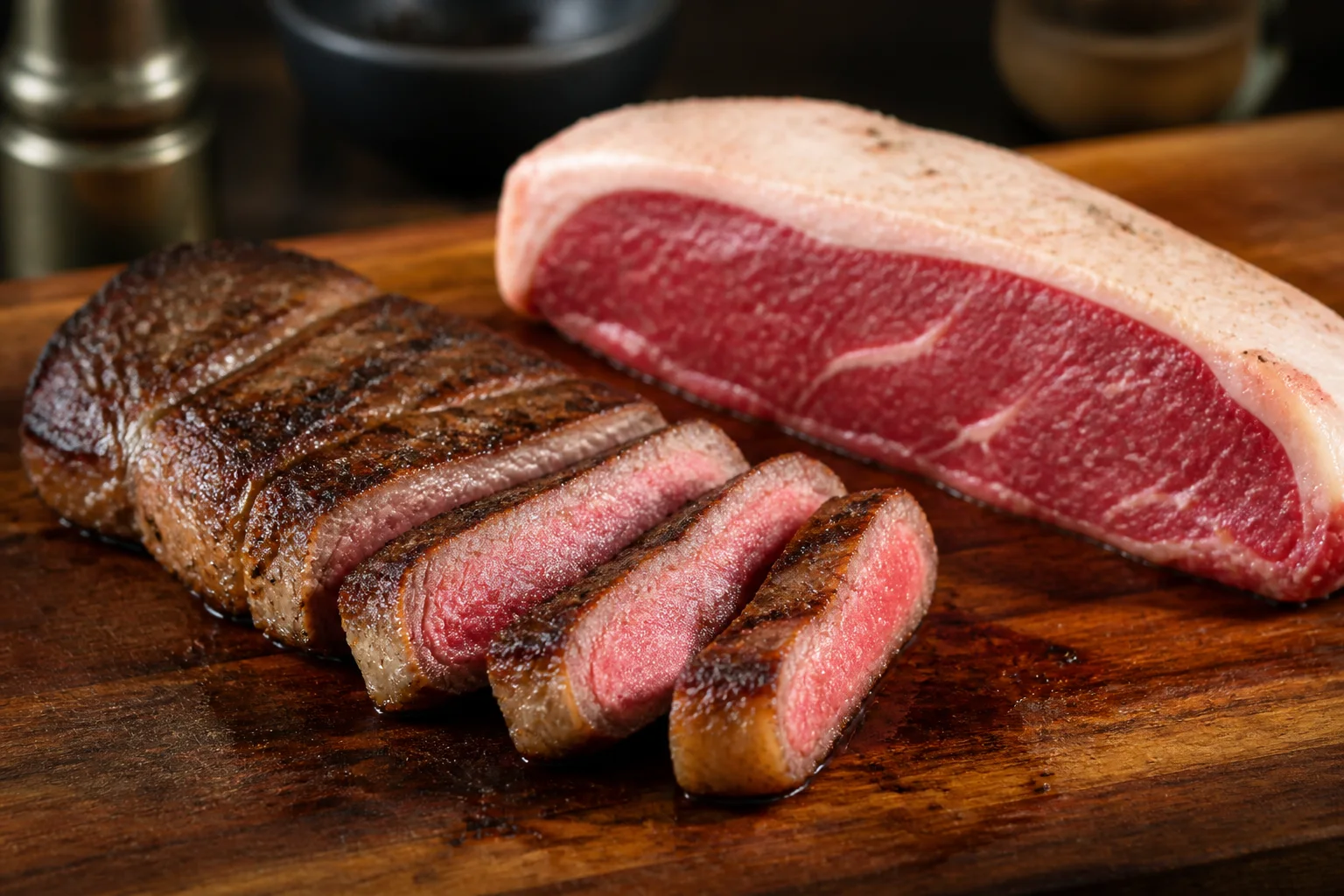
Strip has a tighter grain and firmer chew than ribeye. Its fat is more concentrated along one edge rather than wrapped in cap and internal seams.
Visual Reference
How to Buy
- Choose even thickness around 1.5 inches or more.
- Look for fine marbling through the lean and a clean, not excessive, fat edge.
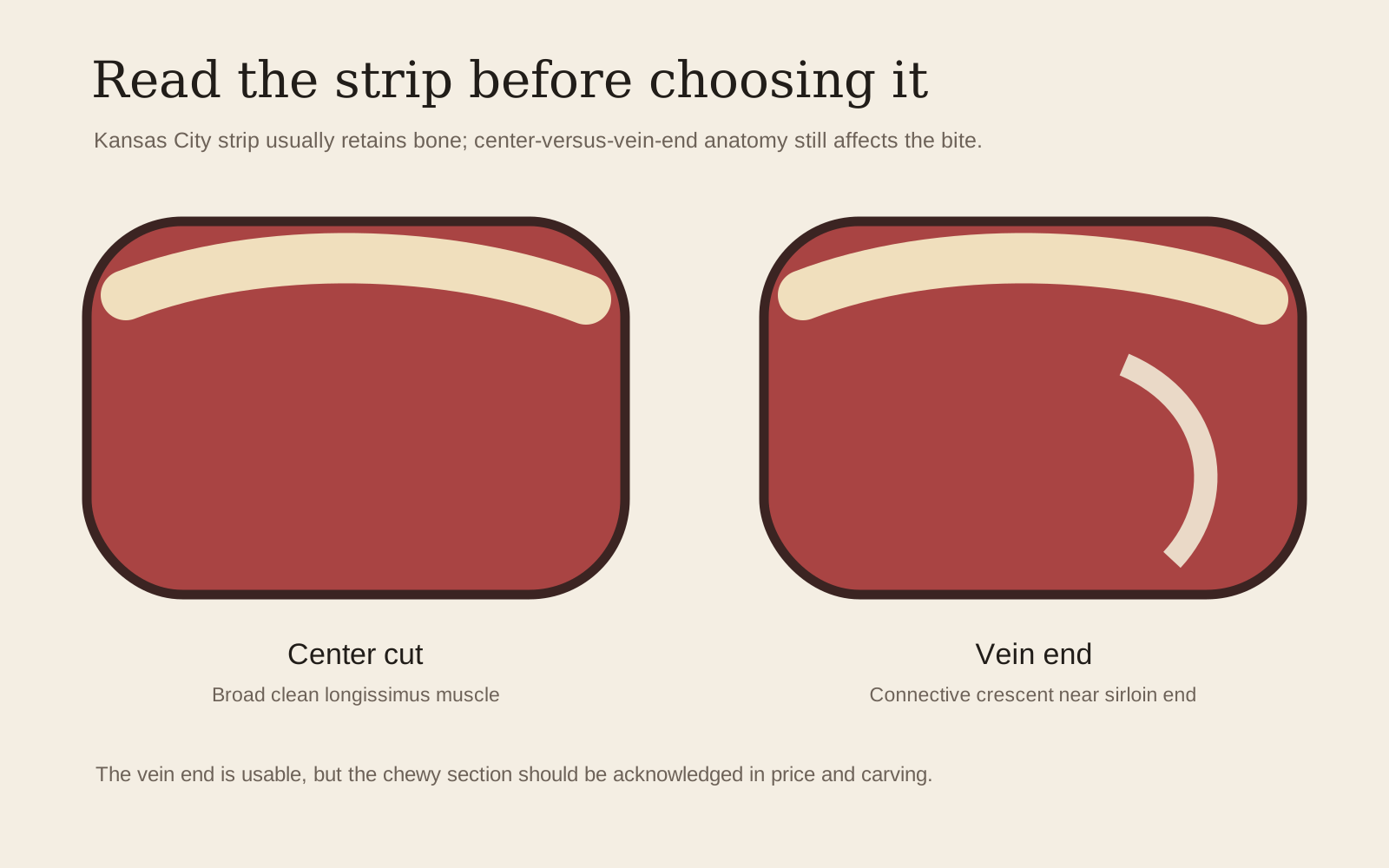
- Avoid a large semicircular nerve at the rear end of the strip if tenderness is the priority.
- Confirm whether the menu or package means bone-in.
Cook the Strip and Fat Edge
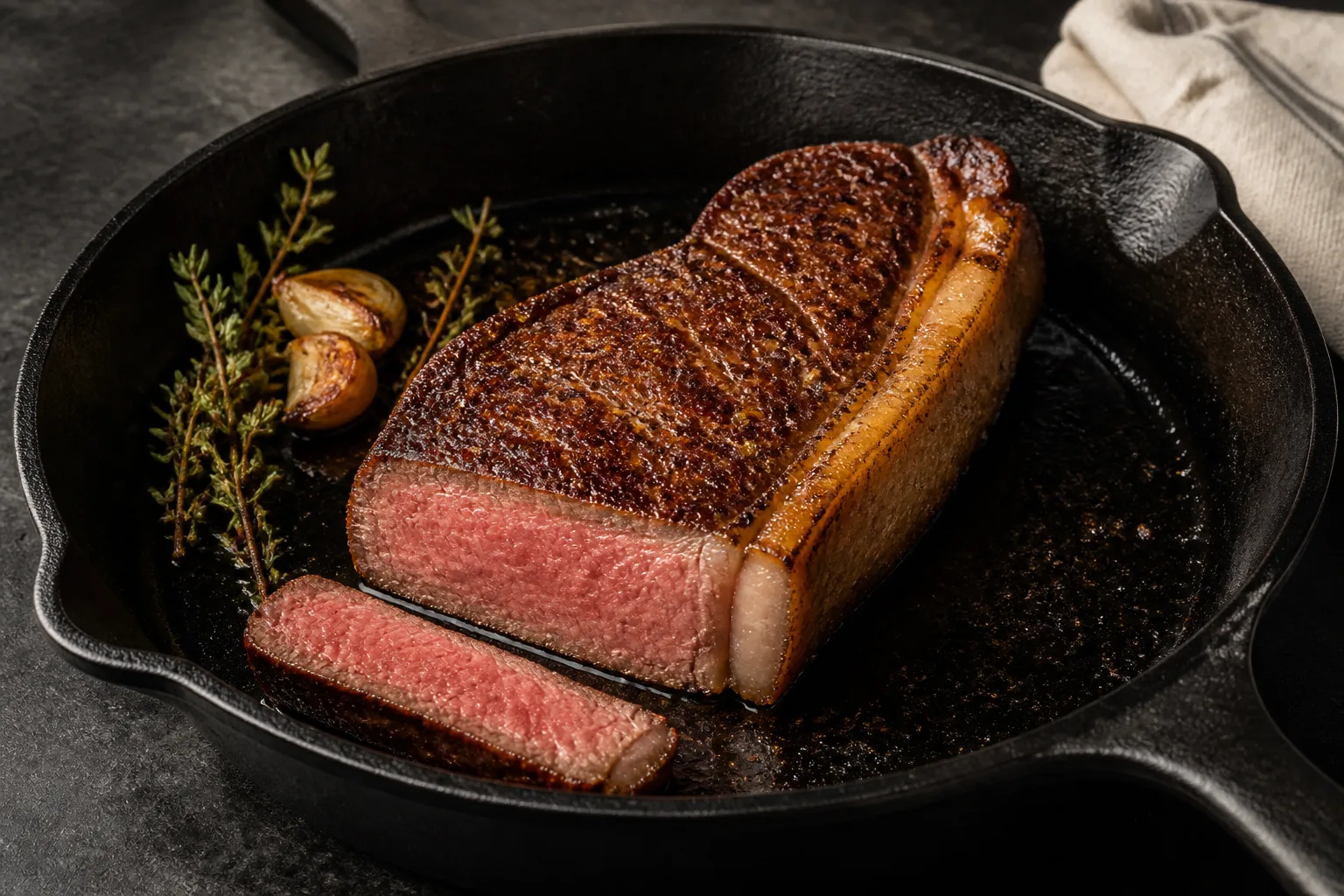
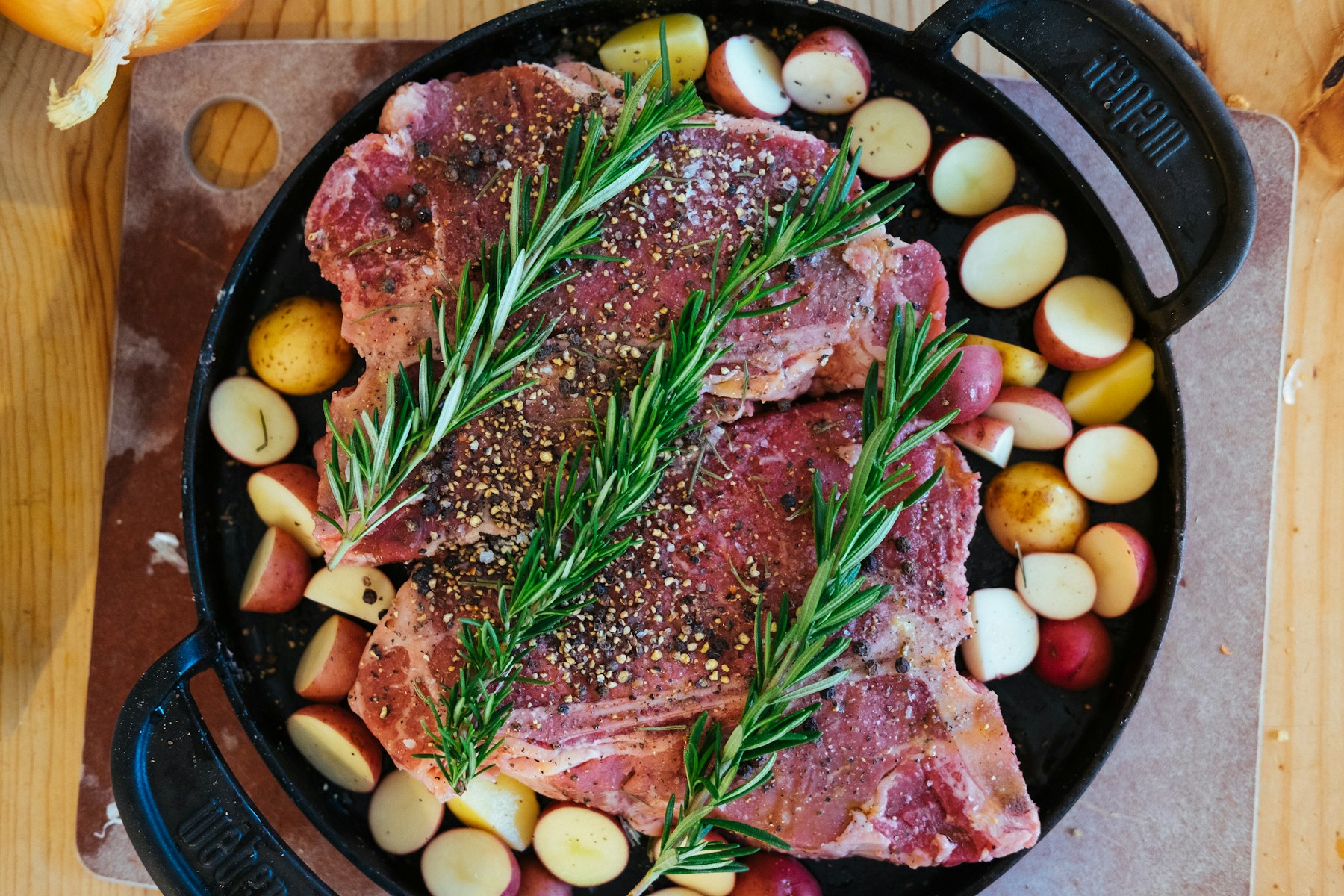
Begin by rendering the fat edge over moderate heat, then sear the broad faces. Use cast iron for a medium-thick steak or a two-zone grill for thicker bone-in cuts. The bone may keep one edge from contacting the pan, so baste or tilt as needed.
Measure in the center of the strip, away from bone and fat, using the temperature guide. Rest and slice across the grain.
Season and Serve
Strip has enough character for black pepper, garlic and a pan sauce but less fat than ribeye, so avoid overcooking. Serve with creamed greens, charred onion, mushrooms or a sharp steak sauce.
Recognize the Vein End and Center Cut
Strip loin changes from one end to the other. Center-cut steaks show a broad, clean longissimus muscle with a relatively straight fat edge. Toward the sirloin end, a curved band of connective tissue—often called the vein—appears in one corner and can make that portion chewier. The steak remains usable, but it should not command the same expectation as a uniform center cut.
Bone-in strip also heats asymmetrically. The bone protects one edge while the fat strip on the opposite edge needs deliberate rendering. Begin that fat edge over moderate heat, then cook the broad faces. On a grill, position the bone toward the indirect zone and rotate the steak so the exposed lean does not dry.
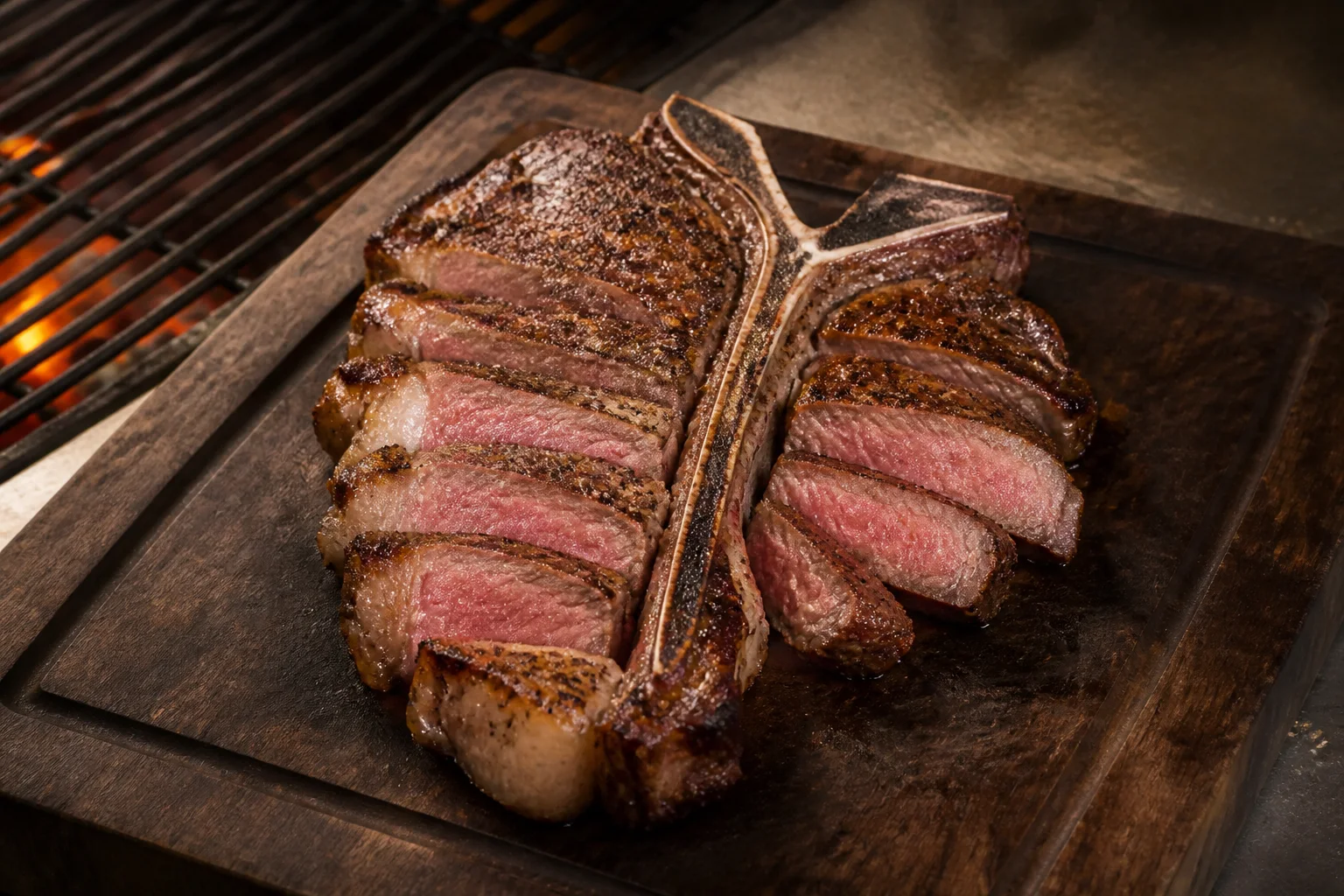
After resting, run the knife parallel to the bone and inspect the grain of the strip. Cut slices across it and portion the crisp fat edge so interested diners receive some with each serving. For a two-muscle version of the same short-loin anatomy, compare the porterhouse.
Kansas City Strip Is Usually a Bone-In Strip Steak
Kansas City strip generally describes a bone-in steak from the strip loin, though naming conventions vary by seller and region. New York strip usually appears boneless. Both center on the longissimus muscle of the short loin and have a firmer, more uniform texture than ribeye.
The retained bone changes presentation and pan contact but does not create a separate muscle. Ask the seller how the name is being used, especially when comparing online products. “Club steak” can overlap with bone-in strip terminology in some markets.
Choose Center Cut and Inspect the Vein End
A clean center-cut strip shows one broad muscle and a relatively straight exterior fat band. Toward the sirloin end, a curved line of connective tissue—the vein end—can appear in a corner. That steak is still usable, but the chewy section should be acknowledged in price and portioning.
Choose even thickness and fine marbling across the lean. A very thick fat edge will not fully render during a normal steak cook, so trim only ragged excess and plan to brown the remaining band over moderate heat. Grade, aging and bone weight should be considered separately.
- Center cut: clean muscle shape and easy portioning.
- Vein end: visible connective crescent near one end; plan to trim at service.
- Bone-in geometry: attractive, but may lift an edge from a flat pan.
Render the Fat Edge Without Overcooking the Strip
Salt ahead and dry thoroughly. Start the exterior fat band over moderate heat long enough to begin rendering, then sear the broad faces with frequent turns. For a steak above roughly two inches, reverse searing is calmer than extending direct contact.
Insert the probe from the side into the center of the lean, avoiding bone and exterior fat. Rest, carve from the bone and slice across the grain. A mustard pan sauce or herb butter suits the firmer beef flavor, but keep the crust exposed.
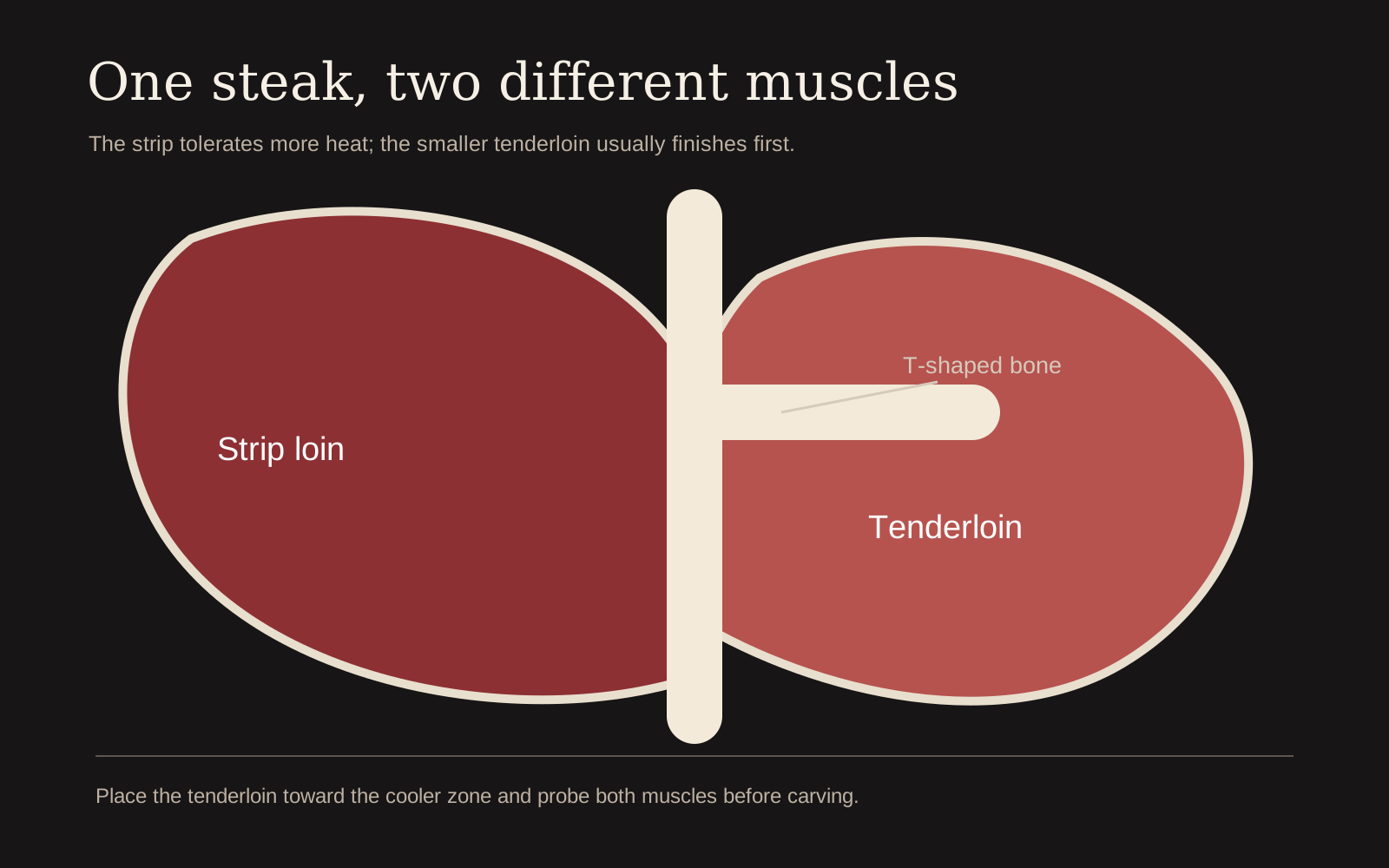
For a steak that adds tenderloin to the other side of the bone, compare porterhouse. For more internal fat and a softer cap, compare ribeye.
Where This Guide Fits
This page supports the broader New York Strip Steak guide. Use that pillar page for the complete cut family, buying framework and links to every closely related article.
Useful next reads include Shell Steak, T-Bone Steak, Porterhouse Steak, Ribeye Steak, and Filet Mignon for nearby cuts, methods and decisions.
Frequently Asked Questions
Kansas City strip vs New York strip: what is different?
Kansas City strip often denotes bone-in and New York strip boneless, but usage varies. Both come from the strip loin.
Is Kansas City strip the same as porterhouse?
No. Porterhouse includes both strip and a large tenderloin around a T-shaped bone.
Is strip steak tender?
It is tender but firmer and tighter-grained than ribeye or tenderloin.