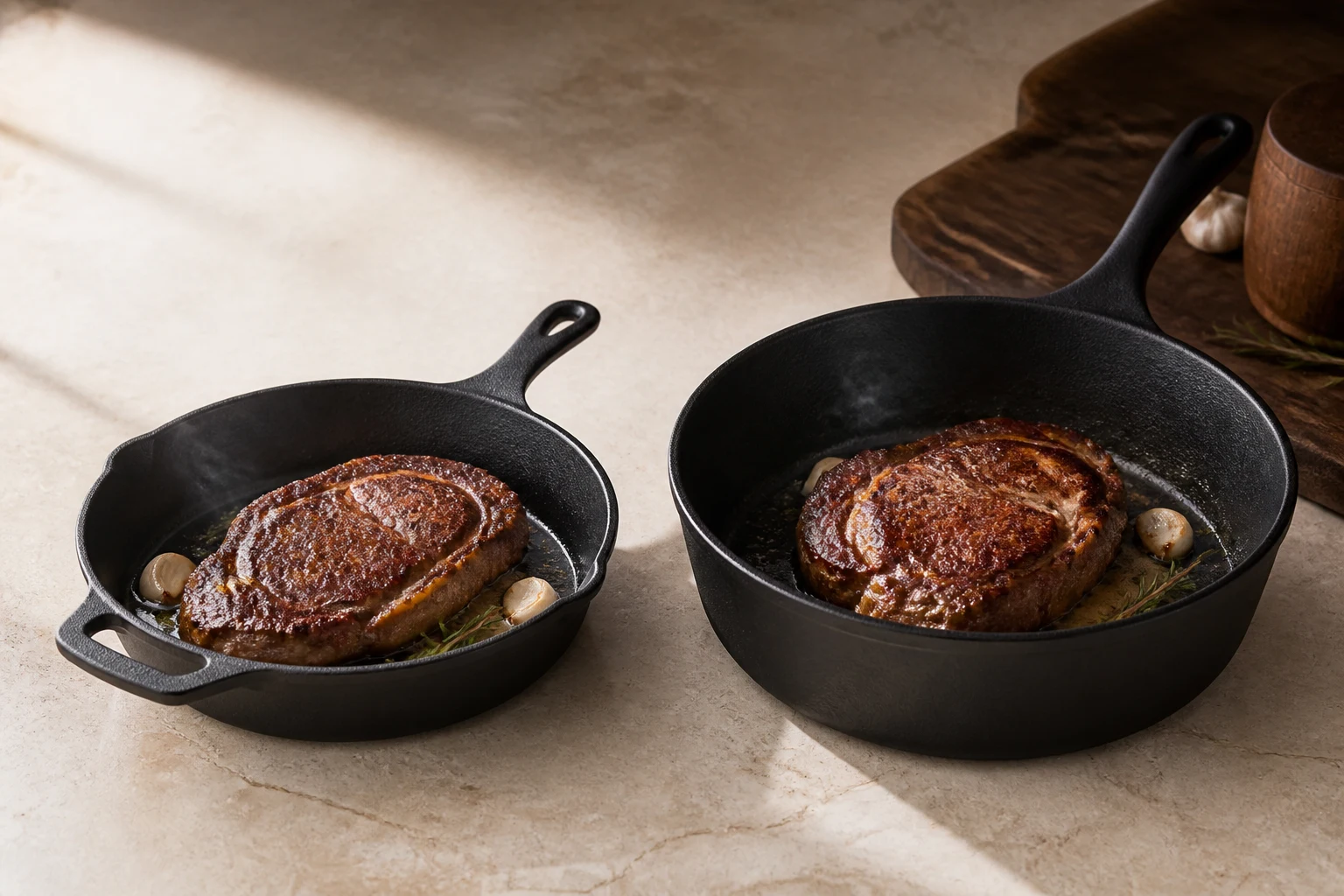
The Short Answer
For most steak cooks, the Lodge 12-Inch Seasoned Cast-Iron Skillet is the safer first choice. Its conventional 12-inch format, helper handle, broad heat-source compatibility and established replacement ecosystem make it easy to understand and use. Choose the Victoria 12-Inch Skillet when you specifically prefer its longer curved handle, deeper body and dual pour spouts.
Neither pan creates a crust by itself. Dry beef, enough preheat, a thin high-smoke-point oil film and space between steaks matter more than brand. Start with our cast-iron steak method or the faster pan-seared steak guide once the cookware decision is settled.
The Two Exact Skillets We Would Shortlist
| Pick | Why it stands out | Main tradeoff |
|---|---|---|
| Lodge 12-Inch Seasoned Skillet | Conventional all-purpose shape, helper handle, U.S. manufacture and broad heat-source compatibility | About 7.7 pounds before adding steak |
| Victoria 12-Inch Cast-Iron Skillet | Longer curved handle, deeper vessel, dual pour spouts and flaxseed-oil factory seasoning | Long handle needs more oven and storage clearance |
What Matters More Than the Brand Name
Usable flat area comes first. A nominal 12-inch measurement usually describes the upper rim. Sloped walls reduce the flat base where beef makes direct contact. If you regularly cook two wide ribeyes, measure them and compare that footprint with the manufacturer dimensions. Crowding traps moisture and turns a sear into a steam bath.
Weight is both strength and cost. More iron stores heat, helping the cooking surface recover after cold meat arrives. The same mass makes washing, pouring and oven transfers harder. A helper handle is not decorative; it is the safe place for the second hand, protected by a dry mitt.
Handle geometry changes control. A shorter handle can fit an oven and cabinet more easily. A longer handle moves the gripping point farther from burner heat but also increases leverage and clearance requirements. Pick the layout that matches your stove, oven and physical comfort rather than treating one design as universally superior.
| Question | Why to check it |
|---|---|
| Will the flat base fit my burner? | A small heating element can create a hot center and cooler perimeter |
| Can I lift it with food inside? | Safe transfers may require the helper handle and two dry mitts |
| Will the handle fit my oven? | Long handles can collide with racks, doors or adjacent cookware |
| Is the surface factory seasoned? | Preseasoning starts protection but does not eliminate routine care |
How Each Pan Fits Real Steak Cooking
For a fast stovetop steak, preheat progressively instead of blasting an empty skillet at maximum flame for a long period. Pat the steak dry, apply a thin oil film and leave open space around the beef. The Lodge's familiar shape makes it easy to follow almost any conventional recipe. The Victoria's deeper wall can contain splatter and basting fat, although that wall can also make a very low-angle turner slightly less convenient.
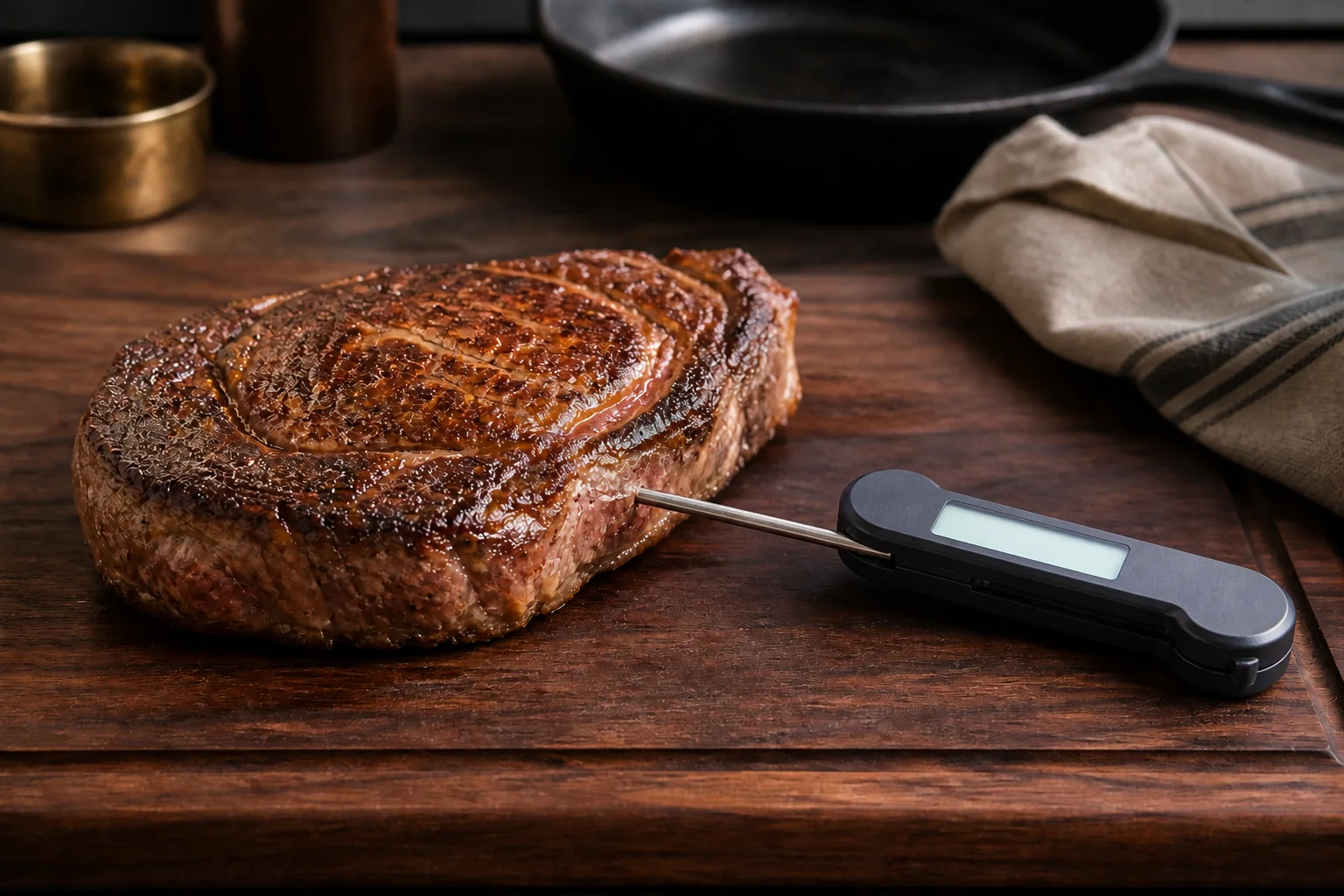
For a thick steak, use a lower-temperature first stage and let the skillet handle only the final crust. The reverse-sear method reduces the time a thick cut spends in violent pan heat. Measure the center with the technique in our steak temperature guide instead of using skillet color or elapsed time as doneness proof.
Care, Safety and Honest Limitations
- Dry the skillet promptly after washing, warm it briefly to drive off residual moisture and wipe on only a very thin protective oil film.
- Use dry oven mitts on both handles; a handle cover can become hot and is not permission to grab blindly.
- Avoid sudden temperature shocks, such as pouring cold water into a very hot empty pan.
- Expect seasoning to evolve. A patchy appearance is not automatically damage, while active rust needs cleaning and reseasoning.
Cast iron is not the lightest or quickest pan. Multi-ply stainless steel heats and cools faster, while carbon steel can provide a similar seasoned surface at lower weight. Choose iron for heat capacity and durability, not because every kitchen must own it.
Marketplace availability, seller identity and bundle contents can change. Confirm that the selected size is 12 inches, review the current seller and warranty, and ignore accessory bundles you do not need.
If Neither Exact Skillet Fits
Verdict
Buy the Lodge when you want the simplest broadly compatible 12-inch choice. Buy the Victoria when its longer handle, deeper sides and pour-spout layout directly solve a need in your kitchen. Both can produce excellent steak, and neither excuses a wet surface, a crowded pan or an unchecked center temperature.
Our labels describe specification fit, not a permanent league table. We will revise this page if product specifications or availability change and replace the ranking once Just Great Steaks completes a documented repeatable skillet test.
Where This Guide Fits
This page supports the broader best meat thermometer for steak guide. Use that pillar page for the complete cut family, buying framework and links to every closely related article.
Useful next reads include best smoker thermometer, best butcher paper for brisket, best brisket slicing knife, Cast Iron Steak, and Smoked Brisket for nearby cuts, methods and decisions.
Frequently Asked Questions
What size cast-iron skillet is best for steak?
A 12-inch skillet is the most useful general size for one large steak or two modest steaks. Check the flat interior diameter, because the upper rim is wider than the actual contact surface.
Is Lodge or Victoria better for steak?
The Lodge is our all-purpose specification match. The Victoria is the better fit when a longer curved handle, deeper vessel and dual pour spouts matter more to you.
Does a heavier skillet sear steak better?
Extra mass can improve heat retention, but burner fit, preheat, dry beef and adequate space still control the crust. Weight also makes handling harder.
Can both skillets go in the oven?
Both manufacturers describe broad oven compatibility. Confirm current instructions and make sure the complete handle fits your oven with safe clearance.
Were these skillets tested by Just Great Steaks?
Not yet. This is a transparent specification-based comparison using current manufacturer information and steak-cooking requirements.
Sources & further reading
- Lodge — 12 Inch Seasoned Cast Iron Skillet — Manufacturer dimensions, weight, seasoning and heat-source compatibility
- Victoria — 12 Inch Cast-Iron Skillet — Manufacturer construction, handle, pour-spout and seasoning details
- Amazon — Lodge 12-Inch Skillet (ASIN B00006JSUB) — Exact marketplace product identity
- Amazon — Victoria 12-Inch Skillet (ASIN B01726HD72) — Exact marketplace product identity