Match Method to Thickness
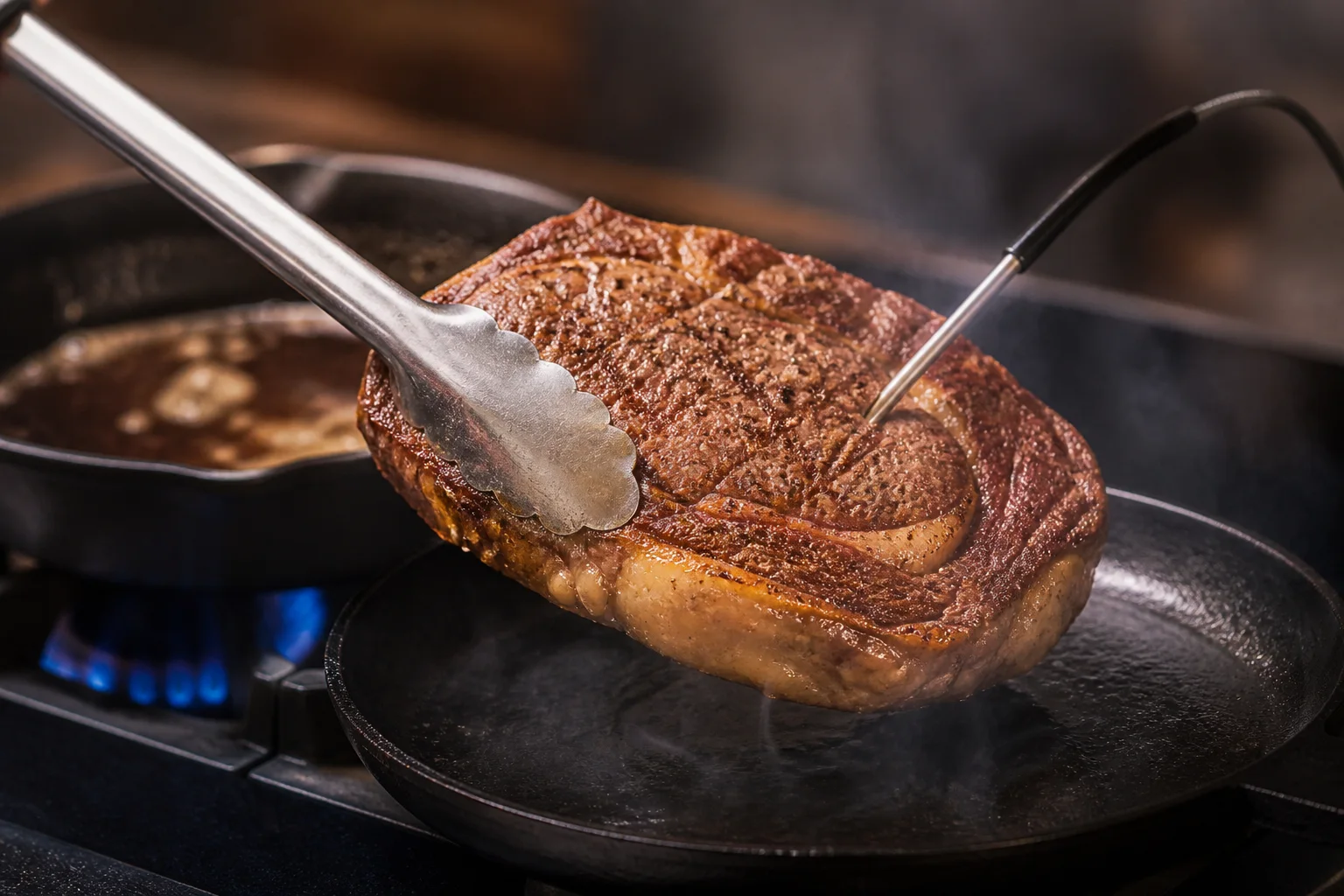
First identify the steak: thickness, bone, cap and marbling. The complete ribeye guide explains the anatomy. Thin steaks reward a very fast direct cook; thick steaks need an indirect or low-oven stage before searing.
| Steak | Method | Reason |
|---|---|---|
| Under 1 inch | Direct sear | Finish before moisture is lost |
| 1–1.5 inches | Cast iron or two-zone grill | Good crust with frequent turning |
| 1.5–2.5 inches | Reverse sear | Better center control |
| Thick bone-in | Indirect grill/smoker + sear | Handles uneven shape and bone |
Salt and Surface Preparation
Dry-brine uncovered for 8 to 24 hours when possible. Pat dry before cooking. Avoid wet marinades if crust is the goal; the steak seasoning guide covers salt timing and spice behavior.
Cast-Iron Method
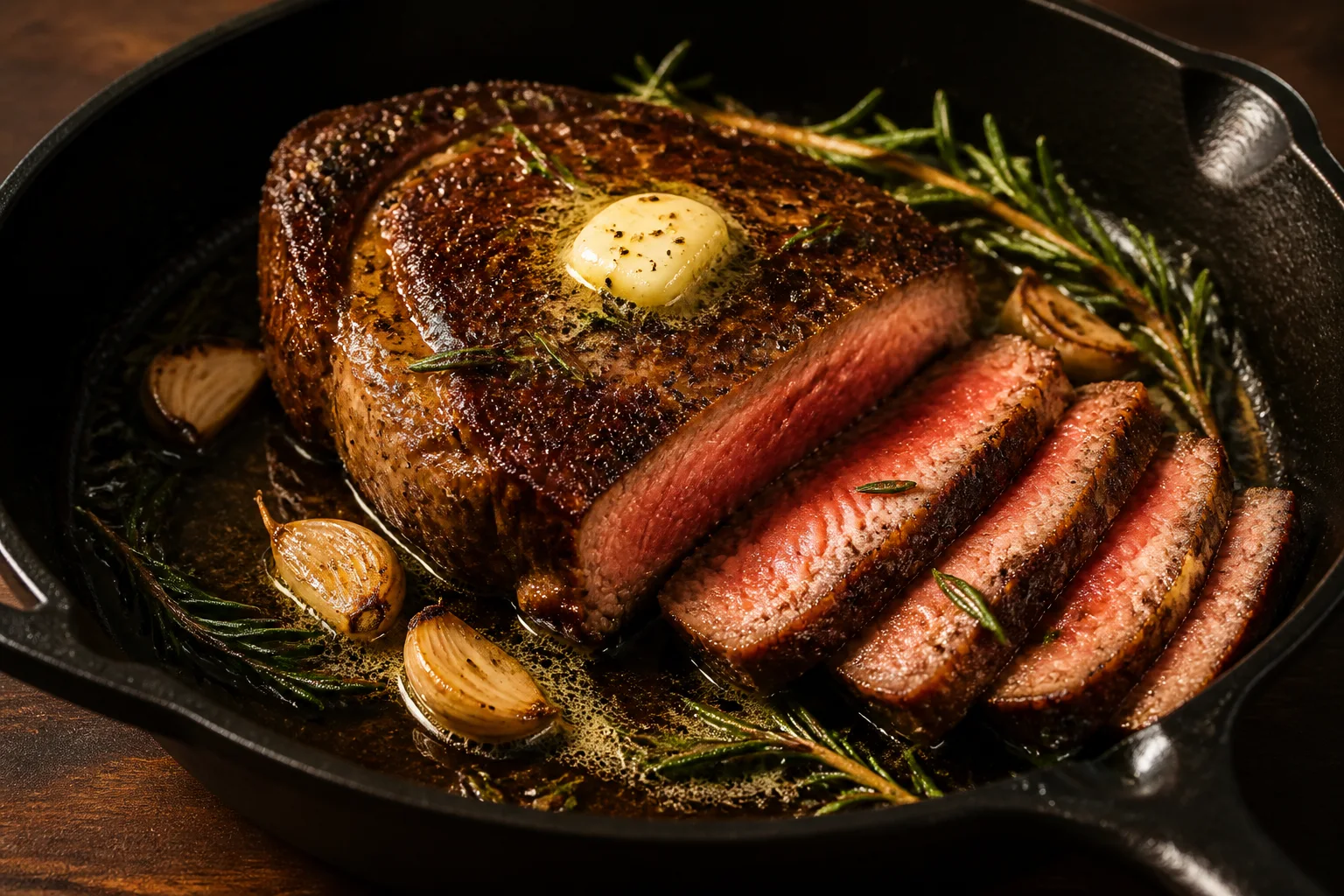
For a medium-thick boneless steak, preheat a heavy skillet, use a thin film of high-heat oil and turn frequently. Lower heat before adding butter. The dedicated cast-iron ribeye guide covers pan size, smoke and basting.
Reverse-Sear Method
For thick ribeye, warm on a rack in a 225–275°F oven or indirect grill. Move to a fiercely hot finish before the center reaches its final target. Follow reverse-sear ribeye for the full handoff and carryover logic.
Grilling and Smoking
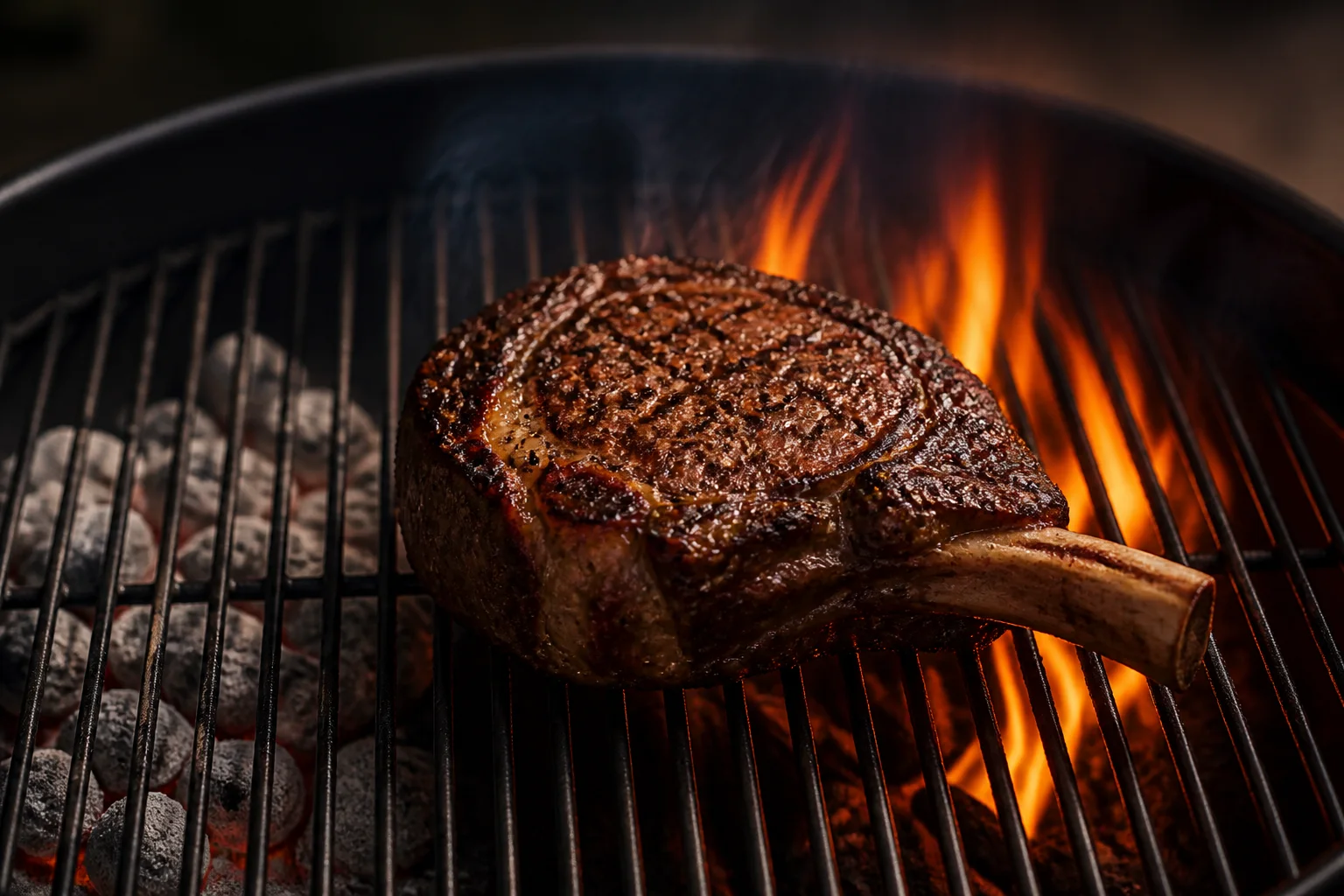
Build direct and indirect zones. Render the fat edge carefully and move away from flare-ups. For wood flavor, use the smoked ribeye method or the pellet-cooker specifics in Traeger ribeye.
Temperature, Rest and Slice
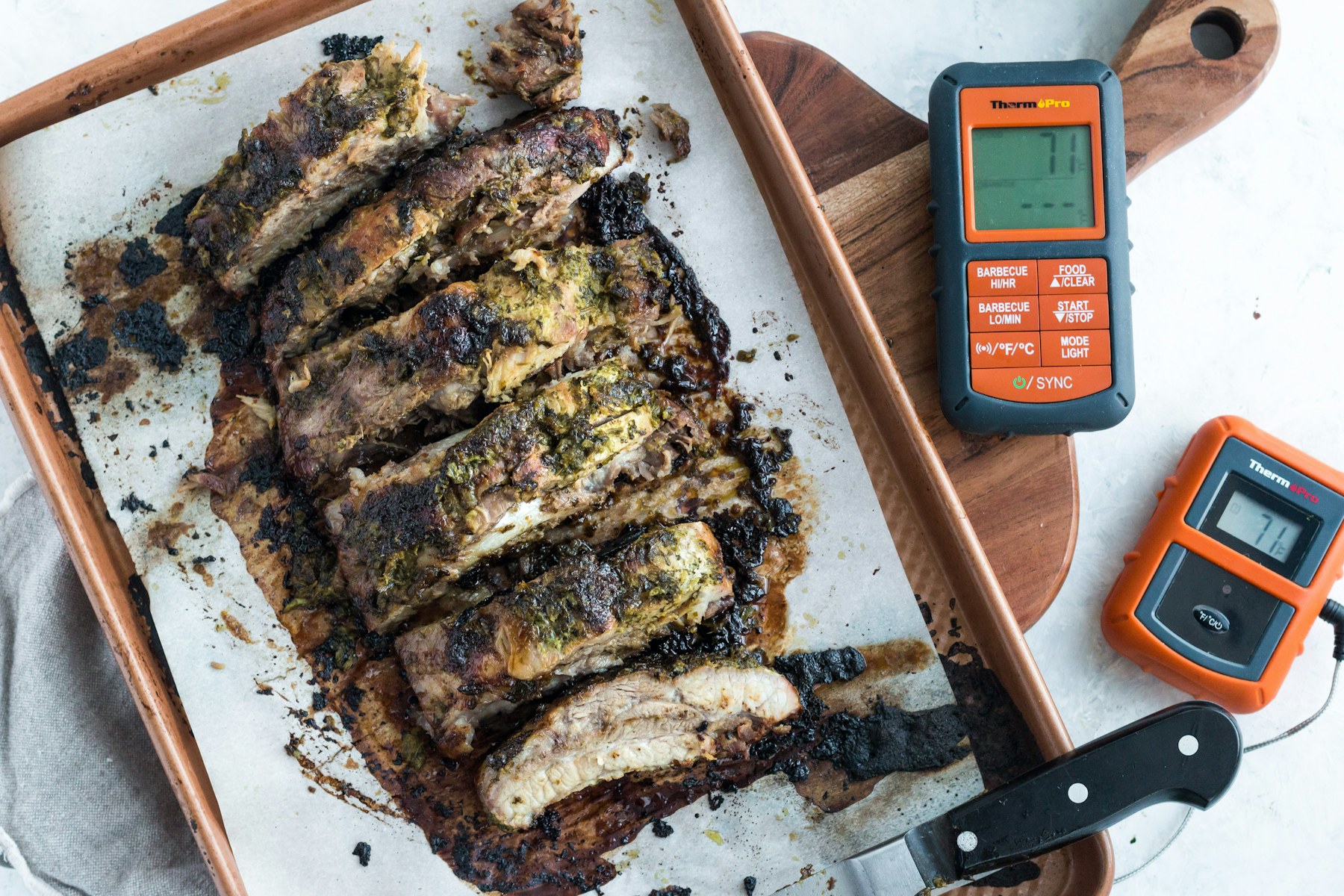
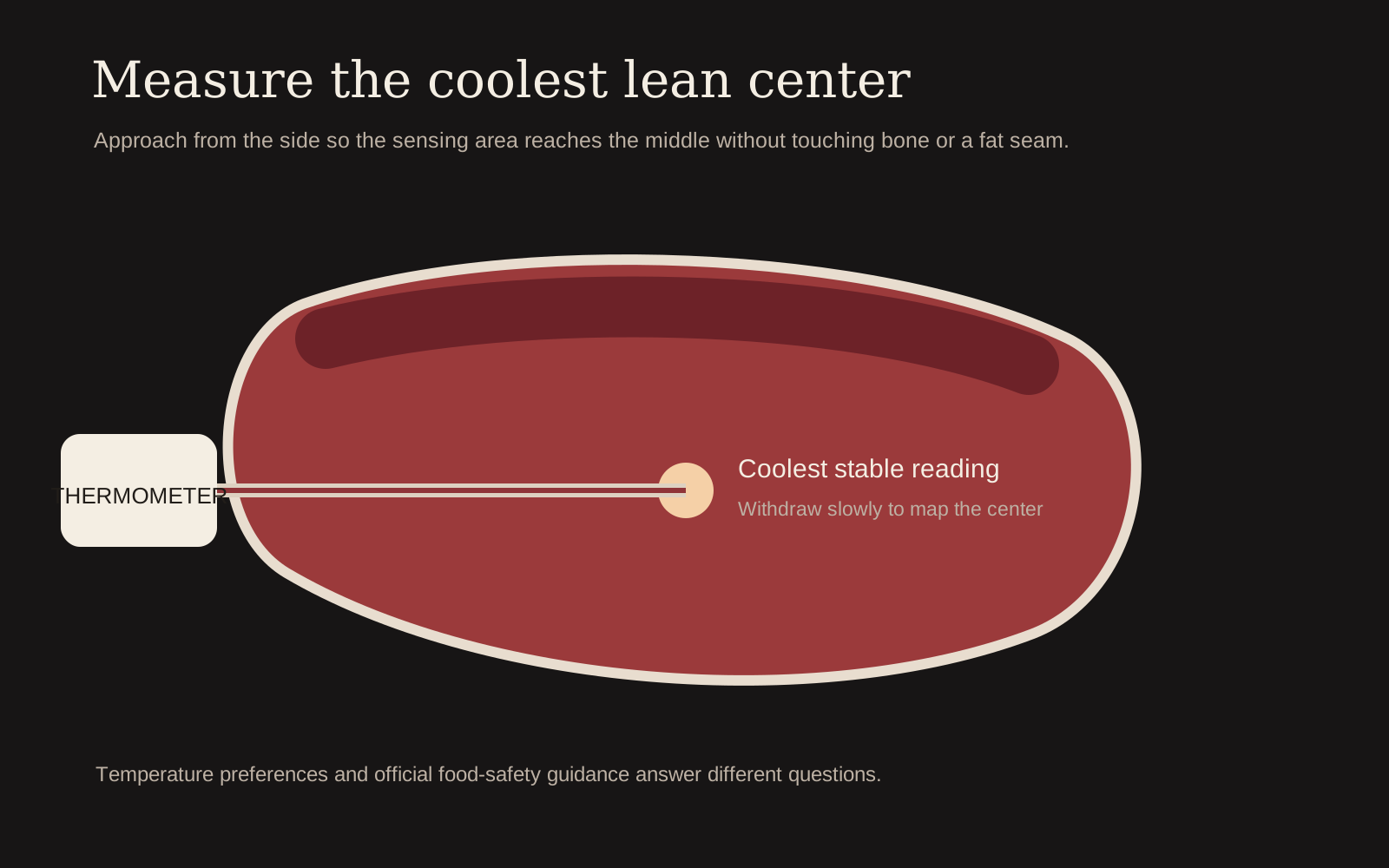
Probe from the side into the eye. Verify multiple spots, rest until the rise slows, and slice across the grain. Consult the doneness and safety chart rather than judging by color alone.
Troubleshooting
| Problem | Likely reason | Fix |
|---|---|---|
| Pale crust | Moist steak or cool pan | Dry thoroughly and preheat |
| Burnt butter | Butter added during fiercest heat | Add after lowering heat |
| Gray center | Steak too thin for the method | Use faster direct heat |
| Raw fat seams | Served very rare/cool | Choose a slightly higher doneness |
Adjust the Method for Eye, Cap and Bone
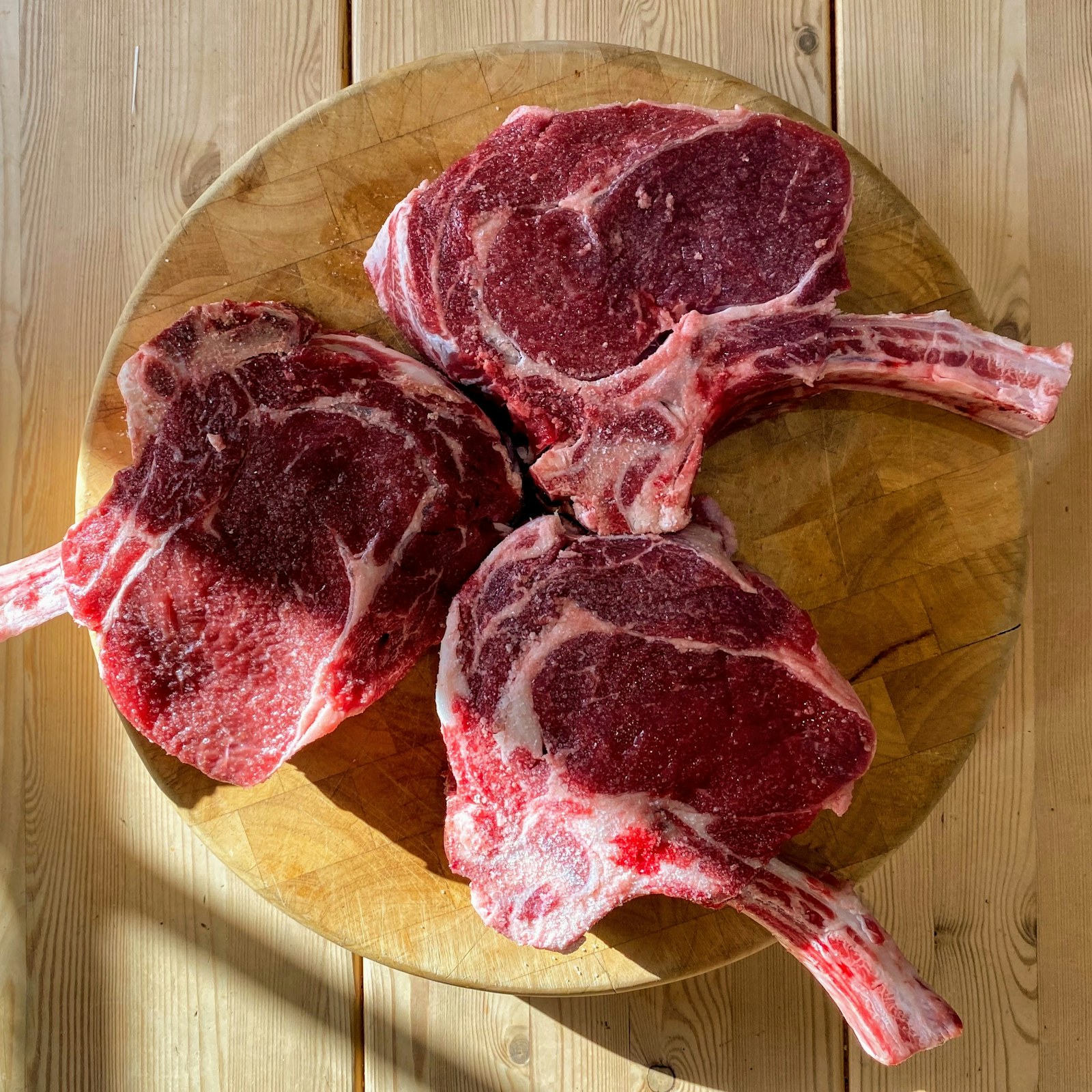
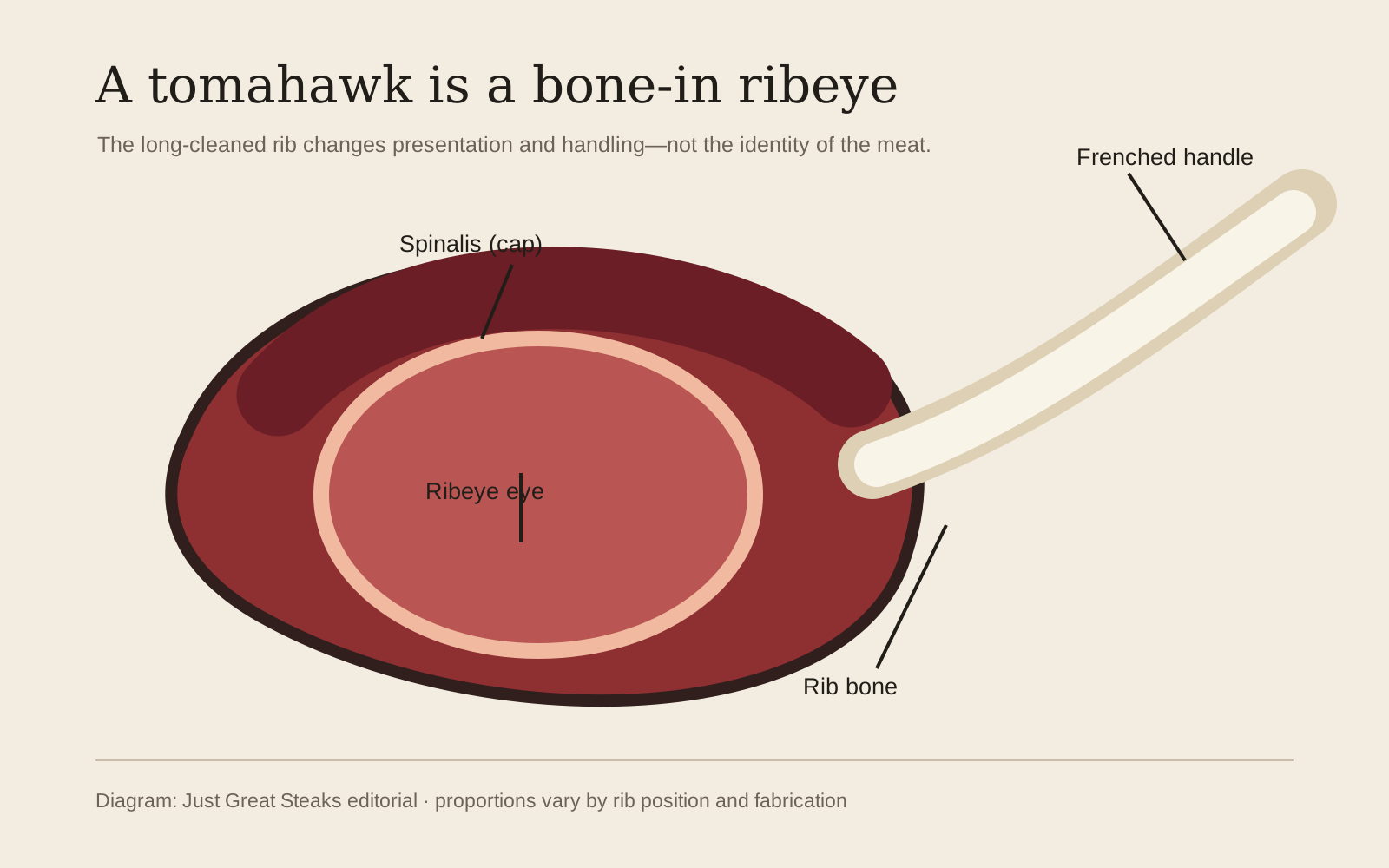
A chuck-end ribeye with a large cap has more irregular thickness than a loin-end steak with a broad eye. Keep the thin cap edge away from the hottest zone during a long sear, then give it brief direct heat for browning. A boneless loin-end steak usually makes flatter pan contact and is easier to cook entirely in cast iron.
For bone-in steak, insert the probe parallel to the rib and shift the steak through the sear so the bone does not hold one area above the pan. For boneless steak, use the side-entry thermometer at the center of the eye. In both cases, a reading from the soft fat seam is not the center temperature.
If cooking several ribeyes, sort by thickness rather than weight and begin the thickest first. Give each steak enough grate or pan area to brown. Rest on individual rack sections and label targets before slicing. The same discipline prevents a Wagyu ribeye from being treated like a lean steak simply because both packages weigh 16 ounces.
Use Thickness and Bone to Choose the Method
| Ribeye | Primary method | Reason |
|---|---|---|
| Boneless, 1–1½ inches | Frequent-turn cast-iron sear | Good pan contact and manageable center |
| Two inches or thicker | Reverse sear | Even warming before a short crust stage |
| Bone-in with irregular contact | Two-zone grill or oven-to-pan | Less dependence on a flat surface |
| Very high marbling | Smaller portion, controlled pan or plancha | Limits grease fire and excessive richness |
Sort steaks by thickness rather than package weight. Bone and exterior fat can add ounces without changing the distance heat must travel to the center. If one end is thin, protect it over a lower zone or divide the steak before cooking.
Read Browning, Smoke and Rendered Fat
A steady sizzle and progressive brown surface indicate useful pan contact. Thick gray smoke, black aromatic solids and a steak swimming in fat signal excessive or poorly managed heat. Pour off excess rendered fat before butter basting and wipe burned debris between batches.
On a grill, flare-ups are movement cues. Shift to the indirect zone, close the lid only as the grill design requires and return after flames settle. The goal is convective or radiant heat plus clean browning, not fat burning directly on the surface.
Cook More Than One Ribeye Without Crowding
Use two pans, a griddle with defined hot zones or sequential batches. Two cold ribeyes in one modest skillet lower the surface temperature and trap steam. Hold the first steak briefly on a rack and give it a short warm refresh only if the schedule requires it.
For varied doneness requests, label boards before cooking and start the higher target steak earlier during the gentle stage. Sear lower targets first on a clean surface. Rest and carve separately so juices and labels do not become confused.
Diagnose Ribeye by the Result
A thick gray band indicates too much continuous high heat or too few turns. A pale surface indicates moisture, crowding or weak preheating. A bitter fat edge points to sustained flame or overheated pan residue. A warm but soft crust usually rested against a flat plate in rendered fat.
Correct one variable per cook. Dry the surface, choose a pan that fits, establish a cooler grill zone and measure the center. Changing salt, method, thickness and target simultaneously makes it difficult to learn what solved the problem.
If the eye and cap differ sharply, position the cap away from fierce heat during the long stage and give it a brief dedicated finish. If the bone edge stays pale, carve first and decide whether a seconds-long refresh is worthwhile.
The best method is the one that fits the steak and equipment. A compact boneless ribeye does not need a smoker; a thick tomahawk should not be forced into an undersized pan.
Where This Guide Fits
This page supports the broader Ribeye Steak guide. Use that pillar page for the complete cut family, buying framework and links to every closely related article.
Useful next reads include Bone-In Ribeye Steak, Cowboy Steak, Ribeye Steak Recipe, Tomahawk Steak, and steak temperature for nearby cuts, methods and decisions.
Frequently Asked Questions
What is the best method for ribeye?
Cast iron excels for medium-thick boneless steak; reverse sear is more forgiving for thick steak; a two-zone grill adds fire flavor.
Should ribeye be flipped once?
No rule requires it. Frequent turning can brown evenly and reduce the overcooked band.
How long should ribeye rest?
Rest until carryover slows and juices are no longer driven hard toward the surface—often 5 to 10 minutes, longer for very thick steaks.