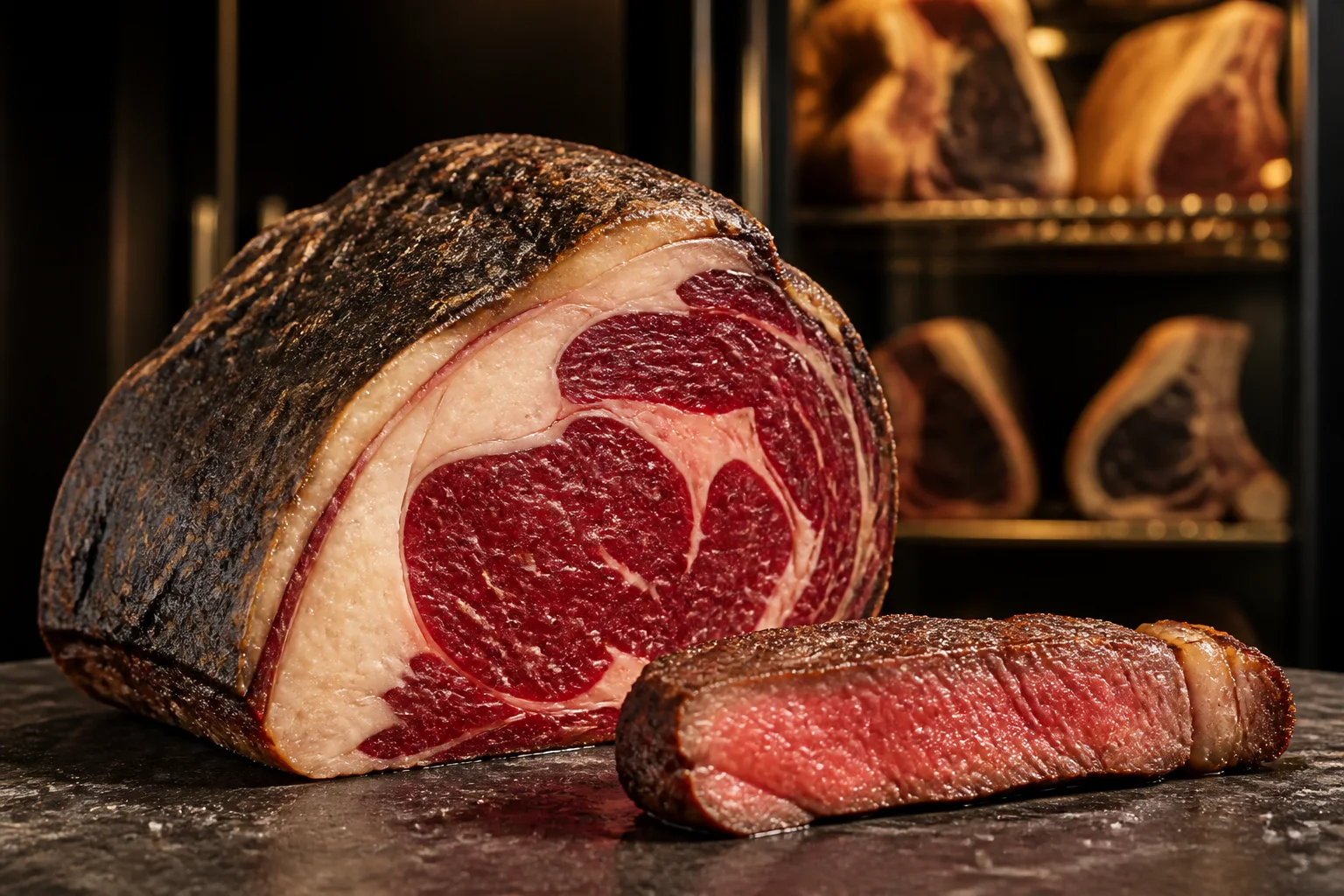
What Dry Aging Changes
Large beef sections are held under controlled temperature, humidity and airflow. Moisture loss concentrates flavor; natural enzymes change texture; the dried exterior is trimmed. This differs from vacuum-pack wet aging. For baseline rib anatomy and marbling, begin with the ribeye guide, then read the broader dry-aged steak guide for process, cost and buying questions.
Flavor and Aroma
Shorter aging can emphasize roasted, buttery and nutty notes. Longer aging may move toward cured, earthy or blue-cheese-like aromas. Not everyone prefers the strongest profile, and days alone do not describe the aging room or starting beef.
How to Buy
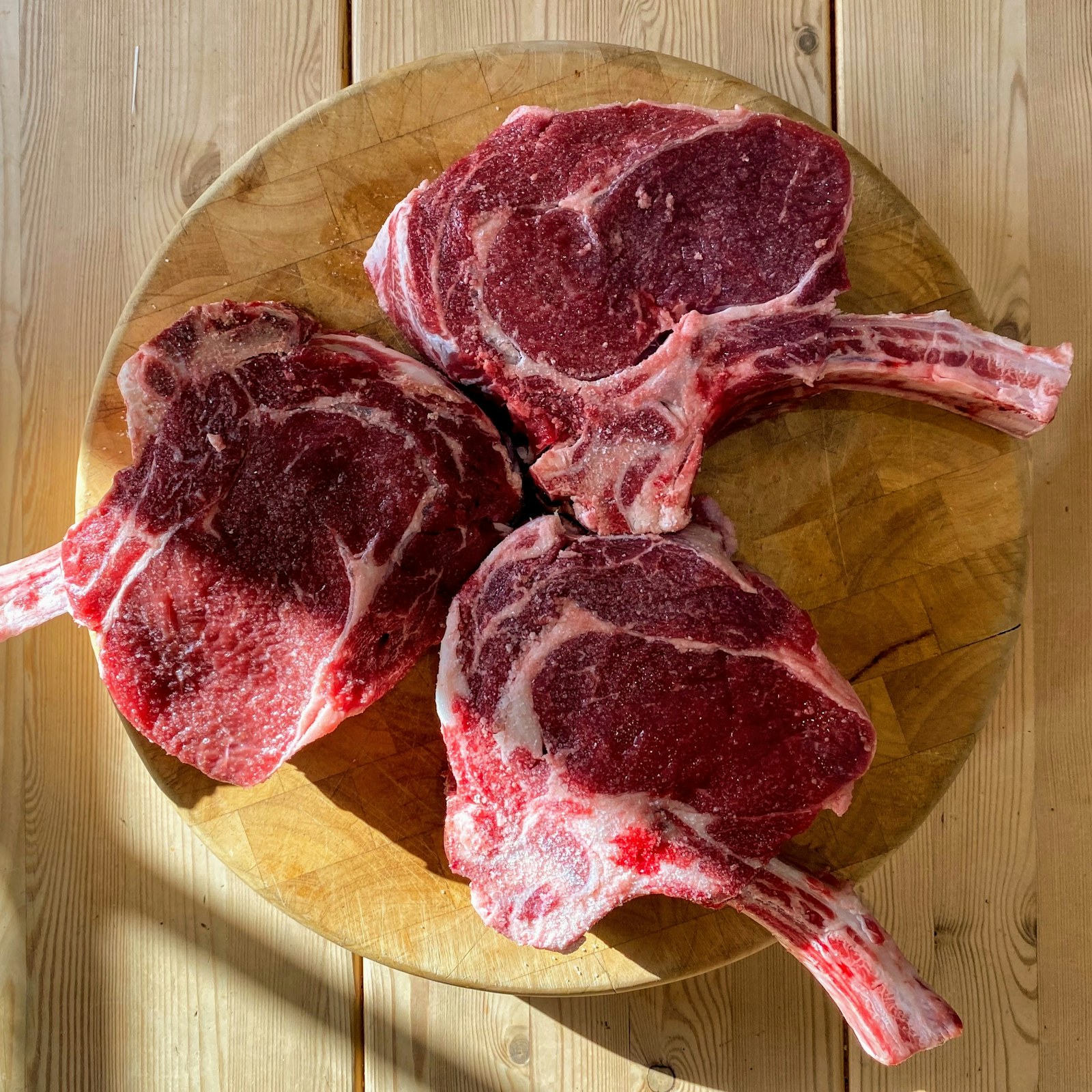
Choose a thick steak with enough marbling to support the concentrated flavor. Avoid paying a dry-aged premium for a steak with oxidized retail edges and no credible process information. Compare with standard ribeye and Wagyu ribeye as distinct experiences—not a quality ladder.
How to Cook It
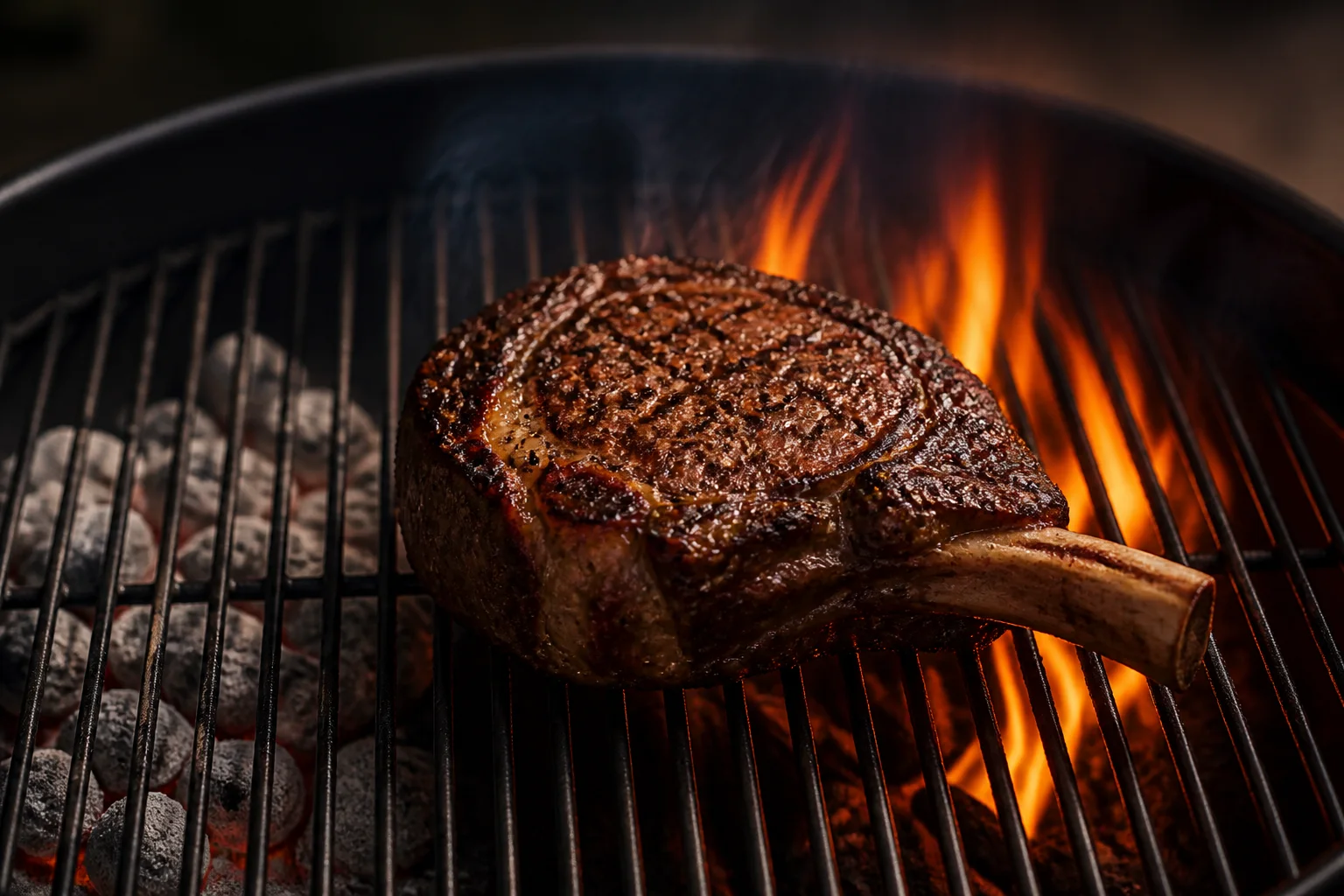
The surface is already dry, so it browns quickly. Use a little less searing time than you might expect and keep seasoning restrained. For a thick cut, reverse sear; for a medium cut, use cast iron. Verify against the temperature guide and rest before slicing.
Let the Aging Character Reach the Plate
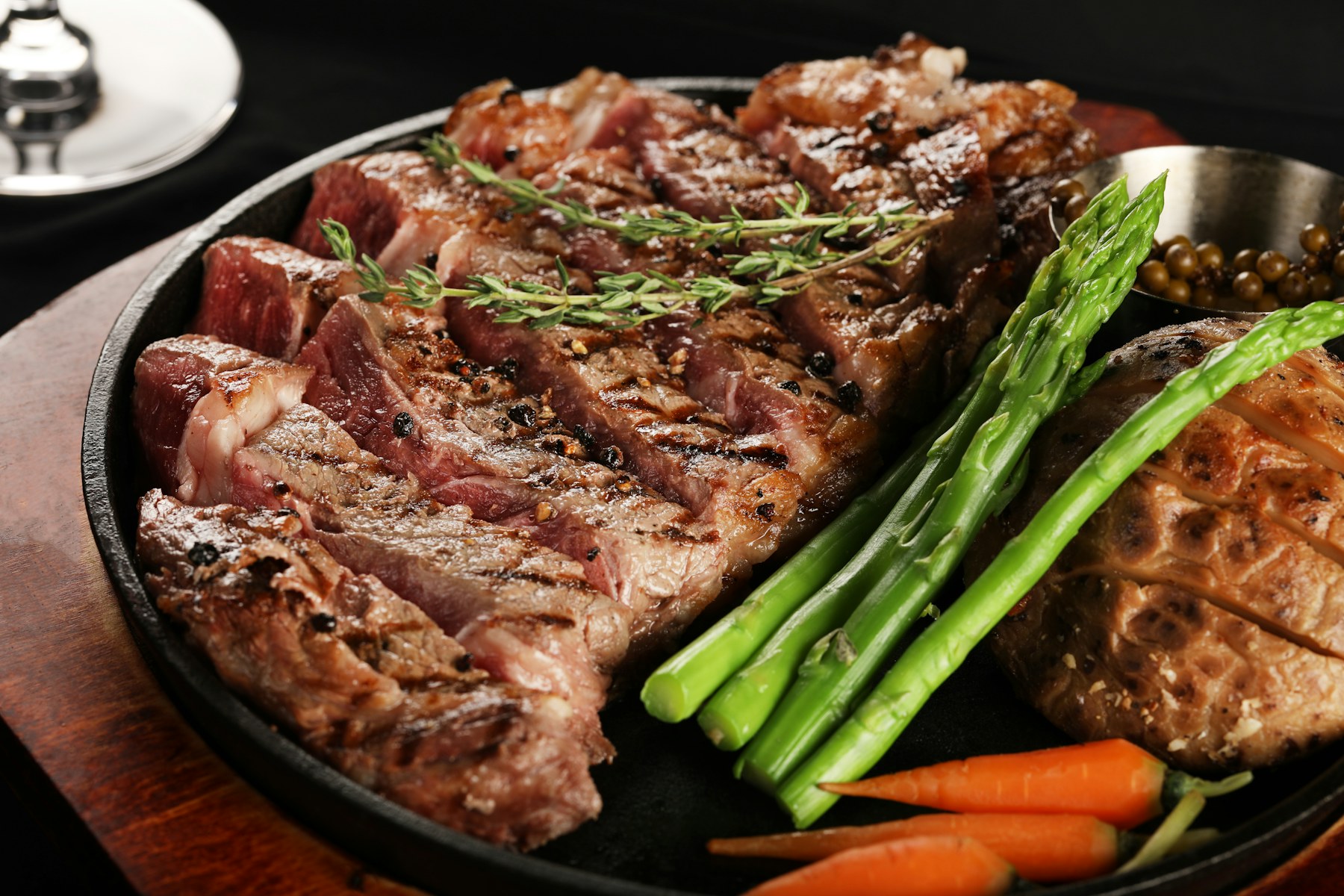
Bring dry-aged ribeye to the table warm enough that its fat is supple. A cool serving platter can firm the fat seams while the slices are being arranged, so warm the plate gently and keep the steak in larger pieces until service. Slice the cap separately if its grain and doneness differ from the eye.
Strong aging aromas change what belongs beside the steak. Mushrooms, aged cheese and a heavy red-wine sauce can repeat the same earthy register until the plate feels muddy. Crisp potatoes, watercress, mustard, roasted alliums and clean jus create contrast. Taste before adding garlic butter; a long-aged steak rarely needs another dominant aroma.
Leftovers lose some of the volatile aroma that justified the premium. Store them in a thick piece and eat within a safe refrigerated window. Gentle reheating is better than a second hard sear. Thin cold slices with salt and bitter greens often preserve more character than trying to recreate the original crust.
Verify Aging Before Paying the Premium
Ask whether the rib primal was aged in a controlled environment, how the day count is measured, and whether the steak was cut after aging. A dry exterior on an individually held steak is not the same process. The seller should be able to discuss trimming loss and flavor without treating a visible aging cabinet as complete evidence.
Choose a moderate program for a first comparison and use a familiar ribeye position. Very long aging can produce assertive aromas that some diners love and others read as cheese-like or funky. More days are not a universal quality ladder.

Prepare and Cook Without Masking the Aging
A properly butchered dry-aged steak should arrive trimmed to clean edible surfaces. Do not rinse it. Pat any package moisture dry, salt with restraint and avoid a spice crust that overwhelms the aroma. The drier surface often browns rapidly, so watch color and heat rather than assuming it needs the same sear duration as a wet-aged steak.
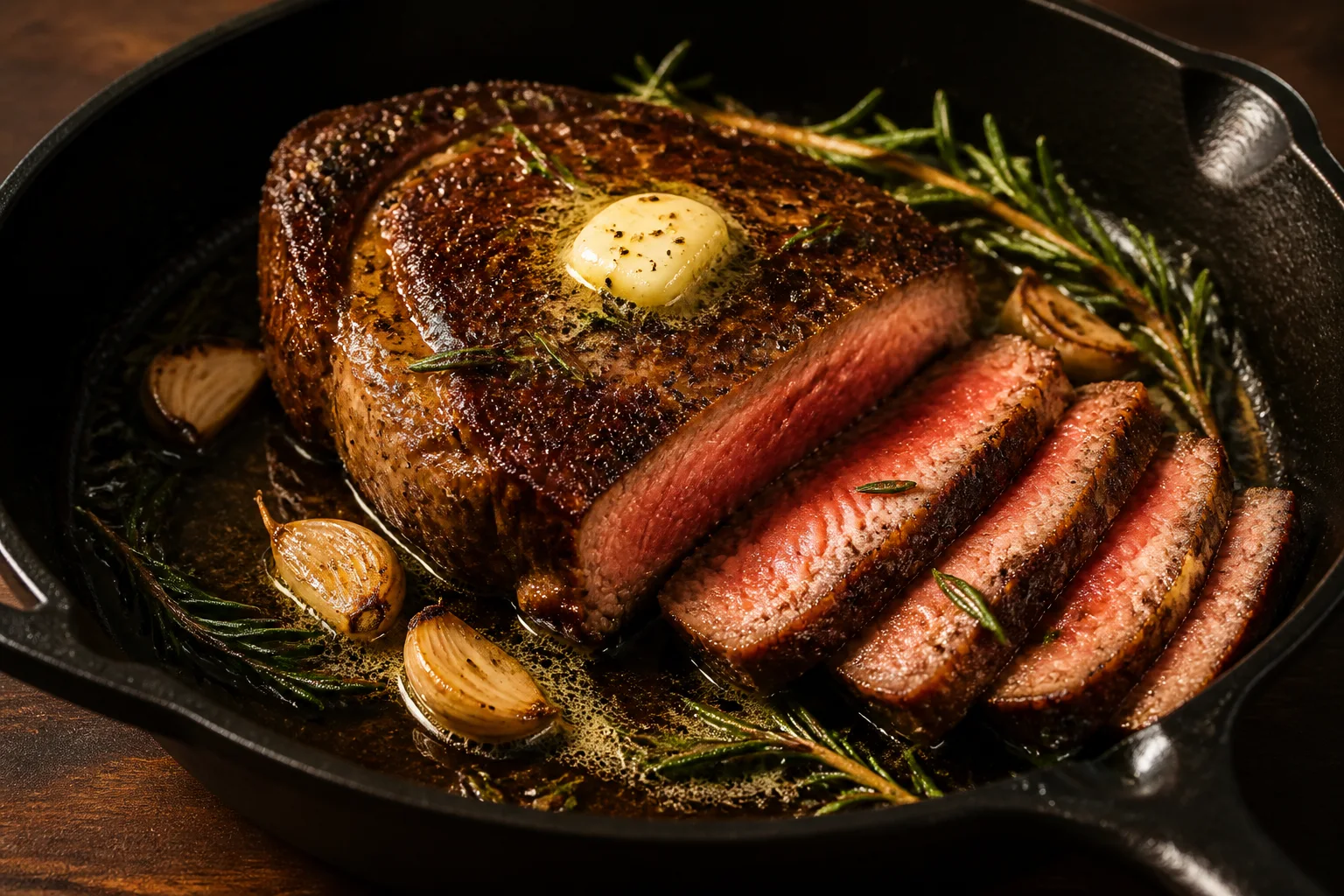
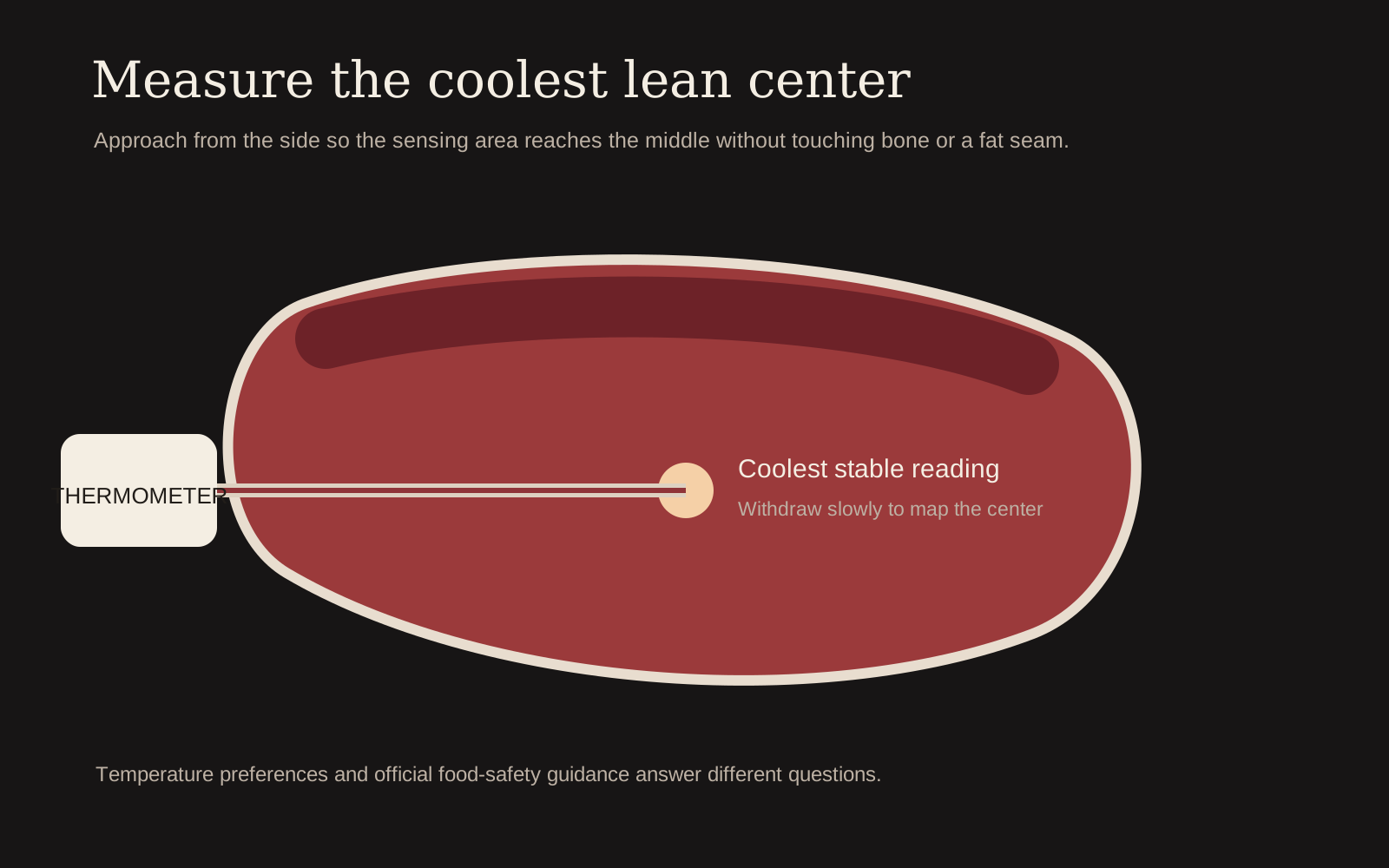
Thick dry-aged ribeye responds well to a low oven followed by a short hard sear. In a pan, add little oil because the ribeye releases fat. Butter and garlic are optional; taste the beef first. Check the eye with a side-entry probe and protect the thinner cap.
For process, cost and seller questions beyond this cut, use the complete dry-aged steak guide.
Pair for Contrast
Earthy mushrooms, aged cheese and heavy wine reduction can repeat the same aromatic register until the plate feels muddy. Crisp potatoes, watercress, mustard, roasted onion and a clean jus give the steak room. Warm plates keep ribeye fat supple.
Store leftovers promptly and in a large piece. Volatile aging aromas fade, so aggressive reheating rarely recreates the original experience. Cold thin slices or a gentle low-oven warm-up are preferable to a second full sear.
Compare Dry-Aged Ribeye Fairly
Use a wet-aged or conventionally packaged ribeye of similar grade, rib position, thickness and bone status. Salt both equally and cook them on the same surface to the same measured center. A chuck-end dry-aged steak should not be compared with a loin-end control if the goal is to isolate aging.
Taste the eye and cap separately. Aging aroma may appear stronger in fat while the lean demonstrates concentration and tenderness changes. Record the stated program and day count, but describe the flavor rather than treating the number as the result.
If the aged steak tastes merely stale or oxidized, check seller handling and whether it was cut long before purchase. Controlled dry aging of a primal is not the same as an individual steak drying in retail air.
For the next purchase, adjust one variable: cut, aging intensity or source. Changing all three makes the premium impossible to evaluate.
At service, use a warm platter and slice only what will be eaten immediately. Dry-aged ribeye fat firms as it cools, while volatile aromas fade; several small carving rounds can preserve the experience better than one thinly sliced display.
Where This Guide Fits
This page supports the broader Ribeye Steak guide. Use that pillar page for the complete cut family, buying framework and links to every closely related article.
Useful next reads include Bone-In Ribeye Steak, Cowboy Steak, Ribeye Steak Recipe, Tomahawk Steak, and steak temperature for nearby cuts, methods and decisions.
Frequently Asked Questions
Is dry-aged ribeye better?
It is more concentrated and aromatic, not universally better. Some diners prefer the cleaner taste of fresh or wet-aged beef.
Why is dry-aged ribeye expensive?
Time, controlled storage, moisture loss and trimming reduce the sellable yield.
Does it cook differently?
Its dry surface browns rapidly, so watch the sear and avoid masking the aging aromas with heavy seasoning.