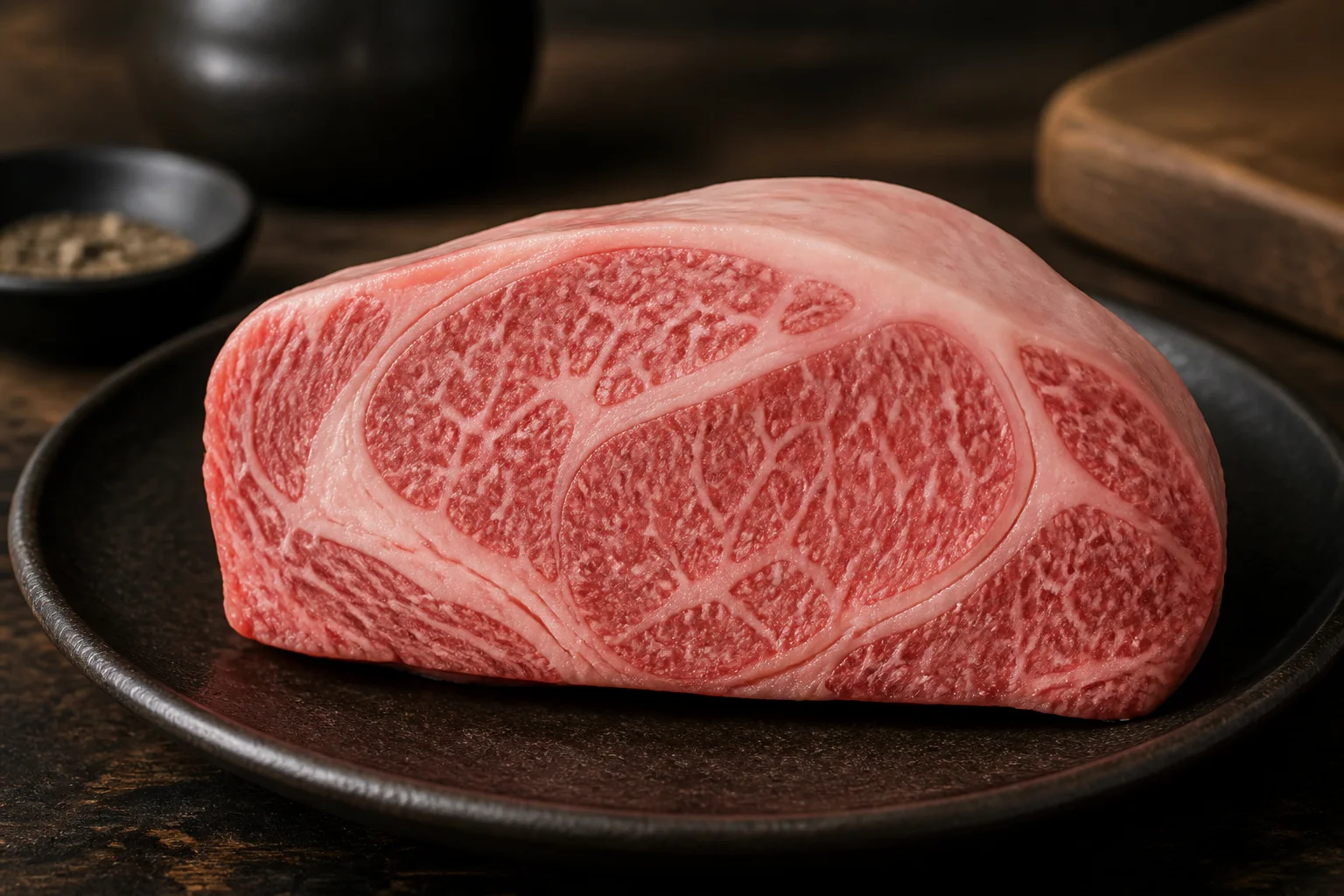
Clarify the Label
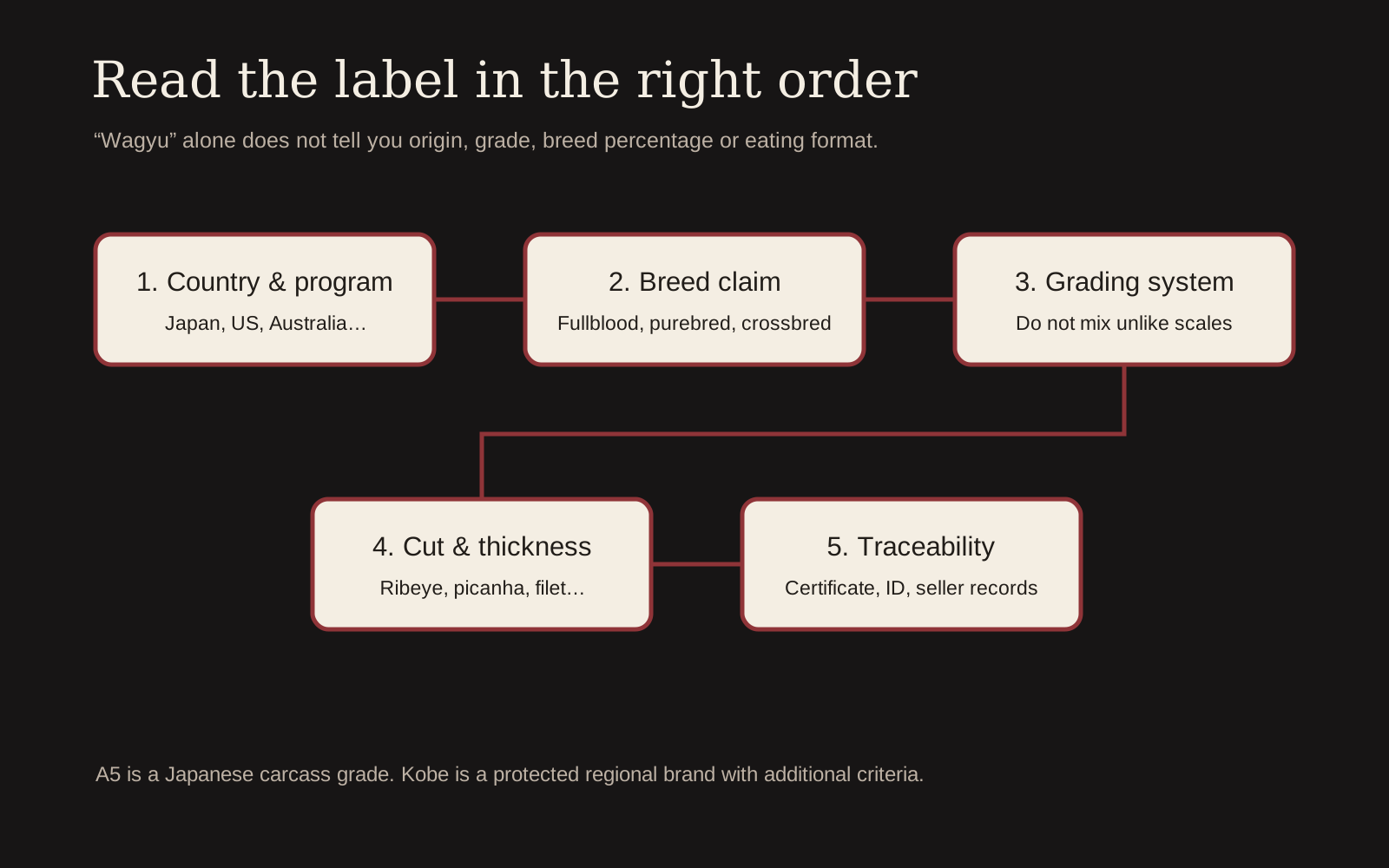
Ribeye identifies the cut; Wagyu points to cattle genetics or a marketing program that must be qualified. Japanese Wagyu, American Wagyu and Australian Wagyu use different production and grading contexts. Read the Wagyu steak guide before comparing price or marbling claims.
Japanese A5 is a specific grade that combines the highest yield grade letter with quality grade 5. It does not describe American crossbred beef. The Japanese A5 guide explains the system.
Why Ribeye Amplifies Richness
Conventional ribeye already contains substantial marbling and fat seams. Add very high Wagyu marbling and sensible portion size falls. Thin slices or small shared pieces can be more satisfying than a large steakhouse portion.
How to Cook Wagyu Ribeye
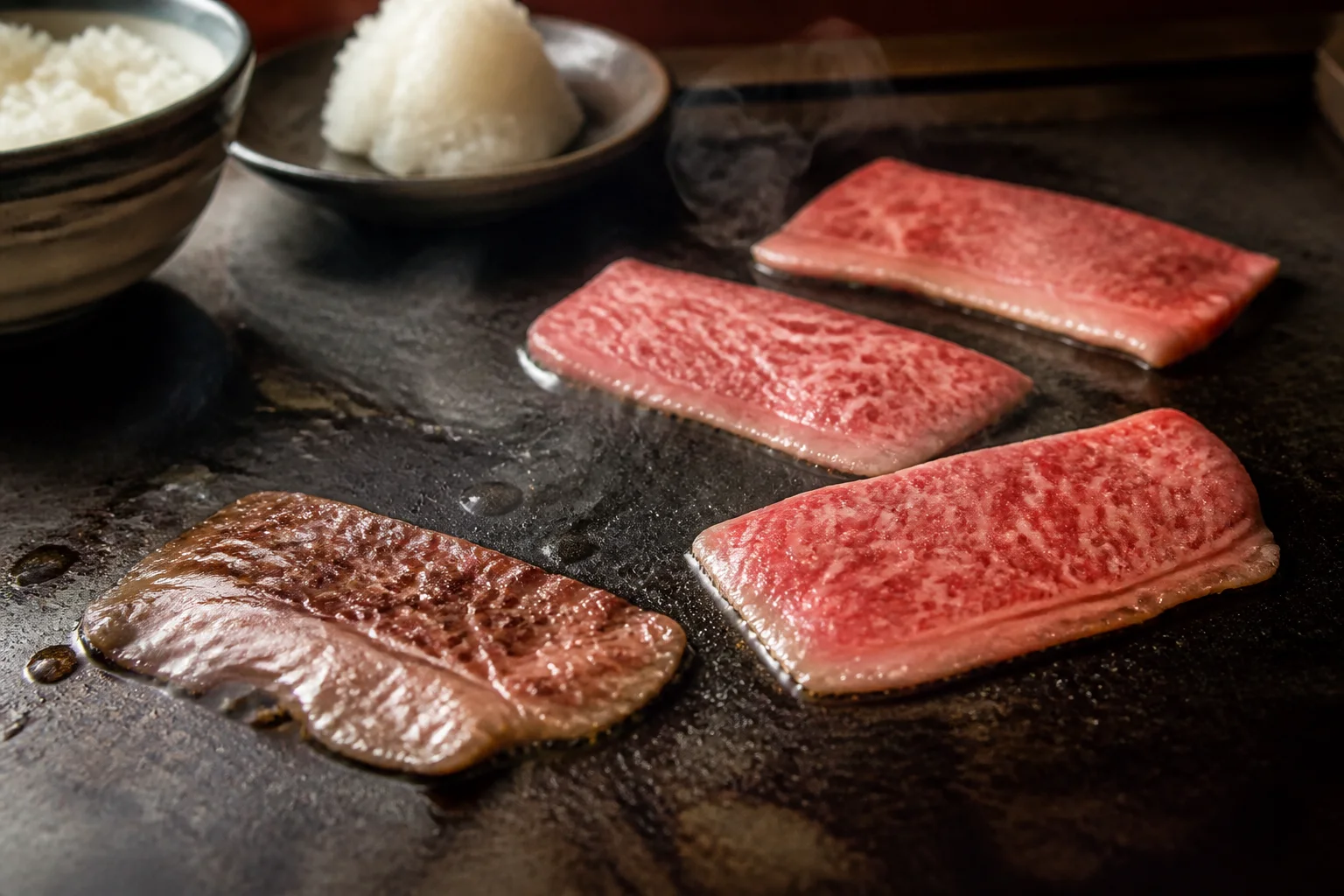
For thin Japanese portions, sear quickly on a hot clean surface and serve in small batches. For a thick American or Australian Wagyu steak, use the same temperature-led method as reverse-sear ribeye but control flare-ups and avoid a prolonged sear. Consult the temperature guide.
Serve for Contrast
Use rice, crisp cabbage, pickles, bitter greens, citrus or light soy-based seasoning. The aim is to reset the palate between rich bites. For another premium rib presentation, compare Wagyu tomahawk.
Choose Between Thin Slices and a Thick Steak
Japanese ribeye with extreme marbling is often more coherent as thin slices cooked moments before eating. The large surface-to-volume ratio lets fat soften and edges brown without asking a diner to finish a huge rich center. Use a clean griddle, wipe between batches and serve two or three pieces at a time.
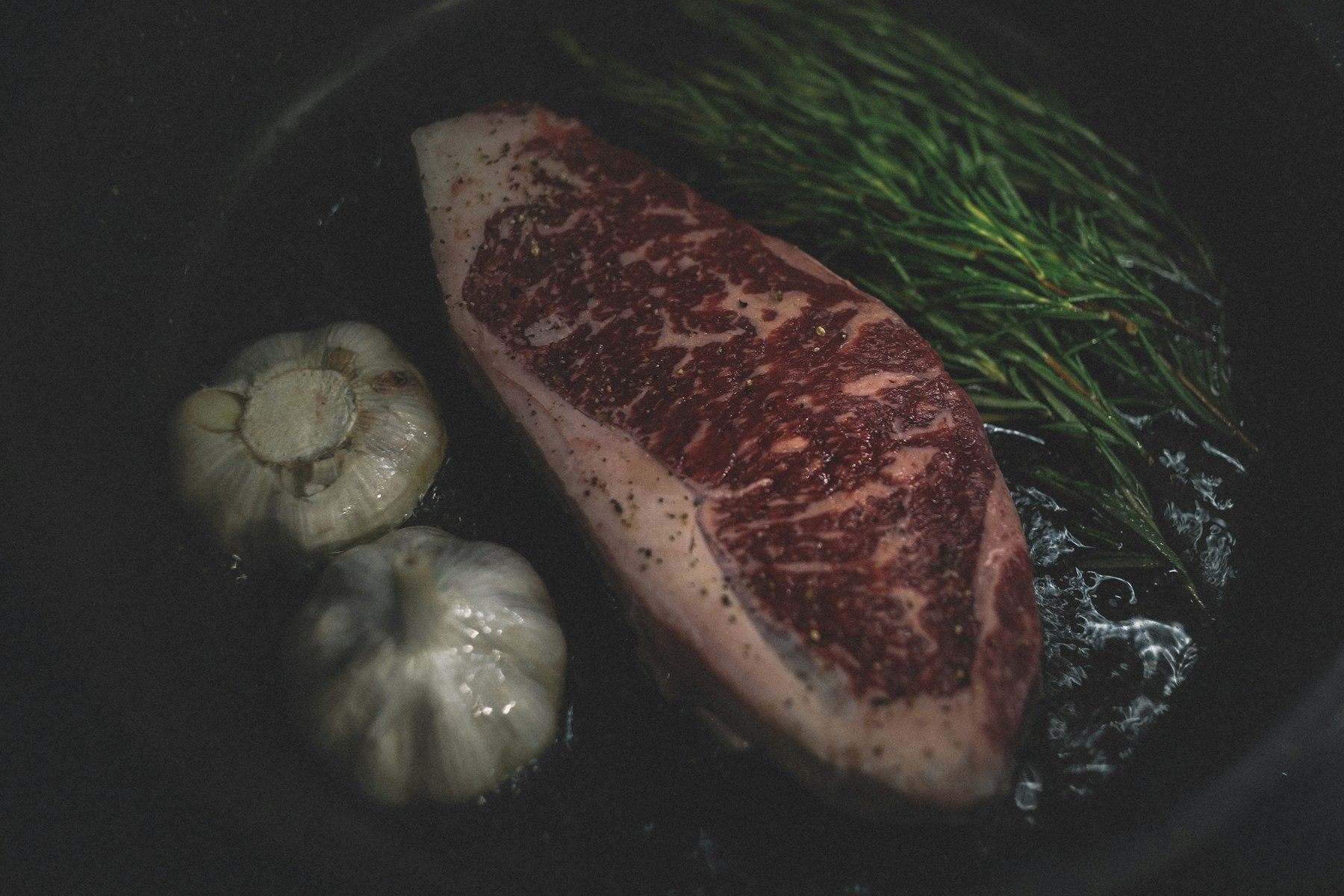
American and Australian Wagyu ribeyes are frequently sold in a familiar thick-steak format. If the marbling is moderate, dry-brine and reverse-sear as usual, but start rendering the fat edge gently and keep a cool grill zone. A heavy skillet can fill with rendered fat; spoon away excess so the steak sears rather than shallow-fries.
Do not compare the two formats by a single preferred doneness. Slice thickness, fat density and grading system change the point at which the beef tastes balanced. Note the exact label and preparation you liked. That record is more useful for a future purchase than deciding that all Wagyu should receive one method.
Identify the Program Before Judging the Ribeye
A Japanese A5 ribeye, an American crossbred Wagyu ribeye and an Australian Wagyu ribeye can all be valid products, but they are not interchangeable. Ask for country, breed or cross claim, grading system, marble score in its original system and traceability. Do not convert those facts into an invented universal grade.
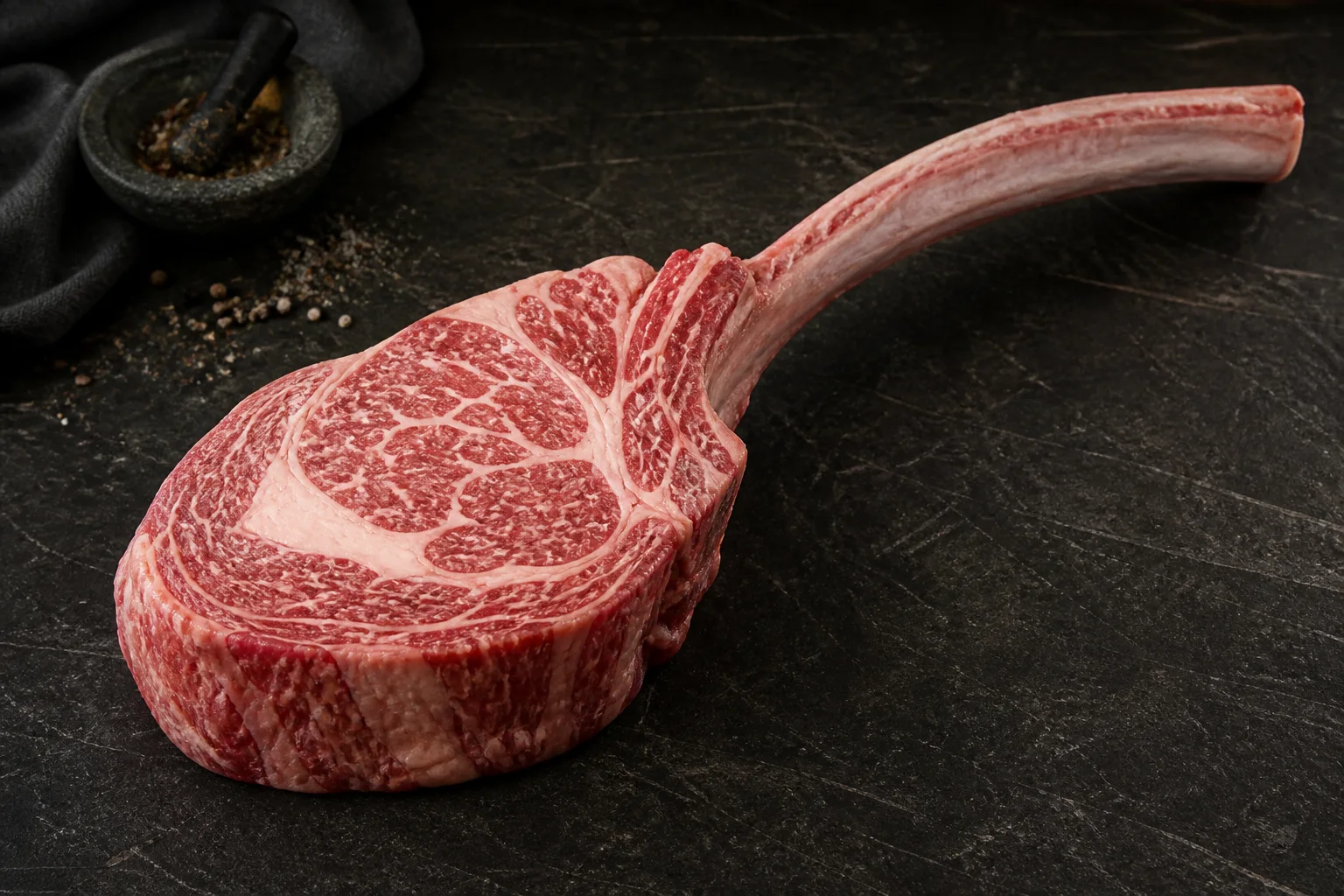
The cut face should still show eye, cap and seams clearly. Extreme marbling can obscure grain, so rib position and fabrication deserve deliberate attention. A long exposed bone adds no proof of Wagyu origin or grade.
Choose a Portion That Matches Marbling
Intense Japanese A5 ribeye is better treated as a tasting portion than a 16-ounce steak. Thin slices or small cubes create several browned surfaces and let diners pause between bites. Moderately marbled domestic or Australian examples can work as thick steaks, but often still serve more people than the same weight of conventional ribeye.
If the goal is a familiar steak with enhanced marbling, choose a moderate program and an even 1¼- to 1½-inch cut. If the goal is the full A5 experience, buy less, keep the format small and follow the Japanese A5 service guide.
| Ribeye style | Useful format | Added fat |
|---|---|---|
| Intensely marbled Japanese A5 | Thin slices or small cubes | None |
| Moderate crossbred Wagyu | Shared steak or smaller individual steak | Usually none; optional aromatic finish |
| Lean Wagyu-labeled program | Judge like the actual cut in the package | Based on visible marbling, not label prestige |
Control Rendered Fat and Keep the Surface Clean
A dry skillet or plancha is sufficient for highly marbled slices. Cook a small batch, remove it, pour clean rendered fat into a heat-safe container if desired and wipe dark residue before continuing. A pool of fat softens the surface and burns seasoning.
For a thick steak, use gentle heat only as long as necessary and finish in brief turns. A grill requires a real indirect escape zone because dripping fat can ignite. Salt is enough; butter and a sweet glaze usually make the result heavier.
Serve with rice, citrus, pickles, watercress or grated radish. Warm plates keep fat supple. For ordinary ribeye anatomy and grain, return to the complete ribeye guide.
Compare Wagyu Ribeyes Without Flattening the Differences
Compare products within the same country and grading framework first. Then normalize cut position, thickness, bone status and shipping. A Japanese A5 slice, a thick Australian marble-score steak and a USDA-graded American crossbred ribeye solve different meal problems.
Ask for a cross-section that shows the eye and cap. Fine web-like marbling distributed through the lean is different from a few thick seams. Confirm whether the quoted score applies to the individual package, the product range or a representative carcass.
Choose the smallest quantity that answers the tasting goal. If you want to study provenance and fat texture, several small batches are better than one giant steak. If you want a familiar grill centerpiece, moderate marbling and a thick shared steak may be the better format.
Freeze unused vacuum-sealed portions within the seller's instructions and thaw in the refrigerator. Highly marbled fat picks up stale odors readily, so protect opened product from air and use it promptly.
Where This Guide Fits
This page supports the broader Ribeye Steak guide. Use that pillar page for the complete cut family, buying framework and links to every closely related article.
Useful next reads include Bone-In Ribeye Steak, Cowboy Steak, Ribeye Steak Recipe, Tomahawk Steak, and steak temperature for nearby cuts, methods and decisions.
Frequently Asked Questions
Is Wagyu ribeye always A5?
No. A5 is a Japanese grade. Wagyu ribeye can also come from American or Australian programs with different grading systems.
How much Wagyu ribeye per person?
It depends on marbling. Extremely rich Japanese A5 is often served in a few ounces or shared tasting portions rather than a full conventional steak.
Does Wagyu ribeye need butter?
Usually not. It carries abundant fat; butter can obscure the beef and increase flare-ups.