How Much Does Filet Mignon Cost?
Filet mignon does not have one honest permanent price. In the USDA AMS Weekly Grocery Store Beef Feature Activity report dated August 10, 2026, regional advertised entries for tenderloin steaks ranged from about $14.99 to $45.98 per pound, while one branded Choice filet mignon entry appeared at $24.99 per pound. Those are featured advertisements observed for that week—not a guaranteed national shelf range.
Use that snapshot to understand spread, not to promise today's checkout price. Local supply, grade, branded program, center-cut trimming, package size and holiday demand all move the market. Online offers add insulation, cold packs and shipping, so their displayed steak price cannot be compared directly with a store feature.
Why Filet Mignon Costs More
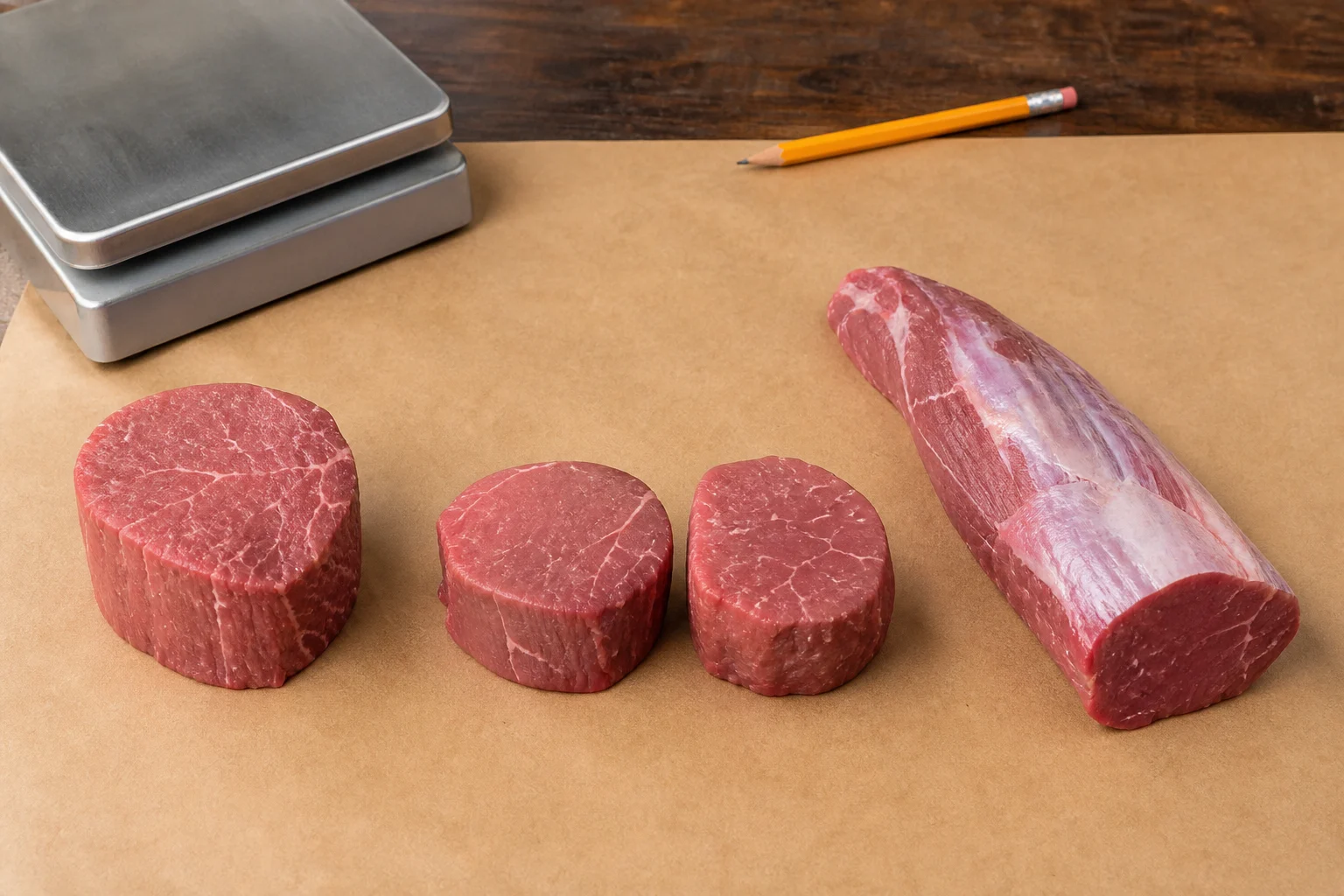
Filet mignon comes from the tenderloin, a relatively small muscle that yields fewer center-cut medallions than the animal yields portions from larger primals. The cut is prized for tenderness, and heavy external trimming reduces saleable weight further. Demand is concentrated on the most uniform center section.
- Center-cut geometry: even cylinders command more than tapered tail pieces because they cook and present consistently.
- Trim level: chain muscle and silver skin removal increase labor and reduce sellable weight.
- USDA quality grade: Prime, Choice and other grade statements describe quality factors; they do not change the cut into a different muscle.
- Aging and branded programs: supported practices and traceability can add cost, while vague “premium” language proves little.
- Portioning and packaging: individually vacuum-sealed filets require more processing than an intact tenderloin section.
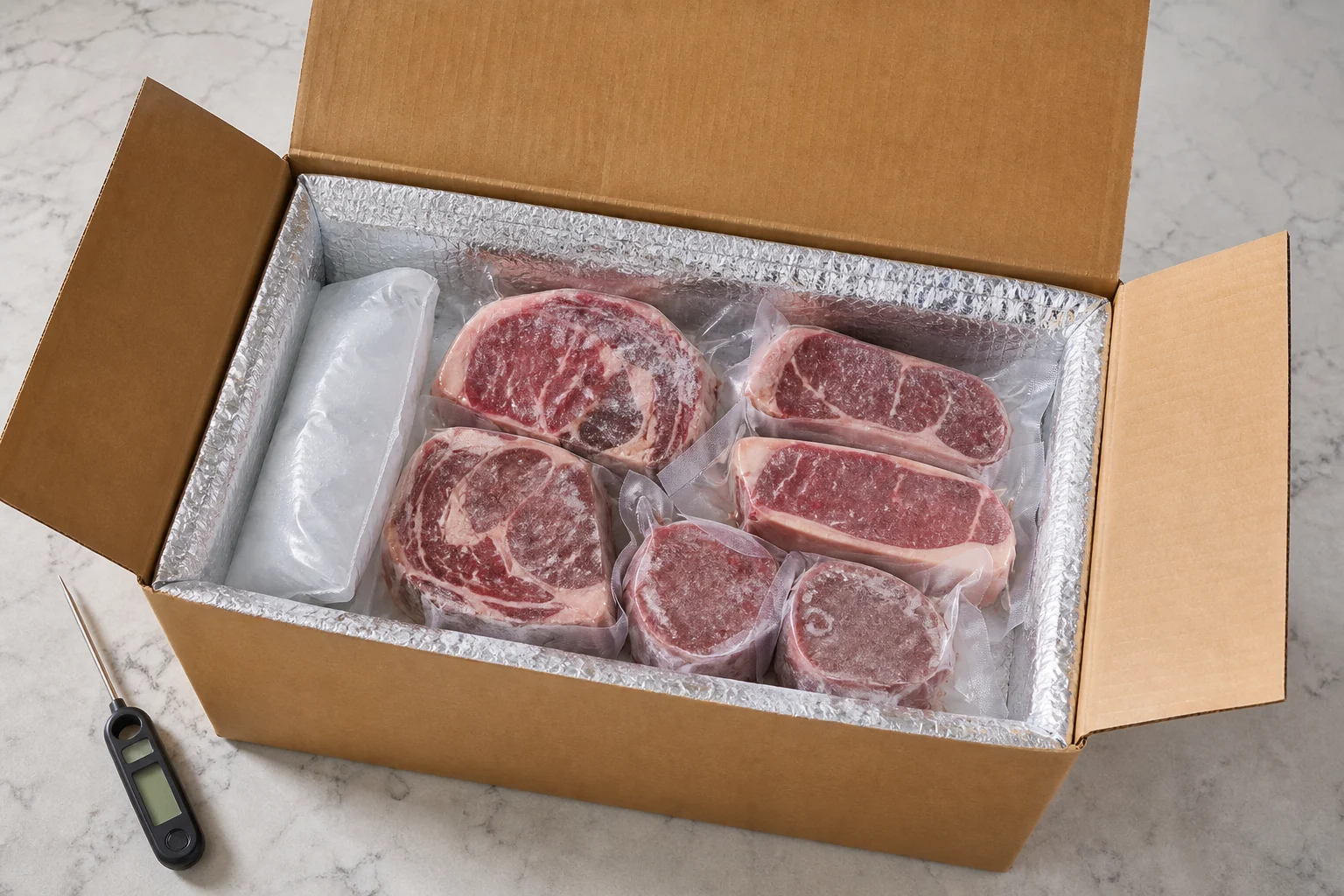
- Sales channel: mail-order prices include cold-chain packaging and may hide cost inside mandatory shipping or bundle filler.
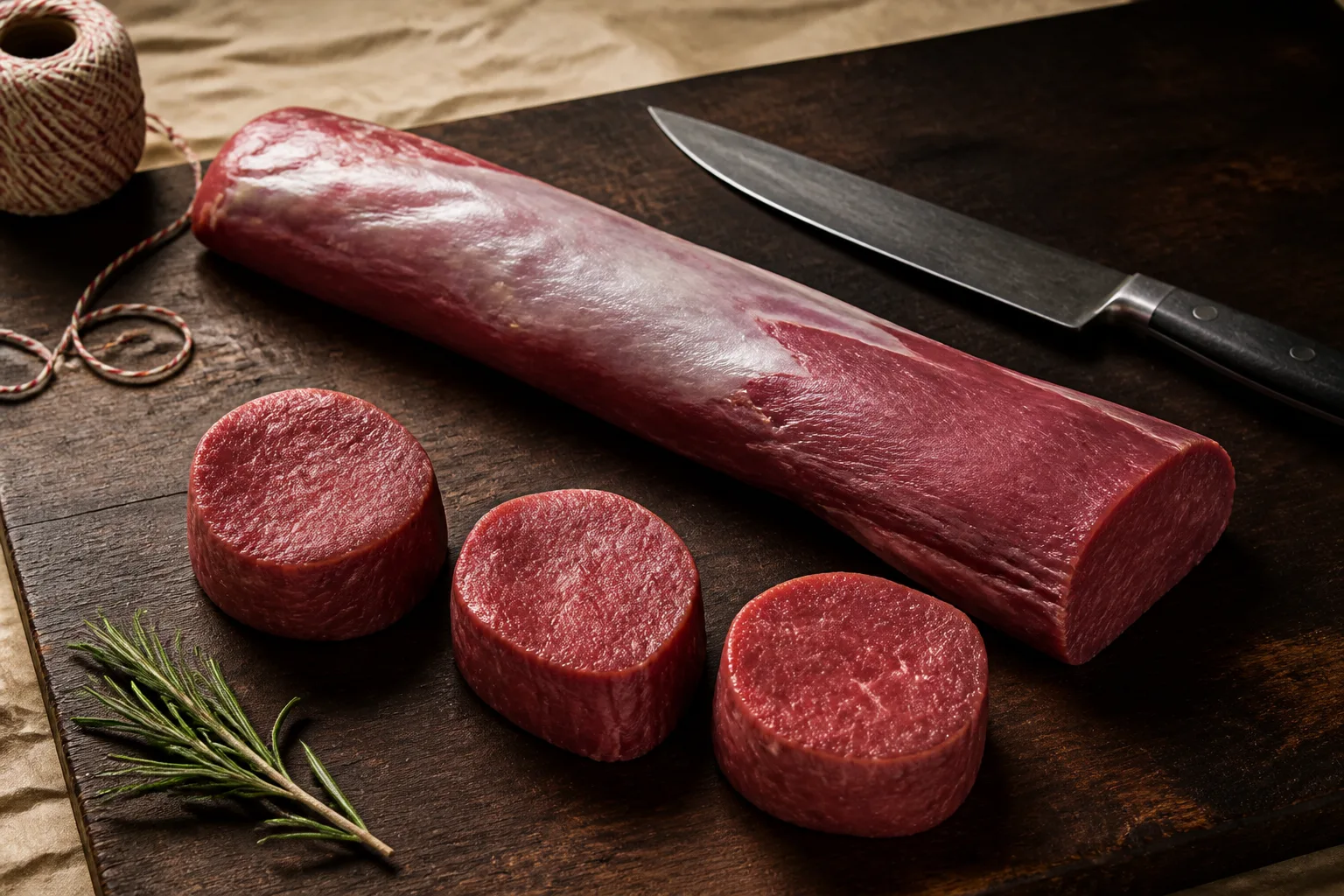
Read the complete filet mignon guide for anatomy and buying detail before deciding which premium actually improves the steak you need.
Convert Price per Pound Into Price per Steak
Multiply price per pound by portion ounces, then divide by 16. An 8-ounce filet is half a pound; a 6-ounce filet is three-eighths. Add allocated shipping for online orders and subtract any weight you do not plan to serve.
| Advertised price per lb | 6-ounce filet | 8-ounce filet |
|---|---|---|
| $15 | $5.63 | $7.50 |
| $25 | $9.38 | $12.50 |
| $35 | $13.13 | $17.50 |
| $46 | $17.25 | $23.00 |
Whole Tenderloin vs Pre-Cut Filets
| Format | What you pay for | Best fit |
|---|---|---|
| Center-cut filets | Maximum uniformity and trimming labor | Two to four steakhouse-style portions |
| Tenderloin roast section | Fewer individual cuts and a larger format | Roast dinner or self-portioning |
| Whole peeled tenderloin | Broad yield including center and tapered ends | Confident home trimming with plans for every piece |
| Tail medallions or tips | Less uniform geometry | Sauced dishes, skewers or quick sliced meals |
A whole tenderloin is not automatically cheaper after trimming, nor is every pre-cut filet wasteful. Compare the exact condition: unpeeled tenderloin includes chain and silver skin; peeled products may still need surface cleanup; fully portioned center cuts include more labor but nearly all purchased weight may reach the plate.
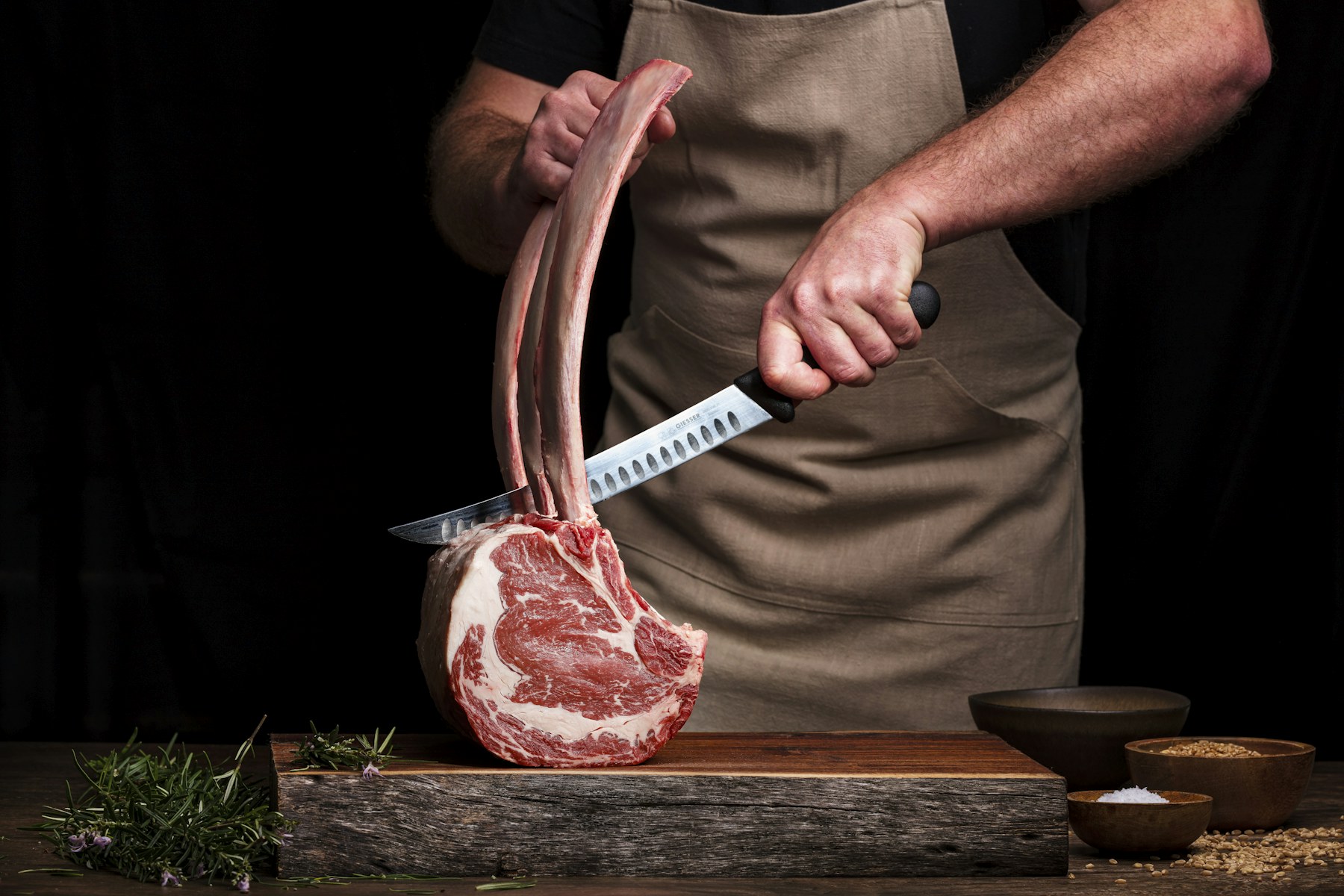
Bone-in filet is another premium format, but the retained bone changes presentation more than tenderloin flavor. Compare its edible yield with our bone-in filet mignon guide before paying by total weight.
Does USDA Prime Filet Justify the Price?
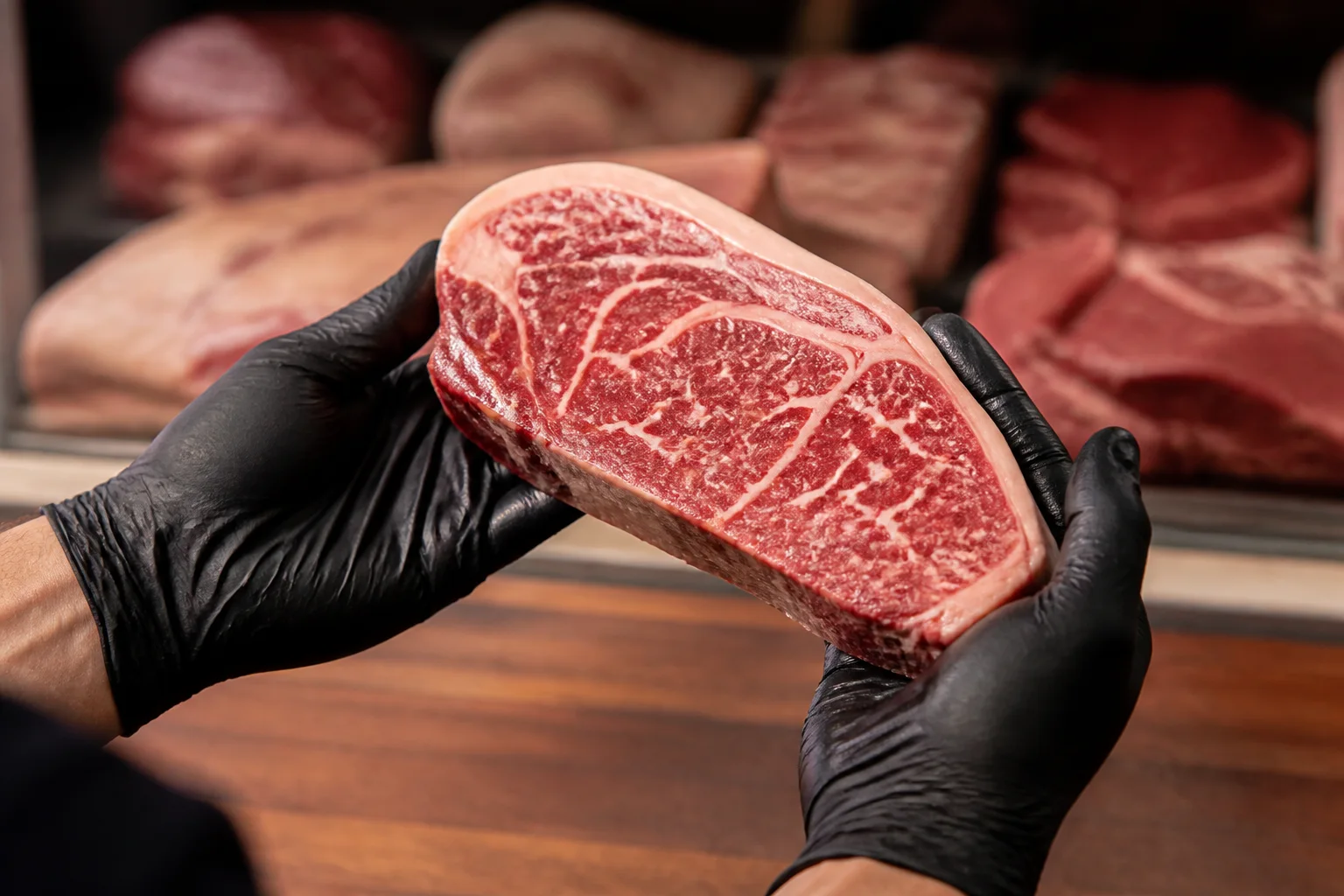
USDA Prime identifies a carcass quality grade; it does not guarantee that one individual filet will show dramatic marbling or be trimmed better than every Choice filet. Tenderloin is naturally leaner than ribeye, so inspect the actual steak and evaluate grade alongside diameter, surface condition and trim.
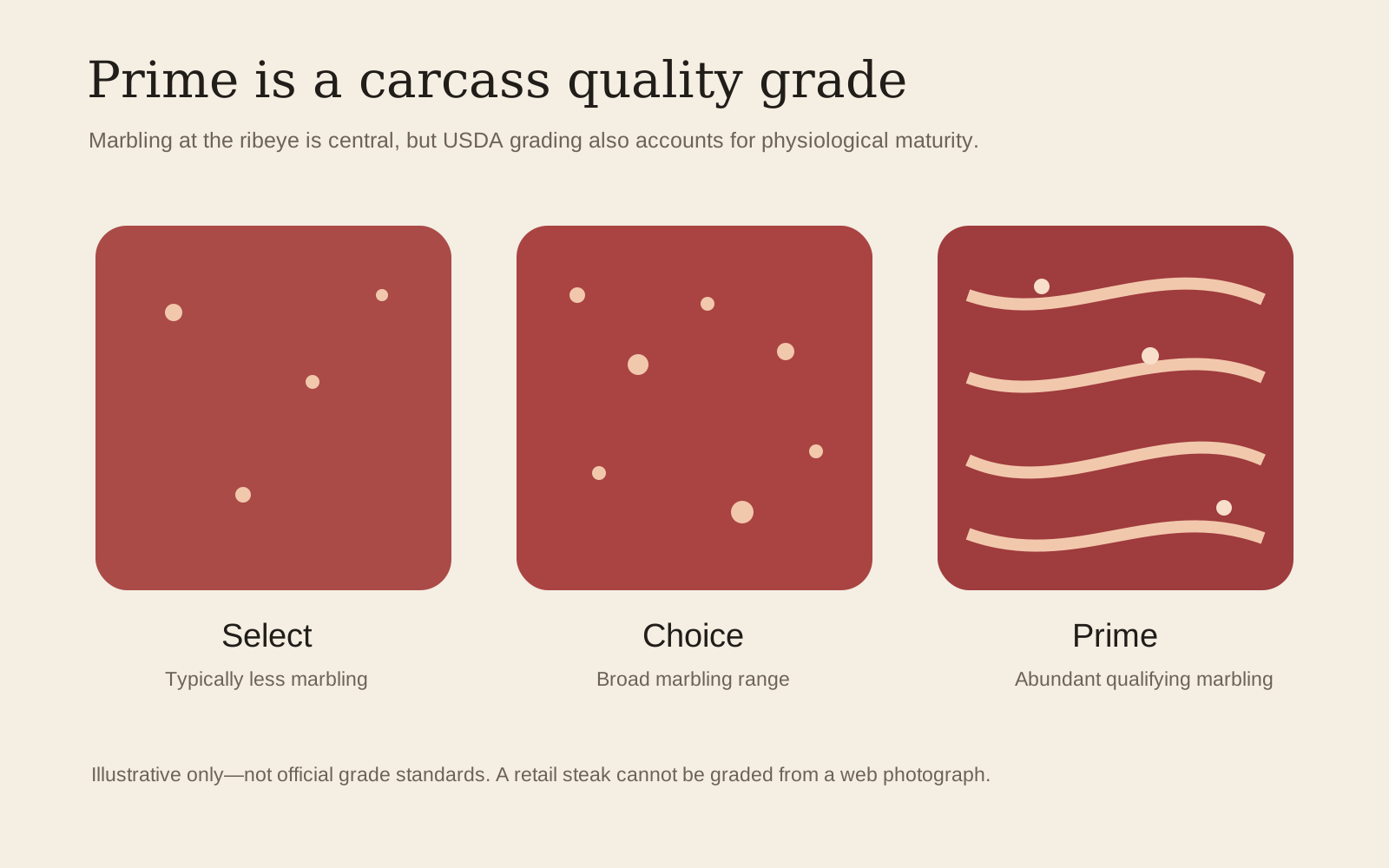
Prime can be worthwhile when the specific filet shows useful fine marbling and the price difference is reasonable. It is less persuasive when the package hides the steak, the portion is tapered or the seller supplies only a trademarked tier with no official grade. See the USDA Prime steak guide for the difference between the official shield and marketing language.
Filet Mignon Buying Scorecard
- Confirm center-cut or mixed portions. A mixed box may contain tapered ends even when the hero photograph shows cylinders.
- Compare diameter and thickness. Matching weights do not guarantee matching cooking geometry.
- Check stated grade and program. Separate official grade from breed, feeding, aging and seller tier.
- Inspect trim. Silver skin, chain muscle and tucked loose pieces reduce the value of a “ready to cook” promise.
- Calculate delivered portion cost. Add shipping and fees, then divide by guaranteed edible steaks.
- Match format to method. Tall center cuts suit reverse searing; smaller medallions may be better for a fast pan dinner.
For delivered filets, apply the full online steak buying checklist and inspect the cold chain immediately. Price loses all meaning if a warm shipment is unsafe or the seller's remedy is unclear.
Where This Guide Fits
This page supports the broader How to Buy Steak Online guide. Use that pillar page for the complete cut family, buying framework and links to every closely related article.
Useful next reads include Where to Buy Tomahawk Steak, and USDA Prime Steak for nearby cuts, methods and decisions.
Frequently Asked Questions
What is a normal filet mignon price per pound?
There is no single permanent national price. The USDA retail-ad report dated August 10, 2026 showed featured regional tenderloin/filet entries spanning roughly $14.99 to $45.98 per pound, including a branded Choice filet entry at $24.99. Regular shelf and delivered prices can differ.
How much does an 8-ounce filet cost?
An 8-ounce filet is half a pound. Multiply the per-pound price by 0.5, then add any allocated shipping or fees. At $25 per pound, the ingredient cost is $12.50.
Why is filet mignon expensive?
Tenderloin yield is limited, center cuts are in high demand and trimming removes saleable weight. Grade, aging, brand, portioning and cold-chain shipping can add further cost.
Is it cheaper to buy a whole beef tenderloin?
It can be, but compare the condition and usable yield. An unpeeled tenderloin requires chain and silver-skin removal, while pre-cut center filets include more labor but less waste for a small dinner.
Is USDA Prime filet worth it?
It can be when the individual steak has useful marbling, even center-cut geometry and a reasonable premium. Grade should be evaluated with trim, thickness and actual appearance rather than used as the only buying signal.
Sources & further reading
- USDA AMS — Weekly Grocery Store Beef Feature Activity, August 10, 2026 — Dated advertised-price snapshot used for the filet price examples; it is not a permanent national retail price list.
- USDA AMS — Institutional Meat Purchase Specifications, Fresh Beef Series 100 — Federal purchase specifications used to distinguish tenderloin, sirloin-tip and other beef items.
- USDA AMS — Beef Carcass Grades and Standards — Official explanation of USDA beef quality grades and what they do and do not describe.