The Online Steak Buying Checklist
Before ordering, require six facts: the exact cut, piece count, weight range, thickness or diameter, quality grade or supported production claim, and the total delivered price. If a seller hides those details behind a box photograph and a large sale percentage, you cannot compare the actual beef.
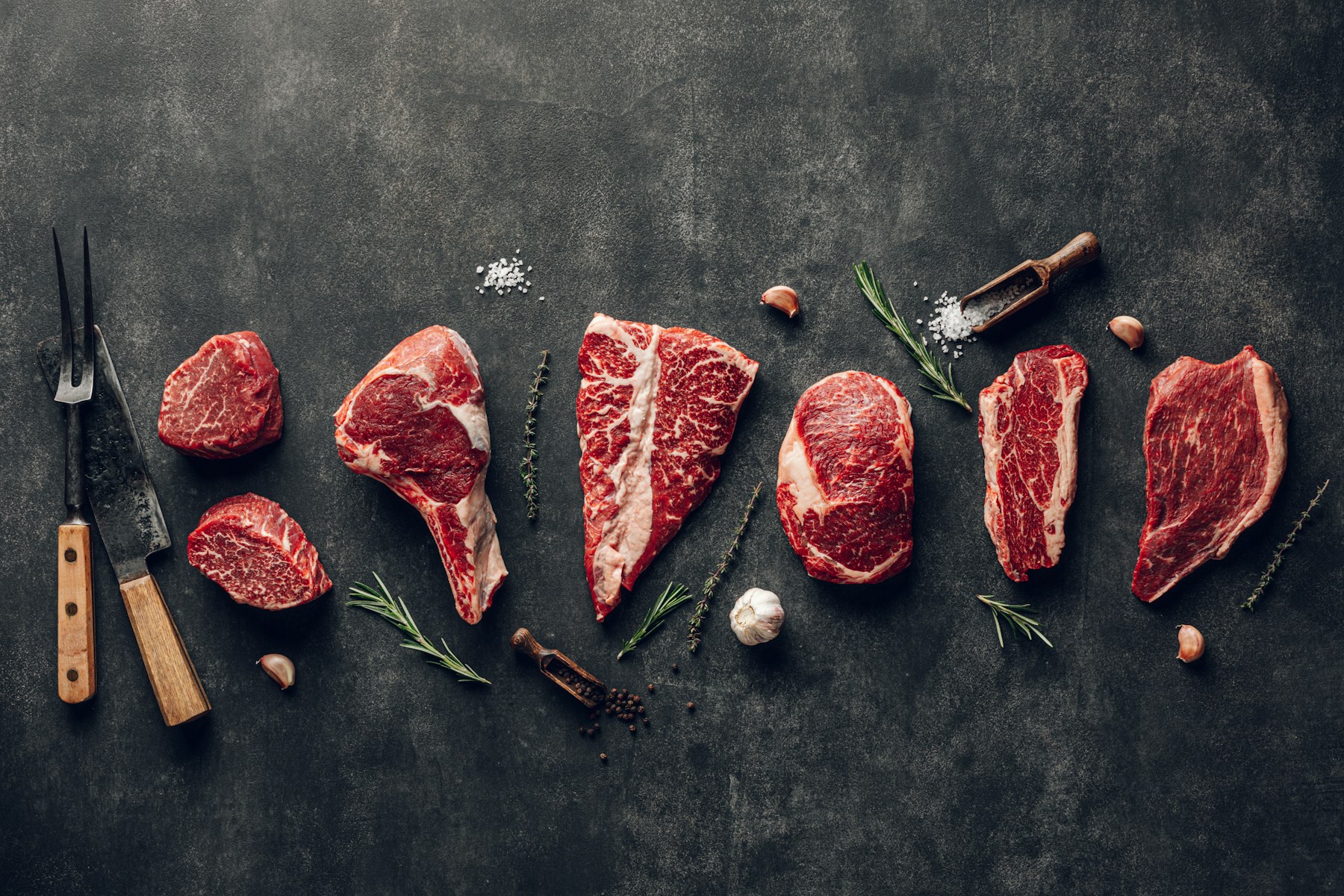
- Cut identity: ribeye, strip, filet and sirloin are not quality grades. Confirm bone-in versus boneless and any seller-specific name.
- Portion specification: compare ounces per piece and the allowed weight range, not only the total box weight.
- Thickness: a 6-ounce wide thin steak cooks differently from a 6-ounce tall filet.
- Grade and claims: USDA Prime, Choice, breed, grass-fed, organic and aging answer different questions.
- Cold-chain promise: find the delivery window, packaging method and explicit warm-arrival remedy before checkout.
- Landed cost: include mandatory shipping, membership fees and unusable bone or trim.
Use our steak-cut directory to confirm anatomy before comparing sellers. A low price on the wrong cut is not a bargain, and a premium label cannot compensate for an underspecified package.
Compare Landed Cost, Not the Sale Badge
Online promotions often compare a bundle with an internal reference price that is difficult to verify. Ignore the percentage for the first pass. Add item price, required shipping and unavoidable fees, then divide by the edible ounces you expect to serve. Keep bonus burgers, sides and desserts at zero value unless you would have bought them separately.
| Step | Calculation | Why it matters |
|---|---|---|
| 1. Landed price | Box price + required shipping + mandatory fee | Shows the actual checkout cost |
| 2. Steak ounces | Piece count × stated ounces per steak | Separates steak from filler items |
| 3. Edible yield | Steak ounces − estimated bone and hard trim | Makes bone-in and boneless offers comparable |
| 4. Unit value | Landed price ÷ edible ounces | Reveals the cost of the beef you can serve |
Read the Cut and Quality Claims Separately
Cut tells you muscle and shape; USDA quality grade describes carcass factors including marbling and maturity. Breed, feeding, organic certification and aging are separate attributes. A listing that says only “premium,” “signature” or “butcher selected” has not supplied a standardized grade.
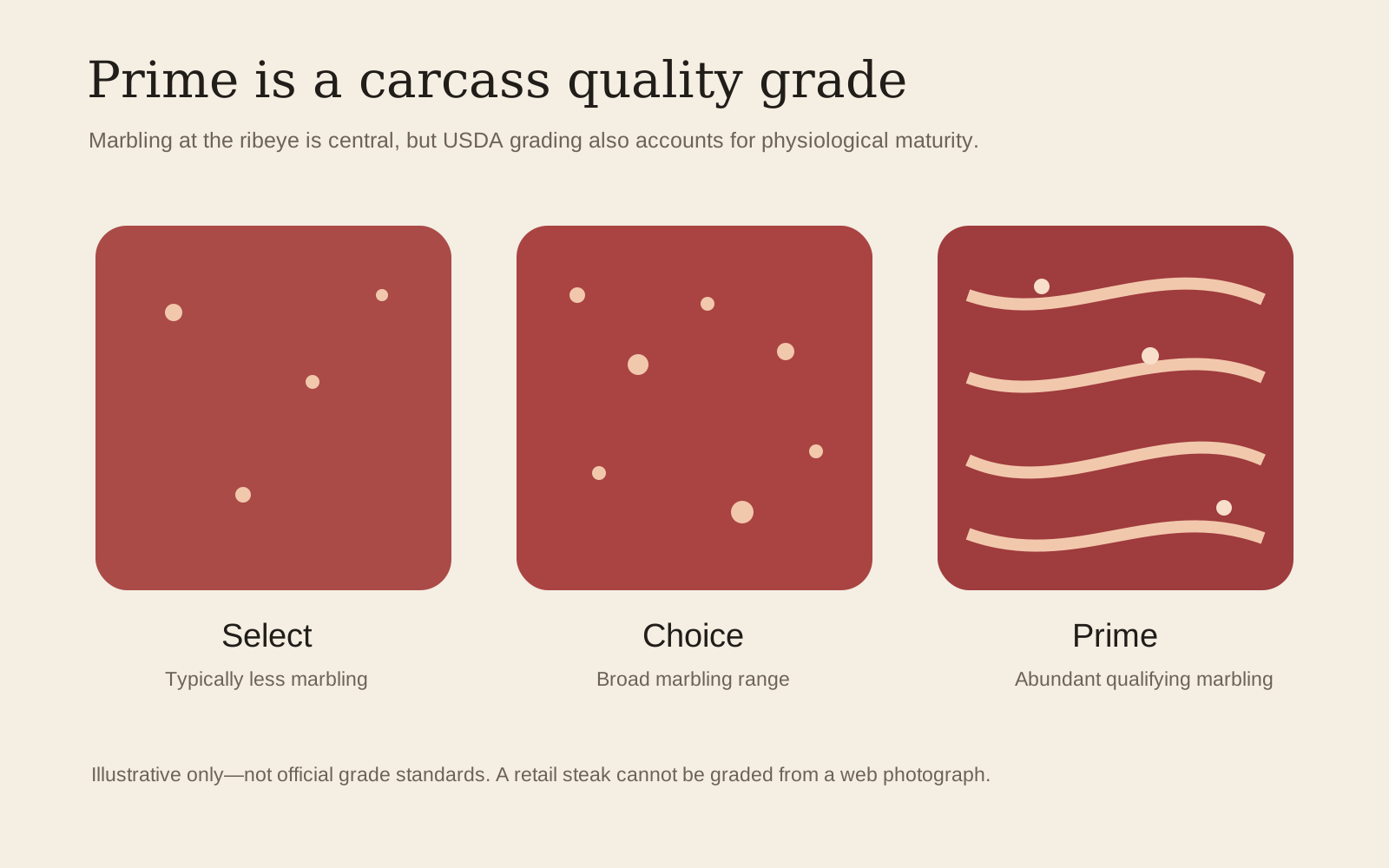
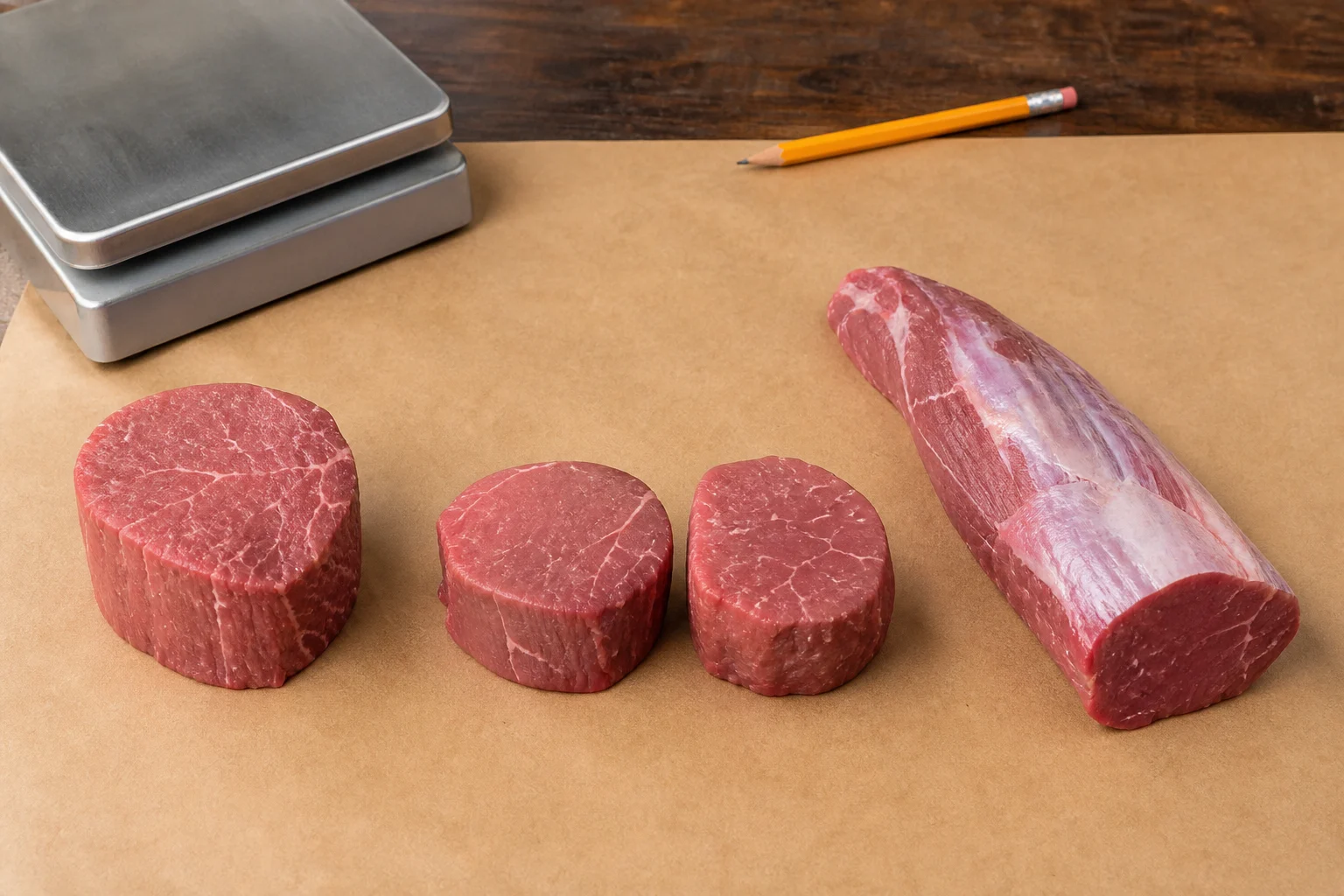
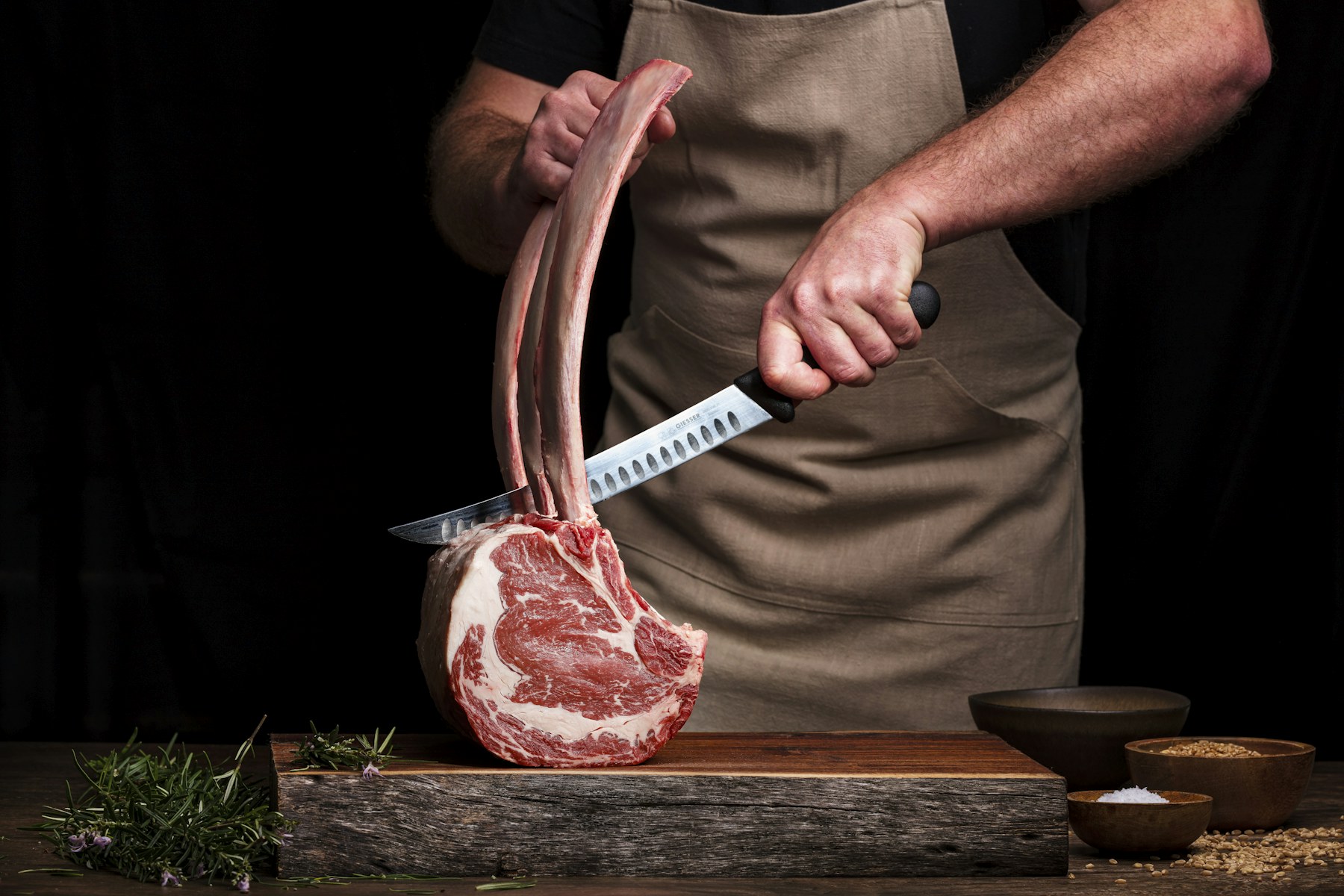
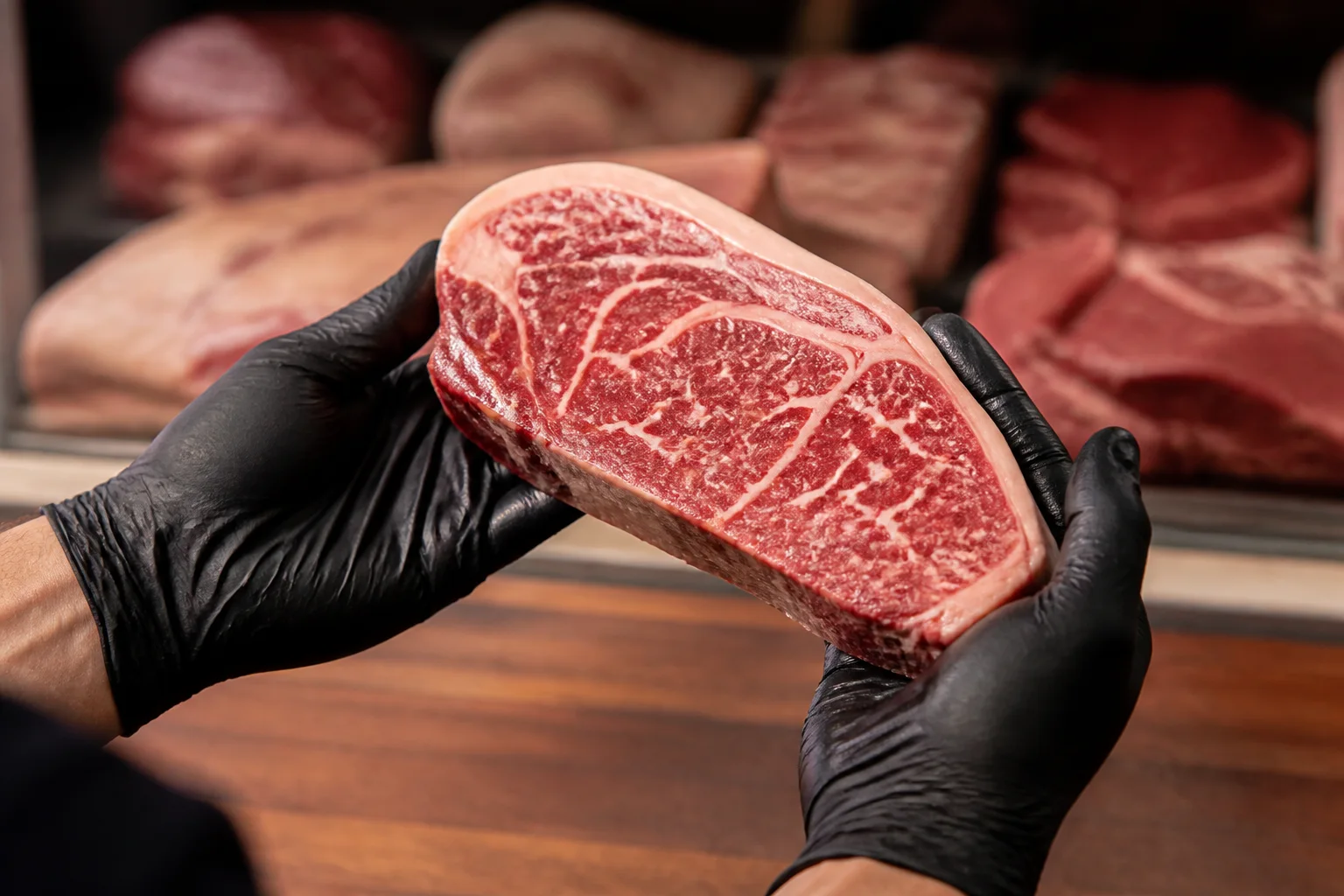
For richer steak, compare the marbling visible in the actual product and the supported grade. For tenderloin, pay close attention to center-cut diameter and chain-muscle removal. For a long-bone steak, compare edible yield with our tomahawk price guide before paying a boneless-steak price for presentation bone.
If grass-fed or organic matters, read the claim language and certifier rather than assuming every pasture photograph means the same production system. Our grass-fed steak guide separates those label questions from cut quality and cooking performance.
Choose the Seller Type That Fits the Order
| Seller type | Useful strength | Question to ask |
|---|---|---|
| Local butcher with delivery | Cut-to-order detail and easier problem resolution | Can thickness, trim and grade be confirmed before charging? |
| Producer or ranch program | Origin and production details | Is the cut specification as precise as the farm story? |
| National mail-order company | Established packaging and replacement process | What is the total steak-only value after shipping and bundle filler? |
| Subscription box | Convenience and variety | Can frequency, cuts and renewal be controlled without penalty? |
| Marketplace seller | Broad selection | Who packs the meat, who ships it and which policy controls a warm arrival? |
This guide does not invent a universal “best” seller without ordering and inspecting the same products. A professional comparison would require repeat deliveries, package-temperature checks, measured weights, cut verification and blind cooking. Until that testing exists, use disclosed specifications and a clear remedy policy rather than unverified superlatives.
Inspect a Steak Delivery Immediately
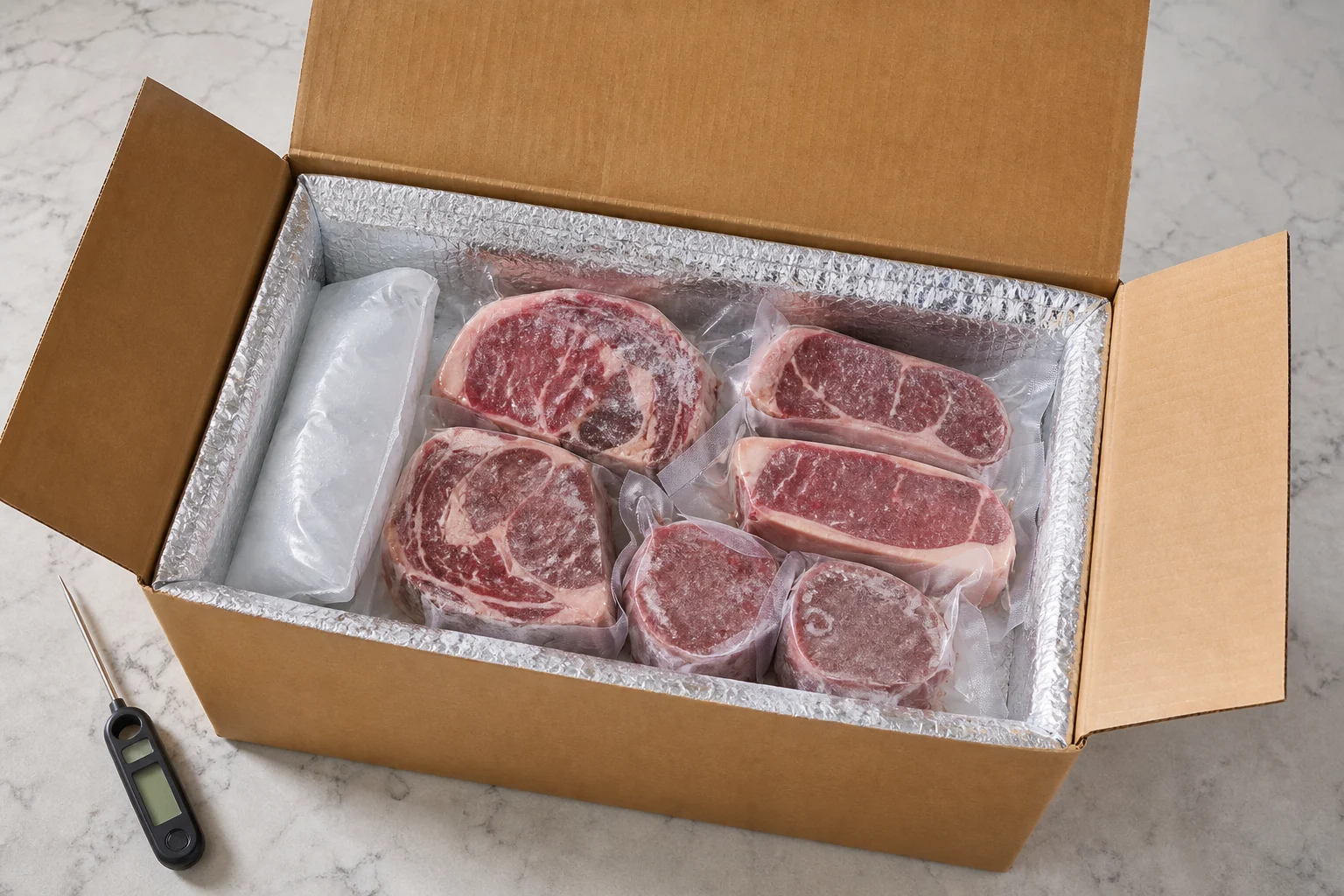
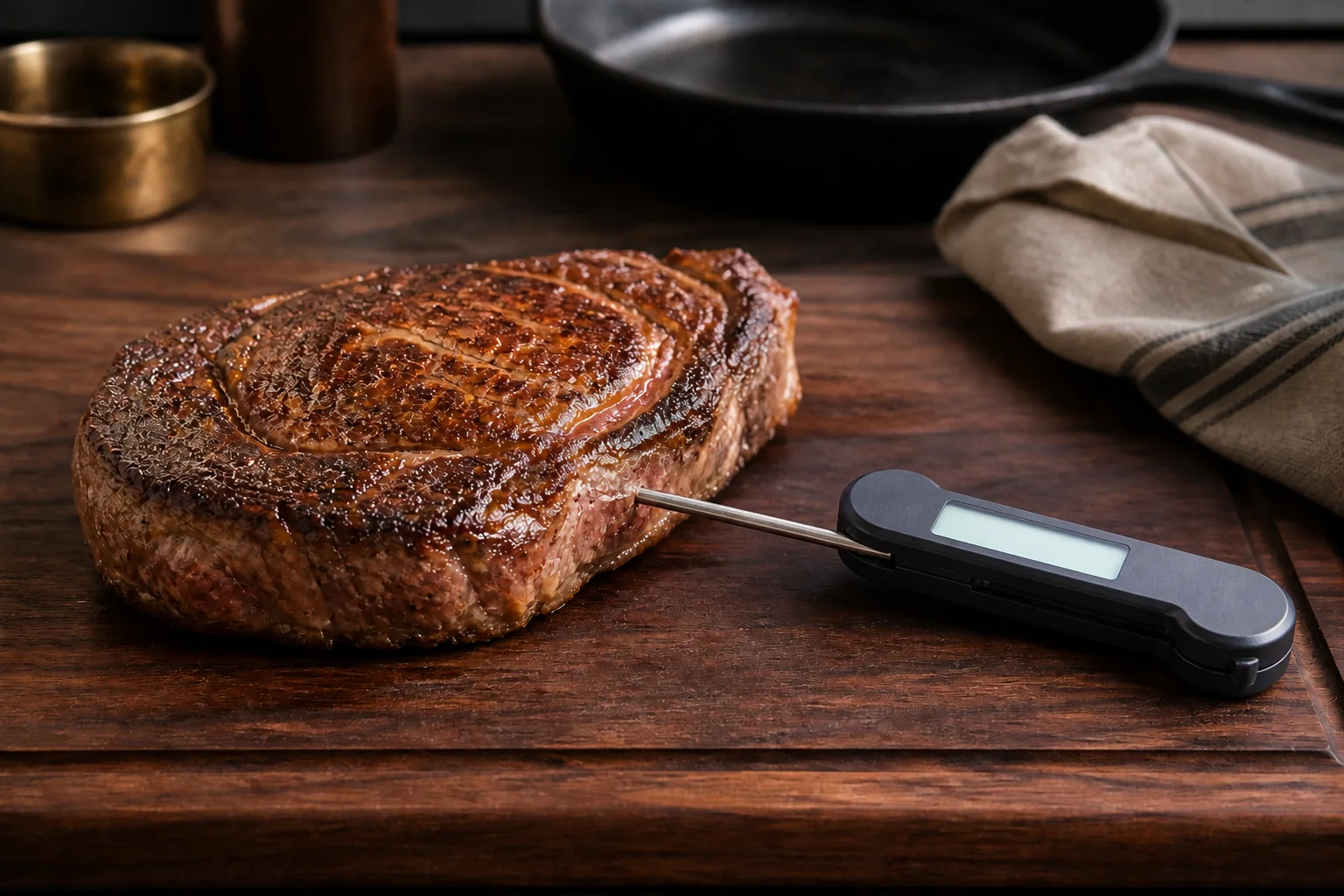
Arrange delivery for a day someone can receive it. Open the package immediately and check the coldest and warmest portions. USDA FSIS says perishable mail-order food should arrive frozen, partially frozen with visible ice crystals or at least refrigerator-cold—below 40°F when measured with a food thermometer.
- Photograph the unopened box. Record crushing, wet cardboard, broken tape or a late-delivery timestamp.
- Open and inspect promptly. Look for intact vacuum seals, ice crystals and a functioning cold source.
- Measure without contaminating food. Place a sanitized thermometer between close packages or follow the seller's safe measurement instructions.
- Separate acceptable packages. Refrigerate or freeze cold intact steaks immediately according to the label.
- Escalate a warm shipment. If perishable meat arrives above 40°F, contact the company. Do not taste it to decide whether it is safe.
Steaks on Sale and Subscription Traps
A genuine sale improves landed unit cost for a cut you already wanted. It does not need oversized “free” extras, a countdown timer that restarts or a subscription you must remember to cancel. Save a screenshot of the item list, weights, shipping promise and renewal terms before purchase.
For subscriptions, calculate one full renewal at the non-introductory price. Confirm skip, pause and cancellation rules, then decide whether surprise cuts help or complicate meal planning. A predictable freezer inventory can be valuable; an opaque mix can leave you paying steak prices for ground beef and sides.
If the order is specifically a tomahawk, use the where-to-buy-tomahawk guide for bone length, thickness and shipping questions. If grade is the main concern, compare the claim with our USDA Prime steak guide before checkout.
Continue Through This Steak Topic
Build the full picture: Filet Mignon Price cover the closely related cuts, methods, buying decisions and recipes that support this guide.
When you need to compare across families or techniques, continue with Where to Buy Tomahawk Steak, USDA Prime Steak, and Grass-Fed Steak. These pages answer adjacent questions without forcing every detail into one overgrown article.
Frequently Asked Questions
What should I check before buying steak online?
Confirm exact cut, bone format, piece count, weight range, thickness, grade or supported production claim, total delivered price, cold-chain method and the seller's warm-arrival remedy.
How cold should delivered steak be?
USDA FSIS says perishable mail-order food should arrive frozen, partially frozen with ice crystals or at least refrigerator-cold below 40°F. Inspect and store it immediately.
Are steaks on sale always a good value?
No. Calculate landed cost per edible steak ounce after shipping, fees, bone and filler items. A large discount percentage does not establish a low real unit cost.
Is it safe to eat steak from a warm delivery box?
Do not taste suspect meat. If perishable food arrives above 40°F, USDA FSIS advises notifying the company rather than consuming it.
Which online steak company is best?
A defensible best-company claim requires comparable repeat orders and inspection. Without that testing, choose the seller with the clearest cut specifications, landed price, cold-chain promise and remedy policy.
Sources & further reading
- USDA FSIS — Mail Order Food Safety — Official arrival-temperature, packaging and cold-storage guidance for delivered perishable food.
- USDA AMS — Institutional Meat Purchase Specifications, Fresh Beef Series 100 — Federal purchase specifications used to distinguish tenderloin, sirloin-tip and other beef items.
- USDA AMS — Beef Carcass Grades and Standards — Official explanation of USDA beef quality grades and what they do and do not describe.