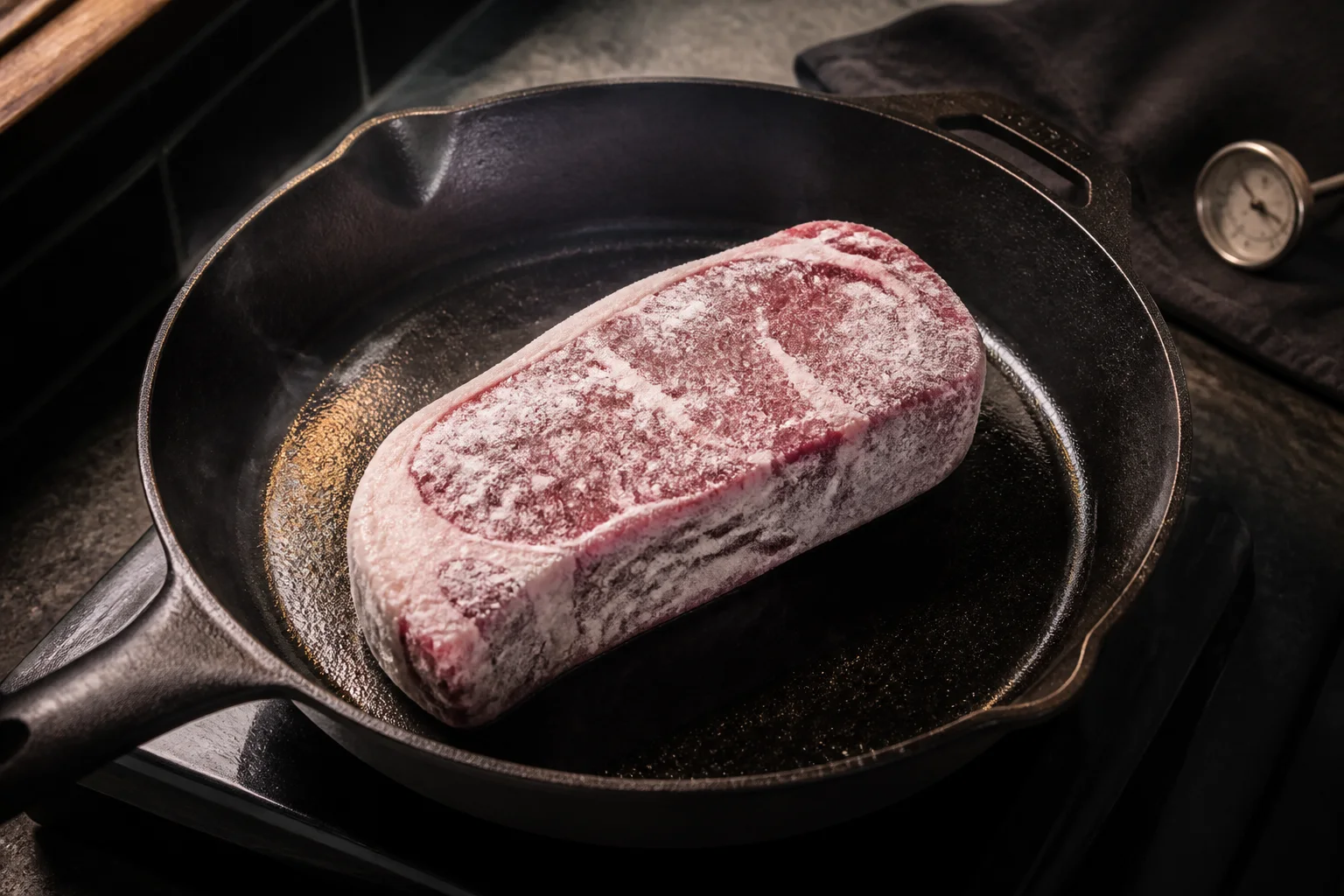
What Frozen Steak Actually Means
Frozen steak is raw beef held at 0°F or below; freezing pauses microbial growth but does not sterilize the meat or erase handling requirements. The name describes a starting condition or heat-contact method, not a cut. Thickness, muscle structure, surface moisture and the real heat source still decide how quickly the exterior and center move.
A sound method separates culinary preference from safety. Use the steak temperature guide for probe placement and the official minimum, then use the actual steak's geometry to decide when to begin checking. Fixed minutes cannot account for every freezer, coal bed, pan or cut.
This guide fits inside the larger how to cook steak framework: dry the surface where possible, build controllable heat, measure the coolest lean center, rest deliberately and slice across the grain when the muscle requires it.
Choose a Steak That Fits the Method
Choose an individually frozen, evenly thick steak with intact wrapping and little exposed freezer burn; a boneless strip or sirloin is simpler to manage than an irregular bone-in cut. An evenly shaped steak is more forgiving than one with a thin tail or an oversized hard seam. Compare actual thickness, not package weight, and avoid assuming that an expensive label makes unsuitable geometry easier to cook.
- Measure thickness. A ruler gives a more useful starting point than ounces because heat travels from the surfaces toward the center.
- Map fat and bone. Thick exterior fat needs controlled rendering; bone and internal seams create uneven heating and can mislead probe placement.
- Read the label. Follow storage, thawing, mechanical-tenderization and safe-cooking directions printed on the product.
- Plan a second zone. A lower burner, indirect grill area or cooler section of the fire prevents a dark crust from becoming a burned crust.
Set Up Before the Steak Meets Heat
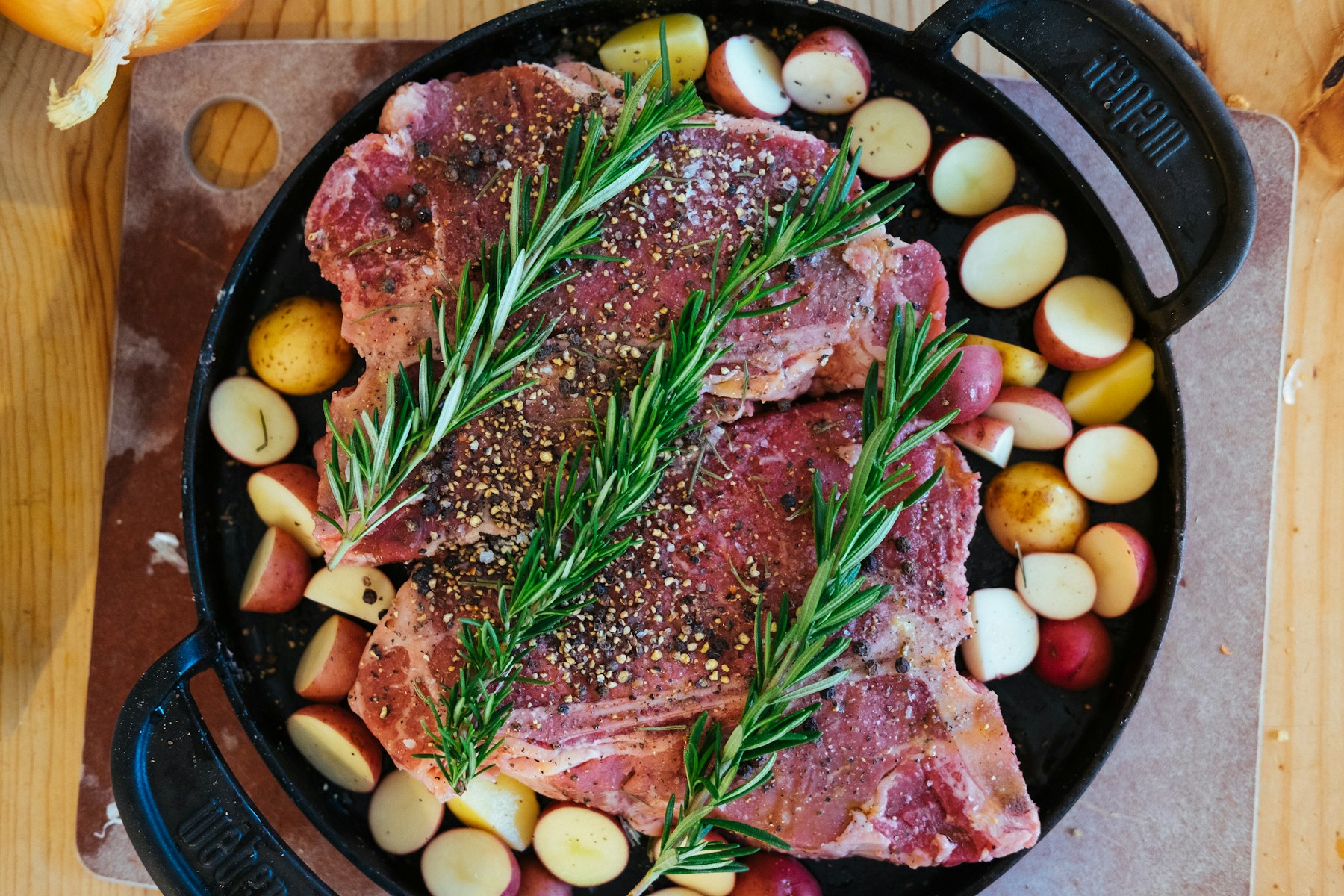
Remove all plastic, absorbent pads and paper, brush away loose frost and use an oven-safe pan plus a gentler second heat stage. Never put frozen meat into a slow cooker. Keep raw-beef tools separate from cooked-food plates and prepare the thermometer before high heat begins. A frantic search for tongs or a clean board is enough time to overshoot a thin steak.
Ventilation, a stable cooking vessel and heatproof gloves are practical parts of the recipe. Arrange the work so raw packaging can be discarded, hands can be washed and the cooked steak can land on a clean rack without crossing the raw zone.
Step-by-Step Method
- Step 1: Preheat the oven to 275°F and a heavy skillet over medium-high heat; keep ventilation running and a clean rack ready.
- Step 2: Unwrap the frozen steak completely. Scrape away thick surface ice so it cannot spit into hot oil, but do not rinse raw beef.
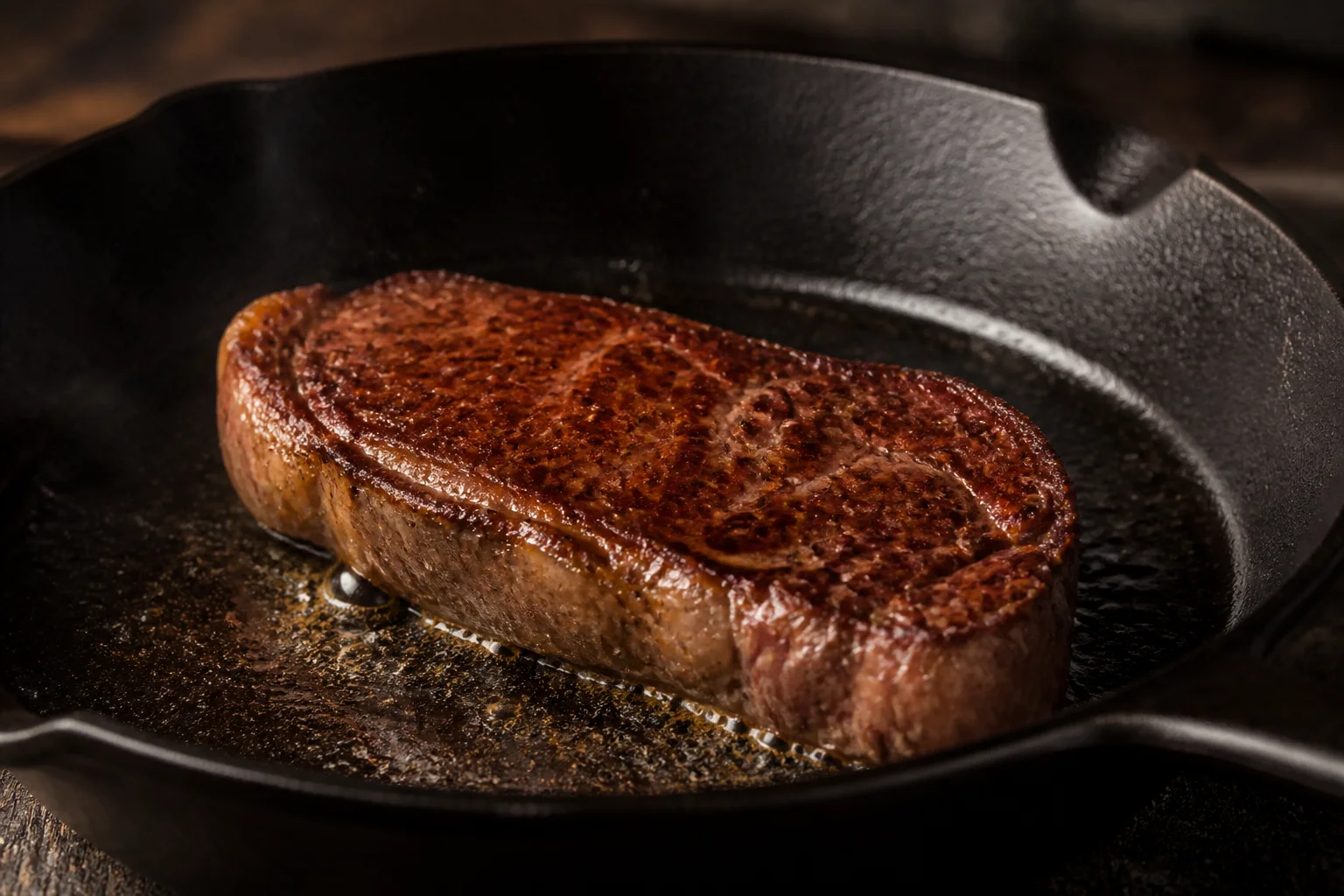
- Step 3: Add a thin film of high-smoke-point oil and brown both broad frozen faces briefly; use tongs to control contact rather than forcing the steak flat.
- Step 4: Move the steak to a rack over a sheet pan and finish in the low oven, turning once so the temperature gradient develops evenly.
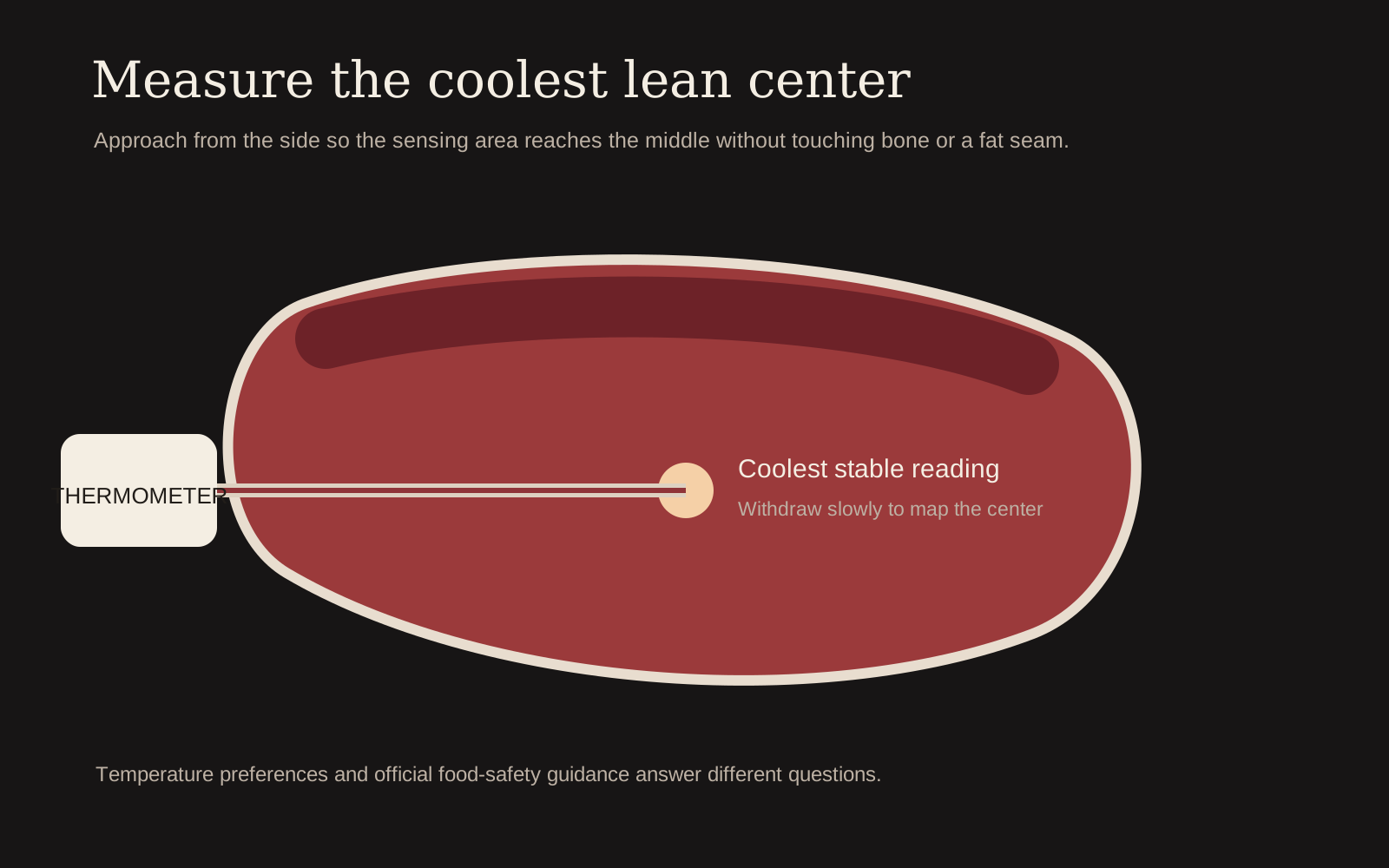
- Step 5: Begin checking earlier than appearance suggests. Probe from the side toward the coolest center and sample more than one location.
- Step 6: Once the applicable safe center is reached, rest at least three minutes, then identify the grain and slice.
- 01Inspect and measure the steak
- 02Prepare two levels of heat
- 03Build the first controlled browning
- 04Move or turn before scorching
- 05Probe the coolest lean center
- 06Rest and carve
USDA notes that cooking beef from frozen is safe and generally takes about 50 percent longer. That is a planning estimate, not a doneness test. Insert an instant-read probe from the side when practical and move it slowly through the center; the lowest stable reading is more informative than a hot surface-adjacent number. Check more than one location in an irregular steak.
Troubleshooting the Method
| Problem | Likely cause | Correction |
|---|---|---|
| Water spits in the pan | Heavy exterior frost or ice | Remove packaging and scrape off loose ice before oil |
| Black crust, frozen center | Only high heat was used | Move to a low oven after brief browning |
| Gray, wet exterior | Crowded pan or slow initial heat | Use one steak and preheat the heavy pan |
| False hot reading | Probe is near the surface | Insert from the side into the coolest center |
Most failures come from a mismatch between heat intensity and steak thickness. Surface moisture delays browning, uncontrolled flame blackens fat before the center moves and checking too late leaves no room to correct. Change one variable at a time and record what happened.
For a second attempt, note the cut, thickness, starting condition, heat arrangement, first-check time, pull temperature and rest. That small log creates a method for your equipment instead of repeating a generic timing chart.
Resting, Slicing and Storage
Rest on a warm rack or board so carryover can settle without trapping steam against the crust. A thin steak needs only a short rest; a thick steak retains more energy and needs a longer pause. Measure again if the center was close to a limit.
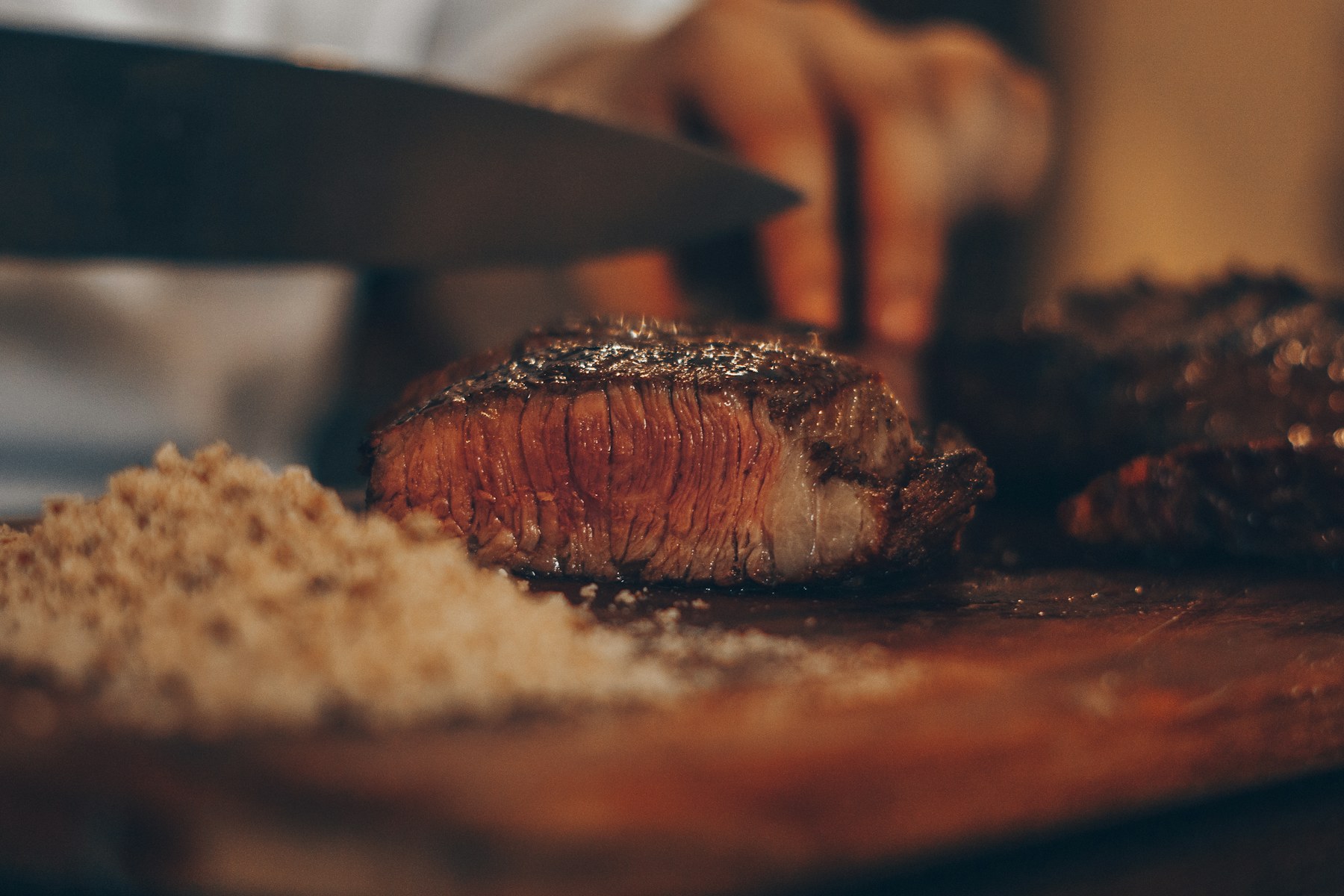
Identify the grain before carving. If it changes direction, divide the steak into sections and rotate each before slicing. Cutting across the fibers cannot repair overcooking, but it can make a strongly grained cut easier to chew.
Safe thawing choices are the refrigerator, cold water in leakproof packaging changed regularly, or the microwave followed by immediate cooking. Do not thaw steak on the counter. Refrigerate perishable leftovers promptly in a shallow covered container. When reheating leftovers, USDA guidance calls for 165°F; often the best quality choice is to slice only what you need and warm it gently.
Continue with how to cook steak, steak temperature, cast iron steak, oven baked steak, steak cuts, steak dinner ideas for the cuts, temperature rules and adjacent methods behind this technique.
How Long Can You Freeze Steak?
Food kept continuously frozen at 0°F remains safe indefinitely, according to USDA; recommended freezer periods describe quality rather than a safety deadline. Flavor, color and texture decline faster when air reaches the surface, the freezer cycles warm or the steak was poorly wrapped.
- Freeze early. Freeze while the steak is still within its refrigerated use window, not as a rescue for questionable meat.
- Overwrap for storage. Add a freezer-rated airtight layer around retail film or vacuum packaging and press out excess air.
- Label the facts. Record cut, weight and freeze date so older packages are used first.
- Thaw safely. Use the refrigerator, cold water in leakproof packaging, or microwave followed by immediate cooking.
Where This Guide Fits
This page supports the broader how to cook steak guide. Use that pillar page for the complete cut family, buying framework and links to every closely related article.
Useful next reads include Caveman Steak for nearby cuts, methods and decisions.
Frequently Asked Questions
Is frozen steak safe?
It can be when the heat source is food-safe, cross-contamination is controlled and the coolest center reaches the applicable safe temperature measured with a thermometer.
What cut works best for frozen steak?
Choose an individually frozen, evenly thick steak with intact wrapping and little exposed freezer burn; a boneless strip or sirloin is simpler to manage than an irregular bone-in cut.
Can I cook by minutes per side?
Use time only to schedule the first check. Thickness, starting condition and actual heat output vary, so internal temperature must make the final decision.
How should the steak be sliced?
Rest first, identify the grain and carve across it. Divide cuts whose grain changes direction before slicing each section.
Sources & further reading
- USDA FSIS — Safe Minimum Internal Temperature Chart — Official minimum temperatures for intact beef steaks and reheated leftovers.
- USDA FSIS — Beef From Farm to Table — Official freezing, thawing, cooking and storage guidance for beef.
- USDA FSIS — The Big Thaw — Official refrigerator, cold-water and microwave thawing methods.
- USDA FSIS — Freezing and Food Safety — Official freezing, packaging, thawing and safety guidance.