What Is Prime Ribeye?
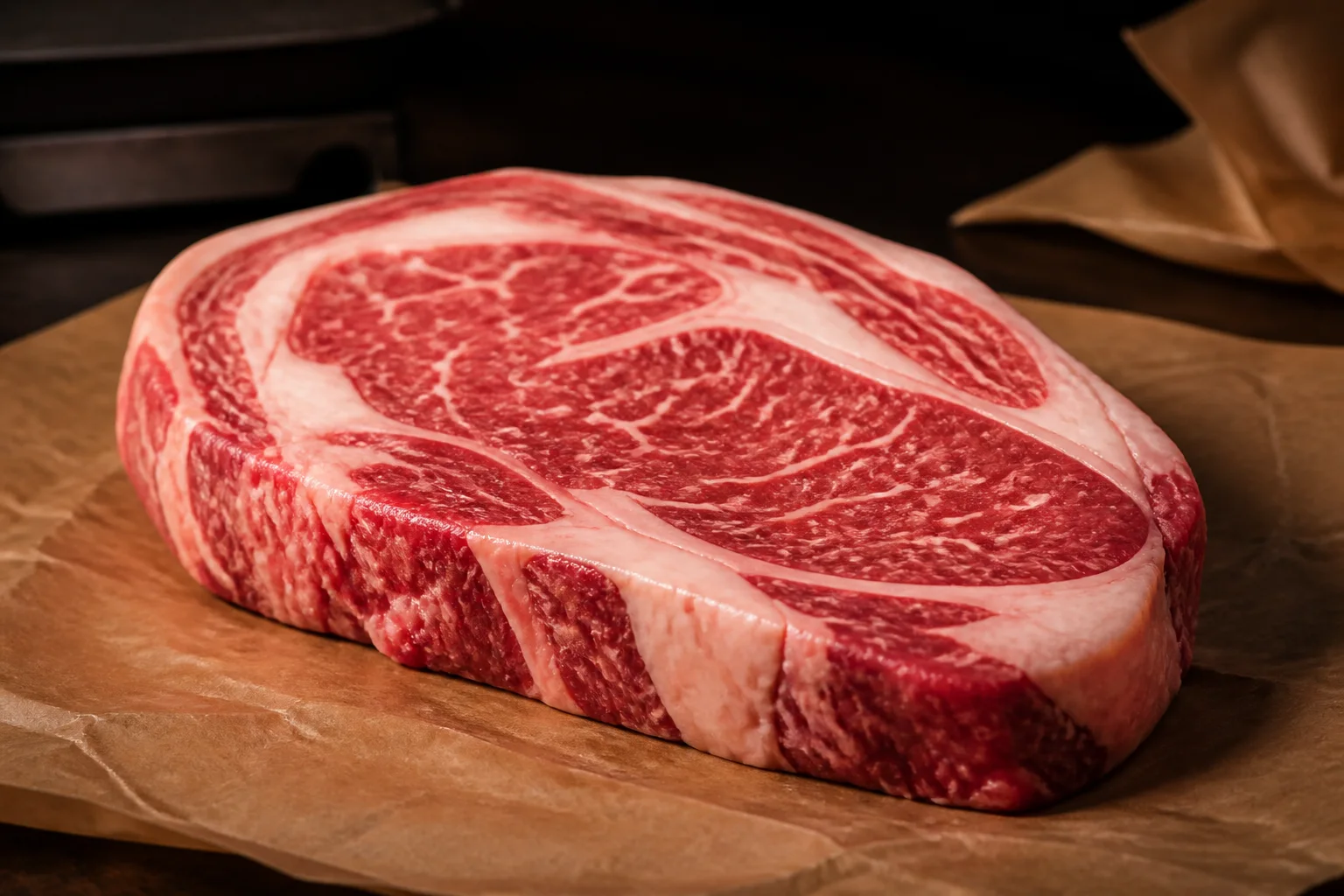
Prime ribeye is ribeye from beef graded USDA Prime. Ribeye comes from the rib section and includes the longissimus eye, usually some spinalis cap and seams of fat. The word Prime describes the quality grade of the carcass; ribeye describes the cut. For the complete muscle map, start with our ribeye guide.
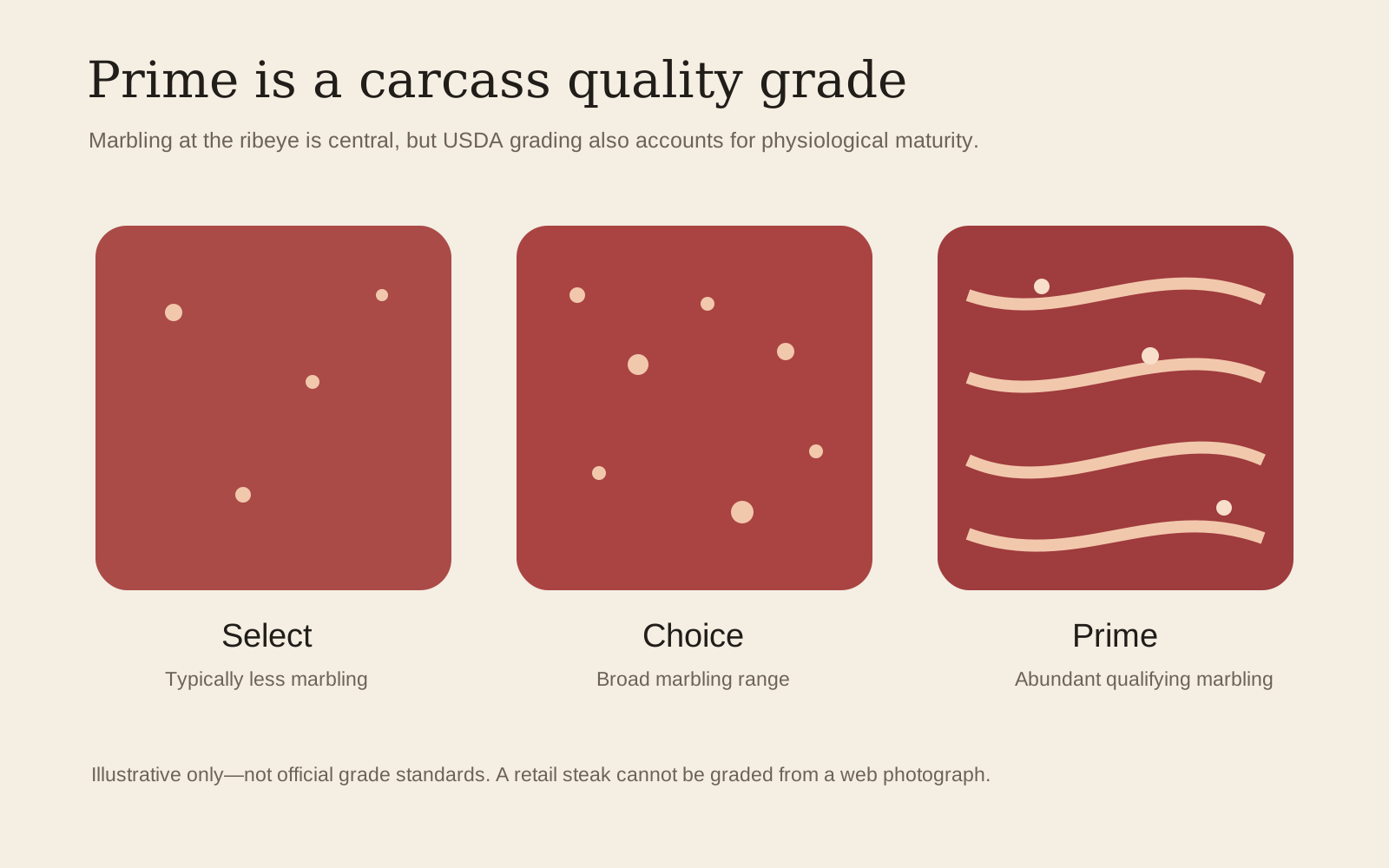
USDA beef quality grading is voluntary and performed through an official grading service. Prime is the highest of the quality grades commonly seen in retail and foodservice. It is associated with abundant qualifying marbling in young beef, but the standard is more formal than simply looking at white flecks. Physiological maturity is part of the grade determination.
A photograph cannot establish an official grade. Packaging, a case label or seller documentation should identify USDA Prime. A beautifully marbled ungraded steak may eat very well; it should not be marketed as officially Prime without the grade claim being supported.
Prime Ribeye Is Not the Same Thing as Prime Rib
Prime rib is a preparation and retail name for a rib roast. It can be USDA Prime, Choice or another grade. Prime ribeye is an individual ribeye steak carrying a Prime grade claim. The shared word causes needless confusion: one refers to a familiar roast format, the other to quality grade plus cut.
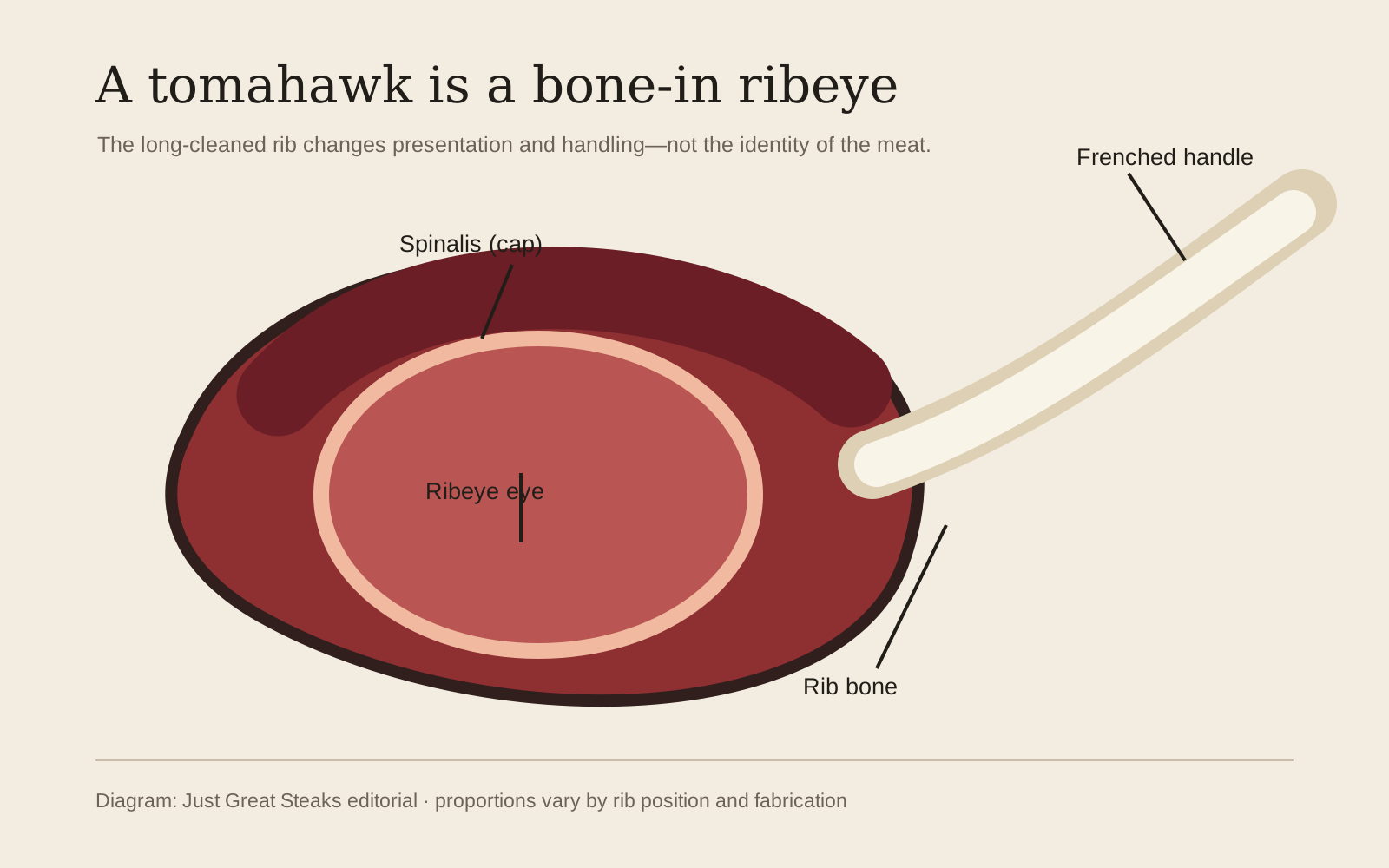
Bone status is separate again. Prime ribeye may be boneless, carry a short rib as a bone-in ribeye, have a cowboy-style bone or arrive with the long handle of a tomahawk. Bone length affects handling, pan fit, presentation and edible yield. It does not create a higher USDA grade.
| Label | What it tells you | What remains unknown |
|---|---|---|
| USDA Prime | Official carcass quality grade | Cut, thickness, aging and rib position |
| Ribeye | Muscle group and rib-section cut | Official grade and production program |
| Prime rib | Rib-roast format or preparation | Whether the beef itself graded Prime |
| Bone-in / cowboy / tomahawk | Fabrication and bone presentation | Grade, edible yield and cooking quality |
Rib Position, Eye and Cap Still Matter
A grade does not make every ribeye anatomically identical. Chuck-end steaks tend to have a larger spinalis cap and more complex seams; loin-end steaks often show a broad, tidy eye with less cap. Cap lovers may prefer the chuck end, while cooks wanting uniform pan contact may choose a center or loin-end steak.
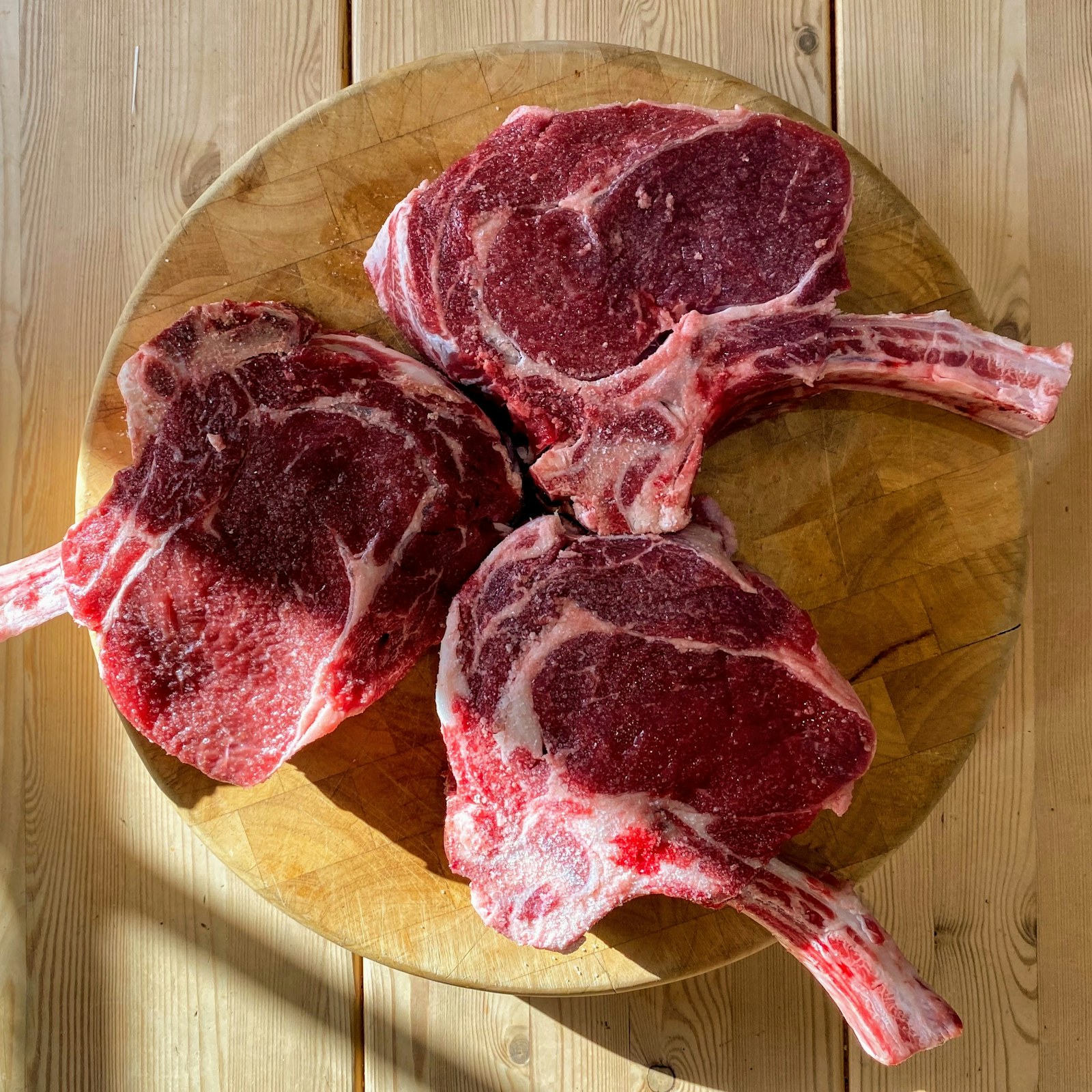
Inspect marbling distribution, not only the largest fat seam. Fine intramuscular flecks across the eye are more useful than a single island of exterior fat. The cap should look fresh and securely attached. A narrow tail can overcook before the eye, so decide whether to tie it, protect it over lower heat or trim it for a separate cook.
How to Choose a Prime Ribeye
- Verify the grade claim. Look for the USDA shield or clear seller documentation; do not infer Prime from price or a loose use of “premium.”
- Inspect the actual steak. Compare fine marbling, cap size, thickness, taper and trimming rather than relying on a glamour photograph.
- Ask for rib position. A knowledgeable butcher can often distinguish chuck-end, center and loin-end characteristics.
- Clarify aging. Wet-aged and dry-aged are different processes. Ask for useful details rather than assuming older is always better.
- Compare edible value. A short-bone steak may offer more meat per listed pound than a long-bone showpiece.
Price varies with region, seller, fabrication, aging and supply, so there is no timeless national number that makes a steak a bargain. Compare like with like: same grade, similar cut position, thickness, bone status and aging. If a product is sold online, include mandatory shipping and the stated weight range.
Choose the format around the meal. Boneless Prime ribeye maximizes pan contact and edible yield. A cowboy steak gives a compact bone-in presentation. Tomahawk emphasizes ceremony. For very high marbling and smaller portions, compare the labeling framework in our Wagyu ribeye guide rather than treating Wagyu and Prime as rungs on one universal scale.
How to Cook Prime Ribeye
Salt in advance and refrigerate uncovered when practical. Before cooking, blot the surface completely dry. A dry surface browns sooner, which protects the center from the prolonged high heat needed to evaporate surface moisture. Pepper can go on before cooking for a toasted edge or after the hard sear for a cleaner aroma.
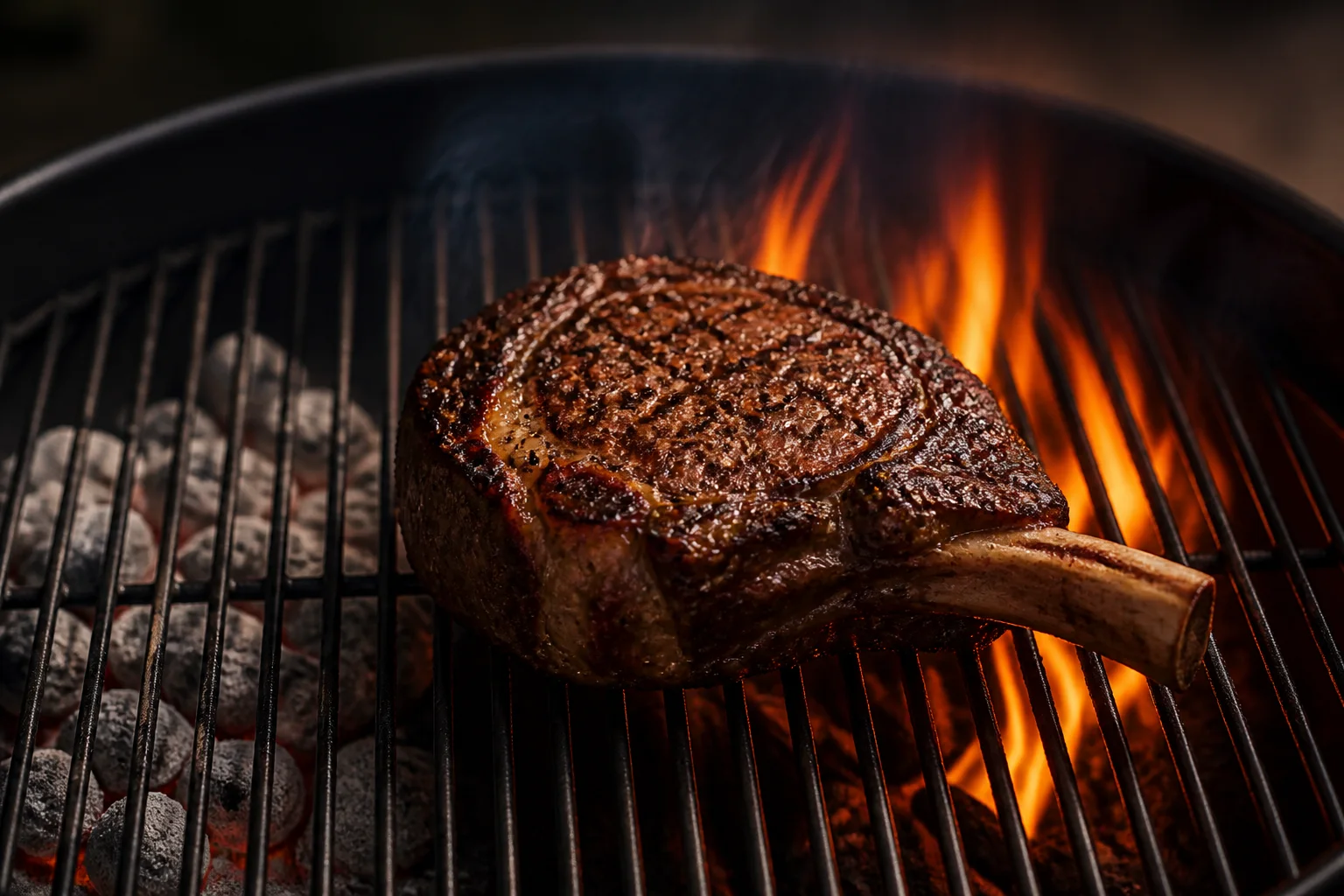
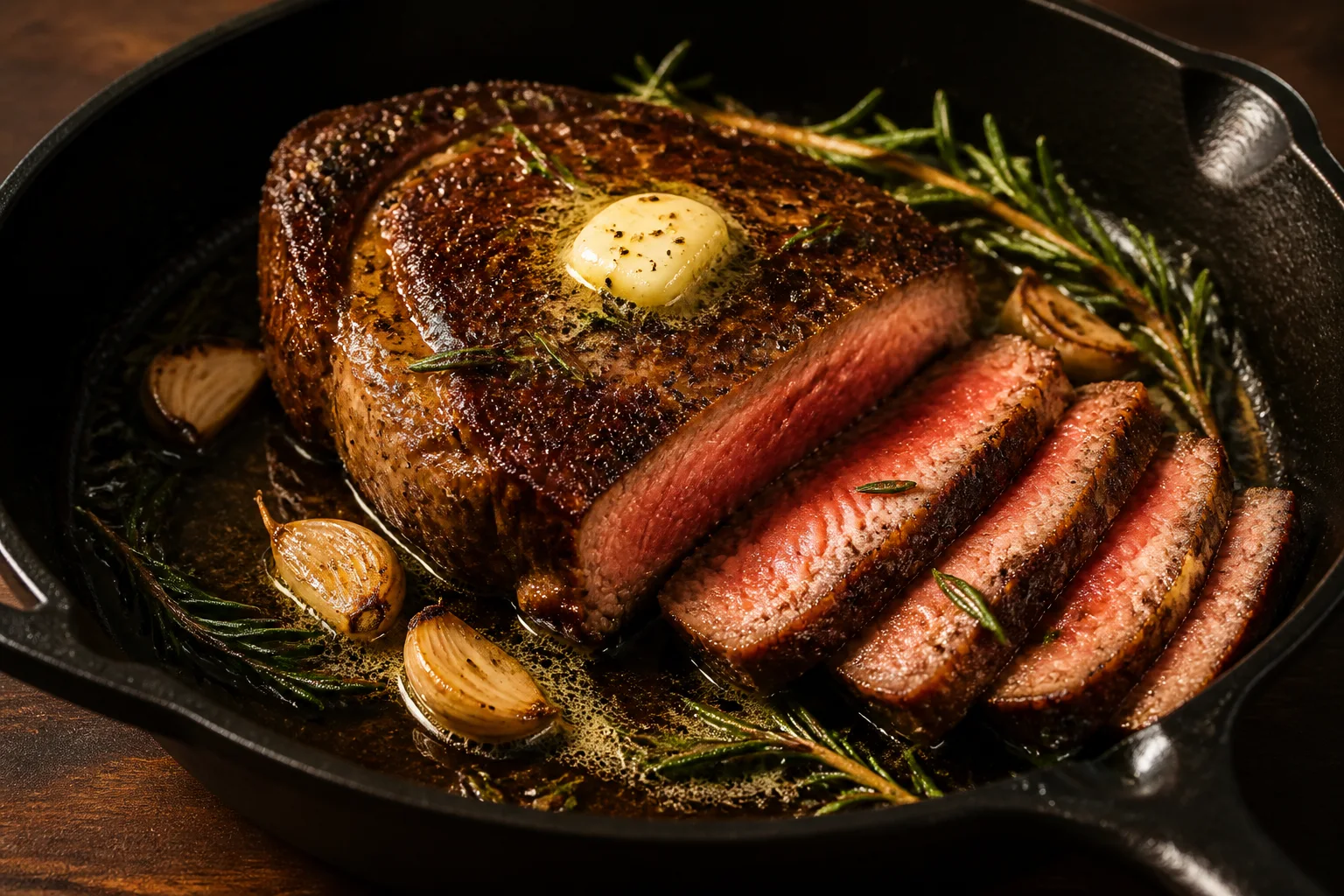
For a medium-thick boneless steak, follow the controlled cast-iron ribeye method: preheat gradually, use only a thin film of neutral oil, turn frequently and lower the heat before adding butter. For a very thick or bone-in steak, reverse searing creates a more even interior. On a grill, keep a genuine indirect zone because rendered Prime ribeye fat can ignite.
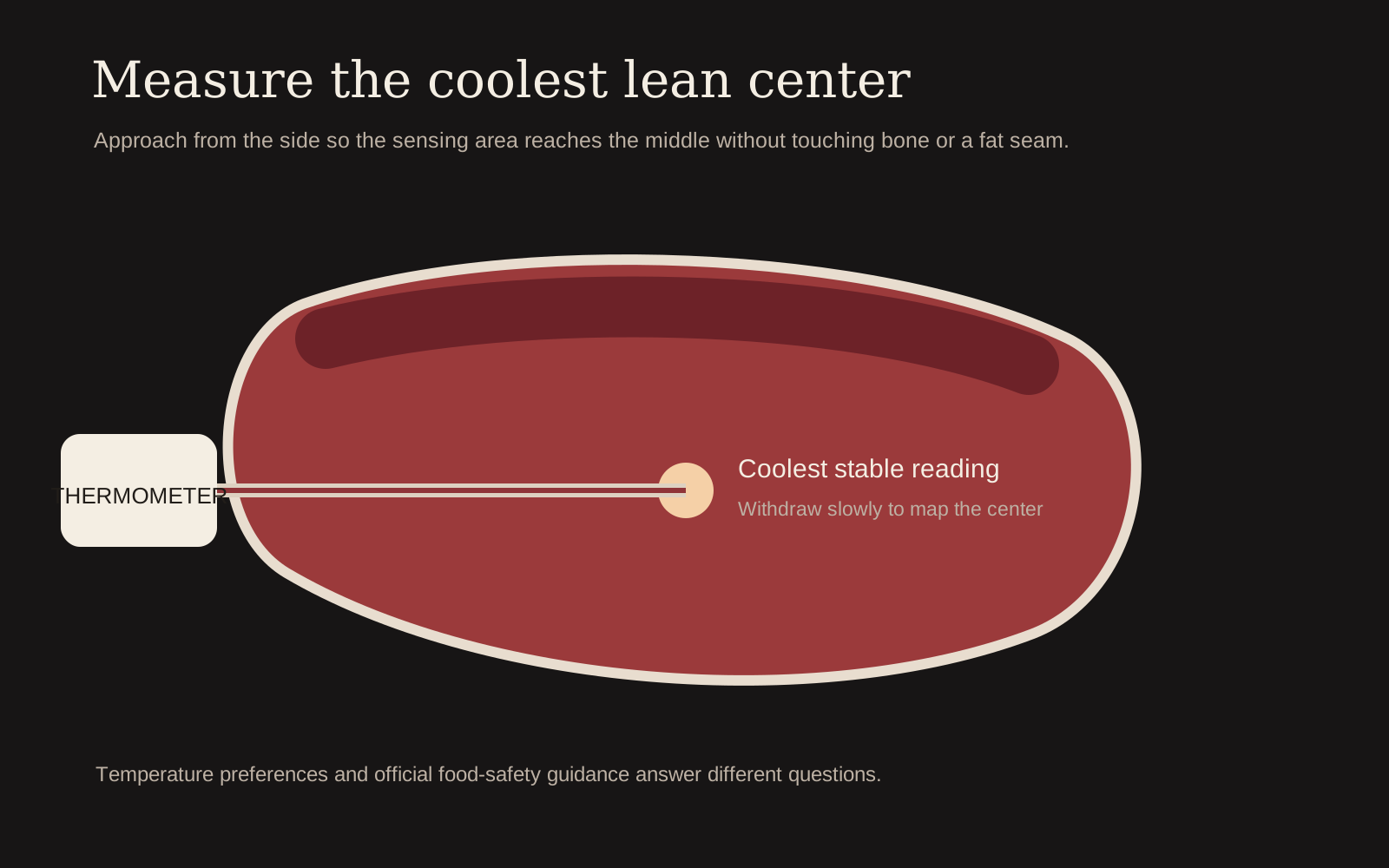
Check the center of the eye from the side and avoid a fat seam or bone. The cap is thinner and may run warmer. Remove the steak with carryover in mind, rest on a rack or warm board and carve the eye and cap across their respective grain directions.
When Prime Is—and Is Not—the Best Buy
Prime makes sense when abundant marbling is the experience you want and the steak is fabricated well. Ribeye is already a rich cut, so the jump from a good Choice steak may be more about depth and fat distribution than a simple tender-versus-tough contrast. Taste preference matters.
A well-shaped Choice ribeye can be a better dinner than a thin, tapered or poorly trimmed Prime steak. Likewise, dry-aged flavor, grass-fed production, breed program and traceability answer different buying priorities. No single label replaces inspection.
For a fair home comparison, buy steaks of similar rib position, thickness and bone status. Salt them by weight, use the same heat and pull at the same measured center temperature. That experiment teaches more than comparing menu adjectives or photographs.
USDA Prime Ribeye: Verify Both Grade and Cut
USDA Prime ribeye combines two separate facts: ribeye identifies the rib-section steak, and USDA Prime identifies an official quality grade. The phrase prime ribeye steak should not be inferred from a restaurant's use of prime rib, a house label or unusually heavy marbling alone.
Verify the grade evidence, then inspect cap size, eye shape, fine marbling, seam fat and thickness. A Prime shield does not guarantee that every ribeye has the same muscle balance or that a thin, poorly trimmed steak is the best value. Compare it with the broader USDA Prime steak guide and the ribeye anatomy guide before choosing.
Where This Guide Fits
This page supports the broader Ribeye Steak guide. Use that pillar page for the complete cut family, buying framework and links to every closely related article.
Useful next reads include Bone-In Ribeye Steak, Cowboy Steak, Ribeye Steak Recipe, Tomahawk Steak, and steak temperature for nearby cuts, methods and decisions.
Frequently Asked Questions
Does Prime ribeye mean prime rib?
No. Prime is the USDA quality grade and ribeye is the steak cut. Prime rib is a rib-roast name and the roast itself may carry a different grade.
Is every highly marbled ribeye USDA Prime?
No. Official grade claims require grading and documentation. Marbling is central, but USDA quality grading also considers maturity.
Is bone-in Prime ribeye better than boneless?
Neither is universally better. Bone-in emphasizes presentation and changes geometry; boneless maximizes pan contact and edible yield. Grade and muscle quality can be equivalent.