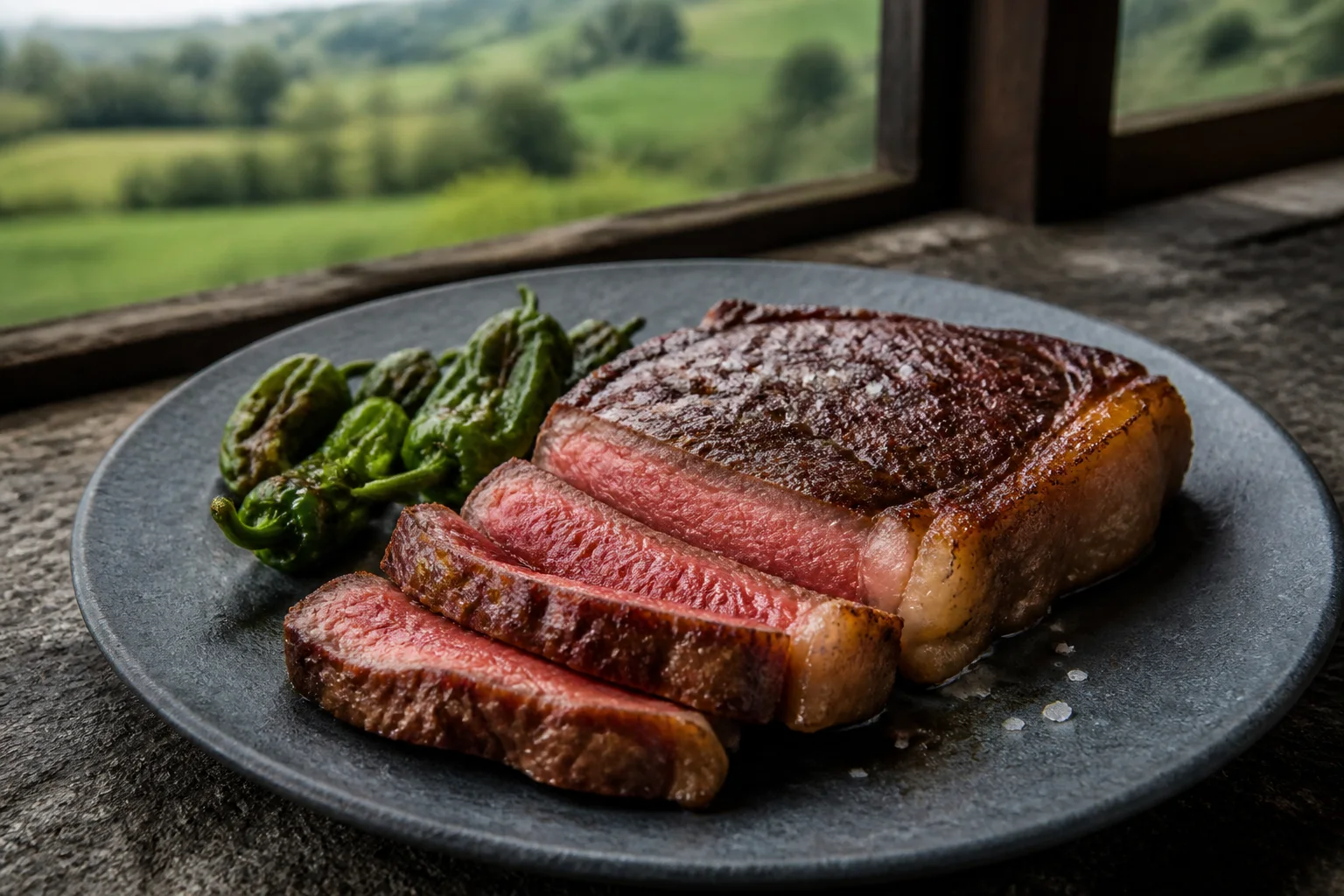
What Galician Beef Steak Means
Galician beef steak is a retail steak associated with Galicia in northwestern Spain; protected products must meet the specification of the exact registered geographical indication used. The words describe one part of the product, not every quality that matters at the table.
Galician does not automatically mean retired dairy cow, extreme dry aging, one breed, one grade or the same specification as every other Galician protected name. Cut, grade, marbling, maturity, aging, origin, raising claims and storage condition are separate attributes. A responsible seller should identify them separately rather than compressing everything into “premium.”
Use the label as a set of claims to verify. Our steak buying guides explain cut and technique; this page concentrates on what the claim can and cannot establish.
Read the Exact Terms
| Term | What it tells you |
|---|---|
| Ternera Gallega PGI | Protected specification for qualifying Galician veal/beef categories |
| Vaca Gallega–Buey Gallego PGI | Separate protected indication for qualifying Galician cow and ox beef |
| Maturation | Post-slaughter aging claim that should state method and duration |
| Rubia Gallega | Breed term that is not interchangeable with every Galician regional label |
Read the complete label, including the USDA shield, establishment information, country statements and the name of any private program. Similar typography does not make two claims equivalent. If the product page omits the actual grade or cut, ask before paying a premium.
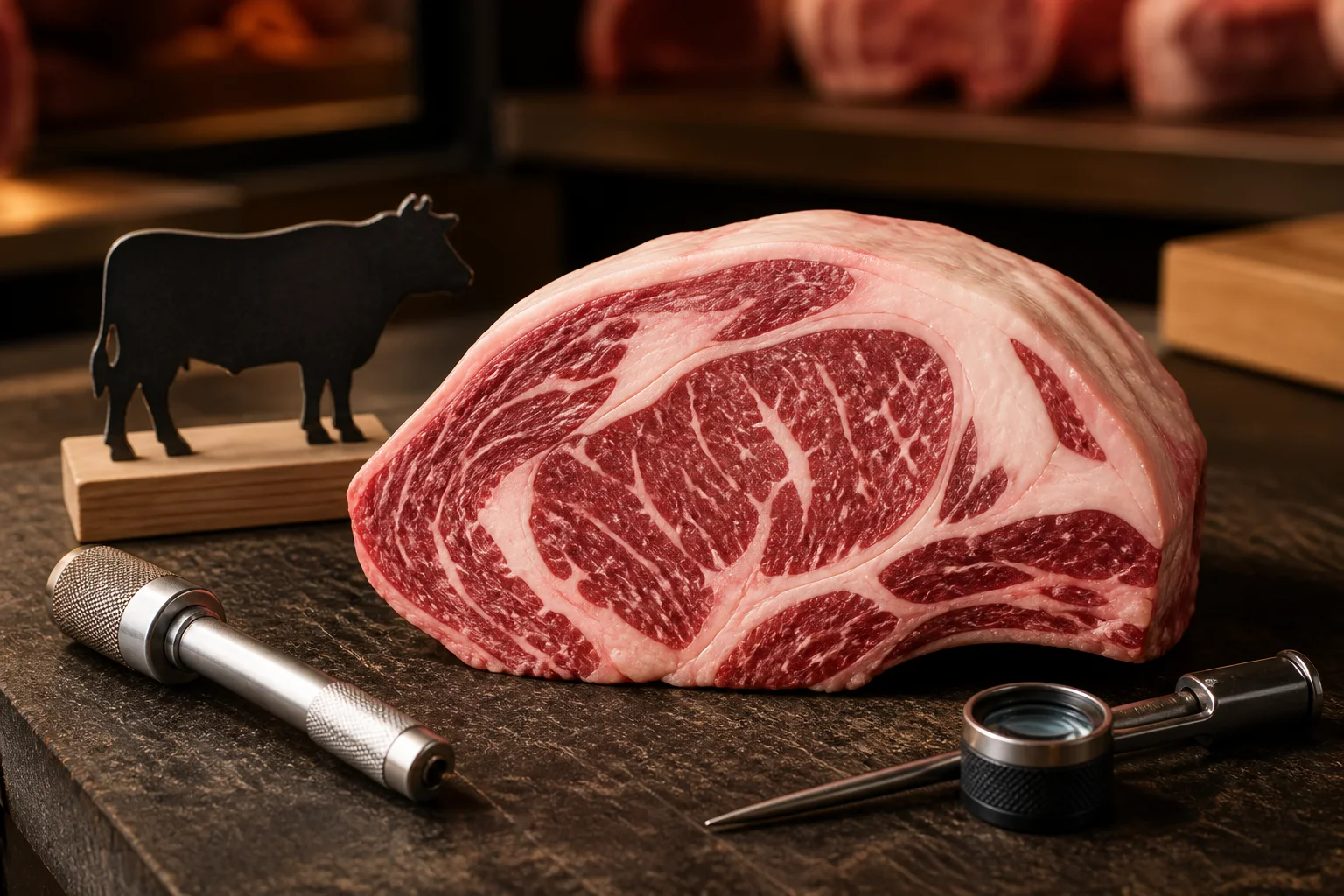
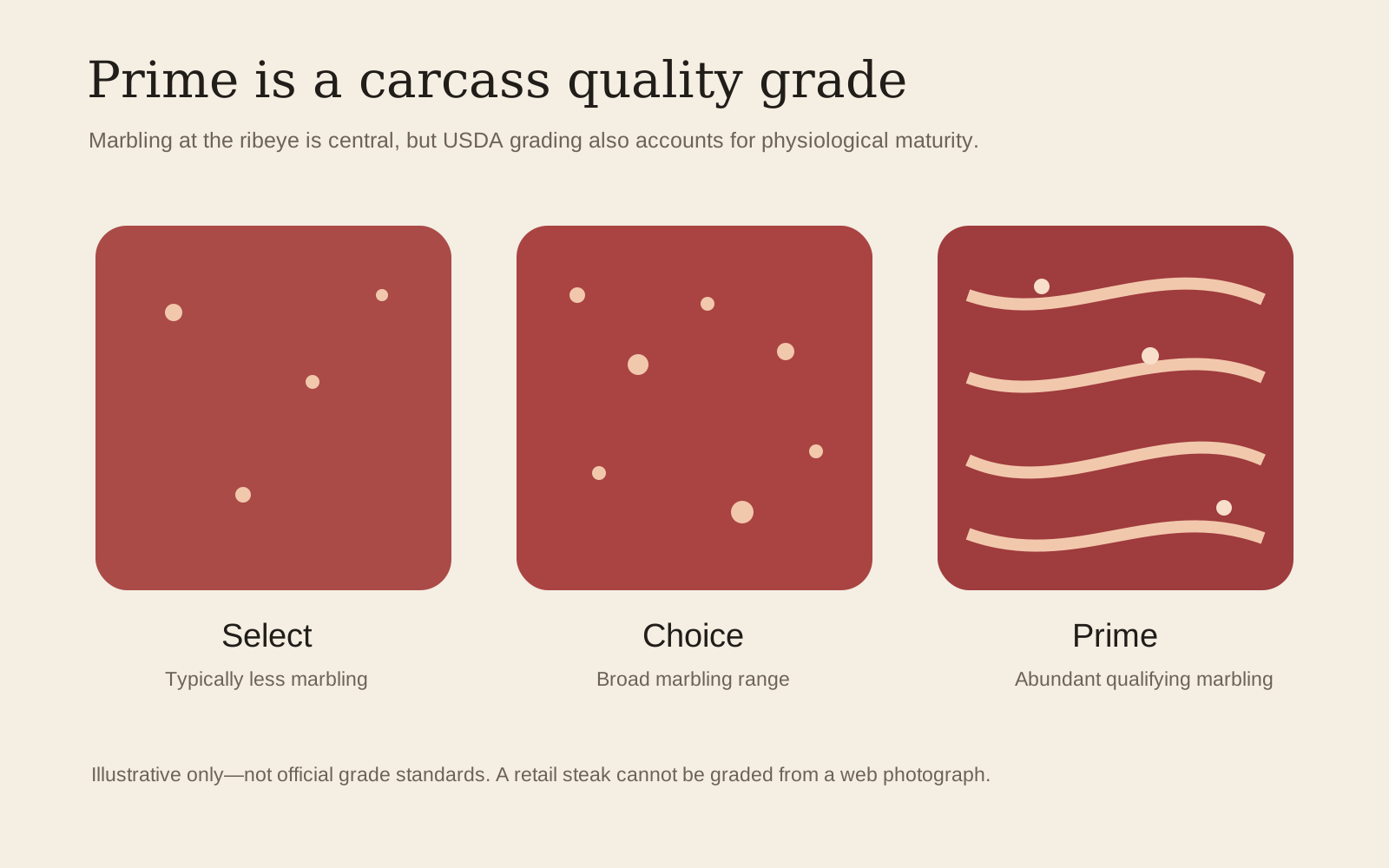
Official grade cannot be assigned from a retail photograph. Likewise, a breed name does not reveal the percentage of qualifying ancestry unless a program defines it. Documentation is more useful than black packaging, ranch imagery or an unsupported superlative.
How to Buy Galician Beef Steak
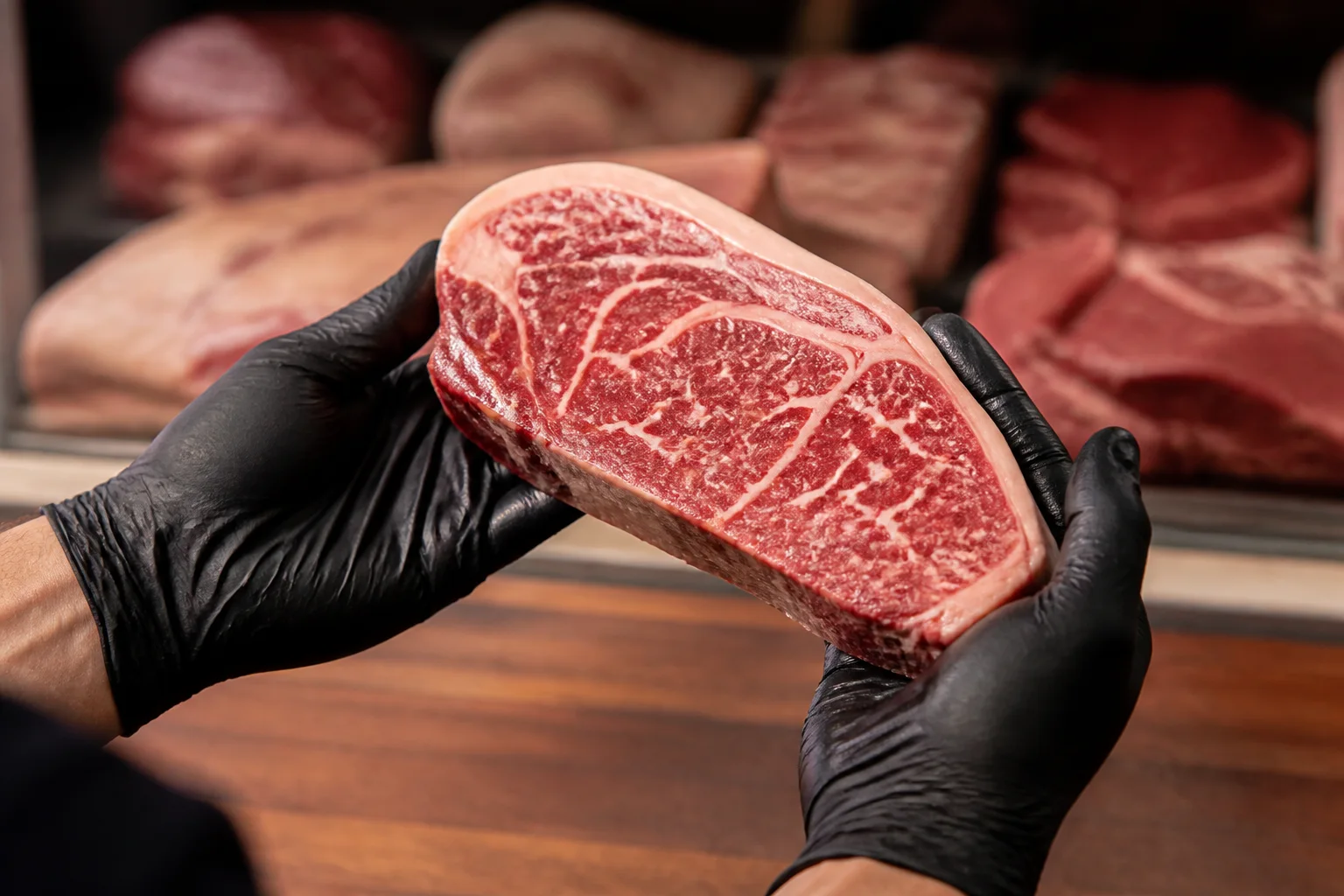
Identify whether the label states Ternera Gallega or Vaca Gallega–Buey Gallego, then verify certification, category, cut, maturation method, trim, weight and storage instructions. Then inspect the actual steak: even thickness, useful fine marbling, clean fabrication, manageable hard seams and packaging integrity.
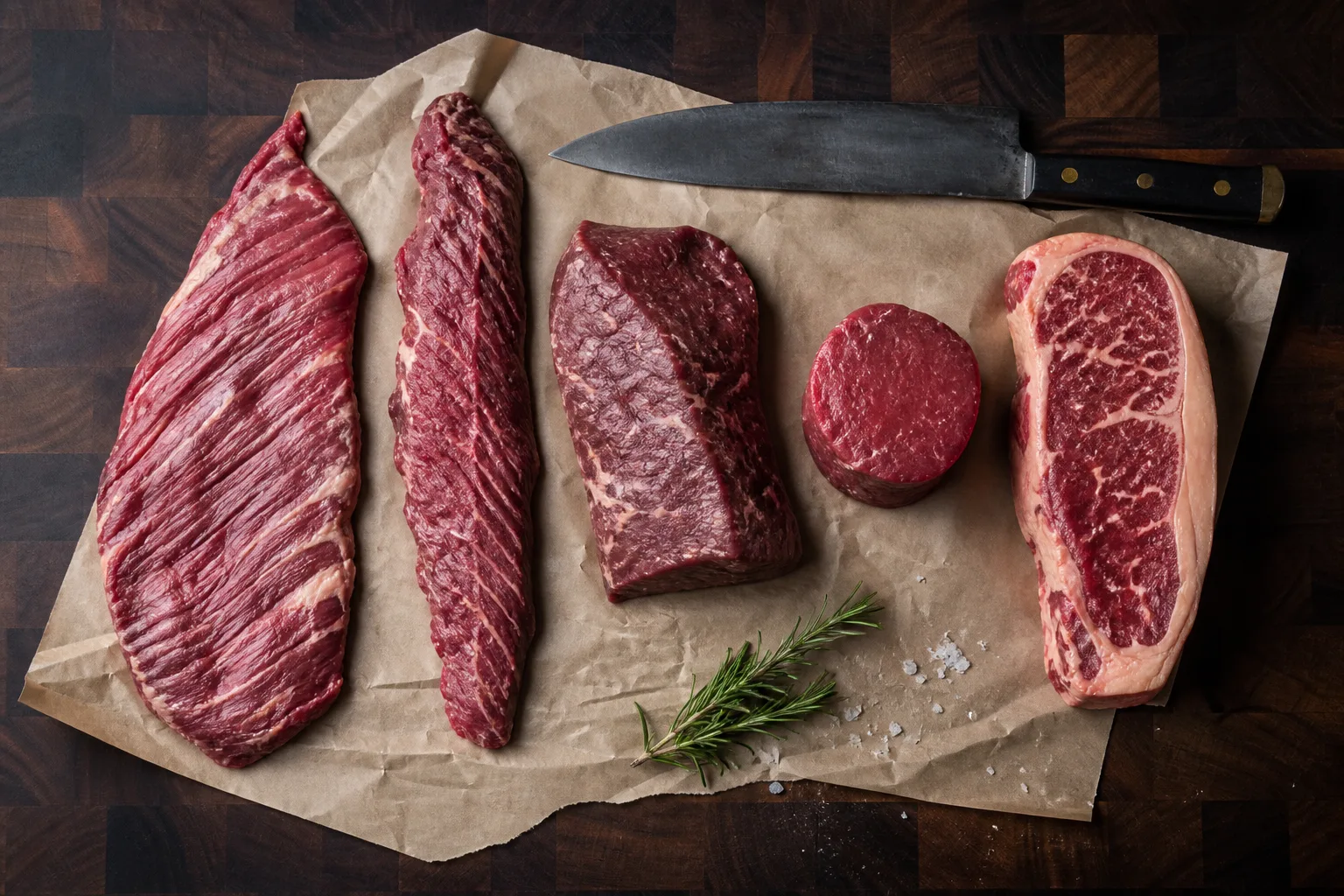
- Name the cut. Ribeye, strip, sirloin and tenderloin cook differently regardless of the label claim.
- Verify the claim. Look for the official shield, program name or documentation that supports the words used.
- Compare like with like. Use the same cut, grade, bone format, aging and weight range before comparing price.
- Check edible yield. Bone, exterior fat and required trimming can change the true portion cost.
- Keep the cold chain. Proper packaging and temperature control matter more than prestige once the steak leaves the seller.
What the Label Changes in the Kitchen
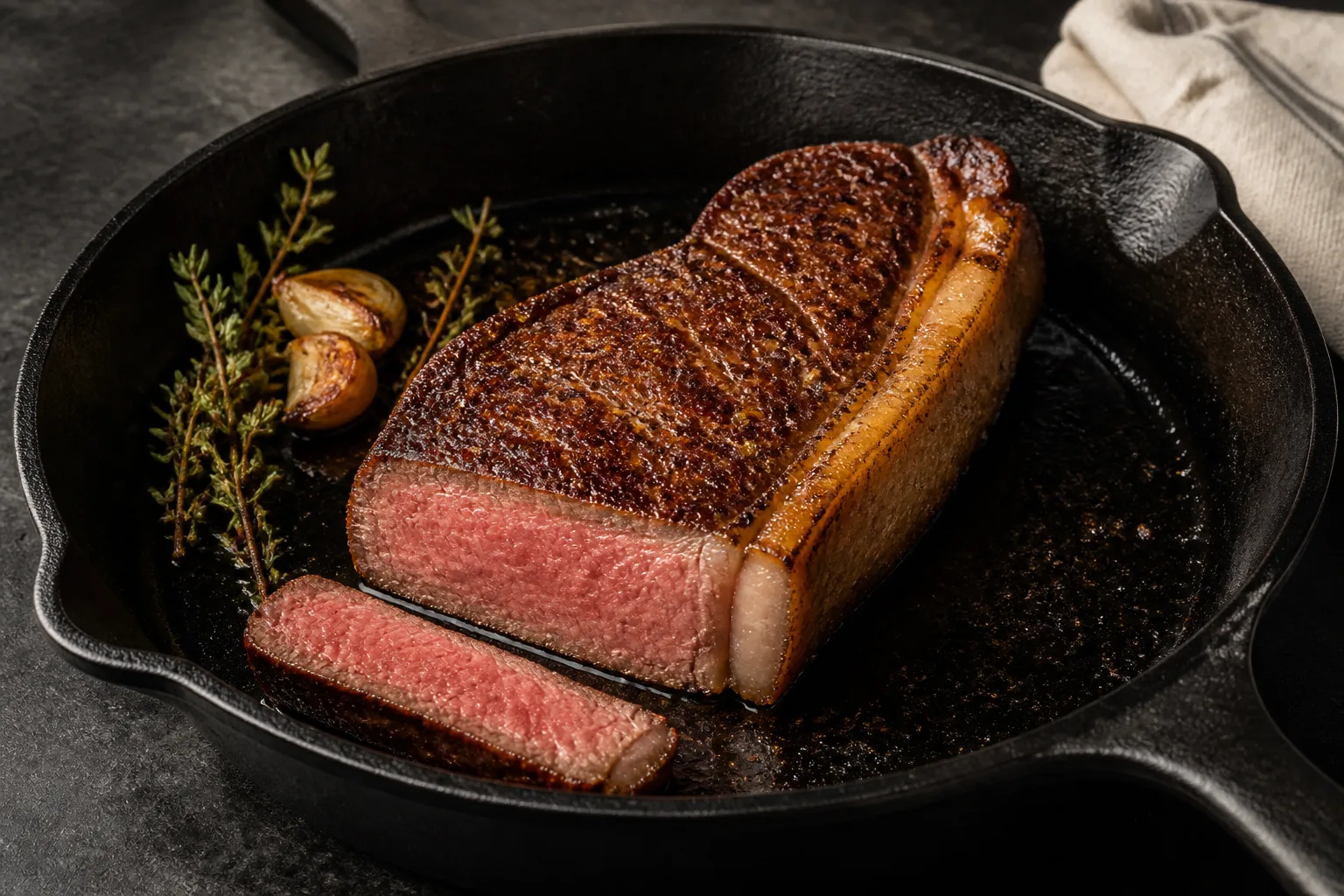
Treat a thick, mature-beef steak according to its actual cut and aging: temper the sear with a cooler zone, render the fat edge, measure the center and carve across the grain. There is no single appliance setting for a breed or quality word. Choose the method by cut and thickness, dry the surface and measure the center.
Highly marbled steaks often tolerate hard browning but can trigger flare-ups. Lean examples have a narrower thermal margin. Start with the general steak cooking method and use the cut-specific guide for geometry.
Is the Premium Worth It?
Value depends on whether the documented claim matches your priorities and whether the steak itself is well cut. A precise label on a thin, tapered or poorly trimmed steak does not guarantee a better dinner than a carefully fabricated alternative.
Run a fair comparison with the same cut, similar thickness and the same measured pull temperature. Salt by weight and use the same pan or grill. That isolates the beef more honestly than comparing different cuts, sauces and doneness levels.
Separate Origin, Aging and Cut Quality
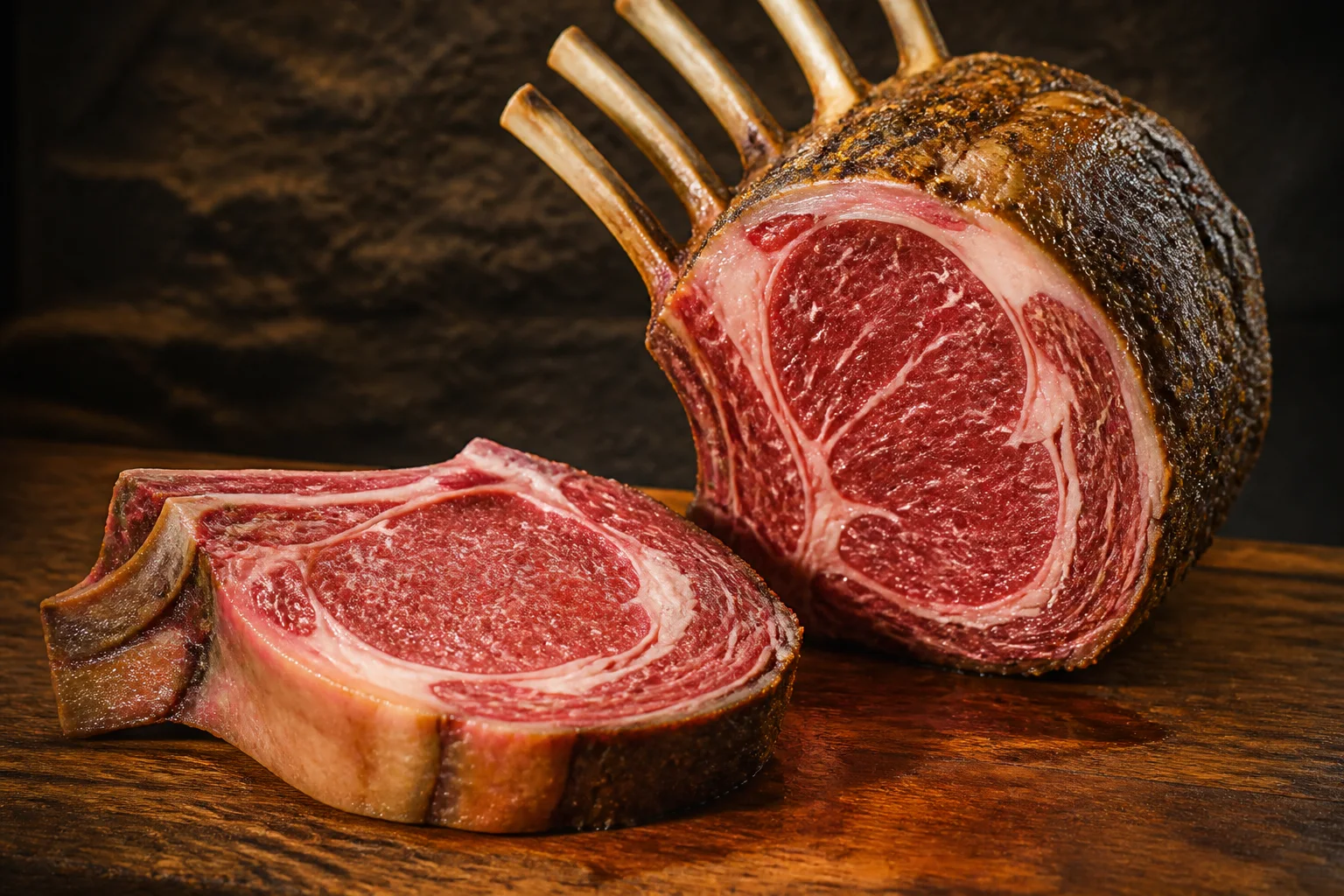
Maturation is frequently emphasized when Galician beef is sold abroad, but an aging duration is not a universal quality score. Dry aging loses exterior trim and moisture while developing concentrated aromas; wet aging occurs in sealed packaging and produces a different profile. Ask for the method, stated duration, storage control and whether the quoted weight is before or after final trimming.
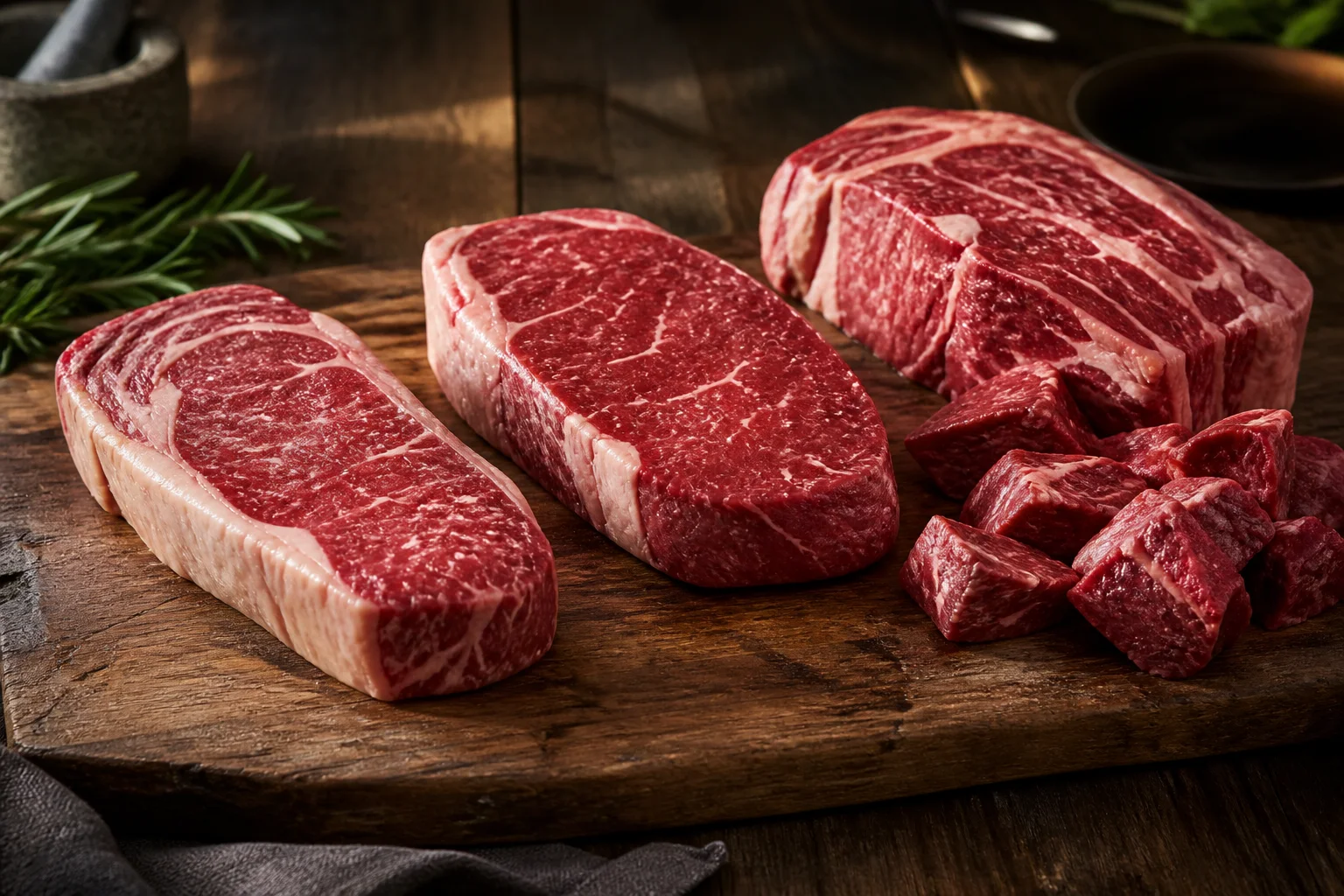
Then evaluate the muscle. A mature-cow rib steak, strip steak and sirloin steak can share origin yet differ sharply in fat seams, connective tissue and usable yield. Broad yellow fat or dark lean may be characteristic of some mature animals, but color alone cannot verify breed, protected status, age or safe storage. Certification and cold-chain condition carry more evidentiary weight than a dramatic photograph.
| Buying detail | Why it matters | Useful question |
|---|---|---|
| Exact PGI name | Defines the protected specification being claimed | Which certification mark and category appear on the label? |
| Cut and bone format | Controls tenderness, yield and cooking geometry | Is this rib, strip, sirloin or another muscle? |
| Maturation | Changes aroma, moisture and trim loss | Was it dry- or wet-aged, and for how long? |
| Final trimmed weight | Allows a fair price comparison | Does the quoted weight include bone or required trim? |
For a thick steak, render the exterior fat over moderate heat before the hard sear, keep a cooler zone available and probe the lean center from the side. Rest, separate muscles if the grain changes and carve across each fiber direction. A bold aged aroma can support coarse salt and grilled peppers, but sauce cannot repair burnt fat or a center cooked beyond its target.
Where This Guide Fits
This page supports the broader USDA Prime Steak guide. Use that pillar page for the complete cut family, buying framework and links to every closely related article.
Useful next reads include Prime Rib Steak, Angus Steak, Angus Ribeye Steak, Prime Ribeye Steak, and Grass-Fed Steak for nearby cuts, methods and decisions.
Frequently Asked Questions
Is Galician Beef Steak always more tender?
No. Tenderness begins with the muscle and is affected by aging and cooking. A label claim does not make every cut equally tender.
Does Galician Beef Steak guarantee USDA Prime?
Only an official USDA Prime grade claim establishes Prime. Breed, brand and marketing descriptions are separate.
How should I compare Galician Beef Steak?
Compare the same cut, grade, thickness, bone format, aging and edible yield, then inspect the actual steak.
Sources & further reading
- European Union — Ternera Gallega PGI specification — Official EU geographical-indication specification.
- European Union — Vaca Gallega–Buey Gallego PGI specification — Official EU geographical-indication specification for Galician cow and ox beef.
- Ternera Gallega — Certification — Certification and control context from the regulatory council.
- USDA FSIS — Safe Minimum Internal Temperature Chart — Official safety guidance for whole beef steaks and roasts.