Why Garlic Butter Burns
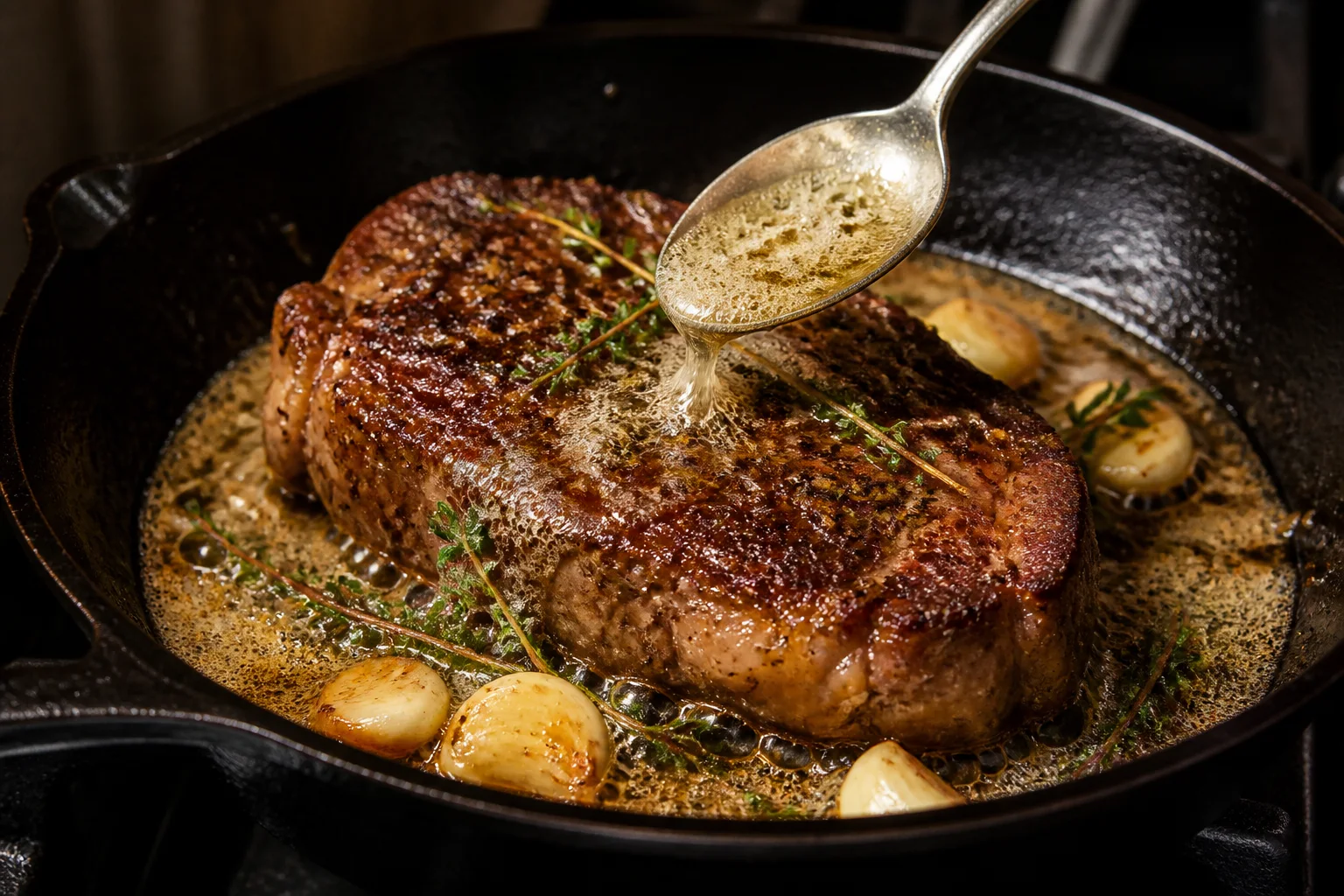
Whole butter contains milk solids that darken faster than neutral searing oil. Garlic burns faster still when finely chopped. If both go into a ripping-hot empty pan, bitterness arrives before a thick steak is ready.
Sear First, Baste Second
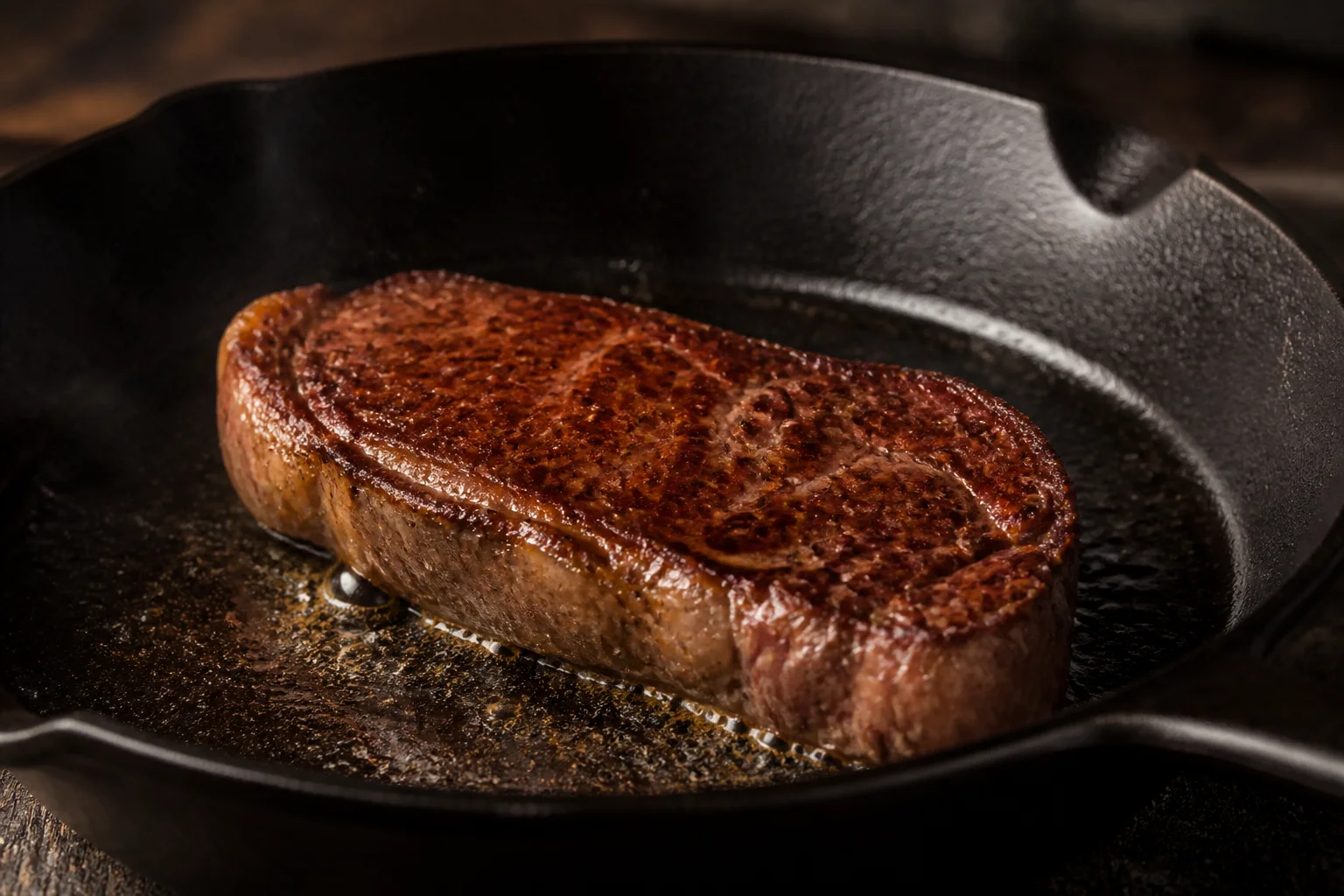
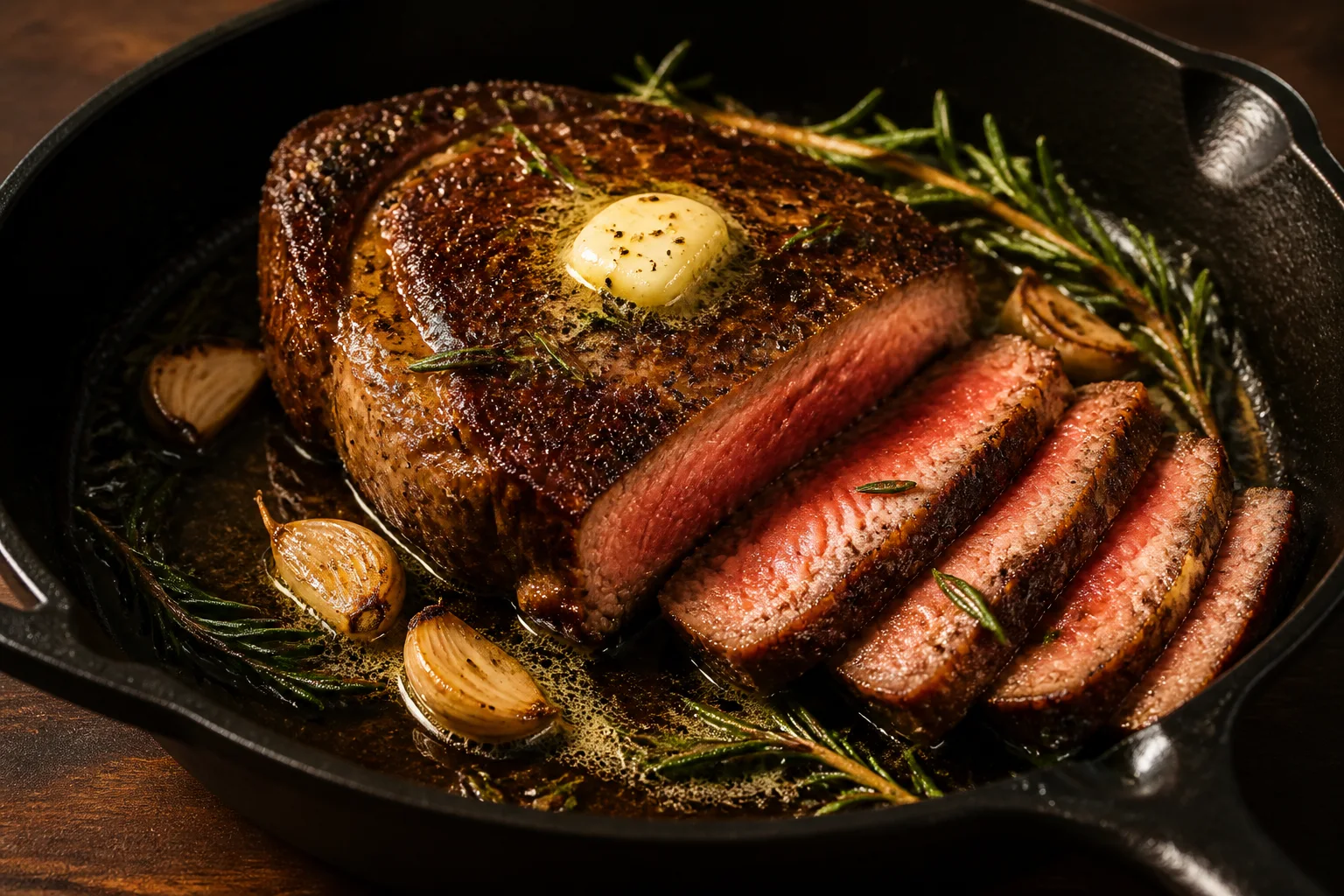
Pat dry and sear in a thin layer of high-heat oil using the cast-iron steak method. Once crust has formed, lower the burner and add butter, lightly crushed garlic and sturdy herbs. Tilt and spoon for 30–60 seconds, moving off heat if the solids race past hazelnut brown.
Which Steaks Benefit?
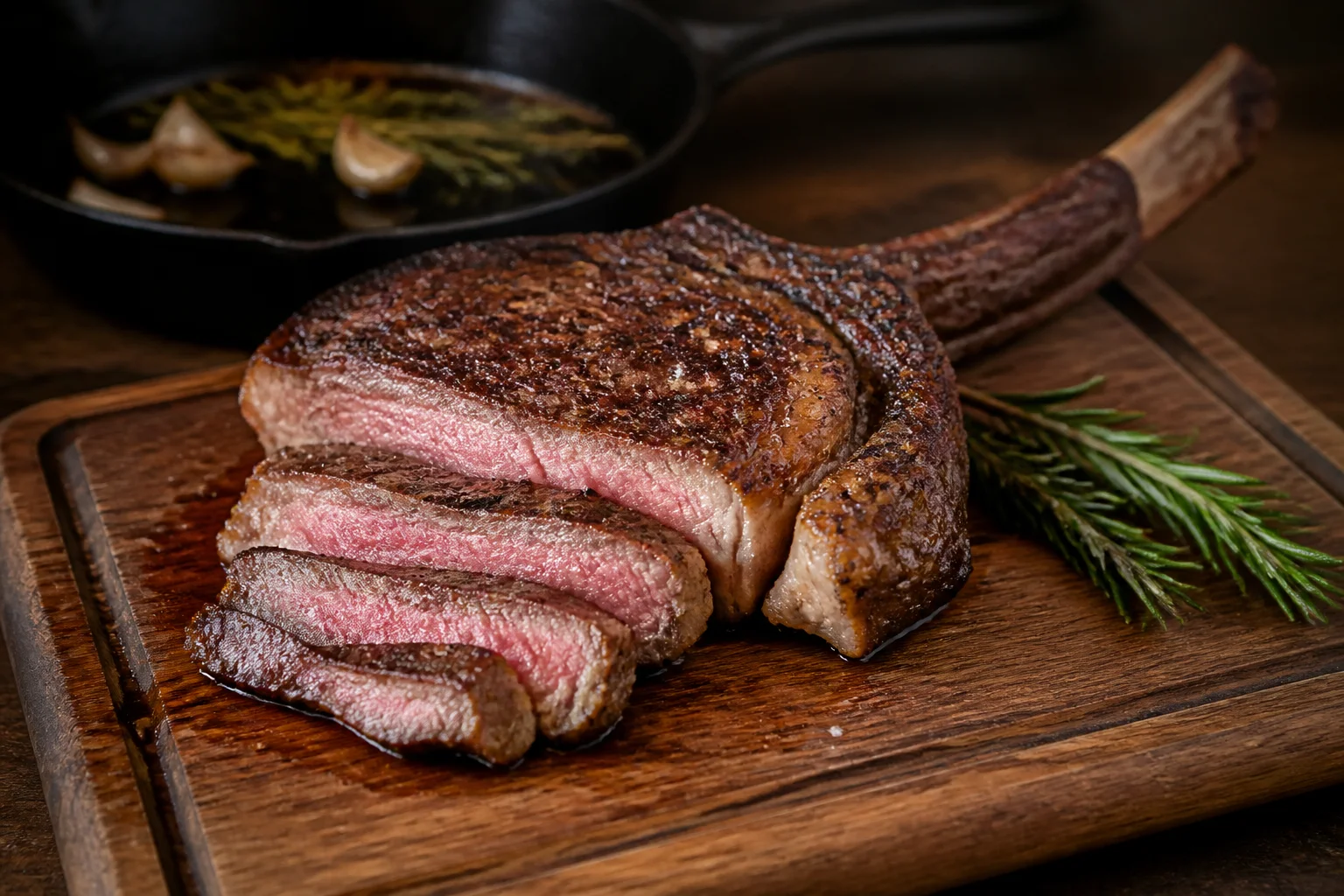
Lean filet and teres major welcome added fat. Ribeye needs only a small amount; highly marbled Wagyu may need none. For tomahawk, add butter after the final grill or skillet sear.
Compound Butter Alternative
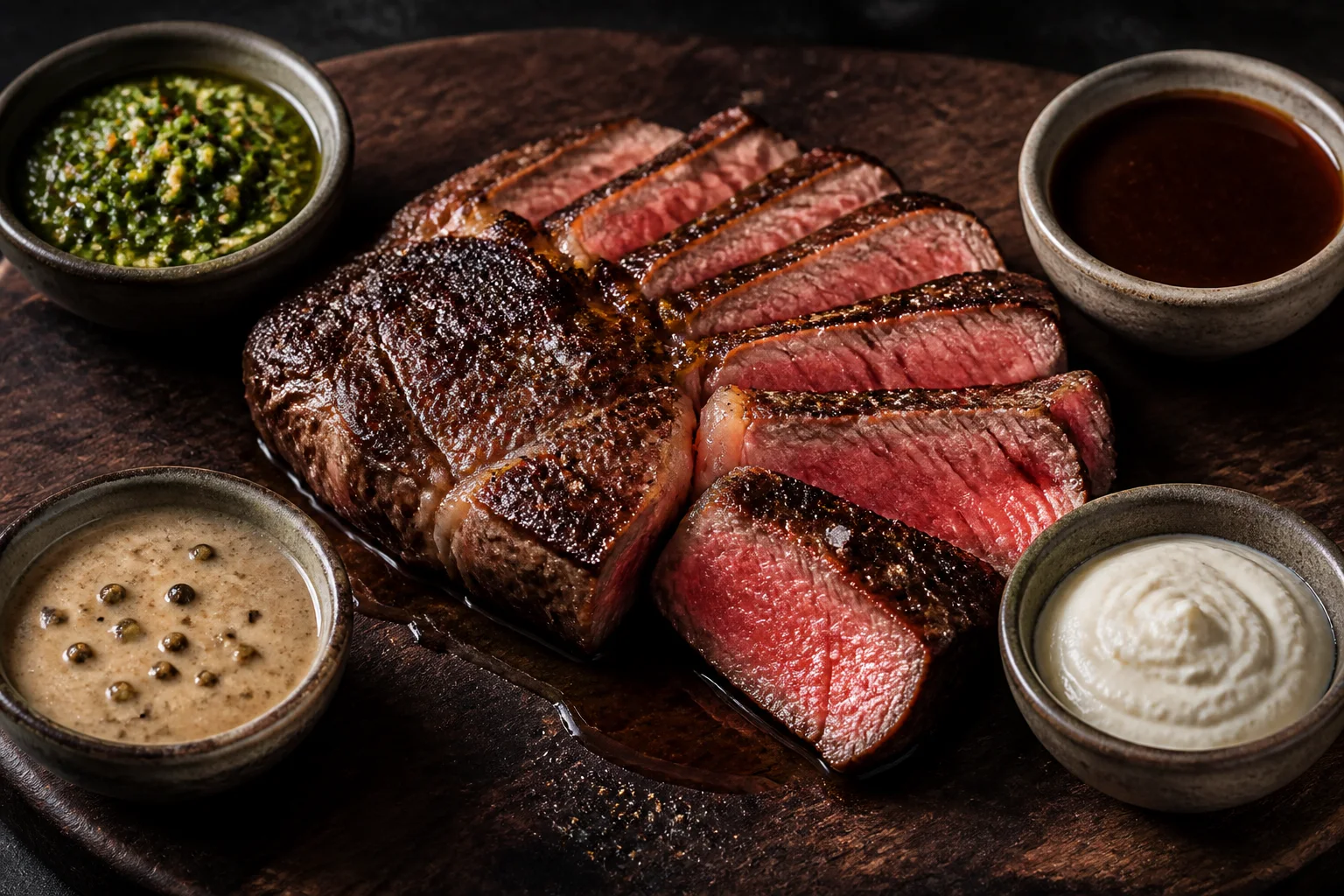
Mix softened butter with grated garlic, parsley, thyme and lemon zest, then place a small slice on the rested steak. This gives fresh aroma without exposing the butter to a smoking-hot pan. More pairing options appear in the steak sauce guide.
Butter Does Not Signal Doneness
Basting changes surface heat quickly. Continue checking the center with the temperature guide and move the steak out of the hot pan to rest.
Choose the Butter Finish for the Cooking Method
Pan basting works when the steak already has crust and the cook can lower heat quickly. A grilled steak is better finished with compound butter on the resting board, where it melts into the surface without falling through the grate. Smoked steak often needs lemon zest and herbs more than extra garlic, because strong raw garlic can cover delicate wood aroma.
Clarified butter removes milk solids and tolerates more heat, but it still should not replace a neutral oil when the pan is near its smoke limit. Use it for a nutty finish or mix it with whole butter after searing. Brown butter can be prepared separately, strained and spooned over the sliced steak, eliminating the race between browned milk solids and the center's doneness.
Compound butter freezes well in a tight log, making portion control easier. Slice only a thin coin per serving and add more after tasting. Salted butter, grated cheese, anchovy or miso all add salinity, so adjust the initial steak seasoning instead of stacking every savory ingredient at full strength.
Plan Garlic-Butter Steak Before the Heat Starts
Garlic butter should finish a browned steak, not act as the high-heat cooking fat from the first minute. A reliable result begins by separating decisions that are often bundled together: the cut and thickness, the surface condition, the heat source, the target center and the finish. When those variables are named before cooking, the clock becomes a reference instead of the only control.
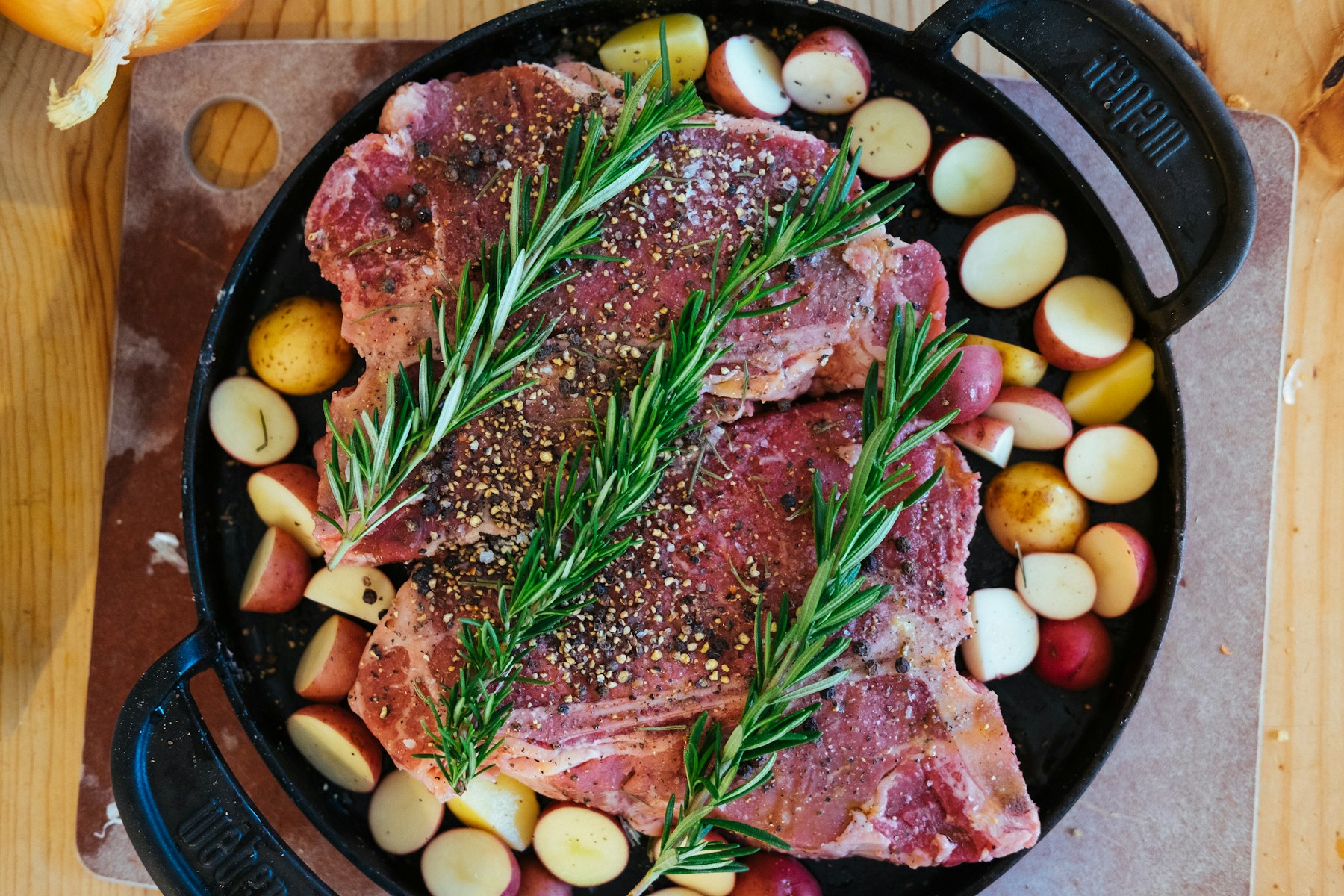
Use neutral oil for the primary sear and have butter, crushed garlic and sturdy herb sprigs measured before lowering the heat. Set out the thermometer, tongs, resting surface and finishing ingredients before the steak reaches the pan, grill, smoker or air fryer. That short mise en place prevents the common scramble in which butter burns, a sauce reduces too far or the steak passes its intended pull point while a tool is being found.
- Measure thickness at the thickest useful point. Weight alone does not predict the distance heat must travel to the center.
- Dry the entire exterior. Check edges, fat seams and bone recesses; hidden moisture can create a pale patch.
- Choose the probe path. Insert from the side into the coolest central area, avoiding bone and large fat pockets.
- Prepare a gentler zone. A cooler burner, indirect grill zone or lower oven gives you a place to finish without burning the crust.
- Name the resting surface. A rack preserves crust better than a deep plate that traps steam beneath the steak.
Compare the full workflow with our cast-iron steak guide. If the cut itself is unfamiliar, start with the sirloin guide so muscle, grain and trimming guide the technique.
Control Browning and Center Temperature Separately
Whole crushed garlic flavors foaming butter more gradually than fine minced garlic, which can burn almost immediately against hot iron. Crust and center temperature are related, but they are not the same measurement. Surface browning responds to dryness, direct energy and contact; the center responds mostly to thickness, temperature gradient and time. If the exterior is ready first, reduce the heat. If the center is ready first, the next attempt needs a drier surface or a stronger, shorter sear.
| Signal | What it usually means | Response |
|---|---|---|
| Weak sizzle | Surface or cooking surface is too cool | Pause, avoid crowding and restore heat |
| Black spices before crust | Fine seasonings are scorching | Use simpler early seasoning and finish later |
| Uneven reading | Probe is near fat, bone or a hot edge | Check from a second direction |
| Gray band expanding | Too much time over aggressive heat | Move to gentler heat sooner |
| Juice pooling during rest | Deep plate or premature slicing | Use a rack and complete the rest |
Take two readings when geometry is irregular. Thick bone-in steaks may have different thermal zones, while thin steaks can change several degrees during the time needed to reposition a probe. The goal is not to perforate the meat repeatedly; it is to confirm that one surprising number is real before acting on it.
Finish, Rest and Evaluate the Result
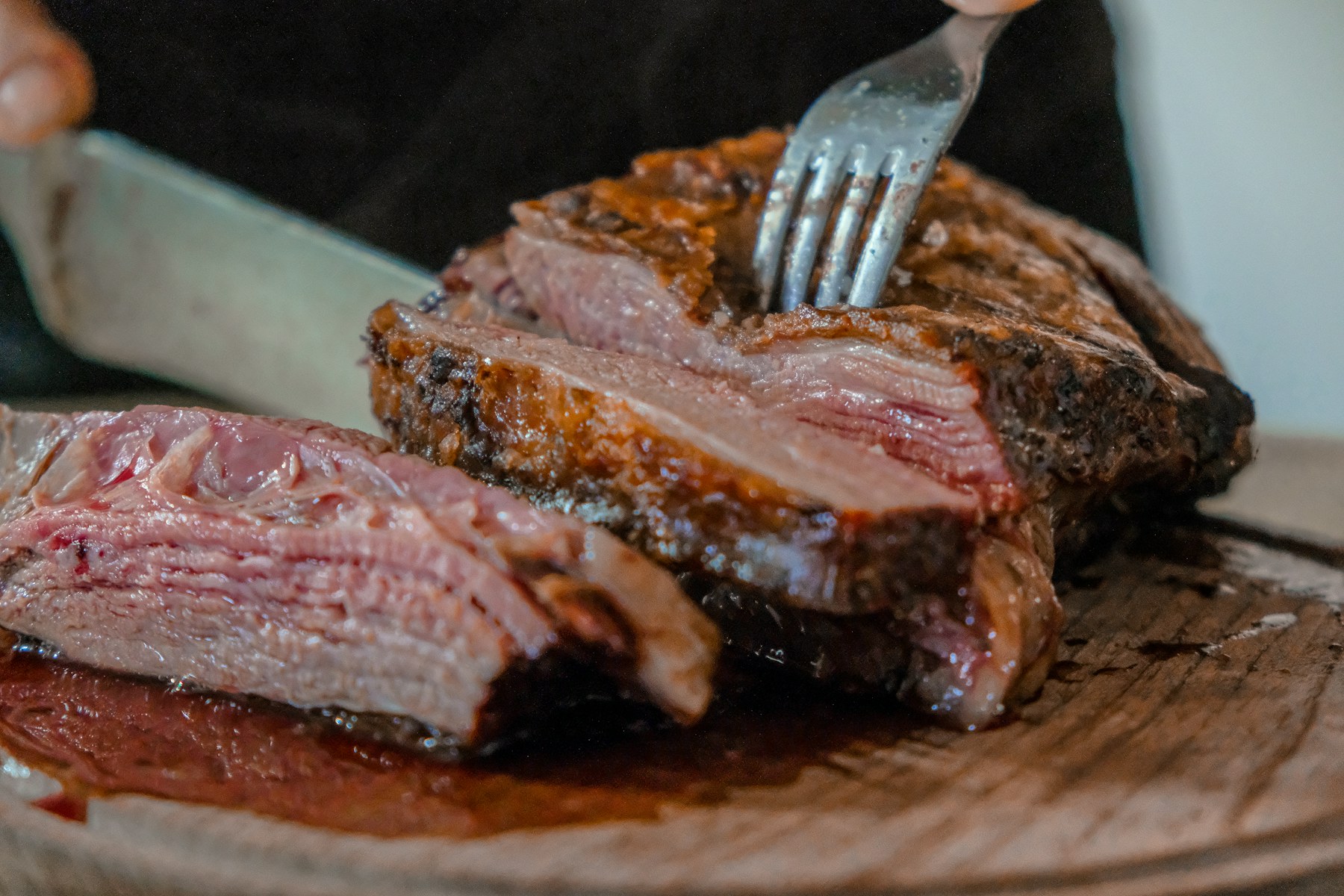
Tilt the pan, spoon foaming butter over the steak briefly and stop if milk solids or garlic turn acrid. Add butter, sugar-bearing sauces, fresh garlic and delicate herbs late enough that they flavor the steak without burning. Resting then allows the steepest temperature gradient to ease. Large steaks carry over more than thin steaks, so record the actual change rather than assuming a universal number.
A blackened garlic taste comes from timing and heat, not from insufficient butter; restart the aromatic phase in a clean, cooler pan if necessary. If the result misses, change one major variable on the next cook. A lower pull temperature cannot fix a wet surface; a longer rest cannot repair slicing with the grain; more smoke cannot compensate for dirty combustion. A narrow adjustment produces evidence you can use.
Complete the plate only after tasting a center slice. Reduced sauces, compound butter and salty seasonings can make an already well-seasoned steak harsh. Acid, fresh herbs and crisp vegetables often improve balance without covering the beef.
Frequently Asked Questions
Can I sear steak in butter only?
It is possible at lower heat but the milk solids can burn before a deep crust forms. Neutral oil first, butter later is more controllable.
Is garlic powder safer than fresh garlic?
It can still scorch on a hard sear. Apply lightly or add after the most intense heat.
Can compound butter be made ahead?
Yes. Refrigerate it safely and slice a small amount onto the rested steak.