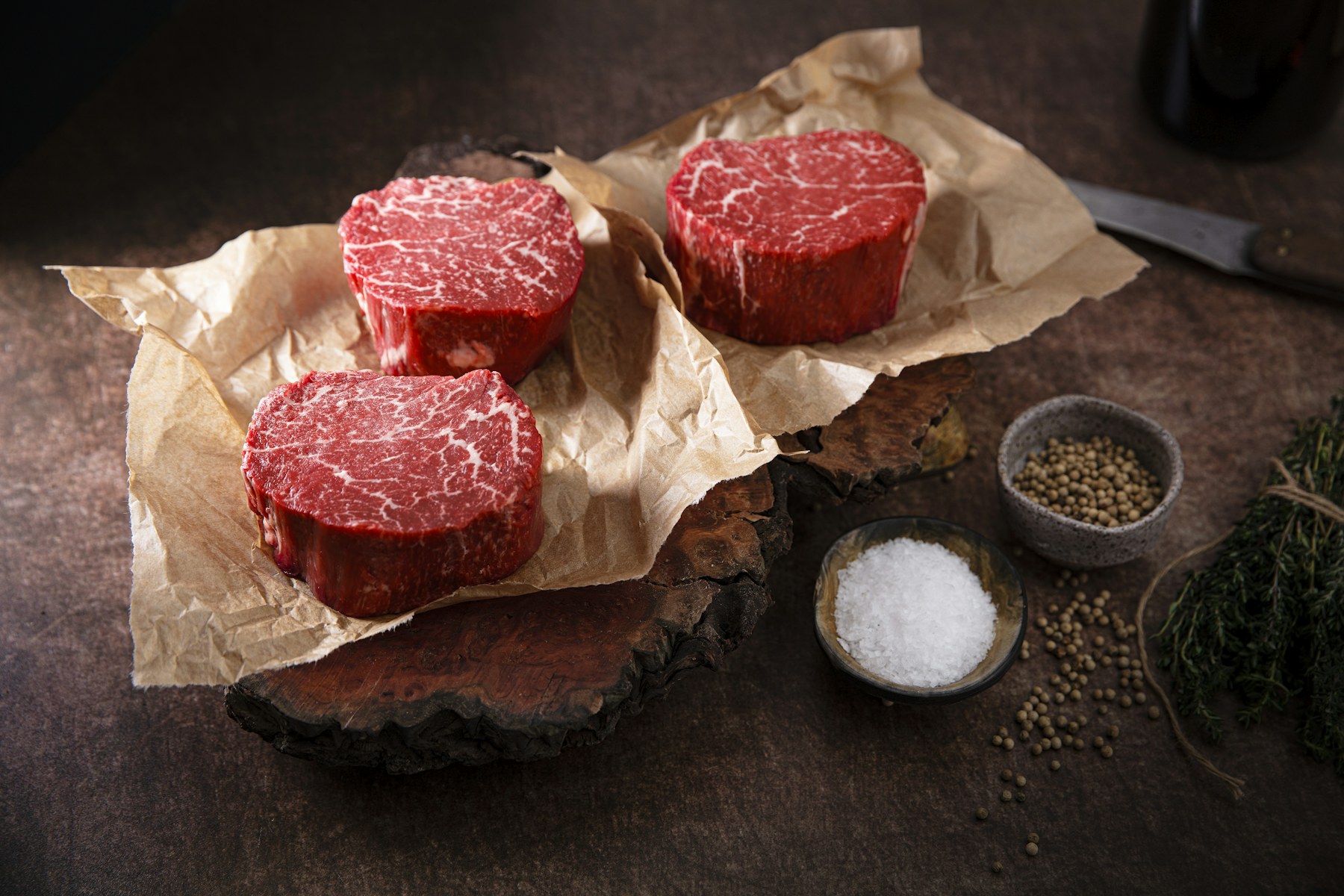
What Does Wagyu Mean?
Wagyu means Japanese cattle, and in Japan eligibility is tied to recognized native breeds and traceability. Outside Japan, 'American Wagyu' or 'Australian Wagyu' often describes cattle with Wagyu genetics raised under local systems, sometimes crossed with other breeds. Those products can be excellent, but the labels do not promise the same genetics, feeding, grading or eating style.
Ask four questions: where was the animal raised, what genetics or program are claimed, which grading system produced the score, and is traceability documentation available? Those answers are more useful than a menu that says only 'premium Wagyu.'
Wagyu, A5 and Kobe Are Not Interchangeable
| Term | What it identifies | What it does not guarantee |
|---|---|---|
| Wagyu | Japanese cattle category or qualified overseas program | A Japanese A5 grade |
| A5 | Japanese yield grade A plus quality grade 5 | Kobe origin or any overseas grade |
| Kobe Beef | Certified Tajima-line beef meeting regional rules | Any highly marbled beef |
| American Wagyu | A U.S. program using Wagyu genetics | Pure Japanese genetics or Japanese grading |
| Australian Wagyu | An Australian Wagyu program | A universal marbling score across all sellers |
The Japanese A5 Wagyu guide goes deeper into yield and quality grading without turning A5 into a marketing superlative.
Choose the Cut, Not Just the Label
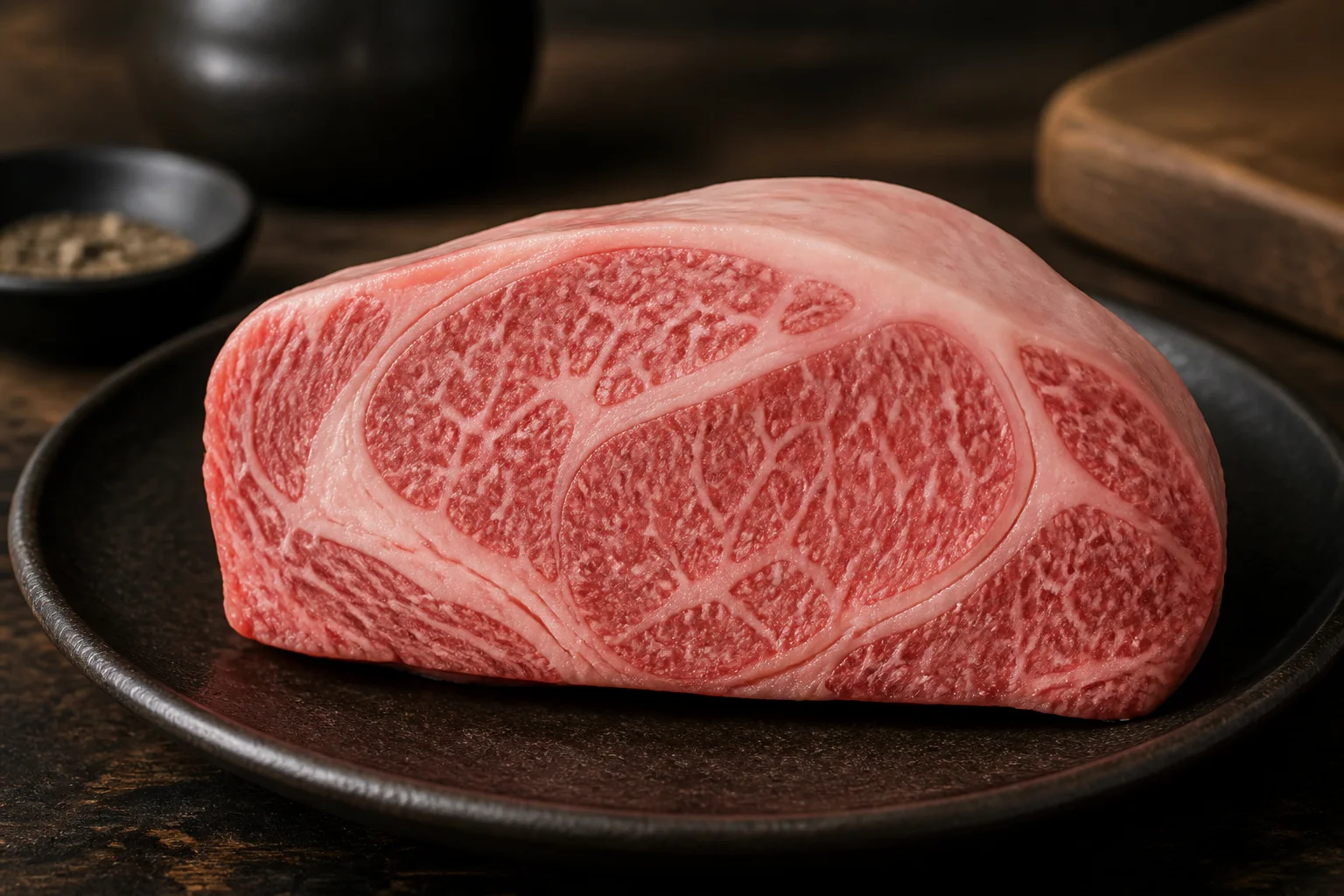
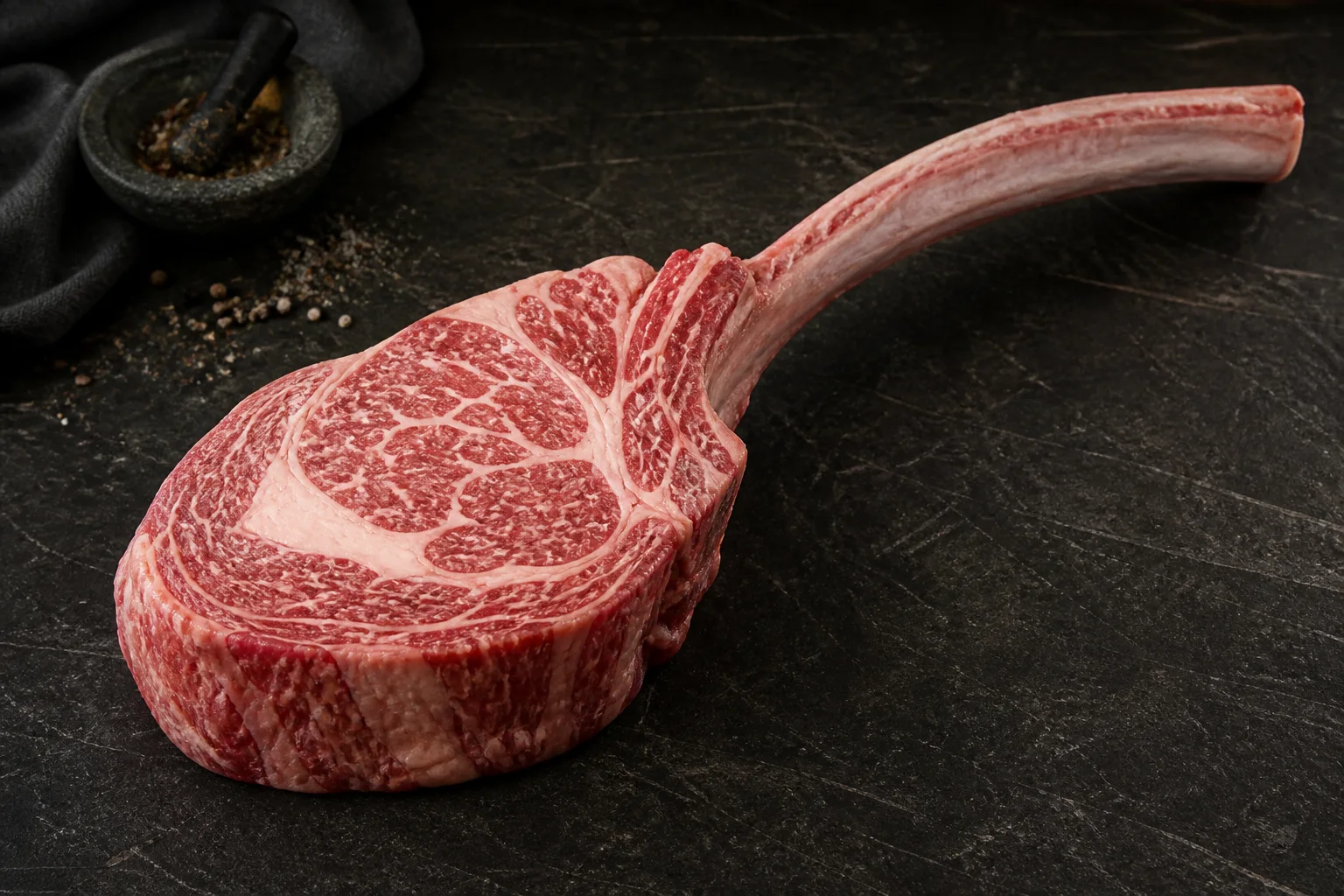
Marbling interacts with muscle structure. Wagyu ribeye layers high intramuscular fat onto an already rich cut. Wagyu picanha combines marbled lean with an exterior fat cap. Wagyu filet mignon stays fine-grained and mild, while a Wagyu tomahawk adds a large-format bone presentation.
A rich grade does not erase cut anatomy. Decide whether you want cap fat, a tender fine grain, a beefier chew or a centerpiece. Then choose the level of marbling and portion.
How to Buy Without Getting Lost in Claims
- Look for country of origin and a named grading system.
- For imported Japanese beef, ask for individual identification or certificate information.
- Treat marble-score scales as system-specific; the same number does not automatically translate between countries.
- Choose a portion appropriate to richness rather than defaulting to a steakhouse-size cut.
- Prefer transparent sellers who explain frozen status, cut thickness and shipping.
How to Cook Wagyu Steak
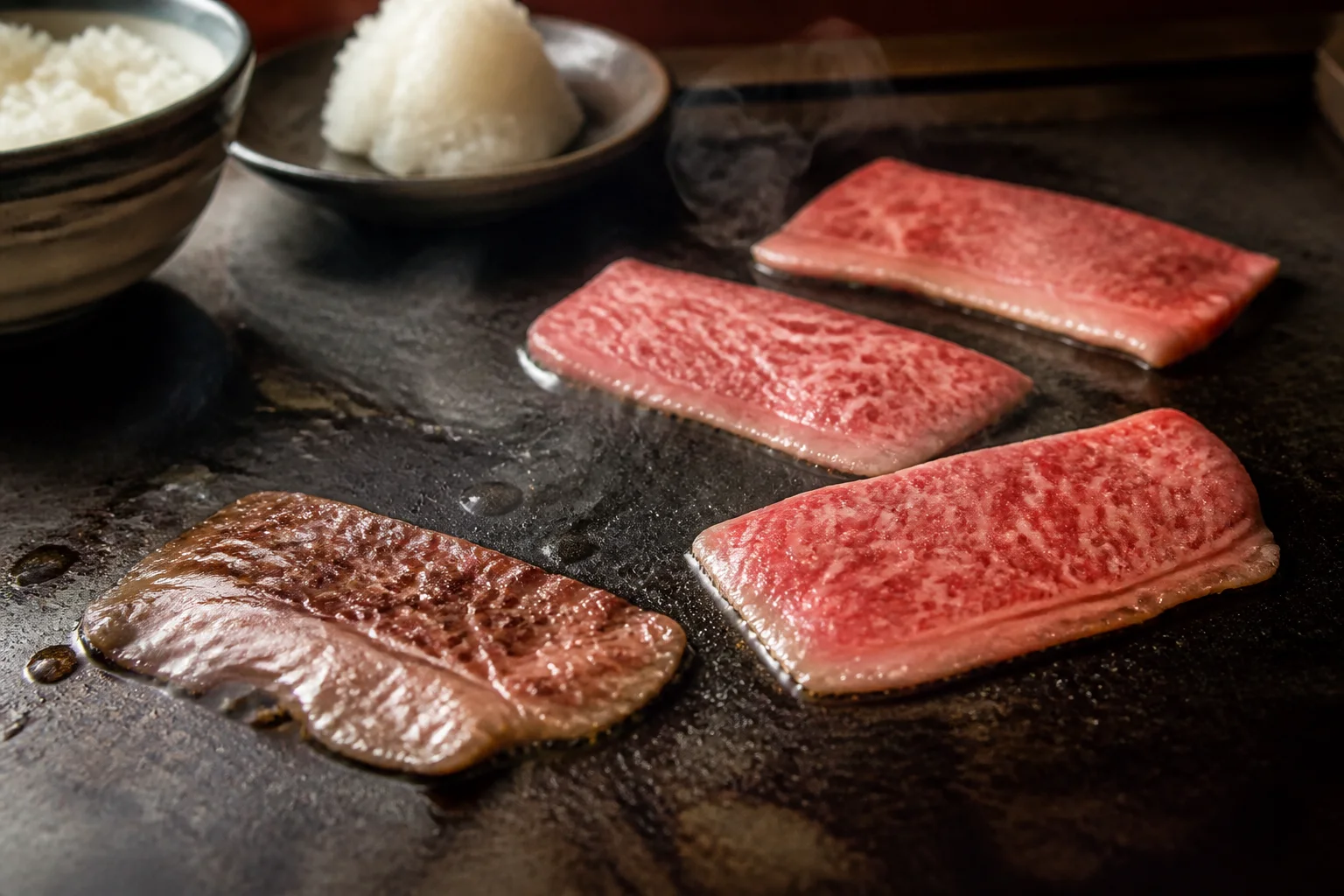
Thin, highly marbled Japanese portions need a hot clean surface, brief contact and small batches. Thick American or Australian Wagyu steaks can use familiar grilling or reverse-sear methods, but they render more fat and flare more easily. Avoid a heavy butter baste unless the cut is comparatively lean.
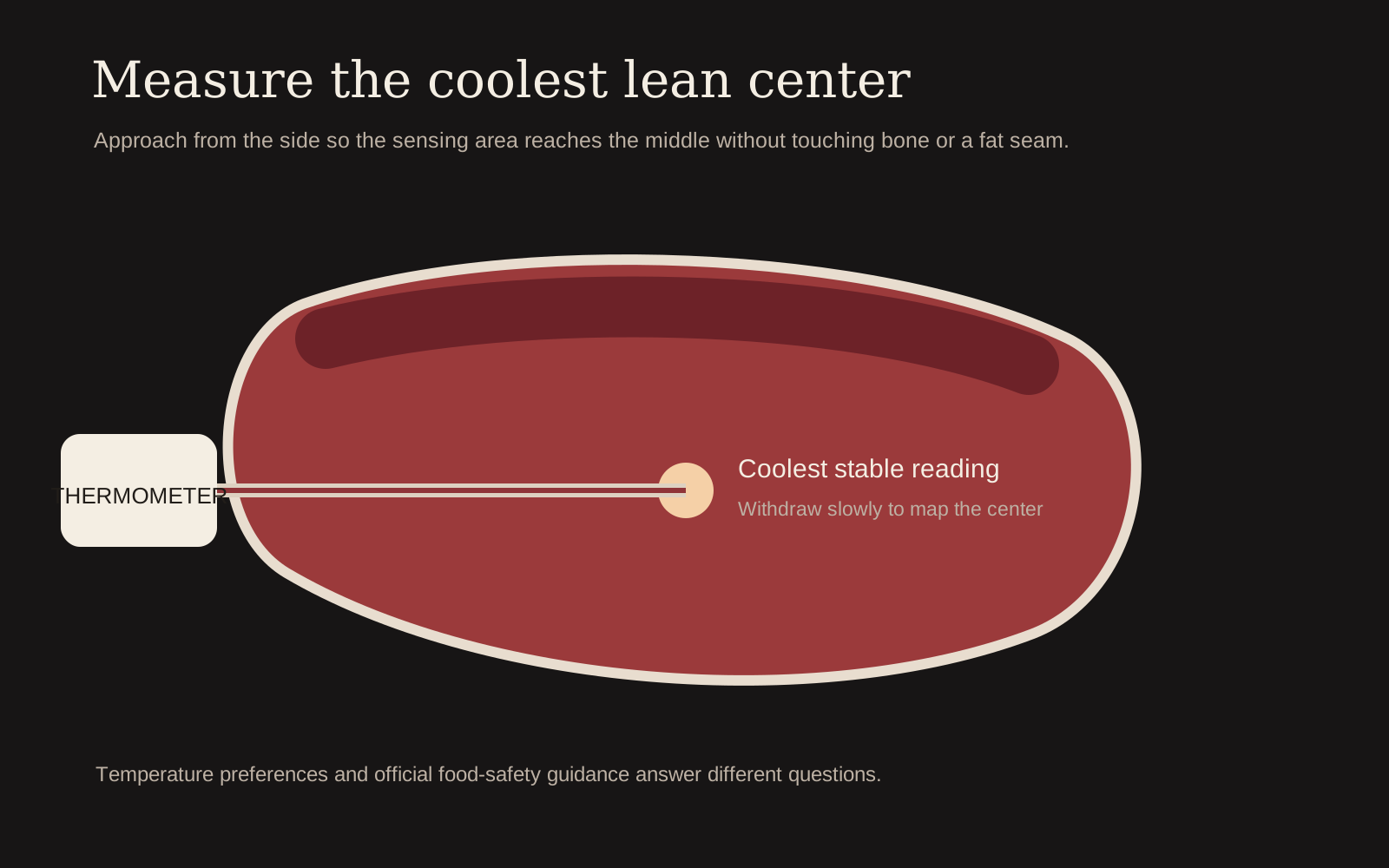
Use salt sparingly, keep a cool grill zone and slice into small pieces. Track whole-steak safety and preference with the steak temperature guide. Note that color is especially unreliable in heavily marbled meat.
Portions and Pairings
Serve very rich Wagyu with steamed rice, pickles, citrus, daikon, bitter greens or crisp cabbage. Small portions make the marbling pleasurable instead of exhausting. Bring slices to the table in waves so rendered fat remains warm.
Common Wagyu Mistakes
- Calling any highly marbled beef Kobe.
- Assuming A5 is a breed or an international grade.
- Buying a huge portion without accounting for richness.
- Adding excessive butter, sugar, smoke or spice.
- Letting rendered fat ignite under the steak.
- Comparing marbling scores from different systems as if they were identical.
Read Country, Breed Claim and Grade Separately
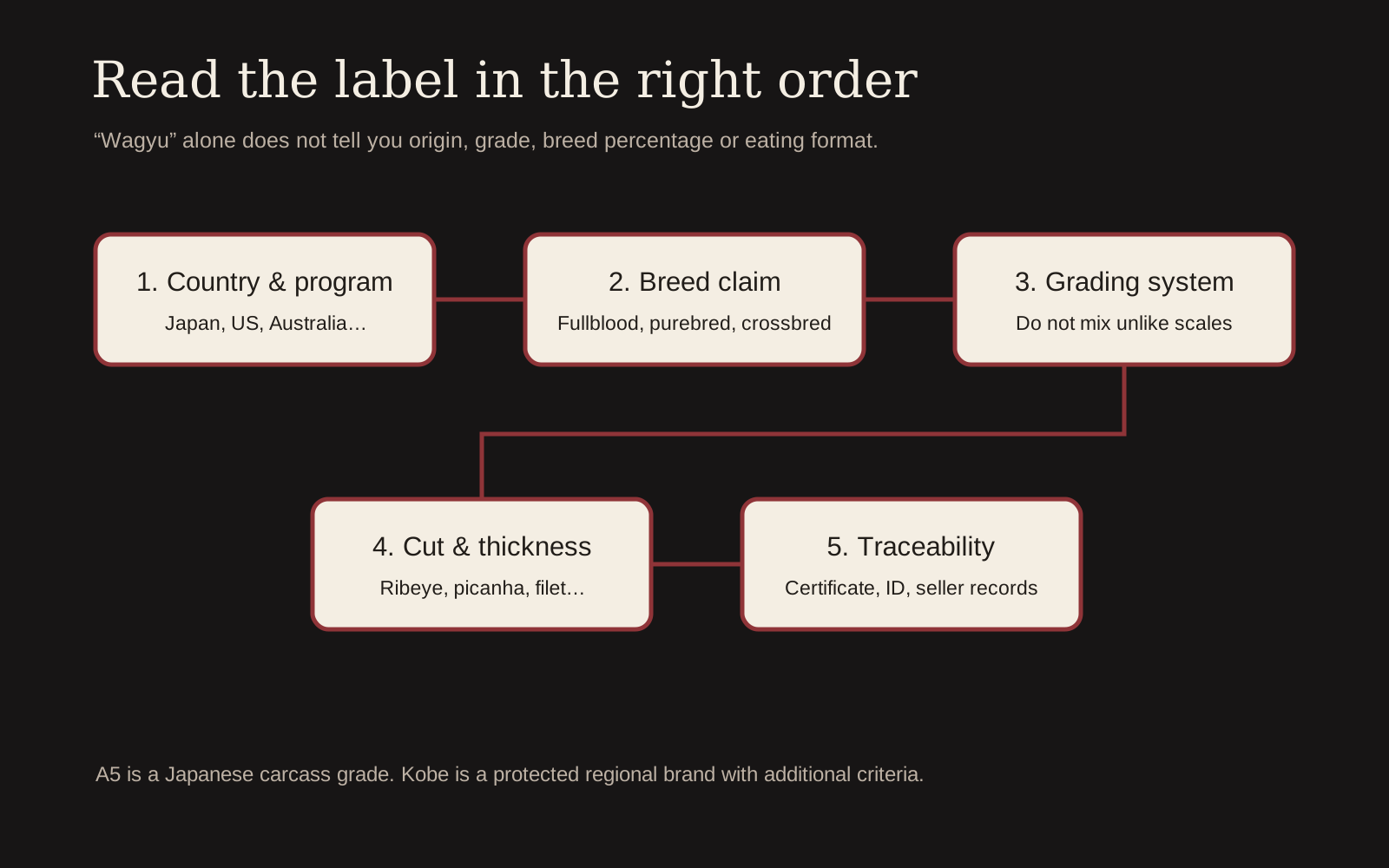
Wagyu means Japanese cattle, but a retail Wagyu claim outside Japan can describe several production models. Japanese beef, American Wagyu and Australian Wagyu do not share one universal breed-percentage rule or grading scale. The useful label begins with country and program, then identifies breed claim, grade, cut and traceability.
Fullblood, purebred and crossbred are not casual synonyms. Their definitions depend on the registry or program making the claim. Ask which breed is involved, what records support the percentage statement and whether the animal was raised domestically or the beef was imported. A flag graphic or Japanese-style brand name is not enough.
| Claim | What it may answer | What it does not answer alone |
|---|---|---|
| Japanese A5 | Japanese origin and carcass grade | Specific regional brand, cut or eating portion |
| American Wagyu | US production program using Wagyu genetics | Breed percentage or USDA grade without more detail |
| Australian Wagyu | Australian production program | Marble score equivalence with Japan or the US |
| Kobe beef | Certified beef meeting Kobe brand criteria | A generic synonym for any highly marbled Wagyu |
Do Not Convert Grading Systems With a Simple Chart
Japan combines a yield grade letter with a quality grade number. Marbling is important, but meat color and brightness, firmness and texture, and fat color and quality also contribute to quality grading. A5 therefore communicates more than abundant visible fat.
USDA quality grades and Australian marble-score systems were designed for their own industries. A seller may provide a helpful comparison, but treating BMS, AUS-MEAT marble score and USDA Prime as exact steps on one ladder is misleading. Keep the original program's name and evidence attached to the claim.
For Japanese beef, look for traceability or certificate information that connects the package to its documented origin. For a domestic program, ask for the breed and grading statements used by that producer. Our Japanese A5 guide explains the A5 designation in detail.
Cut Still Determines Texture and Portion
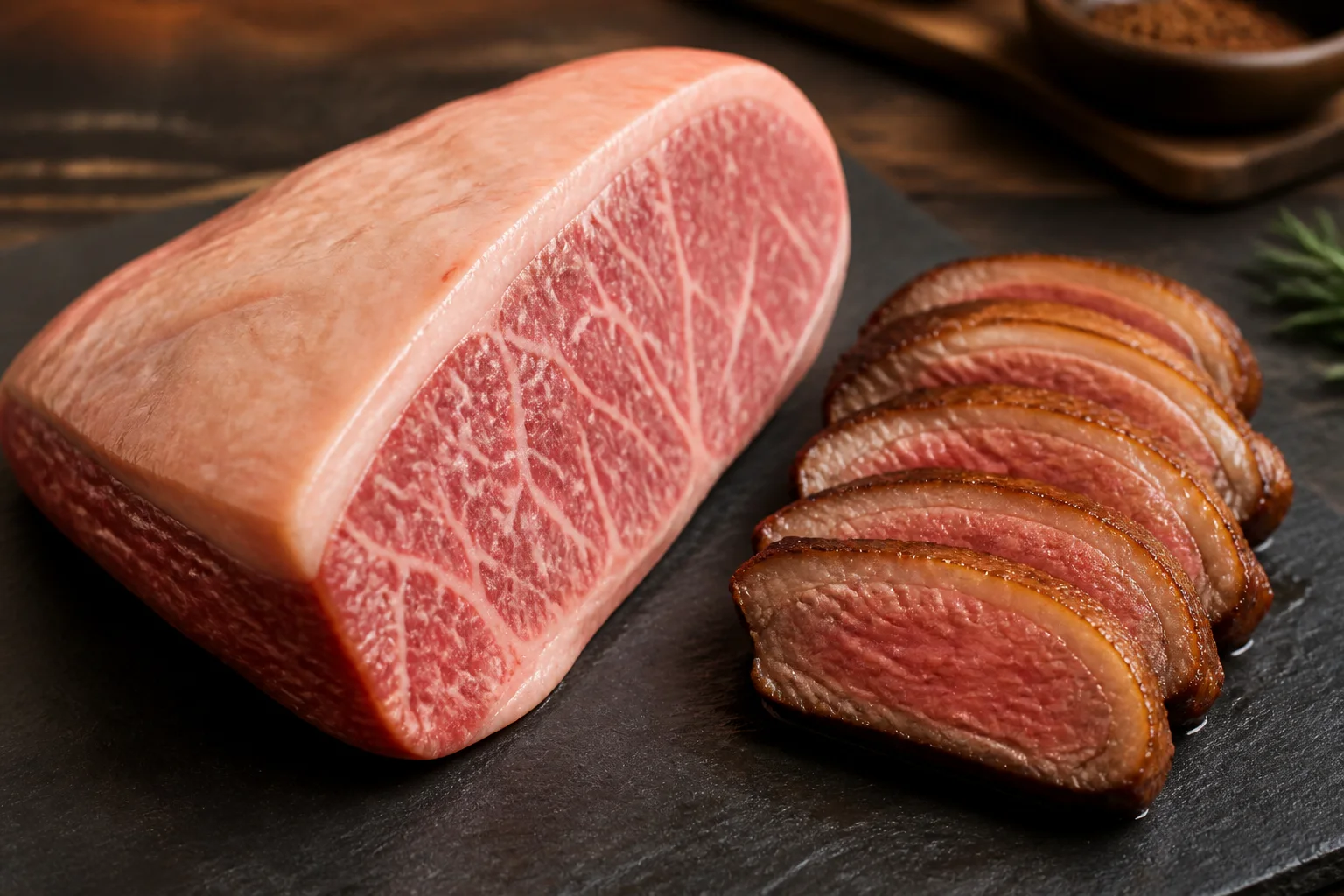
Ribeye magnifies richness through the eye, cap and fat seams. Picanha combines internal marbling with an exterior cap. Filet has a fine tender structure but less of ribeye's loose richness. Tomahawk adds bone presentation and a large format that may conflict with intensely marbled beef.
Start with the number of bites the diner can enjoy, not a conventional steak weight. Intensely marbled Japanese A5 is commonly served in small pieces because richness accumulates quickly. Moderately marbled crossbred Wagyu can suit a more familiar steak portion and two-stage cook.
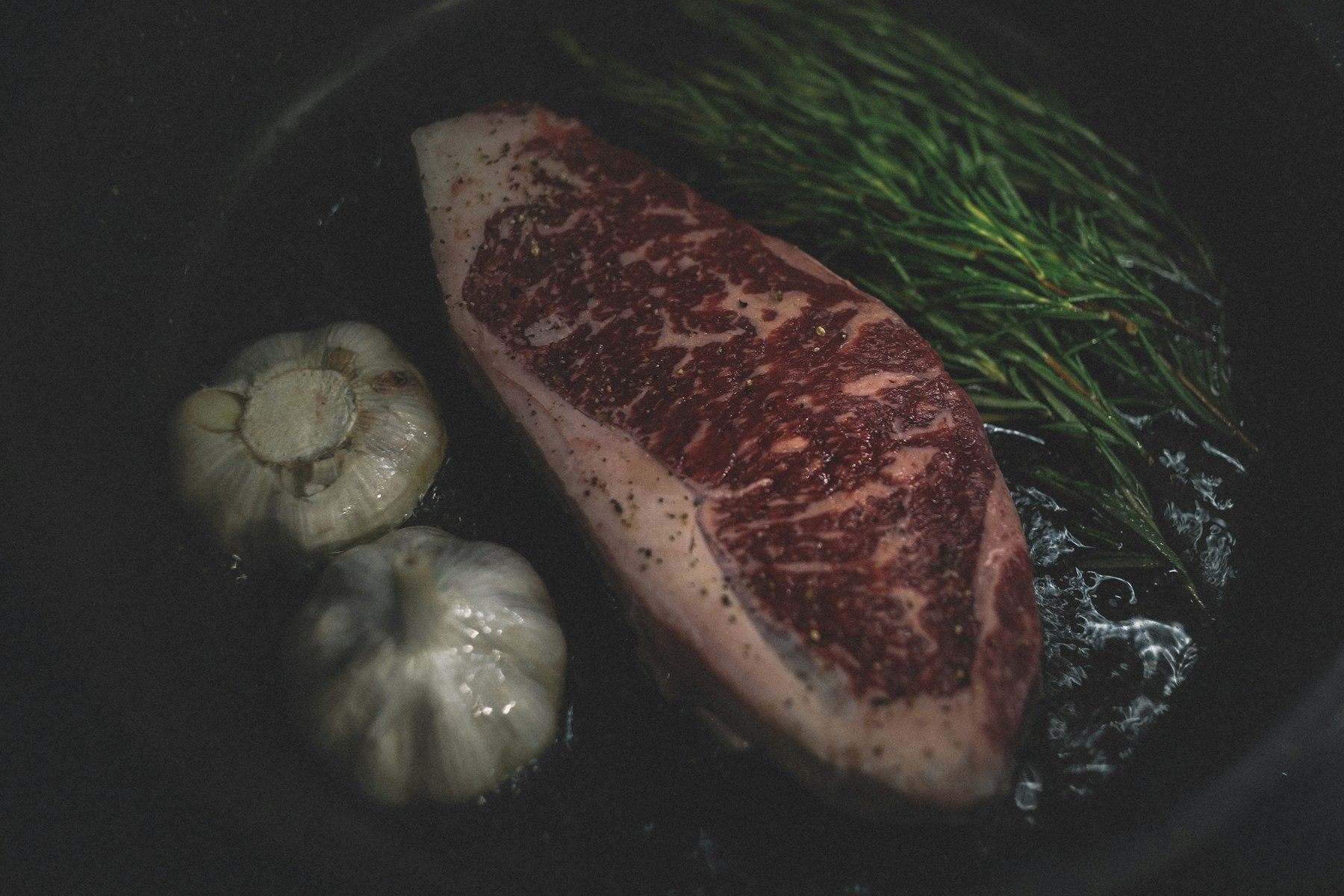
- For eye-and-cap contrast: choose Wagyu ribeye and serve a restrained portion.
- For fat-cap character: choose Wagyu picanha and manage both internal and exterior fat.
- For spectacle: choose Wagyu tomahawk only after checking grade, origin and edible yield.
- For tenderness with a milder profile: consider Wagyu filet mignon rather than assuming more marbling is always the goal.
Cook and Serve According to Marbling Intensity
For intensely marbled thin pieces, use a dry plancha or skillet and cook a few at a time. Brown several faces, wipe pooled fat between batches and serve immediately. For a thick moderately marbled steak, salt lightly, warm gently if needed and use a brief high-heat finish with a clear escape zone.
Butter is usually redundant. Salt, citrus, wasabi, grated daikon, pickles, rice and bitter vegetables provide contrast. Serve warm plates and small successive batches so the fat remains supple rather than cooling into a waxy film.
What “Japanese Wagyu Steak” Must Tell You
Japanese Wagyu steak should describe beef from Japan under Japanese production and traceability systems. Wagyu produced in the United States or Australia can be legitimate Wagyu, but it is not Japanese Wagyu. Look for origin, individual identification or traceability details, prefecture or brand where applicable, grade, cut and net weight.
Do not treat Japanese Wagyu as a single marbling grade. A5 is a specific combination of Japanese yield grade A and meat-quality grade 5; Japanese Wagyu can carry other grades. Likewise, Kobe is a protected regional brand with its own requirements, not a synonym for all Japanese beef.
Continue Through This Steak Topic
Build the full picture: Japanese A5 Wagyu, Wagyu Ribeye, Wagyu Picanha, Wagyu Tomahawk Steak, Wagyu Filet Mignon, Wagyu Tenderloin, Wagyu Sirloin, American Wagyu Steak, Australian Wagyu Steak, Kobe Beef Steak, Olive Wagyu Steak, Wagyu Burger, and Wagyu Brisket cover the closely related cuts, methods, buying decisions and recipes that support this guide.
When you need to compare across families or techniques, continue with Ribeye Steak, Picanha Steak, and steak temperature. These pages answer adjacent questions without forcing every detail into one overgrown article.
Frequently Asked Questions
Is all Wagyu from Japan?
Japanese Wagyu is from Japan. American and Australian Wagyu are separate programs using Wagyu genetics, often with different breeding and grading systems.
Is A5 the best Wagyu?
A5 is the highest combined yield-letter and quality-number designation in Japan, but preference also depends on cut, marbling intensity, portion and cooking.
Is Kobe beef the same as Wagyu?
Kobe is a specific certified regional brand within Japanese Wagyu. Most Wagyu is not Kobe.
Why are Wagyu portions small?
High intramuscular fat makes each bite very rich. Smaller portions preserve balance and allow several pieces to be served hot.
Should Wagyu be cooked rare?
Not automatically. Some heat is needed to soften marbling. Choose doneness with the cut, thickness and official safety guidance in mind.