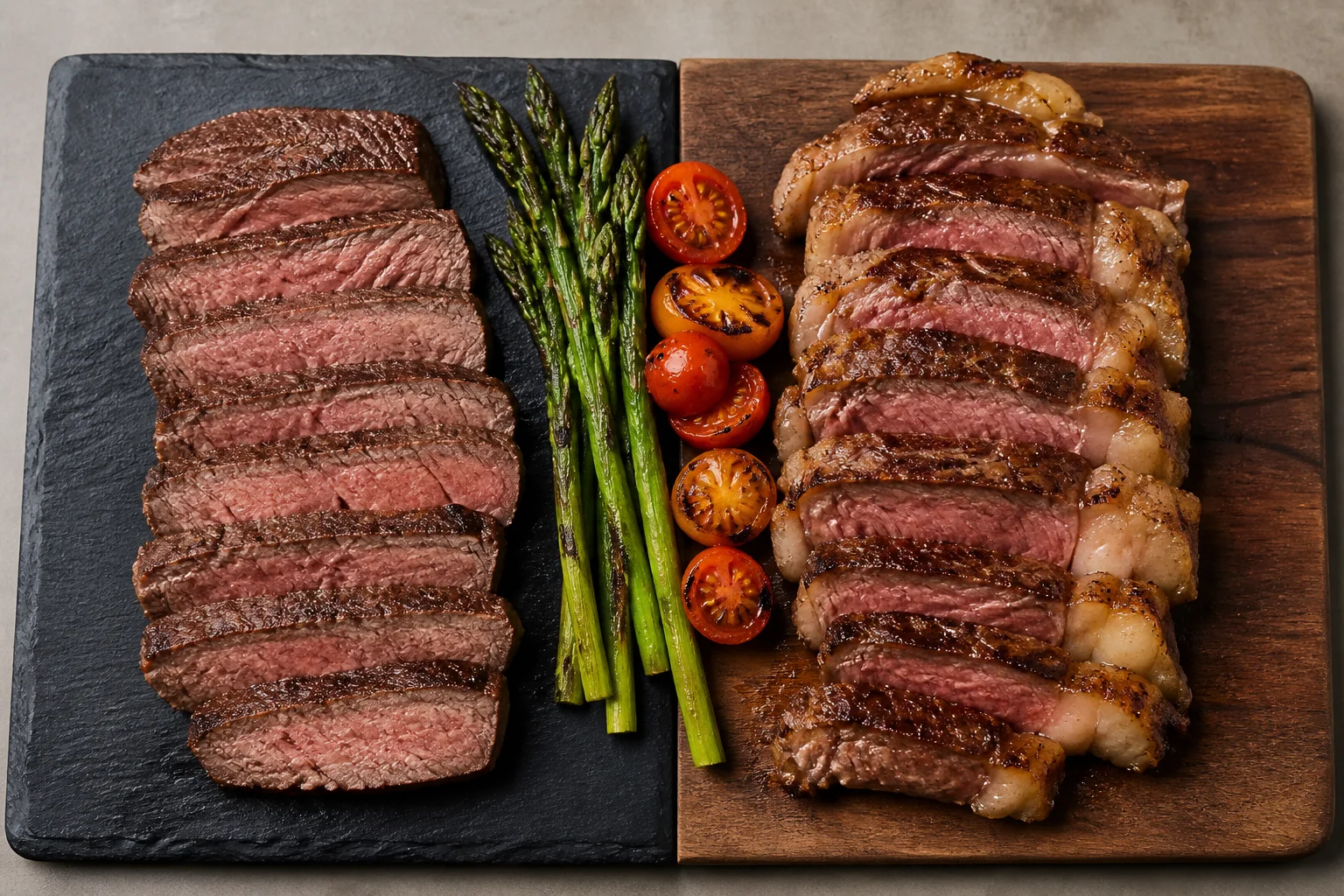
What Lean vs Fatty Steak Means
A lean steak contains less total and saturated fat than a fatty steak, but visual trim, cut name and a regulated “lean” claim answer different questions. USDA explains that lean beef has under 10 grams total fat, no more than 4.5 grams saturated fat and under 95 milligrams cholesterol per 100 grams; extra lean uses stricter fat thresholds. Check the actual label and serving basis.
That distinction matters because a familiar search phrase can hide several separate decisions: anatomical identity, processing, condition, portion format and cooking method. A precise guide names each one instead of treating an appealing photograph or broad label as evidence.
Use this page with the complete steak-cut directory when anatomy is the question, and with the steak cooking guide when thickness and heat control are the question. The temperature guide keeps culinary preference separate from official safety advice.
Names also move across countries, restaurants and butcher counters. When two labels appear similar, compare the actual muscle, fabrication and documented process. An alias can help a shopper find the product, but it should never be used to invent a grade, origin or safe-handling claim.
How to Choose Lean vs Fatty Steak
For a leaner meal, begin with top sirloin, tenderloin, eye of round or another cut whose Nutrition Facts fit the goal, choose sensible thickness and trim exterior hard fat after comparing yield. Inspect cold-chain condition, intact packaging and the full product name before comparing price. For online orders, include shipping, weight range, bone, trim and edible yield rather than comparing a headline price alone.
- Read Nutrition Facts: Calories and fat vary by product, trim, grade, serving size and cooking.
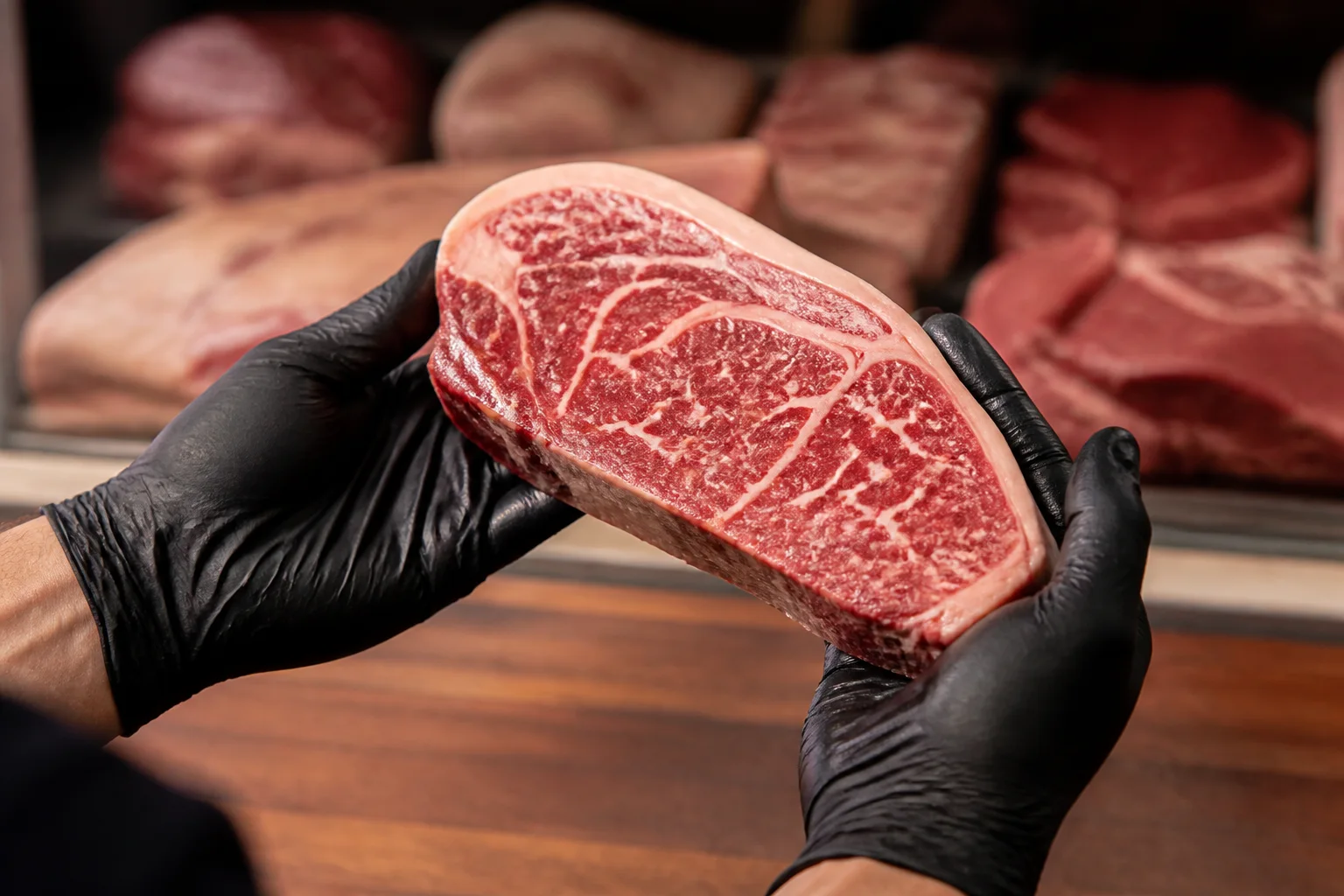
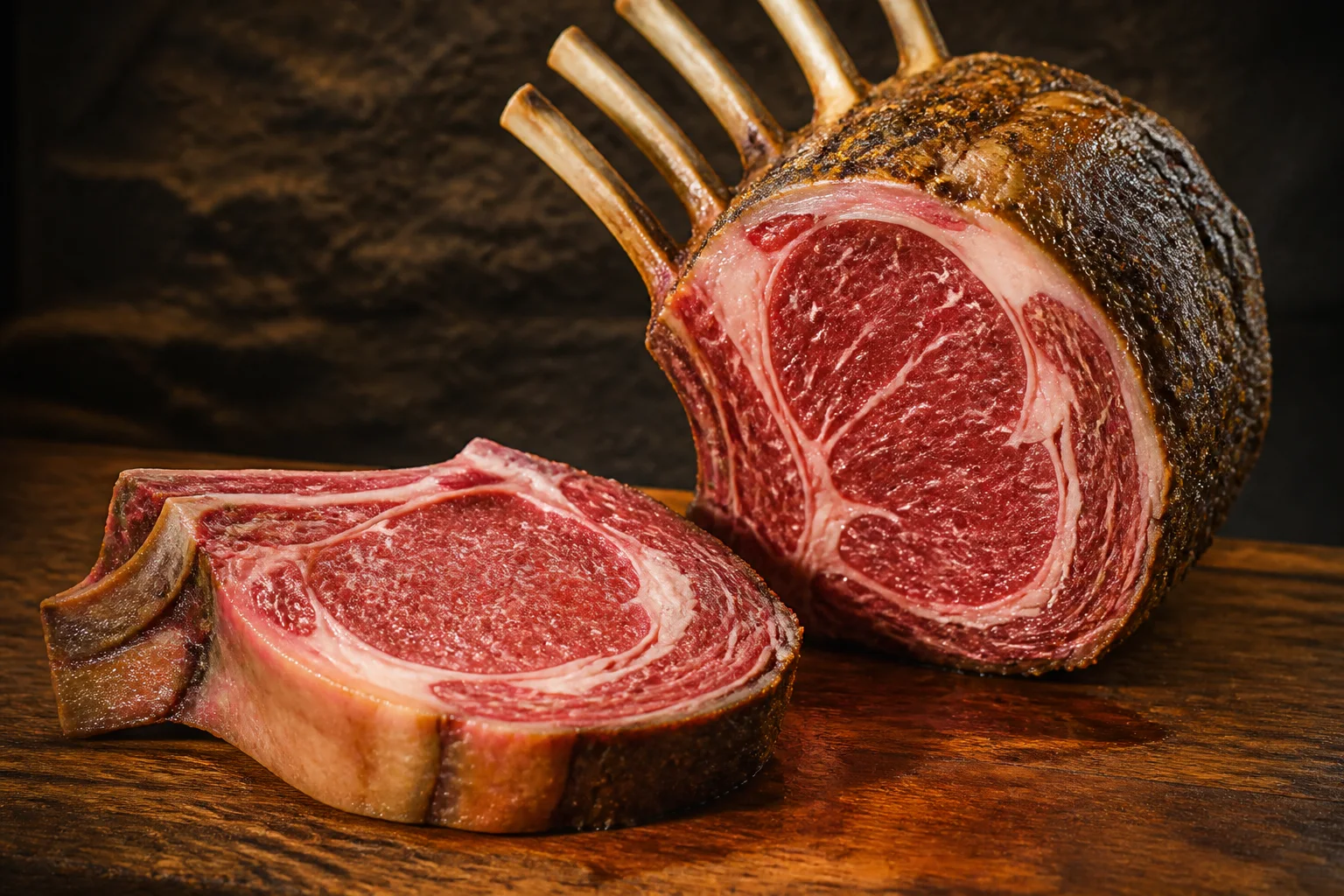
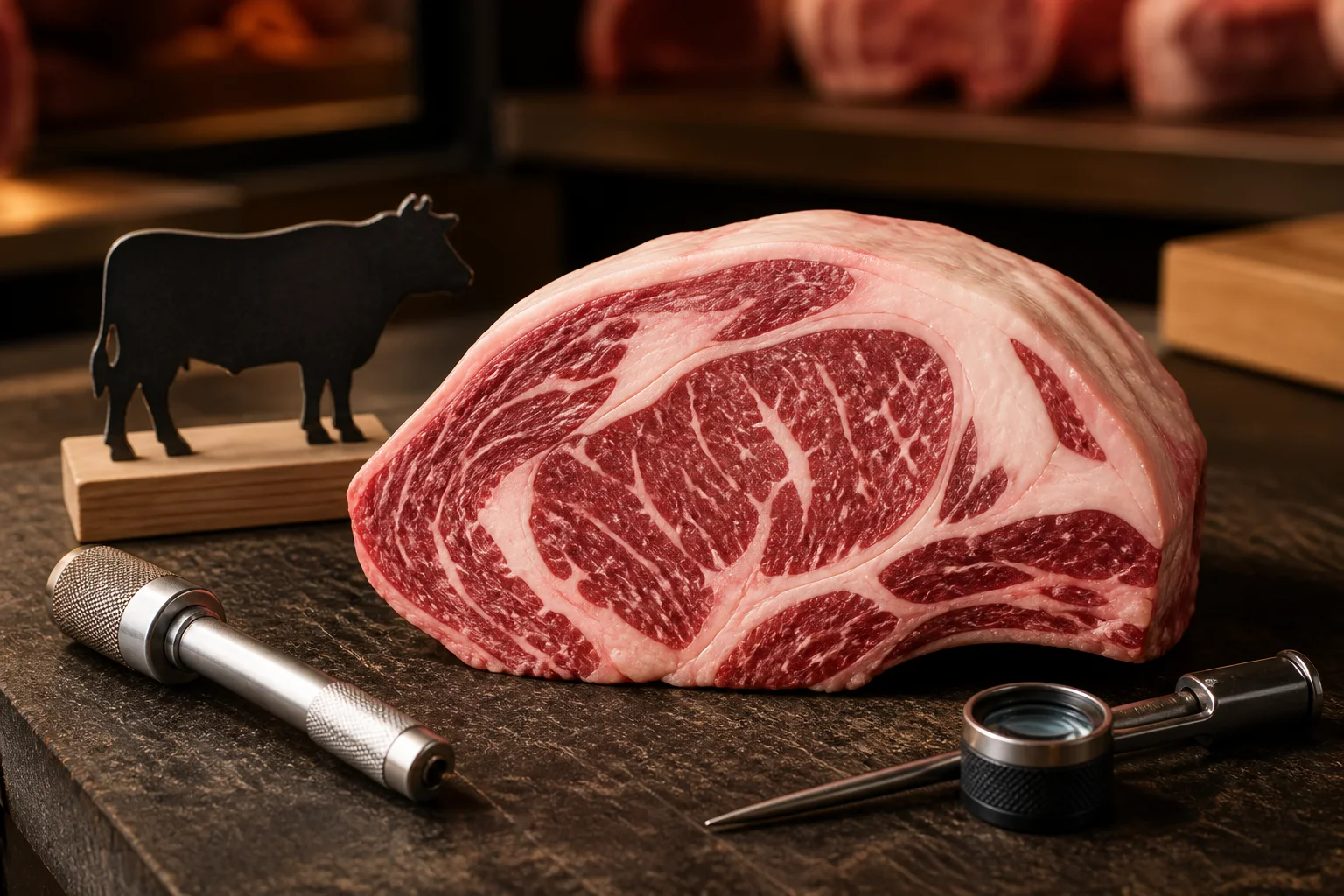
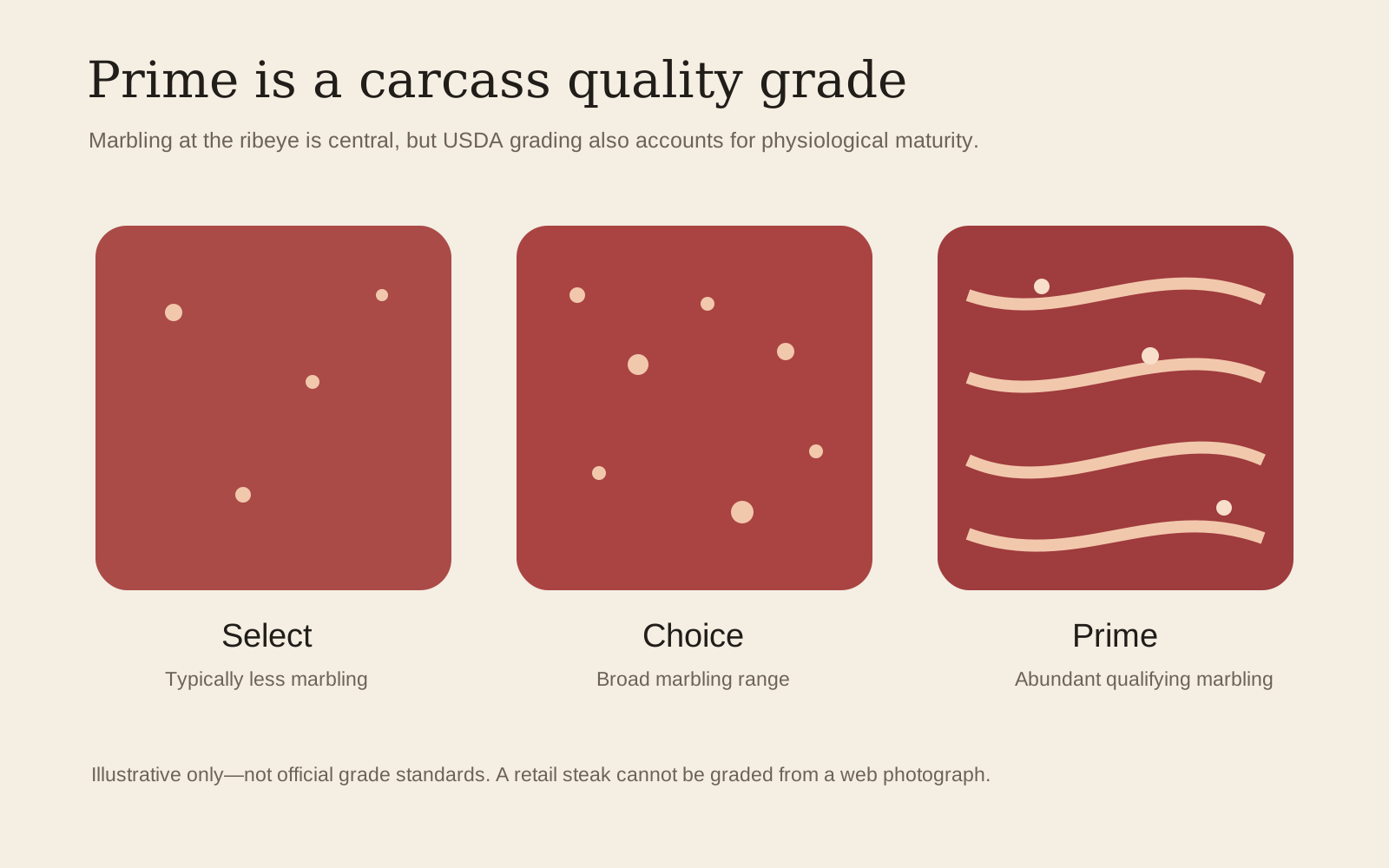
- Separate marbling from trim: Internal fat changes richness; exterior fat can often be trimmed.
- Use defined claims: Lean and extra lean have regulatory criteria, unlike vague guilt-free language.
- Hold grade and cut constant: A Prime ribeye and Select round differ in more than one variable.
- Plan the whole plate: Sauce, butter, cheese and sides can outweigh the cut choice.
Color is only one clue because oxygen exposure, vacuum packaging and aging change beef appearance. A cold, intact package with a clear use plan is more informative than chasing one bright-red shade. Reject leaks, damaged seals and vague listings that cannot answer the practical questions above.
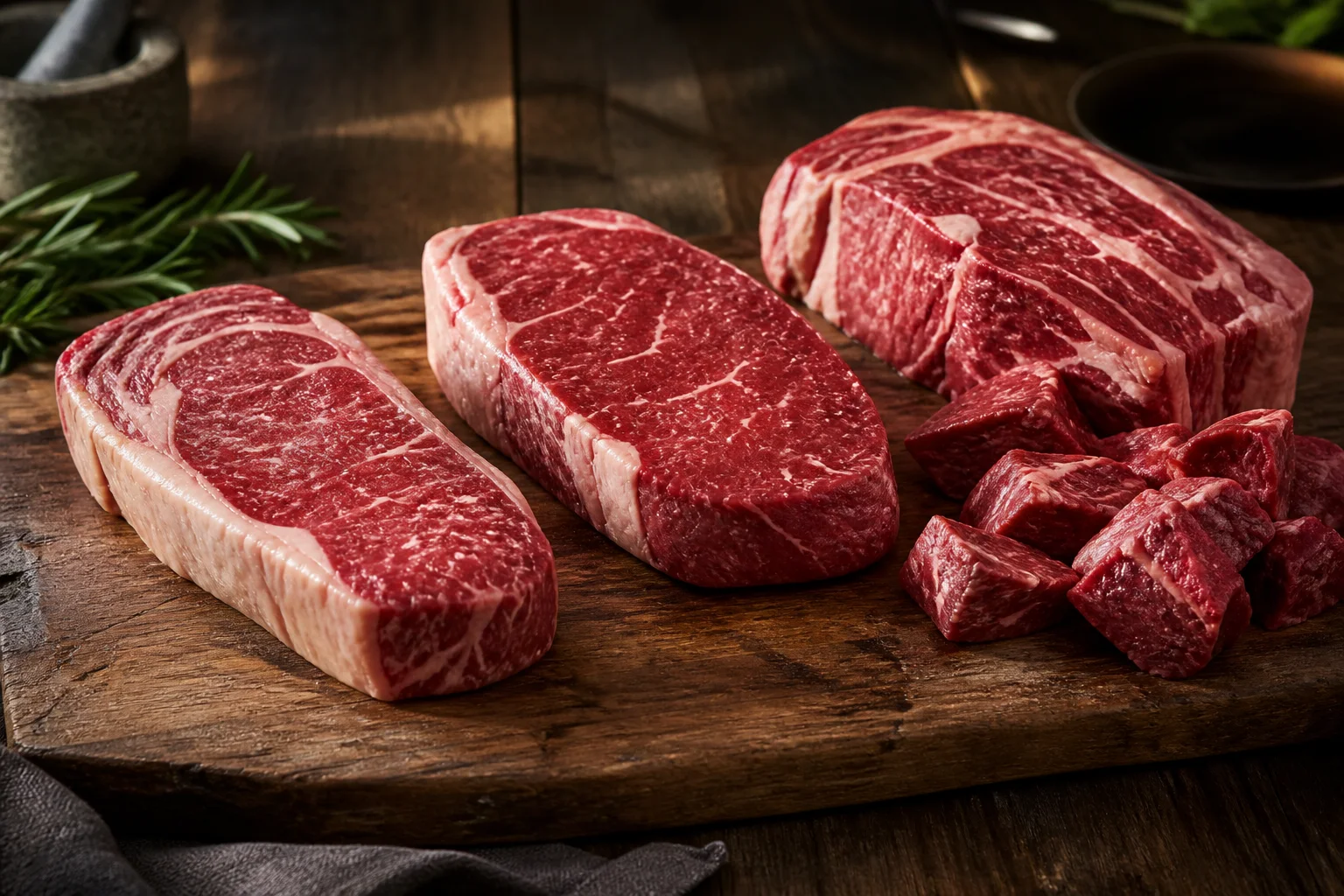
Compare like with like. Keep cut, portion format, grade, aging, net weight and required trimming constant before deciding that one option is a better value. A cheaper package may contain more bone, hard fat or connective tissue; a costly one may still be unevenly fabricated.
Use the Right Decision Framework
Cook lean steaks efficiently with surface dryness and close temperature monitoring; they have less fat to buffer overcooking. Give fatty steaks a cooler zone and smaller portions so rendered fat browns without feeding flare-ups. Write the serving time first, then work backward through preparation, cooking, resting or chilling, and final assembly. This prevents a delicate finish from waiting while a dense component catches up.
| Feature | Lean steak direction | Fatty steak direction |
|---|---|---|
| Example cuts | Top sirloin, tenderloin, eye of round | Ribeye, rib cap, highly marbled strip |
| Heat margin | Narrower; check early | More rendering but greater flare-up risk |
| Portion | Can support a larger lean-protein role | Often satisfying in a smaller portion |
| Pairing | Sauce or moist vegetables | Acid, bitter greens and crisp vegetables |
A cooking time is a planning range, not proof of doneness. Real elapsed time changes with shape, starting temperature, equipment output, pan material, airflow and batch size. Begin checking early enough that moving to gentler heat can still correct the trajectory.
Preparation, Heat and Safety Control
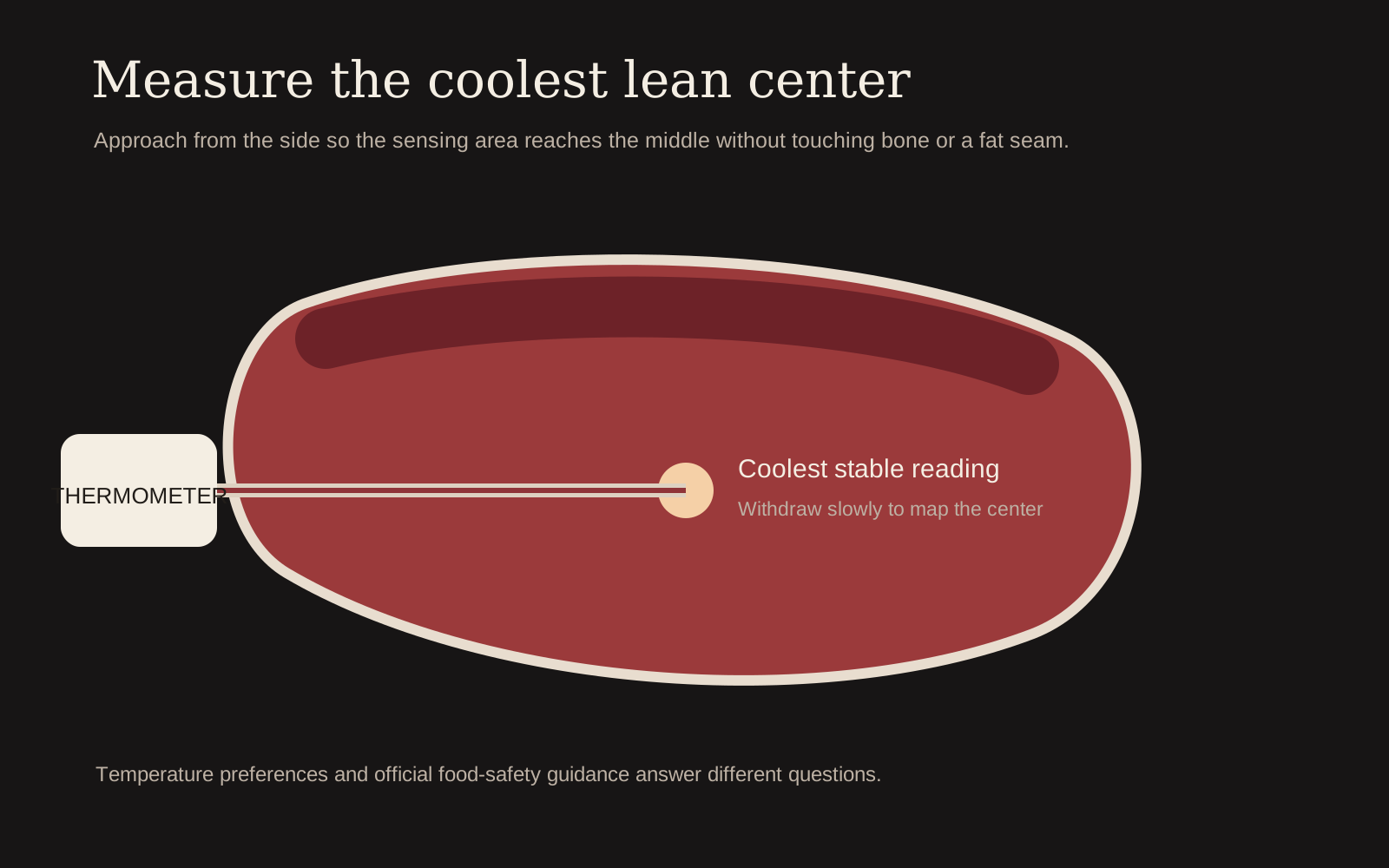
A thermometer protects both ends of the comparison. Pulling a lean steak by the clock can make it dry, while judging a fatty steak only by softness can leave the lean center unchecked. Keep raw beef and its packaging away from cooked food, wash hands and food-contact surfaces, and use a clean plate for the finished product. Do not rinse raw beef; splashing can spread contamination around the sink and nearby workspace.
When temperature applies, insert the thermometer into the coolest central point without touching bone, a large fat pocket or the hot pan. Check multiple points in irregular pieces. Appearance, firmness and juice color cannot establish a safe internal temperature.
If a process intentionally avoids a conventional kill step—raw service, low-temperature drying or long aging—risk management becomes more demanding, not less. Salt, acid, freezing, color, smell or an expensive source does not automatically make raw beef pathogen-free.
Common Mistakes and Better Moves
Calling one steak “low calorie” without a serving size or product-specific nutrition data is misleading. So is removing visible exterior fat and assuming internal marbling disappeared. Most poor results trace to one of four mismatches: the wrong identity, unsuitable geometry, uncontrolled moisture or a heat schedule chosen from minutes rather than measurement.
- Buying the name instead of the product. Confirm cut, process, grade or origin rather than assuming the short label establishes all four.
- Changing several variables together. A new cut, pan, thickness and temperature cannot produce a useful comparison when all change at once.
- Ignoring edible yield. Bone, exterior fat, aging trim and connective seams can change the true serving cost.
- Starting without a clean finish station. Prepare the resting rack, serving board, thermometer and garnishes before raw beef reaches the cooking area.
- Using aroma as a safety test. Harmful organisms cannot reliably be seen, smelled or tasted; time, temperature and validated process controls matter.
Serving, Storage and Leftovers
Slice across the grain and build the plate deliberately. A lean steak can use mushroom sauce or olive-oil vegetables; a rich ribeye benefits from lemon, vinaigrette, tomato or bitter greens. Taste the complete bite before adding more salt, rich sauce or fat. The strongest plate usually combines beef with contrast: acid, fresh herbs, bitter greens, crisp vegetables or a plain starch that carries juices without hiding the product.
Fat level does not change fresh-beef storage rules. Refrigerate promptly, freeze for longer keeping and reheat leftovers to 165°F. Refrigerate perishable food promptly in shallow covered containers. USDA guidance calls for reheating leftovers to 165°F. Keep wet components away from crisp surfaces and slice only what is needed when that improves quality.
Build the next meal from the same decision sequence: identify, verify, prepare, control and measure. Continue with beef marbling, top sirloin steak, tenderloin steak, ribeye steak, steak salad, steak temperature for related cuts, methods, serving ideas and safety references.
The goal is not to turn every beef product into the same steakhouse plate. It is to preserve the attribute that makes this product useful while controlling the variable most likely to ruin it—tough connective tissue, excess rendered fat, surface moisture, raw-service risk, timing or storage.
Where This Guide Fits
This page supports the broader USDA Prime Steak guide. Use that pillar page for the complete cut family, buying framework and links to every closely related article.
Useful next reads include Prime Rib Steak, Angus Steak, Angus Ribeye Steak, Prime Ribeye Steak, and Grass-Fed Steak for nearby cuts, methods and decisions.
Frequently Asked Questions
What is lean vs fatty steak?
A lean steak contains less total and saturated fat than a fatty steak, but visual trim, cut name and a regulated “lean” claim answer different questions.
How should I choose lean vs fatty steak?
For a leaner meal, begin with top sirloin, tenderloin, eye of round or another cut whose Nutrition Facts fit the goal, choose sensible thickness and trim exterior hard fat after comparing yield.
What is the most important practical step?
A thermometer protects both ends of the comparison. Pulling a lean steak by the clock can make it dry, while judging a fatty steak only by softness can leave the lean center unchecked.
How should it be served?
Slice across the grain and build the plate deliberately. A lean steak can use mushroom sauce or olive-oil vegetables; a rich ribeye benefits from lemon, vinaigrette, tomato or bitter greens.
Sources & further reading
- USDA FSIS — What Lean and Extra Lean Mean — Official definitions for lean and extra-lean beef label claims.
- MyPlate — Protein Foods — Federal dietary guidance on lean protein choices and saturated fat.
- USDA FSIS — Water in Meat and Poultry — Official explanation of leaner meat, water and flavor.
- USDA FSIS — Safe Minimum Internal Temperature Chart — Official consumer cooking-temperature and rest guidance.