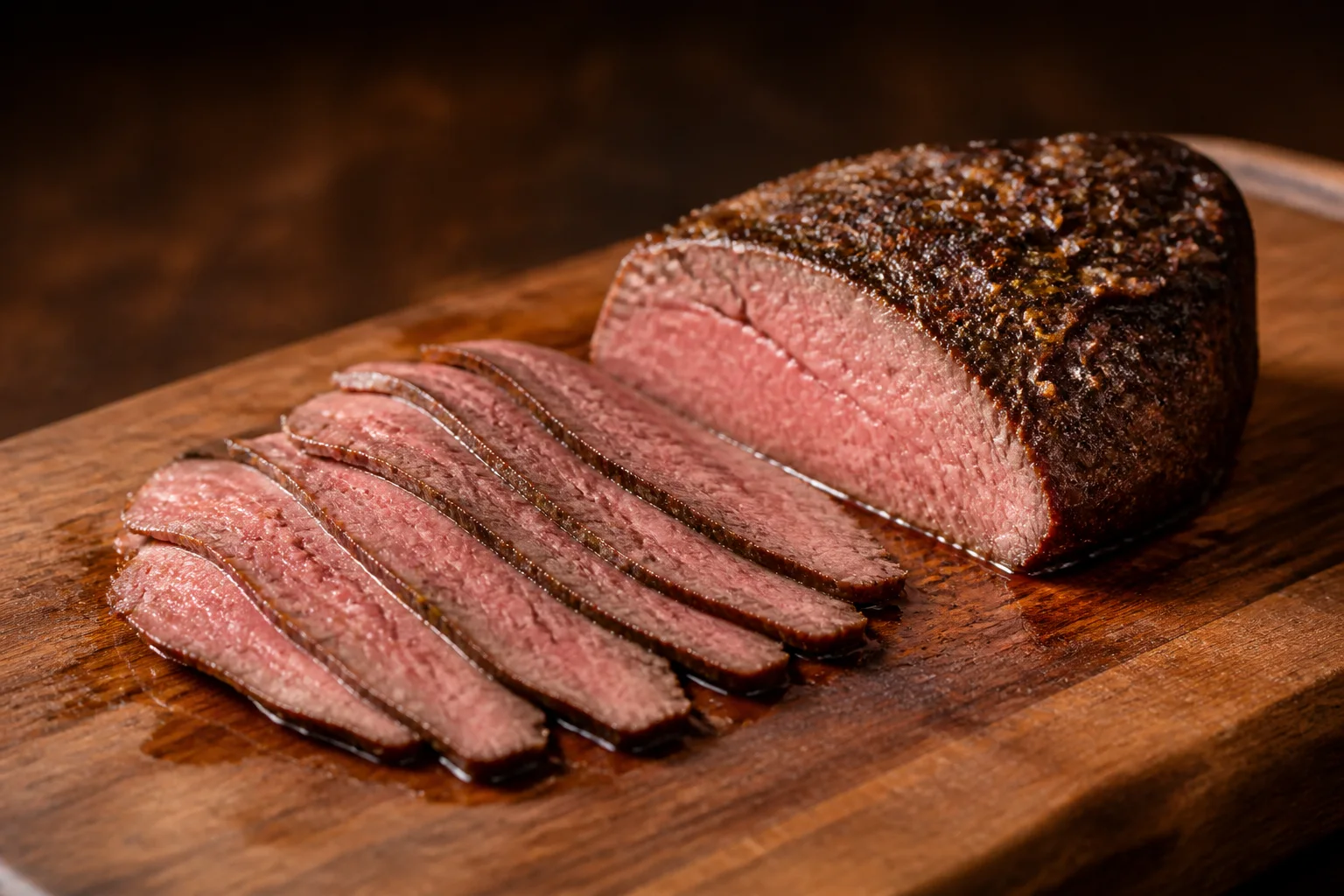
What Is Sirloin Tip Steak?
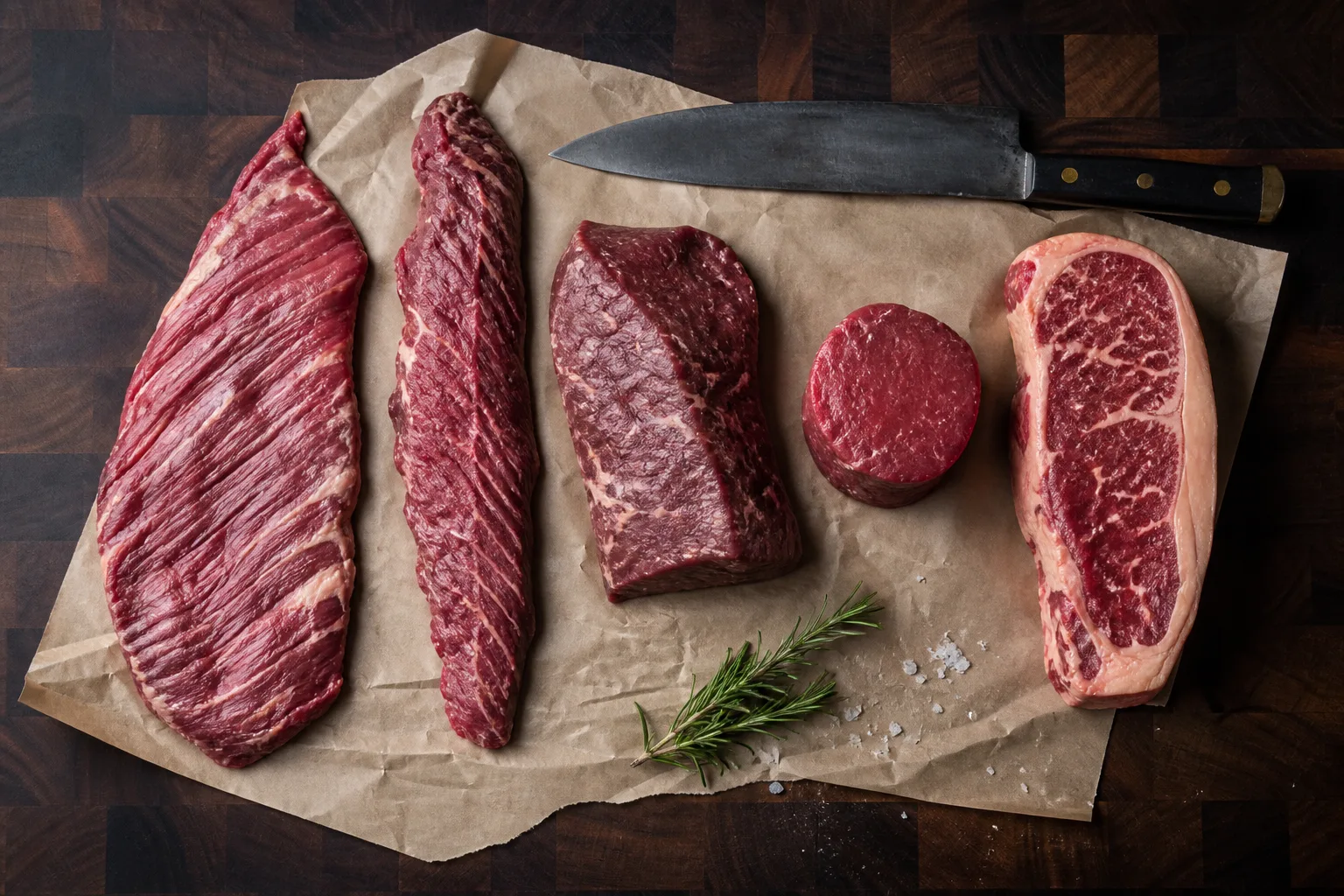
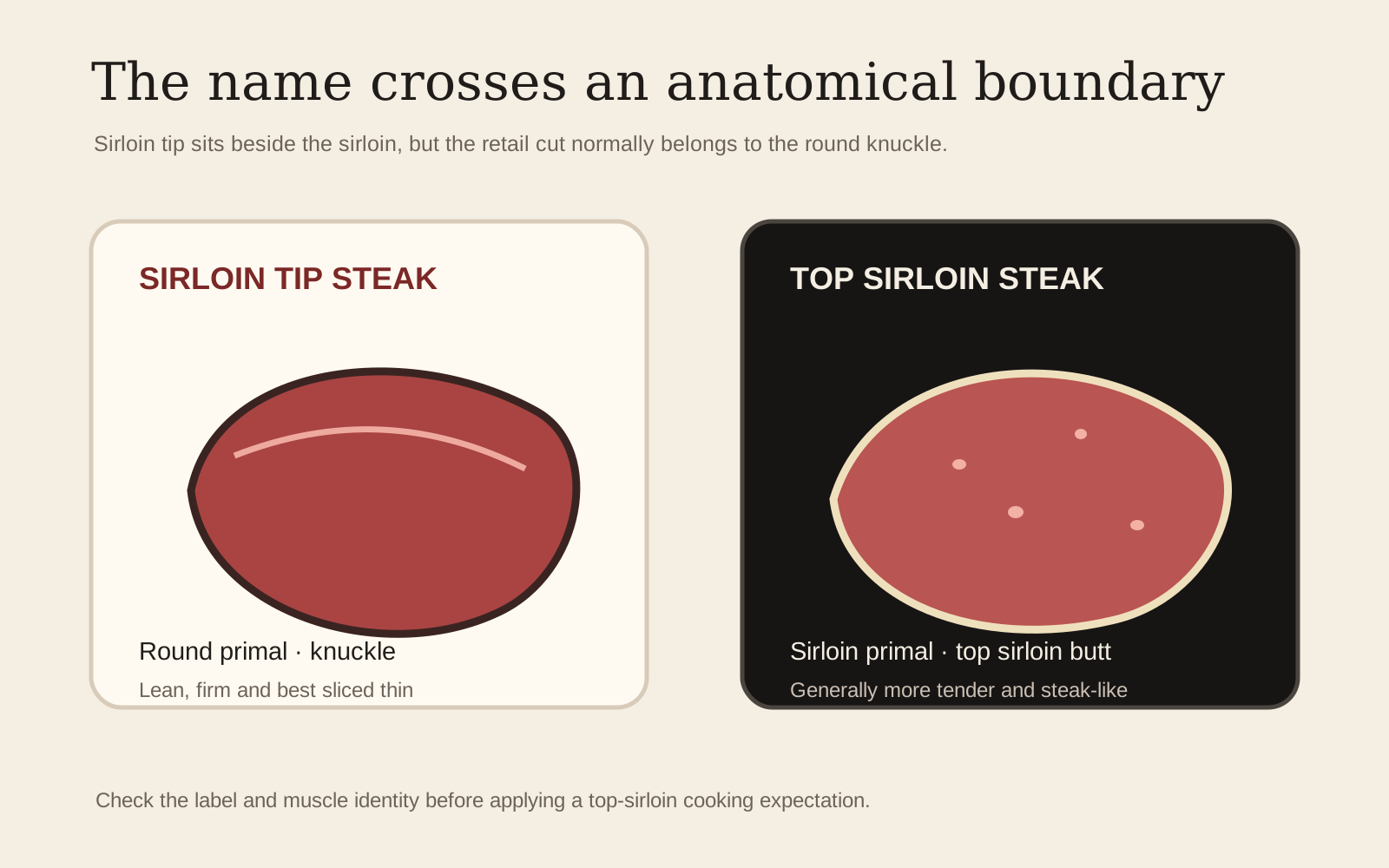
Sirloin tip commonly comes from the beef round, specifically the knuckle near the sirloin. The retail name suggests a classic top sirloin steak, but the muscle works harder and is leaner. It should not be confused with picanha or coulotte, both associated with the top sirloin cap.
Sirloin Tip Is a Round Cut, Not Top Sirloin
Sirloin tip steak is a lean steak from the round knuckle beside the sirloin. The location explains the retail name, but it does not give the cut the tenderness or marbling of a top-sirloin steak. That distinction should control buying expectations and cooking method.
| Identity point | Sirloin-tip answer |
|---|---|
| Primal | Round; the knuckle next to the sirloin |
| Common names | Knuckle steak, round tip steak, breakfast steak, sandwich steak |
| Industry reference | Sirloin tip steak IMPS 1167; side steak IMPS 1167F |
| Typical character | Lean, beefy and firm |
| Best uses | Thin steaks, strips, kabobs, sandwiches, wraps and stir-fry |
Texture and Flavor
Sirloin tip tastes clean and beefy with relatively little fat. Its firm fibers can feel dry if cooked too far or cut thick. Individual muscles within the knuckle differ, so a butcher-cut steak may be more or less tender depending on where it came from.
How to Buy
- Choose evenly cut steaks without heavy bands of silverskin.
- Look for modest internal marbling; exterior fat will not protect a lean center.
- For stir-fry or sandwiches, buying a small roast and slicing it yourself may give better grain control.
- Ask whether the label means round tip/knuckle in your market.
Cooking Strategy
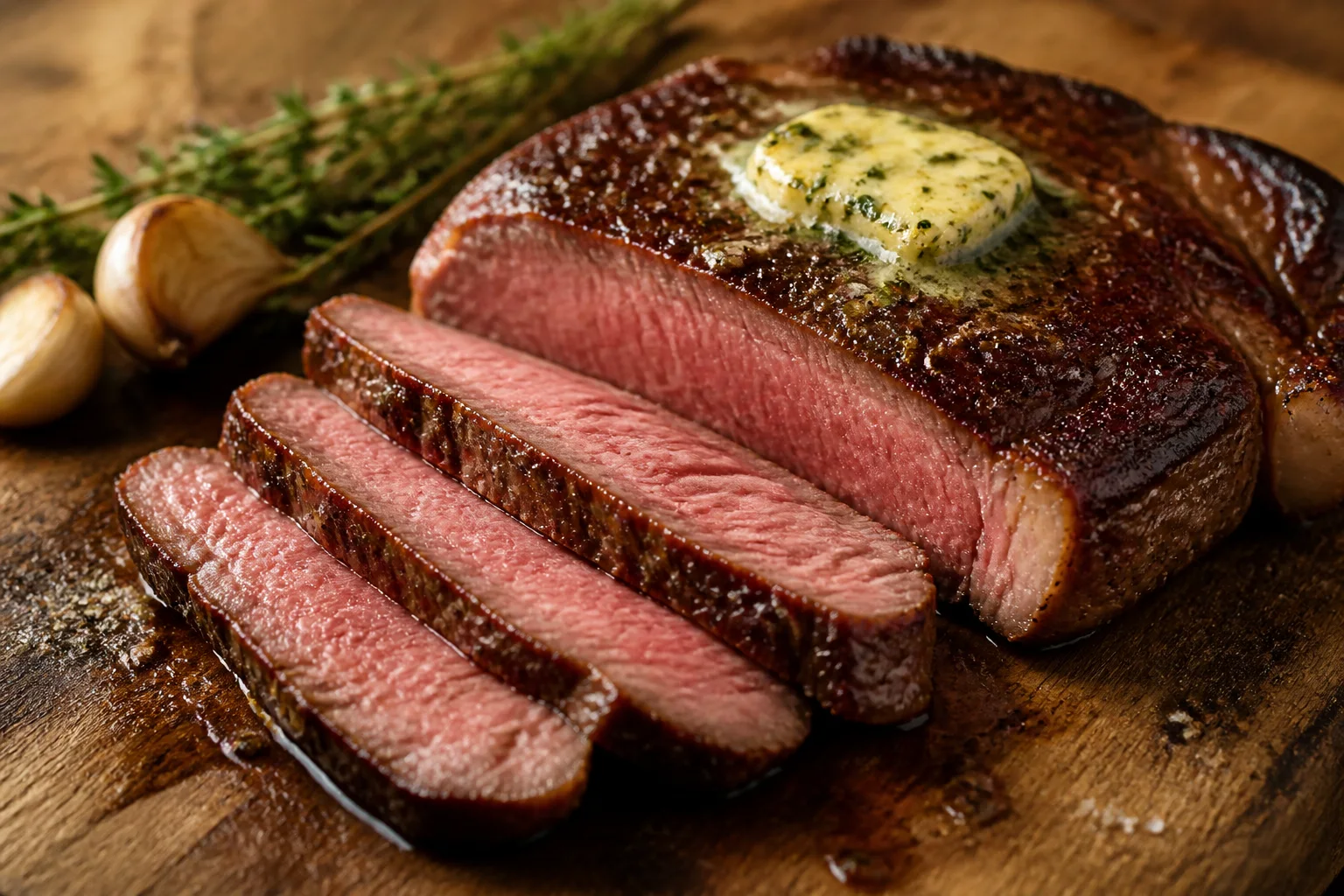
Use a brief steak marinade for surface seasoning, then pat dry. Sear quickly over high heat and avoid pushing a thin steak far past the doneness you want. For thicker pieces, a gentle oven finish is easier to control.
Slice for Tenderness
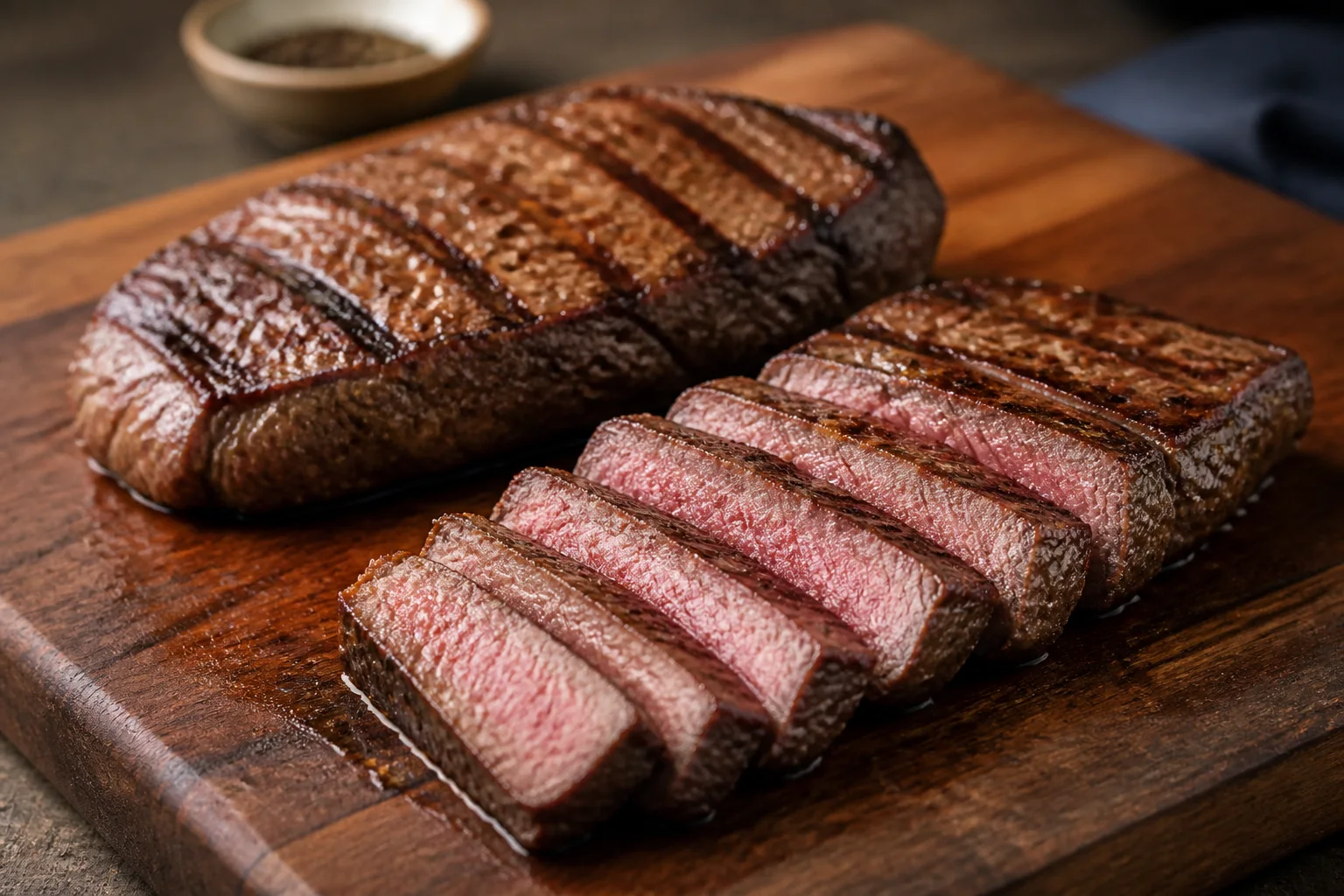
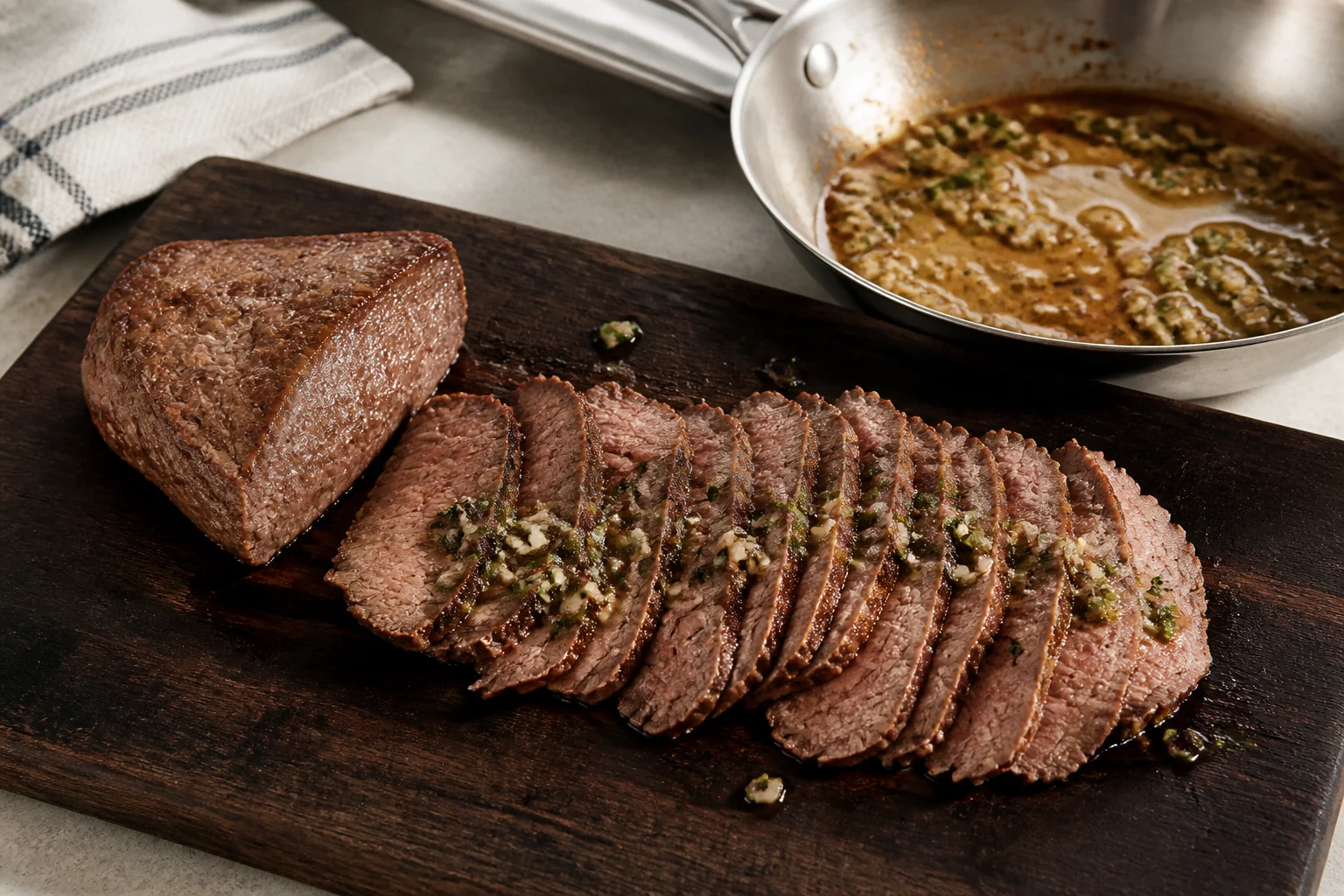
Rest briefly, identify the grain and cut very thin slices across it. Sirloin tip is at its best in steak salads, sandwiches, rice bowls and fajita-style dishes where thin portions carry sauce and vegetables.
Use Sirloin Tip Where Its Lean Texture Works
Sirloin tip is often more successful as a sliced component than as a thick individual steak. Cook a larger even piece, rest it and cut thinly for sandwiches, salads or rice bowls. This keeps every serving across the grain and lets sauce supply moisture without pretending the cut is ribeye.
If steaks are already thin, dry them thoroughly and cook in batches over high heat. A crowded pan loses temperature and the released moisture steams the lean before browning. Remove each steak as soon as the center reaches the intended point; there is little internal fat to buffer an extra few minutes.
For meal prep, chill the cooked piece whole and slice only when cold, when the firm grain is easy to cut thinly. Reheat slices briefly in hot jus or add them at the end of a stir-fry. Do not simmer until gray. A brief marinade can establish the flavor direction before this fast final warming.
Sirloin Tip Is Not Top Sirloin
Despite its retail name, sirloin tip—also called knuckle—comes from the round near the hip rather than the top sirloin. It contains several muscles with different grain directions and connective structures. That is why one package may appear uniform while another has seams or a pronounced taper.
Do not apply a top-sirloin recipe based on the shared word sirloin. Sirloin tip is generally leaner and less forgiving. Thin slicing, mechanical tenderization for certain portions, or moist applications may be more appropriate than treating every piece as a thick steakhouse cut.
| Feature | Sirloin tip / knuckle | Top sirloin |
|---|---|---|
| Primal area | Round near the hip | Sirloin |
| Typical fat | Lean | Varies; often more forgiving |
| Best service | Thin slices across grain | Individual steaks or roast portions |
Trim, Portion and Season for the Intended Dish
Remove silverskin and heavy exterior connective tissue rather than expecting heat to tenderize it during a brief sear. If the steak has multiple grain directions, separate along natural seams or plan to change the carving angle. Even pieces cook more predictably and are easier to serve.
A salt-forward marinade with garlic, herbs and modest acid can establish flavor, but acid does not penetrate deeply enough to transform the muscle into tenderloin. Refrigerate during marination, discard raw-contact liquid unless it is boiled according to a safe recipe, and blot the steak before browning.
Sear Quickly and Slice Thinly
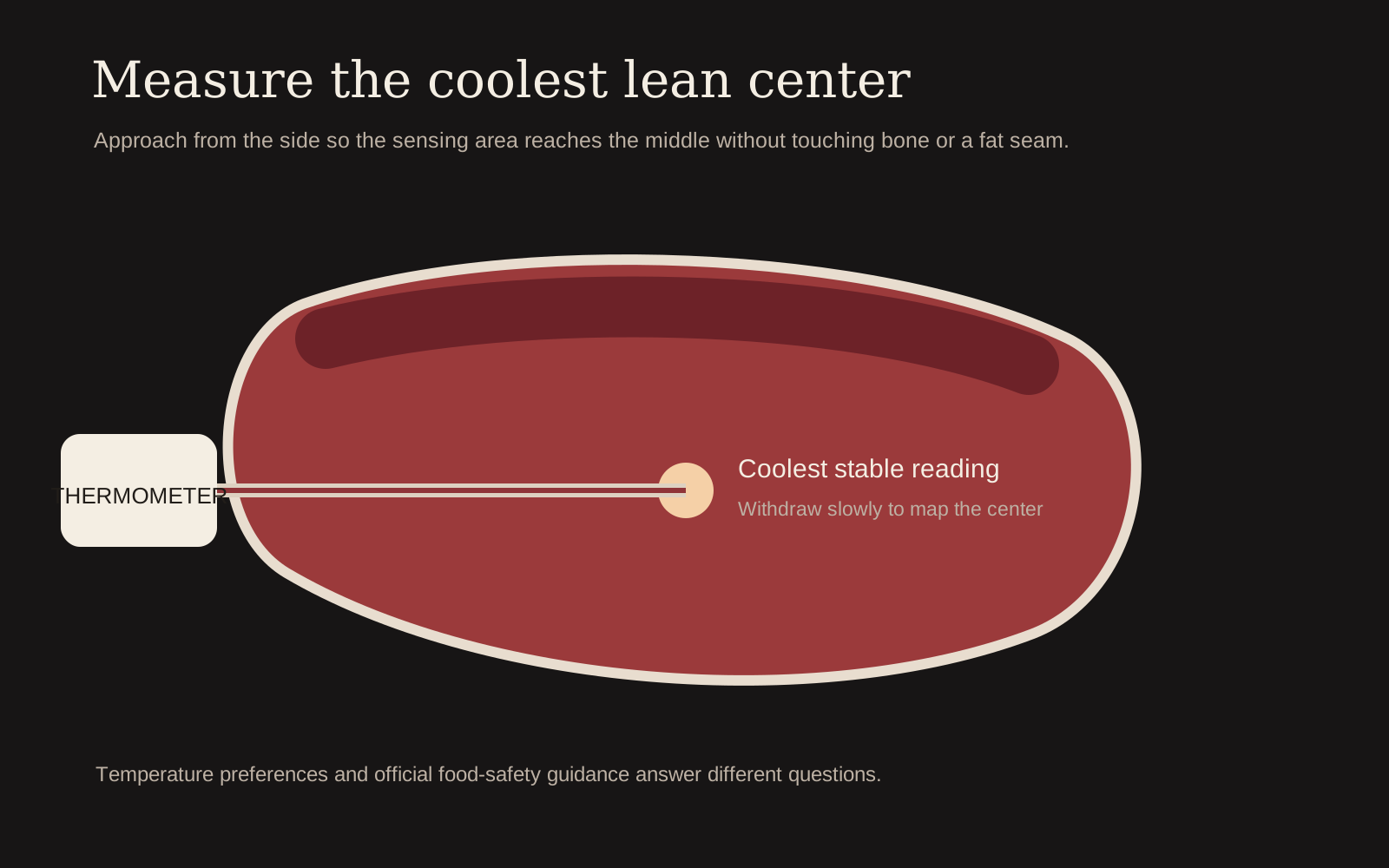
Use a hot pan or grill and leave space around each piece. Thin steaks need only a short cook; batch work is better than crowding. For a thicker section, brown the surface and finish over moderate heat while monitoring the center. Rest briefly, then cut across the grain.
Sirloin tip excels in sandwiches, salads and bowls where thin slices meet sauce, vegetables and texture. For reheating, warm slices only until heated through in jus or add them at the end of the dish. Simmering turns lean fibers gray and firm.
If you want a naturally more tender small shoulder muscle with a similar lean profile, compare teres major. For richer shoulder marbling, compare Denver steak.
Sirloin Tip vs Similar Sirloin-Labeled Cuts
| Cut | Actual region | Texture and fat | Do not confuse it with |
|---|---|---|---|
| Sirloin tip | Round knuckle | Lean and firm | Top sirloin |
| Top sirloin | Top sirloin butt | More tender and conventionally steak-like | Sirloin tip |
| Tri-tip | Bottom sirloin | Triangular roast or steaks with clear grain | The round knuckle |
| Ball tip | Bottom sirloin ball tip | Lean petite-sirloin format | Sirloin-tip center or side steak |
For an intact, thicker knuckle piece, oven roasting and thin carving may be more forgiving than forcing it into steak service. For individual steaks, a tenderizing steak marinade and a fast cook preserve more moisture. The label should tell you whether you are buying the whole category, a center steak or a side steak.
Choose a Sirloin Tip Recipe That Respects the Cut
A recipe for top sirloin is not automatically a sirloin tip steak recipe. Sirloin tip is usually leaner round-primal beef and benefits from thinner portions, an efficient sear and very thin cross-grain slicing. Heavy marinades cannot turn it into tenderloin.
Use the dedicated sirloin tip steak recipe for a short soy-garlic marinade, fast pan sear, safe measured center and reduced pan sauce. If your package contains irregular cubes sold as “sirloin tips,” first read the steak tips guide because that retail name can refer to several source cuts.
Where This Guide Fits
This page supports the broader Sirloin Steak guide. Use that pillar page for the complete cut family, buying framework and links to every closely related article.
Useful next reads include Top Sirloin Steak, Sirloin Tip Steak Recipe, Sirloin Steak Recipe, Picanha Steak, and Grilled Steak for nearby cuts, methods and decisions.
Frequently Asked Questions
Is sirloin tip actually sirloin?
Usually it comes from the round knuckle adjacent to the sirloin, despite the retail name.
Is sirloin tip tender?
It is lean and firmer than top sirloin or ribeye. Quick cooking and thin cross-grain slicing improve it.
Can sirloin tip be reverse-seared?
A thick, even piece can be, but many sirloin tip steaks are thin enough that a fast direct sear is better.