Choose, Trim and Dry-Brine
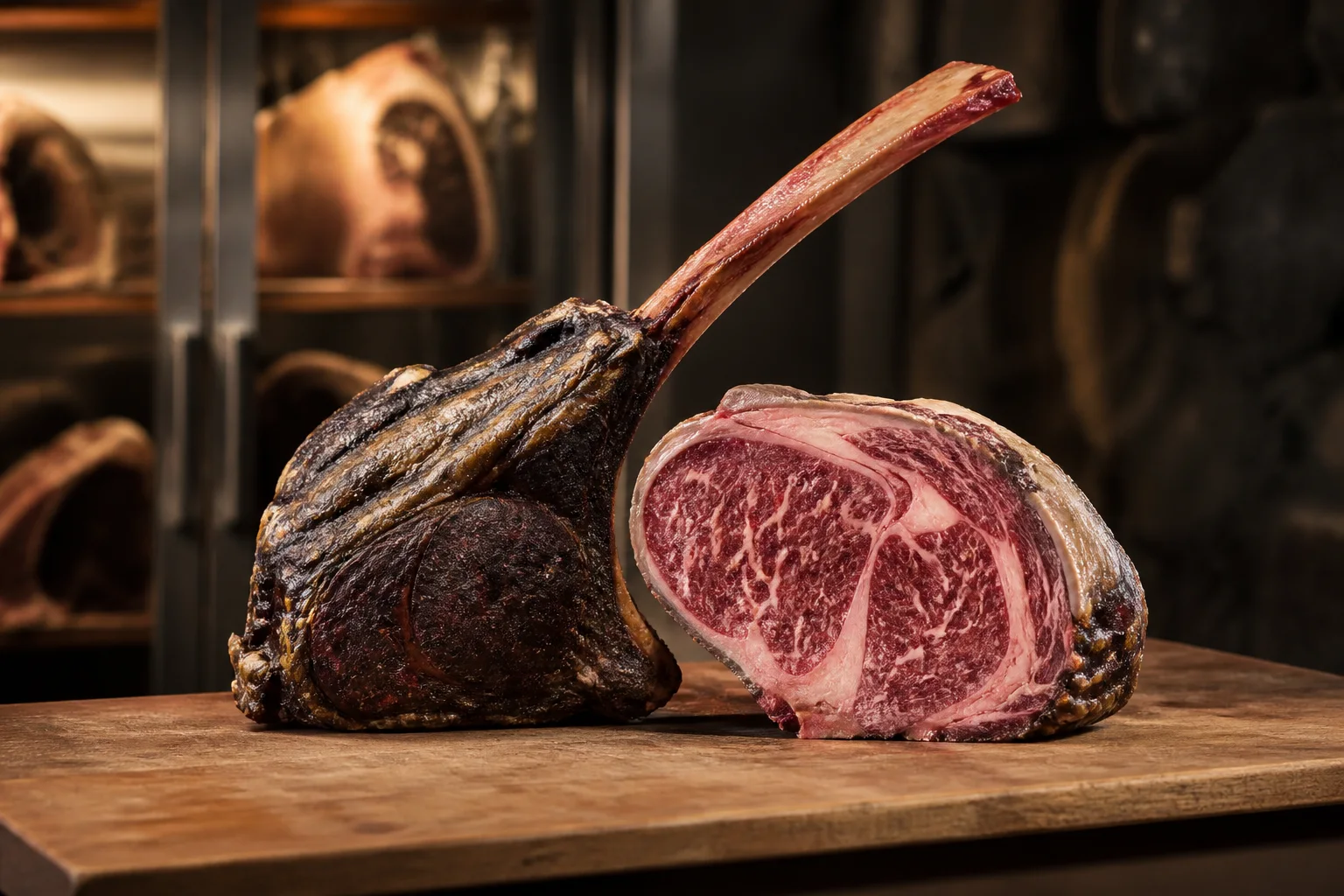
Choose an evenly thick, well-marbled steak; the tomahawk steak guide shows how to judge the cap, eye and bone-to-meat ratio. Trim only loose scraps and any hard waxy fat that will not render during a gentle cook.
Salt uncovered on a rack for 12 to 24 hours. A dry surface accepts smoke cleanly and browns quickly later. Pepper is fine at smoker temperatures, but reserve sugar and delicate herbs for after the sear.
Smoker Setup and Wood
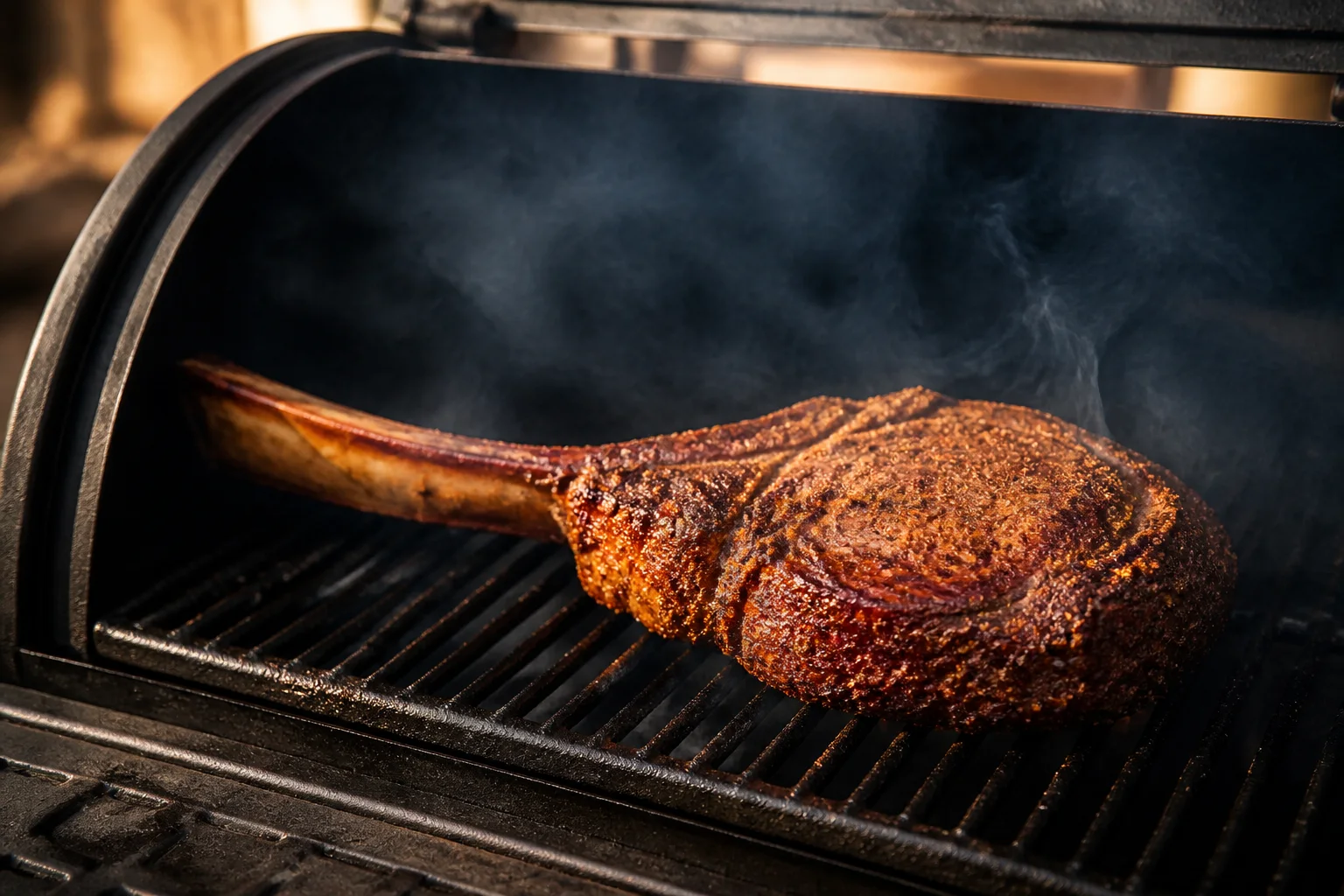
Run the smoker around 225–250°F with clean, nearly invisible exhaust. Oak is a steady all-purpose choice; hickory is stronger; fruitwoods are softer. Pellet species labels matter less than clean combustion and fresh, dry fuel. Heavy white smoke deposits bitterness rather than depth.
The Smoking Timeline
- 01PREP
- 02SEASON
- 03SMOKE
- 04CHECK TEMP
- 05SEAR
- 06REST
- 07SLICE
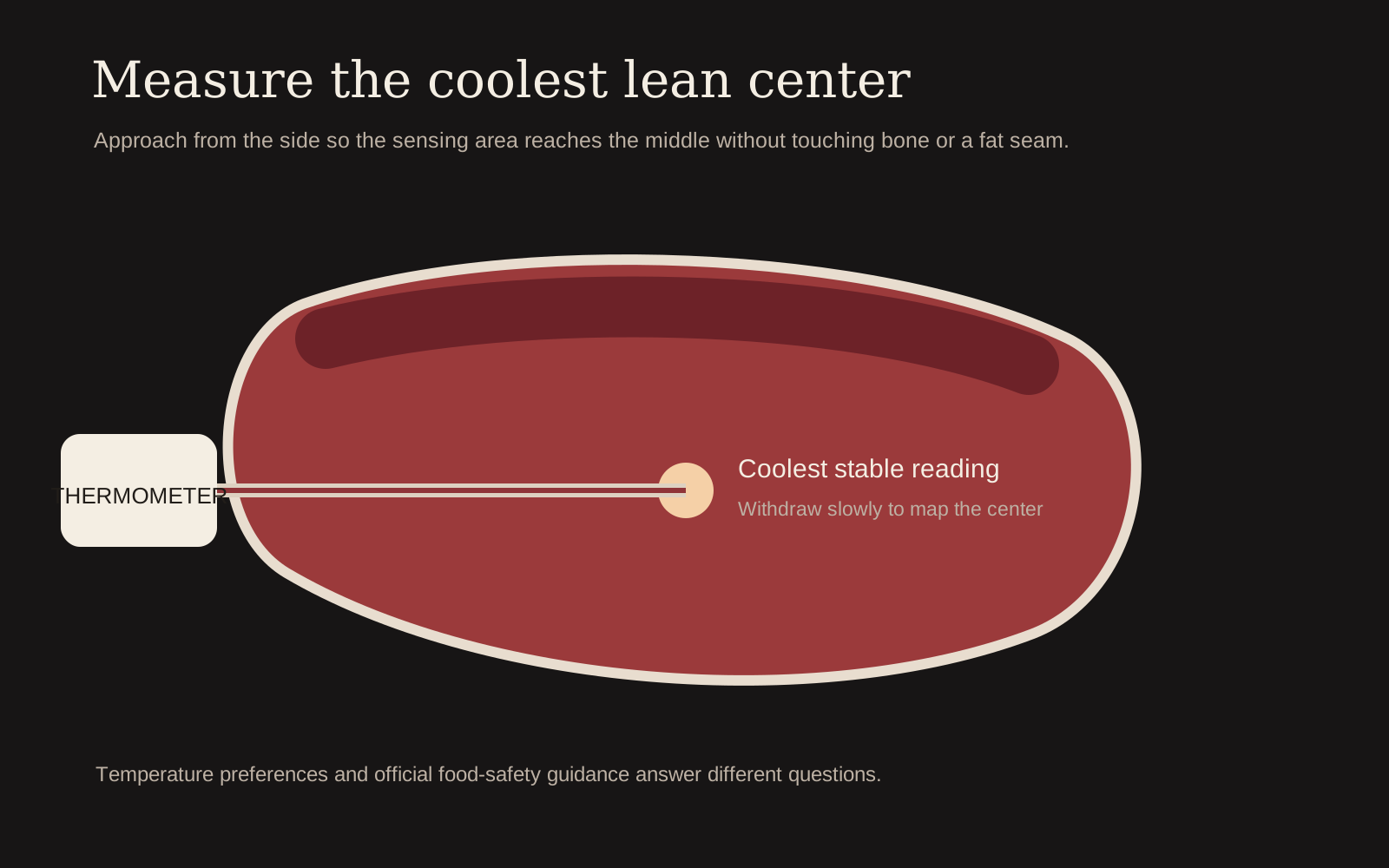
Insert the probe sideways into the center of the eye, clear of bone and fat seams. Place the steak where the cooker has stable airflow and turn it if one side colors faster. Begin verifying with an instant-read thermometer well before the expected finish.
Move to the sear while the center still has room to climb. The exact handoff depends on steak size, searing intensity and the temperature trend, so use the principles from the broader tomahawk cooking guide instead of memorizing one pull number.
Reverse Sear and Butter Finish
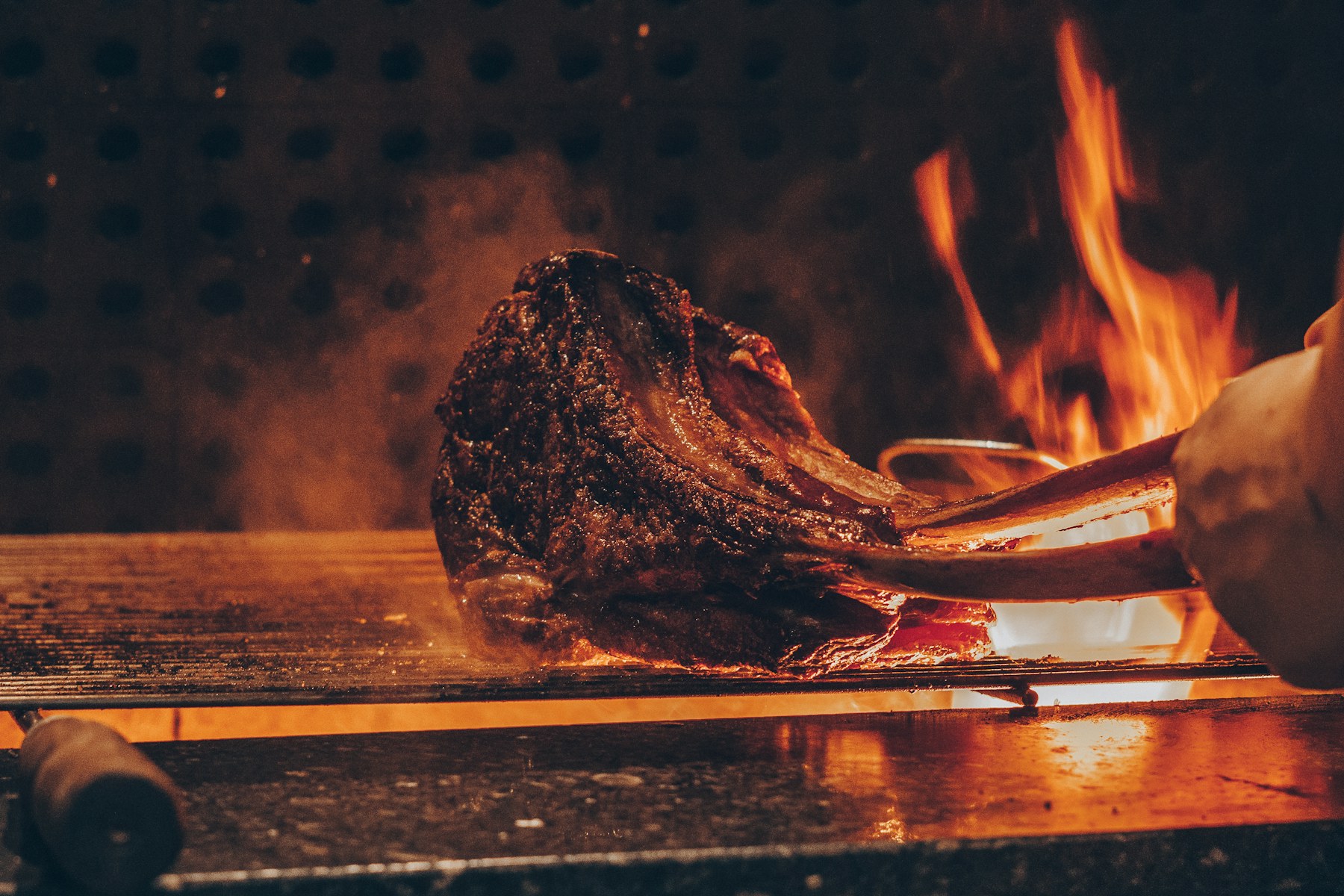
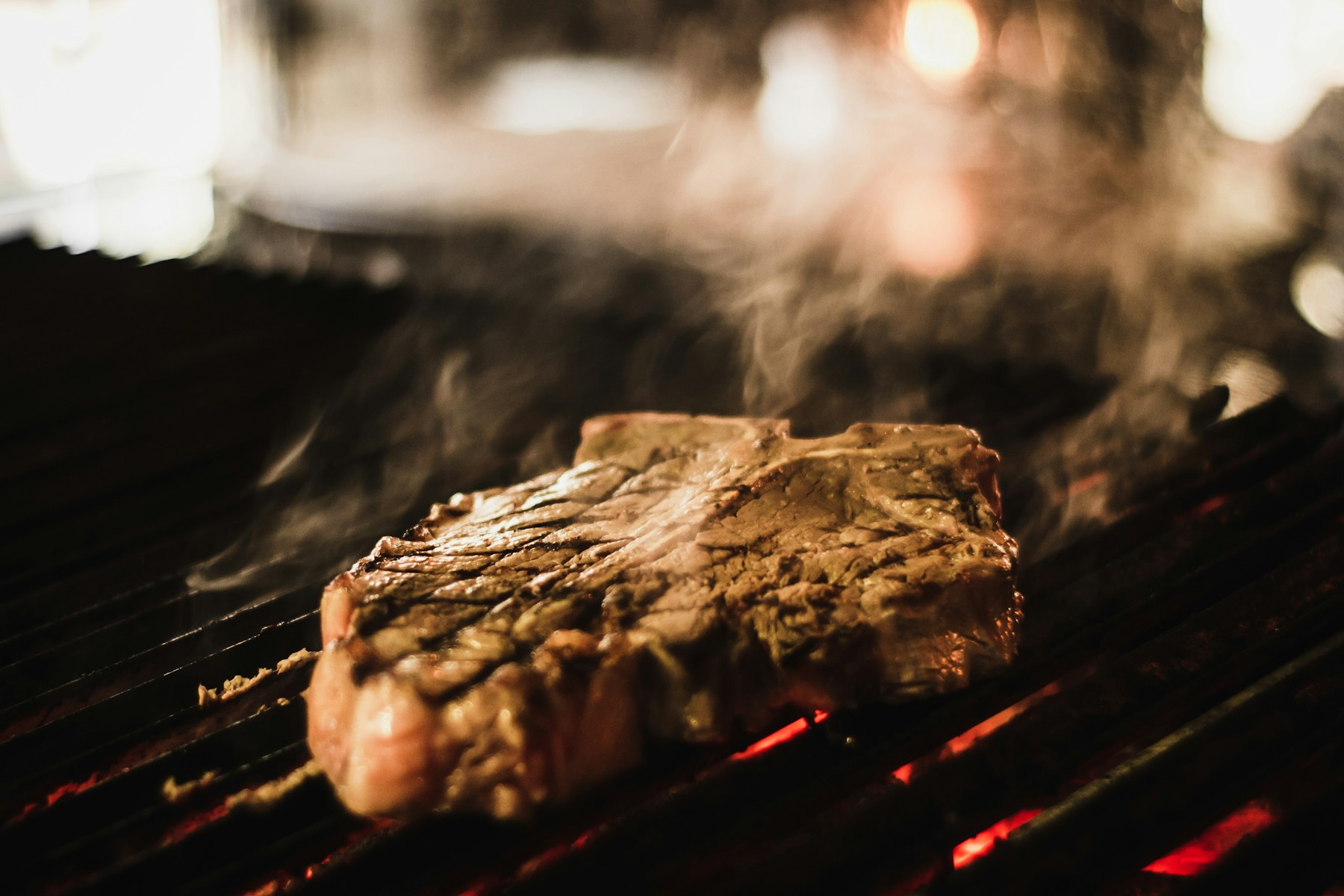
Use a ripping-hot grill, plancha or cast-iron pan. Blot the surface, add a thin film of high-heat oil and turn in short intervals. Manage flare-ups from ribeye fat. Once the crust is established, move off direct heat and add butter, herbs or garlic without burning the milk solids.
Rest, Slice and Serve
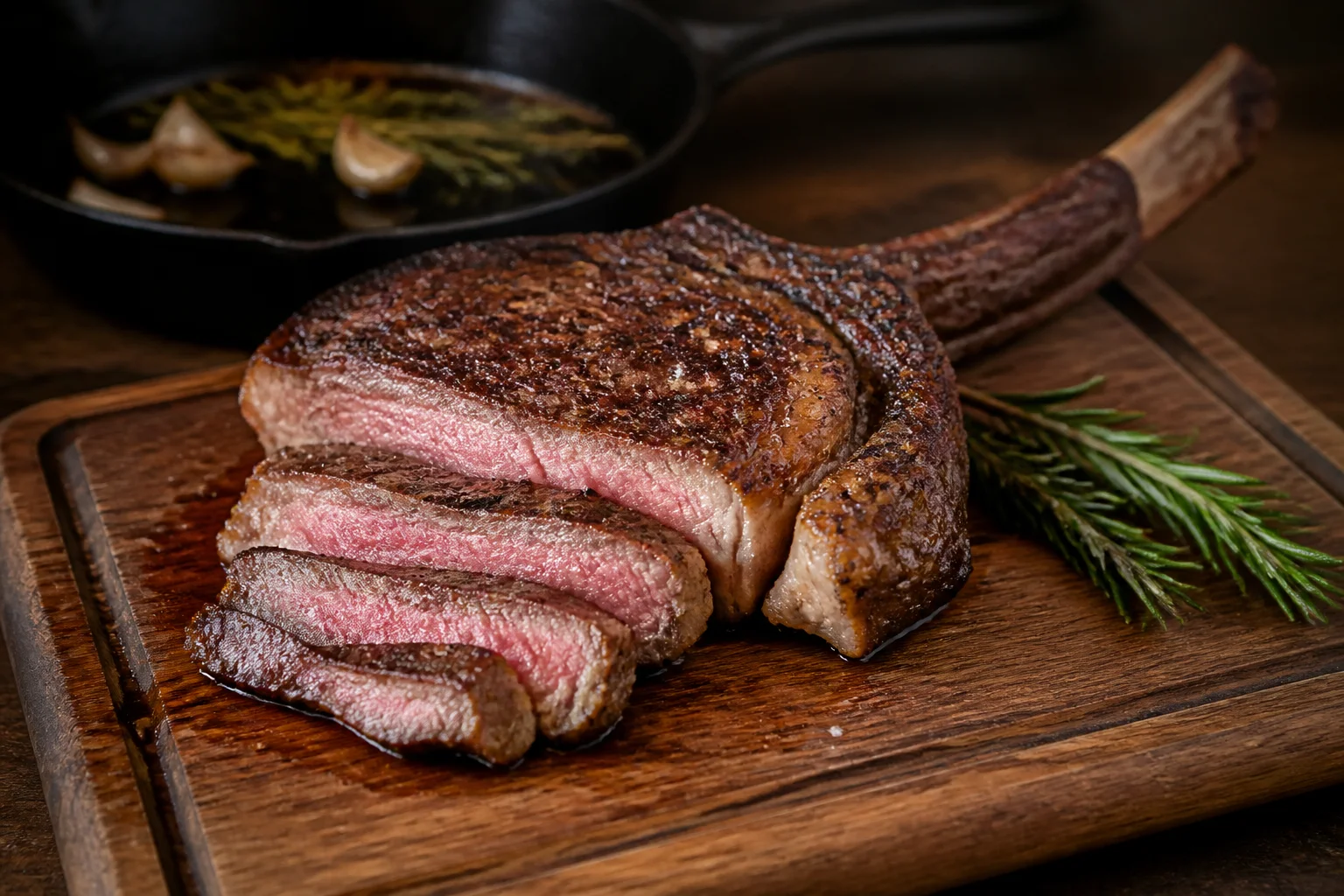
Rest on a board or rack while monitoring carryover, then cut the meat from the rib and slice across the grain. Check the steak temperature guide before deciding on doneness, and remember the official safety guidance is distinct from culinary preference.
Serve with something acidic or herbaceous. For a butter-based option added after high heat, use the approach in our garlic butter guide.
Troubleshooting
| Symptom | Cause | Fix |
|---|---|---|
| Bitter surface | Dirty, dense smoke | Improve airflow and use a clean-burning fire |
| Soft bark | Wet surface or butter added too early | Dry before searing; butter only after crust forms |
| Uneven center | Smoker hot spot or misplaced probe | Rotate and verify the eye in multiple places |
| Overcooked cap | Long sear over flare-ups | Turn frequently and move to a cooler zone |
Build Clean Smoke Before the Steak Goes On
A stable fire and clear exhaust matter more than loading the cooker with wood. Dense, stale smoke deposits harsh compounds on the broad dry surface of a tomahawk. Light the fuel fully, keep the exhaust path open according to the smoker design and wait for the initial heavy smoke to settle before adding meat.
Oak is a calm baseline for beef. Hickory is assertive and should be used with restraint; fruit woods are milder. Mixing several woods does not automatically create complexity. Start with one clean fuel, take notes and adjust on the next cook.
Account for Weather, Bone and Cooker Hot Spots
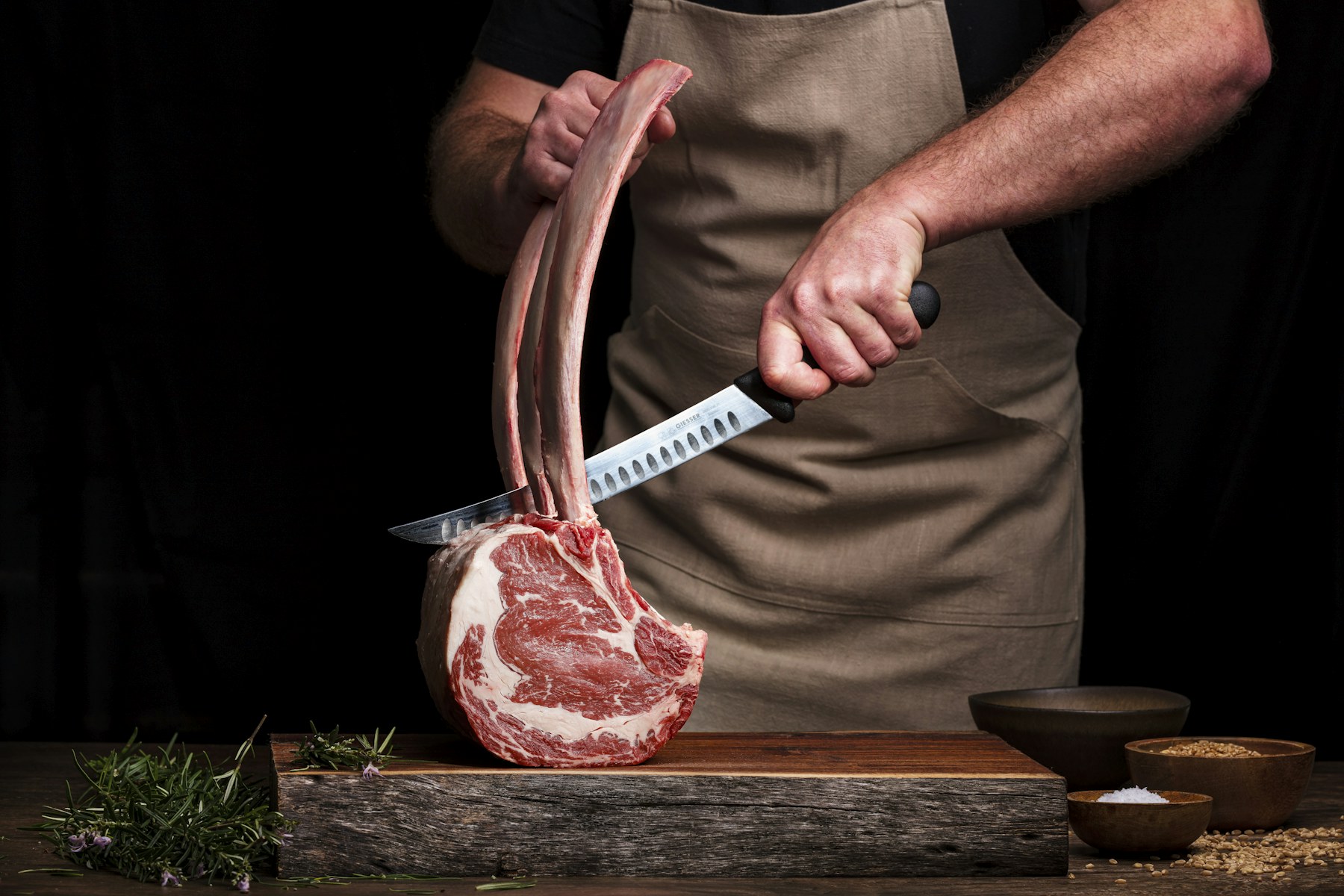
Wind and cold increase fuel demand and can make a controller reading differ from grate conditions. Place a separate grate probe near—but not touching—the steak, shield the cooker only as its manufacturer permits and avoid opening the lid merely to look. On an offset smoker, orient the bone or fat edge toward the stronger heat.
The leave-in probe belongs in the center of the eye, away from bone and the seam under the cap. Check a second point before the high-heat finish. If the exterior already looks dry and dark, shorten the sear; smoke color is not a reason to burn the crust.
Season and Serve for Smoke, Not Around It
Taste the first slice before adding sauce. Clean smoke, salt and ribeye fat may need only lemon or a vinegar-dressed salad. Sweet sauce softens crust and can make strong smoke feel heavier. Serve sauce on the side when cooking an expensive shared steak.
Separate the cap and eye if their grains diverge, slice across each and keep the platter warm. Leftover smoked steak is better cold or gently warmed than exposed to another full sear, which concentrates smoke while driving the center past its original doneness.
Plan the Cook Without Promising an Exact Clock Time
Start with thickness, not weight. Bone, cap and exterior fat increase pounds without changing the distance to the center of the eye. Cold weather, wind, cooker recovery and actual grate temperature make a minutes-per-pound formula unreliable for a steak.
Salt the day before, prepare the smoker and finishing fire before guests arrive, and begin checking the center early. The steak can pause briefly between a completed smoke stage and the final sear, but it should not sit at room temperature for an extended social delay.
Keep the final crust stage short by drying the surface and fully preheating the sear zone. Rest while finishing fast sides, then carve immediately before service. If timing is critical, practice on a less expensive bone-in ribeye of similar thickness.
Record smoker set point, grate reading, steak thickness, handoff temperature and post-rest result. Those five facts make the next cook far more predictable than recording total minutes alone.
Where This Guide Fits
This page supports the broader Tomahawk Steak guide. Use that pillar page for the complete cut family, buying framework and links to every closely related article.
Useful next reads include How to Cook Tomahawk Steak, Tomahawk Steak Recipe, Dry-Aged Tomahawk Steak, Ribeye Steak, and Cowboy Steak for nearby cuts, methods and decisions.
Frequently Asked Questions
What wood is best for tomahawk steak?
Oak is balanced, hickory is stronger and fruitwoods are gentler. Clean combustion has a greater effect than the species name on the bag.
Should I wrap a tomahawk while smoking?
No wrap is normally needed for a steak. Wrapping traps steam and works against the dry exterior needed for searing.
Can I smoke it on a pellet grill?
Yes. Use the same low-heat first stage, verify the grate temperature and arrange a separate high-heat finish if the grill cannot sear strongly.