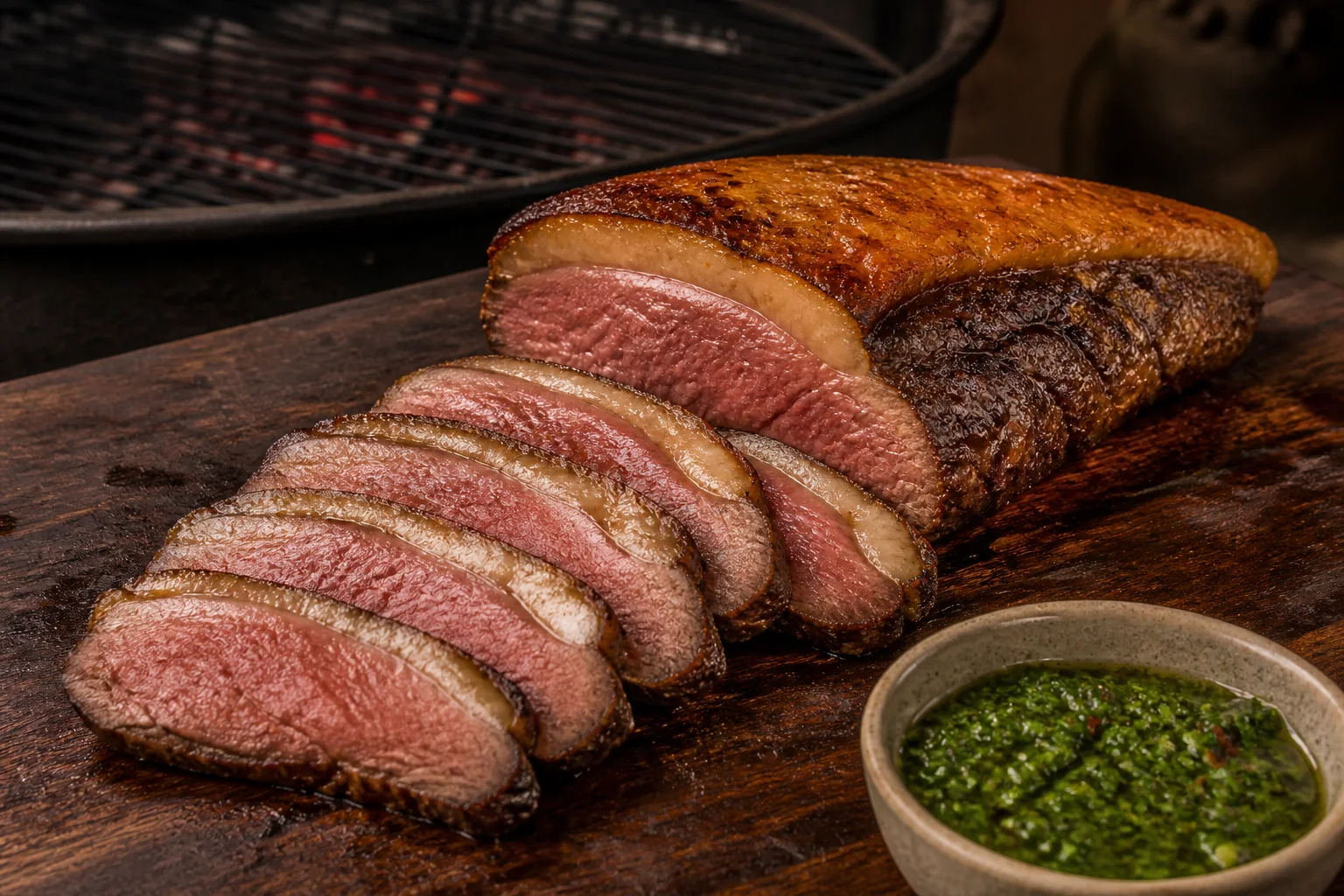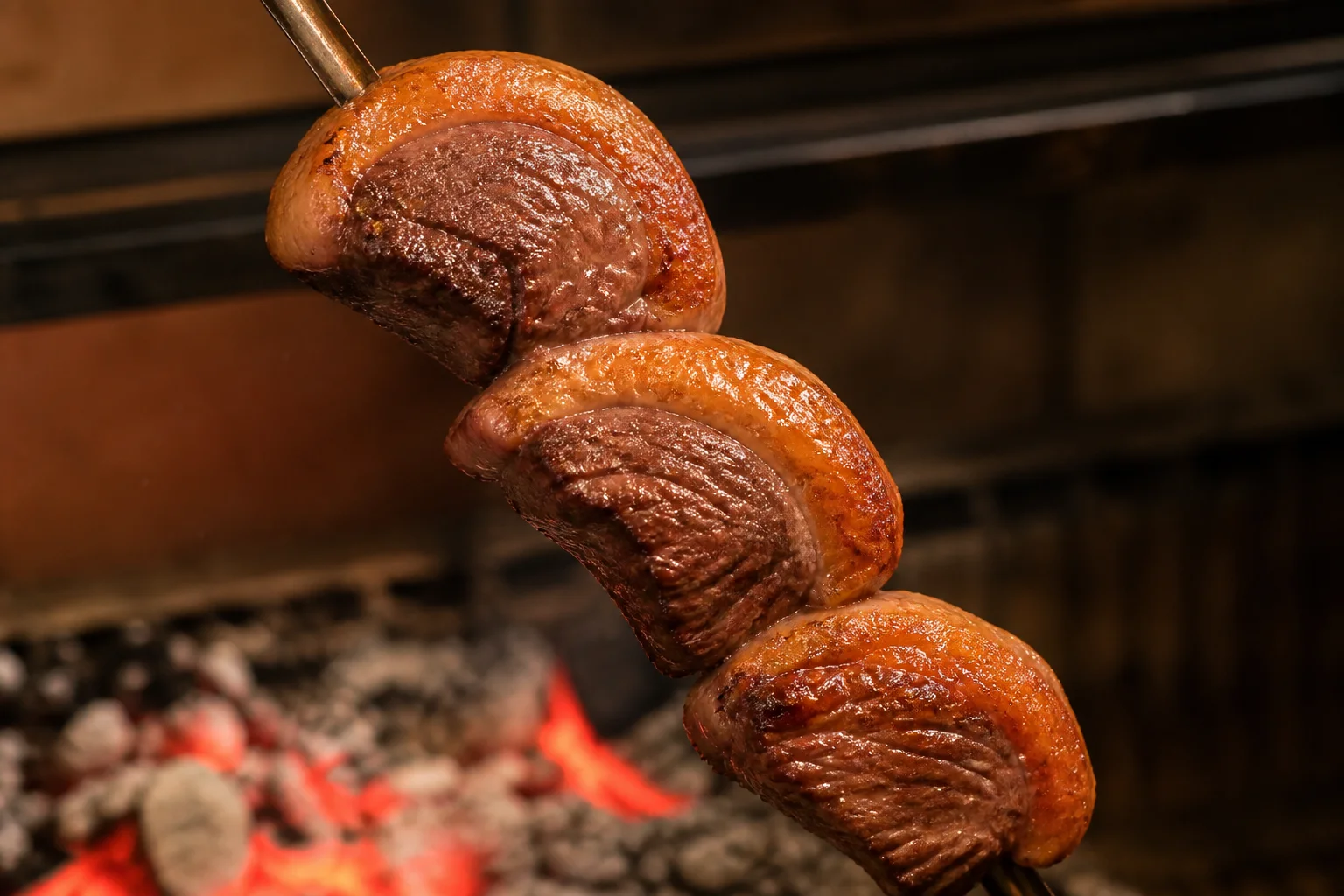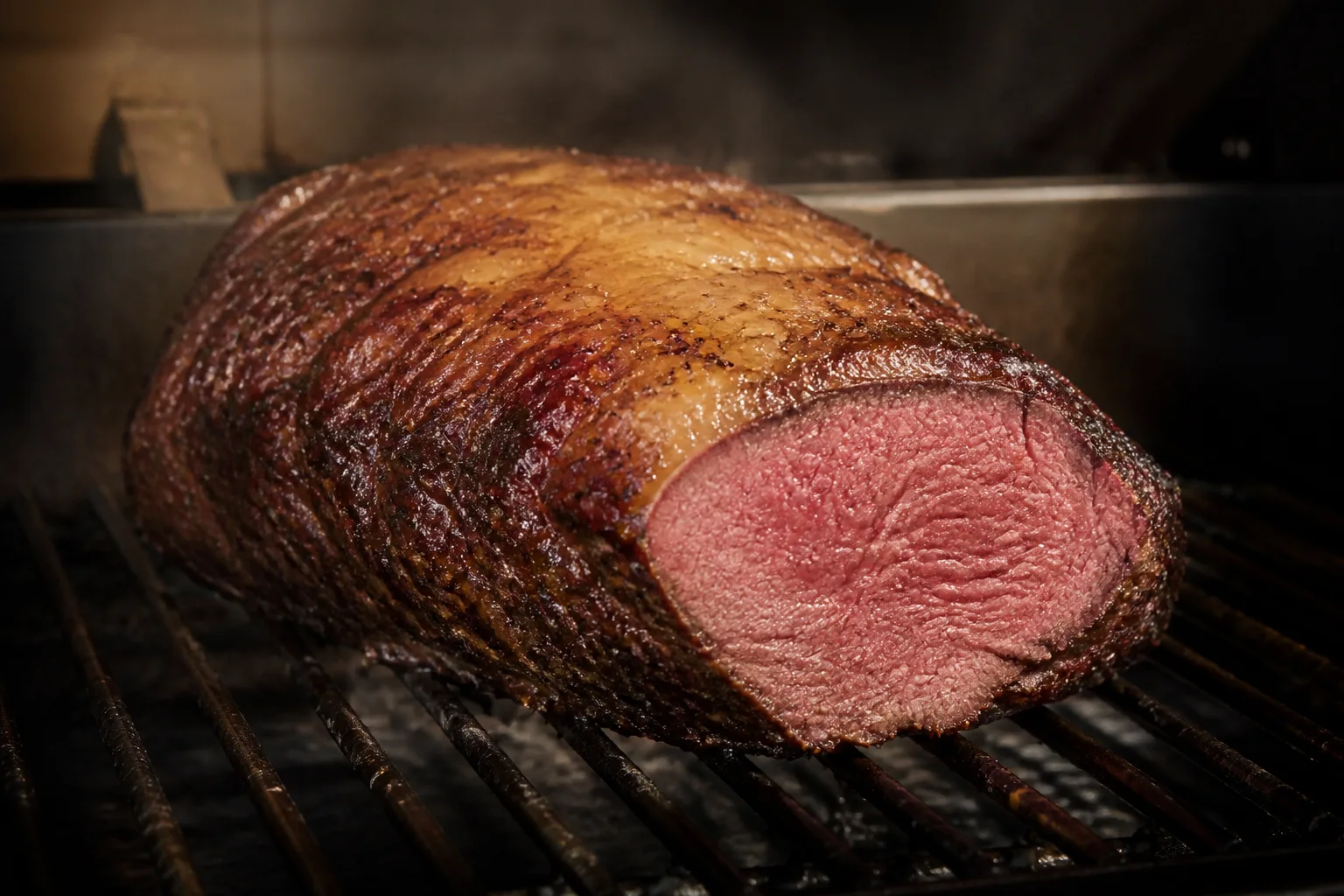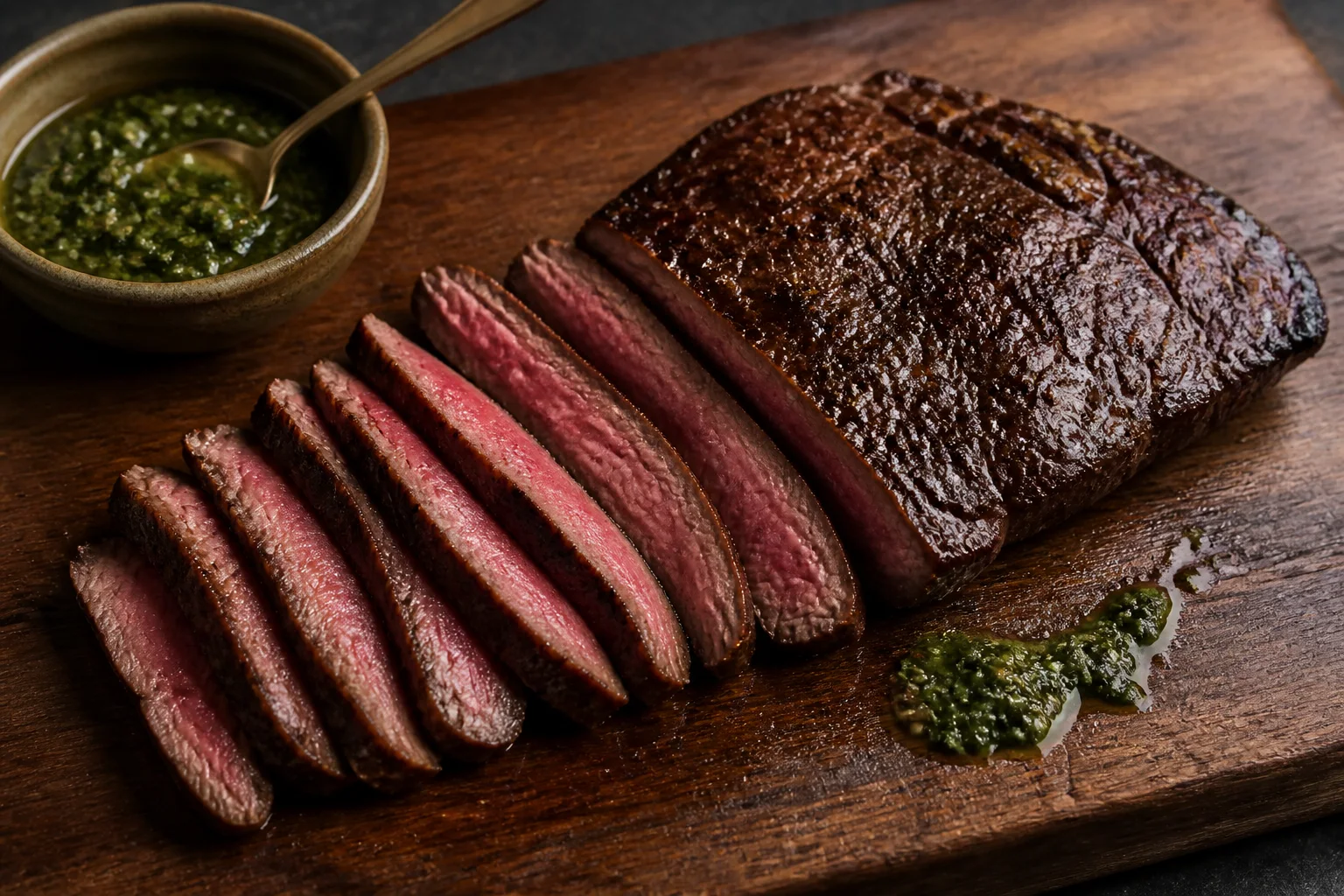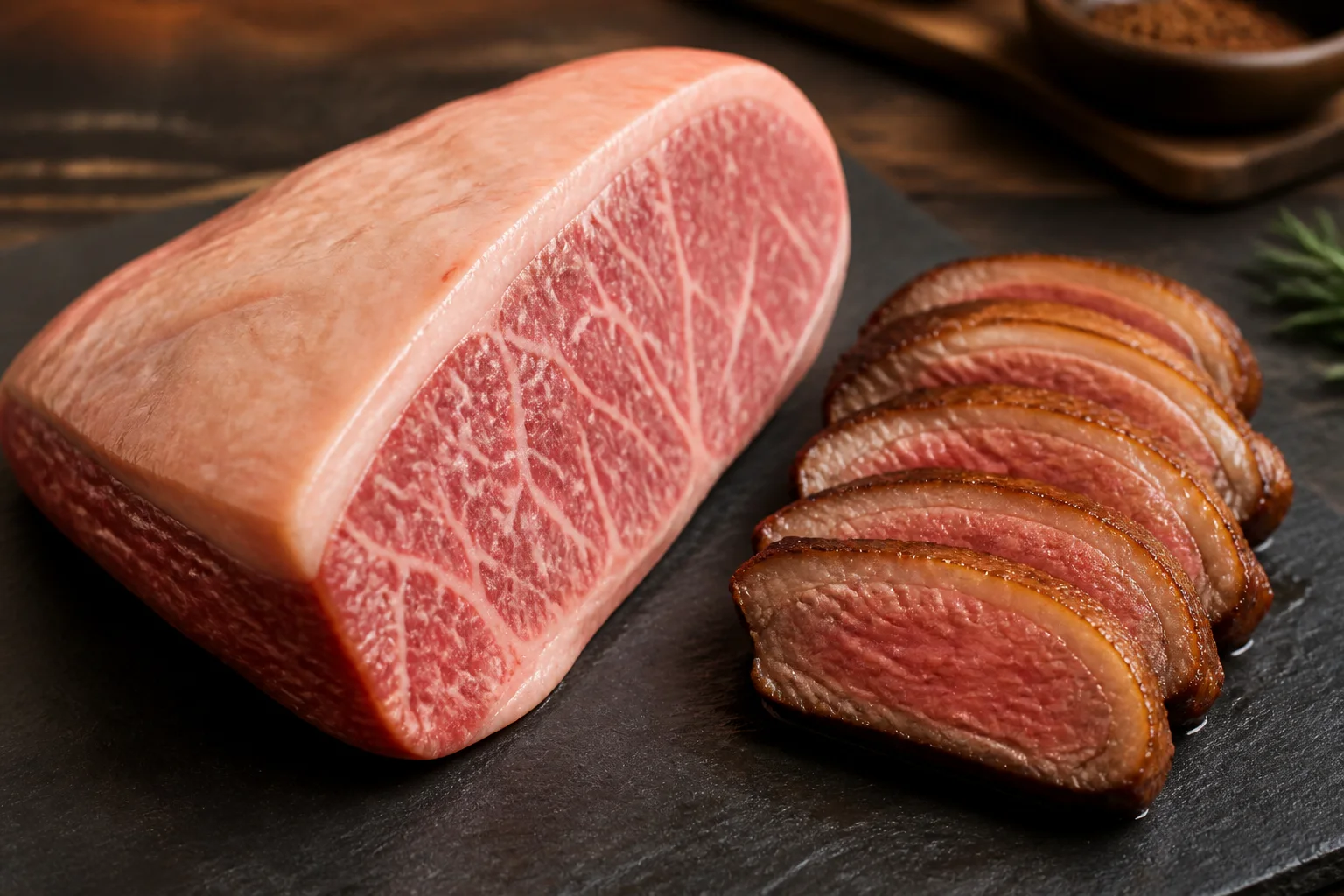
Start With Picanha Anatomy
Picanha is the triangular top sirloin cap. Read the complete picanha guide for grain and fabrication. Wagyu genetics can increase intramuscular fat, but they do not remove the cut's characteristic exterior cap.
Visual Reference

Clarify Origin and Grade
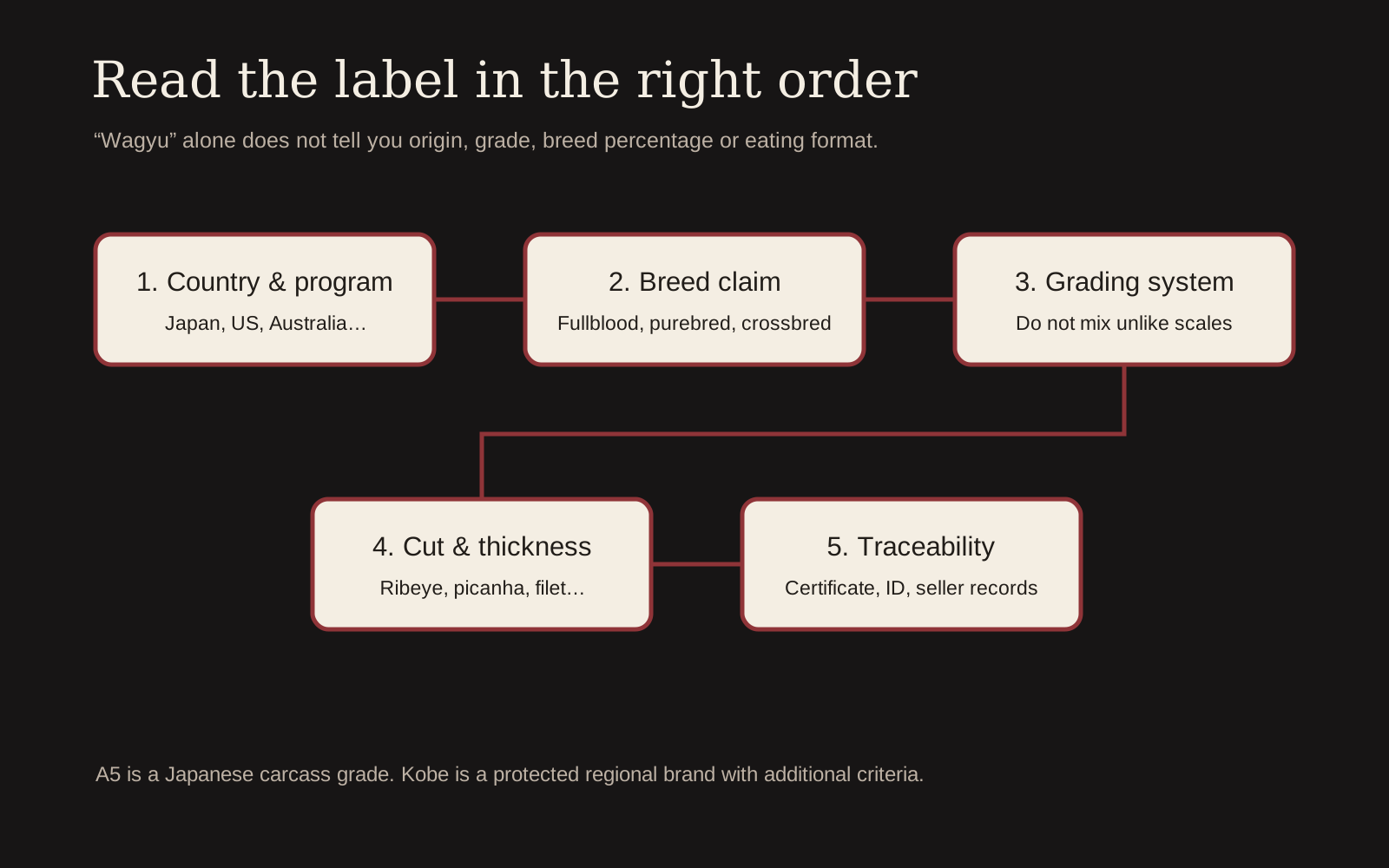
Ask whether the beef is Japanese, American or Australian Wagyu and which grading system supports the claim. The Wagyu guide explains why marble scores cannot be compared casually across systems. 'A5 picanha' should carry Japanese documentation, not simply a photograph of white flecks.
Manage Two Kinds of Fat
Trim the exterior cap to an even, useful layer. Score it shallowly without reaching the lean. Because the meat may already be richly marbled, an inch of exterior fat is unnecessary. Render over moderate heat and keep a cool zone for flare-ups.
Cook and Slice
Use thick flat steaks or Brazilian-style skewers. Salt simply, render the cap and finish the lean over high heat. Check with the temperature guide and rest briefly. Then identify the grain again and slice thinly across it.
For a more internal-fat-focused experience, compare Wagyu ribeye; for a large bone presentation, compare Wagyu tomahawk.
Serve With Acidity
Use chimichurri, grilled scallions, citrus, vinaigrette and crisp vegetables. Skip butter-heavy sauces; this cut already has both intramuscular and exterior fat.
Portion the Cap Before You Light the Fire
A whole sirloin cap has two sources of richness: marbling inside the lean and the exterior fat layer. Evaluate both before choosing steak size. If marbling is intense, cut smaller portions and trim the cap thinner than you would on lean conventional picanha. The objective is a browned edge attached to each slice, not a thick block of soft fat.
Grain direction curves across a whole cap. Mark it with a shallow corner notch before cooking, then portion with the grain for skewer-style service so the final shaving crosses it. For flat steaks, orient the final knife across the fibers directly. Taking a phone photo of the raw grain is a practical reminder once browning hides it.
Rendered Wagyu fat is valuable but highly combustible. Keep a drip-free resting tray near the grill, turn with tongs rather than piercing and move immediately when flames touch the surface. Finish with citrus and salt instead of butter. The broader picanha guide explains how the same muscle behaves with less internal marbling.
Verify Both the Wagyu Claim and the Cap Cut
A Wagyu label does not prove that the piece is picanha, and a triangular piece with fat does not prove its Wagyu program. Confirm country, breed claim and grade separately from the top-sirloin-cap anatomy. The seller should show the cut face, exterior cap and approximate whole-piece weight.
Internal marbling and exterior cap create two fat systems. An intensely marbled cap may need a thinner exterior layer and smaller portion than conventional picanha. Trim ragged excess, but preserve enough cap to identify and cook the cut honestly.
Portion With Marbling, Grain and Fire in Mind
Map the curved grain while raw. For skewer service, initial sections can be cut with the grain so the final shaved surface crosses it. For flat steaks, orient the final knife directly across the fibers. Make smaller steaks when internal marbling is high.
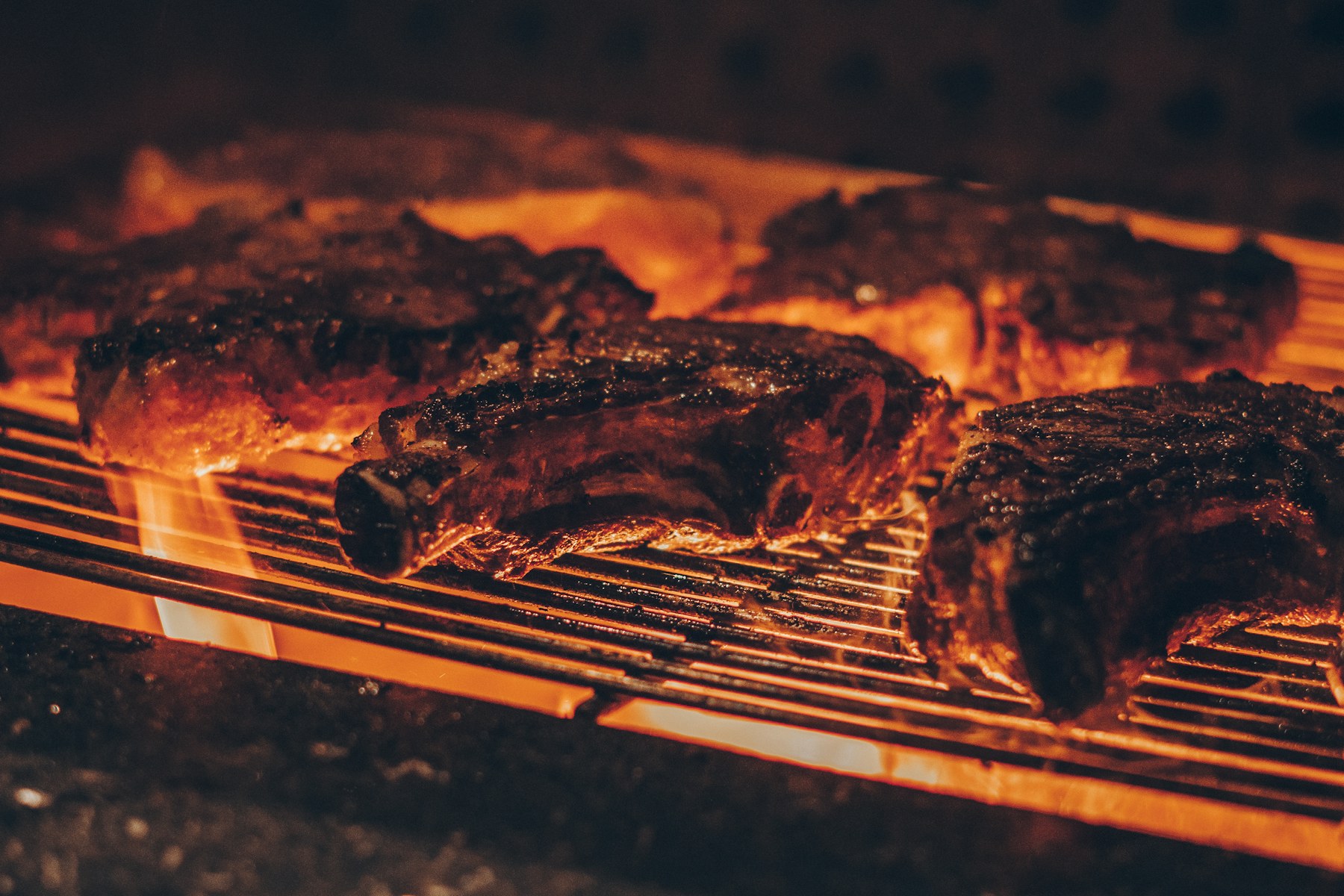
Score the cap only shallowly and salt with restraint. Begin fat-side down over moderate heat, move away from any sustained flame and pour excess pan fat into a heat-safe container. The lean should brown without spending the entire cook in a grease fire.
Serve Acid and Texture Instead of More Fat
Skip butter. Use coarse salt, lime, chimichurri, tomato vinaigrette, pickled vegetables or bitter greens. Slice only the browned exterior in skewer service, or rest flat steaks and cut across the marked grain.
For conventional sirloin-cap anatomy and Brazilian preparation, use the picanha guide. For the labeling framework, use the Wagyu guide. The value of this page is where those two decisions meet.
A Seller Checklist for Wagyu Sirloin Cap
- Origin and program: country, breed or cross claim and original grading scale.
- Cut identity: whole top sirloin cap with a visible triangular shape and curved grain.
- Fat balance: both internal marbling and exterior-cap thickness shown clearly.
- Portion information: net weight, dimensions and whether the image represents the shipped piece.
- Cold chain: frozen or fresh status, shipping schedule and arrival policy.
Do not compare a Japanese grade, an Australian marble score and USDA Prime as if the numbers share one standard. Preserve each claim in its original context. If the package only says “Wagyu” without country or program, the premium cannot be evaluated.
At home, divide the cap around grain and thickness while it is cold. Portion smaller than conventional picanha when marbling is intense. Label pieces if some will be frozen, and protect the cut surface from air.
A controlled first cook should use salt only. Taste the beef before deciding whether future portions benefit from chimichurri, smoke or spice. Expensive ingredients do not need a complicated first test.
For restaurant orders, ask whether the listed weight includes the fat cap and whether the cut will arrive sliced. A shared order is easier to evaluate when the server can identify the production program and explain how the kitchen manages the exterior fat.
Where This Guide Fits
This page supports the broader Wagyu Steak guide. Use that pillar page for the complete cut family, buying framework and links to every closely related article.
Useful next reads include Japanese A5 Wagyu, Wagyu Ribeye, Wagyu Tomahawk Steak, Ribeye Steak, and Picanha Steak for nearby cuts, methods and decisions.
Frequently Asked Questions
Is Wagyu picanha very fatty?
It can combine substantial internal marbling with an exterior fat cap. Trim the cap to a sensible thickness and portion accordingly.
Should I remove the cap?
No, unless it is excessively thick or hard. Keep an even layer and render it gradually.
How is it sliced?
After resting, slice thinly across the grain. Skewer preparation may require rechecking orientation before serving.