What “Wagyu Tomahawk” Can Mean
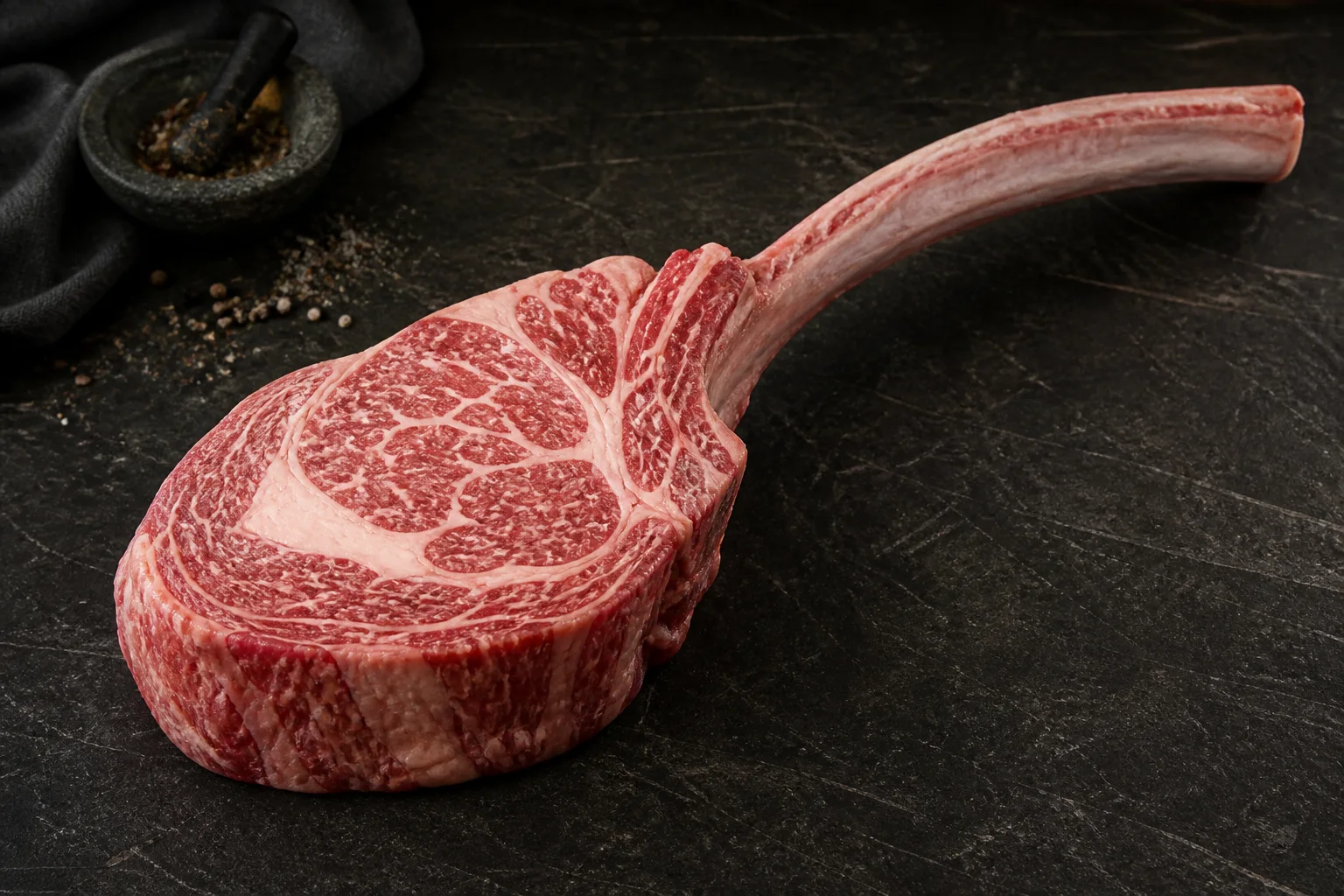
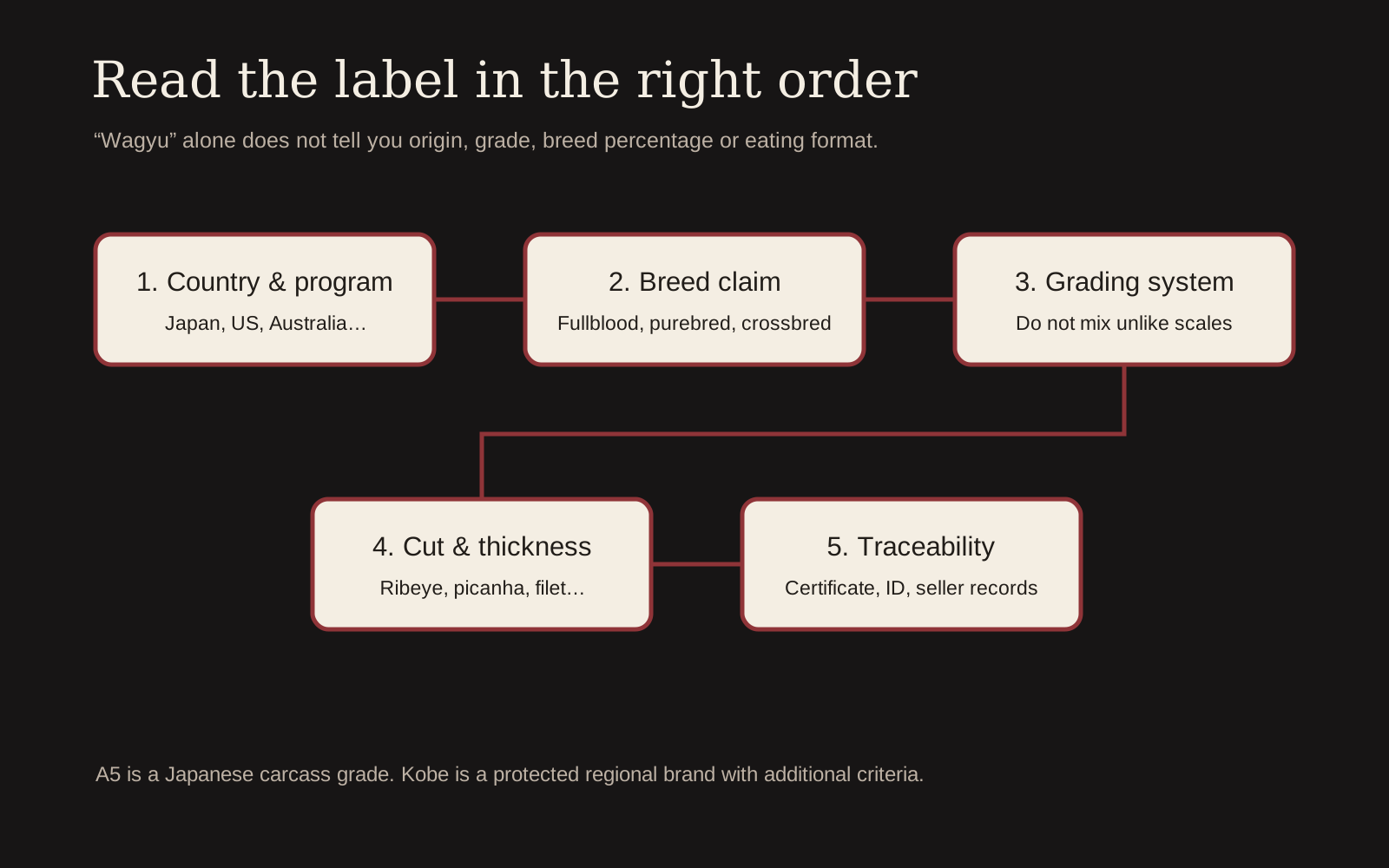
The tomahawk part is straightforward: a thick long-bone ribeye. 'Wagyu' needs more context. Japanese Wagyu, American Wagyu and Australian Wagyu can come from different genetics, feeding systems and grading frameworks. A5 is a Japanese yield-and-quality grade, not a universal synonym for every richly marbled steak.
Use our Wagyu steak guide for the terminology and the Japanese A5 guide for the Japanese grading context. A seller should state country of origin, program or breed information, and the actual grading system.
Choose Marbling for the Meal
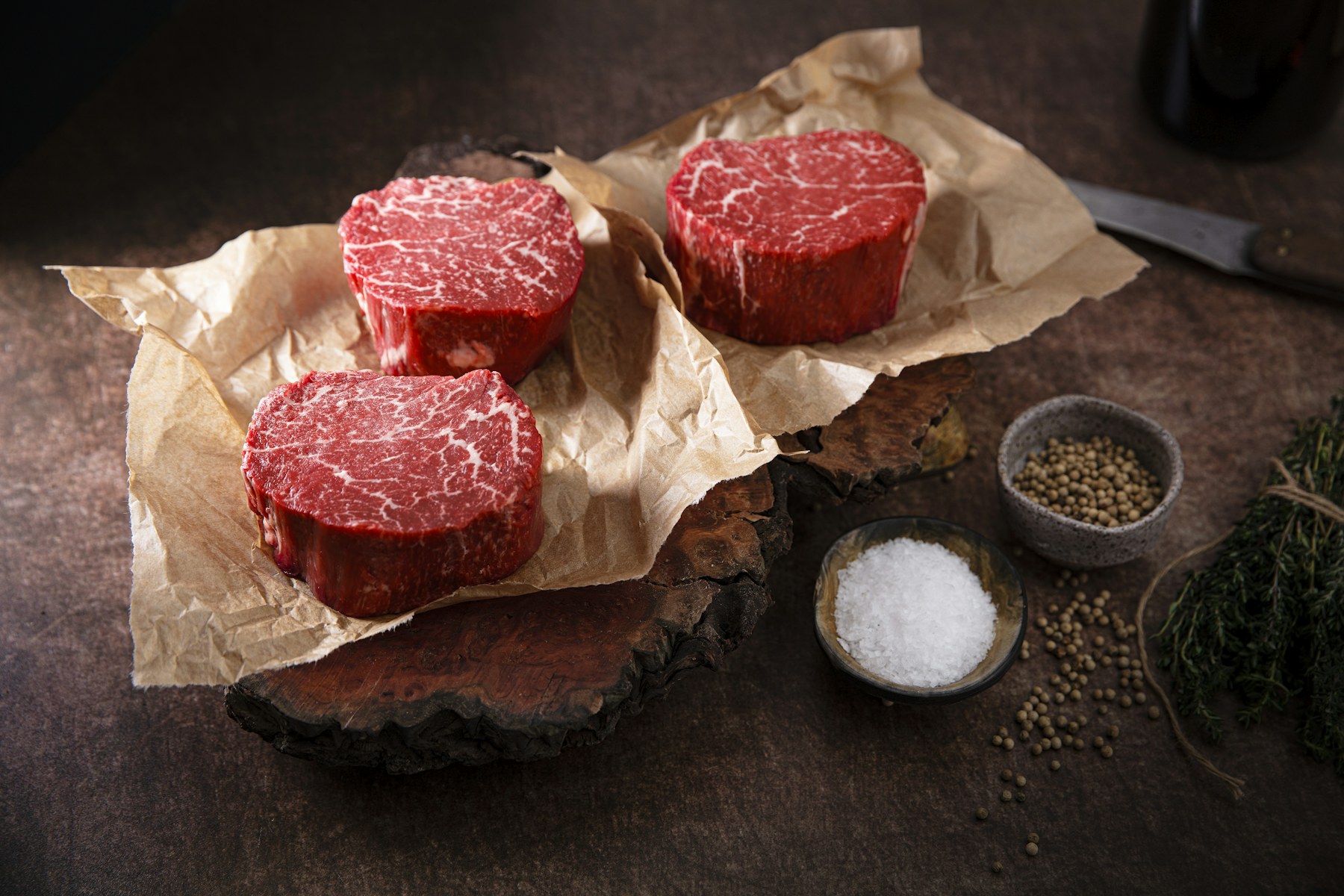
Extremely marbled beef is intense. A large, heavily marbled tomahawk may be more satisfying cut into small shared portions than served as a conventional individual steak. For a centerpiece cooked over fire, moderate Wagyu cross marbling can preserve more familiar ribeye structure while adding richness.
Cooking a Wagyu Tomahawk
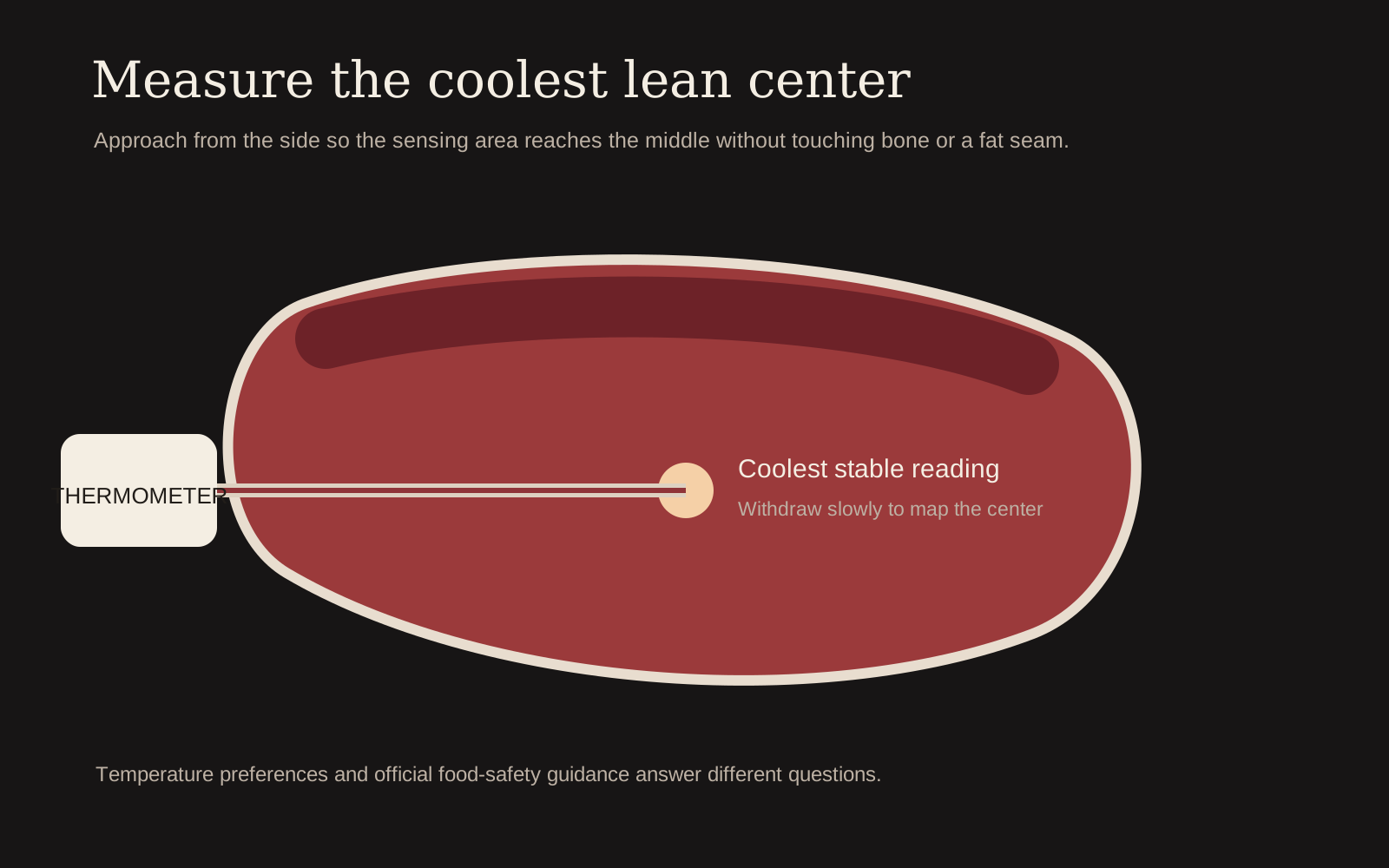
Use controlled low heat and a shorter, attentive sear. Abundant fat transfers heat efficiently and can trigger flare-ups. Keep a cool zone available, turn frequently, and do not hide expensive beef under a sweet rub. Follow the probe technique in how to cook a tomahawk and verify doneness with the temperature guide.
Portion and Serve
Slice thinly and serve with rice, crisp vegetables, bitter greens or a restrained acidic sauce. Let the beef remain central. For another Wagyu rib-cut option without the long bone premium, compare Wagyu ribeye.
Decide Whether the Large Format Fits the Beef
A tomahawk is designed as a shared centerpiece; extremely marbled Japanese-style portions are designed for a few rich bites. Those two ideas can conflict. Before buying, decide whether the steak is moderately marbled crossbred beef suited to a thick grill cook or intensely marbled beef better cut into small portions.
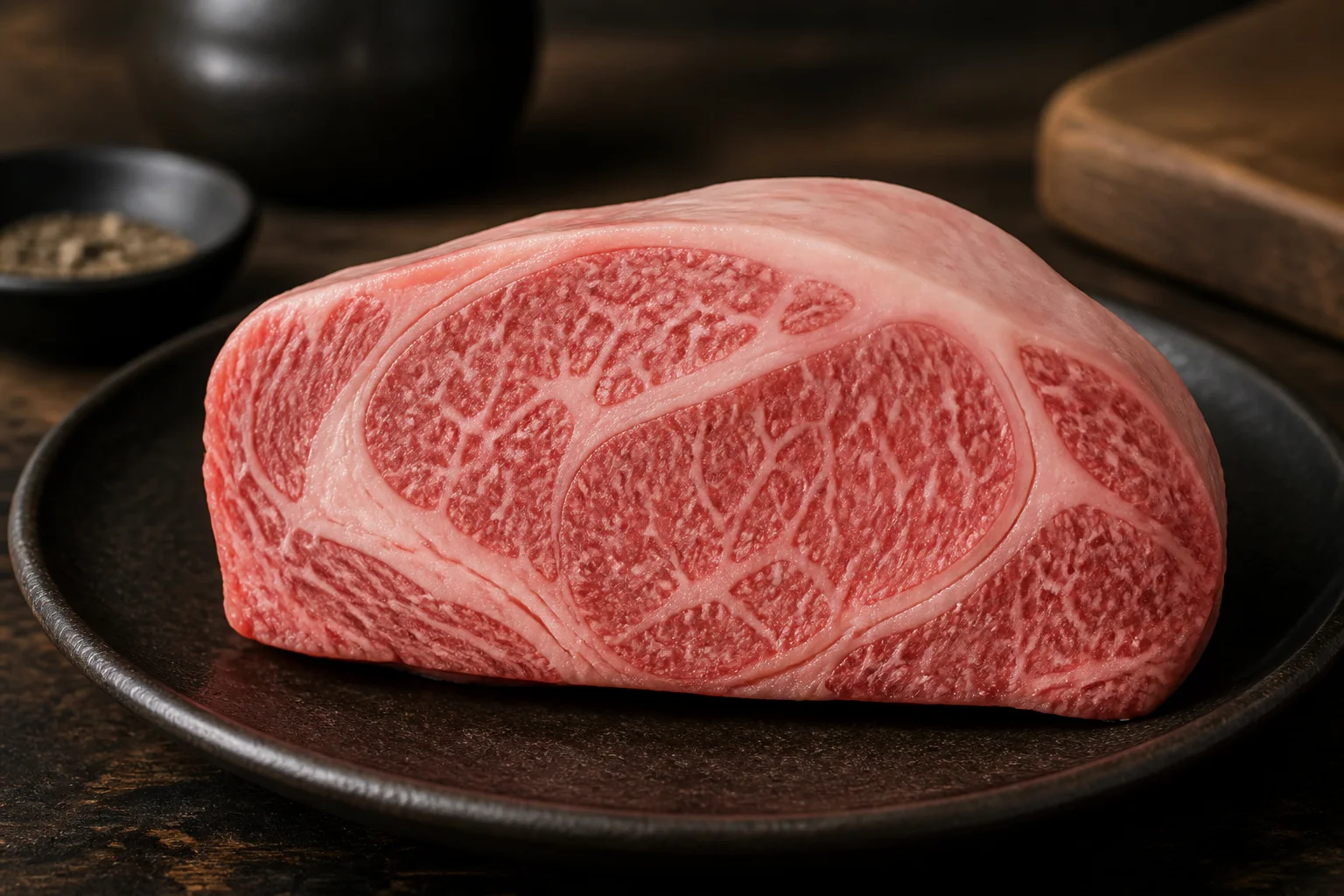
Ask for a cross-section photograph with a scale or stated thickness, not only a dramatic full-bone image. Verify whether the listed weight includes a particularly long rib and thick exterior fat. Country, program and grade should be written on the product information. If 'A5' appears without Japanese origin documentation, do not infer authenticity.
For moderately marbled large-format Wagyu, a reverse sear gives the cap and eye time to warm, but the final fire must be managed aggressively. Keep a cold-zone tray and move at the first flare. For intense marbling, separate meat from bone after a controlled low stage and finish small surfaces on a plancha. Compare the more efficient Wagyu ribeye before paying for the handle.
A Large Bone Does Not Authenticate Wagyu
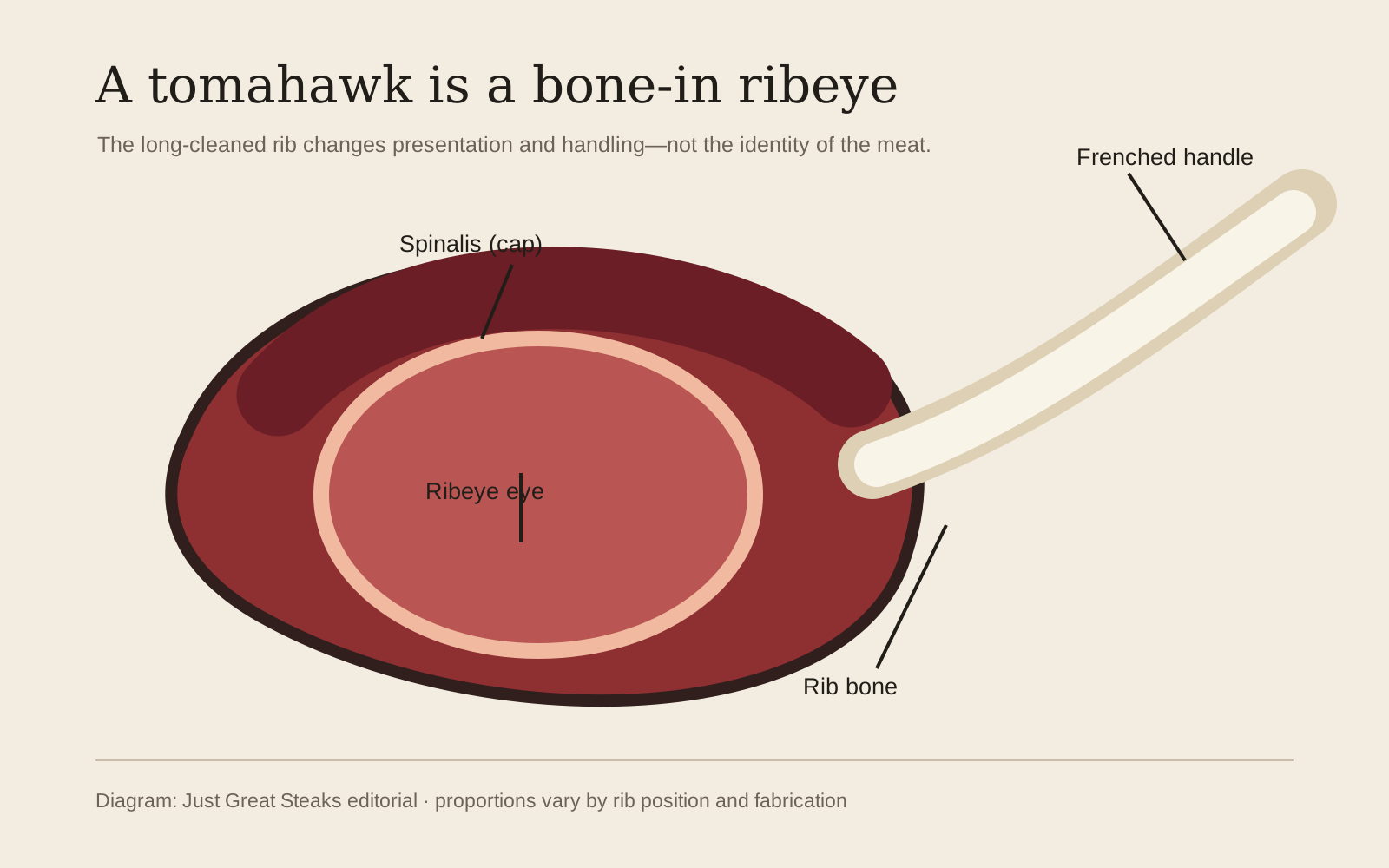
Tomahawk describes a long-bone ribeye fabrication. Wagyu describes cattle genetics or a program claim. The product needs evidence for both: a clear ribeye cut face with the long frenched rib, plus country, breed or cross information and grading in its original system.
A seller should distinguish Japanese A5 from American or Australian Wagyu programs. “A5-style,” “Japanese quality” and dramatic marbling photographs are not substitutes for origin and documentation. Ask whether the image shows the actual steak, because marbling and eye size vary substantially.
Match the Format to the Marbling
A thick tomahawk assumes a long center-warming stage and a large shared portion. Intensely marbled A5 assumes small, quickly cooked bites. Those formats can work against each other. A moderately marbled crossbred Wagyu tomahawk usually fits the classic reverse-sear treatment more naturally.
For very high marbling, consider separating the ribeye from the bone after a gentle controlled warm-up, then portioning smaller pieces for a plancha finish. This reduces flare risk and lets diners receive several fresh browned surfaces instead of a large cooling slab.
| Product | Better approach | Why |
|---|---|---|
| Moderate crossbred Wagyu tomahawk | Reverse sear and share | Large format remains manageable |
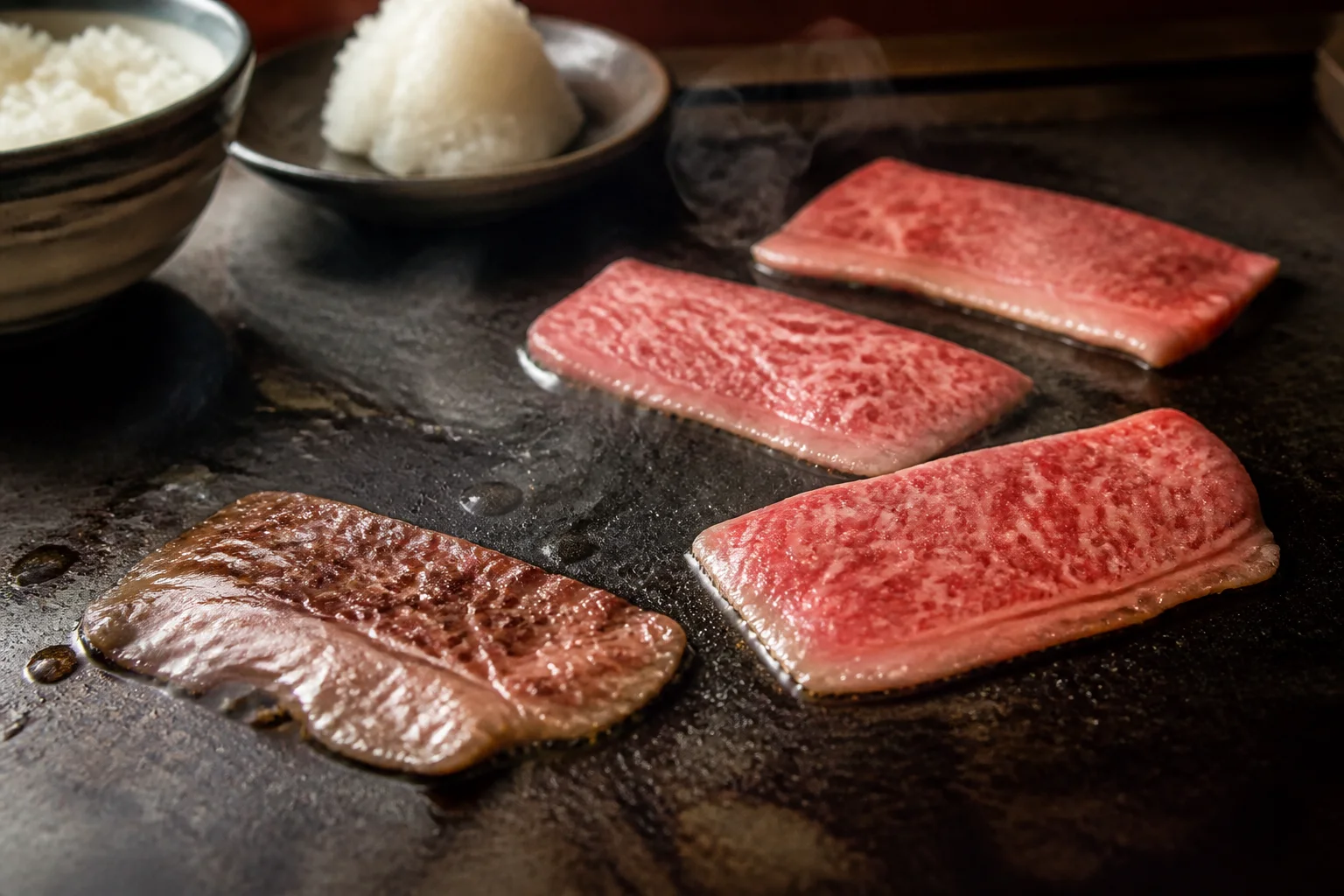
| Intensely marbled Japanese ribeye | Small slices or cubes | Richness and rendered fat favor brief batches |
| Ambiguous Wagyu tomahawk | Do not buy until clarified | The premium cannot be evaluated without provenance |
Cook With an Escape Zone and No Added Butter
Salt lightly, dry the surface and use low heat to warm a thick moderately marbled steak. Preheat a plancha, grill zone or skillet for the finish. Turn often, watch the cap and move immediately from flare-ups. Added oil should be minimal and butter is unnecessary.
Rest on a rack, remove the meat from the bone and separate eye and cap as useful. Slice smaller than conventional tomahawk portions and serve with citrus, pickles, rice or bitter greens. Compare the simpler Wagyu ribeye before paying for a long bone that adds no edible yield.
Evaluate Cost Per Useful Portion
Normalize the price by documented program, cut-face quality, edible ribeye weight and required shipping. A long bone and intense marbling both increase the sense of luxury, but only one is edible. Ask for net weight, bone length, approximate thickness and a photograph or specification that reflects the steak being shipped.
For a highly marbled product, estimate fewer ounces per diner than a conventional ribeye. The steak may serve more people despite its smaller lean portion because richness limits comfortable serving size. Build the menu with rice, pickles, citrus and vegetables rather than several fatty sides.
If the provenance is vague, buy a clearly documented conventional tomahawk or a verified Wagyu ribeye instead. Combining two premium words should increase scrutiny, not lower it.
Where This Guide Fits
This page supports the broader Tomahawk Steak guide. Use that pillar page for the complete cut family, buying framework and links to every closely related article.
Useful next reads include How to Cook Tomahawk Steak, Tomahawk Steak Recipe, Smoked Tomahawk Steak, Ribeye Steak, and Cowboy Steak for nearby cuts, methods and decisions.
Frequently Asked Questions
Is every Wagyu tomahawk Japanese A5?
No. Wagyu can describe Japanese beef or Wagyu-influenced programs in other countries. A5 is a specific Japanese grade.
Should Wagyu tomahawk be cooked like a normal tomahawk?
The two-stage principle still works, but very high marbling calls for smaller portions, close flare-up control and a restrained sear.
Is Kobe tomahawk the same thing?
No. Kobe is a protected regional brand with specific eligibility and certification rules; it is not a generic word for highly marbled Wagyu.