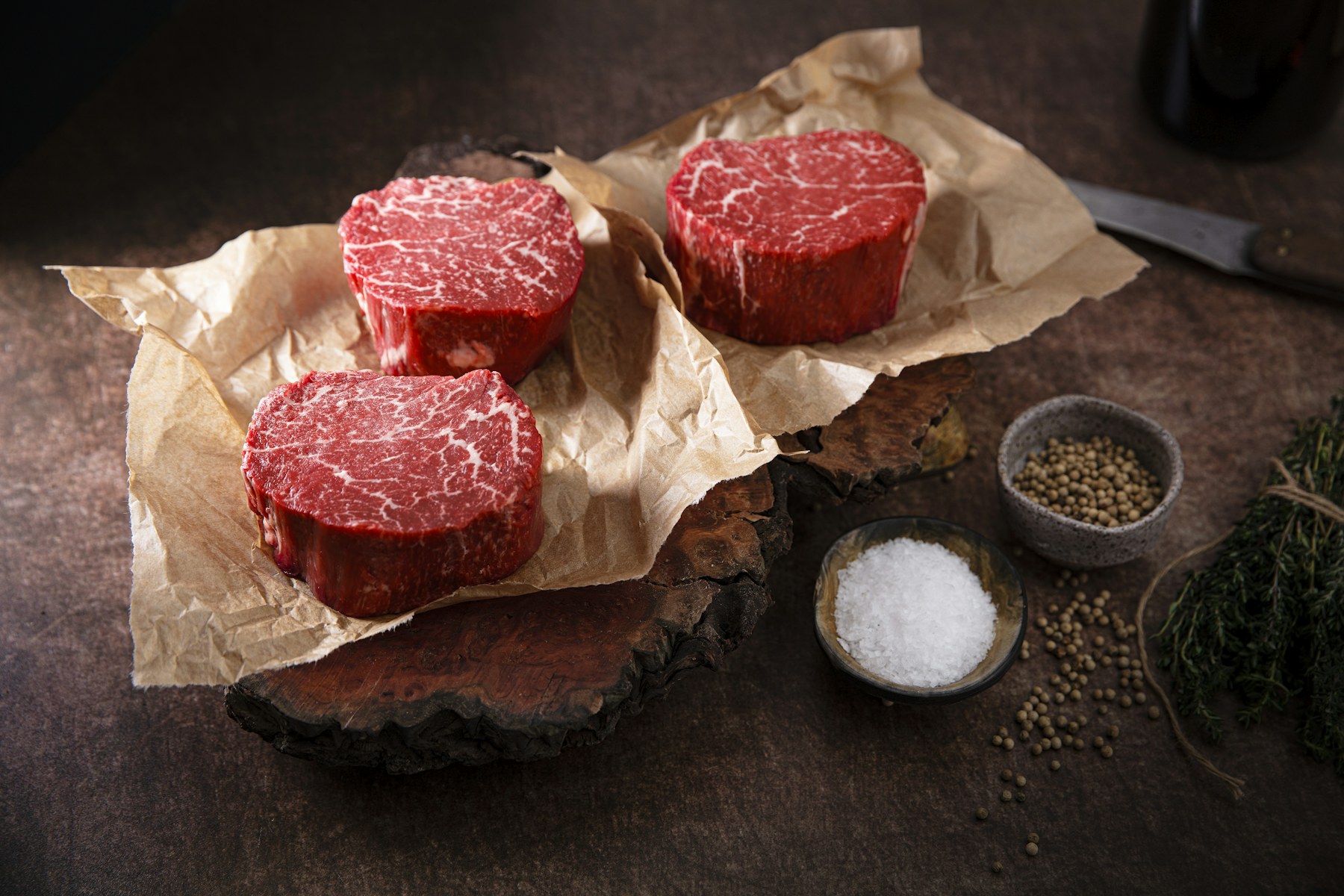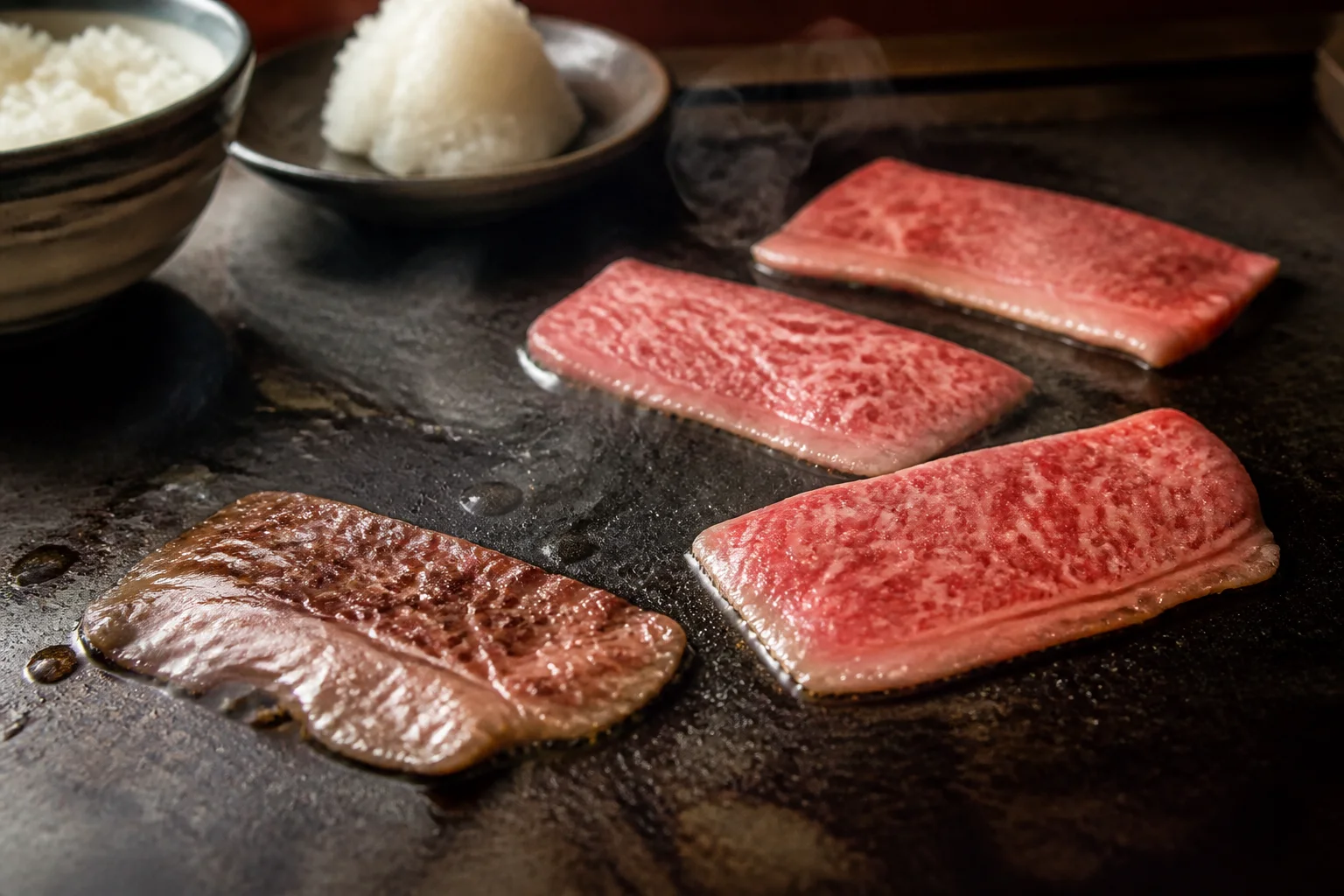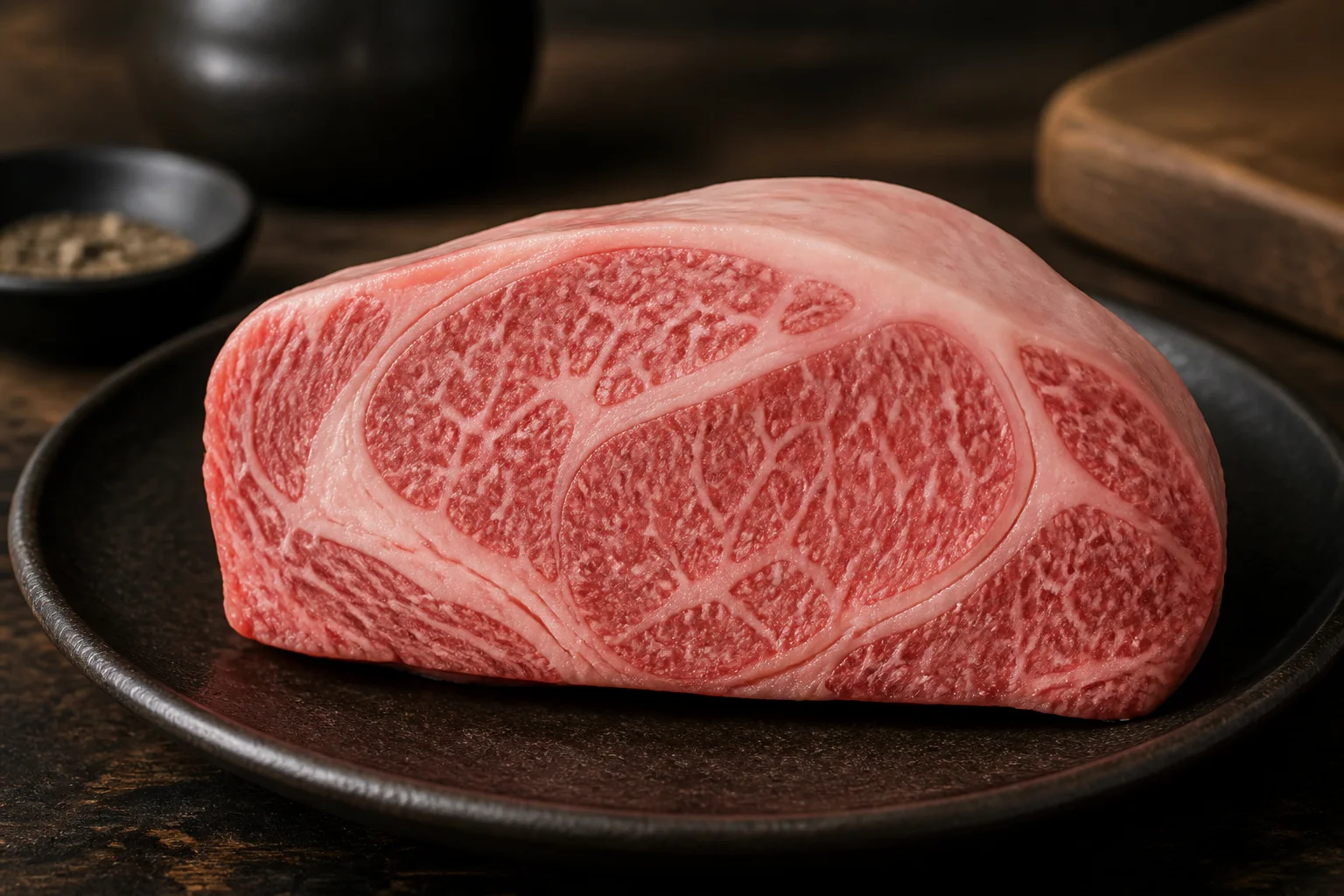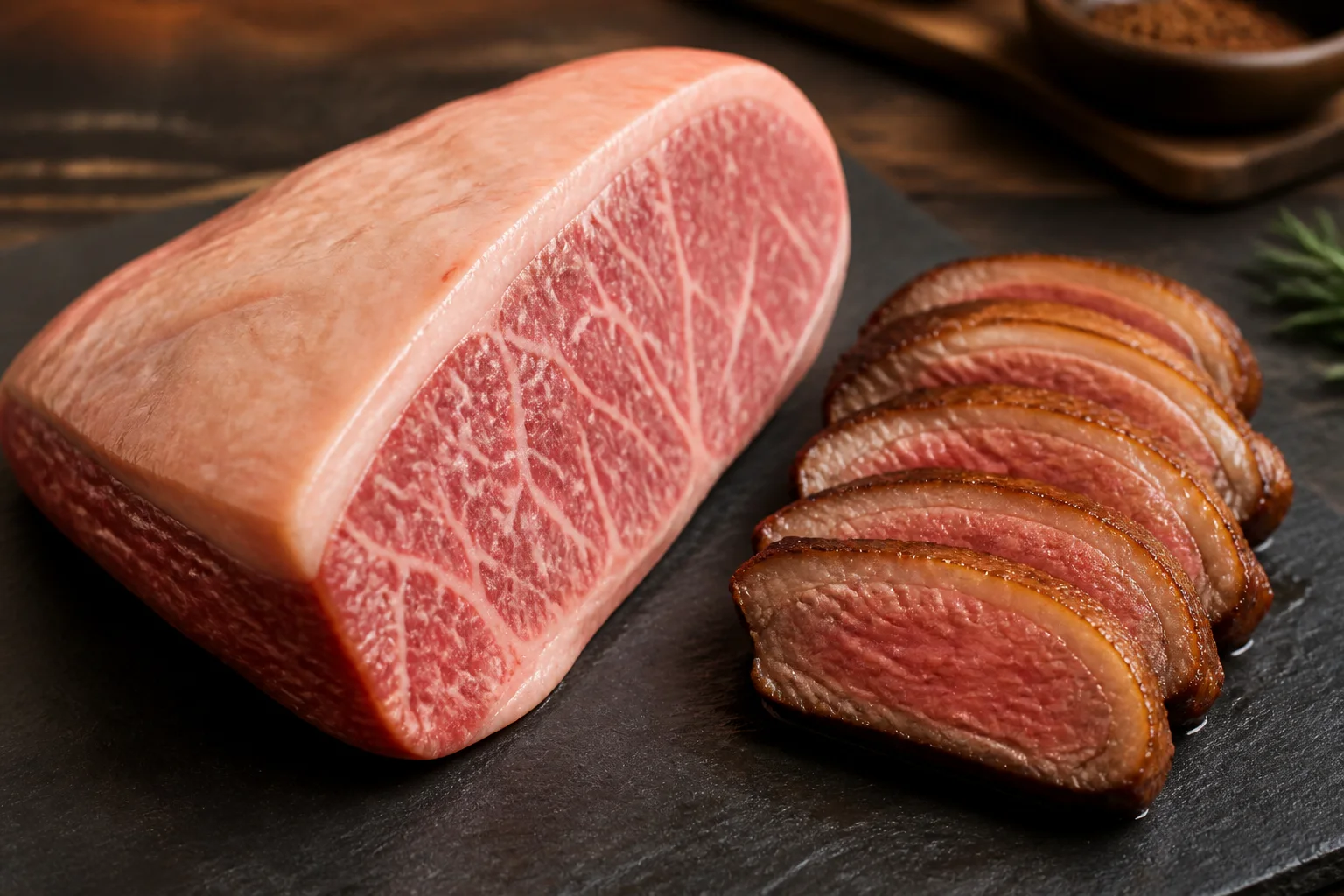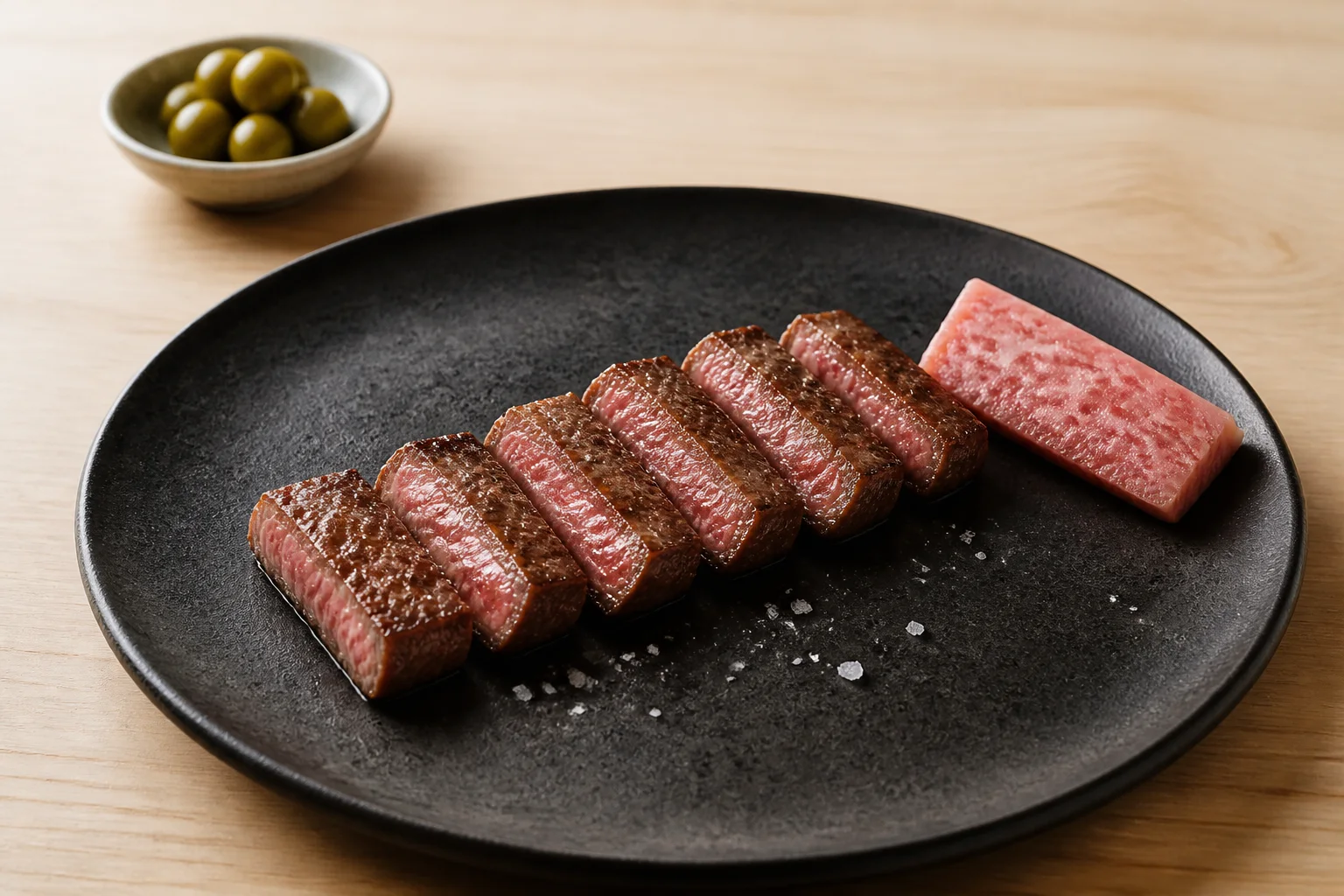
What Olive Wagyu Steak Means
Olive Wagyu is Japanese Wagyu associated with Kagawa Prefecture and cattle finished with feed incorporating the region's olive by-products. The words describe one part of the product, not every quality that matters at the table.
The word olive does not mean the steak is marinated in olive oil, and a seller-created “olive-fed” phrase does not by itself establish Japanese or Kagawa origin. Cut, grade, marbling, maturity, aging, origin, raising claims and storage condition are separate attributes. A responsible seller should identify them separately rather than compressing everything into “premium.”
Use the label as a set of claims to verify. Our steak buying guides explain cut and technique; this page concentrates on what the claim can and cannot establish.
Read the Exact Terms
| Term | What it tells you |
|---|---|
| Olive Wagyu | Kagawa-associated olive-fed Japanese Wagyu provenance |
| Japanese Wagyu | Origin and breed framework; not every example is Olive Wagyu |
| A5 | Japanese yield-and-quality grade, separate from the olive-fed story |
| Individual ID | Traceability information used to verify Japanese beef provenance |
Read the complete label, including the USDA shield, establishment information, country statements and the name of any private program. Similar typography does not make two claims equivalent. If the product page omits the actual grade or cut, ask before paying a premium.
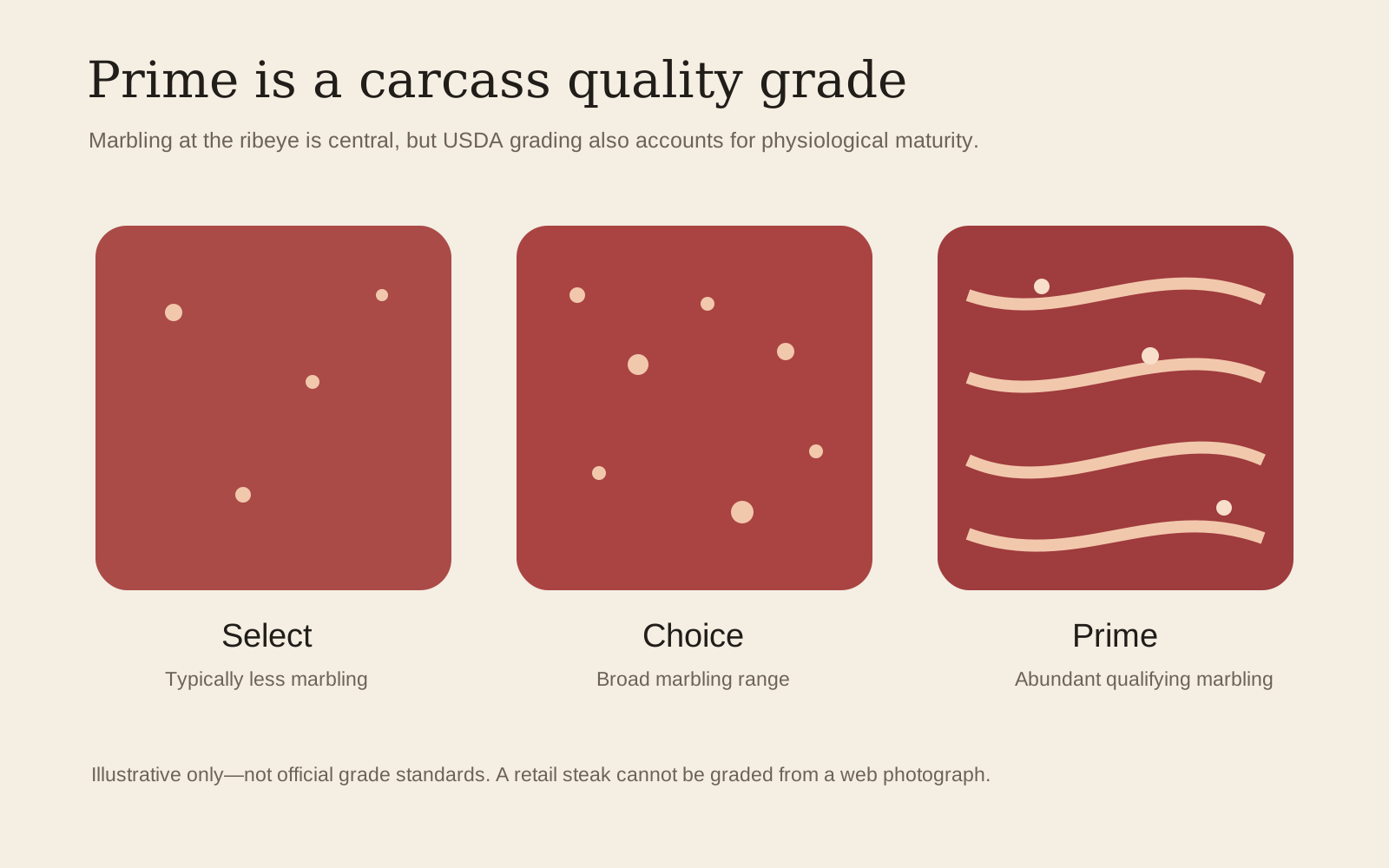
Official grade cannot be assigned from a retail photograph. Likewise, a breed name does not reveal the percentage of qualifying ancestry unless a program defines it. Documentation is more useful than black packaging, ranch imagery or an unsupported superlative.
How to Buy Olive Wagyu Steak
Ask for the Japanese identification details, prefectural provenance, grade, cut, net weight and the documentation connecting the retail portion to the animal. Then inspect the actual steak: even thickness, useful fine marbling, clean fabrication, manageable hard seams and packaging integrity.
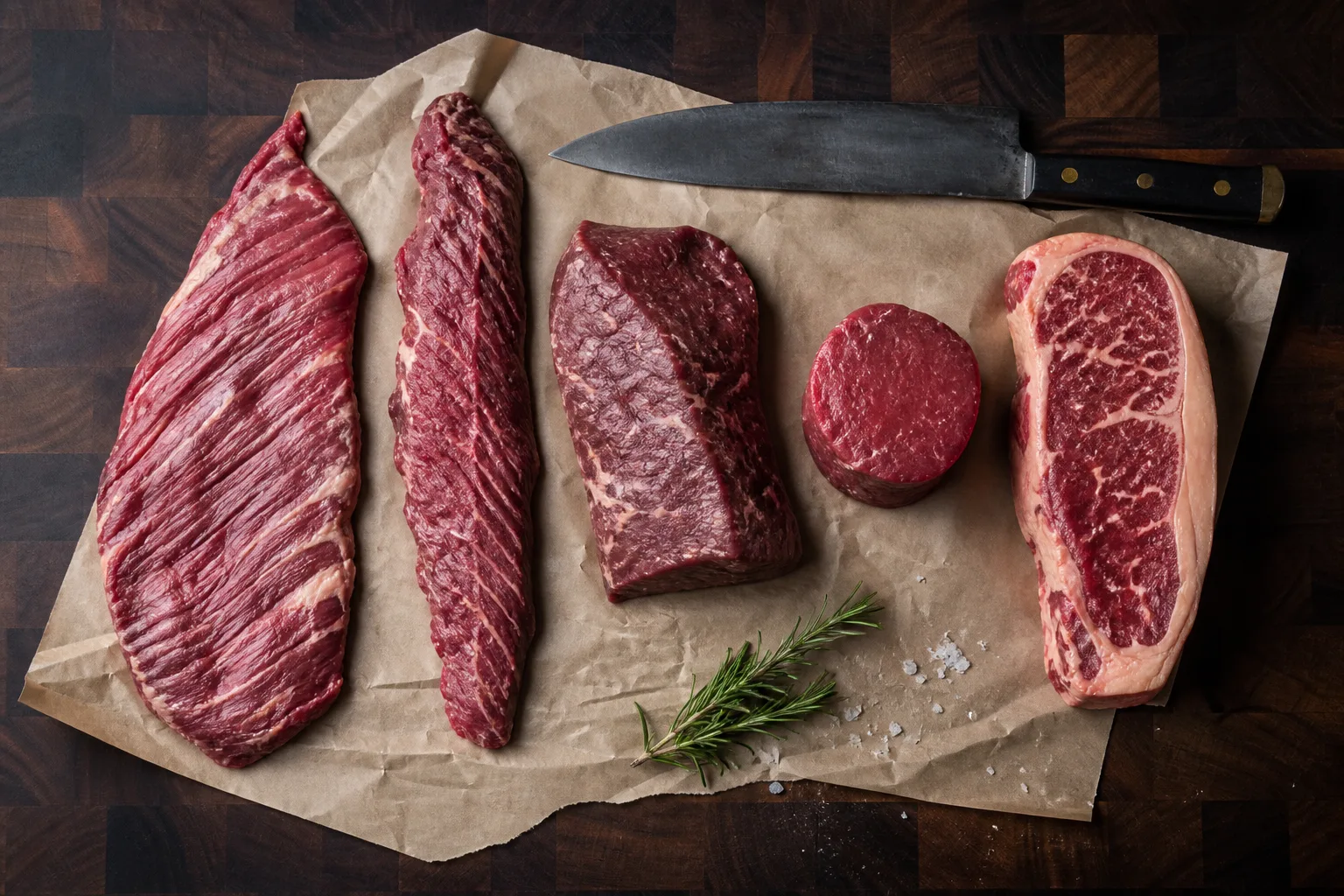
- Name the cut. Ribeye, strip, sirloin and tenderloin cook differently regardless of the label claim.
- Verify the claim. Look for the official shield, program name or documentation that supports the words used.
- Compare like with like. Use the same cut, grade, bone format, aging and weight range before comparing price.
- Check edible yield. Bone, exterior fat and required trimming can change the true portion cost.
- Keep the cold chain. Proper packaging and temperature control matter more than prestige once the steak leaves the seller.
What the Label Changes in the Kitchen
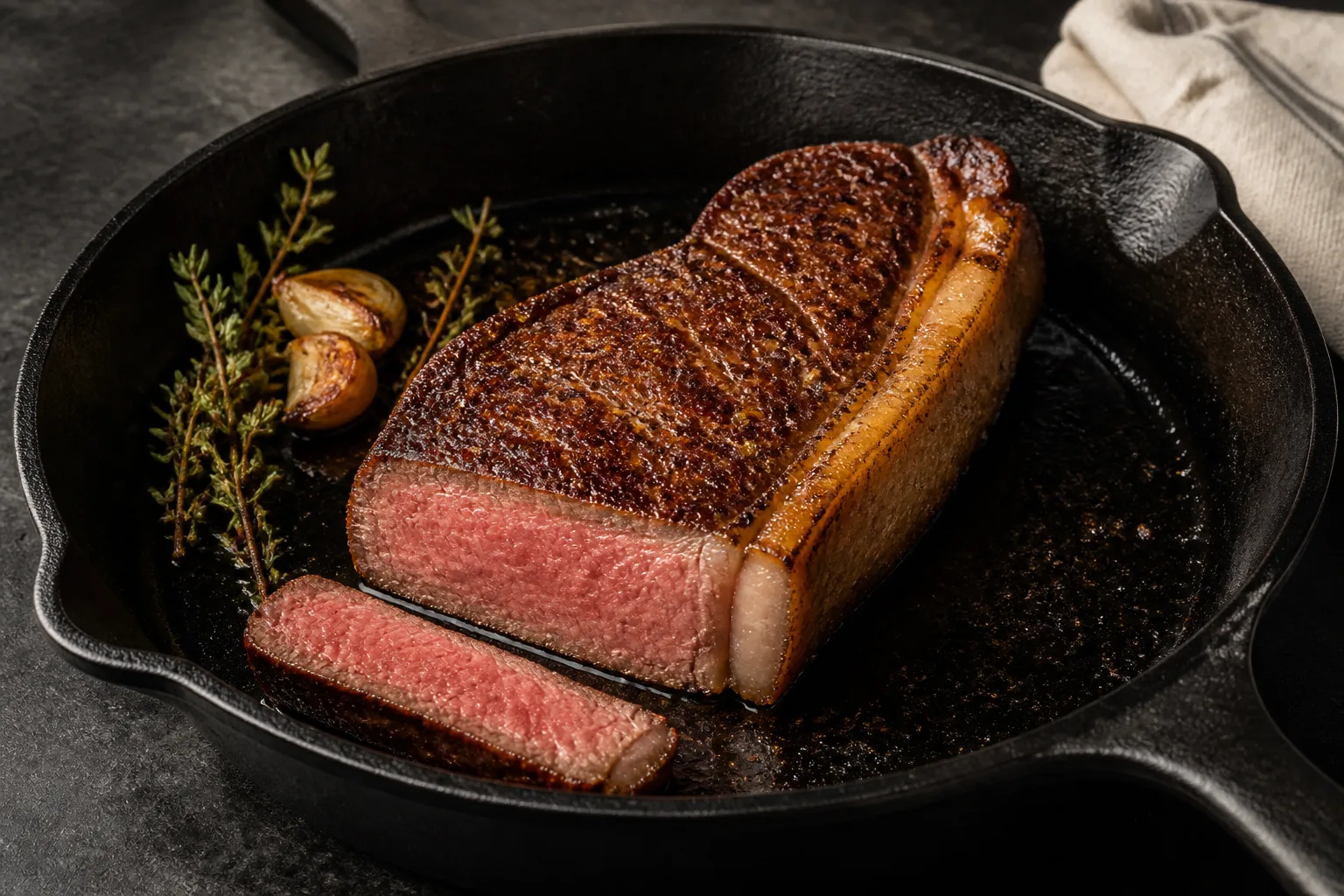
Use a small, thin tasting portion over controlled high heat, render deliberately and serve fewer ounces than a conventional steak because marbling changes richness and flare-up risk. There is no single appliance setting for a breed or quality word. Choose the method by cut and thickness, dry the surface and measure the center.
Highly marbled steaks often tolerate hard browning but can trigger flare-ups. Lean examples have a narrower thermal margin. Start with the general steak cooking method and use the cut-specific guide for geometry.
Is the Premium Worth It?
Value depends on whether the documented claim matches your priorities and whether the steak itself is well cut. A precise label on a thin, tapered or poorly trimmed steak does not guarantee a better dinner than a carefully fabricated alternative.
Run a fair comparison with the same cut, similar thickness and the same measured pull temperature. Salt by weight and use the same pan or grill. That isolates the beef more honestly than comparing different cuts, sauces and doneness levels.
Portion and Cook Olive Wagyu Deliberately
A conventional steakhouse portion is the wrong default for highly marbled Japanese beef. Plan several small slices per diner as part of a tasting, and balance them with plain rice, lightly dressed vegetables, citrus or a restrained condiment. The aim is to experience rendered fat and beef flavor without making every bite equally rich.
Before heating, photograph the traceability label and note the exact cut. Strip, ribeye, sirloin and chuck-flat portions do not become interchangeable because they share an olive-fed provenance. A thin slice can be seared in seconds, while a compact steak needs lower heat between brief browning stages. Keep a cool plate ready so the meat can leave the pan immediately.
- Use a dry pan first. A heavily marbled slice supplies its own rendering fat; excess added oil dilutes control.
- Cook in small batches. Crowding drops surface temperature and lets rendered fat accumulate around the meat.
- Manage the rendered fat. Pour off excess between batches before it smokes or burns.
- Season after a test slice. Salt perception changes with portion size and rich fat, so one measured sample is useful.
If the seller recommends serving the beef raw or barely warmed, remember that provenance and price do not remove food-safety risk. Follow official guidance and any package-specific directions. For the wider grading framework, continue with the Japanese A5 Wagyu guide; for origin terminology across countries, use the Wagyu steak guide.
Where This Guide Fits
This page supports the broader Wagyu Steak guide. Use that pillar page for the complete cut family, buying framework and links to every closely related article.
Useful next reads include Japanese A5 Wagyu, Wagyu Ribeye, Wagyu Picanha, Ribeye Steak, and Picanha Steak for nearby cuts, methods and decisions.
Frequently Asked Questions
Is Olive Wagyu Steak always more tender?
No. Tenderness begins with the muscle and is affected by aging and cooking. A label claim does not make every cut equally tender.
Does Olive Wagyu Steak guarantee USDA Prime?
Only an official USDA Prime grade claim establishes Prime. Breed, brand and marketing descriptions are separate.
How should I compare Olive Wagyu Steak?
Compare the same cut, grade, thickness, bone format, aging and edible yield, then inspect the actual steak.
Sources & further reading
- Japan National Tourism Organization — Kagawa Cuisine — Official tourism reference for olive-fed Wagyu as a Kagawa specialty.
- Japan National Tourism Organization — Kagawa Things to See and Do — Official origin and regional-food context.
- USDA FSIS — Safe Minimum Internal Temperature Chart — Official safety guidance for whole beef steaks and roasts.